Dirty fuel, low-tank heat, a plugged strainer, and a voltage drop are the usual reasons what causes car fuel pump to fail on a gasoline passenger car. The motor sits in the tank so the fuel can cool it. When that bath turns to rust, runs dry, or the connector wastes power as heat, the pump jams or cooks.
The sections below follow those inducers in the order a buyer can actually check them: dirt and water, a low tank, the electrical feed, a starved inlet, then the dirty-tank comeback. Symptom lists, high-pressure pumps, and a ranking of one “most common” cause live on other pages. Here the job is the passenger-car inducer and the part you stock only after it is fixed.
What Actually Starts a Car Fuel Pump Failure
Failure starts when dirt, heat, or a weak electrical feed damages the motor or jams the pump. Mileage alone does not explain a unit that dies at 40,000 miles on a rusty tank, or one that still hums at high mileage in a clean circuit.
Shop notes and driver threads keep returning to the same cluster. Fuel contamination scores the internals. A low tank removes cooling.
A voltage drop heats the windings even while the fuse looks fine. What causes a fuel pump to go out in a driveway is often one of those three. A seizure with no dirt, heat, or feed fault is the rare leftover.
A clogged inlet strainer or fuel filter sits in the same story. The restriction does not just lean the engine. It makes the pump pull harder and can dry-run the motor that fuel is supposed to flush.
If you want a single ranking, use the most common cause of fuel pump failure page. High-pressure pumps have a separate cause map at what causes high pressure fuel pump failure. Diesel high-pressure symptoms sit on diesel high pressure fuel pump failure symptoms.
| Inducer | What it does to the pump | Check before you replace |
|---|---|---|
| Dirt, rust, or water | Scores vanes or jams the rotor | Tank, sock, and filter condition |
| Low tank / dry running | Removes the fuel that cools the motor | Habit of running near empty |
| Voltage drop or bad relay | Heats the motor or cuts power | Loaded voltage at the connector, fuse, relay |
| Plugged sock or filter | Starves flow and cooling | Strainer and filter, not only rail pressure |
Dirt, Rust, and Water That Reach the Pump
Dirt, rust, and water either grind the pump or jam it so it stops suddenly. Foreign bits that pass the sock can lock the rotating parts. When that happens the pump often quits at once, not after a long moan.
Water is the quiet partner. It makes rust and lime in the tank. Those particles clog the inlet and then the pump runs without the fuel flush that cools and lubricates it.
A missing tank cap, a torn vent hose, or a car that sits half empty for months all feed that moisture. Alcohol in the fuel can hold water and later drop it.
The check valve suffers in the same dirty bath. Debris that holds the valve open lets rail pressure bleed back.
The next start cranks longer because the pump has to fill the line from scratch. That long crank is a clue. It is not proof the motor is dead.
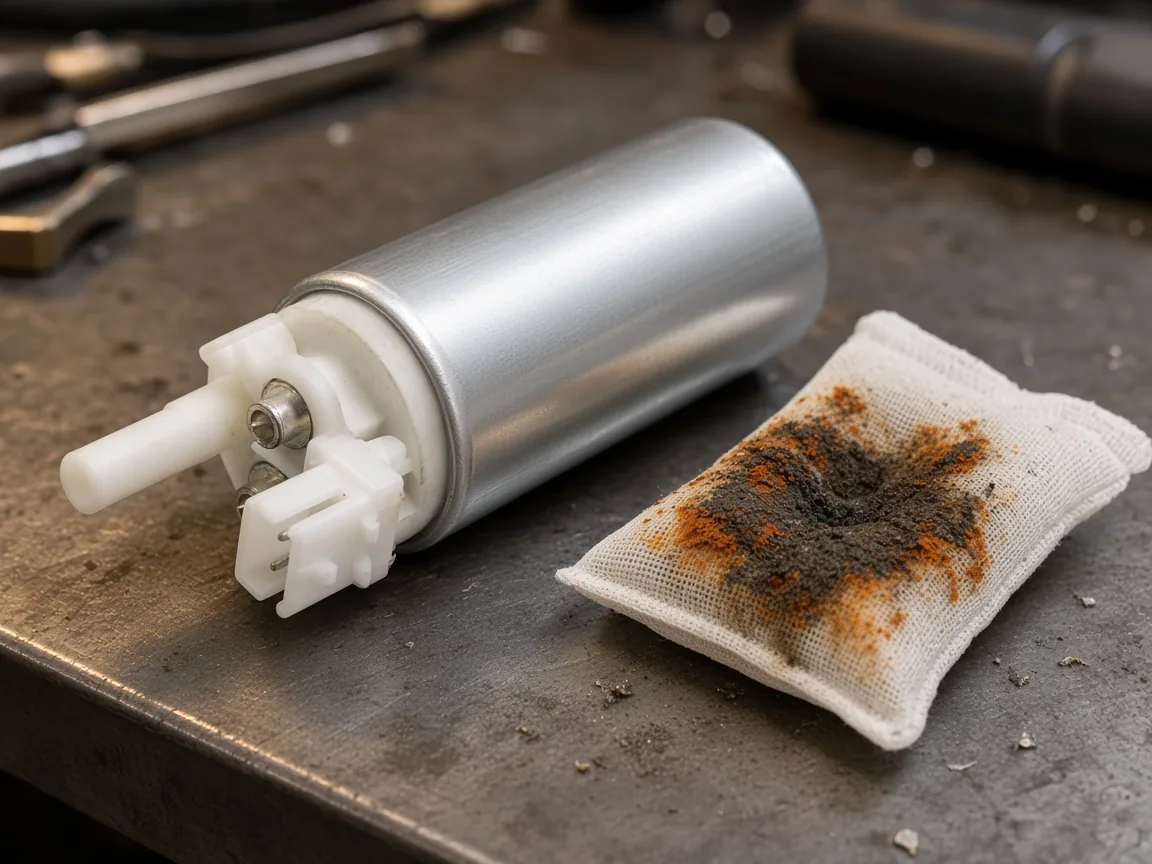
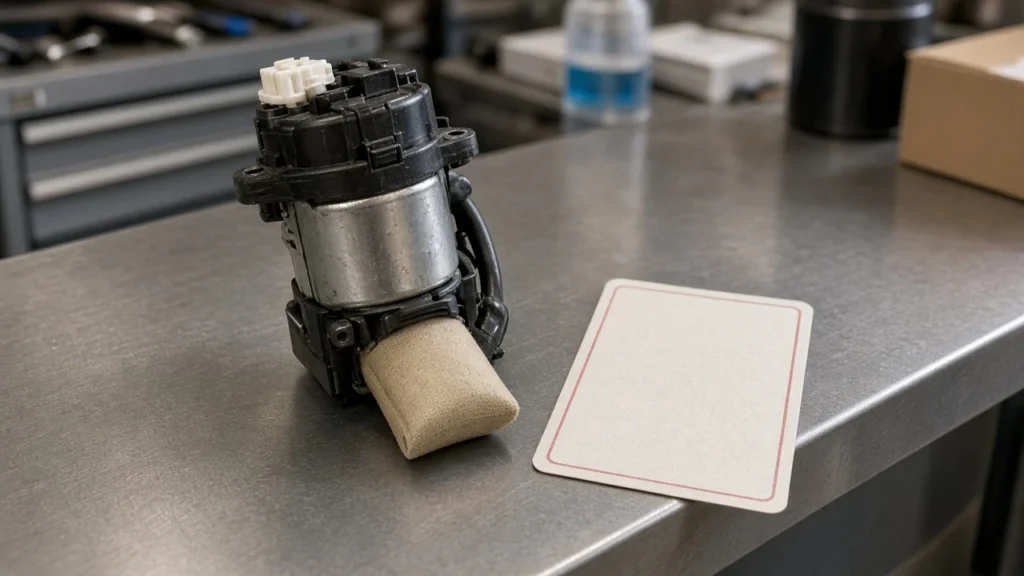
A sock that looks like a tea bag of rust is already a failed filter job. Replacing only the pump leaves the same grit for the next impeller.
Low-Tank Heat and Dry Running
A low tank removes the fuel that cools and lubricates an in-tank electric pump. Low fuel running is the habit that produces that heat. Engineers put the pump in the tank for that bath.
Service writers treat repeated running below about a quarter tank as a heat habit. They do not sell it as a mileage promise.
On a hot afternoon the remaining fuel is already warm. The motor adds its own heat. Without liquid around the canister, dry running starts even if a little fuel still reaches the pickup.
The same dry-run damage shows up when the inlet is blocked. A sock full of scale, or a kinked pickup hose, starves the flush the pump needs.
Noise rises, flow falls, and plastic parts can melt from friction. That is a heat failure caused by starvation, even when the gauge is not on empty.
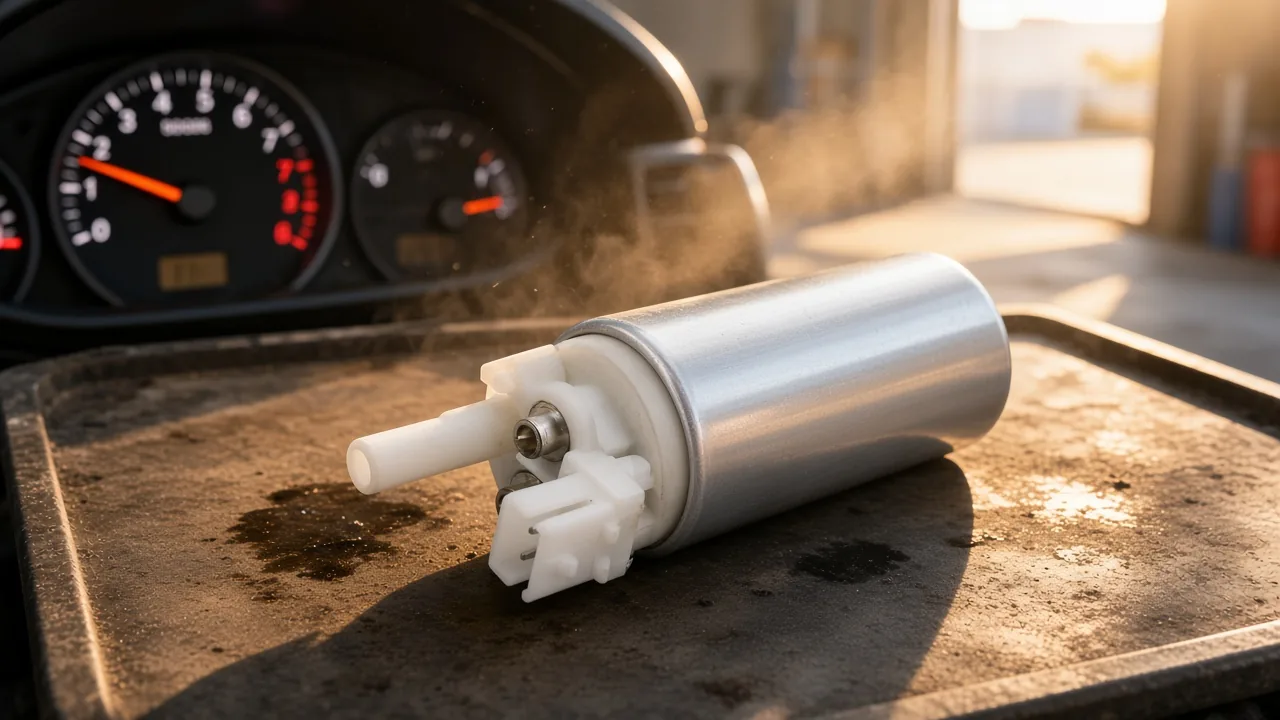
Fleet cars and delivery vans that live on the bottom of the gauge are the usual buyers of this failure. A weekend car that is always half full rarely tells the same story.
Voltage Drop, Relays, and Connector Heat
A voltage drop on the power or ground side heats the motor and can look exactly like a dead pump. Any time the motor sees less voltage while it is trying to turn, it draws more current. That extra current is heat in the windings and at the pins.
The connector lives above the tank, in road spray and salt. A green pin, a loose lock, or a melted shell is resistance you can see.
A fuel pump relay that clicks does not prove the pump is getting a solid feed. A blown fuse can mean the motor already started pulling too much current. Those are electric fuel pump problems that belong on the wiring diagram before anyone prices a pump.
From the field: Owners who just fitted a pump still find a hot ground at the tank connector, as in this MechanicAdvice thread. A healthy ground sits near zero. A poor ground can make a good pump act dead.
A MechanicAdvice thread recorded 0.4 V on the ground pin after a new pump was fitted, and a reply treated that reading as a ground fault rather than a healthy circuit.
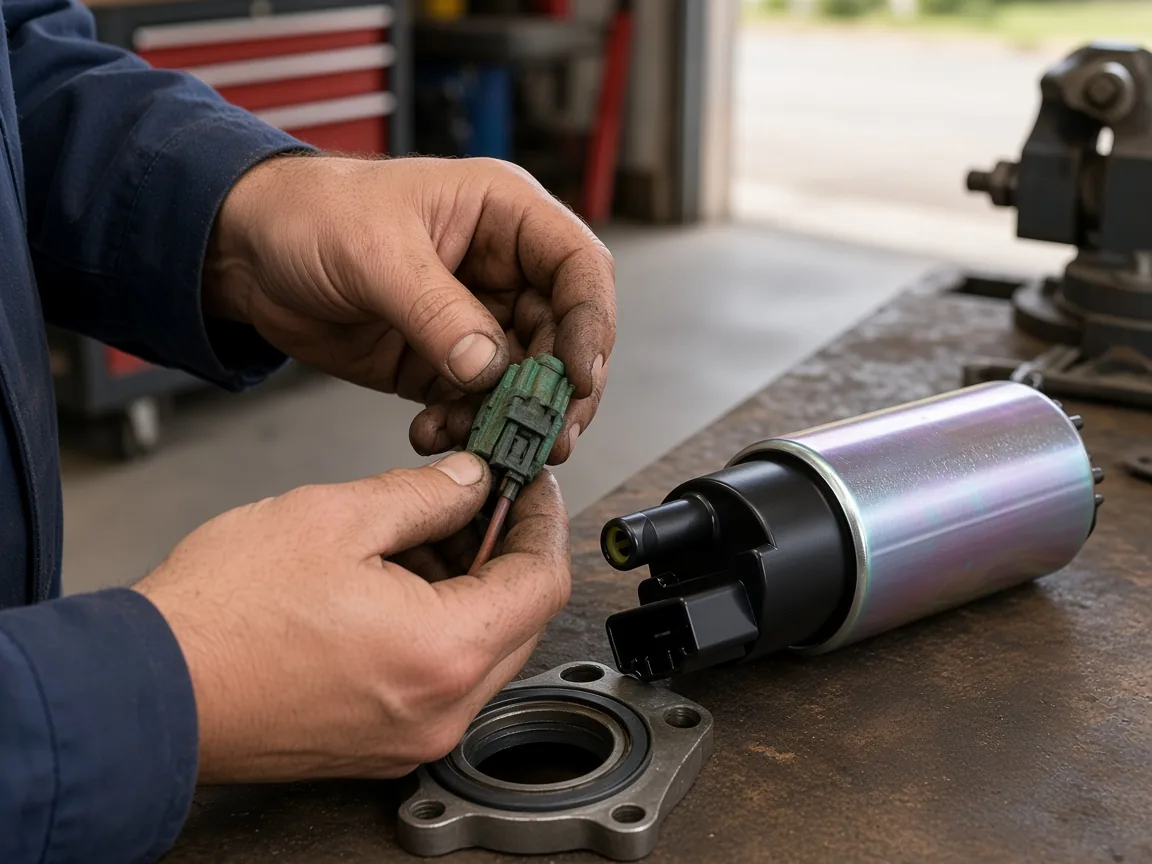
There is also a narrow manufacturing path worth knowing. A Nissan safety recall on certain 2021 Rogue vehicles describes abnormal wear between the brush and commutator that creates excess heat and can stall the engine.
That bulletin is campaign-specific. It shows how brush heat kills a passenger-car pump. It does not mean your VIN is in that campaign.
| What you hear or see | Easy wrong conclusion | Better first check |
|---|---|---|
| No prime sound | Pump is seized | Fuse, relay, and loaded voltage at the connector |
| Whine that rises with throttle | Motor is dying | Sock and filter restriction, then pressure |
| Long crank after sitting | Pump will not build pressure | Check valve bleed-down and a dirty tank |
| Stalls only when hot or under load | Always a weak pump | Low-tank heat, or voltage that sags only when the motor is working |
For fuse and relay order, use fuel pump fuses and fuel pump electrical problems. Connector release steps live on how to disconnect a fuel pump electrical connector.
A Clogged Filter or Starved Inlet
A plugged sock or filter starves flow and can dry-run the pump. Modern electric pumps are flushed by the fuel they move.
Block the inlet and that flush stops. Delivery falls, the pump gets loud, and the motor can fail even though the tank is not empty.
Fine mesh belongs on the pressure side in the designs diagnostic notes describe. A tight screen added on the suction side becomes a restriction.
It does not protect the pump. Skipped filter service, aged fuel after a long sit, and porous hoses all feed the same sock.
Do not condemn the pump from a low rail reading alone. A restricted filter can hold idle pressure and then collapse when you ask for volume.
A weak electrical feed can print the same gauge. Pressure tells you the engine is short of fuel. It does not name the inducer.
Repeat Failures After a Dirty Tank
A new pump fails early when the tank still holds the debris that killed the last one. Independent repair notes call a skipped tank clean a leading reason the second pump dies. The sock on the new unit cannot hold an old rusty tank’s debris.
How to prevent fuel pump failure is mostly habit. No additive replaces a clean tank and a solid feed.
Keep the tank above the habit of running near empty. Change the filter on the maker’s interval. Fix a leaking cap or a vent hose that drinks road water.
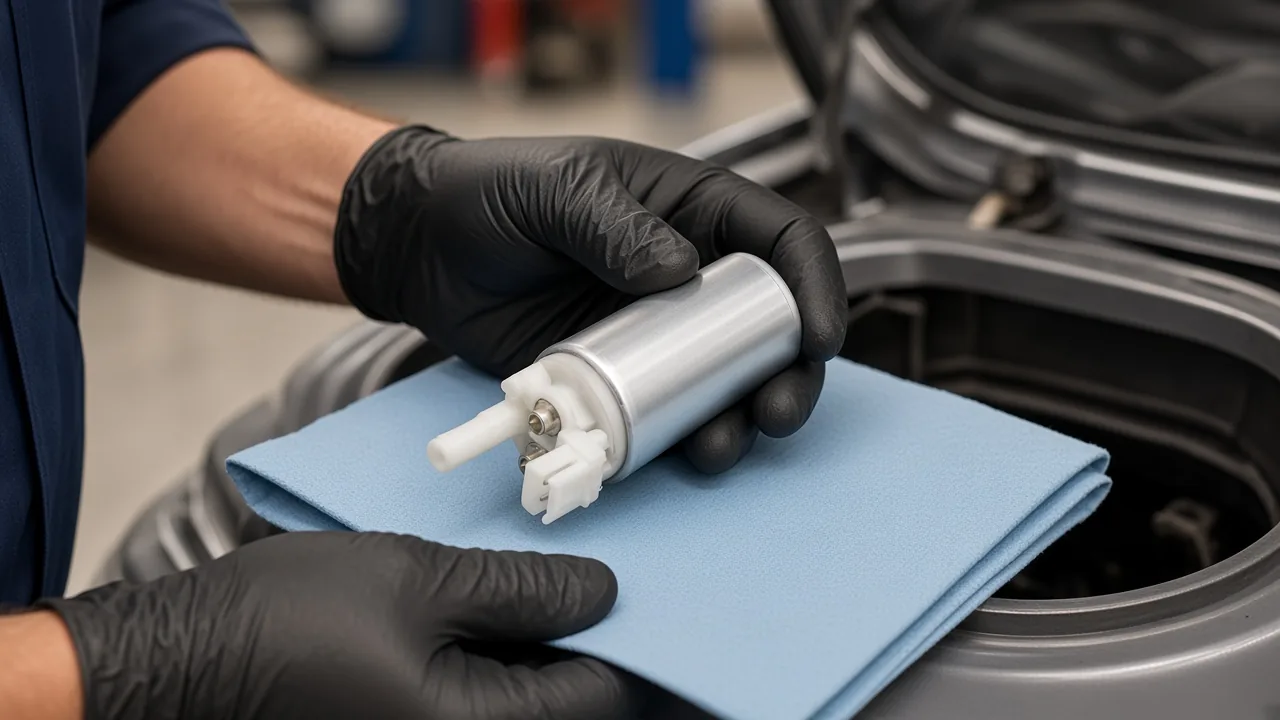
Inspect the old pump and the sock before you close the tank. If the sock is caked, the tank needs cleaning or the next pump inherits the same grit.
Install mistakes add a second comeback. A twisted cover, a torn seal, or a connector that stays loose lets fuel leak or pins arc.
Contact between a steel clamp and an aluminum body can pit the housing. Those handling faults can kill a sound pump.
Community truck owners say the same thing in plainer words: contamination that gets through the sock is how an early electric pump dies, and a poor ground can mimic that death. Listen to the worry. Then clean the tank and test the circuit so the worry does not become the invoice.
How to Choose a Pump After the Cause Is Known
Choose an electric kit only after the inducer is fixed and the application matches the published list. A clean tank and a solid voltage reading come first. The pump is the part you buy when those checks still point at the motor.
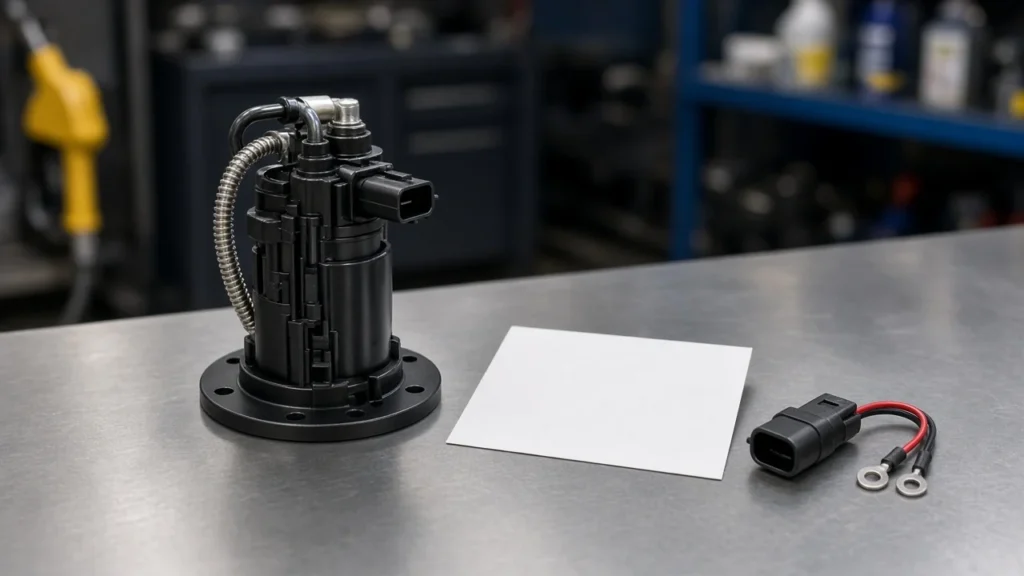
The published electric fuel pump with installation kit (product 2551) is an electric gasoline pump with accessories included and a 2-pin main connector. The product page lists working voltage as DC 12 V and flow as 43.3-49.5 GPH, and the title scopes it to 1987–1995 C/K 1500/2500/3500 interchange numbers such as 25168719 and E3902.
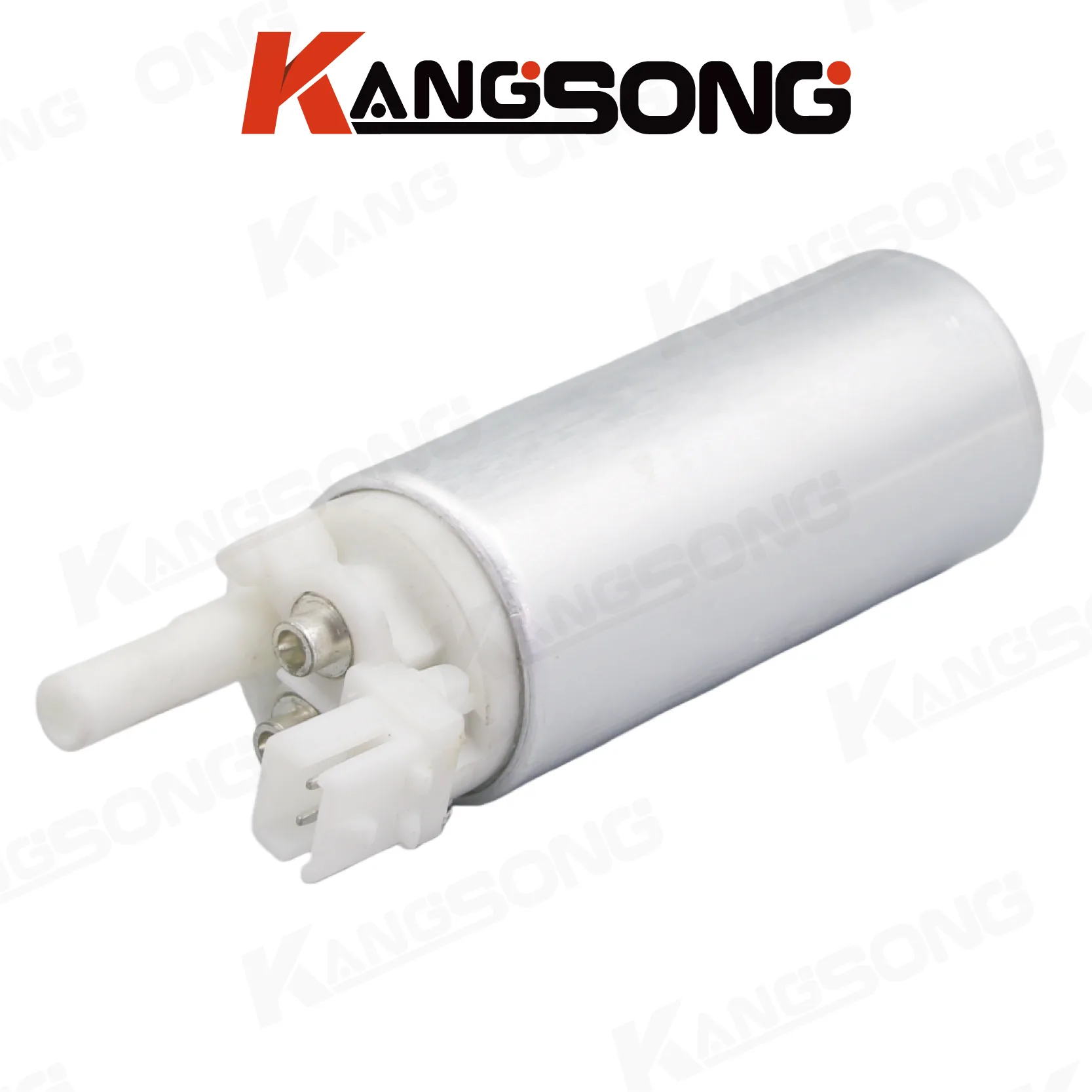
Use that kit when the truck on the hoist matches that list and the sock, filter, and connector have already been dealt with. Leave it on the shelf when the job is an unlisted vehicle, a diesel high-pressure pump, or a circuit that still drops voltage.
The catalog root at products is where you match a different OE string. One kit does not cover every car.
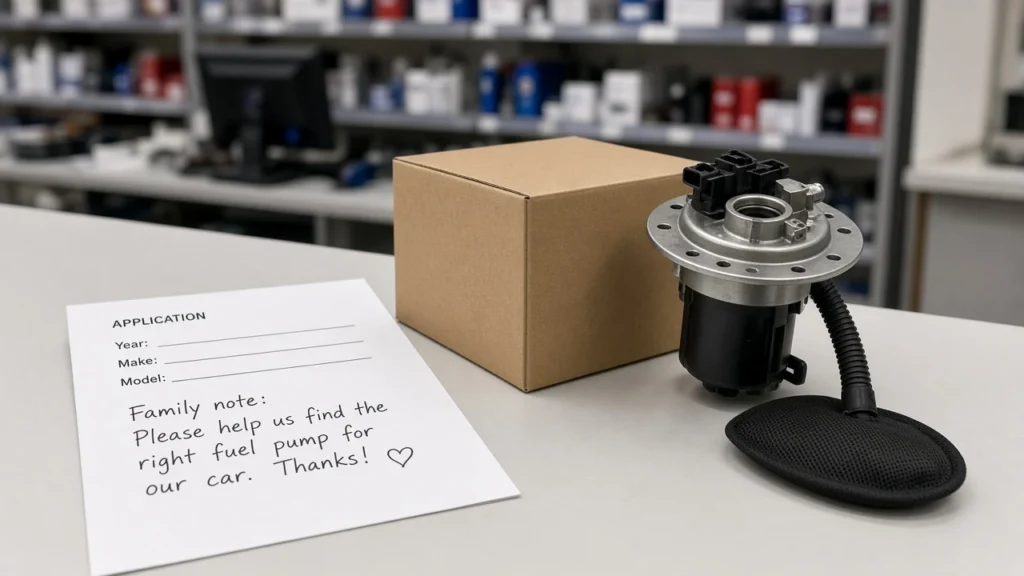
A fuel pump module is the hanger, sender, and pump sold as one assembly on many cars. When the complaint is the whole hanger, read what causes a fuel pump module to go bad instead of treating those inducers as the whole repair.
FAQ
How much will it cost to fix a fuel pump?
Labor and tank access usually move the bill more than the pump alone. A sedan with a hatch under the seat is a different job from a truck that needs the tank lowered. Price the sock, filter, and any corroded connector in the same visit, or the second trip costs more than the first quote.
Can you still drive if your fuel pump is bad?
You can until it stalls you in traffic. A pump that already hesitates under load or dies when hot belongs on a tow truck.
Highway traffic is the wrong place to test it. If the engine cranks normally but will not fire, and the rest of the electrics stay bright, suspect fuel delivery and stop using it as a daily.
How does a car act when a fuel pump is going out?
Hard starts, a whine from the tank, and a stumble under throttle are the usual hints. Those signs also come from a plugged filter or a weak relay, so treat them as a prompt to test, not as a verdict. The symptom write-up is on bad fuel pump symptoms and in-tank fuel pump symptoms.
How long does a fuel pump typically last?
Parts counters often quote 100,000 to 200,000 miles as an average life for a pump that stays cool and clean. That range is a retailer average.
It is not warranty language. A rusty tank or a car that lives below a quarter tank can end the pump much sooner.
What causes car fuel pump to fail while driving?
Heat, a starved inlet, and a voltage drop that only shows up under load are the usual on-road triggers. Debris that jams the rotor can also kill power in one moment, with no long warning. A stall with a bright dash and a strong starter points at fuel delivery rather than a dead battery.
Can electric fuel pump problems be a relay instead of the pump?
Yes. A relay, fuse, or ground fault can silence a pump that still runs when you feed it directly.
Test loaded voltage at the connector before you drop the tank. If power and ground are solid and the pump still will not move fuel, then the motor or a jammed inlet is the remaining suspect.
References
- What Causes Fuel Pump Failure and How to Prevent It — Rick Muscoplat, Ricks Free Auto Repair Advice.
- Nissan Campaign Bulletin R21B8, fuel pump voluntary safety recall — Nissan North America, filed with NHTSA.
- Voltage goes down on fuel pump when I crank it — r/MechanicAdvice.