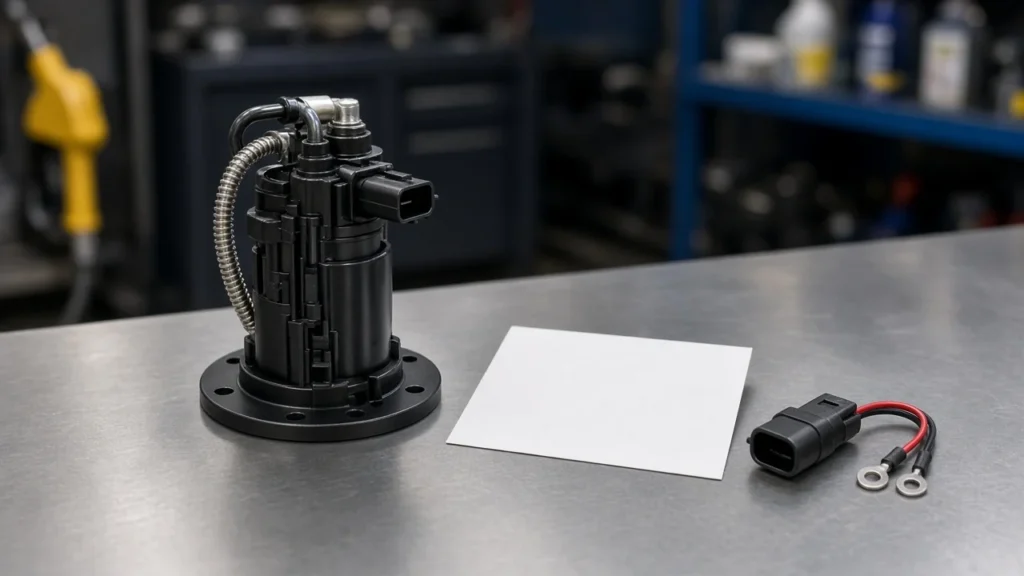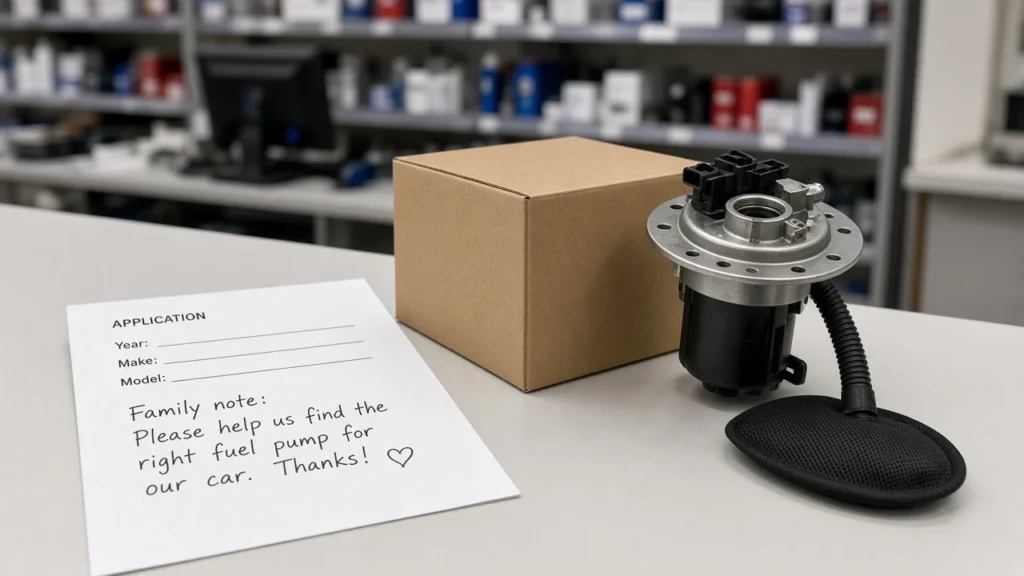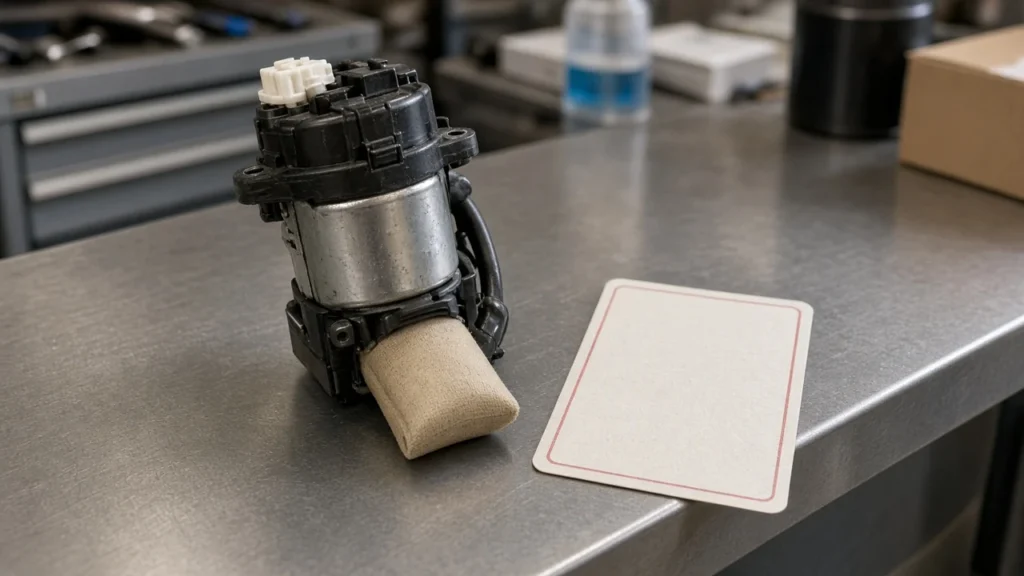

in tank fuel pump symptoms on EFI vehicles usually start with whine or buzz from the tank, hard starting, stall under load, and trouble after a hot soak—often worse when the fuel level is low. Fleet maintainers and parts buyers use this guide to match those patterns, separate filter and relay mimics, and confirm failure with a key-on prime listen test and rail pressure reading before approving an RMA.
What Electric In-Tank Fuel Pumps Do and Why Symptoms Shift With Tank Level
Electric in-tank fuel pumps sit submerged in gasoline, using fuel for cooling and lubrication while they push volume to the rail at pressures your injection system expects. When the tank runs low, the pump can ingest more vapor, run hotter, and lose inlet supply—so the same worn module may stumble only below roughly quarter tank.
That low-fuel pattern is one of the clearest in tank fuel pump symptoms field teams report on delivery vans and light-duty fleet units. A full tank can mask marginal volume until the pickup starves on a long grade or after repeated short trips that never refill the tank.
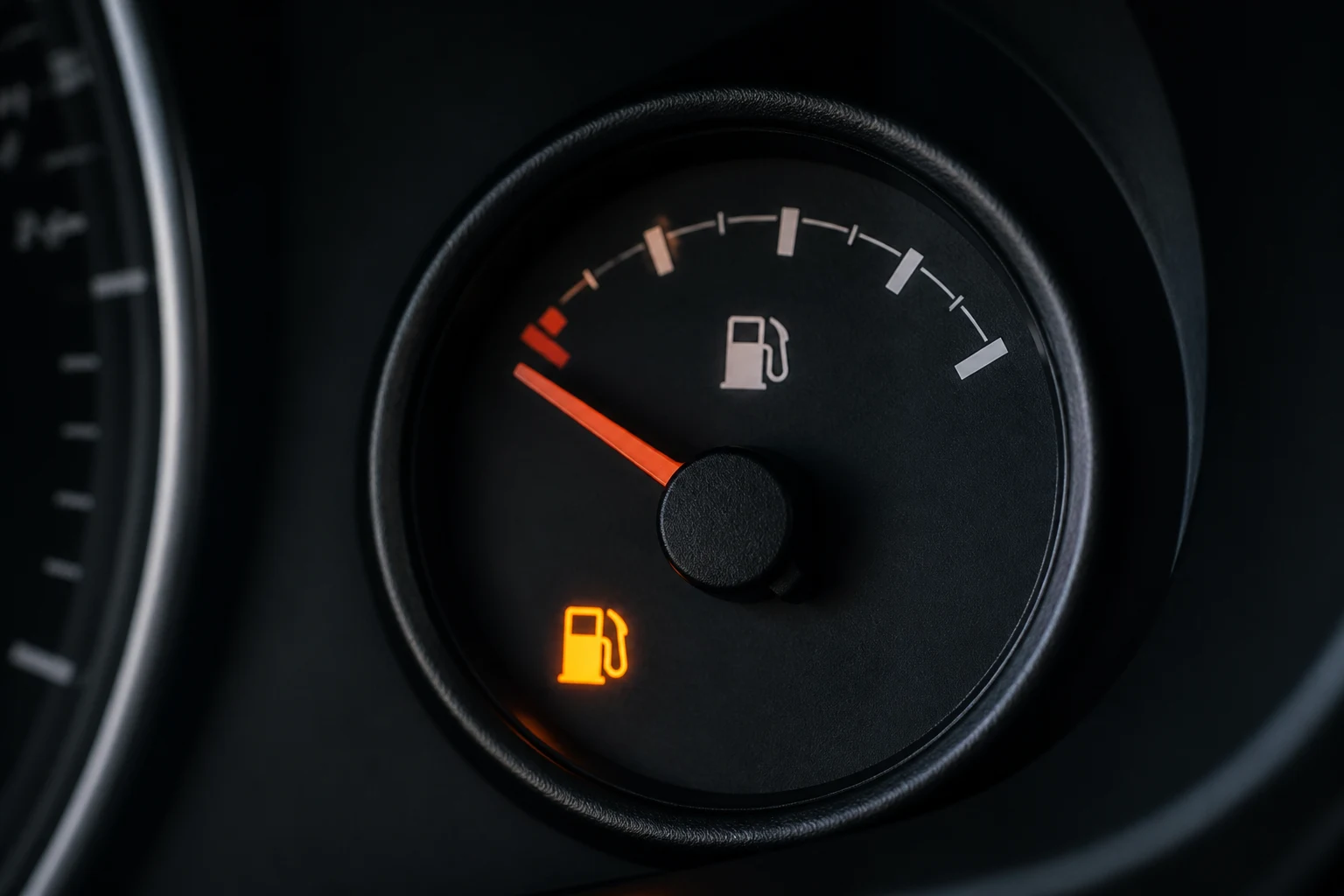
Important: Community shop reports repeatedly show vehicles that run fine above half tank but hesitate below a quarter tank until rail pressure under load is logged—do not treat low-fuel stumble as “normal” without a pressure check.
For pump-type context across mechanical and electric programs, see what is a fuel pump.
Whine, Buzz, and Other Audible Signs of a Failing In-Tank Pump
Whine or buzz from the tank area often means the in-tank motor or impeller is working harder against wear, restriction, or low supply. Fuel pump whine from tank locations is audible at idle or just after key-on when the module primes.
The noise may change with engine speed because demand rises even though the pump is inside the tank. Whine with strong rail pressure points more toward restriction upstream or aeration; whine plus weak acceleration usually tracks internal wear.
Compare audible clues with volume tests in our weak fuel pump symptoms review when pressure data is already on the work order.
Hard Start, Stall Under Load, and Hot-Soak Restart Patterns
Hard start, hesitation when you demand power, and stall under load or acceleration are classic bad in tank fuel pump symptoms when the module cannot maintain rail volume as injectors open wider. The engine may crank normally yet fail to catch, or it may run until you climb a grade or merge into traffic.
Hot-soak restart failure adds another layer: after a short stop on a hot day, heat soaks the in-tank module and fuel around the pickup. The car starts cold in the morning but will not restart after lunch until it cools—or until you add fuel that improves cooling and inlet supply.
Cross-read broader field patterns in bad fuel pump symptoms when multiple units in a fleet show staggered failures.
How to Tell Pump Failure From Filter, Relay, or Regulator Issues
An in tank fuel pump not working is not the only explanation for no-start or weak acceleration. A clogged fuel filter / sock screen at the pump inlet can choke volume while the motor still whines. A failed fuel pump relay, blown fuse, or corroded ground can leave the pump silent even when the module is healthy.
The fuel pressure regulator maintains rail setpoint downstream; a stuck or leaking regulator can show low rail pressure that looks like pump failure until you confirm volume at the pump outlet side of the filter.
| Symptom pattern | More likely pump module | More likely filter / sock | More likely relay / wiring | More likely regulator |
|---|---|---|---|---|
| Whine + weak acceleration under load | Yes | Possible if whine is loud | Uncommon | Possible |
| Silent prime (no hum on key-on) | Possible dead motor | Uncommon | Yes—investigate first | No |
| Good idle, fails only at WOT | Yes—volume collapse | Yes—restriction | Possible voltage sag | Yes |
| Rough run clears after filter change | Unlikely alone | Yes | No | No |
| Pressure high, poor running | Uncommon | No | No | Yes—return fault |
Mechanical vacuum pumps on older carbureted platforms follow different rules; see how to test a vacuum fuel pump when the fleet still runs non-EFI units.

Key-On Prime Listen Test and Fuel Rail Pressure Confirmation
Confirm the brief prime cycle and rail pressure before you condemn the in-tank module.
Turn the ignition to key-on without starting and listen near the tank for a brief prime hum when the relay energizes the module. Work in a ventilated area and control ignition sources whenever fuel lines are opened for gauge installation. No hum after confirming fuse and relay operation suggests an electrical path fault or a seized pump.
Install a fuel pressure gauge on the rail test port (or use a scan tool that reads live fuel pressure when supported). Compare static key-on pressure and running pressure to the OEM spec for that engine family. Pressure that falls sharply under load while voltage at the pump connector stays near 12 V key-on points to internal pump wear.
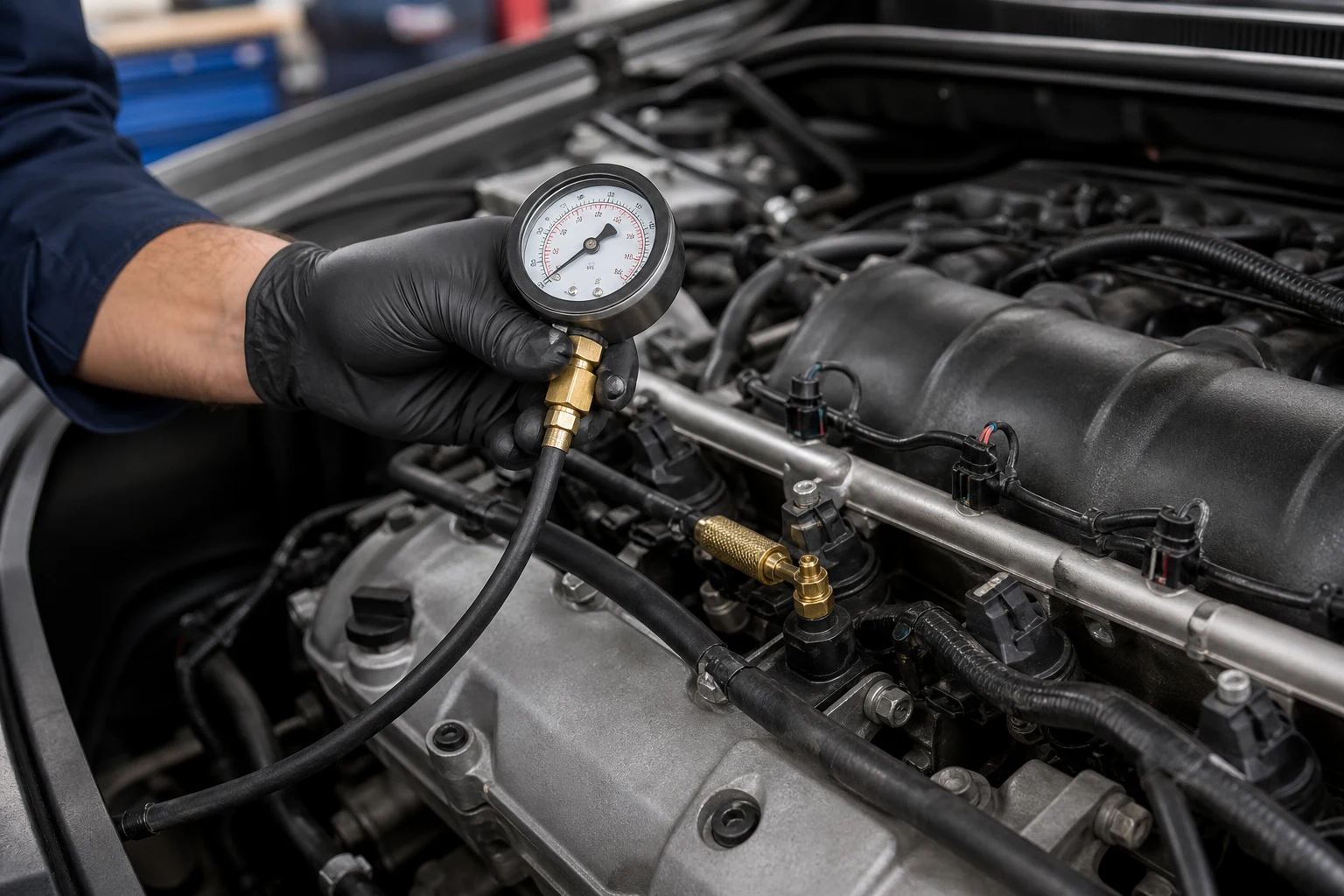
Use the table below to interpret listen and pressure results together.
| Test step | What you should observe | If it fails |
|---|---|---|
| Key-on listen (prime) | Brief hum roughly 1-3 seconds | Check relay, fuse, inertia switch, wiring |
| Key-on rail pressure | Rises toward spec within prime window | Listen test + electrical checks |
| Cranking pressure | Holds within spec band | Pump volume or inlet restriction |
| Loaded snap throttle | Pressure stays within spec | Pump wear, sock clog, or regulator fault |
| Voltage at pump connector | Near 12 V key-on; investigate below about 10 V under load | Repair circuit before RMA |
Log the numbers on the repair order. Whine alone is not enough to condemn a module when pressure meets spec under the same conditions that produce the customer complaint.
When to Replace: Fleet and Parts-Buyer Documentation Before RMA
Replace the in-tank module when documented rail pressure stays below OEM spec after filter, relay, wiring, and regulator checks—and when the key-on prime test shows the pump runs but cannot hold volume under load. Every fleet maintainer / parts buyer should pair each RMA with symptom notes (whine, low-tank pattern, hot-soak), gauge readings, and filter condition photos when your program requires them.
Tip: Shop forums stress writing gauge readings on the repair order instead of guessing—fleet credits move faster when rail psi and prime-listen results travel with the core (GarageJournal discussion).
Plan filter replacement whenever the sock or inline element shows restriction; many programs treat filter service as mandatory whenever the tank module is dropped. Distributors reduce warranty returns when test evidence shows pressure failure rather than relay or ground repair.
Recommended In-Tank Fuel Pump Assemblies for Distributor Programs
When rail pressure tests confirm pump failure on an EFI platform, browse electric in-tank fuel pump assemblies for distributor programs. The Kangsong electric fuel pump assembly catalog covers importer and wholesale channels—match OE references, tank depth, and connector style per SKU rather than quoting a generic module number from memory.
Example Hyundai/Kia Sonata/Optima assemblies are scoped on their own product pages and do not prove fitment on other nameplates.

Confirm wiring health and filter status on the same work order before you stock assemblies for recurring fleet patterns.
FAQ
What are the most common in-tank fuel pump symptoms?
Whine or buzz from the tank, hard starting, loss of power under acceleration, sputter at highway speed, hot-soak no-start, and patterns that worsen when the tank is low are the most common signs on EFI vehicles.
What does fuel pump whine from the tank mean?
It usually means the submerged pump motor or impeller is under stress—from internal wear, inlet restriction, or low fuel level—not simply “normal” noise. Pair whine with a rail pressure test before you order parts.
Why do in-tank fuel pump symptoms get worse when the tank is low?
Low fuel reduces cooling and lubrication around the pump and can increase vapor at the pickup. A marginal module may deliver enough volume when submerged deep but starve when the level drops.
How do bad in-tank fuel pump symptoms differ from a clogged filter?
Both can cause weak acceleration. A clogged filter often improves immediately after replacement while pressure at idle looked deceptively normal. Pump wear more often shows whine plus pressure drop under load even after a new filter.
Can a fuel pump relay cause the same symptoms as a failing in-tank pump?
Yes. A failed relay or blown fuse can prevent the brief key-on prime cycle, producing a silent tank and no-start that mimics a dead pump until you test relay output and connector voltage.
How do you confirm an in-tank fuel pump is not working before replacement?
Run the key-on listen test, measure voltage at the pump connector, then compare rail pressure to OEM spec at key-on, idle, and loaded throttle. Condemn the module only when electrical supply is good and pressure still fails.
Should you replace the fuel filter when replacing an in-tank pump?
Yes—most shop programs replace the inline filter and inspect the sock whenever the tank module is replaced, because restriction contributed to many field failures and would shorten the new unit.
When should a fleet buyer approve an in-tank pump RMA?
Approve when the shop log shows rail pressure below spec under the complaint condition, filter and relay faults are ruled out, and symptom notes (whine, low-tank, hot-soak) match pump delivery failure—not when only a trouble code or whine is recorded without pressure data.
References
- Fuel pump types and electric in-tank operation — Wikipedia
- Gasoline standards and safe fuel-system handling — EPA
- Shop discussion on recording pressure instead of guessing — GarageJournal community forum