A fuel pump module goes bad when rust or debris fills the basket, the strainer chokes the pump, a connector overheats, or the sender stops reporting level. That is the direct answer to what causes a fuel pump module to go bad. The fuel pump module failure causes below are separate repairs, and a frame-mounted driver is a different part.
What a fuel pump module actually contains
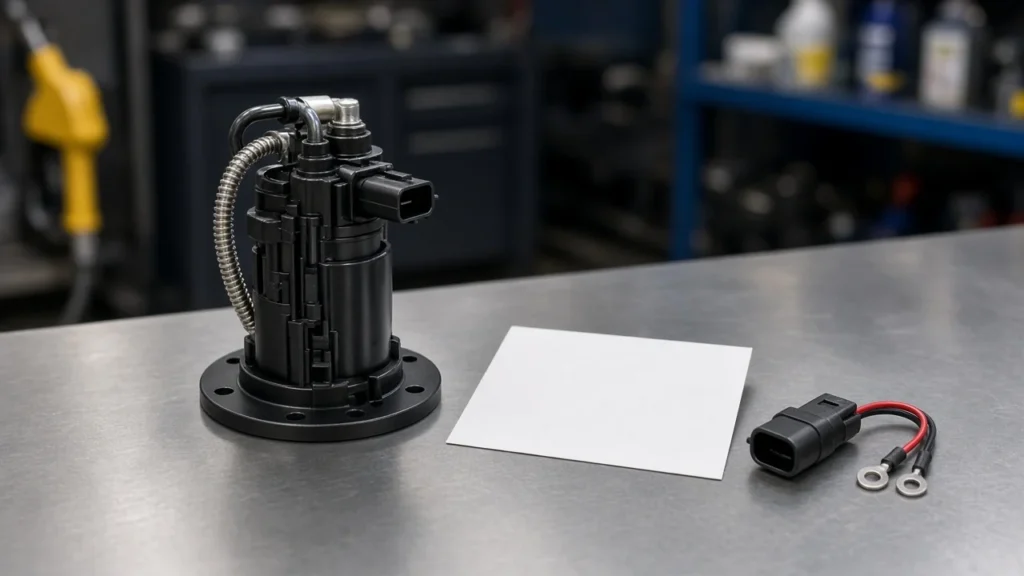
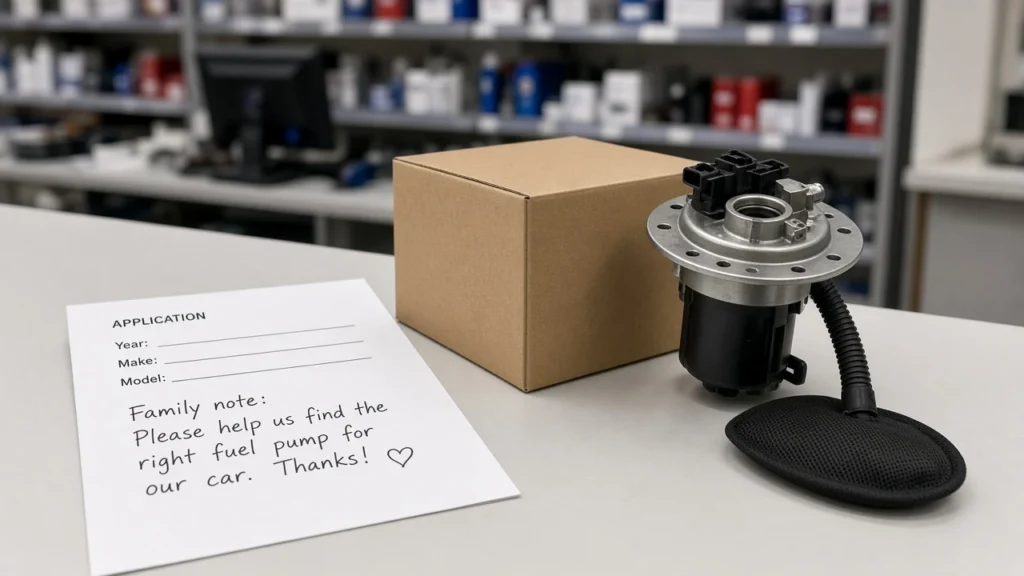
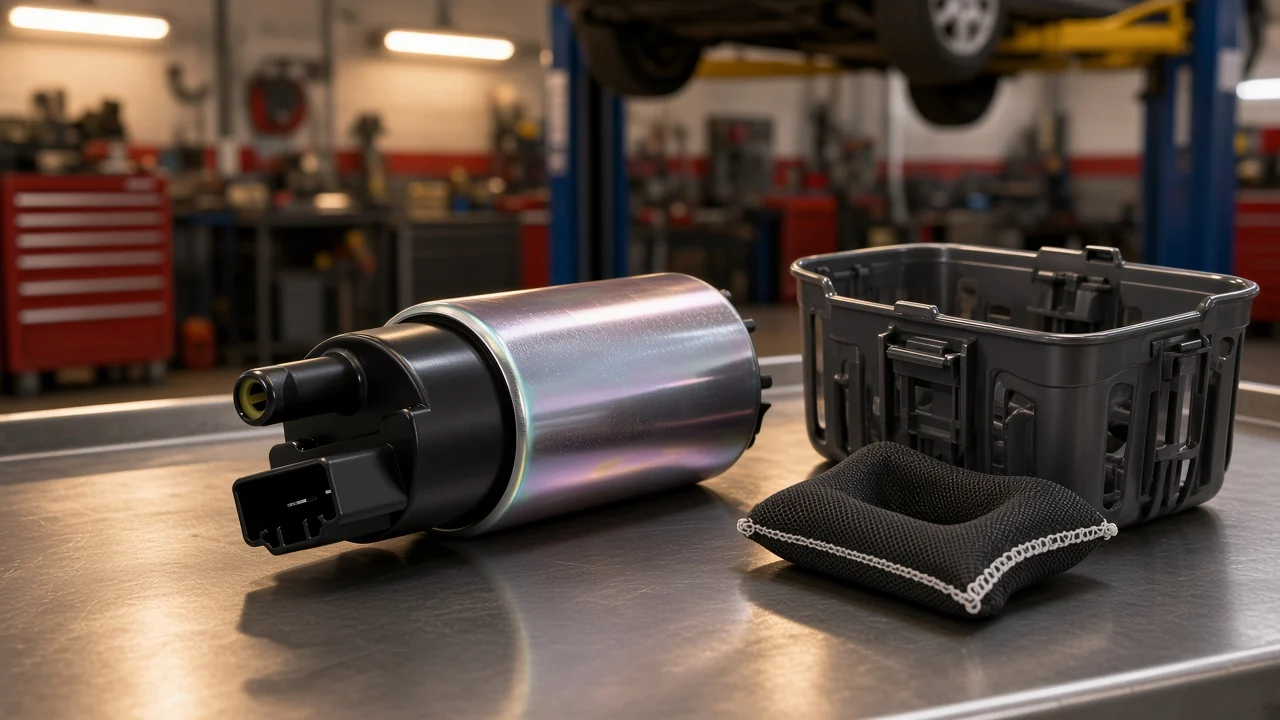
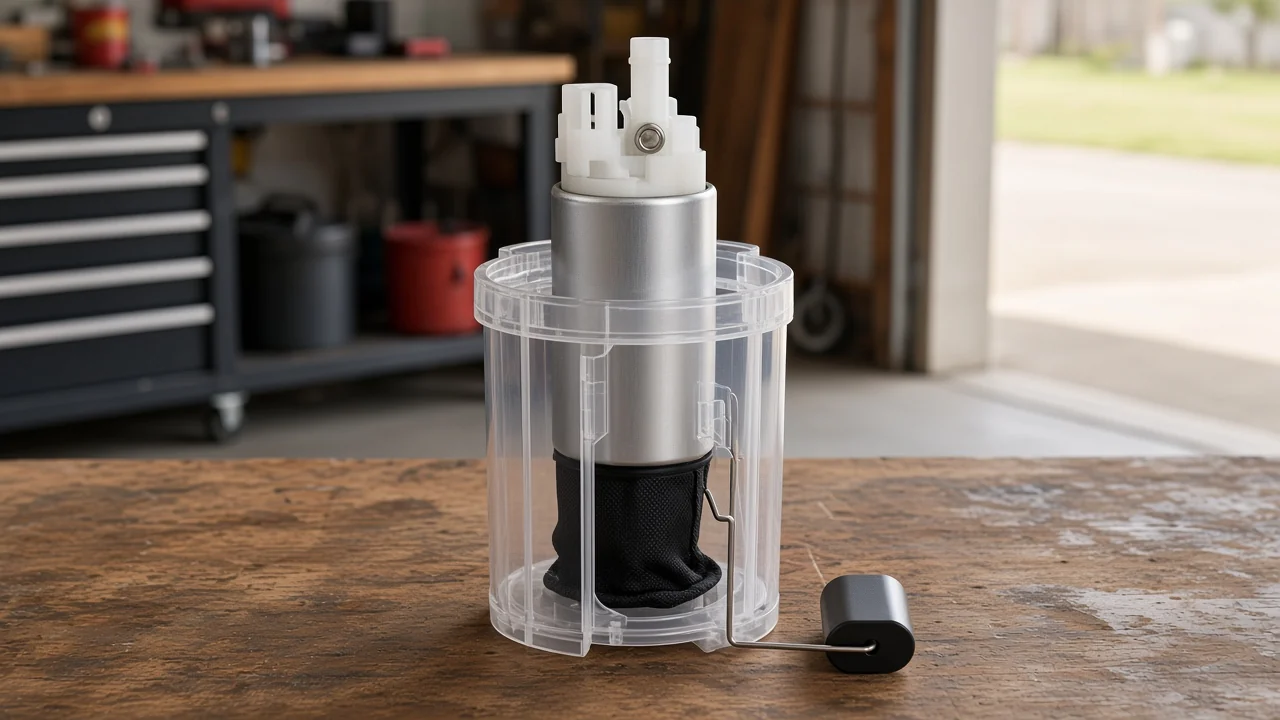
The hanging unit in the tank is the fuel pump module: pump, strainer, basket, sender, and wiring together. A pressure test that only watches the rail can miss which of those pieces failed. Service descriptions of this hanging assembly also include a reservoir around the pump and a small jet that keeps that reservoir filled during a low-fuel turn.
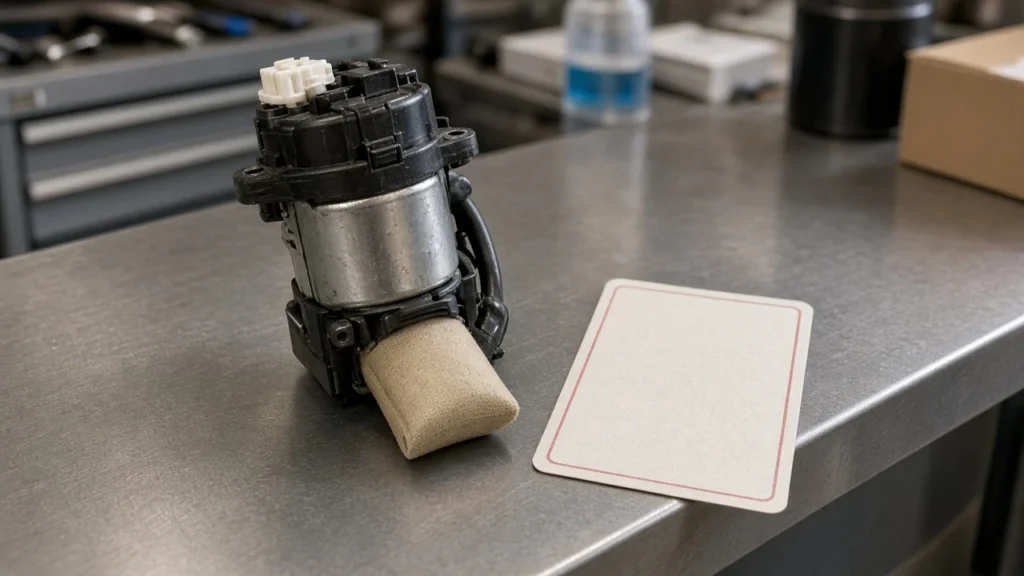
Look at the pieces in order. The electric pump is the motor and pumping element. The fuel strainer, often called a sock, sits on the inlet.
The module basket is the cup that holds a local supply so the inlet stays covered on a hill or in a turn.
The fuel sender is the level circuit, usually a float and a resistive card, and it shares the hanger with the pump even when its fault is unrelated. Power and the level signal both cross the fuel pump connector on the tank and any short harness inside the unit.
People also use the word module for an electronic driver bolted to a frame rail. That part switches power to the pump. Fuel never touches that driver, and the driver has no float.
If the job is a no-start on a truck with a splash-mounted driver, start there before you drop the tank. This page stays on the hanging unit. A separate note on what sits in a fuel pump assembly covers the broader assembly name when the catalog splits the hanger from the motor.
How contamination reaches the basket
Rust and grit reach the basket from the tank or from a return line, and once they are in the cup they stay there. A technician bulletin on in-tank electric pumps ranks contaminated fuel as the first cause of those pump failures and electrical connections as the second reason a pump is replaced. That order belongs to the bulletin’s in-tank electric pumps.
This ranking stops short of counting every module sold, and it says nothing about rail pumps.
Moisture in a steel tank makes rust. The pump then drinks that rust. A missing filler cap, a cap that no longer seals, or years of station dirt add grit the sock was never sized to hold forever.
Plastic tanks rust less on the inside, but leftover pump debris, a lost cap, and dirt around the hanger opening still land in the cup when the unit comes out for service.
A published teardown found rust packed into the bucket and the internal strainer while the external sock was only discolored, because a rusted return fuel line dumped into the bucket. The tank itself did not hold the main pile of rust. The return path put the flakes straight into the cup, downstream of the tank filter, so a clean-looking tank did not clear the next module.
Two units failed in less than a week on that vehicle until the line was treated as the source.
| What you find | Likely path in | What still has to be fixed |
|---|---|---|
| Brown grit in the sock and the cup | Tank rust, lost cap, or old fuel put back in | Clean or replace the tank; do not reuse the drained fuel |
| Rust mainly inside the cup, light stain on the outer sock | Return fuel line feeding the cup | Repair the return line, then fit the new unit |
| Sand or torn sock, pump quiet with current flowing | Missing sock or a loose baffle hitting the inlet | Secure the baffle and fit a new sock before the next pump |
| White grainy sediment on the filter | Some additives attacking a plastic baffle | Inspect the tank baffles, not only the pump motor |
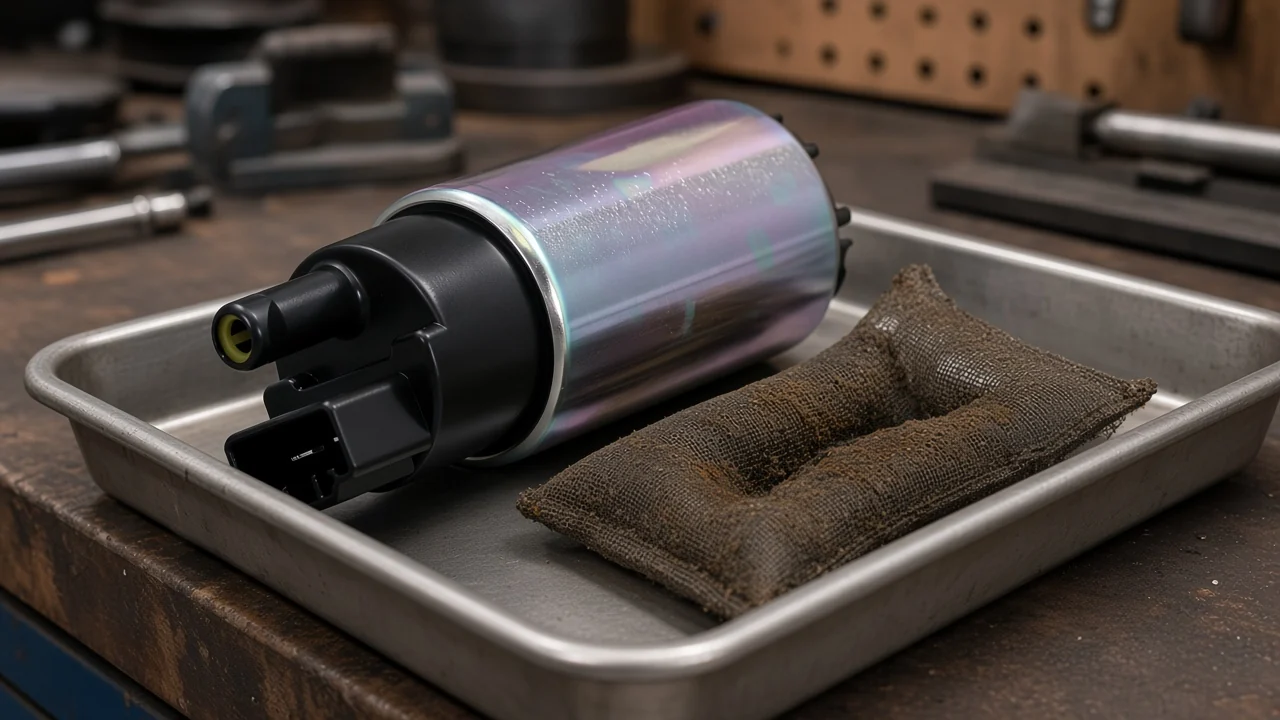
Putting the same fuel back after a pump swap puts the grit back with it. If the drained fuel is dirty, dispose of it and start with fresh fuel. That step is cheap next to a second tank-drop.
Why a clogged strainer ruins the pump
A choked or missing fuel strainer makes the pump work harder and run hotter, and fine grit still gets past a normal sock. That bulletin says a strainer will not stop particles smaller than 70 microns on average. The same bulletin puts in-line filters at about 30 microns and injector screens as small as 10 microns.
Treat the sock as a balance between flow and protection. It is only a coarse inlet screen. A finer sock large enough to catch everything would not fit the tank.
| Screen | About what it is built to catch | What that means on a failed module |
|---|---|---|
| Inlet sock / fuel strainer | Particles larger than about 70 microns, on average | A discolored sock still lets finer rust through; a packed sock starves the pump |
| In-line filter | About 30 microns | A clogged in-line filter raises the work the pump must do |
| Injector screen | As small as 10 microns | Downstream screens do not protect the pump from tank grit |
When the sock is packed, flow falls. On many returnless systems the controller then raises duty cycle to chase rail pressure, and the pump runs hotter. When the sock is missing or torn, sand and sock fragments go straight into the pumping element.
Current can still flow while the mechanical side is jammed, which is why a noisy or silent pump with power present still needs the tank opened.
Rust or debris on the pickup screen means the tank should be cleaned or replaced before a new pump goes in, and the in-tank pickup screen should be replaced with the pump. A restriction at the sock, the in-line filter, or the feed line can hold pressure down even when the motor is not fully dead. Pressure specs still follow the vehicle, so a generic number from another engine is the wrong pass mark.
A mechanic replaced only the pump after finding the strainer destroyed, left the new pump without a sock, and the same hot-crank symptom returned in two weeks. The owner of that 2001 Camry described pieces of the old sock loose in the tank and asked whether that debris could kill the unprotected inlet. The thread is here: strainer left out after a pump-only repair.
Two weeks is short, and it matches a missing sock better than a story about a motor that simply wore out again.
How a hot connector mimics a dead pump
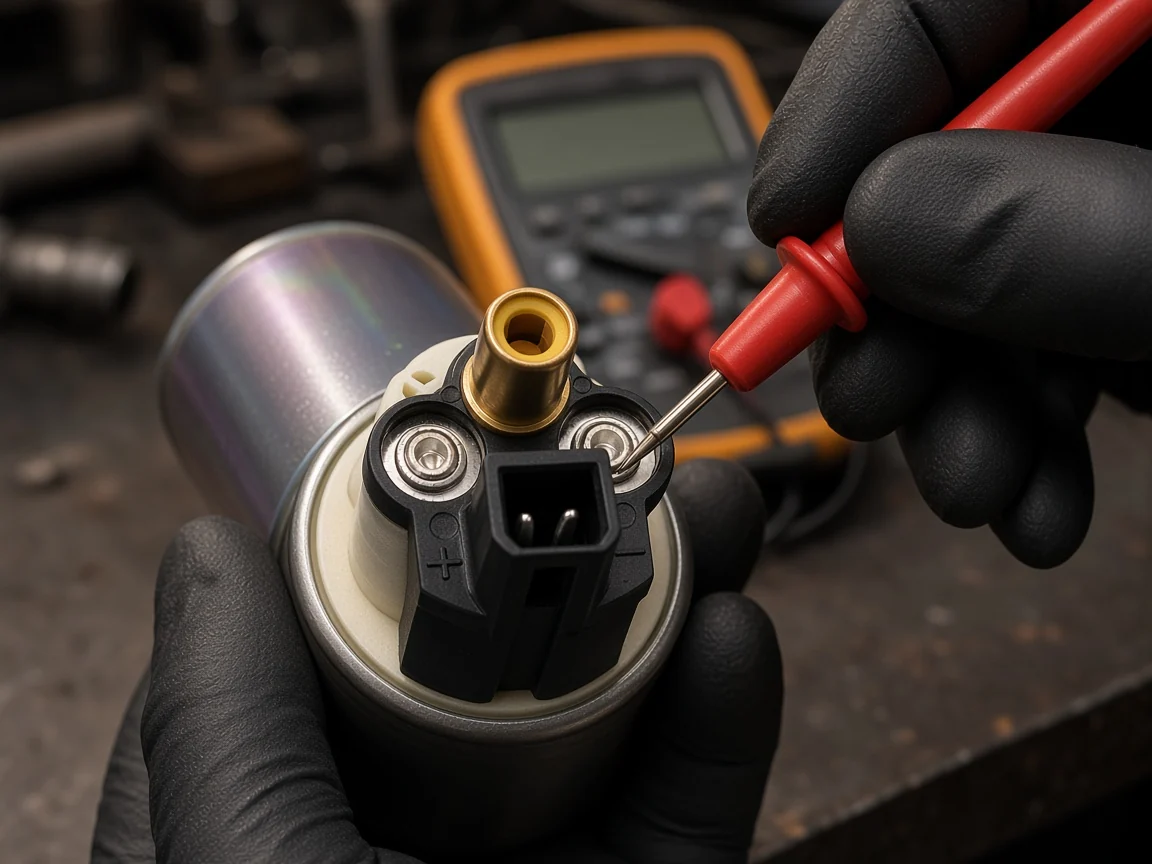
A high-resistance fuel pump connector drops voltage and cooks the terminals, so the pump looks dead while the motor can still move fuel. Those pumps are designed to run at 13.5 volts, and a voltage drop of more than 0.2 volts will affect operation. That threshold comes from the same in-tank electric-pump bulletin, measured with the pump running, not from an unpowered ohm check.
A pump getting 13.5 volts can fall to 11 volts when the connector at the tank module is corroded. The lower voltage cuts speed, pressure, and flow enough to stall under load or lengthen the crank. Low voltage or high resistance on the ground can keep the pump from spinning fast enough to build normal pressure.
An ohmmeter uses almost no current, so a film that looks fine on ohms can still collapse under pump current. Load the circuit and read the loss from the relay output to the pump feed, and from the pump ground back to battery negative.
In one summer repeat failure the measured loss was 1.1 volts in total, with 0.6 volts on the feed side and 0.5 volts on the ground side. Both times the pump had been replaced. The fix was a new connector pigtail and a cleaned ground ring, rather than another motor.
Read the numbers in an under-load voltage drop test at the tank module. Treat the split as that case, then use the service data for the vehicle in front of you.
From the field: An Impala SS owner pulled the sending unit and wrote that the top of the fuel pump, where the connection terminals are, was burnt, and that the ground wire and the fuel-level sense wire had melted together — source: Impala SS forum. A reply said the rest of the sending unit pointed to excess resistance in the wiring and terminals, more than a pump simply drawing too many amps. Other owners on the same thread had seen burnt in-tank wires with the pump motor still usable.
See burnt in-tank pump wiring on a sending unit. An owner pulled a sending unit and found the pump-top terminals burnt, with the ground wire and the fuel-level sense wire melted together.
That is a harness fault sharing the hanger, not automatic proof the pumping element is scrap. Black soot, melted plastic, or eroded pins on the vehicle side mean the plug has to be replaced with the unit.
Leaving it there repeats the heat in the next pump.
The same teardown series described three modules in five weeks, each with a burnt ground terminal, until the vehicle connector was replaced. Hitting the tank sometimes made the car run, which felt like a tired pump. The ground path was the part that never got changed.
Road brine on the tank lid, a green pin, or a connector that has lost spring tension belongs in that same check before the new hanger goes in.
When the sender fails and the pump still runs
A fuel sender unit failure can kill the gauge, or make it lie, while the pump still feeds the engine. The float arm, the card, and the level wire share the hanger, so a single “module” complaint often mixes two faults. Compare the gauge with a known fill, or with how far the vehicle actually drives, before you condemn the motor.
Corrosion on the card, a fuel-logged float, a cracked arm, or a melted level wire all move the needle without stopping fuel pressure. On the Impala thread the level-sense wire had melted into the ground wire at the burnt pump top. A reply also warned that a lying sender can make a quarter-tank reading hide a much lower true level, so the pump sees a low tank more often than the driver thinks.
That is a user argument on one car line. An empty-tank law for every vehicle would overread that thread.
Owners on that thread were also told the pump is cooled and lubricated by the fuel that flows through it, and that leaving tanks low over a wet winter showed up as spring warranty claims. Running low raises fuel temperature because there is less fuel in the system to soak heat. Low fuel alone fails to prove the hanger is scrap.
A hot stall that returns after a rest can still be a connector loss or a driver that drops out when warm.
If pressure is in spec and only the gauge is wrong, a sender card or a repaired level circuit can be the smaller repair, but the card has to match the hanger connector that is actually in the tank. A pump-only listing does not include that card.
How an in-tank module differs from a driver module
An in-tank fuel pump module lives in the fuel. A fuel pump control module, also called a driver module, usually lives on a frame rail or in a dry pocket and only switches the pump. Search results for this question often describe the frame-rail part, because splash, salt, and an aluminum housing against steel wreck that driver on some trucks.
That failure can copy a dead pump: long crank, stall, no-start after a hot soak. Basket rust and a moving float stay outside that failure.
Separate the two before you buy. A sudden stall on a wet day, with a driver mounted in the wheel splash, is a different job from a sock full of rust. A pump that whines for weeks and then dies is more like a motor or a strainer problem.
Codes for the pump circuit can come from the driver, the relay, the ground, or the pump itself, so the code alone does not name the part.
Keep the sister topics in their own pages. A pump-only failure ranking is not this hanger question. Rail-pump faults sit on the engine, not in the tank cup.
A diesel rail-pump symptom list is a symptom page for that high-pressure stage, not a cause map for the hanging unit.
How to choose a replacement after the cause is known
Choose the replacement that matches the failed element, and clean the path that killed the last one. If the sock is packed and the tank is dirty, a new hanger without a tank clean is a short repair. If the vehicle plug is burnt, replace that plug with the unit.
Leave the motor off the order when only the level circuit is wrong and pressure is good. Recheck pressure and the level reading after the repair, not only whether the engine starts once.
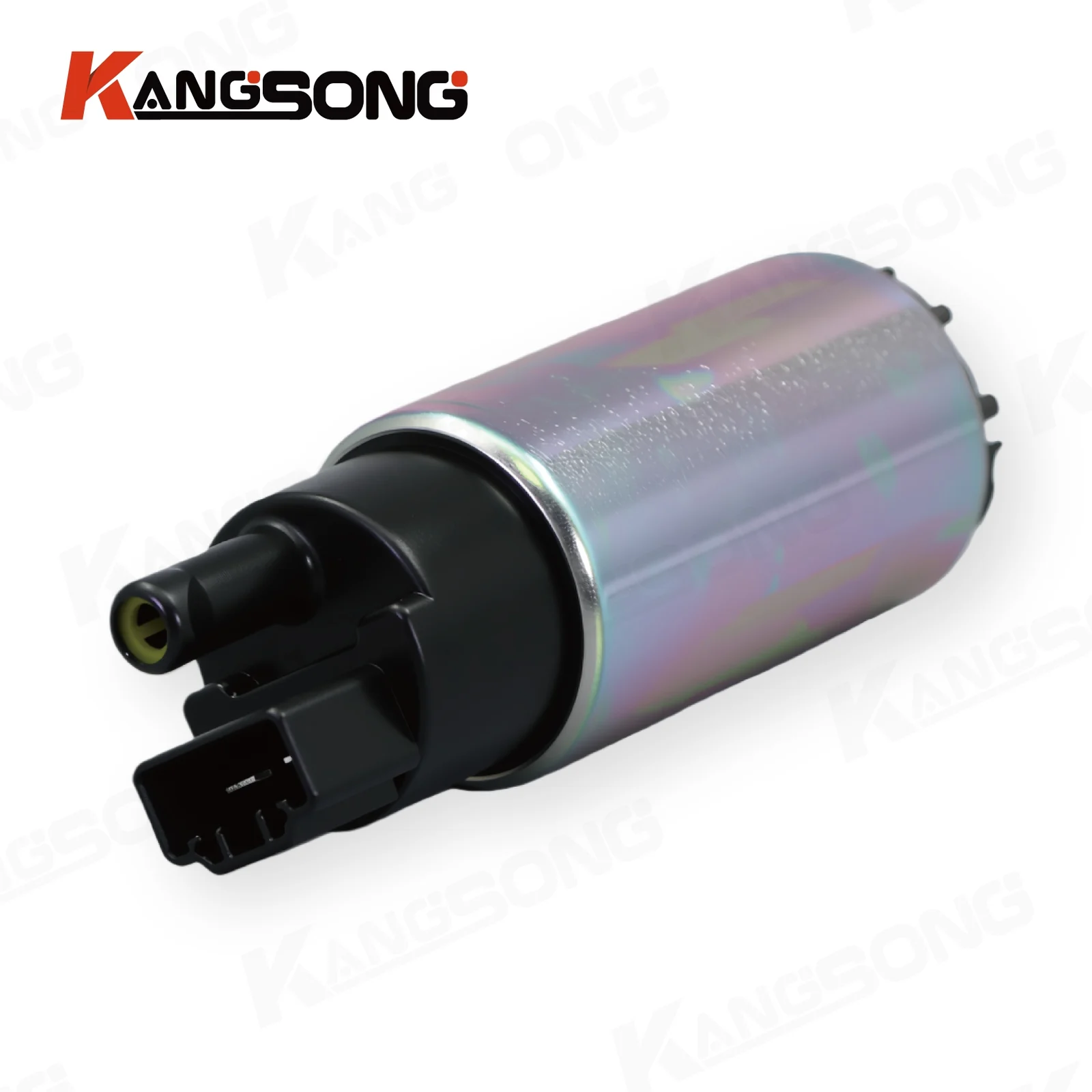
When the failed element is the electric pump, and the vehicle is in the published interchange, the matching part on this site is an electric fuel pump for the listed Accent and Sephia interchange. Product 2552 is an electric fuel pump for Accent I from 1994 to 2000 and Sephia from 1995 to 1997, with interchange numbers 31111-25000, 31111-09000, 31111-38050, and 31111-0M000. The listing is the pump.
That listing omits the sender card and the basket. A damaged float, a cracked cup, or a vehicle outside that interchange needs a different unit. It is also the wrong part for a frame-rail driver or a high-pressure rail pump.
Browse the rest of the fuel-pump range from the product category only after the failed element and the interchange are known. Fitment stays on the product title. Nothing here transfers that Accent and Sephia listing to another model, and nothing here states a pressure rating, a warranty term, or a brand equivalent.
FAQ
Can the gauge still move if the pump side of the module is dead?
Yes. The fuel sender and the pump share the hanger, but they are different circuits. A float can still sweep the card while the motor has no pressure, and a dead level wire can freeze the needle while the pump runs.
Compare a known fill, or real driving range, with the gauge before you name the failed piece.
Does a missing strainer kill a new pump in weeks?
It can. On the Camry thread, the sock was already destroyed, pieces were left in the tank, and no new sock was fitted. The same hot-crank complaint was back in two weeks.
Fine grit also passes a normal sock, so a new pump still needs a clean tank, not only a fresh screen.
Should the vehicle connector be replaced with the module?
Replace it when the pins are sooty, the plastic is melted, or the terminal tension is gone. A teardown series saw three modules fail in five weeks on an unrepaired ground plug. A summer repeat case needed a new pigtail and a cleaned ground, not another motor.
Is a frame-rail control module the same part?
No. A fuel pump control module switches the in-tank pump from outside the tank. Splash and salt can kill that driver and copy a no-start.
The hanging unit is the pump, sender, basket, strainer, and wiring in the fuel.
Can rust reach the basket if the tank looks clean?
Yes, when a return fuel line dumps into the cup. A teardown found the heavy rust in the bucket and on the internal strainer, with little rust on the outer sock and little rust in the tank. Fix that line or the next cup fills the same way.
When is a pump-only part the wrong buy?
When the sender, the basket, or the vehicle plug is the failed piece, or when the vehicle is outside the published interchange. The Accent and Sephia electric pump on this site is the motor for that listed range. A level card or a cracked cup needs a different buy.
Does running the tank low, by itself, prove the module is bad?
No. Low fuel raises fuel temperature because less fuel is there to soak heat, and owners on the Impala thread tied low winter tanks to spring pump claims. That history is worth asking about.
It still does not replace a pressure check, a loaded voltage reading, or a look at the sock.
References
- Anthony Calhoun, How to Do a Proper Voltage Drop Test, Apex Tech Nation, 13 April 2026.
- AA1Car, How to Diagnose Electronic Fuel Injection.
- Chevy Impala SS Forum, Fuel Pump internal wiring burnt?, March 2015.
- r/AskMechanics, 2001 Camry fuel pump replaced but mechanic skipped the strainer.