Diesel fuel pump failure causes on the low-pressure feed and on the injection pump usually start in the fuel and the lines: wet diesel, grit, a thin film, air, starvation, or a prime that never happened. In plain language, what causes diesel fuel pump failure is that chain, rather than a casting that simply got old.
Use the sibling pages for what a diesel fuel pump is, how a high-pressure diesel fuel pump works, the high-pressure failure mechanism, the symptom checklist, CP4 sourcing, or a generic pump-cause page. This page stays on the shared inducers and the supply-first checks.
What shared causes hit a diesel lift pump and an injection pump
Shared damage starts in wet, dirty, thin, aerated, or starved fuel, or a prime that never happened. A diesel fuel pump in buyer language is two machines.
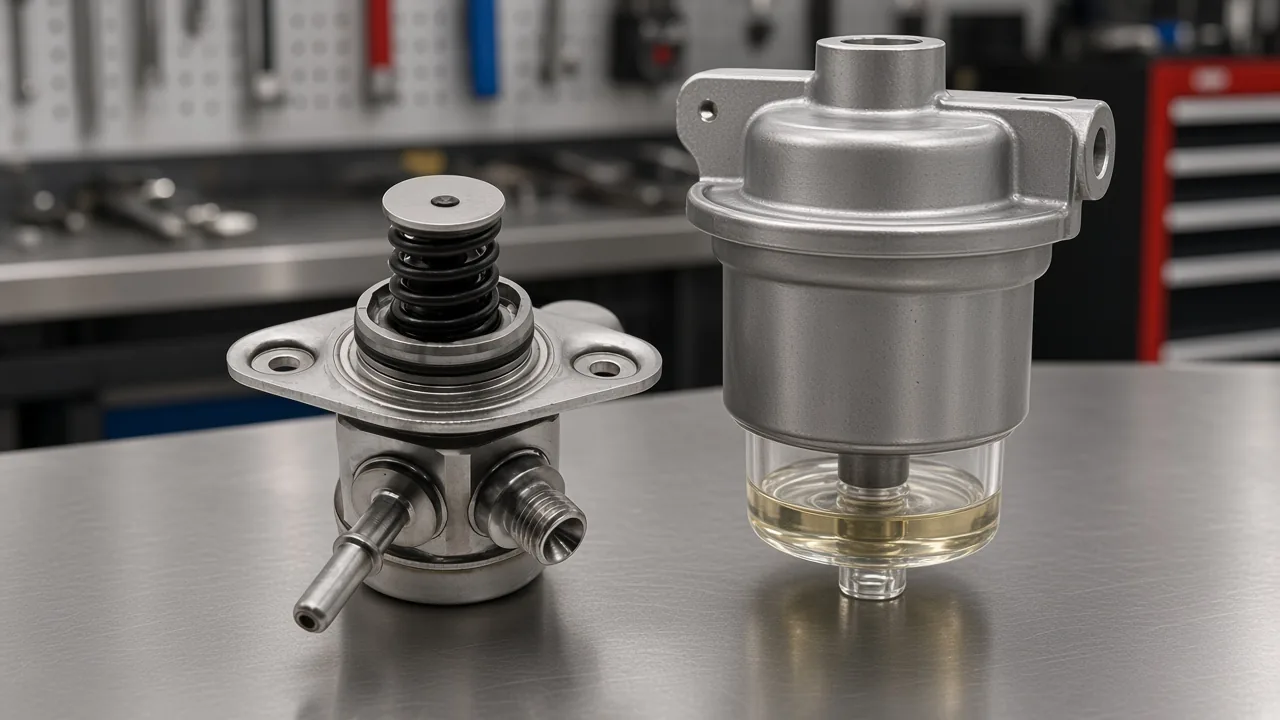
The lift pump or transfer pump moves fuel from the tank. The injection pump meters or pressurizes what arrives.
Shop pages often glue those jobs together and then rank “top causes.” Service notes and fuel specs do not support a worldwide rank. They do keep returning to the same families: contamination, water, poor lubricity, air, a restricted feed, and a careless install.
A gasoline electric pump can die from a relay or from heat when the tank is empty. A cam-driven injection pump does not have that motor. Treat electrical faults as a lift or assist-pump check, then return to fuel quality for the injection stage.
| Cause family | Where it shows first | Check before you price the injection pump |
|---|---|---|
| Water and sludge | Separator bowl, rusty ports, sour fuel smell | Drain the separator and look at the tank sample |
| Grit and rust | Early filter clog, scored elements | Cut the filter open before you order a pump |
| Thin film / wrong fluid | Polished or seized elements, metal in the bowl | Ask what was in the last tanks, including gasoline or DEF |
| Air and starvation | Stall under load, foam in clear line, noisy inlet | Filter, suction leaks, then lift-pump output |
| Bad prime or dirty install | Failure right after a filter or pump job | Bleed path and leftover debris in lines |
If bright metal is already in the filter, read the high-pressure failure note before you stock only a pump. That page owns the high-pressure mechanism. This one owns the feed that often starts the trouble.
How water, grit, and tank sludge damage the pump
Water strips the film and rusts metal; hard particles score the elements; sludge plugs the feed. Diesel is both the fluid being pumped and, on many systems, the lubricant for the moving parts. Free water is a poor lubricant and a rust starter.
Condensation in a half-empty tank, a leaking filler, rain at a bulk tank, and a separator that nobody drains are ordinary paths. Microbes then grow at the water line and leave a dark jelly that plugs strainers. A service job aid for a modern common-rail diesel also flags water as a host for acids and organic growth, and it flags alcohol additives that emulsify water so the separator cannot drop it out.
Grit does a different job. Dirt, rust scale, and metal fines act like lapping compound on plunger and barrel faces.
Older rotary pumps sometimes ran dirty longer. Tighter common-rail clearances do not. A failed high-pressure stage can also throw that metal downstream into lines and injectors, which is why a pump-only swap often comes back.
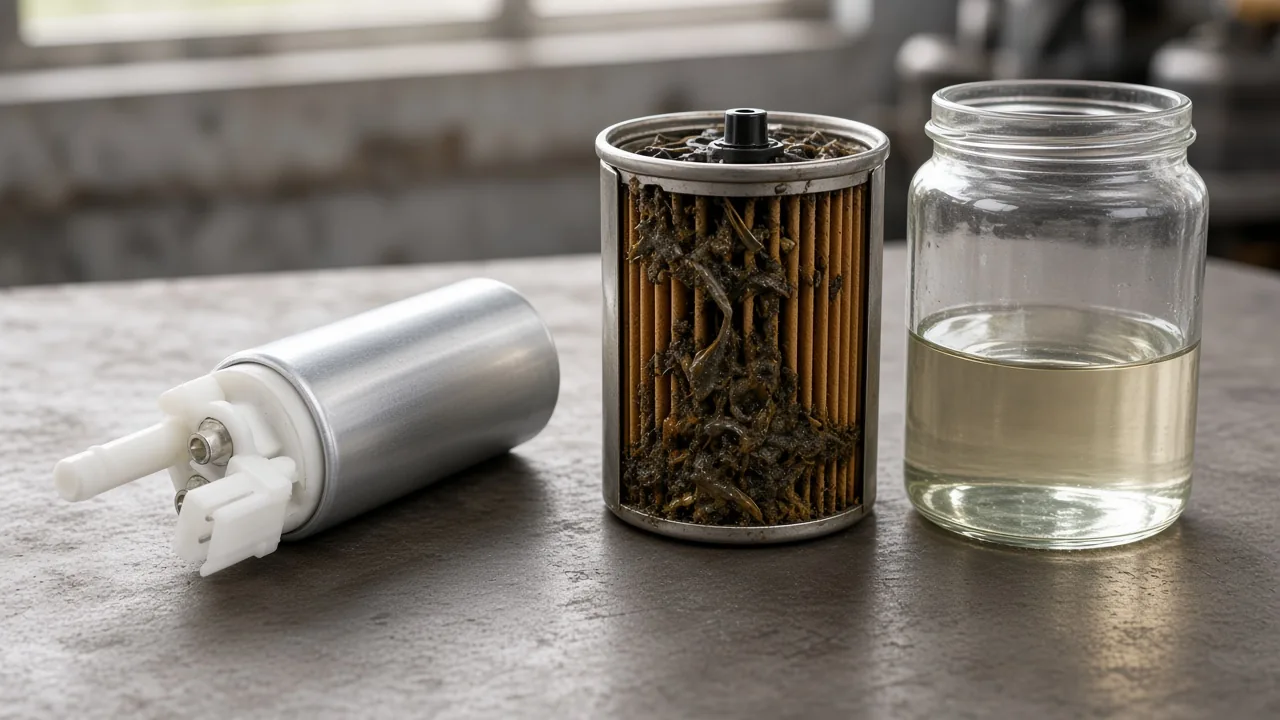
From the field: Owners arguing about sudden pump deaths keep landing on water and starvation, not on a brand slogan. One shop story blamed “bad fuel,” then a later sample came back clean — which is a reminder that the tank in the truck today is not the tank that started the rust.
Start at the water separator and the filter element. Cloudy fuel, a water line in a jar, or rust on separator ports is enough to stop a pump quote and clean the circuit first.
How thin lubricity and the wrong fluid wear the elements
Injection hardware relies on the fuel film; ULSD refining is why a lubricity cap exists; gasoline, DEF, and a bad biodiesel blend are different risks. ASTM method notes say diesel fuel injection equipment has some reliance on the lubricating properties of the fuel, and that shortened life of pumps and injectors has sometimes been ascribed to lack of lubricity. That is a lab-and-history statement, not a promise that every off-spec tank kills a pump tomorrow.
ASTM D975, as summarized by DieselNet, caps water and sediment at 0.05% by volume and sets an HFRR lubricity limit of 520 microns at 60°C. A larger scar in that test means a poorer film under the test conditions.
The same method text also says the scar is sensitive to contamination and temperature, and that a simple field correlation was not settled in that significance note. Use the cap as a fuel check when a batch is in doubt. Do not treat a single lab number as a warranty verdict.
ULSD is the fuel most on-road diesels now see. Hydrotreating that cuts sulfur also cuts natural film formers, which is why the lubricity limit and additive practice showed up.
The Department of Energy handling guide says the fuel itself lubricates moving parts in some diesel fuel systems, and that low-level biodiesel can restore film on dry ULSD. It also warns the other direction: acid numbers above 0.50 mg KOH/g have been associated with deposits and shorter fuel-pump and filter life, and B100 can ruin a pump if hoses and seals are the wrong material.
Wrong fluid is harsher than a marginal HFRR. Gasoline or ethanol in a diesel tank strips the film. DEF in the fuel tank is a different contamination event and, on the service note cited above, a path to metal debris.
Alcohol “dispersant” additives that hide water from the separator are in the same job-aid warning. A diesel injection pump failure after a misfuel is a flush-and-inspect job, beyond a filter swap.
How air, a clogged filter, and a weak lift pump starve the pump
Restriction and air collapse the inlet film and can cavitate the chamber before the injection pump is actually worn. The lift pump has to fill the injection pump.
A crushed line, a plugged filter, or a tired transfer pump leaves a low-pressure pocket on the intake stroke. Bubbles then collapse as cavitation and pit metal that still looked fine last week.
Air gets in the same neighborhood. A cracked suction hose, a loose clamp, a filter housing that was opened and never bled, or a pickup that leaks when the tank is low will pull air instead of fuel.
Owners describe a cold stall a short distance from home, then a recovery after bleeding injectors. In one public thread the injection pump had already been resealed; the stall stopped only after the lift pump was replaced. Start with the filter, then the lift pump, before you condemn the injection pump.
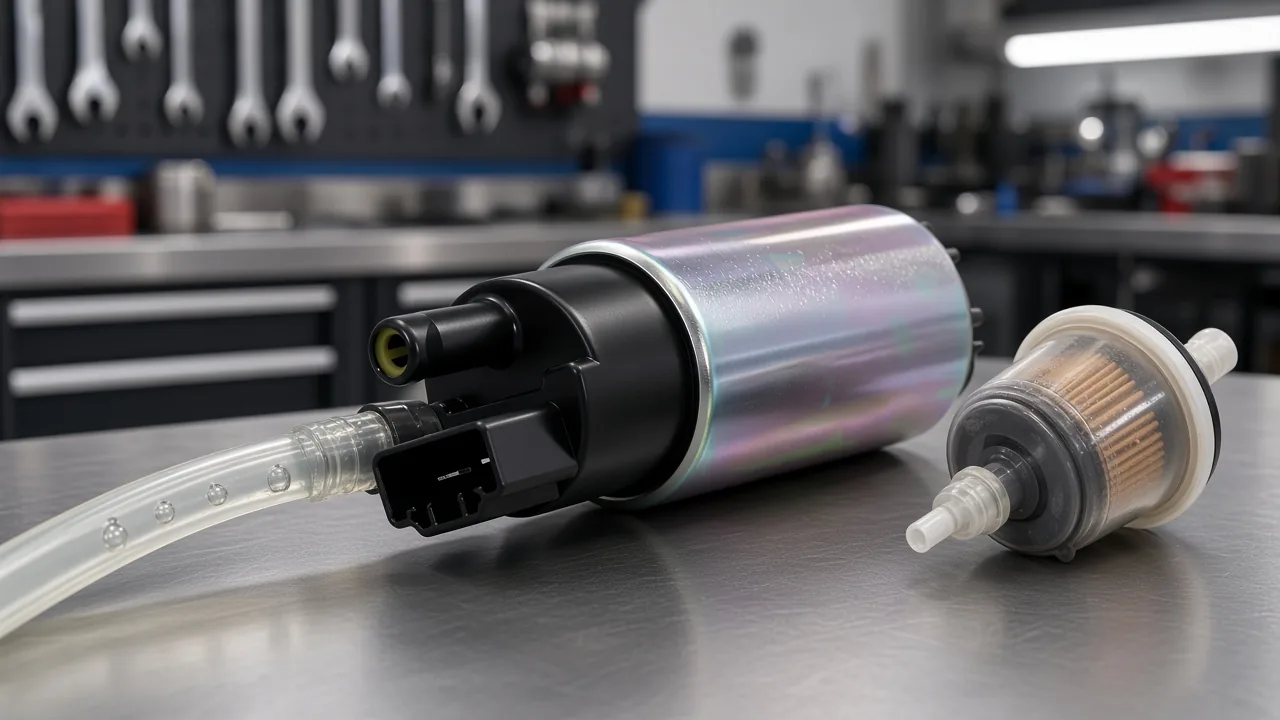
Important: A noisy inlet, foam in a clear line, or power that fades only under load is a feed problem until the lift side proves otherwise — source: inline-pump diagnose-supply order and owner threads. Replacing the injection pump into that circuit repeats the bill.
Electrical faults belong here too, and only here. A relay, a corroded connector, or a loose terminal can silence an electric lift or assist pump and make the engine feel dead.
That pattern comes from electric-pump writeups, rather than from a mechanical injection pump with no motor. If the lift pump never clicks or hums at key-on, fix power before you open the injection pump.
Which priming and installation mistakes repeat the failure
A new pump in a dirty, unbled circuit inherits the last failure. Filter changes and pump swaps are when air and debris enter on purpose, then get blamed on the part. Goldfarb’s injection-pump notes and the TDI owners’ thread both land on the same practical point: bleed after the filter job, and inspect the housing seals that were just disturbed.
Dry cranking is the other install mistake. If the chamber is full of air, the first minutes are metal on metal. Prime until solid fuel, without water, reaches the inlet.
Then start. A long crank on an empty pump is how a fresh unit scores on day one.
Metal already in the system changes the job. A worn high-pressure stage sheds debris into the rail, lines, and injectors.
The service note treats that metal as evidence of a lubricity or contamination event, and the parts writeups warn that injectors are often in the same cloud of grit. Flush lines and the tank, replace filters, and inspect injectors when glitter is in the bowl. A catalog pump dropped into that soup will follow the last one.
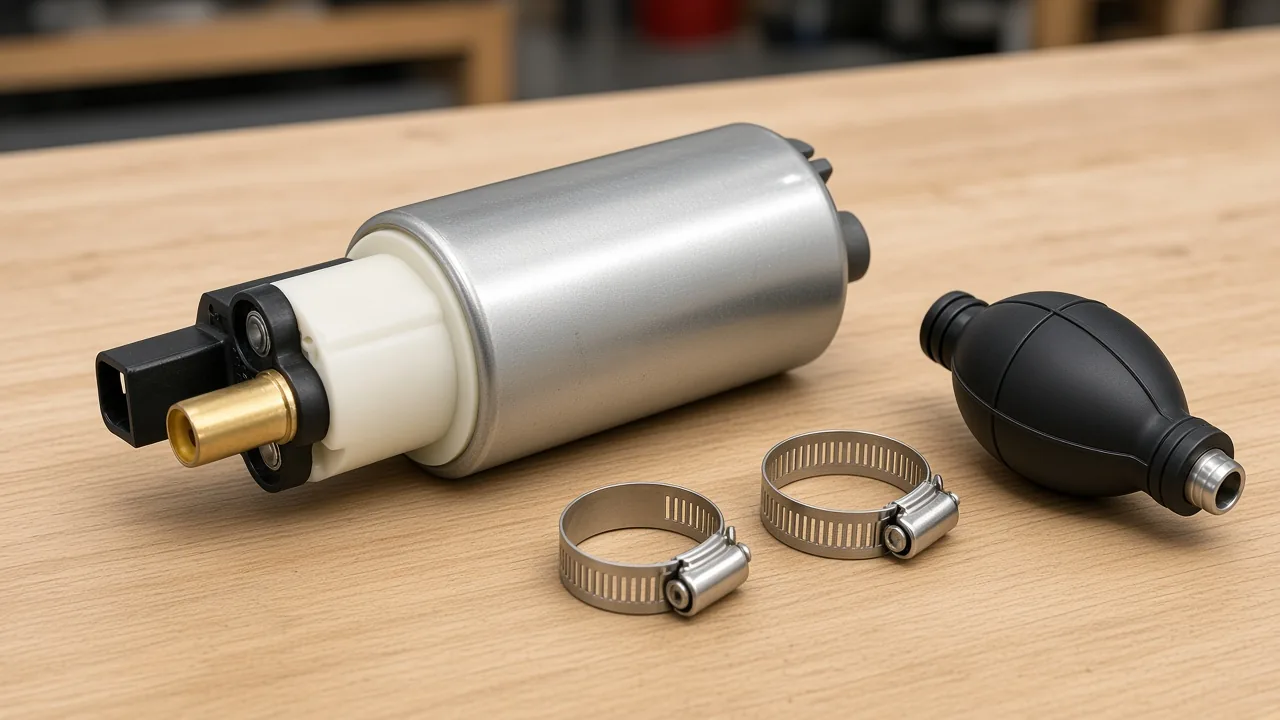
Match the drive and the rotation to the engine you actually have. A pump timed wrong, or a coupling left loose, will knock, smoke, and get returned as “failed” when the install was never finished. That is a setup error, not a fuel-quality story.
How to tell a feed problem from a worn injection pump
Check the separator, the filter, the lift feed, and electric supply power before you price the injection pump. PAA readers ask what can be mistaken for a bad fuel pump. On diesel, the usual lookalikes are a plugged filter, air on the suction side, a dead lift pump, and contaminated fuel that has not yet destroyed the high-pressure stage.
| What you see | More often a feed problem | More often the injection pump |
|---|---|---|
| Hard start after sitting | Air leak or lost prime; separator full of water | Internal leakage after feed checks pass |
| Stall a short distance out, then OK after a bleed | Lift pump, pickup leak, filter housing | Less likely if a bleed restores fuel at the inlet |
| Power loss only under load | Restricted filter or weak lift volume | Worn elements after inlet pressure is healthy |
| No click or hum at key-on | Electric lift power, relay, connector | Does not apply to a cam-driven pump |
| Metal in the filter bowl | Upstream grit that has already reached the pump | High-pressure wear that has seeded the circuit |
Symptom lists, smoke charts, and scan-tool code hunting live on the diesel high-pressure fuel pump failure symptoms page. Use them after the feed is clean.
A pressure gauge on the lift side, compared with the engine maker’s inlet figure, is the clean split between “starved” and “worn.” On a tractor forum, a dealer’s first step for a rail-pressure code was still to check fuel flow to the pump before swapping rail sensors.
How to choose a catalog diesel high-pressure fuel pump when the application matches
Match the failed pump’s OE numbers to the catalog page. A gasoline electric kit is the wrong conversation for a diesel injection pump, even when the photo is a pump on a bench.
Kangsong’s published high-pressure example for a named Hyundai application is the Hyundai high-pressure fuel pump KSGYB-096 (product numbers 5320-3F200, 35320-3F000, 0261520172 on that title). Recommend it only when those numbers match the failed unit. Browse the rest of the fuel-pump catalog for a different application instead of forcing this one SKU.
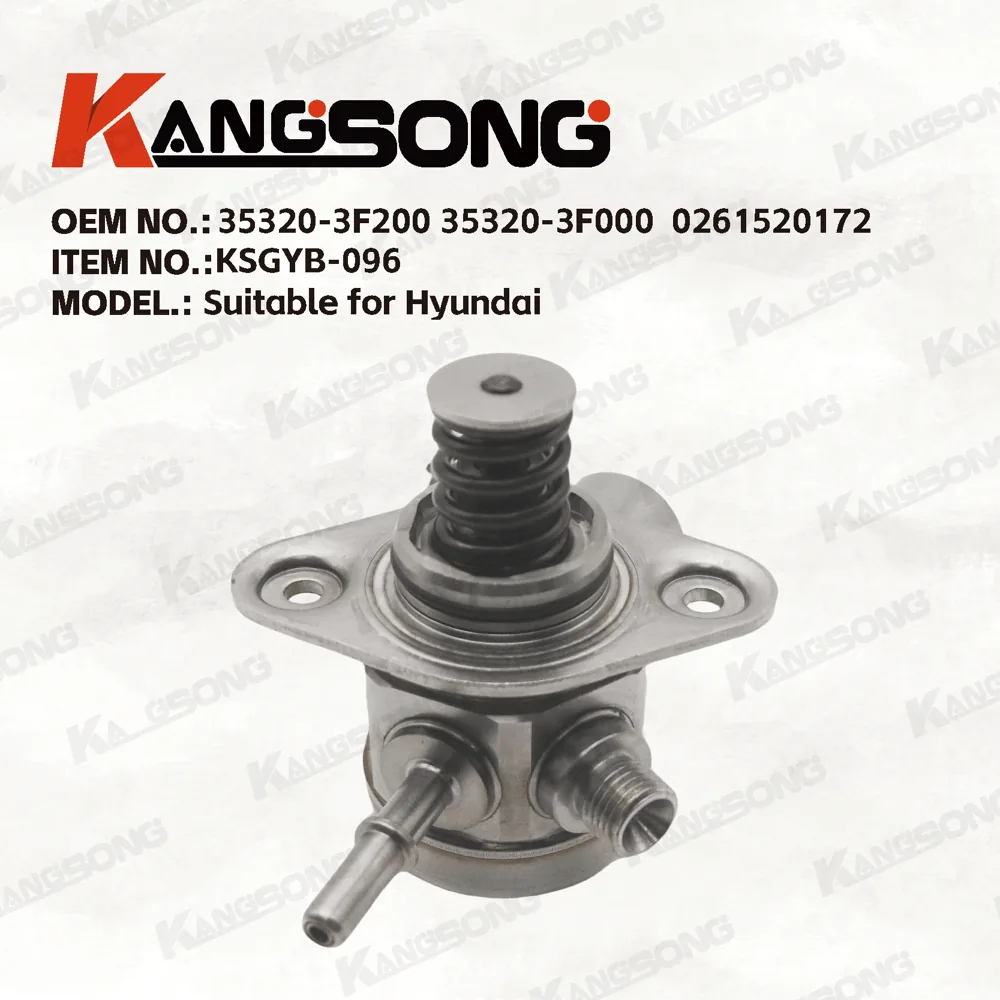
KSGYB-096 is a common rail high-pressure fuel pump in that catalog sense. Fitment stops at the numbers on that title: a lift pump, a rotary inline pump, or a truck that only needs a filter and a bleed is a different part.
If the failure was a weak lift feed, order the supply-side part the engine actually uses, after the tank is clean. If metal already left the high-pressure stage, follow the high-pressure cause page and flush before any replacement is installed.
FAQ
Can a diesel fuel pump fail suddenly while driving?
It can feel sudden. A water slug, a collapsed filter, or a lift pump that quits will drop power in one moment even when scoring started earlier. Clean the feed and look for metal before you treat the stall as unexplained.
What can be mistaken for a bad diesel fuel pump?
A plugged fuel filter, air on the suction side, a silent electric lift pump, and a tank of wet fuel all mimic injection-pump death. Separate those before you price the injection pump.
Does running a diesel tank low cause fuel pump failure?
A low tank raises the chance of drawing sediment and of pulling air at a cracked pickup, and some electric pumps use the fuel around them for cooling. Shop writeups treat that as a habit risk, without a numbered spec. Keep the pickup covered and change the filter; skip any invented mile life.
Should a replacement diesel pump go in before the tank and lines are cleaned?
No, if metal, water, or sludge is already in the circuit. The new pump inherits the grit. Drain, flush, replace filters, and bleed until the inlet is solid fuel.
Does biodiesel or the wrong additive change diesel fuel pump risk?
Low-level biodiesel can improve the film on dry ULSD. High acid number, neat B100 on the wrong seals, gasoline, DEF, and alcohol additives that hide water are the risks named in the DOE handling guide and the common-rail service note. Match the blend to what the engine maker allows.
Is a weak lift pump the same failure as a worn injection pump?
They are different failures. A weak lift pump starves the injection pump and can cavitate it, but the failed part may still be the supply pump. One owner’s cold stall survived an injection-pump reseal and stopped only after the lift pump was replaced.
What is the life expectancy of a diesel fuel pump?
No public standard in this research gives a mile life. Life tracks fuel cleanliness, water control, lubricity, and whether the lift feed and the prime were honest. A number from a parts FAQ without a study does not belong on a purchase order.