A what is diesel fuel pump answer starts here: a diesel fuel pump is the hardware that moves diesel from the tank and raises it to the pressure the injectors need for compression-ignition combustion—often as a low-pressure lift/supply stage feeding a separate high-pressure injection stage.
The sections below cover naming across stages, the tank-to-injector path, how a diesel fuel injection pump works on mechanical versus common-rail layouts, a short diesel-versus-gasoline contrast, and what buyers should confirm before ordering. Deep high-pressure common-rail teardown lives on the sister guide how a high pressure diesel fuel pump works. Architecture contrast with gasoline systems lives on diesel fuel pump vs gas fuel pump.
What a Diesel Fuel Pump Is
A diesel fuel pump moves and/or pressurizes diesel so injectors can deliver fuel for compression-ignition combustion.
Gasoline engines light the mixture with a spark. Diesel engines compress air until it is hot enough that injected fuel ignites on its own. That difference is why diesel fueling hardware cares so much about pressure and timing: the spray has to arrive as a fine mist at the right moment, not as a lazy dribble.
In catalogs and on tickets, “diesel fuel pump” is an umbrella phrase. It may point to a lift/supply pump that only moves fuel at low pressure, to a high-pressure injection pump that builds injection pressure, or to the whole two-stage path. The definition stays the same—the hardware that gets diesel ready for injection—while the SKU you order depends on which stage failed.
Independent technical education on fuel injection pumps describes the classic jobs as pressurizing, metering, and distributing fuel to injectors; on many electronic common-rail systems the high-pressure pump mainly pressurizes a shared rail while injectors and the ECU handle the spray timing (source: https://mechcontent.com/internal-combustion-engine/fuel-injection-pump/).
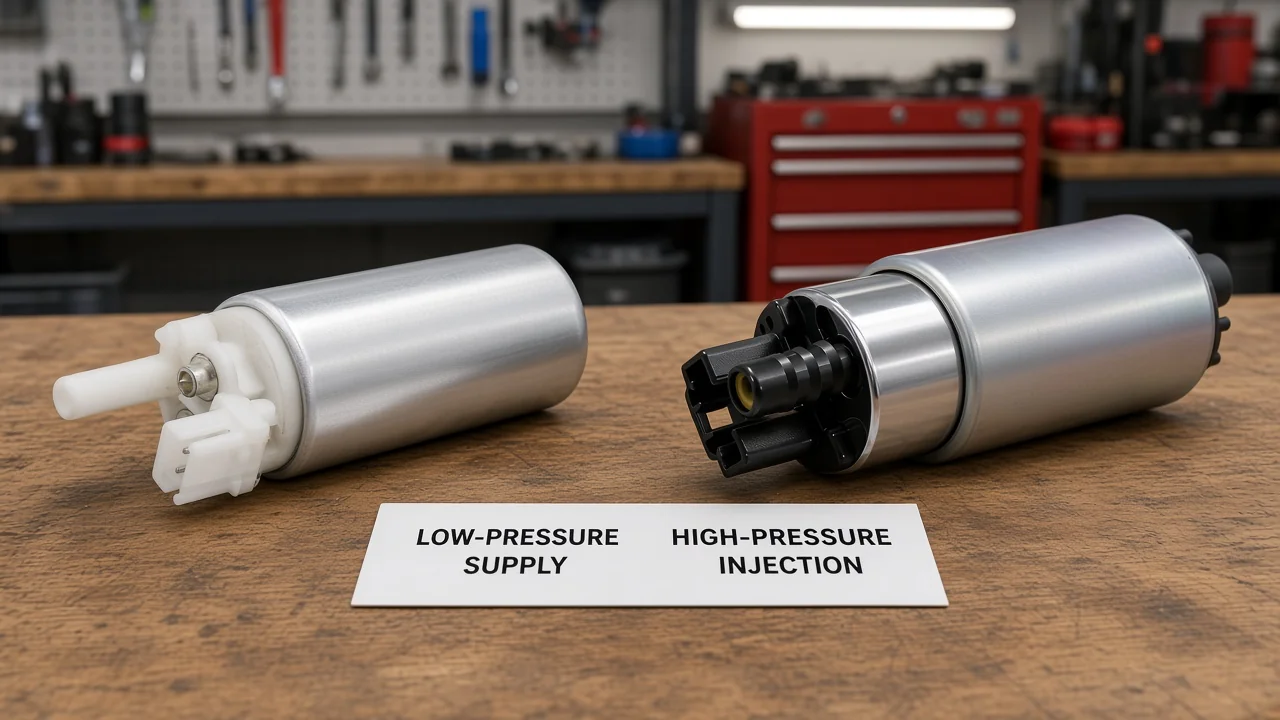
Lift Pump vs Injection Pump: Why the Name Confuses Counters
“Diesel fuel pump” may mean the low-pressure lift/supply stage, the high-pressure injection stage, or both—confirm which stage failed before you quote a part.
Shop English is messy here. On many diesel trucks, technicians call the low-pressure unit a lift pump, supply pump, or transfer pump.
The high-pressure unit is the injection pump, injector pump, or—on common-rail platforms—the high-pressure fuel pump that feeds the rail. Customers often flatten all of that into one request: they say they need a diesel fuel pump.
| Stage | Typical job | Pressure class (orientation) | What it is not |
|---|---|---|---|
| Lift / supply / transfer pump | Moves diesel from tank through filtration toward the injection stage | Low-pressure, high-volume; community examples for some pump families cite roughly 7–12 psi inlet needs | Not the part that builds tens of thousands of psi at the injectors |
| Diesel fuel injection / high-pressure pump | Compresses diesel for injection; may also meter/time on older mechanical systems | Common-rail systems often run above roughly 2,000 bar (~29,000 psi); independent tech cites rail pressures that can exceed ~30,000 psi | Not a gasoline in-tank module swap |
| Injectors | Spray metered fuel into the chamber | Controlled by mechanical pop pressure or ECU timing | Not the tank-supply pump |
The lift pump vs injection pump distinction is the single most useful clarification on a parts counter. A weak lift pump starves the high-pressure stage.
A failed high-pressure pump can still have a healthy tank pump humming at key-on. Ordering the wrong stage wastes a bay day even when both listings say “diesel fuel pump.”
From the field: On diesel forums, owners often condemn the “injector pump” first, while replies push checking lift/supply flow and metering control before cracking high-pressure common-rail hardware—because a hungry high-pressure stage and a dead high-pressure stage look alike on the road (source: https://www.tractorbynet.com/forums/threads/2005-ram-3500-injector-pump-r-and-r.299979/).
How a Diesel Fuel Pump Works: Tank to Injector
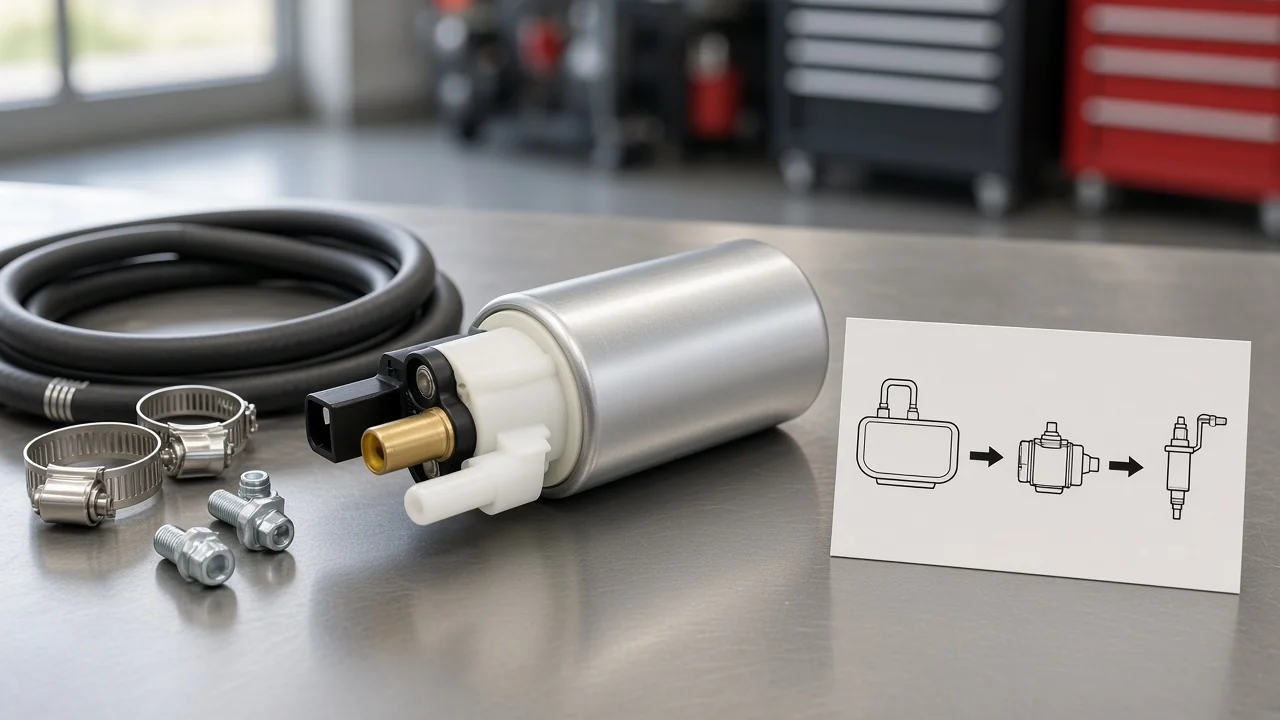
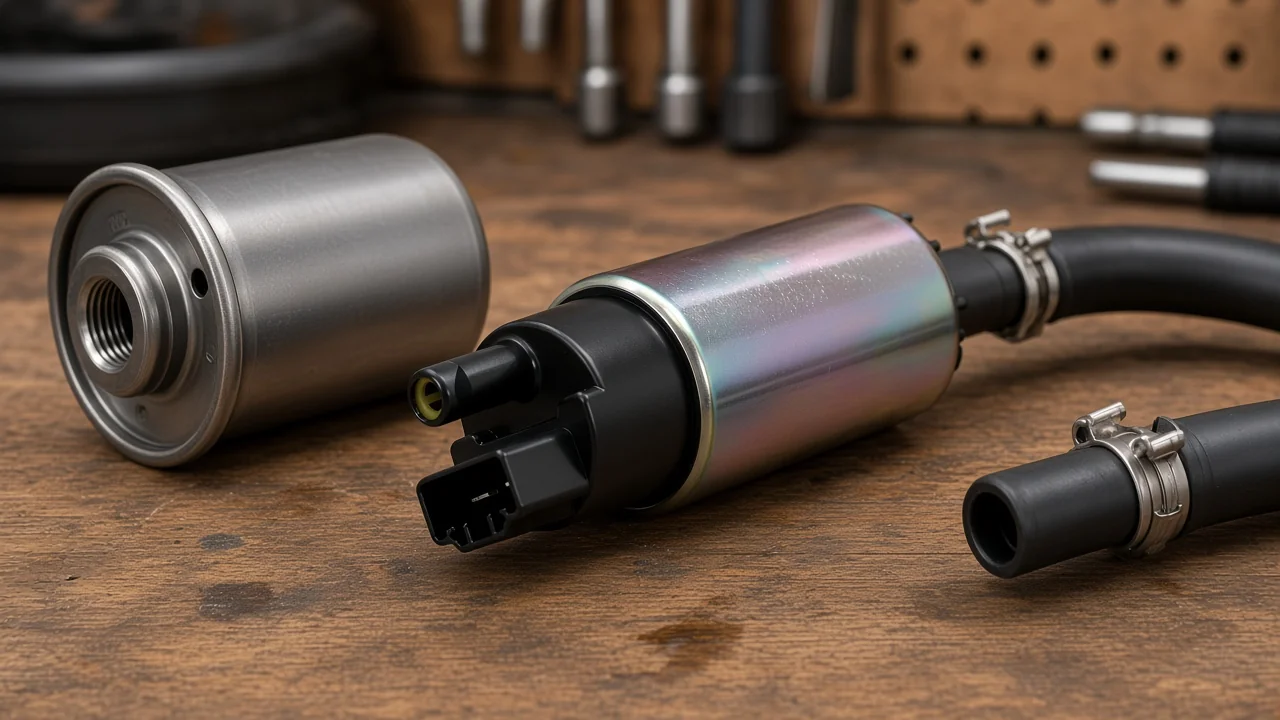
Fuel typically moves tank → lift/supply and filter → high-pressure injection stage → (rail on common-rail) → injectors.
That is the practical answer to how does a diesel fuel pump work when someone wants the system story, not a single casting number.
- Tank inventory — Diesel leaves the tank through a pickup. Air leaks or a restricted pickup show up as starvation long before anyone rebuilds an injection pump.
- Lift / supply stage — A mechanical or electric lift pump moves a steady volume through the primary filter path. Its job is consistent feed, not injector atomization.
- High-pressure injection stage — The injection pump compresses diesel. On older mechanical systems it may also meter and time delivery to each injector line. On common-rail systems it mainly keeps the rail pressurized.
- Rail and injectors (common-rail) — The shared rail stores high-pressure fuel. The ECU opens injectors electronically so spray timing is no longer locked to a cam lobe inside the pump.
Independent common-rail explainers describe the same split: the lift pump’s only purpose is to feed the high-pressure pump; rail pressure at the outlet of that high-pressure stage can exceed roughly 30,000 psi; injection events are commanded by the PCM/ECM (source: https://www.dieselhub.com/tech/common-rail.html). In common-rail layouts, the ECU / PCM decides when each injector opens.
How a Diesel Fuel Injection Pump Works
The injection pump compresses diesel to injection pressure; on common-rail systems it mainly feeds the rail while injectors and the ECU / PCM time the spray.
How does a diesel fuel injection pump work, then, depends on architecture:
- Mechanical inline and distributor pumps use cam-driven plungers (or a rotary distributor) to raise pressure and, historically, to meter quantity and sequence delivery to each cylinder. The pump is both compressor and traffic controller.
- Common-rail high-pressure pumps still use plungers or pumping elements to build pressure, but the shared rail becomes the reservoir. Solenoid or piezo injectors open on electronic command, so multiple injection events per combustion stroke become practical.
Encyclopedia-level common-rail summaries place typical system pressure above roughly 2,000 bar (about 29,000 psi), which is why diesel injection hardware is built around tight clearances and clean fuel (source: https://en.wikipedia.org/wiki/Common_rail).
That pressure class is also why technicians treat high-pressure lines as hazardous. Put simply: the injection stage’s job is extreme pressure for atomization; the lift stage’s job is reliable feed so high-pressure hardware is never forced to suck dry.
Common Diesel Pump Design Families
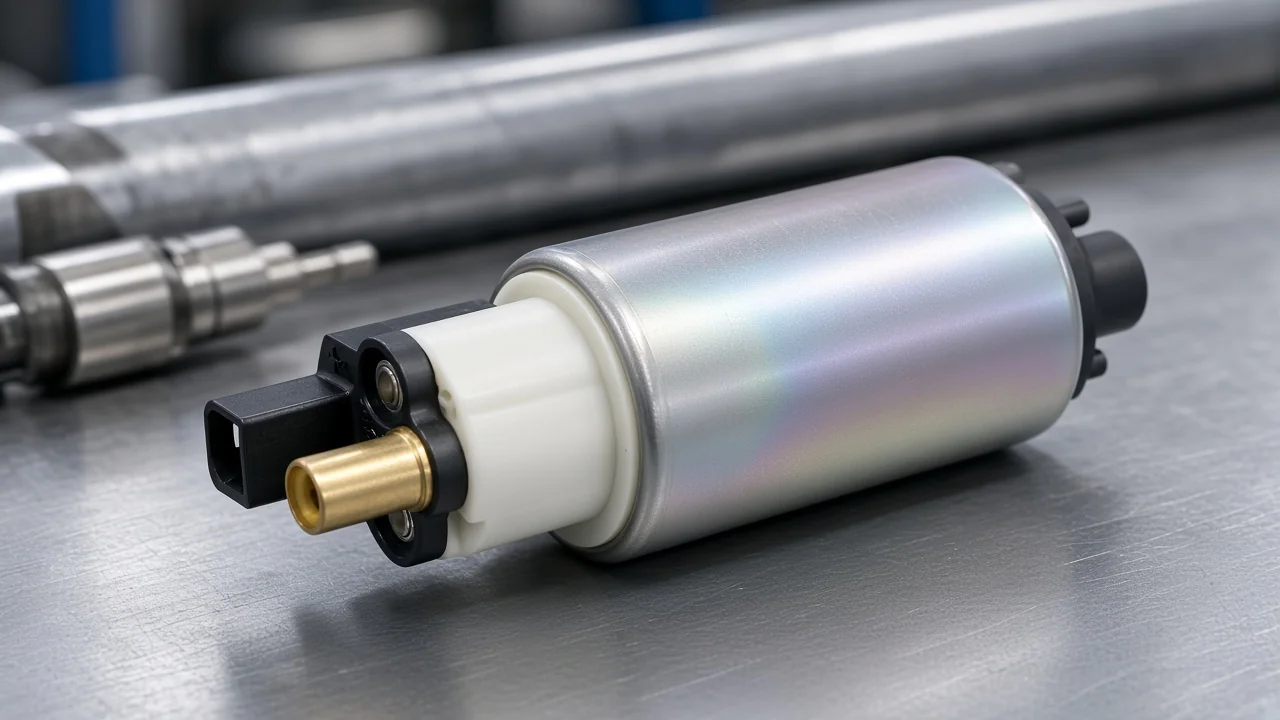
Inline, distributor/rotary, and common-rail high-pressure supply pumps are the families counters see most often.
| Design family | How it builds / delivers pressure | Reader cue on a ticket |
|---|---|---|
| Inline injection pump | One plunger/barrel element per cylinder arranged in a line; cam timing drives each element | Older heavy-duty and many industrial diesels; mechanical lines to injectors |
| Distributor / rotary pump | A single pumping mechanism distributes fuel to all cylinders in turn | Compact mechanical systems; shared pumping unit |
| Common-rail high-pressure pump | Pump pressurizes a shared rail; injectors fire electronically | Modern light-duty and many late-model medium-duty diesels |
These families answer “what kind of diesel pump is on this engine?” They do not, by themselves, tell you whether today’s no-start is a clogged filter, a dead lift pump, or a failed high-pressure stage. Use the family to frame the conversation; use stage checks to pick the SKU.
Diesel vs Gasoline Fuel Pumps: A Short Contrast
Diesel injection hardware runs at far higher pressure and depends on Diesel fuel lubricity / ULSD margins—do not treat gasoline kits as diesel high-pressure swaps.
Gasoline port-injection systems often live in a much lower pressure band than diesel common-rail injection. Modern gasoline direct injection adds its own high-pressure pump, which is why casual “gas vs diesel pump” talk gets muddy. The durable rule for this definition page is narrower: diesel compression-ignition injection stages are not drop-in cousins of gasoline in-tank modules, and gasoline contamination removes the lubricity margin diesel high-pressure parts rely on.
United States highway diesel programs regulate fuel sulfur and quality (ULSD-class on-road diesel), which matters because injection hardware uses the fuel as its working fluid and lubricant (source: https://www.epa.gov/diesel-fuel-standards/diesel-fuel-standards-and-rulemakings). For a full side-by-side pressure and lubricity comparison, stay on the sister page rather than expanding this definition article into a second comparison pillar.
What This Definition Means for Shop and Wholesale Buyers
Confirm fuel family, architecture, failed stage, OE/VIN, and fuel quality before quoting a pump class.
A clean definition only helps if the counter converts it into a ticket. Use this checklist:
- Fuel family — Diesel or gasoline? Do not quote across families.
- Architecture — Mechanical inline/distributor, common-rail, or unknown? Unknown means stop and identify before promising a number.
- Failed stage — Lift/supply, high-pressure injection, or injector? Prove supply before condemning the high-pressure pump when symptoms are starvation-like.
- OE / VIN / engine code — Titles on OE-scoped listings are application fences, not brand nicknames.
- Fuel condition — Water, dirt, and off-spec fuel destroy tight injection clearances; filter and tank notes belong on the same ticket.
Community threads make the inlet-pressure nuance concrete: the lift pump pressure a given injection pump wants can change with pump family—replies for one PFR-style example cite roughly 7–12 psi, and warn that a much higher electric pump can be the wrong “more is better” fix (source: https://www.tractorbynet.com/forums/threads/farm-trac-390-hst-4-cylinder-mitsubishi-diesel-engine-electric-fuel-pump-pressure.401000/). Treat those numbers as orientation, not a universal OE chart.
Important: Do not crack high-pressure common-rail lines to “see if fuel comes out.” Prove low-side supply and use proper rail-pressure diagnosis instead (community caution echoed in diesel service threads such as https://www.tractorbynet.com/forums/threads/2005-ram-3500-injector-pump-r-and-r.299979/).
Choose an OE-Scoped Pump Kit After the Stage Is Clear
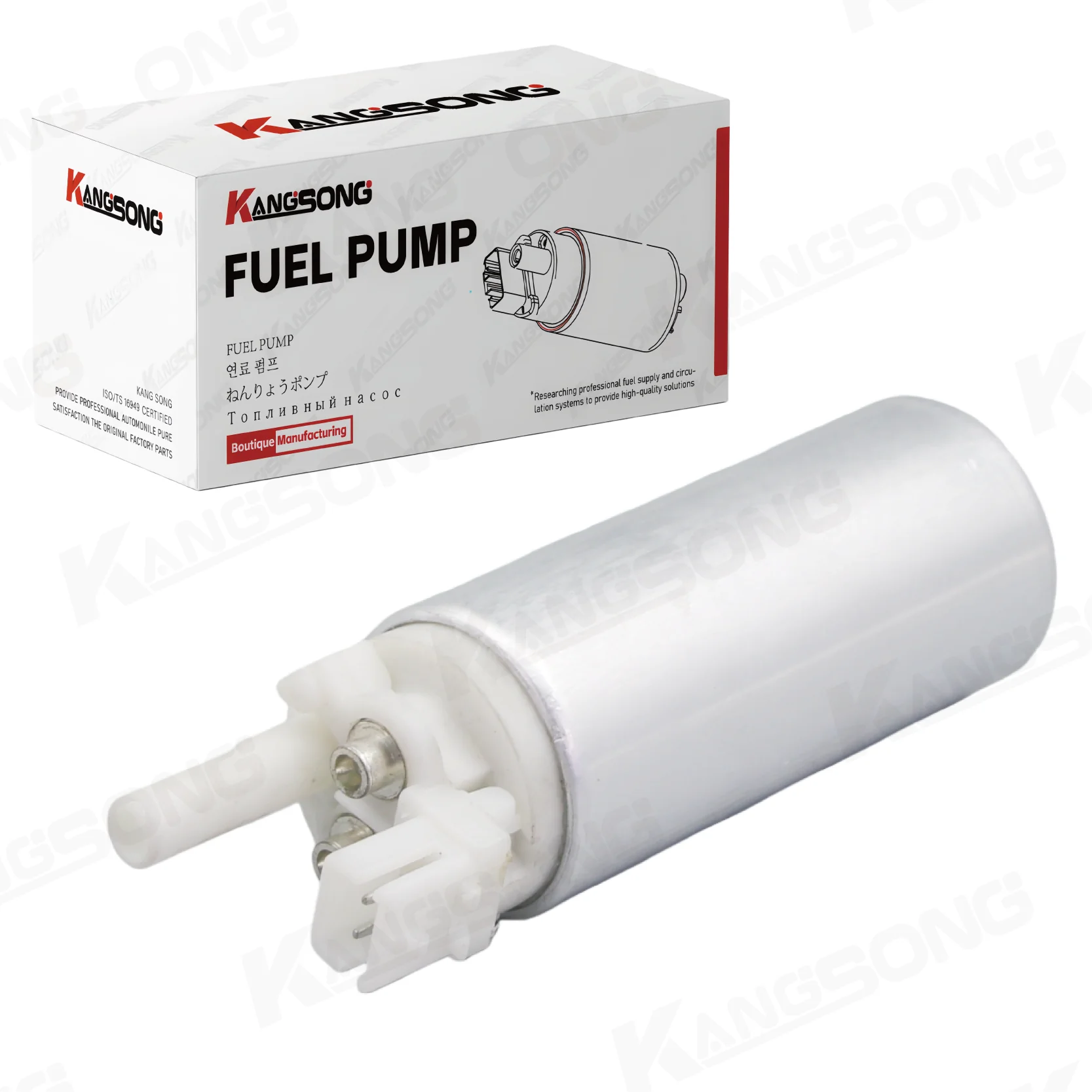
Browse the catalog and use an OE-scoped electric pump kit only when the low-side electric path and application strings match—never as a silent stand-in for a diesel common-rail high-pressure pump.
After the stage question is answered, buyers need a concrete next click. Kangsong publishes OE-scoped electric fuel pump kits and high-pressure pump SKUs under the products catalog.
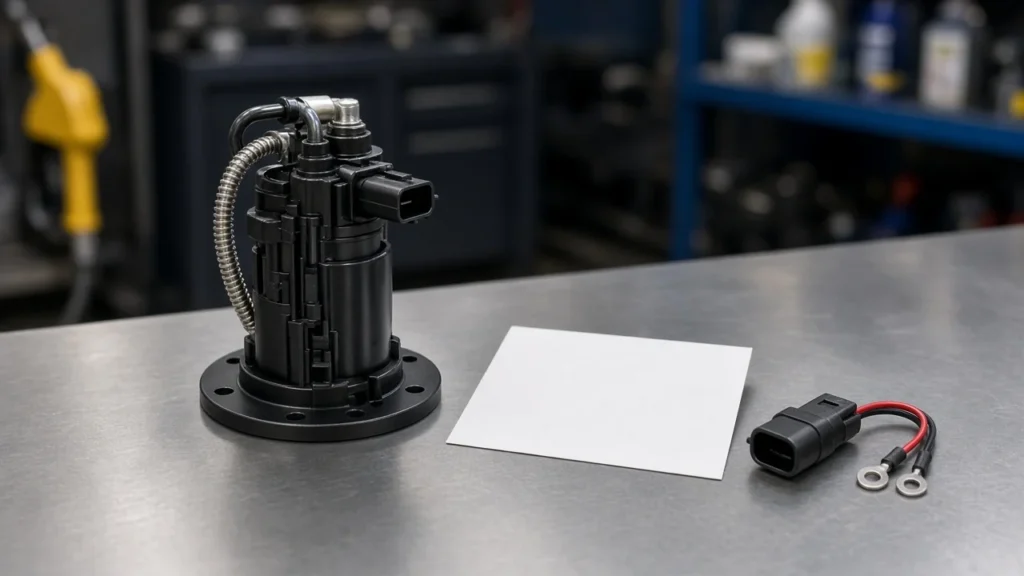
For this article’s recommendation image and low-side electric-kit example, use the Kangsong electric pump kit #2551 only inside its listed platform/OE scope. See the electric gasoline fuel pump with installation kit listing for OE strings. It is a first-party catalog example for electric pump kit browsing—not a claim that this gasoline-scoped kit replaces a diesel high-pressure injection pump.
If the failed stage is the diesel high-pressure / common-rail supply pump, open the high-pressure principle sister and browse OE-scoped high-pressure listings rather than forcing a low-side electric kit into the wrong job. Start family browsing at products-root.
Kangsong listings stay OE-scoped. They are not ranked against FASS, AirDog, Facet, or Bosch model names, and no market-share claim is made here.
Not Failure Causes, Not Nozzle Size: Intent Boundaries
Keep HPFP deep principle, diesel-versus-gas depth, failure causes, nozzle size, vacuum-pump principle, and fuel-pump-assembly definition on their own pages.
The definition and two-stage working map stay here. These topics move to sister pages:
- Full high-pressure plunger/metering teardown beyond the summary above — use how does a high pressure diesel fuel pump work
- Full diesel-versus-gasoline pressure/lubricity comparison — use diesel fuel pump vs gas fuel pump
- Failure-cause trees, CP4 sourcing guides, dispenser nozzle sizing, vacuum/pulse pump principle, or fuel-pump-assembly definition depth
If a ticket is really “why did this pump fail?” or “what nozzle size do I need?”, leave this definition page after the stage names are clear.
FAQ
What is a diesel fuel pump?
It is the hardware that moves and/or pressurizes diesel so the engine’s injectors can deliver fuel for compression-ignition combustion—often as separate lift/supply and high-pressure injection stages.
How does a diesel fuel pump work?
Diesel typically travels from the tank through a lift/supply pump and filtration into a high-pressure injection stage, then to injectors (through a common rail on modern systems).
How does a diesel fuel injection pump work?
It compresses diesel to injection pressure. On older mechanical pumps it may also meter and time delivery; on common-rail systems it mainly pressurizes the rail while injectors and the ECU time the spray.
Are a diesel pump and a fuel pump the same?
Sometimes in casual speech, but not as a parts SKU. Ask whether the failed unit is the low-pressure lift/supply pump, the high-pressure injection pump, or both.
What is a lift pump versus an injection pump?
A lift pump is low-pressure, high-volume supply from tank toward the engine. An injection pump is the high-pressure stage that prepares fuel for the injectors.
How much pressure does a diesel injection pump make?
Common-rail systems are often described above roughly 2,000 bar (~29,000 psi), and independent tech cites rail pressures that can exceed ~30,000 psi. Always confirm the OEM band for the engine in front of you.
Can you run gasoline through a diesel fuel pump?
No. Gasoline and diesel fueling hardware are not interchangeable, and gasoline removes the lubricity margin diesel high-pressure parts rely on. See the diesel-versus-gas sister page for the architecture contrast.
Is this the same as the high-pressure diesel fuel pump principle guide?
No. This page defines the umbrella “diesel fuel pump” and the two-stage map. The sister guide goes deeper on common-rail high-pressure pump internals.
References
- Wikipedia — Common rail direct fuel injection
- Diesel Hub technical note on common-rail injection
- MechContent fuel injection pump types and functions
- U.S. EPA diesel fuel standards program overview
- TractorByNet discussion on electric diesel lift-pump inlet pressure
- TractorByNet discussion separating lift supply from injector-pump faults