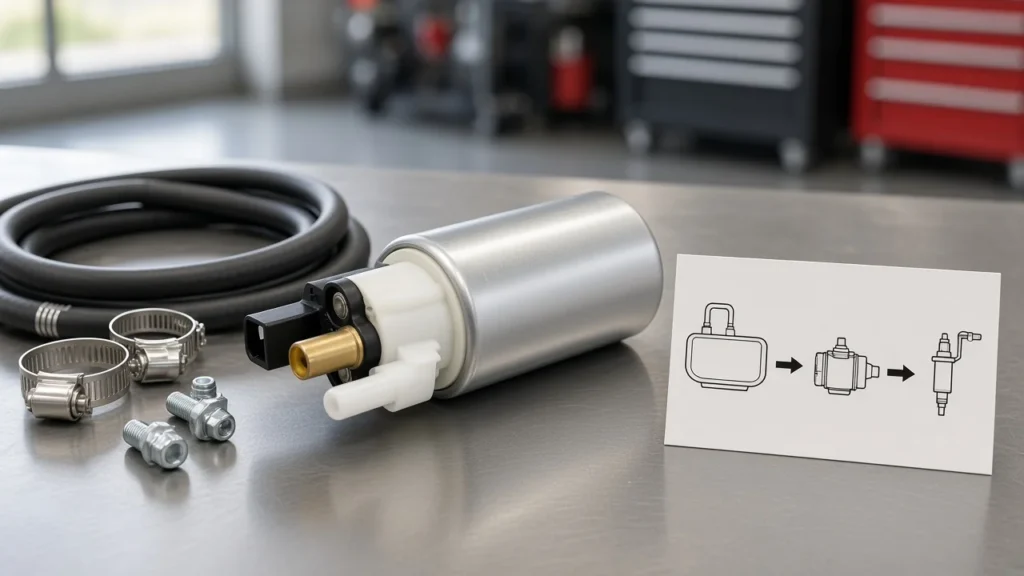
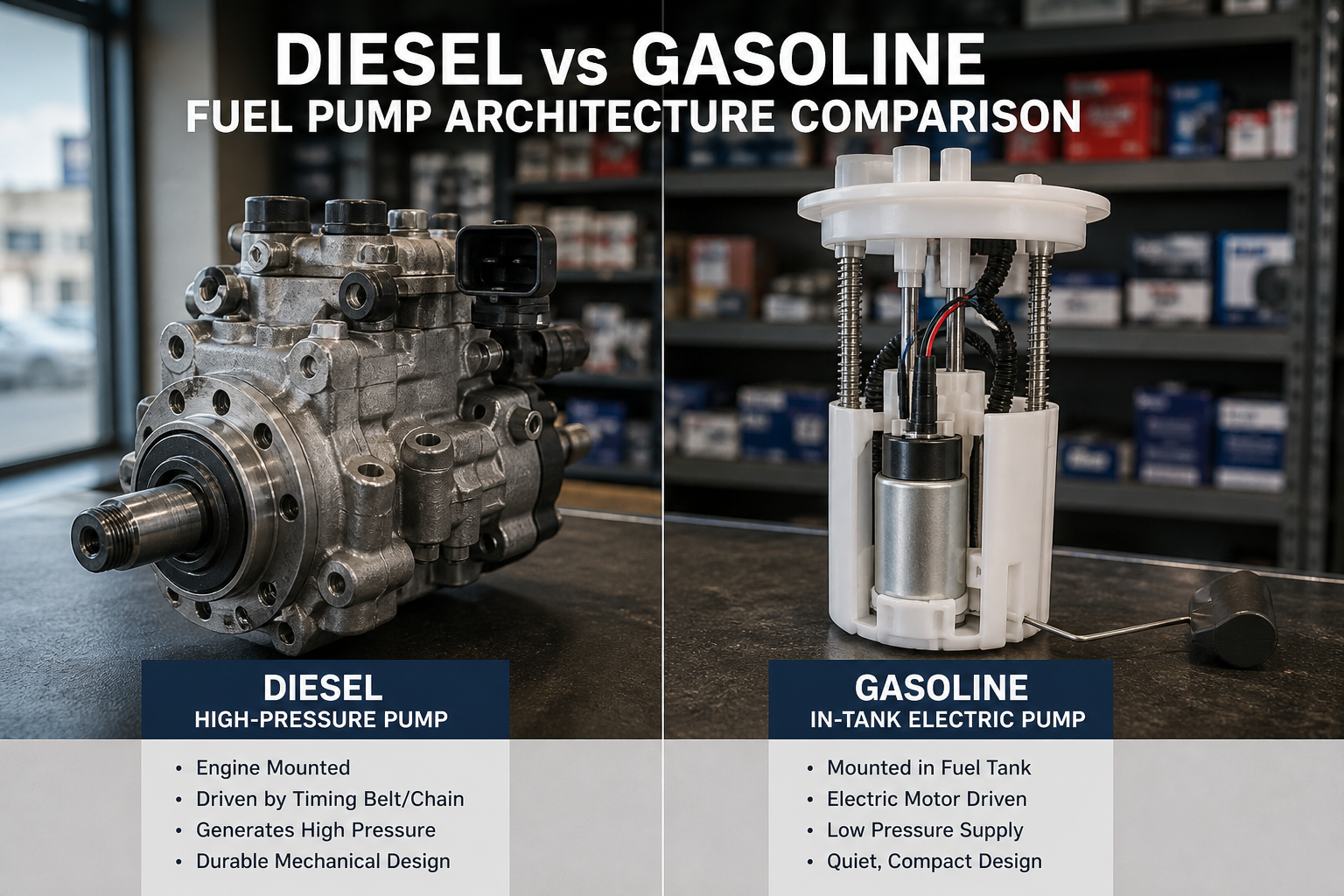
A diesel fuel pump vs gas fuel pump comparison starts with architecture, not brand names: diesel injection hardware is built for far higher rail pressure and depends on diesel lubricity, while gasoline systems use different pressure jobs (port injection versus GDI two-stage layouts) and are not drop-in swaps. This diesel vs gasoline fuel pump guide compares pressure classes, lift versus high-pressure stages, lubricity and ULSD context, cross-use risk, and a counter checklist—then points to scoped Kangsong electric assemblies only when that path fits. It is not a dispenser nozzle-size page and not an acceleration-noise diagnostic.
Core Differences: Pressure Architecture and Ignition Demand
Diesel and gasoline fuel pumps diverge because the engines ignite fuel differently, so the pumps chase different pressure jobs. A Gas / gasoline fuel pump path and a Diesel fuel pump path are not the same specification family.
Gasoline spark-ignition systems historically delivered fuel at modest rail or carburetor pressures.
Many consumer comparison pages still quote roughly 10–60 PSI for that class of gasoline delivery.
Diesel compression-ignition systems atomize fuel by injecting it at very high pressure into hot compressed air, which is why common-rail diesel hardware centers on a high-pressure pump feeding a shared rail under electronic pressure and injection control.
That ignition-driven pressure gap is the first buying filter. When a counter ticket says only “fuel pump,” ask whether the failed unit is a low-pressure supply stage or a high-pressure injection stage—and whether the vehicle is diesel or gasoline—before you quote a class.
Pressure Classes Side by Side (Including GDI)
Compare pressure bands only after you label the system type; “gasoline = low pressure” is incomplete once GDI enters the ticket.
Modern gasoline direct injection adds a second stage.
An in-tank electric pump typically feeds about 50–85 PSI into a cam-driven high-pressure fuel pump that raises rail pressure into a roughly 2,000–3,000 PSI class on many educational examples.
That GDI HPFP stage is still a different job from diesel common-rail injection pressures that consumer guides often place in a roughly 10,000–30,000 PSI conversation band. Treat those diesel figures as common comparison framing, not a Kangsong product rating and not a substitute for OEM service data on a specific VIN.
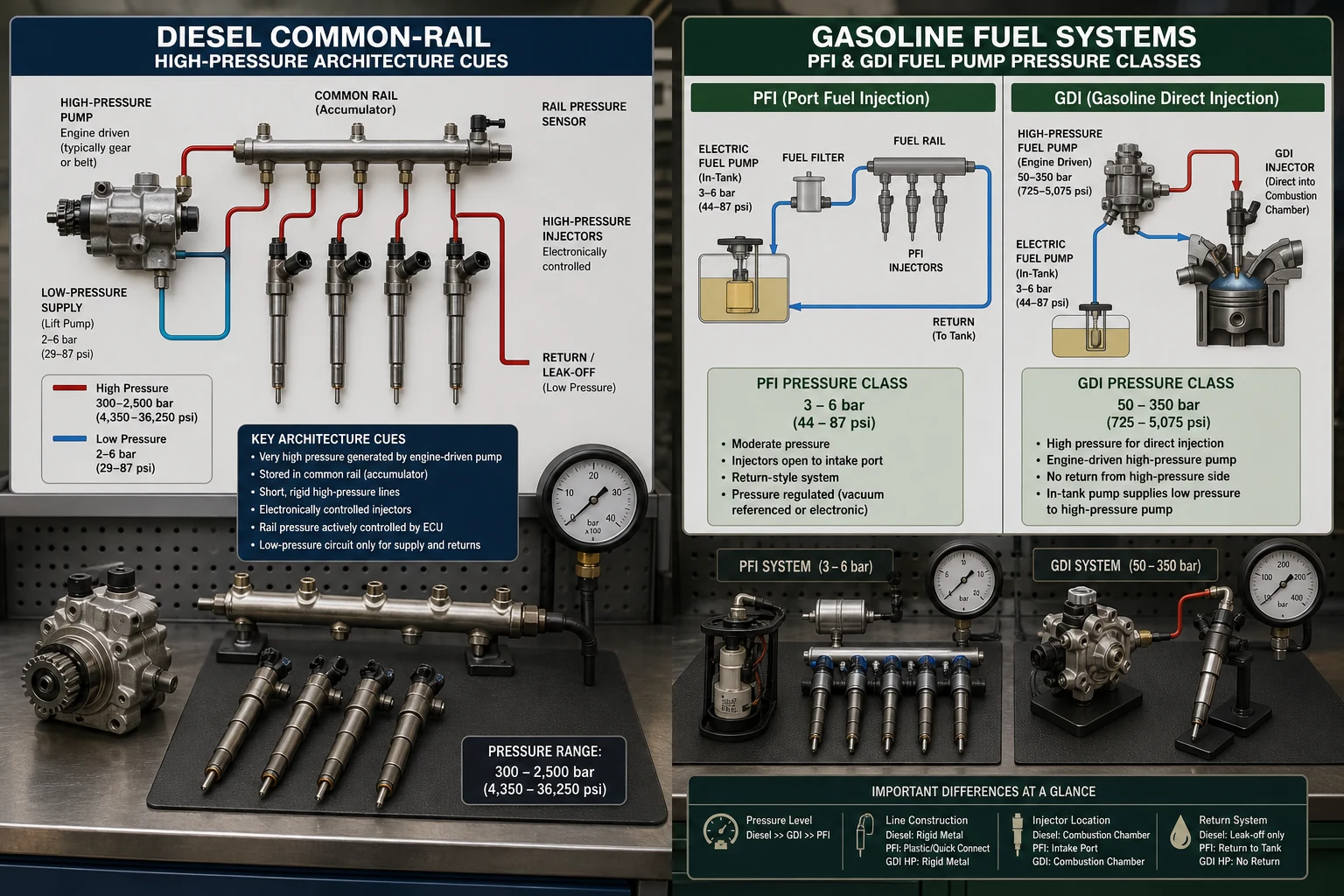
Use the matrix below when a buyer collapses every “high-pressure fuel pump” into one SKU.
| System class | Typical pressure job (educational / common framing) | What the pump is doing | Counter note |
|---|---|---|---|
| Gasoline port injection (PFI) | Often discussed in a ~10–60 PSI delivery band | Supply pressurized fuel to port injectors / rail | Do not assume this covers GDI |
| Gasoline direct injection (GDI) | Low-side feed often ~50–85 PSI; HPFP rail often ~2,000–3,000 PSI | Two-stage: electric feed + mechanical HP stage | Confirm which stage failed |
| Diesel common-rail | Consumer guides often cite ~10,000–30,000 PSI injection context | HP pump maintains rail pressure for injectors | Separate lift/supply failure from HP pump failure |
If the ticket is GDI, “gas fuel pump” may mean the in-tank feed or the cam-driven HPFP. If the ticket is diesel, “diesel fuel pump” often means the high-pressure / injection pump—even when a lift pump is also in the story.
Lift Pump vs High-Pressure Fuel Pump Stages
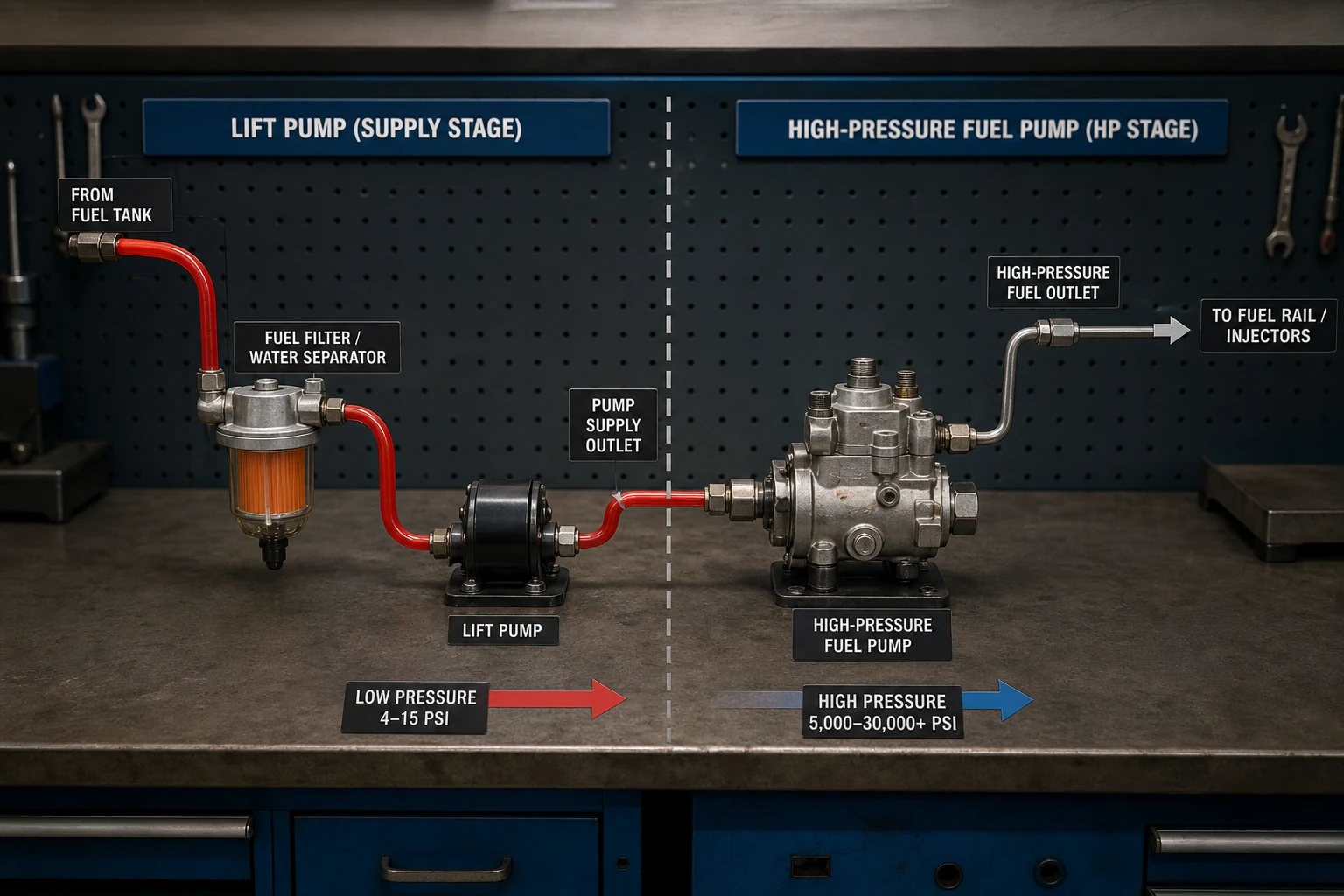
A lift pump vs high pressure fuel pump distinction matters on both diesel and GDI tickets: the Lift / supply pump moves fuel at low pressure to the high-pressure stage; the high-pressure pump is a different component with a different failure and parts path.
On diesel systems, the low-pressure side typically includes the tank, supply/lift pump, and filtration, while the high-pressure side includes the high-pressure pump, accumulator/rail, and injectors.
The lift or supply pump’s job is to deliver fuel to the high-pressure pump; modern electric lifts can sit in the tank.
GDI gasoline systems rhyme with that map: the in-tank electric pump feeds the mechanical HPFP, and a weak feed can starve the high-pressure stage.
Ordering tip: replace the stage that failed. A gasoline-scoped electric assembly is not a diesel common-rail high-pressure pump, and a diesel HP pump is not the right answer for every “no fuel” complaint that starts at a clogged filter or dead lift pump.
Fuel Lubricity, ULSD, and Why Gasoline Damages Diesel Pumps
Fuel pump lubricity is the quiet requirement behind diesel high-pressure reliability: those pumping parts rely on the fuel film itself, and gasoline does not provide that same protective behavior—which is why gasoline-in-diesel events are treated as system risks. Lubricity / HFRR language is how U.S. fuel specs quantify that protection.
U.S. diesel fuel practice commonly cites a maximum HFRR wear scar of 520 µm for lubricity under ASTM D975-related summaries.
That limit is tied to protecting injection equipment as ultra-low sulfur diesel became standard.
U.S. highway diesel moved to 15 ppm ULSD under EPA diesel fuel standards—useful context for why lubricity additives and fuel quality matter, not a claim that every pump failure is a sulfur problem.
Gasoline’s limited lubricity is also a recognized constraint for high-pressure gasoline pumps, but the practical disaster story for diesel shops is still gasoline contamination of a diesel tank.
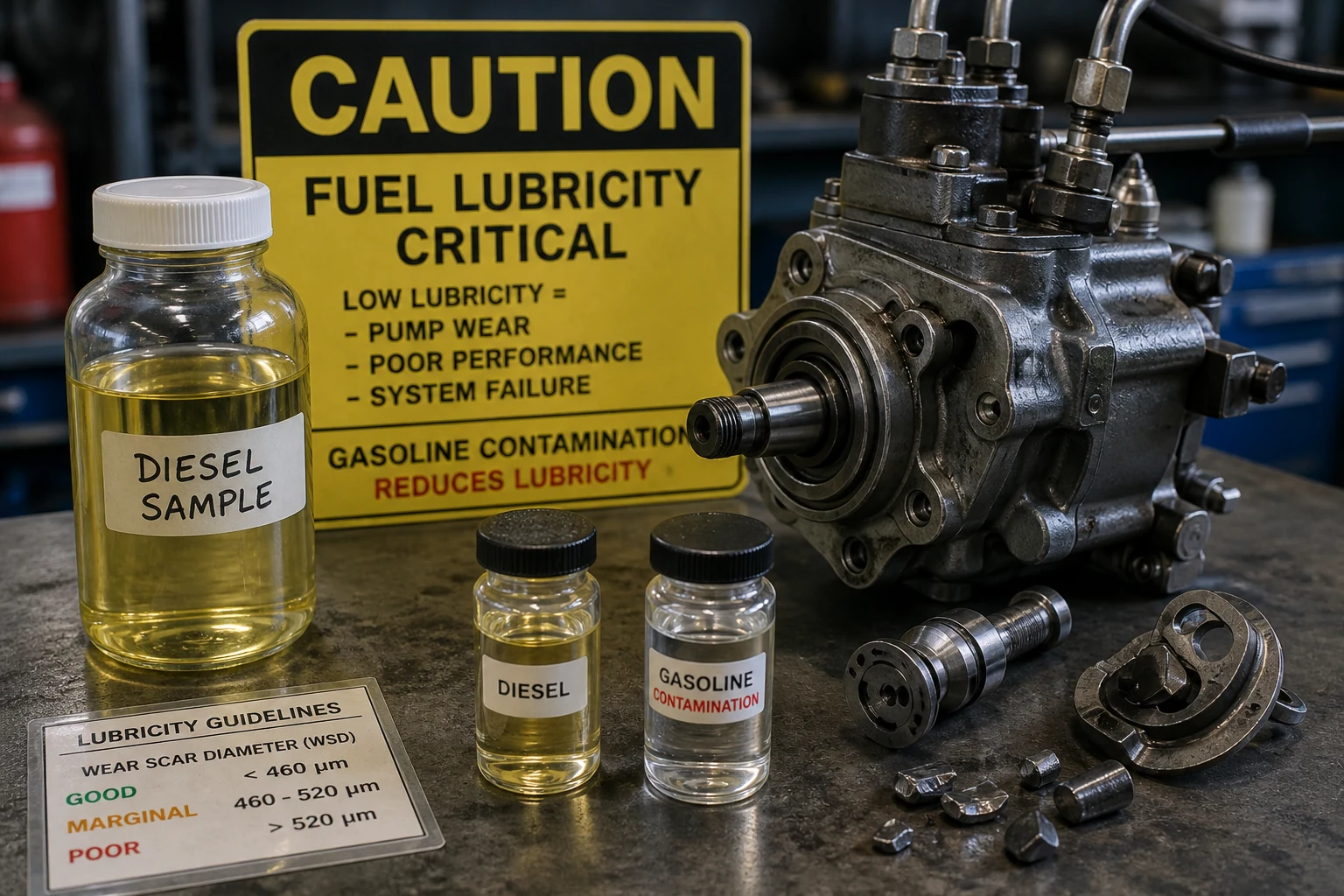
Important: If gasoline enters a diesel tank, do not casually cycle the ignition. Diesel owners and techs repeatedly warn that key-on can run the in-tank booster/lift pump and push contaminated fuel toward the filter, high-pressure pump, and rails—raising wear and metal-debris risk once lubricity is gone. (Sprinter-Source misfuel thread)
Cross-Use Reality: Why Diesel and Gas Pumps Are Not Interchangeable
You should not install a gasoline fuel pump as a diesel high-pressure substitute, or treat a diesel injection pump as a gasoline drop-in—the pressure capability, seals, and lubricity paths are built for different fuels.
A gasoline pump cannot generate diesel common-rail injection pressure. A diesel high-pressure pump expects diesel’s lubricity behavior and is the wrong hardware for a gasoline fuel chemistry and control strategy. Cross-shopping “whatever is in stock” creates pressure mismatch, seal/material risk, and contaminated-fuel wear—not a clever universal spare.
For misfuel recovery, prioritize containment and drain/flush procedure over parts guesswork. If the engine already ran on the wrong fuel, inspect for debris and follow platform service guidance before you condemn or replace only one pump in isolation.
Procurement Checklist for Shop and Wholesale Counters
Lock fuel type, architecture, and failed stage before you quote a pump class or browse assemblies.
| Check | What to confirm | Why it changes the quote |
|---|---|---|
| Fuel type | Diesel vs gasoline | Sets lubricity and pressure family |
| Architecture | PFI, GDI, diesel common-rail, or other | Stops “high-pressure” word collisions |
| Failed stage | Lift/supply vs high-pressure vs assembly module | Prevents wrong-stage orders |
| Application IDs | OE, VIN, years, engine | Fitment before catalog browsing |
| Contamination status | Wrong fuel, water, debris flags | May require flush before any pump install |
| Sibling intent | Nozzle size or accel-noise complaint? | Route to the correct article / workflow |
Work the ticket in that order. Only after the architecture is clear should you open a product catalog for electric assemblies—or route diesel high-pressure injection hardware through the correct diesel parts channel.
Not Nozzle Size, Not Acceleration Noise: Intent Boundaries
This page compares diesel versus gasoline fuel-pump architecture; it does not own dispenser spout sizing or acceleration-noise diagnostics.
If the reader needs spout outside-diameter classes and misfuel-guard unlock rules, use the diesel fuel pump nozzle size guide.
If the complaint is high-pressure fuel pump noise when accelerating, use the high pressure fuel pump noise when accelerating decision guide.
Keep those lateral links for boundary clarity—do not merge their matrices into this comparison.
Choose Kangsong Fuel Pump Assemblies After Architecture Is Clear
Choose or select a Kangsong electric fuel pump assembly only after you confirm the vehicle needs a low-side / in-tank assembly path—not a diesel common-rail high-pressure pump substitute. A Fuel pump assembly (Kangsong) is the verified electric-module browse path on this site.
Kangsong’s verified public catalog starts at the products hub for fuel pump assemblies.
When the application matches, the Audi high pressure fuel pump example for listed applications.
That SKU is a vehicle-scoped electric assembly example—not universal diesel fitment, not a FASS/AirDog/Facet/Bosch equivalent, and not a claim that Kangsong replaces every high-pressure diesel pump.
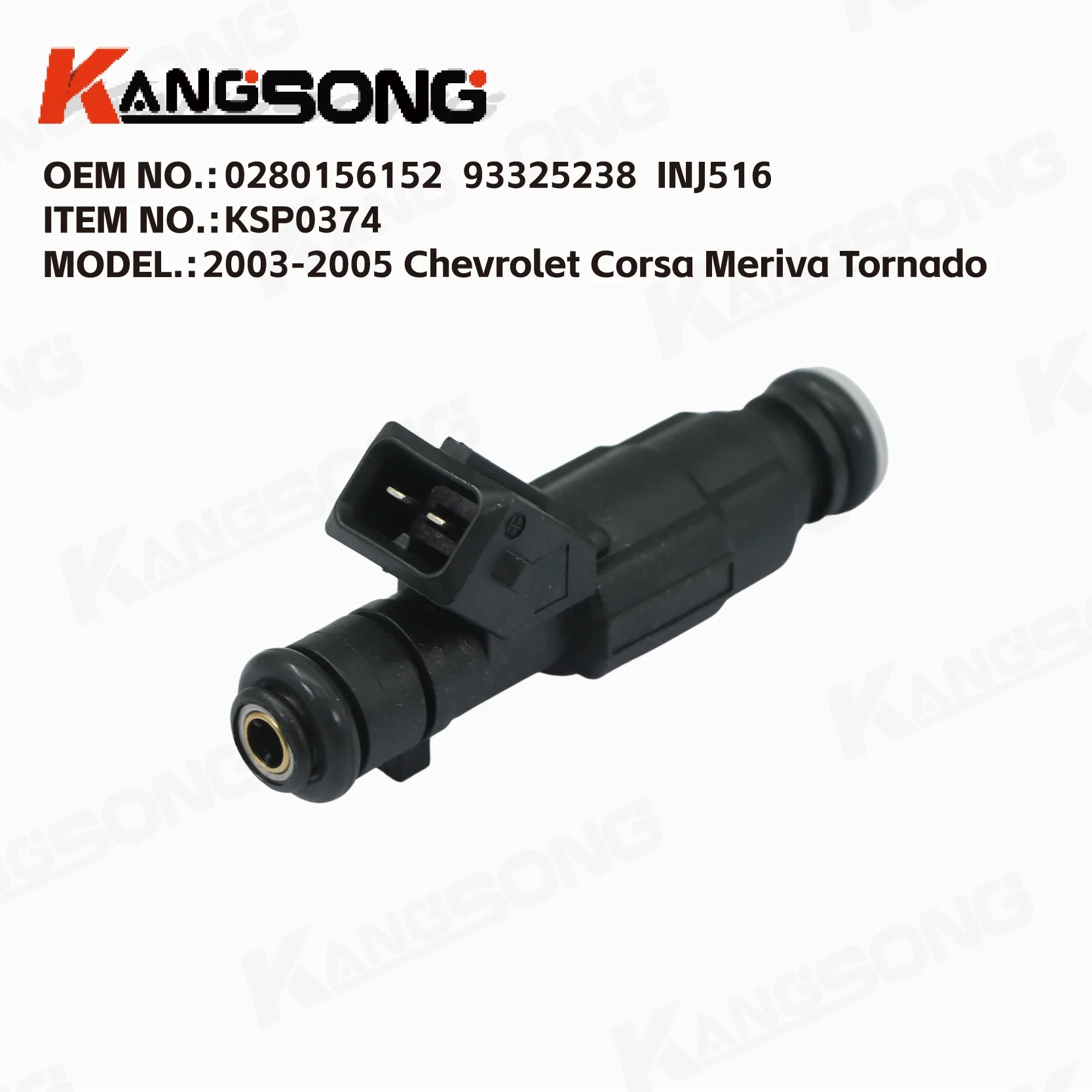
Skip the assembly browse while fuel contamination is still open, while the failed part is a diesel high-pressure / common-rail pump, or when the VIN falls outside the listed years and engines. Product links here are browse-only; this article does not run a standalone RFQ or quote workflow.
FAQ
What is the difference between a diesel fuel pump and a gas fuel pump?
Diesel injection pumps are built around much higher injection pressures and fuel-lubricated high-precision parts, while gasoline systems use lower port-injection pressures or a separate GDI high-pressure stage after an electric feed. Architecture and lubricity—not cosmetics—drive the difference.
Why do diesel fuel pumps need higher pressure?
Diesel engines ignite fuel by injecting it into hot compressed air, so the fuel must atomize at high pressure inside the cylinder. Common-rail systems keep that pressure available in a rail fed by a high-pressure pump.
Do gasoline direct-injection pumps run as high as diesel common-rail pumps?
No. Educational GDI examples often place the mechanical HPFP rail in a roughly 2,000–3,000 PSI class after a ~50–85 PSI feed, which is still a different pressure job from diesel common-rail injection bands discussed in many buyer guides.
What is a lift pump versus a high-pressure fuel pump?
A lift or supply pump moves fuel at low pressure from the tank toward the engine’s high-pressure stage. The high-pressure pump raises fuel to injection/rail pressure. Diagnose and quote them as separate stages.
Why does fuel lubricity matter for diesel pumps?
Diesel high-pressure components rely on the fuel’s lubricating film. U.S. diesel fuel practice commonly references an HFRR lubricity limit (520 µm max in ASTM D975-related summaries) because poor lubricity accelerates wear.
Can I use a gasoline fuel pump on a diesel engine?
No. Pressure capability, materials, and lubricity expectations do not transfer across fuel families. Treat cross-use as a misfit, not a temporary spare.
What should I do if gasoline was put in a diesel tank?
Avoid cycling the key if the lift/booster pump would push gasoline into the high-pressure path. Drain and recover the system before evaluating pump damage; if the engine already ran, inspect for wear/debris per platform guidance.
Is this the same as diesel fuel pump nozzle size?
No. Nozzle-size content covers dispenser spout OD and misfuel guards. This article compares on-vehicle diesel versus gasoline fuel-pump architecture and procurement fit.
References
- DieselNet — Common Rail Fuel Injection
- DieselNet — Fuel Injection System Components
- DieselNet — Fuels: USA Diesel Fuel (lubricity / ASTM D975 context)
- U.S. EPA — Diesel Fuel Standards and Rulemakings
- APEX Tech Nation — Gasoline Direct Injection (GDI)
- Sprinter-Source — Draining after gasoline in diesel tank