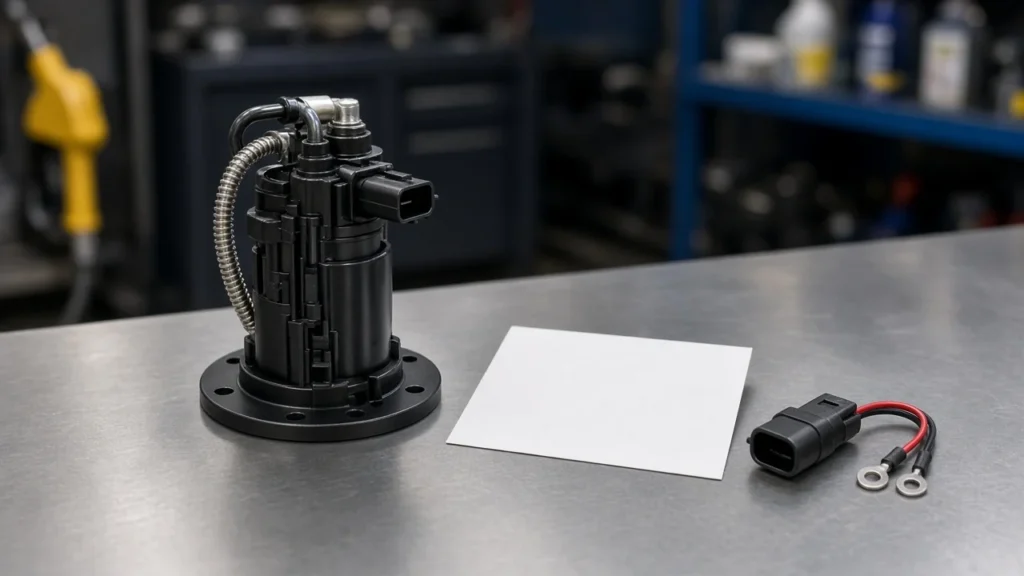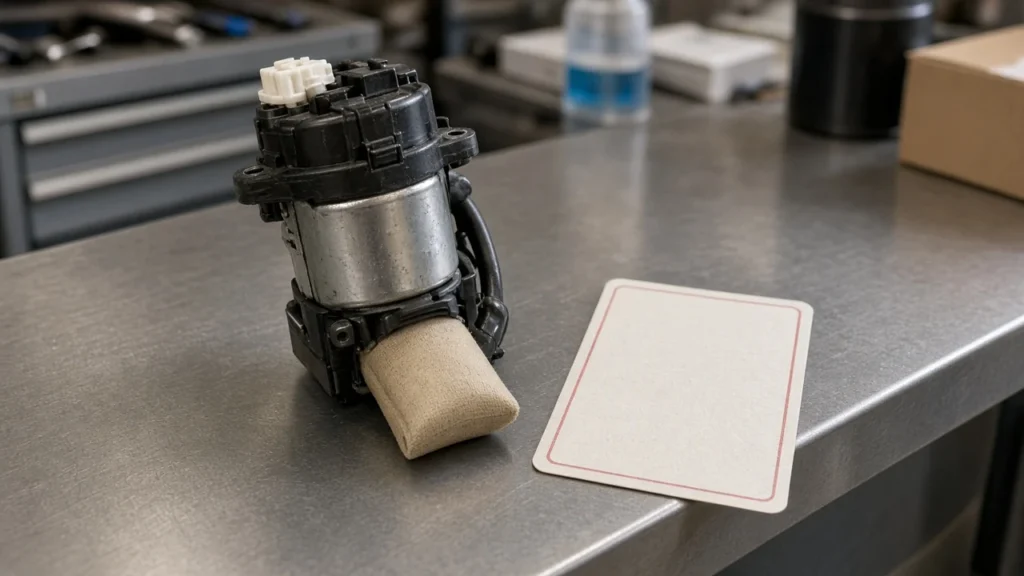
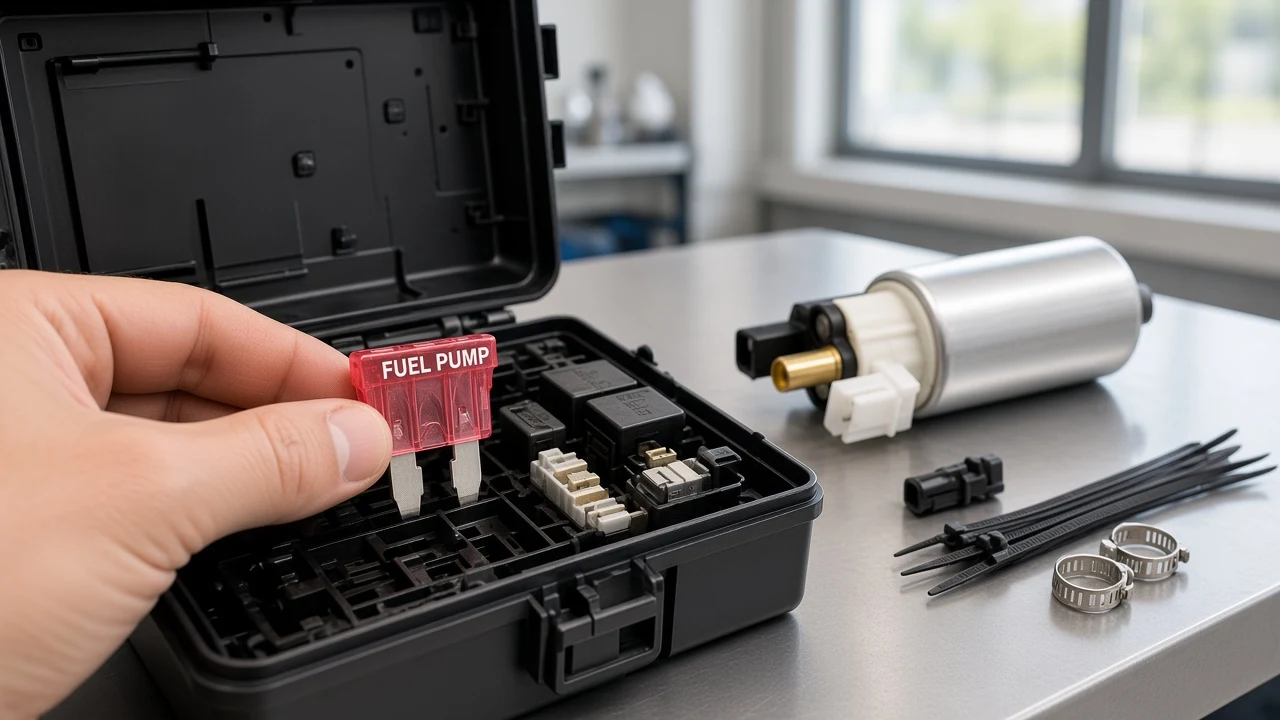
Fuel pump fuses are the sacrificial overcurrent links on the high-current feed to an electric fuel pump: when current exceeds the marked amp rating, the metal element melts and opens the circuit so the harness—and often the pump itself—is not the first thing to burn.
This page stays on application and causes: what the fuse protects, what causes fuel pump fuse to blow, what causes fuel pump fuses to keep blowing, and how fuse, relay, and pump load fit together. For continuity and pad-voltage meter steps, use the sister guide on how to test a fuel pump fuse.
What Fuel Pump Fuses Do in the Power Path
Fuel pump fuses sit in the battery-side feed that supplies the pump (usually through a relay) and open deliberately when that branch pulls more current than the fuse is rated to carry.
In plain language, the fuse is the cheap, replaceable weak link. Excess current heats the thin metal strip inside a blade fuse until it separates. Power to the pump stops. That is annoying at a no-start counter—and far better than melted insulation under the tank strap.
Most late-model layouts place the cavity in an under-hood power distribution center / fuse box or, on some platforms, in a cabin kick-panel box. Labels vary: Fuel Pump, FP, F/PUMP, EFI, or a small pump icon on the lid map. The lid map is the authority for cavity ID and printed amp rating—not blade color alone.
A silent tank on key-ON is only a symptom. The fuse may be open, the relay may never close, the harness may be dark, or the pump motor may be dead with good power still present. The fuse’s job is protection, not diagnosis by itself.
Important: Gasoline remains a regulated flammable fuel under United States EPA gasoline-standards programs (source: https://www.epa.gov/gasoline-standards). Ventilate the bay, keep ignition off when you pull fuses for continuity work, and stage a fire extinguisher before you probe near tank or under-hood vapor paths.
Fuse, Relay, and Pump Load: Who Protects What
The fuse protects the high-current feed, the relay switches that feed on command, and the electric fuel pump is the load that draws the amps.
Mixing those three roles is how counters waste a morning. A dead relay can look like a “bad fuse” when the cavity is fine. A shorted harness can look like a “bad pump” when the fuse is only doing its job. A worn pump can open a good fuse under crank or wide-open load even after a visual glance said the blade looked intact.
Independent automotive training material often places healthy electric fuel pump draw in a rough band around 8–15 amps on many passenger platforms. That band is orientation only—OEM service data for the VIN in front of you still governs. The point for this page is simple: the fuse rating sits above normal running current with margin, and below the damage threshold for the harness. When the motor, a restriction, or a short pushes the branch past that rating, the element opens.
| Part | Job on the circuit | Typical failure look |
|---|---|---|
| Fuel pump fuse | Sacrificial overcurrent protection | Open element; one live pad / one dark pad under power |
| Fuel pump relay | Switches high current so modules do not carry full pump amps | No click, no output, or high voltage drop under load |
| Electric fuel pump | Draws current to build rail pressure | High draw, shorted windings, or no run with good feed |
Relay pin 30 on many ISO cubes is the battery (or fused) power-in terminal. When the coil is commanded, contacts close and pin 87 feeds the pump. The fuse is usually upstream of that heavy path. If you need a bench continuity or pad-voltage procedure, stay on the sister test article rather than inventing a second meter script here.

What Causes a Fuel Pump Fuse to Blow
A fuel pump fuse blows when the branch current exceeds the fuse rating long enough for the element to melt—almost always from a short to ground or from an overloaded pump path, not from a “weak fuse” that randomly fails.
Shop and DIY education pages converge on the same short list:
- Wiring harness / short to ground — Chafed insulation on the fuel-pump wiring harness, a pinched feed after tank or bed work, or a connector that grounds the power pin. Current spikes; the fuse opens fast, sometimes the instant the key hits ON.
- Overcurrent from the pump load — Worn brushes or bearings, partially seized motors, or a severe fuel filter / restriction (clogged strainer or filter) that forces the motor to work harder. Draw climbs toward the fuse rating until the element opens under crank or run.
- Wiring and connection heat faults — Corroded terminals, melted cavities, or high-resistance joints that create local heat and abnormal current behavior on the same fused branch.
- Relay-side faults (less common, still real) — A shorted relay coil or damaged socket path can stress the fused feed depending on how the platform is wired. Treat this as a branch after harness and load isolation, not the first guess.
Timing matters. Instant open on key-ON usually smells like a hard short. A fuse that survives prime, then dies under crank or after a few miles of load, often points at rising motor draw or a restriction that only shows under demand.
Replace once at the same amp rating printed on the lid or OEM chart. Then watch whether the new fuse holds. That single observation splits “one-time event” from “fault still present” before anyone opens a second fuse pack.
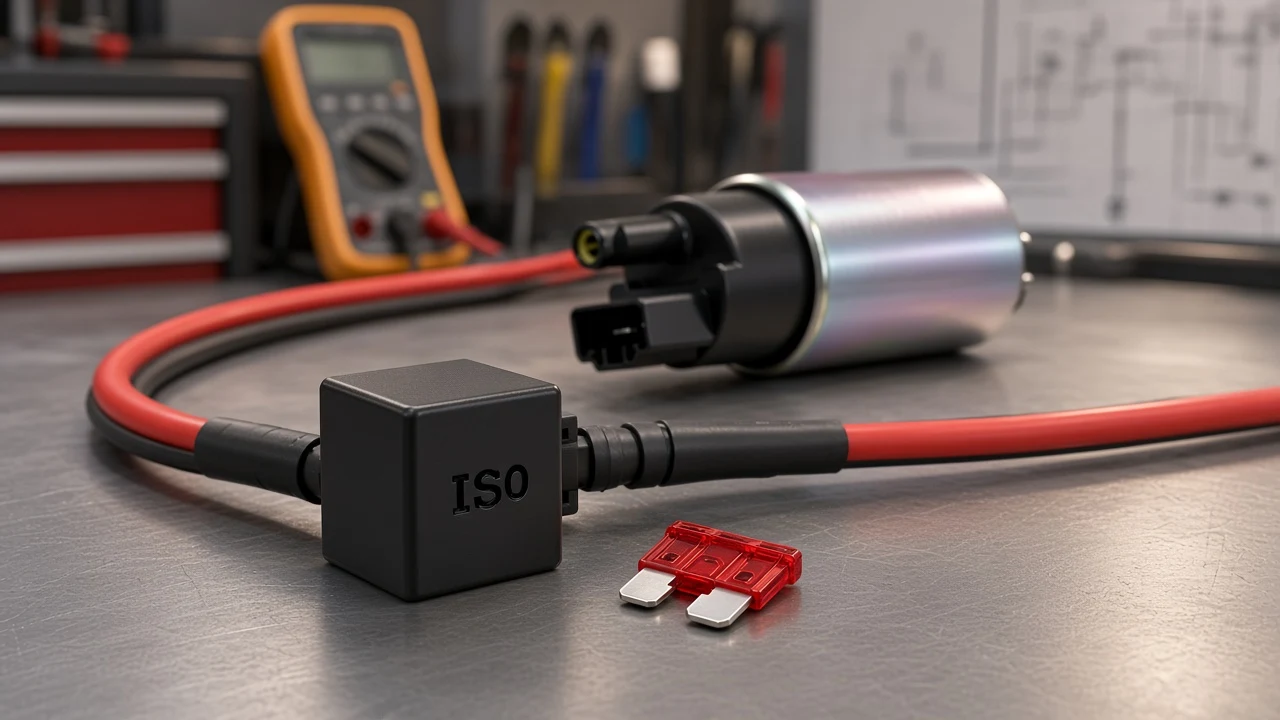
What Causes Fuel Pump Fuses to Keep Blowing
Fuel pump fuses keep blowing when the underlying short or overdraw is still on the circuit after a same-amp replacement—the fuse is reporting the fault, not creating it.
Community threads make the pattern vivid. Technicians describe pumps already swapped while a 10 A fuse still opens, and commenters push wiring shorts and relays instead of another module. Another MechanicAdvice case traced repeated blows to harness wires that had fallen out of a bracket and touched the exhaust manifold; tape and routing repair—not a larger fuse—restored starts.
Use isolation language on the ticket:
- Replace once at the correct amp. Note whether the open is instant on key-ON or delayed under load.
- If it opens immediately, unplug the pump/module connector and retest key-ON when safe. Fuse holds with the pump unplugged → fault is at the pump, tank harness near the pump, or inside the module. Fuse still opens unplugged → chase the short between the fuse/relay feed and the connector.
- Inspect underbody and tank-area routing after bed, tank, or exhaust work. Chafe to chassis or heat shields is a recurring shop story.
- Do not “prove” the car by stacking higher-amp blades. That only moves the melt point into the harness.
From the field: Reddit MechanicAdvice threads repeatedly land on the same two suspects when fuses keep opening after a pump swap—harness short to ground, or a relay/path fault—rather than an endless stack of “bad fuses” (source: https://www.reddit.com/r/MechanicAdvice/comments/gycoc8/help_fuel_pump_relay_fuse_keeps_blowing/).
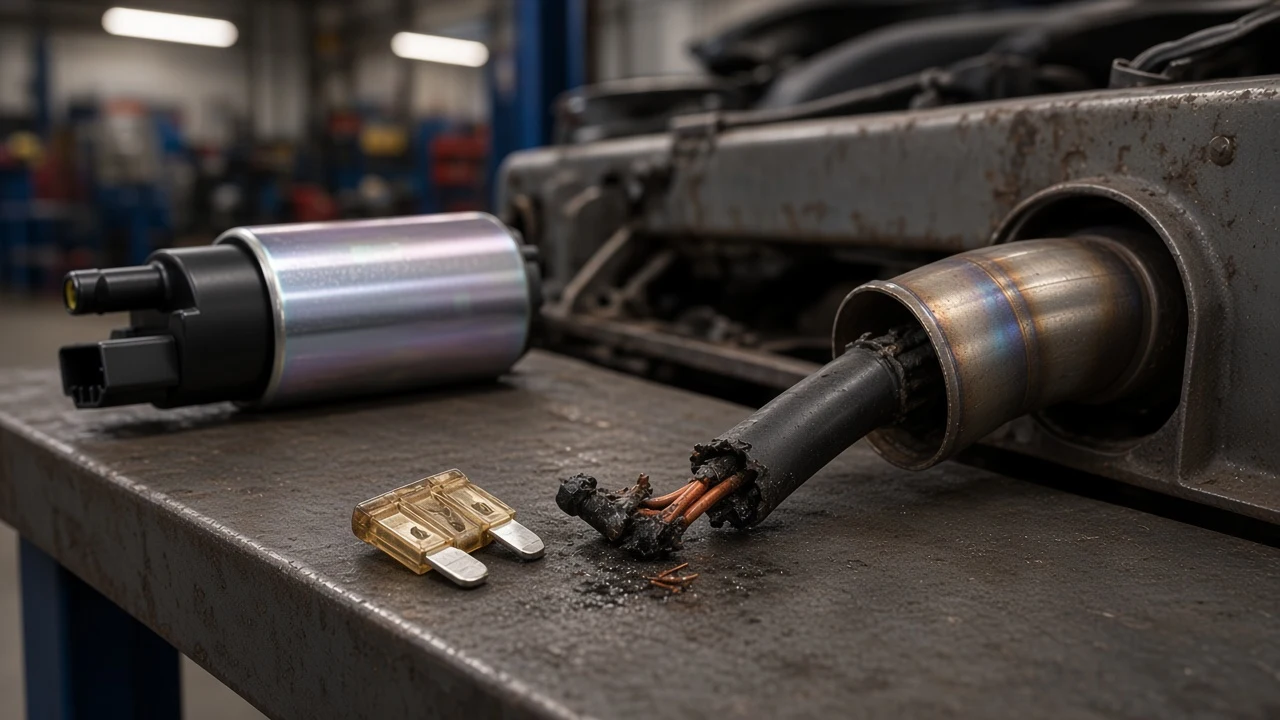
| Pattern | Likely story | Counter next move |
|---|---|---|
| Instant open on key-ON after new same-amp fuse | Hard short or pinned feed | Unplug pump; inspect chafe/pinches |
| Survives key-ON, dies under crank/run | Rising pump draw or severe restriction | Check draw vs OEM; inspect filter/strainer path |
| Still opens with pump unplugged | Short between fuse/relay and connector | Trace feed harness before quoting another module |
| Holds after wiring repair | Chafe or connector was the root | Retest prime; close the fuse ticket |
Match the Amp Rating—Never Upsize a Fuel Pump Fuse
Match the fuse amp rating marked on the original fuse and the lid map; never install a higher-amp fuse to “get the truck home.”
Automotive power-center training is blunt on this point: a higher-amp substitute raises the risk of circuit damage or electrical fire because the sacrificial element is no longer the weakest link. The harness insulation or a connector cavity can become the fuse instead.
A lower-amp substitute is also wrong—it opens early under normal pump inrush or running current and creates false “keeps blowing” tickets. Color coding on blade fuses helps identification, but the fuse amp rating molded into the plastic is the number that matters.
If the new correct-amp fuse opens again, the circuit is still telling the truth. Stay on isolation. Soft-link the sister test page when the bay needs continuity or dual-pad voltage proof before anyone argues about relay clicks.
Tip: For the meter sequence—pulled-fuse continuity versus powered pad checks—use how to test a fuel pump fuse instead of duplicating that procedure here.
Recommended Electric Pump Kits After Power Is Proven
Quote an electric fuel pump or install kit only after the fused feed and relay path can deliver power and the pump still fails commanded run, pressure, or volume checks.
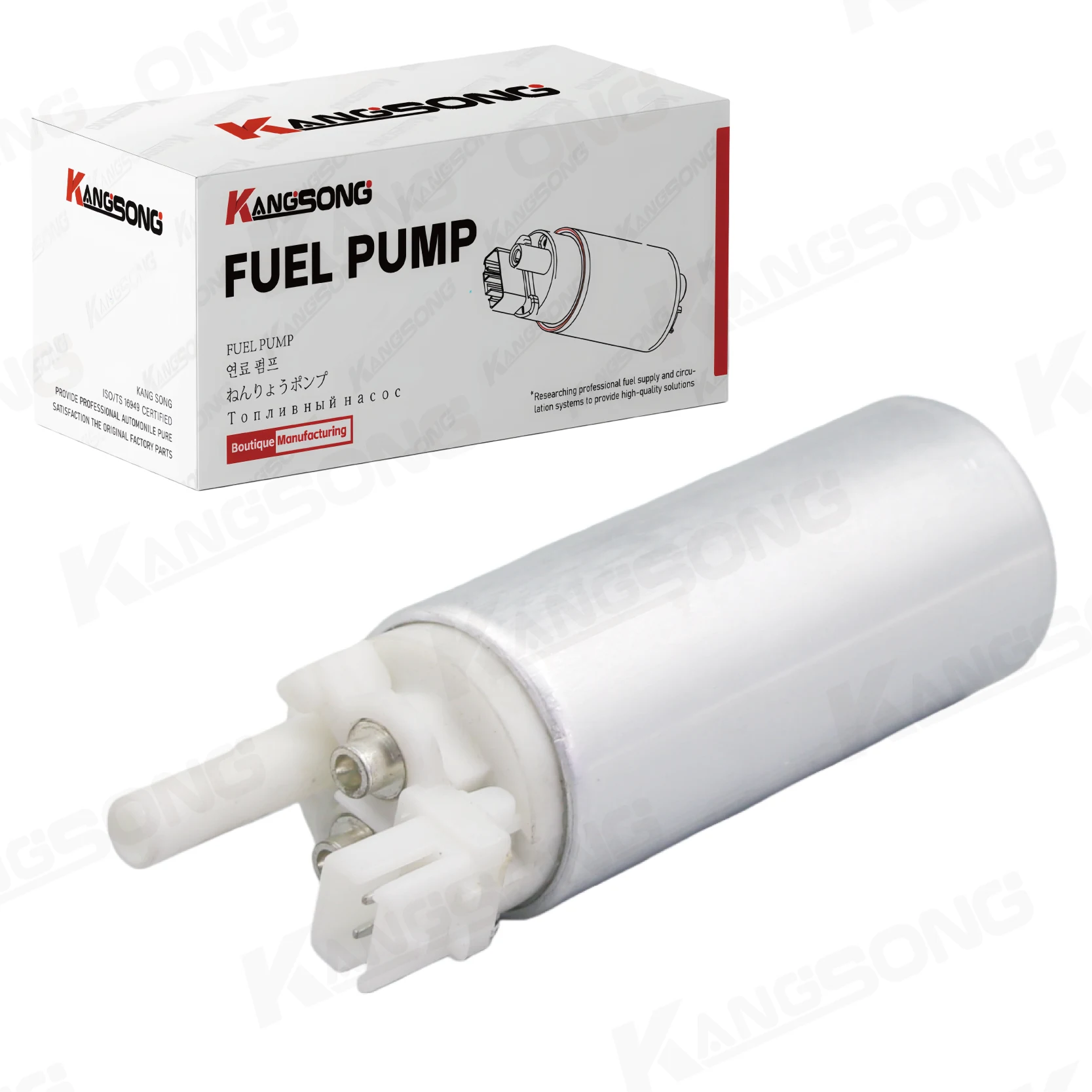
At that point the fuse story is closed. The buyer needs a platform-scoped electric pump—not another assortment of blades. Browse the Kangsong catalog on the products hub. One install-kit example is the electric gasoline fuel pump with installation kit (product page scope applies). Match OE references and connector style per SKU; a Hyundai/Kia- or Jaguar-scoped listing does not prove fitment on another platform.
Attach cavity ID, printed amp rating, same-amp re-blow timing, and unplug-isolation notes to the RFQ so the next stocker does not restart the electrical chase. Skip the pump path when the fuse is still unexplained, the unplug test still points at a harness short, or the vehicle falls outside the product page’s listed scope. No third-party brand equivalence is implied by the catalog link.
FAQ
What do fuel pump fuses do?
They protect the high-current feed to the electric fuel pump by melting open when current exceeds the marked amp rating, interrupting power before the harness becomes the weak link.
What causes a fuel pump fuse to blow?
Usually a short to ground in the feed/harness or an overcurrent load from a failing pump motor or severe fuel-side restriction. The fuse is reporting excess current, not failing at random.
What causes fuel pump fuses to keep blowing?
The root short or overdraw is still present after a same-amp replacement. Instant opens often mean hard shorts; delayed opens under load often mean rising pump draw. Unplug isolation separates pump-side faults from feed-harness shorts.
Is the fuel pump fuse the same as the fuel pump relay?
No. The fuse protects; the relay switches. Both often live in the same box, but replacing one does not fix the other’s job.
Can I replace a fuel pump fuse with a higher amp fuse?
No. A larger fuse removes sacrificial protection and can let wiring overheat while the short or overdraw remains.
Can a bad fuel pump blow the fuse?
Yes. A worn or restricted pump can pull more current than the circuit rating allows, especially under crank or heavy load. Confirm draw against OEM data before stacking modules without isolation.
Where is the fuel pump fuse usually located?
Often in the under-hood power distribution center, sometimes in a cabin kick-panel box. Use the lid map or owner’s manual for FP / Fuel Pump / EFI labels—do not guess by color.
When should a counter quote a replacement electric fuel pump?
After the fuse and relay path can feed the pump and delivery evidence still fails. Then filter the products hub with VIN/OE notes attached—and use the sister test page if power path proof is still missing.
References
- Wikipedia: Fuse (electrical) — sacrificial overcurrent operation of fuses.
- AA1Car: Automotive Power Centers, Fuses and Relays — amp matching, fire risk of upsizing, fuel pump as high-current relay load.
- Apex Technation: How to Test an Automotive Relay — typical fuel-pump current band and fused feed at relay pin 30.
- United States EPA: Gasoline Standards — gasoline program context for careful fuel handling during service.
- Garage Journal: Testing Auto Fuses with Ohm Meter — community guidance on pulled-fuse ohms checks.
- Reddit r/MechanicAdvice: fuel pump relay fuse keeps blowing — user language on shorts, amp draw, and harness chafe.