The advantages of electric fuel pump hardware start with a simple job: it pushes fuel from the tank on an electrical command, so delivery does not wait on a cam stroke or a long suction line through a hot engine bay. That shows up as injection pressure, hot-weather feed, and a line that can prime before the starter turns. The rest of this page compares that pattern with a mechanical pump, then covers placement, the drawbacks that still kill a bad conversion, and a scoped kit path.
For the wider job of moving fuel at all, read what a fuel pump is used for. Here the question is narrower: when the electric design is the better application, and when it is extra work.
What an Electric Fuel Pump Changes in Daily Use
Fuel leaves the tank whenever the electrical system commands the motor, instead of waiting on an engine stroke.
Think of the mechanical unit as a passenger on the engine. A lobe or eccentric has to move before fuel moves. An electric fuel pump has its own motor, so the key-on circuit can build pressure before the crankshaft turns.
That is the daily difference a driver notices as a shorter crank, and the difference a technician notices as a gauge that rises before the engine fires.
The same independence changes where the pump can live. Because the motor does not borrow a cam, the pump can sit at the tank, on a frame rail, or inside the tank. Engine bays stop being the default address.
Freedom of location is also the start of the extra work. Something has to turn the motor on, turn it off, and keep a carburetor from seeing more pressure than the needle and seat can hold.
Those gains come with a bill. Nothing about the swap is free.
Advantages of an Electric Fuel Pump Over a Mechanical Fuel Pump
The advantages of electric fuel pump over mechanical fuel pump hardware are higher steady pressure for injection, and a drive that does not depend on a cam-driven diaphragm.
Carbureted engines commonly use an engine-mounted mechanical pump at about 10-15 psi. Older port and throttle-body injection systems typically pressurize fuel to about 40-60 psi with an in-tank electric pump.
A cam-driven diaphragm pump built for a float bowl is the wrong tool for that second job. Direct injection is a third case: the in-tank electric pump still feeds the engine, and a separate high-pressure mechanical pump on the engine raises pressure further. Keep that engine-mounted injection pump separate from the low-pressure carburetor pump.
| Duty | Mechanical, cam-driven | Electric |
|---|---|---|
| What moves it | Engine lobe or eccentric | Motor on the vehicle electrical circuit |
| Typical home | Engine bay | Tank, or low and close to the tank |
| Best-known job | Carburetor float bowl | Port or throttle-body injection feed |
| Pressure pattern | Rises and falls with engine speed | Steadier, then trimmed by a regulator or the control unit |
| Oil-side failure | Torn diaphragm can leak fuel into the crankcase | Motor or circuit fails; it does not share a diaphragm with the oil |
Jalopnik’s comparison notes the diaphragm leak into engine oil as a mechanical failure mode, and notes that electric pumps can sit in the tank so surrounding fuel cools and lubricates them. The electric vs mechanical fuel pump choice is therefore a platform choice, not a trophy.
On a modified engine that needs more fuel than the stock cam pump can move, the electric unit’s ability to keep pushing at a set pressure is the practical gain. On a mild carburetor that already fills the bowl, that same gain can be unused capacity.
Where the Pump Sits Changes the Advantage
Tank-side push is what cuts the hot suction-line vapor lock pattern; the word “electric” alone does not.
Vapor lock was common when a low-pressure mechanical pump sat high on the engine and pulled fuel up a line. Lower pressure in that suction run lets hot fuel boil. A bubble then starves the float bowl.
Most injection systems put an electric submersible pump in the tank so the whole delivery line is under positive pressure and the pump runs cooler. Some carbureted engines get an electric pump near the tank for the same reason.
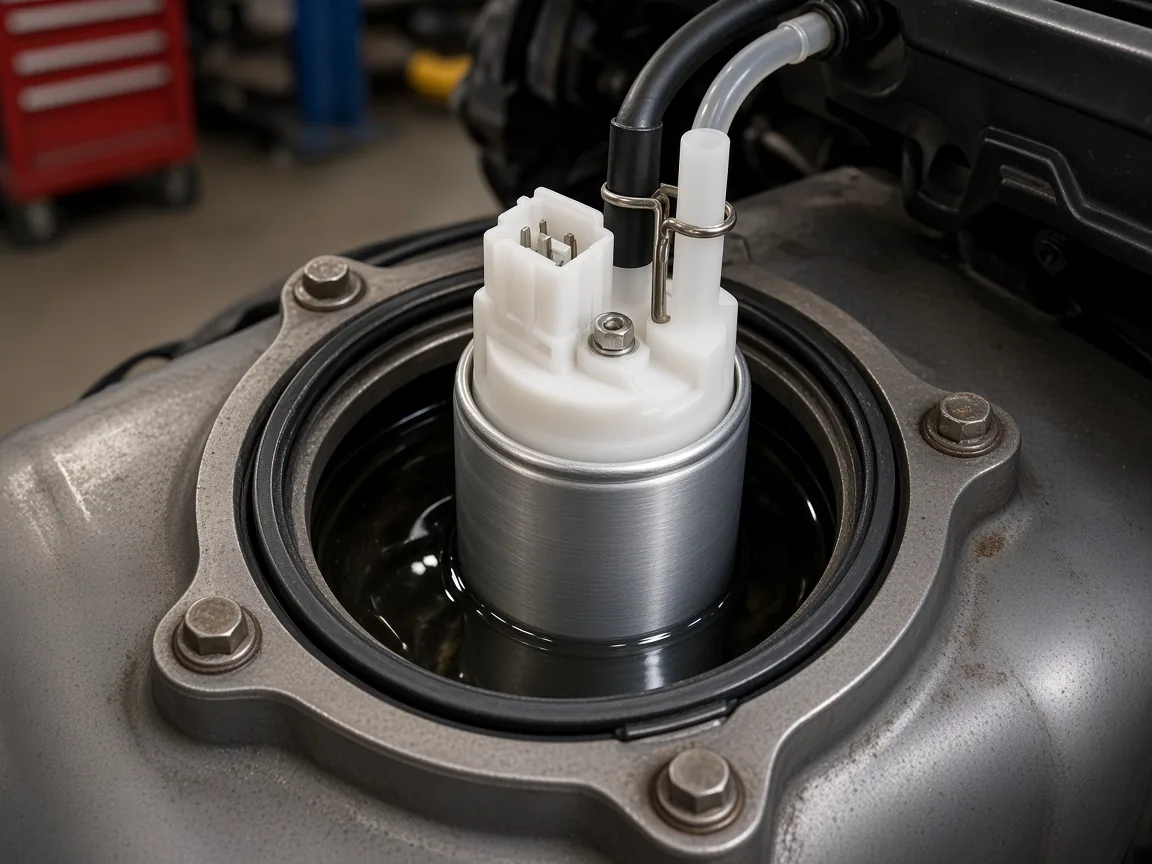
An in-tank fuel pump adds three location effects that an engine-bay pump does not. Fuel around the body cools it.
A full surrounding of liquid fuel, with no air mixed in, is a poor fire mix if a spark occurs at the motor. A pump already sitting in liquid does not have to suck air through a dry line after the tank has been emptied or the lines have been opened.
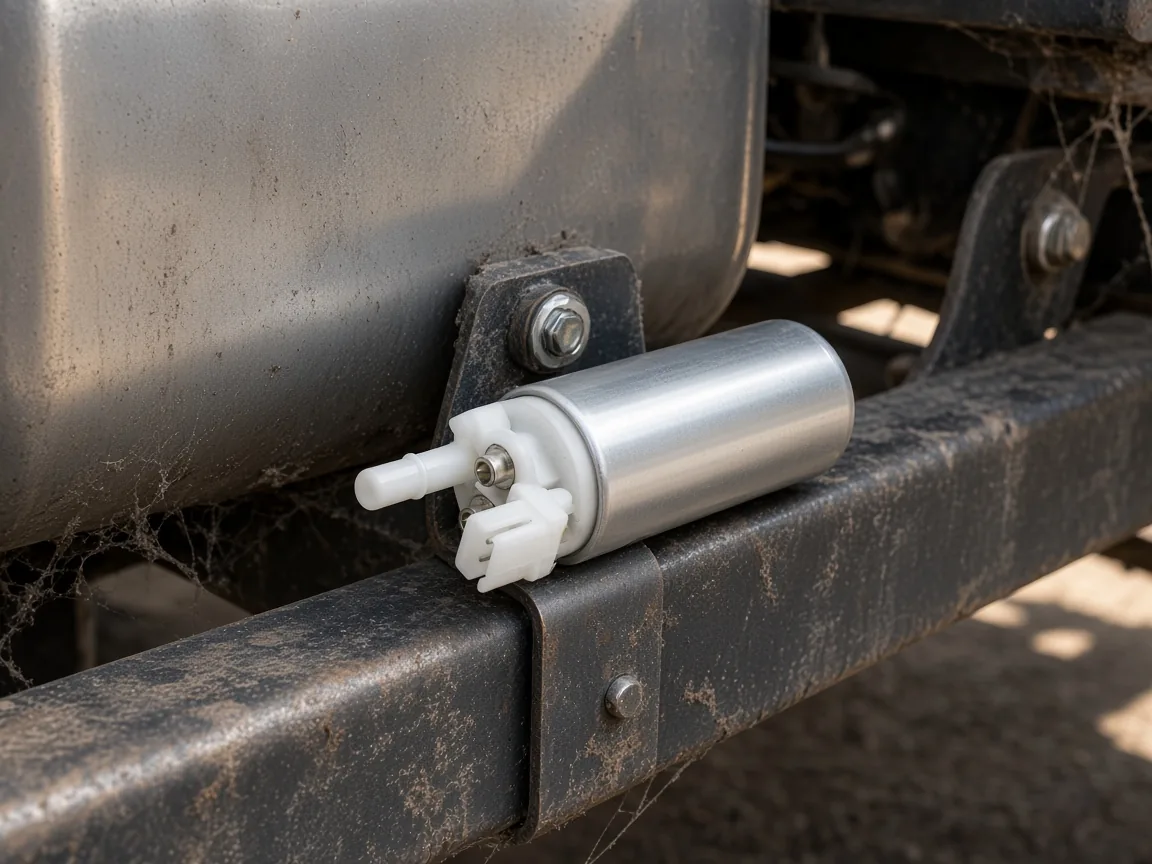
External pumps still push better than they pull. Mount one above the fuel level and it spends its life trying to lift fuel. Classic-car owners who have burned up a frame-rail pump usually mounted it too high, not “too electric.” Low and close to the tank is the layout that keeps the advantage.
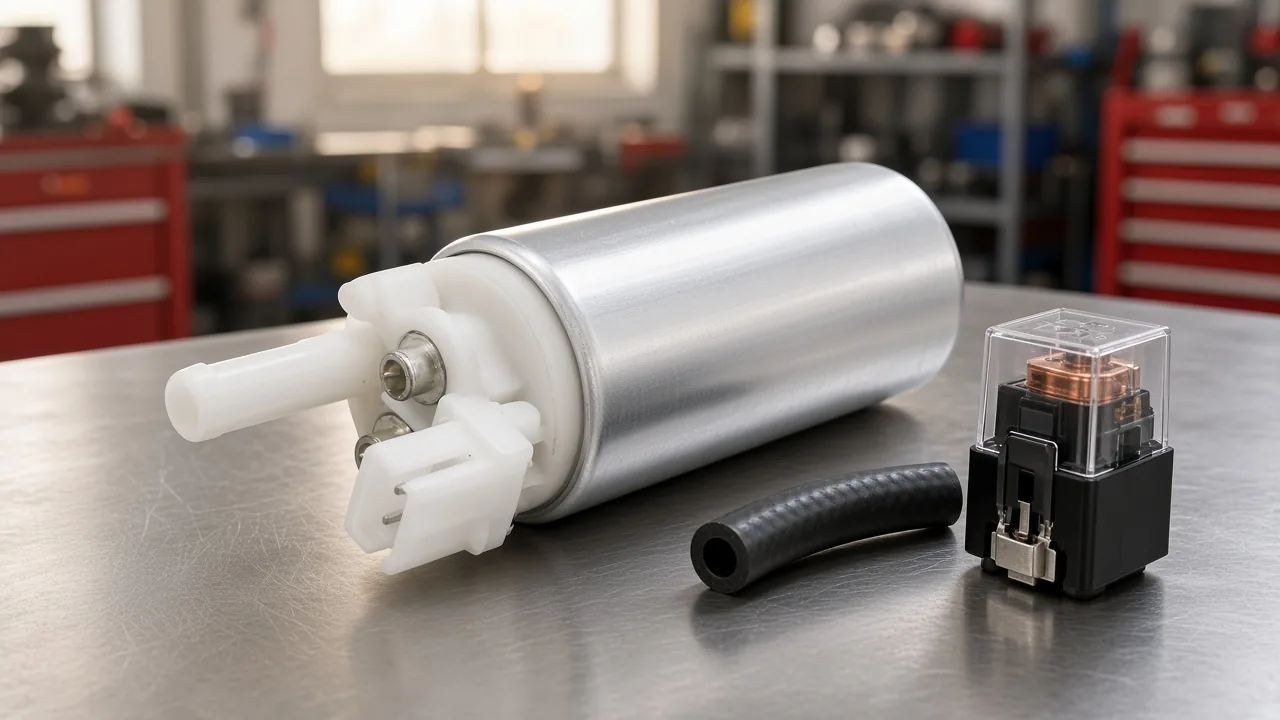
An inline fuel pump is the external version of that idea: reachable, useful when the tank opening will not take a module, and usually louder because nothing liquid wraps the motor. The definition of that package lives on what an inline fuel pump is. This page only needs the split: access versus cooling.
From the field: On a classic Cougar conversion thread, one owner wrote that electric pumps are often noisier than mechanical pumps, that a proper install uses an oil-pressure cutoff, and that the pump belongs near the tank so gravity feeds the inlet. Another owner liked the push, because pressure in the line helps with heat, and still listed the bracket, the wiring, the regulator, and sometimes a return line as the cost. Source: Classic Cougar Community Forum.
A hot soak can still boil fuel that is sitting still in an engine-bay line. Moving the pump does not repeal physics in a dead hose next to a header.
Disadvantages of an Electric Fuel Pump That Still Matter
The disadvantages of electric fuel pump installs are wiring, noise on many external units, a fuel pressure regulator on a lot of carburetors, and a tank that has to come down when an in-tank unit fails.
Owners on classic forums describe the same list. The pump needs its own fused supply and a clean ground. A relay keeps that load off a small ignition switch.
A carburetor that lived on a few pounds of mechanical pressure can flood if an injection-rated pump dead-heads into the needle and seat. The fuel pressure regulator, and sometimes a return to the tank, is how people keep the bowl honest and the fuel from cooking in the line.
People hear this complaint before they read a spec sheet. An external pump on a rail can drone. Rubber mounts help; they do not make it a mechanical pump.
An in-tank unit is quieter because fuel and sheet metal sit between the motor and the cabin. The trade is service: many tanks have to be lowered or the sender hatch has to be opened.
Roadside matching is the other quiet drawback. A common mechanical pump is something a parts counter still stocks for older engines. A specific electric module often is not.
People who convert and then drive far from home sometimes carry a spare. That is a planning cost, not a reason to pretend the pump cannot fail.
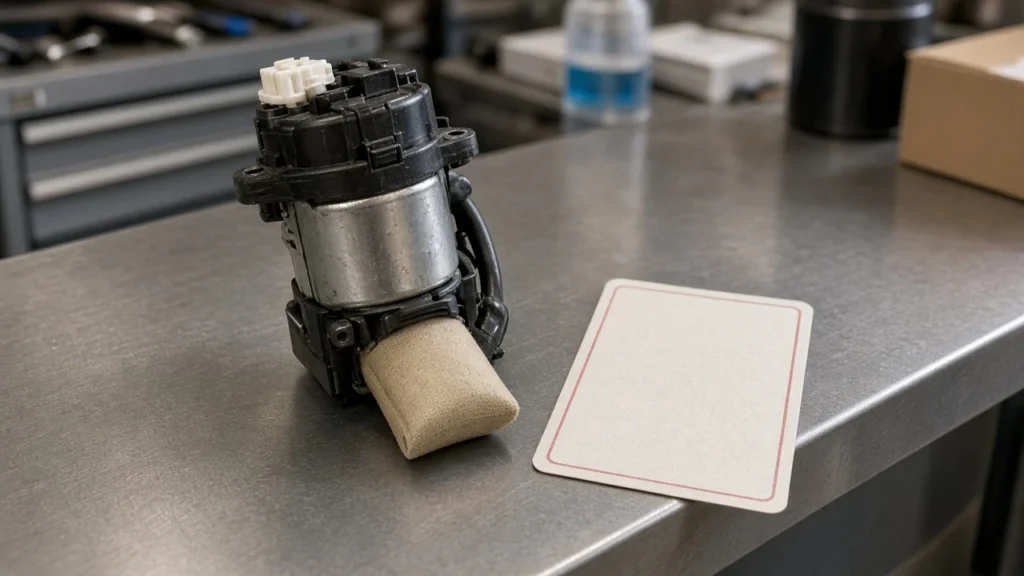
Contamination is less forgiving once a tiny turbine or gerotor is the pump. A screen or filter on the inlet side is how forum users stop sediment from holding a check valve open. Skipping that step, then blaming “electric pumps,” is a common misread.
When a Mechanical Pump Still Fits the Job
A stock carburetor car that already runs well usually does not gain enough to justify the wiring.
Jalopnik’s split matches the garage vote: restoring a carbureted classic, a mechanical pump remains the obvious stay-put choice; new injected cars are built around electric pumps. On the Cougar thread, owners said the same thing in plainer words. If the car is stock or close to it, the mechanical pump is simple and easy to swap at the side of the engine.
The most common fuel pump in carbureted applications is still that engine-driven diaphragm pattern for original equipment. A vacuum or pulse pump is a different mechanical cousin; how a vacuum fuel pump works covers the hose-pulse cycle. Neither page is a reason to rip out a healthy cam pump just because an electric unit exists.
| Situation | Stay mechanical | Move to electric |
|---|---|---|
| Stock carburetor, cool climate, pump already healthy | Strong case | Extra wiring for little feed gain |
| Hot weather, long suction line, repeated vapor lock | Marginal | Tank-side electric push is the usual fix |
| Port or throttle-body injection | Cam pump cannot hold the band | Electric feed is the matching design |
| More power than the stock pump can deliver | Will lean out first | Electric pump sized to the new demand |
| Tank cannot take an in-tank module | Keep mechanical if the carburetor is happy | Inline electric, mounted low, if more feed is required |
A conversion that starts from boredom is how people add a drone and a regulator to a car that already drove home. A conversion that starts from a lean miss under load, or from vapor lock after a hot shutdown, is the one the advantages were written for.
Wiring, Noise, and Shutoff Practice
Plan a relay, a fused supply, and a way to stop the pump if the engine stops, and expect an external pump to be louder than a submerged one.
An electric pump can run whenever its circuit is powered. Crash-test procedure for vehicles covered by the fuel-system integrity standard treats an electrically driven pump that normally runs with the electrical system on as a live fuel source at the moment of impact.
A 1995 NHTSA notice described the practices already in use then: many vehicles cut the pump when a collision stops the engine, and others open the circuit with an inertia switch. That notice asked about the tradeoffs.
Owners still read the practice the same way: an oil-pressure cutoff or an inertia switch is how they stop a pump from feeding a wreck or a stalled engine. The notice does not name one mandatory weekend part.
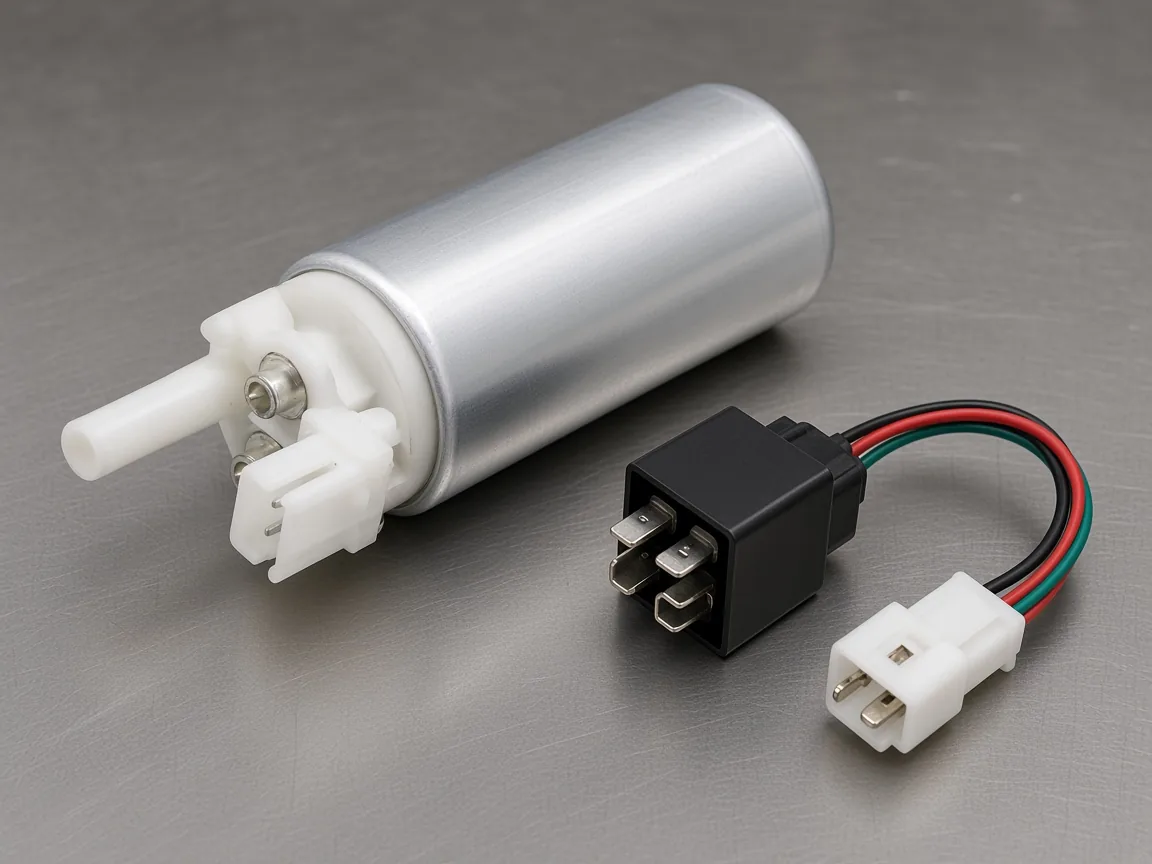
Noise and shutoff are separate complaints that show up in the same week of a conversion. Isolate the pump body from the rail if the cabin picks up the hum. Put the control where a driver can understand why the pump stopped after a hard bump.
An inertia switch that trips on a driveway dip is a real annoyance. Leaving the pump live with no cutoff is the other mistake.
If the only goal is a quieter cabin, an in-tank layout usually wins. If the only goal is a pump that can be swapped in a parking lot, an external unit wins and the noise budget has to be accepted.
How to Choose an Electric Fuel Pump Kit
Choose the kit whose page already names the interchange, and leave the mechanical pump in place when that list does not match.
Kangsong’s catalog path for browsing electric pumps and kits is the fuel-pump catalog.
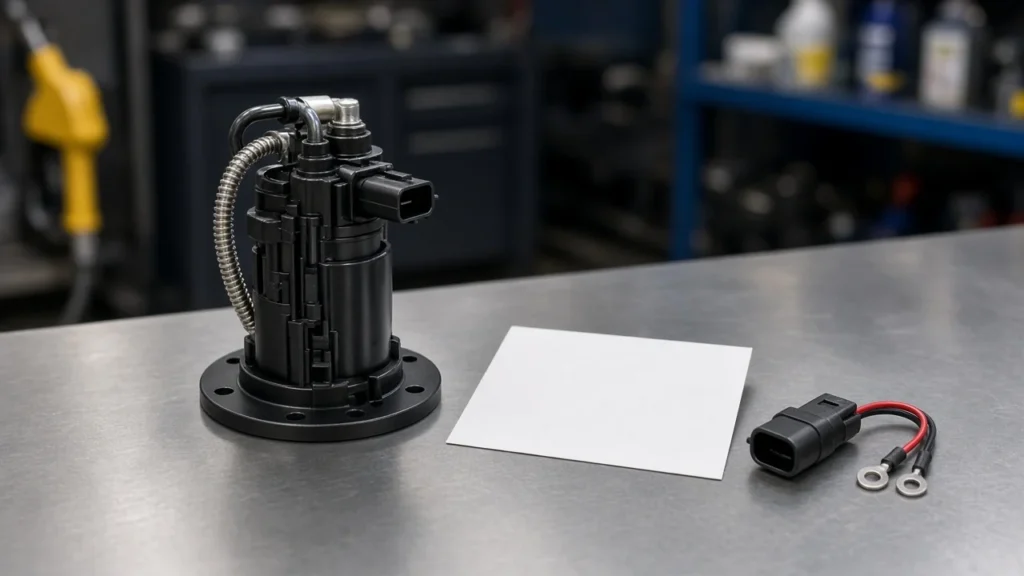
One published option is the electric gasoline fuel pump with installation kit for 1987-1995 C/K 1500, 2500, and 3500 pickups, listed against interchange numbers including 25168719, EP240, EP386, EP270, E3240, BGV00127, and UBEGY0PE.
That is a fuel pump kit for that electric gasoline job. It stays inside the listed interchange, and it does not cover a fitment the title leaves out.
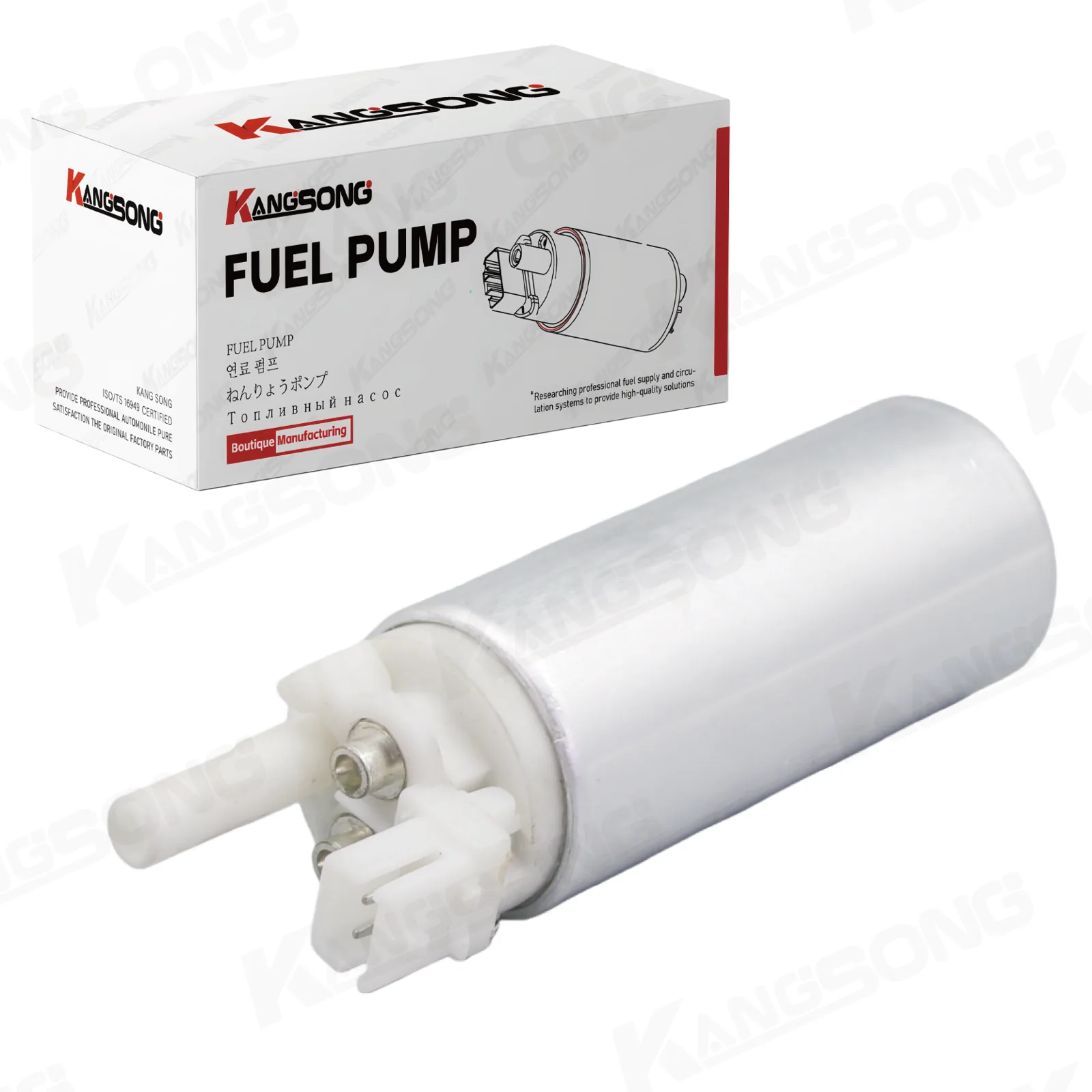
Match the connector, the outlet style, and the listed numbers before the pump goes in a box for a customer. If the platform is a stock carburetor with a healthy cam pump, the better choose is to leave it. If the platform is already an electric in-tank design and the interchange matches, this kit is the concrete next page.
FAQ
Are electric fuel pumps worth it on a stock carbureted car?
Usually no. The pressure and prime advantages matter when the carburetor is starving, vapor-locking, or when the engine has outgrown the cam pump. A healthy stock setup mostly gains wiring and a new noise.
What are the common problems with electric fuel pumps?
Low fuel that stops cooling an in-tank unit, an external pump mounted too high, a missing inlet filter, a weak ground, and too much pressure into a carburetor. Those show up more often than a mysterious “electric” defect.
How many psi does an electric fuel pump need for a carburetor?
There is no single carburetor number in the sources used here. Mechanical carburetor pumps are commonly in a low band around the low teens of psi, while port-injection electric pumps sit much higher. A carburetor conversion needs a regulator so the bowl sees what the needle and seat can hold, not the pump’s dead-head.
Can an electric fuel pump keep running after the engine stops?
Yes, if the circuit stays powered. That is why owners add an oil-pressure cutoff or an inertia switch, and why crash procedures treat an electrically commanded pump as a live fuel source when the electrical system is on.
Does an in-tank electric pump run quieter than an external one?
Usually yes. Fuel and the tank wall sit between the motor and the cabin. An external pump on a rail is the one people hear, even after rubber mounts.
Should a return line be added when leaving a mechanical pump?
Often, on a carburetor, if the new pump can over-pressurize the bowl or if fuel sits and heats in a dead-end line. Owners on the Cougar thread listed a return, with a regulator, as part of keeping the fuel cool. Confirm the carburetor can accept a return before drilling a tank.
How many years will an electric fuel pump last?
No life figure in this research is solid enough to quote. Heat, a dry tank, dirt on the inlet, and voltage at the connector move the result more than the label on the box. Plan for service access, and do not treat a year-count from a forum as a warranty.
References
- Fuel pump — Wikipedia
- Vapor lock — Wikipedia
- 49 CFR 571.301, Fuel system integrity — Electronic Code of Federal Regulations
- Fuel system integrity ANPRM, 12 April 1995 — National Highway Traffic Safety Administration
- Mechanical vs electric fuel pump — Classic Cougar Community Forum