Low voltage at a fuel pump is usually unwanted resistance or a soft supply in the power or ground path—not automatically a dead pump. When people ask what causes low voltage to fuel pump circuits, the answer almost always points to corroded terminals, poor grounds, damaged or undersized wiring, tired relay contacts, or a weak battery/charging system that never delivers healthy voltage under load.
Low voltage at fuel pump terminals under load is the clue that the path—not only the motor—needs attention. This guide inventories those causes, shows how low voltage at the fuel pump cuts flow and pressure, and outlines a loaded voltage-drop check before you condemn the motor.
Why Low Voltage at the Fuel Pump Cuts Flow and Pressure
Modest voltage loss can cut fuel volume and pressure enough to mimic a weak pump. An electric fuel pump is a DC motor: less voltage under load means the motor spins slower, so flow and pressure fall even when you can still “hear the pump.”
Industry technical bulletins use a simple teaching example: a normal charging-class system often sits near the mid-thirteen-volt range, and a loss of about two volts at the pump can cut volume on the order of roughly one-fifth while pressure falls by about one-third in that bulletin’s example. You do not need that exact percentage on every vehicle for the lesson to hold—any sustained fuel pump voltage drop under load is worth chasing before you order another module.
Important: Open-circuit voltage at an unplugged connector can look near battery voltage while the same circuit collapses once the pump draws current. Measure with the circuit loaded — source: Vehicle Service Pros loaded-drop guidance.
For broader power-side electrical patterns that are not limited to voltage loss, keep fuel pump electrical problems as a lateral read. Mechanical wear and contamination causes belong on what causes car fuel pump to fail, not here.
| Cause class | Typical clue | What the reader should check first |
|---|---|---|
| Corroded / heat-damaged connector | Green terminals, melted or blue-tinted plastic, loose retention | Tank-top harness plug and seals |
| Poor ground | Rusted stud, paint under ring terminal, missing ground after prior work | Chassis/battery-negative return |
| Undersized or damaged feed | Long thin run, chafed loom, warm fuse holder | Battery→relay→pump conductors |
| Weak battery / charging | Soft system voltage even before the pump | Battery state and alternator output |
| Relay contact wear | Relay clicks, yet low voltage at the pump under load | Relay output under load, not the click alone |
| Control-module / PWM path | Expected speed control or faulted driver feed | OEM strategy vs unwanted resistance |
Corroded Terminals and Heat-Damaged Fuel Pump Connectors
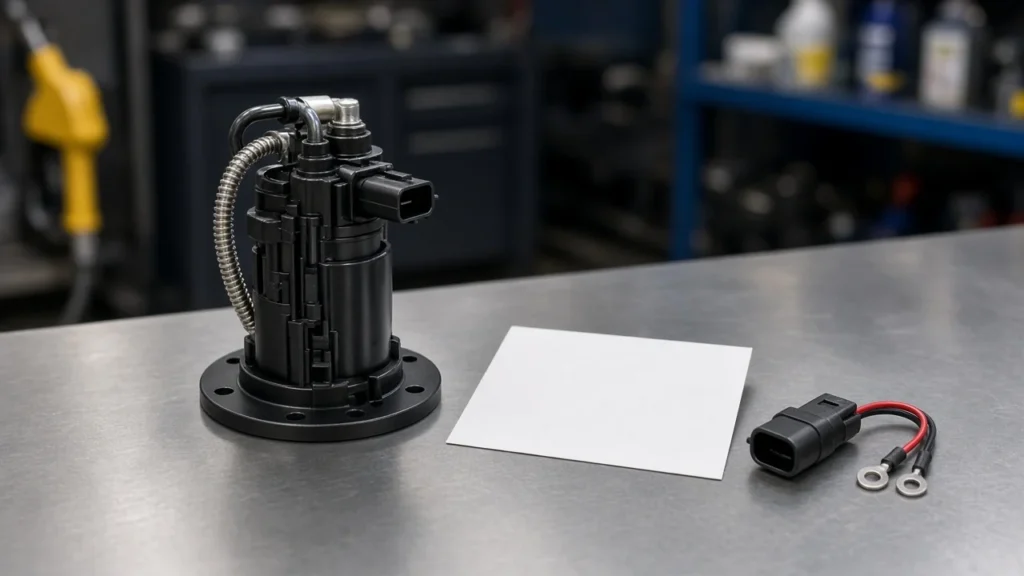
Green corrosion, loose retention, or melted plastic at the tank connector commonly steals voltage under load. A corroded connector and a corroded fuel pump connector both add series resistance exactly where road splash, salt, and de-icing brines collect on many in-tank modules.
Trade diagnostics call out tank-top connectors as a recurring corrosion site: chemicals wick into terminals and raise resistance, which shows up as fuel pump voltage drop once the motor is running. Heat discoloration or melted plastic is the same story told by temperature—resistance that should not be there turns electrical energy into heat.
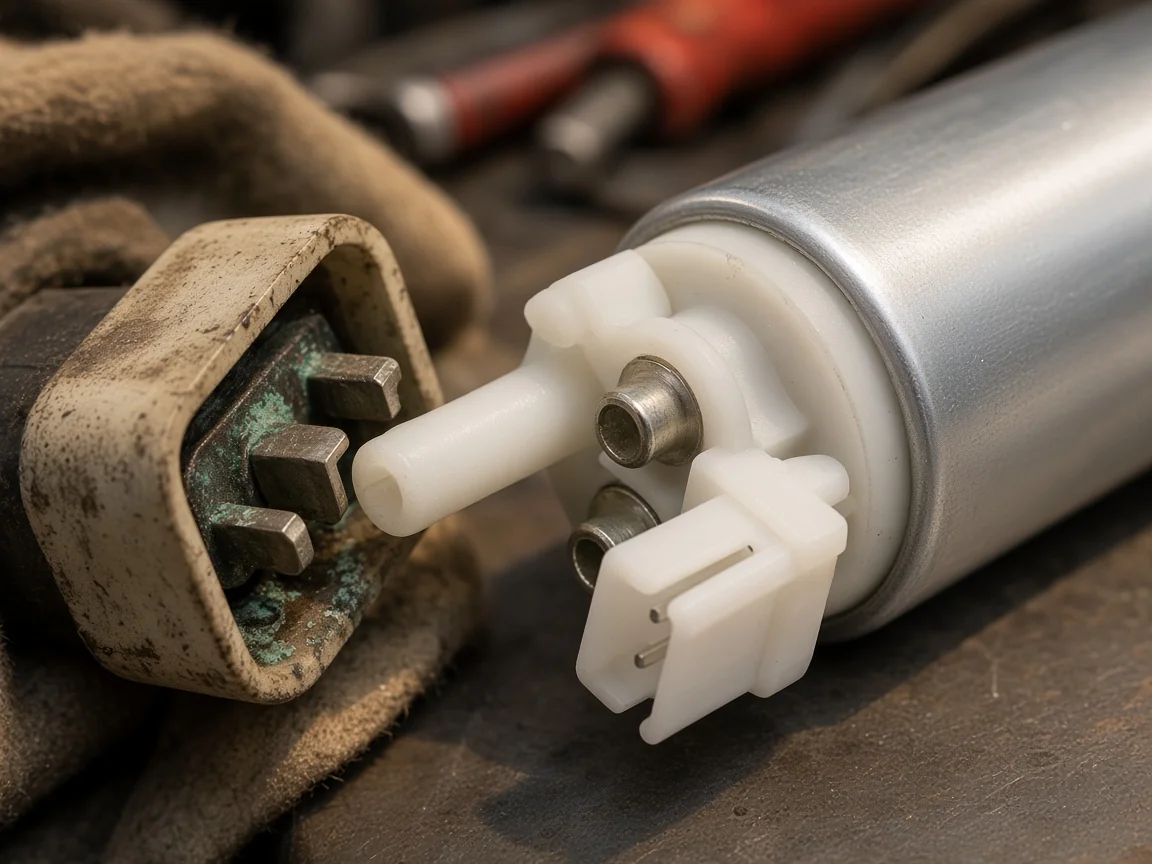
Weak connector retention clips matter too. If the plug does not seat with firm pin contact, fretting and intermittent high resistance follow. When you replace a pump, clean or renew the vehicle-side connector, reseal weather boots, and use contact cleaner—do not force a green plug onto a new unit and hope pressure returns.
This page stops at the voltage-cause story. Metering a fuse that already opened belongs on how to test a fuel pump fuse and the fuel pump fuses application guide.
Poor Grounds and Return-Path Resistance
Rusted, loose, or missing grounds raise return resistance and drop voltage at the pump. The motor needs a clean path home as much as it needs a healthy feed.
Technicians still catch vehicles with battery voltage on an open connector yet a soft reading once the pump is connected, because the ground stud is painted, rusted, or hanging after prior tank work. Community threads regularly describe cleaning frame and module grounds and seeing electrical loads behave better afterward—that language matches what trade editors teach about return-side voltage drop.
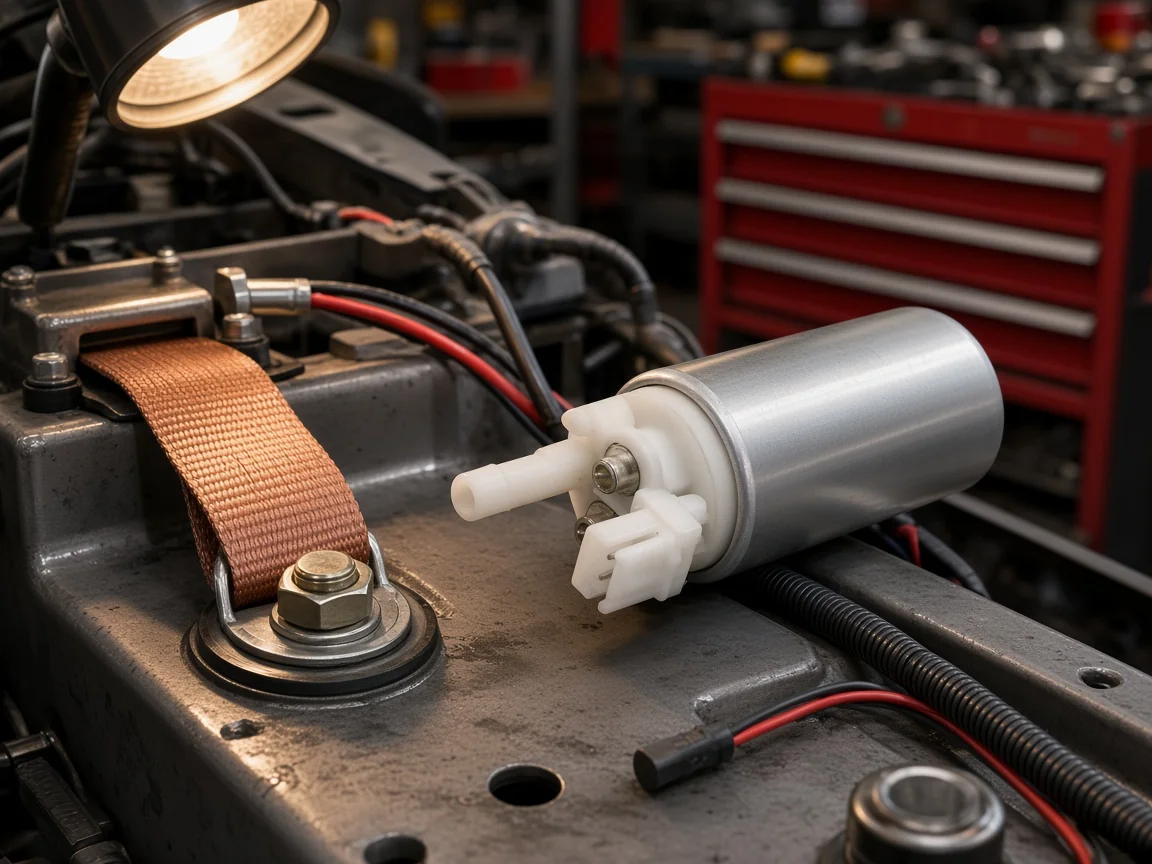
Check the pump ground to clean metal, confirm ring terminals bite through paint, and compare battery-negative voltage to the pump ground terminal while the pump runs. If the ground-side drop is high, repair the return before you blame the armature.
Undersized, Long, or Damaged Feed Wiring
Frayed harnesses, long thin feeds, and failing fuse holders add resistance that shows up as fuel pump voltage drop. Length and gauge are not academic: a wiring harness that looks fine on a short hatchback can starve a rear-mounted pump when the wire is too thin or the insulation is nicked against a chassis edge.
Technical bulletins list damaged harnesses among the most common voltage-loss causes. Shop write-ups add undersized aftermarket upgrades and dual-pump loads hung on factory wire as self-inflicted resistance. A fuse holder that is cracked or partially failed can drop voltage even when the fuse element still “looks good”—probe before and after the holder under load when readings disagree.
Deep fuse amp charts and placement worksheets stay on the fuse siblings. Generic twelve-volt install patterns (relayed fused feed, polarity, smoke test) live on how to wire a 12 volt fuel pump. Relay continuous-current selection stays on what size relay for fuel pump.
Weak Battery and Charging Supply
If system voltage is already soft, the pump never sees a healthy feed even with clean connectors. Compare battery or charging voltage to voltage at the pump under the same conditions; they should be close when the path is healthy.
A weak battery, corroded battery cables, or a lazy alternator lowers the ceiling for every load on the vehicle. The fuel pump simply makes that ceiling visible as hard starts, lean feel under load, or pressure that looks marginal on a gauge. Confirm battery health and charging output before you chase every connector on the tank.
From the field: Drivers and techs often report “the pump runs” while voltage at the pump sits far below system voltage. Hearing the motor is not the same as proving it has a healthy supply — source: community low-voltage threads + trade editors.
Relay Contacts and Control-Path Undersupply
A relay can click yet pass low voltage; some modules intentionally or faultily reduce feed—confirm under load. The click only proves the coil moved. Burnt or pitted relay contacts can still insert resistance in the high-current path between battery feed and pump.
Community cases describe roughly seven to eight volts at the pump while the relay coil side still looks near twelve volts—classic high-resistance between relay output and the motor, or tired contacts. Pull the relay, inspect the blades and socket for arcing, and measure voltage on the load terminal while the pump is commanded on.
On newer platforms, fuel pump control or a PWM strategy can intentionally lower voltage for speed control. That is not the same as a corroded wire.
Trade editors call those “good” voltage drops when they match OEM strategy. If a monitor circuit sees secondary voltage too low, some vehicles set a low secondary-circuit code—still a cue to test the feed path, not to guess the pump first.
Keep fuse and inertia-switch procedures on their own pages. This section only owns contact resistance and control-path undersupply as causes of low voltage at the fuel pump.
Confirm Causes with a Loaded Voltage-Drop Check
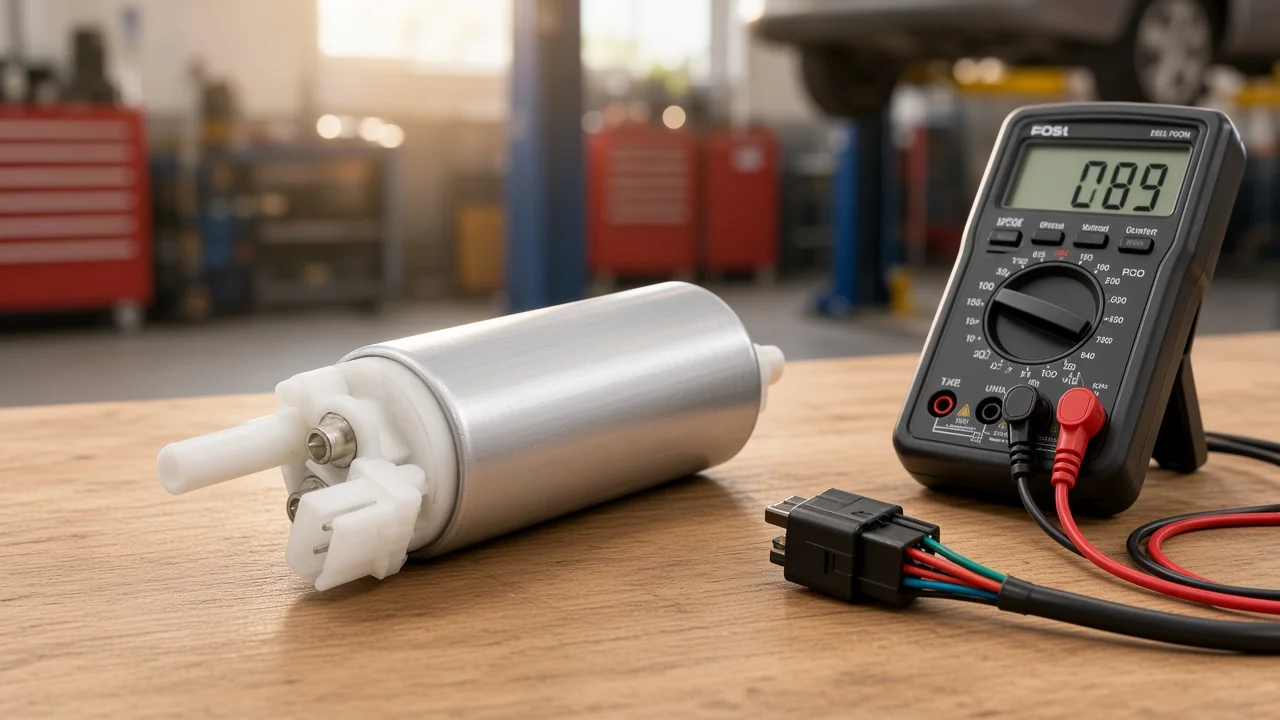
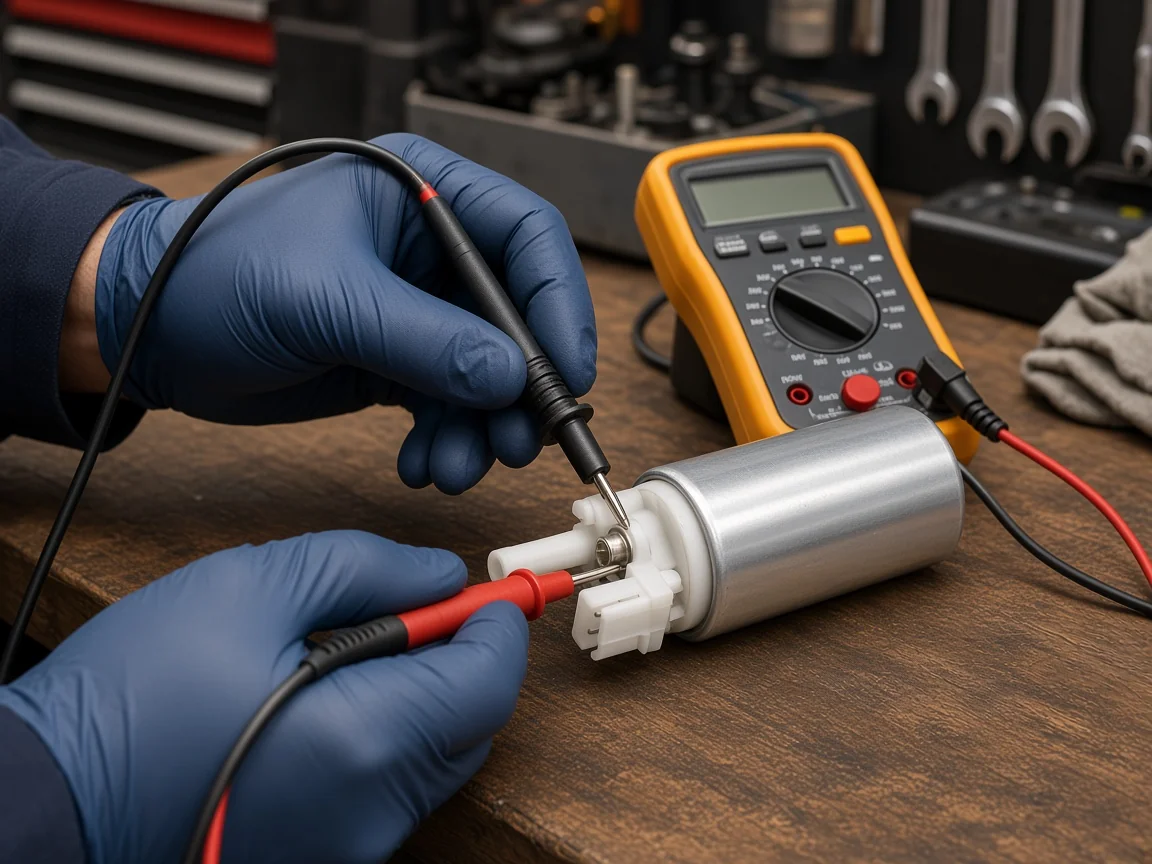
Measure drop on power and ground with the pump running; open-circuit battery voltage alone is not enough. A digital multimeter on a loaded circuit is the practical way to separate path faults from a failed motor.
Trade procedures typically energize the pump (key-on prime window is often only a couple of seconds unless you command the pump on), then measure battery-positive to pump-positive and pump-ground to battery-negative. Many shop guides treat roughly half a volt per side as a cue to investigate; some OEM-education procedures aim near two-tenths of a volt. Always prefer the vehicle maker’s published threshold when it differs.
| Check | What “good” often looks like in trade guidance | If the reading is high |
|---|---|---|
| Power-side voltage drop (battery + to pump +) under load | About half a volt or less (some procedures aim near two-tenths) | Inspect feed wiring, relay contacts, connectors, fuse holder |
| Ground-side voltage drop (pump − to battery −) under load | About half a volt or less (some procedures aim near two-tenths) | Clean/repair chassis ground and return conductors |
| System voltage vs voltage at pump under same conditions | Nearly the same when the path is healthy | Find the segment with the largest drop |
| Open-circuit connector voltage only | Can look normal even when the path is bad | Do not use alone to clear the circuit |
Use proper back-probes or piercing tools that do not spread terminals. Damaging a connector while testing can create the very overheating problem you are trying to prevent.
Tip: Treat fuel vapor and live electrical work as an ignition-risk environment—disconnect the battery before splicing, keep sparks away from open fuel, and follow shop flammable-liquid discipline — source: OSHA 29 CFR 1910.106.
When to Choose a Kangsong Electric Fuel Pump with Installation Kit
After the path is healthy, choose a DC twelve-volt-class Kangsong electric pump or kit that matches the listed OE application. Circuit repair comes first; a new pump on a high-resistance harness becomes another warranty return.
One concrete example is the Kangsong electric gasoline fuel pump with installation kit (product ID 2551): the product page lists working voltage as DC 12V for conventional passenger fuel systems, accessories included, a two-pin main connector, and OE/year scope on listed C/K pickup applications with interchange framing such as E3902-class listings on that page. Use it only inside that published scope.
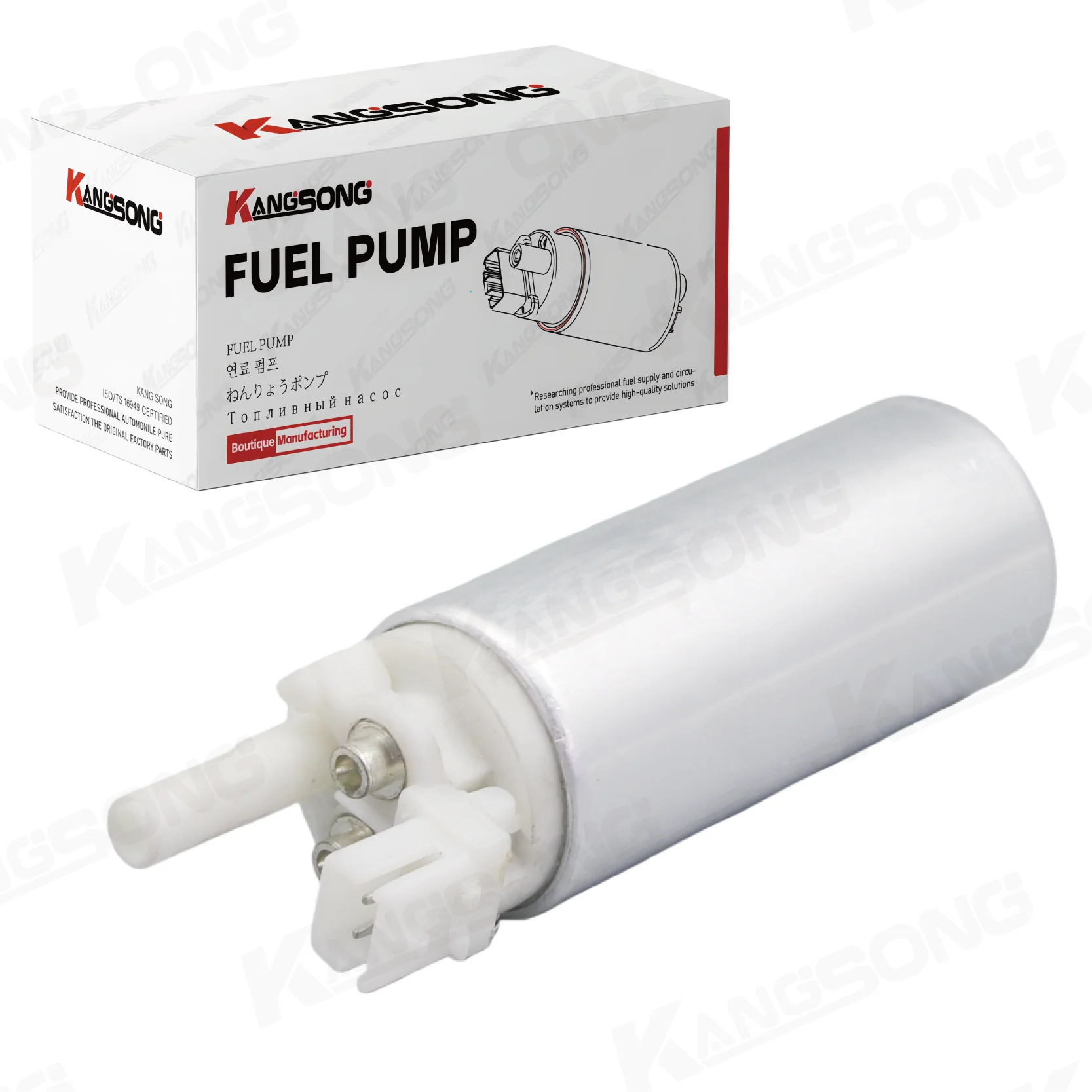
Browse the wider Kangsong products catalog when you need another electric-pump or install-kit SKU. Do not treat Kangsong as a substitute claim for unrelated third-party brands, and do not skip voltage-path repairs because a new motor is in the box.
FAQ
What causes low voltage to a fuel pump?
Most often, resistance under load in the power or ground path—corroded terminals, poor grounds, damaged or undersized wiring, weak battery/charging, or relay contacts that pass low voltage even when the relay clicks.
How much voltage drop is acceptable at the pump?
Many trade guides flag about half a volt per side under load as a reason to investigate; some education procedures aim near two-tenths of a volt. Follow the vehicle maker’s procedure when it specifies a different limit.
Can a bad ground cause low fuel-pump voltage?
Yes. Return-path resistance drops voltage at the motor the same way a bad feed does. Clean metal and a tight ground bond are part of every voltage-loss check.
Why is voltage OK with the connector unplugged but low under load?
An open-circuit reading does not push current through the resistance. Once the pump draws amps, the voltage collapses across corroded pins, thin wire, or tired relay contacts.
Can a clicking relay still cause low pump voltage?
Yes. The click confirms coil movement, not healthy high-current contacts. Measure load-side voltage while the pump is commanded on.
Does a weak battery create low voltage at the fuel pump?
Yes. If system voltage is already soft, the pump cannot see a healthy feed even with clean connectors. Confirm battery and charging health early.
Should I replace the pump first when voltage is low?
Usually no. Fix or prove the circuit first. Premature pump swaps are a common comeback when the path is still stealing volts.
What does a corroded fuel pump connector do to voltage?
Corrosion and heat-damaged terminals raise resistance at the tank harness, which creates fuel pump voltage drop under load and can melt plastic if left alone.
References
- Safe and efficient electric fuel pump wiring (HOT ROD)
- OSHA 29 CFR 1910.106 Flammable liquids
- r/Foxbody discussion: low voltage at the fuel pump
- r/MechanicAdvice discussion: fuel system grounds and electrical path
Editorial note: Drafted for Kangsong production package KANGSONGCN-ARTICLE-20260915-01; Author KS-DRF-AGT-LVFP-01. Humanizer second pass completed with no new facts added.