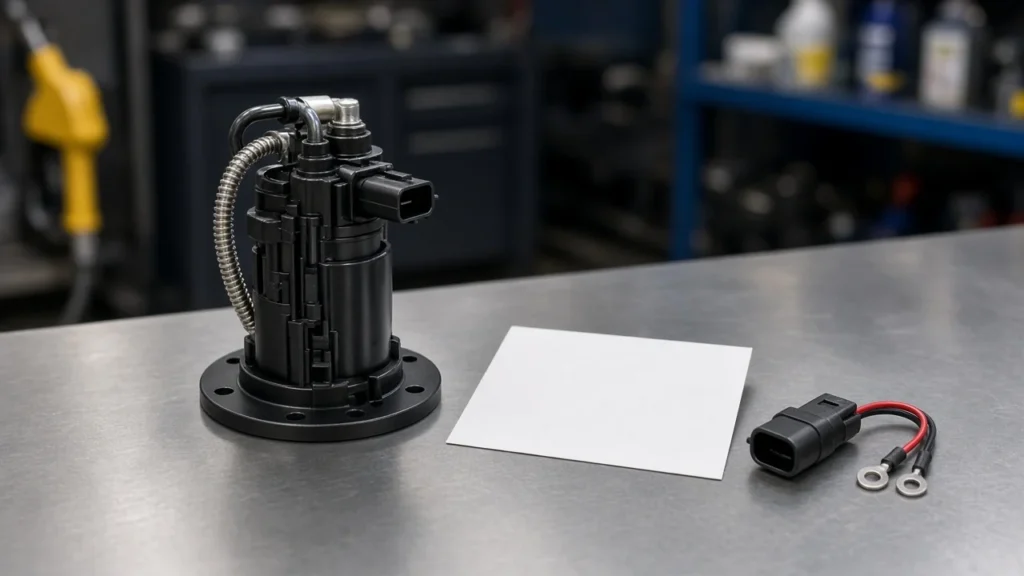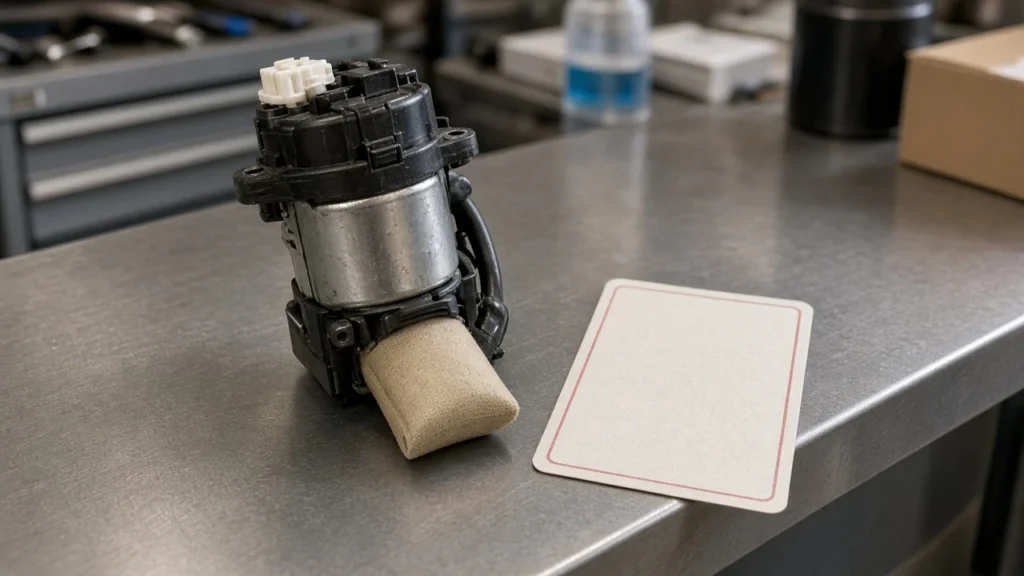
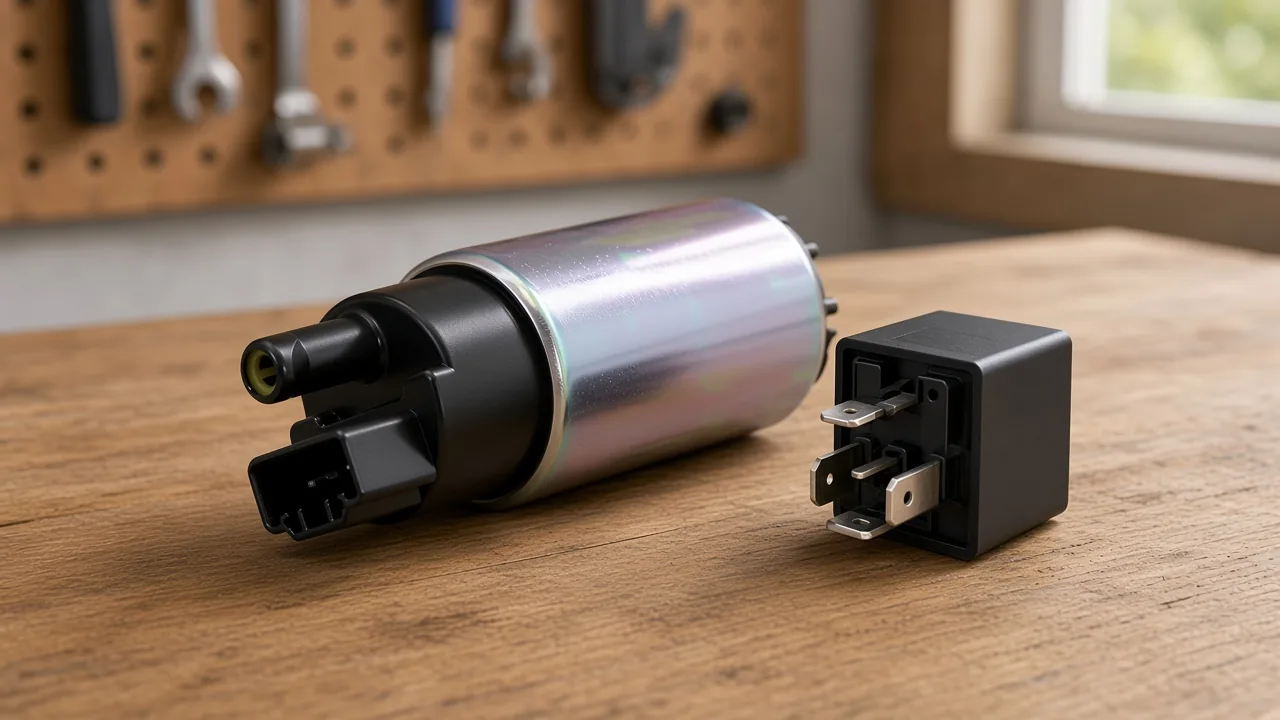
Match a 12v fuel pump relay by confirming a twelve-volt class coil for the vehicle electrical system, continuous contacts sized for the pump’s running current with margin, and a normally-open fused battery-to-pump path — not by trusting a marketplace title that only prints a twelve-volt thirty-amp stamp.
What follows separates coil voltage from contact rating, shows when an independent relay belongs on a twelve-volt pump circuit, and ends with a verification path plus live electric pump kits. Whole-circuit kit shopping stays on the electric fuel pump relay guide. The full amp and form-factor worksheet stays on what size relay for fuel pump.
What a Twelve-Volt Fuel Pump Relay Actually Specs
“Twelve-volt” on the listing names the coil class; contacts and socket fit are separate fields you still have to match.
A 12 volt fuel pump relay is an electromechanical switch. The Relay coil (12 V class) is designed for a twelve-volt vehicle system. When that coil is energized, the Contacts (NO / 87) close so a heavier battery feed can reach the electric fuel pump.
The coil circuit and the contact circuit are not the same wire and not the same amp number. Listings collapse coil voltage and contact amps into one shopping phrase. On the vehicle, you still need a coil that will pull in on a healthy twelve-volt electrical system, contacts that survive continuous pump duty, and a normally-open output that stays dead until the coil is commanded.
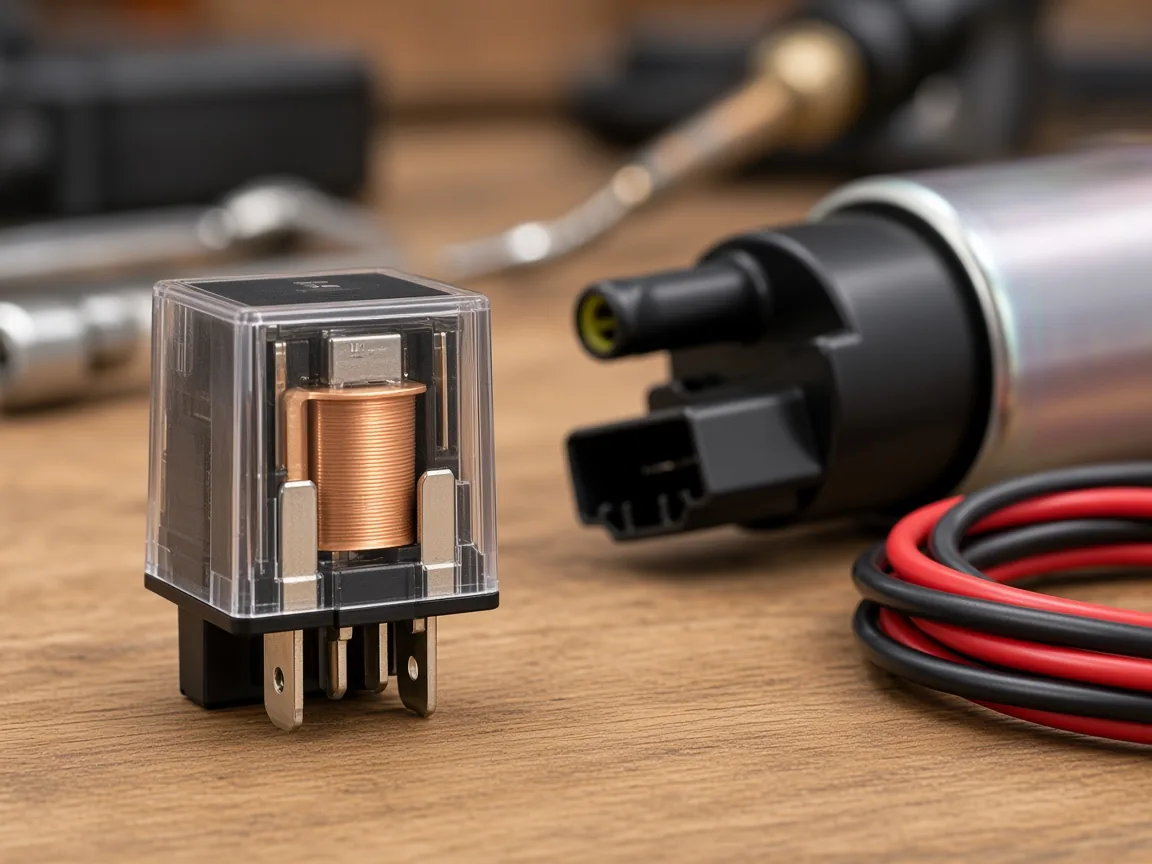
Form factor still matters for the socket you will use. An ISO mini relay footprint is common on aftermarket harnesses. A cube that seats mechanically can still be the wrong continuous contact class.
Why Twelve-Volt Fuel Pump Circuits Use a Relay
A relay keeps pump current on a short fused battery feed while a small trigger drives the coil.
On twelve-volt automotive circuits, even modest resistance in a long switch-fed run shows up as voltage drop at the pump. An electric fuel pump is a motor load. Starving it of voltage cuts performance and shortens life.
A relay lets you mount the high-current side near the battery with a Fuse / fusible link on that feed. The ignition switch, ECU driver, or safety switch only has to energize the coil.
You need a 12v relay for fuel pump duty when the pump current or the wire run exceeds what the controlling switch or ECU line should carry. The same rule applies when you add a higher-draw aftermarket pump on thin factory wiring, or when you build a dedicated external pump circuit.
A factory fuel-pump relay already in the box does not automatically cover a new long-run feed you just fabricated. It also does not repair a high-current path that already drops voltage on the way to the pump.
Low voltage at the pump connector is its own diagnosis. Use what causes low voltage to a fuel pump for that path instead of swapping cubes until one “feels” better.
Matching Fuel Pump Relay Coil Voltage on Twelve-Volt Systems
Match a twelve-volt class coil to the vehicle system; commanded coil voltage should sit near battery or charging range, not a couple of volts.
Fuel pump relay coil voltage is the control-side question. On passenger cars and light trucks, the coil is normally a twelve-volt class winding. Datasheet examples for automotive twelve-volt coils often show operate thresholds well below nominal — commonly in a mid-single-digit volt band — with release thresholds even lower.
Those figures explain why a healthy key-on or run command should present roughly battery or charging voltage across the coil. They do not prove that every vehicle uses the same millivolt budget.
Important: If you measure only a couple of volts on the coil while the pump should be priming or running, treat that as a command or wiring fault until proven otherwise. Community threads keep showing the same pattern: power at one relay terminal does not prove the coil is being driven, and a bridged relay that “fixes” a no-start often points at missing coil power or a missing ECU ground command — not at buying a random higher-amp cube.
Polarity can matter when the coil includes a diode suppressor. Resistor suppression is less polarity-sensitive. Read the diagram molded on the relay or the harness instructions before you reverse eighty-five and eighty-six “just to try it.”
Pin-by-pin install novels belong on wiring siblings such as how to wire a twelve-volt fuel pump. This page only locks the voltage match and the measurement expectation.
Contact Rating for Continuous Fuel-Pump Duty
Size continuous contacts above pump draw with margin; use the sizing sister for the full worksheet.
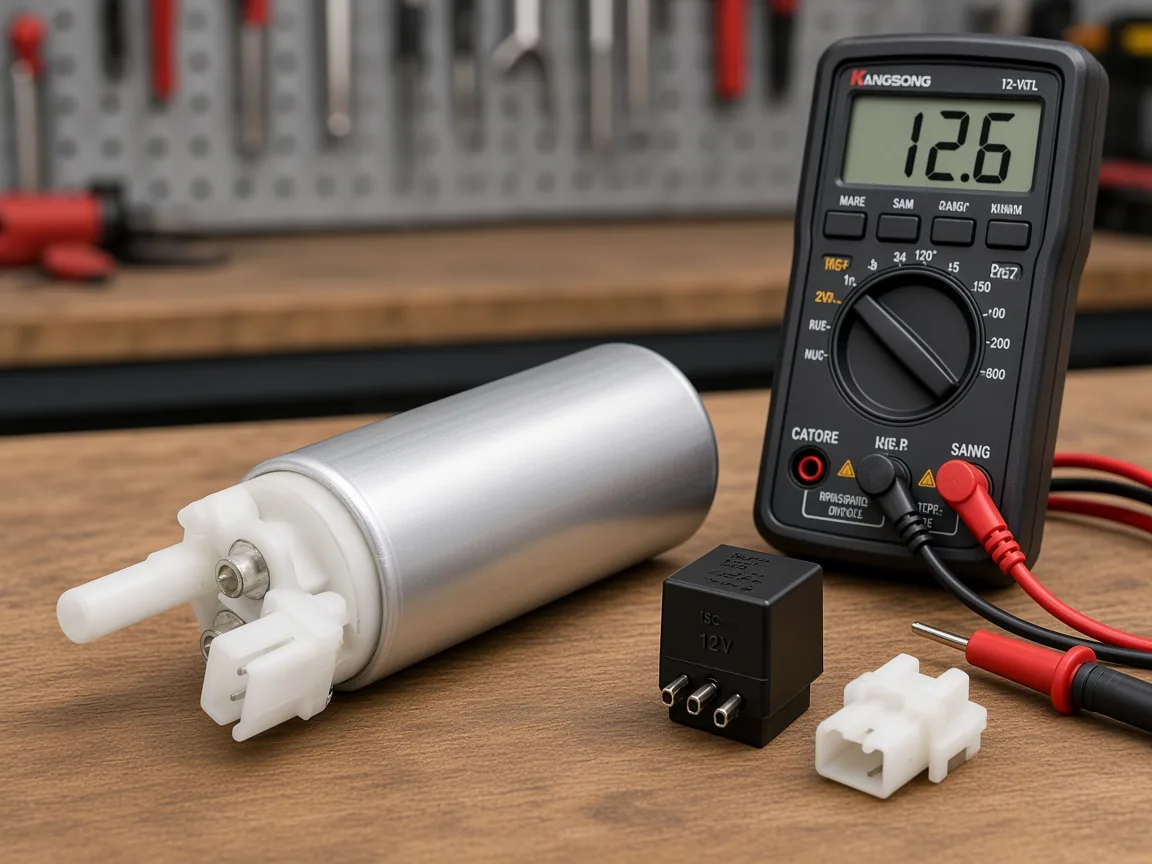
Contact rating is the continuous amp capacity of the switch side. The coil can be a perfect twelve-volt match and the contacts can still be wrong. Fuel pumps are continuous, inductive motor loads.
Community EFI wiring guidance often cites common Bosch-style cubes around 30 A continuous, and editorial practice frequently shows a 40-amp ISO example on aftermarket pump feeds. Those are class examples, not a lab reading of your pump.
Avoid sugar-cube PCB parts that advertise a short-time amp figure when the pump must run for the whole drive. Continuous automotive duty is the filter.
If you need the margin math, temperature derating notes, and ISO mini versus micro socket table, open what size relay for fuel pump instead of guessing from a kit title here.
High-draw aftermarket pumps and long rear-tank feeds are the usual reason a universal thirty-amp stamp stops being conservative. When in doubt, measure or obtain the pump’s continuous current, then choose contacts that sit above that draw with headroom.
Spec Checklist Before You Buy a Twelve-Volt Fuel Pump Relay
Confirm coil class, continuous contact rating, normally-open path, socket fit, and fuse role before you trust a kit title.
| Field | What to read | Why it settles the buy |
|---|---|---|
| Coil voltage | Twelve-volt class for twelve-volt vehicle systems | Must match the electrical system that triggers the coil |
| Contact rating | Continuous amp figure for the contacts | Must sit above the pump’s continuous draw with margin |
| Contact form | Normally open / Form A, or SPDT with NO used for the pump | Pump feed should be off until the coil is energized |
| Form factor | ISO mini vs micro, pin count, skirted vs open | Must fit the socket or harness you will actually use |
| Duty | Continuous automotive rating | Fuel pumps run for the drive, not a one-hour PCB pulse |
| Fuse role | Inline fuse or breaker on the battery feed | Protects the wire — not a substitute for contact rating |
Work the checklist in that order when a seller has no Kangsong relay SKU to copy. Write down the pump’s published continuous current if the manufacturer lists it; if not, plan to measure later rather than inventing an OE relay number from a forum screenshot.
For kit contents, fuse/breaker packaging, and when an independent relay belongs on a fabricated circuit end-to-end, use the electric fuel pump relay buying guide. This page stays on the twelve-volt coil and contact-matching decision.
Relay Amp vs Fuse Amp vs the Coil-Voltage Label
Contacts cover the pump load; the fuse protects the wire; the coil-voltage stamp is not a third amp number.
Three numbers get spoken as if they were interchangeable:
- The coil-voltage stamp — nominal voltage class for the control winding.
- The relay-amp stamp — continuous (or sometimes peak) contact capacity.
- The fuse-amp stamp — overcurrent protection for the conductor.
They sit on the same circuit and still answer different questions. The fuse or fusible link opens when current exceeds what the wire can safely take. The relay’s contact rating has to handle the pump’s continuous draw so the contacts are not the weak link.
Inline-fuse rules of thumb often sit near 125% to 150% of the pump’s maximum current, with the protector placed close to the battery. That protects the conductor. It still does not pick the continuous contact class, and it does not redefine coil voltage.
Fuse location, blown-fuse symptoms, and meter steps belong on fuel pump fuses and how to test a fuel pump fuse, not on this coil-matching page.
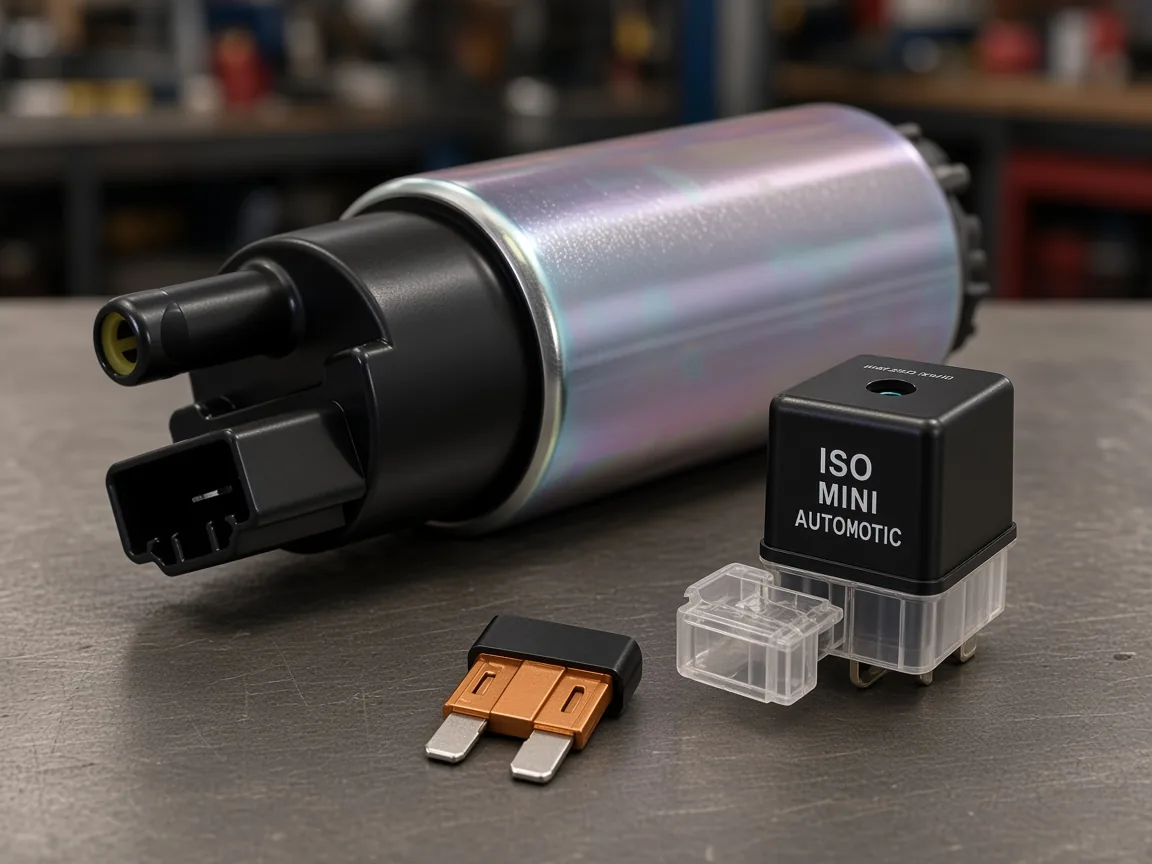
From the field: Service threads keep reminding owners that a relay can show battery voltage on one terminal while the pump stays dead — the coil path and the contact output are separate circuits. Hearing a click is useful. It is not proof the pump feed is live.
Verify Relay Specs, Then Choose a Kangsong Electric Pump Kit
Kangsong does not list a relay SKU here — verify relay specs for the circuit, then browse live electric pump kits inside their published applications.
| Product | Published fields a buyer can check | Application scope |
|---|---|---|
| Electric Gasoline Fuel Pump with Installation Kit | Working voltage DC 12V; 43.3-49.5 GPH; 2-pin main connector; accessories included | Titled 1987-1995 C/K application; interchange numbers stay on the product page |
| Electric Gasoline Fuel Pump for Hyundai/Kia | 43.3-49.5 GPH; 2-pin main connector; accessories included | Published Hyundai/Kia application table on the product page |
Product 2551 publishes DC 12V working voltage, a 43.3-49.5 GPH flow range, a 2-pin main connector, and included accessories, scoped to the 1987-1995 C/K application named in its title. That published working voltage is exactly the electrical class this relay guide assumes on the vehicle side — you still size the relay contacts to the circuit, not to a guess.
Product 2552, the electric gasoline fuel pump scoped to Hyundai and Kia applications, publishes that same flow band and connector style against its own application table.
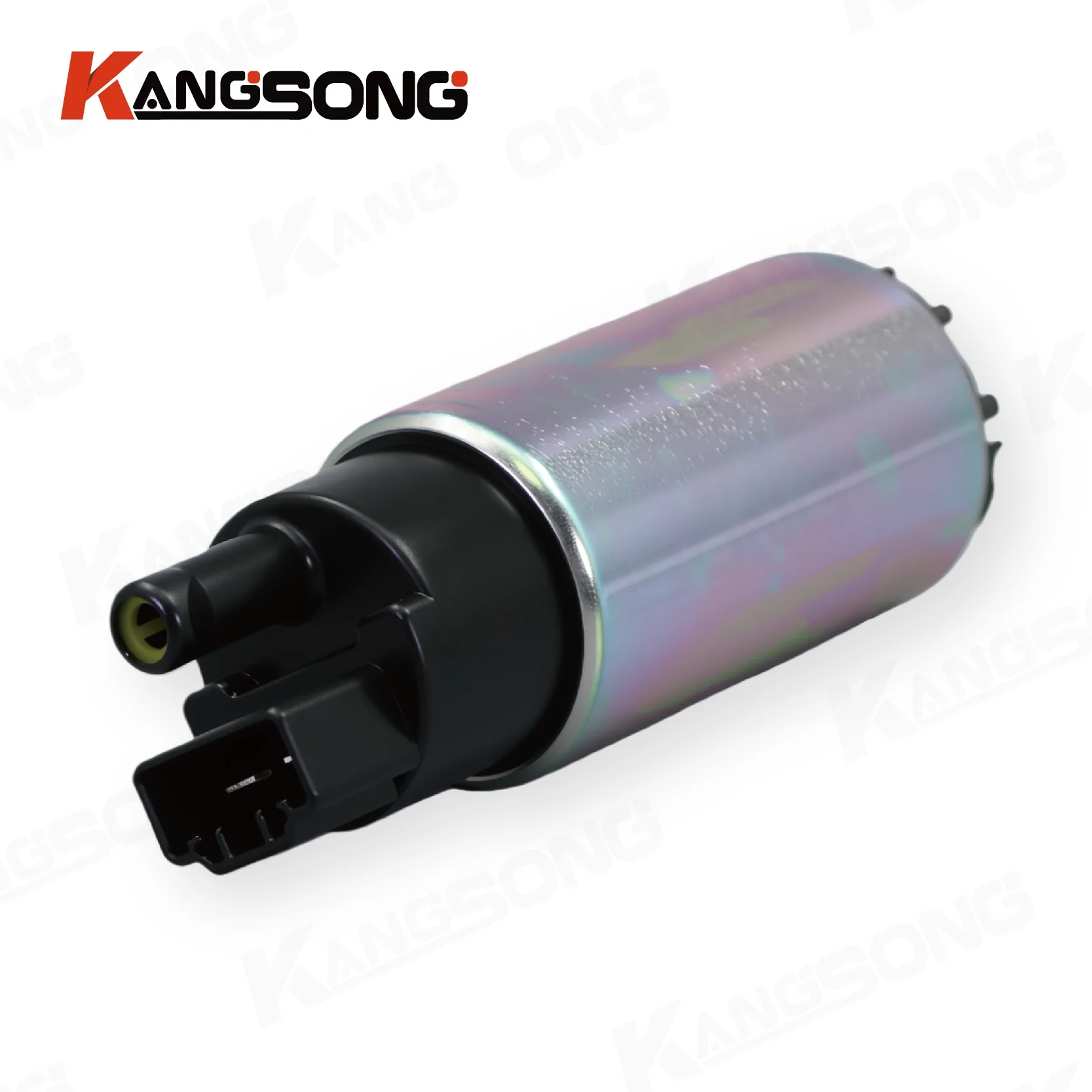
Browse other published fuel-system products at the products catalog root. Use the checklist above — twelve-volt coil class, continuous contact rating, normally-open path, fuse on the feed — as the verification path for whatever switching hardware your circuit requires. No relay OE number is invented on this page.
FAQ
Do I need a relay for a twelve-volt fuel pump?
Yes when pump current or harness length outruns what a dash switch or ECU driver should carry, and when a higher-draw aftermarket pump lands on thin factory wiring. Only a short, low-current, correctly fused run is a rare exception — long rear-tank feeds are not.
What does the twelve-volt marking mean on a fuel pump relay?
It names the coil’s nominal voltage class for twelve-volt vehicle systems. It is not the contact amp rating, not the fuse amp, and not a measured pump draw.
What fuel pump relay coil voltage should I see?
Across the coil you should see roughly battery or charging-system voltage while the pump is supposed to prime or run. Mid-single-digit operate thresholds on datasheets explain why a healthy command is nowhere near a couple of volts; treat very low coil readings as a fault path until the trigger and ground sides are proven.
What size contacts do I need with a twelve-volt coil?
A continuous automotive contact rating above the pump’s running current with margin. Common aftermarket classes cluster around 30 A or 40 A continuous, but the worksheet and form-factor fit live on what size relay for fuel pump.
Is the fuse amp the same as the relay amp?
No. The fuse protects the wire. The relay contacts carry the pump load.
The coil-voltage stamp is not a third amp number. Copying any one of those numbers onto the other two is how circuits get undersized.
Can power at the relay still leave the pump dead?
Yes. The coil supply and the contact output are separate. Confirm both before you condemn the pump, and remember that key-on priming may only last a couple of seconds.
Does Kangsong sell a fuel pump relay for twelve-volt systems?
No verified relay SKU is listed for this topic. Verify coil class, continuous contact rating, and normally-open fused feed against your circuit, then choose a published electric pump kit such as the C/K installation-kit pump or the Hyundai/Kia pump, or browse the catalog root.
Where is the whole-circuit kit guide vs amp worksheet?
Use the electric fuel pump relay guide for kit-versus-bare-cube and whole-circuit selection. Use what size relay for fuel pump for continuous-versus-inrush math and ISO mini versus micro fit.
References
- Relay (Wikipedia) — coil and contact architecture for electromechanical relays.
- Fuel pump (Wikipedia) — electric fuel pump as a motor load in petrol systems.
- Safe and efficient electric fuel pump wiring (Hot Rod) — twelve-volt voltage-drop framing, ISO relay pin roles, fused battery feed practice.
- How It Works: Twelve-Volt Relay (Hot Rod) — low-current coil versus high-current load path on twelve-volt accessories including fuel pumps.
- Sizing relays (HP Academy forum) — continuous contact rating language and high-draw fuel-pump exceptions.
- Power to fuel relay, but not to fuelpumps (r/MechanicAdvice) — community language separating coil power from contact output.
Humanizer self-audit (Author KS-DRF-12VFR-C): preserved research facts; removed source-first openers; varied H2 rhythm; no invented OE or measured Kangsong amp; second pass shortened paragraphs under the three-sentence rule; evidence callouts present; focus keyword bolded once in opening.