A 6 volt inline fuel pump is an external electric pump built for a six-volt vehicle electrical system and mounted in the fuel line. It is not a modern twelve-volt in-tank module wearing a vintage label.
This guide locks vehicle electrical system voltage first, then covers carburetor pressure and External / inline mount checks. Soft paths into the plain definition and the broader electric-inline checklist stay on sister pages. When this catalog has no verified six-volt SKU, the honest next step is the Products catalog root—not a forced twelve-volt kit.
What a 6 Volt Inline Fuel Pump Is
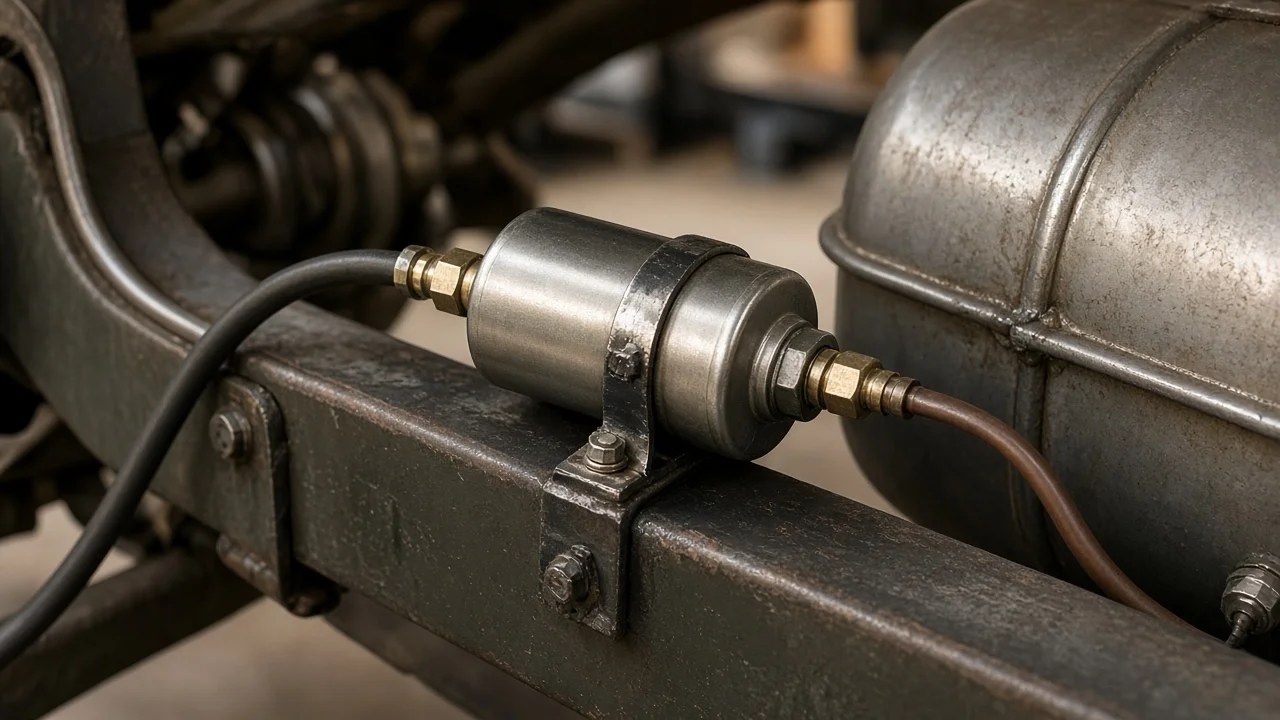
It is an external electric pump built for a six-volt system and mounted in the fuel line.
On many early cars the fuel pump still had to move gasoline from a tank toward a Carburetor / float bowl. An electric unit can sit anywhere between the tank and the engine because it does not need a mechanical drive from the cam.
When that unit is wired for six volts and spliced into the supply hose on the chassis, buyers call it a 6 volt inline fuel pump, a six-volt external pump, or a six-volt in-line electric pump. That is the same External / inline mount idea with different spelling.
It is not the submerged in-tank module that feeds most late-model injected cars. It is also not a diesel mechanical “in-line” injection pump.
If you still need the plain anatomy of an inline pump before you shop voltage, use the sister page on what an inline fuel pump is rather than retelling it here.
Why 6 Volt vs 12 Volt Is Not Optional
The pump’s marked voltage must match the vehicle electrical system voltage class.
Early starting and charging systems were commonly built around six volts. Many of those cars used Positive / negative ground habits that differ from modern negative-ground wiring.
Most modern passenger vehicles moved to a nominal twelve-volt SLI pack. Heavy trucks and earth-moving equipment often use twenty-four volts.
Those are different electrical classes, not fashion labels on the same motor. A listing that says six-volt is promising a motor for that class. A listing that says twelve-volt is promising a different class.
Shared words such as “inline,” “electric,” or “carburetor” do not bridge the gap.
From the field: Hot-rod threads that try to keep a six-volt pump after a twelve-volt conversion with a random dropping resistor often end with the wrong voltage at the pump. (source: The H.A.M.B. thread on six-volt pumps on twelve-volt systems)
Forum advice repeatedly lands on the same practical fix: buy a pump that matches the car’s voltage instead of improvising a resistor that only “works” at one current.
Even on a correctly matched system, weak grounds, thin wire, and tired switches can steal voltage at the pump terminals. OEM diagnostics on modern electric modules treat low voltage at the pump as a real failure mode.
The method still applies to a classic six-volt install: measure at the pump while it is running, not only at a resting battery post.
For a broader twelve-volt electric-inline selection checklist that is not limited to six-volt classics, use how to choose an electric inline fuel pump without copying that page’s full novel here.
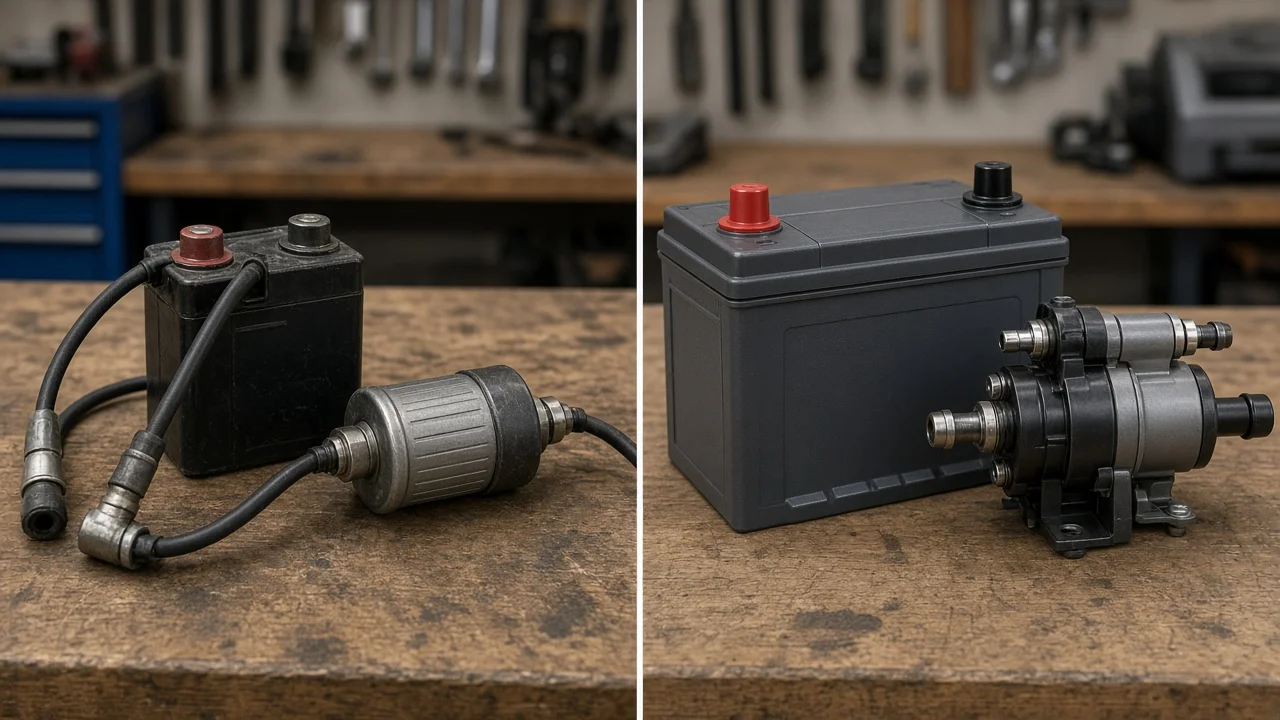
Pressure Class for Carbureted 6 Volt Duty
Carburetor duty is low-pressure; read the listing’s pressure band and regulate when needed.
A float-bowl carburetor fills through a needle and seat that has to hold a steady level. Push harder than that valve can hold and fuel goes past it.
Encyclopedia writing puts many engine-mounted mechanical carburetor pumps in a low-pressure band. Older port or throttle-body injection sits far higher. Aftermarket six-volt carburetor electrics are therefore sold as low-pressure tools, not as EFI rail pumps.
A Fuel pressure regulator belongs in the plan when continuous duty can exceed what the needle and seat will hold.
| Duty | What “right” usually means | What to distrust |
|---|---|---|
| Six-volt carburetor inline | Low-pressure supply or priming for a float bowl | A free-flow flow sticker with no pressure stated |
| Continuous carb feed | Pressure the needle/seat can hold, often with a regulator and gauge | Assuming any “electric” pump is gentle enough |
| Priming only | Brief run to fill the bowl after storage, then mechanical pump takes over | Leaving a high-output pump powered whenever the key is on |
| EFI rail duty | Higher, steadier pressure designed for injectors | Using a carburetor-class six-volt pump as if it were an EFI pump |
Classic-owner forums argue about whether a few pounds of pressure is “too high” for an early carburetor. Treat those arguments as a reminder to read the pressure band on the unit you buy. Do not paste another merchant’s sticker onto this site as a Kangsong nameplate.
Mount Location and Priming Use
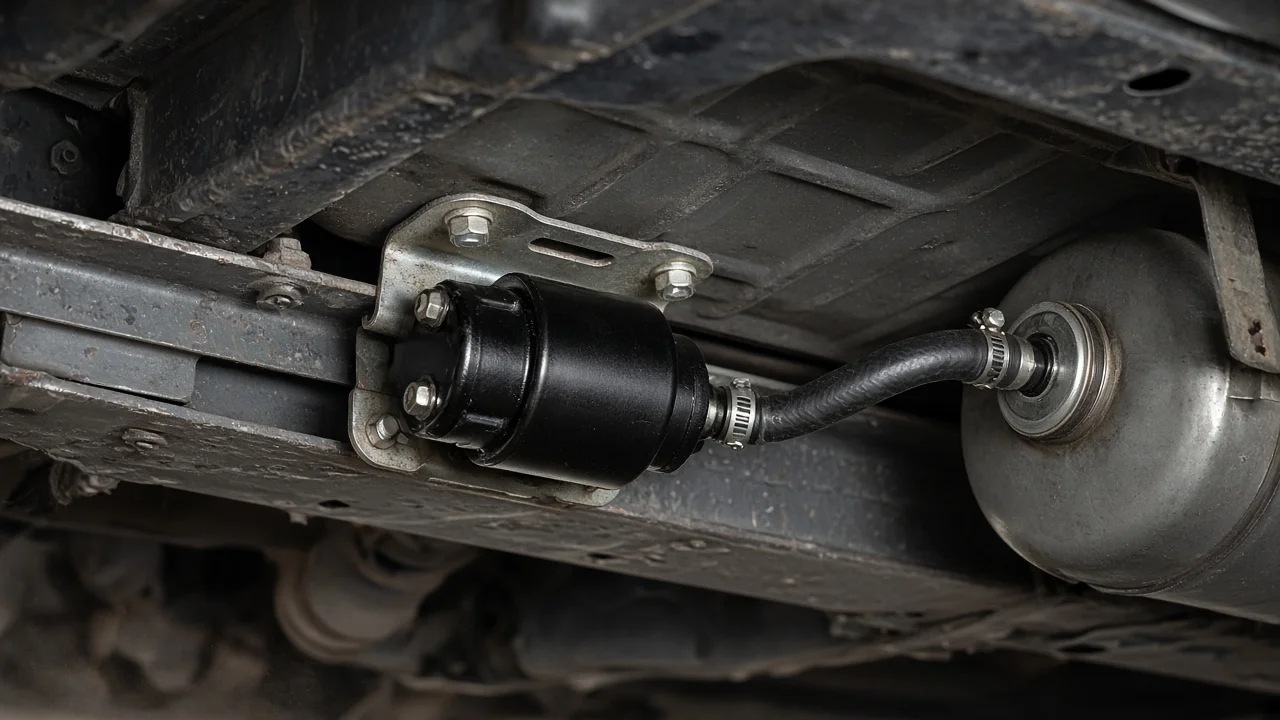
Mount the pump low near the tank; priming after storage is a common classic use.
Electric pumps push better than they pull. A frame-rail mount close to the tank outlet keeps the inlet wet and short.
A high engine-bay mount that forces a long suction lift is how vapor and cavitation stories start.
On six-volt classics, many owners install the electric pump as a helper: fill the carburetor after the car sits for weeks, then let the original mechanical pump carry the drive. Others keep the electric unit available as a limp-home backup.
In both scenes, a spring-loaded or otherwise protected switch matters so the pump cannot keep pushing fuel after the engine stops.
Keep the housing away from exhaust heat, use clamps that actually seal the hose, and confirm flow-direction marks before you tighten anything. Detailed twelve-volt wiring novels belong on the sister electric-inline and wiring pages, not in this six-volt selection guide.
24 Volt Inline and 12 Volt External Pumps Are Different Classes
Those searches name different voltage or mount classes, not the same six-volt part.
Shoppers who type 24 volt inline fuel pump are usually looking at heavy-duty or industrial electrical systems, not a nineteen-forties six-volt sedan. Shoppers who type 12 volt external fuel pump are naming a modern passenger-vehicle voltage with an outside-the-tank mount.
Both phrases can be honest product searches. Neither phrase is a synonym for a 6 volt inline fuel pump.
| Search language | Electrical class | Mount idea | Same as a six-volt carburetor inline? |
|---|---|---|---|
| 6 volt inline fuel pump | Six-volt SLI / period classic | External, in the fuel line | Yes — this page’s object |
| 12 volt external fuel pump | Nominal twelve-volt passenger / light truck | External / inline | No — voltage class differs |
| 24 volt inline fuel pump | Often heavy truck / equipment twenty-four-volt | External / inline supply | No — voltage class differs |
Use the contrasts to avoid carting the wrong motor into a restore. If your car is still six volts, a twelve-volt external kit is not a clever workaround. If the vehicle already runs twelve or twenty-four volts, shopping a six-volt classic pump is the wrong aisle.
Fitment Checks Printed on the Listing
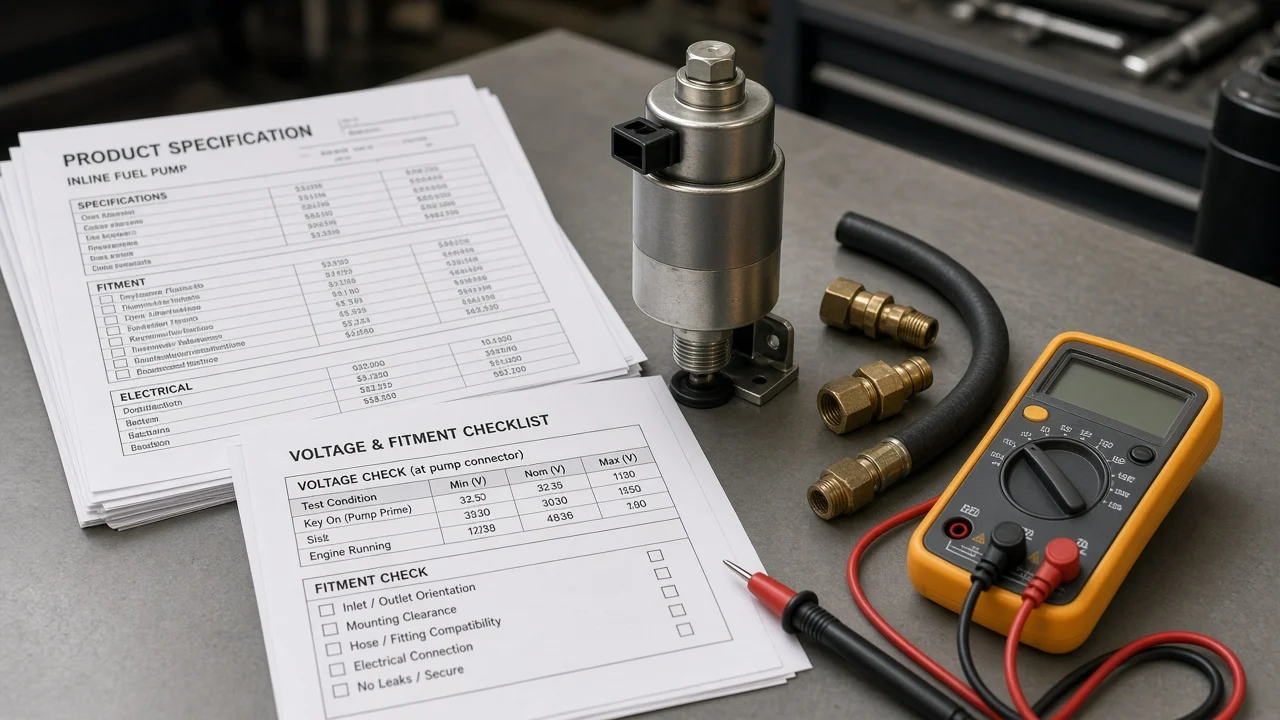
Confirm voltage, Positive / negative ground, hose size, and application text on the page.
Universal six-volt titles still need a slow read. Period cars may be positive-ground or negative-ground. Hose barbs are often sized for small carburetor lines, but the number on the page has to match the hose you actually run.
Some listings publish a vehicle table; others only publish a pressure band and a ground note. Either way, buy from printed fields—not from hope.
| Check | What to find on the listing | Fail signal |
|---|---|---|
| Voltage | Explicit six-volt marking | Only “electric” or “inline” with no voltage |
| Ground / polarity | Positive-ground, negative-ground, or both | Silence on polarity when the car is a known positive-ground classic |
| Pressure class | Pressure band suited to carburetor duty | EFI-style pressure language for a float-bowl car |
| Hose / fittings | Inlet/outlet size or thread callouts | Guessing from a photo alone |
| Application text | Year/make notes or carbureted / universal six-volt scope | A modern injected vehicle table with no six-volt claim |
| Safety path | Switch, cutoff, or priming-only instructions when offered | A pump that can stay powered after a stall with no plan |
If a field is missing, treat it as unusable. Do not invent fitment from a neighboring SKU.
Browse the Catalog When No 6 Volt SKU Is Listed
This catalog does not currently list a verified six-volt inline pump—start at the Products catalog root.
A live site search for six-volt language returns titles that match other uses of the digit six—engine codes, model strings, and unrelated hardware—not a published six-volt inline nameplate.
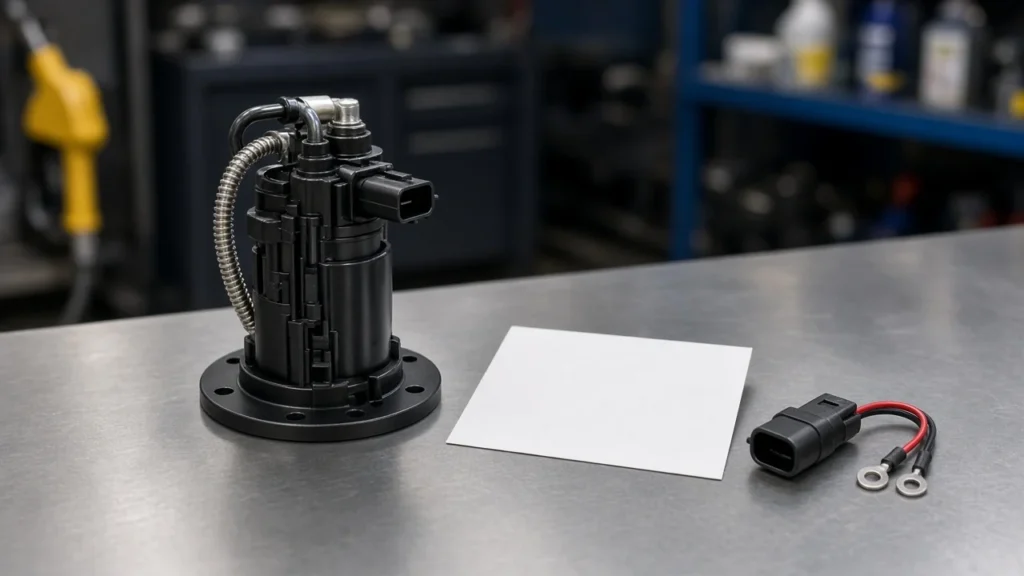
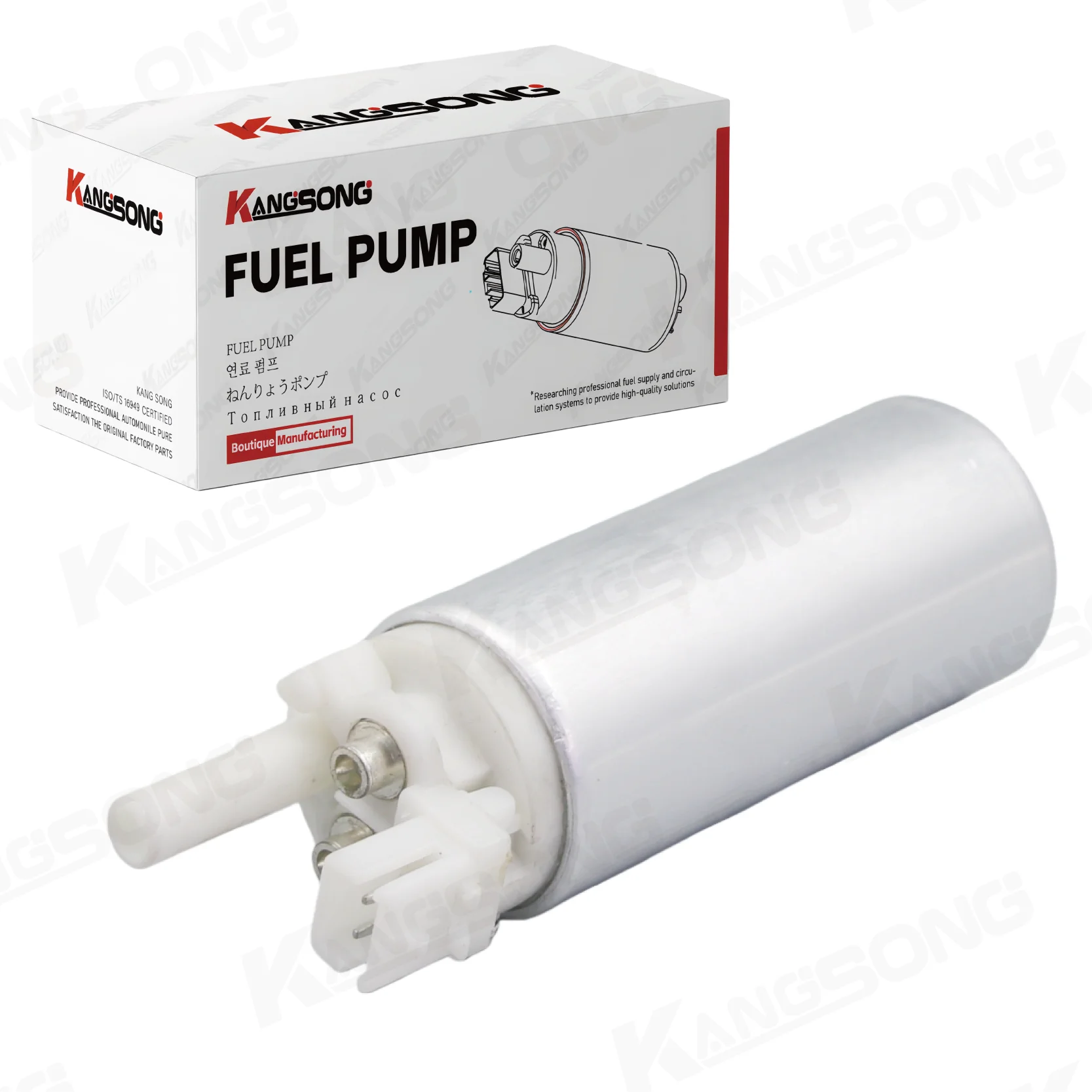
One nearby first-party example, the electric gasoline fuel pump with installation kit scoped to nineteen-eighty-seven through nineteen-ninety-five C/K pickups, publishes DC twelve-volt working voltage and an in-tank install environment. That kit is useful as ordinary vehicle hardware in its own scope.
It is not a 6 volt inline fuel pump, and it must not be sold as one.
Open the live product category when you need the current list. Read the voltage and application lines printed on each page. If you need a true six-volt classic inline pump and none is listed, keep that requirement honest instead of stretching a twelve-volt kit into a six-volt restore.
FAQ
Can I run a 6 volt inline pump on a 12 volt car with a dropping resistor?
Not as a casual fix. Unmatched resistors often leave the pump at the wrong voltage, and straight twelve-volt power can abuse a six-volt motor. Matching the pump to the car’s voltage is the clean path.
What pressure should a 6 volt carburetor electric pump deliver?
A carburetor wants low pressure relative to an EFI rail. Read the pressure band on the listing you buy, and plan a Fuel pressure regulator when continuous duty can exceed what the needle and seat will hold. Do not treat another brand’s sticker as this site’s nameplate.
Where should I mount a 6 volt inline fuel pump?
Mount it low and close to the tank outlet so the pump pushes fuel instead of pulling a long suction column. Keep it away from exhaust heat.
Does positive ground vs negative ground matter?
Yes on period six-volt cars. Early systems were often positive-ground; modern negative-ground habits do not automatically apply. Confirm the listing’s ground note against the car.
Is a 24 volt inline fuel pump the same as a 6 volt unit?
No. Twenty-four-volt searches usually point at heavy-duty electrical classes. Shared “inline” language does not make the motors interchangeable.
Is a 12 volt external fuel pump a drop-in for a 6 volt classic?
No. A twelve-volt external pump matches a different electrical class even when the mount style looks similar.
Does Kangsong list a verified 6 volt inline pump today?
Not in the live catalog evidence used for this page. Browse the product category and read printed voltage fields rather than assuming a twelve-volt kit is a six-volt part.
Can I use an electric pump only for priming and keep the mechanical pump?
Yes—that is a common classic pattern after long storage. Use a protected switch so the electric pump cannot keep running after the engine stops, and add a regulator if the electric unit will also carry continuous carburetor duty.