A car fuel pump assembly is the in-tank module that packages the electric pump with a strainer, fuel-level sender, and related seals so a passenger car can deliver fuel at the pressure and volume the injectors expect. Selection succeeds when OE or VIN identity, connector and sender needs, and return versus returnless architecture match the vehicle—not when a brochure flow rating looks impressive. The sections below cover module packaging, full assembly versus pump-only, match checks that prevent a second tank job, and a printed-fitment handoff into the catalog.
What a Car Fuel Pump Assembly Is (and Isn’t)
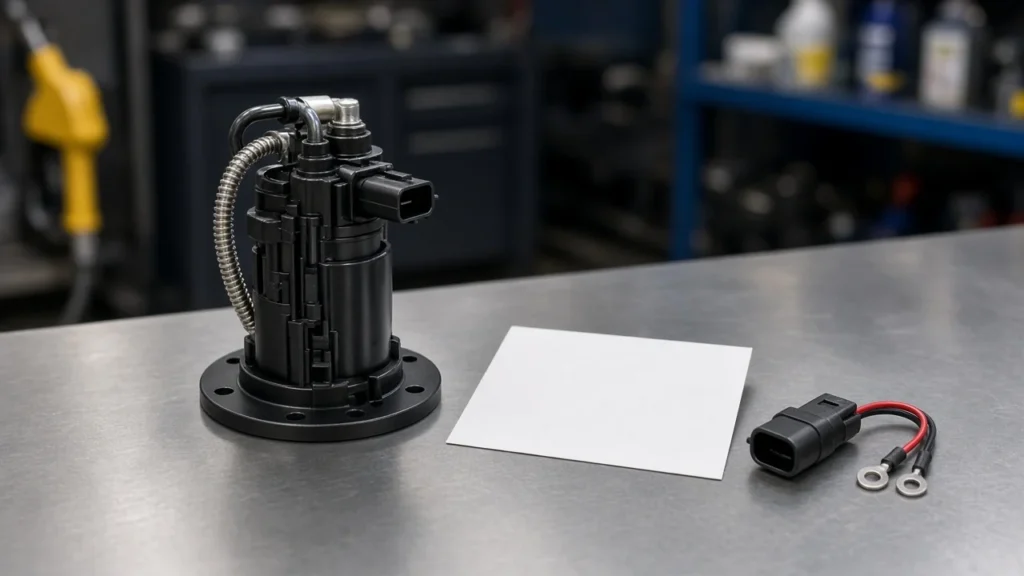
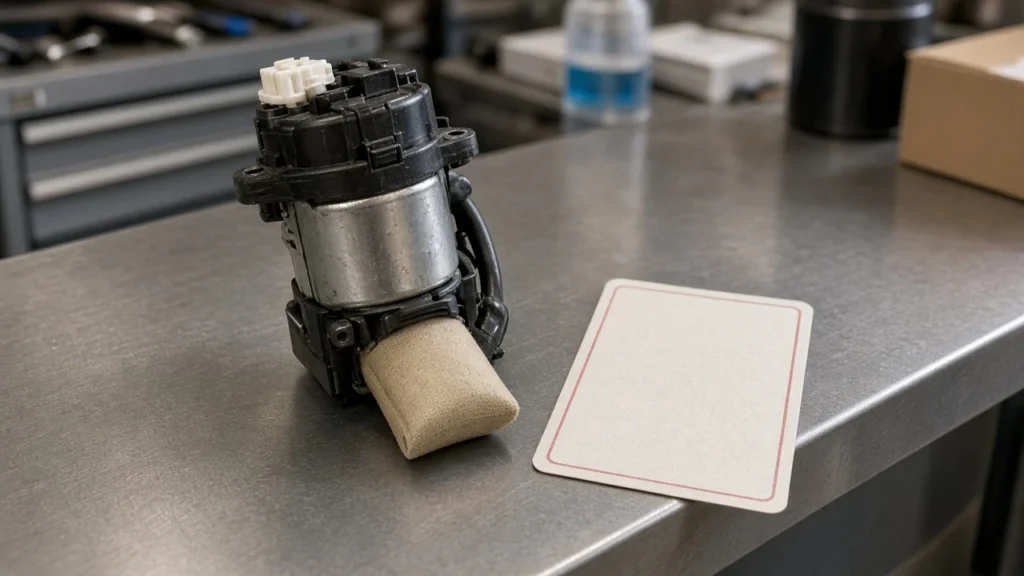
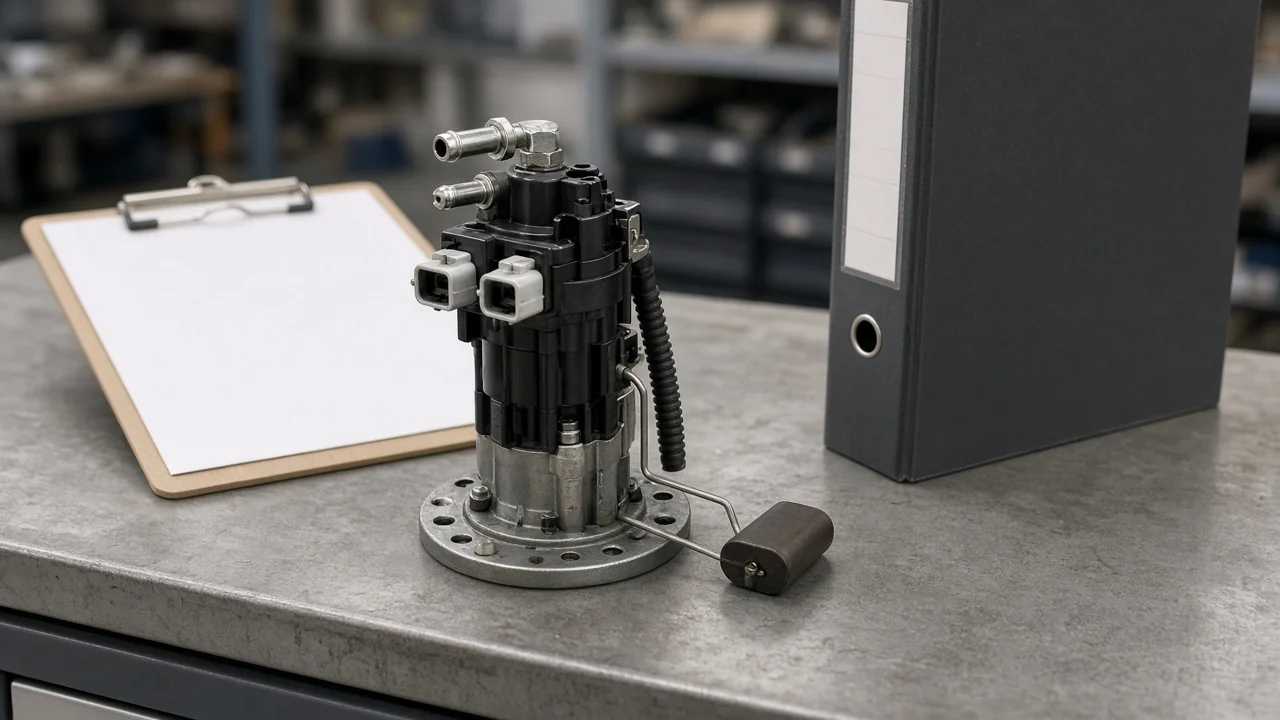
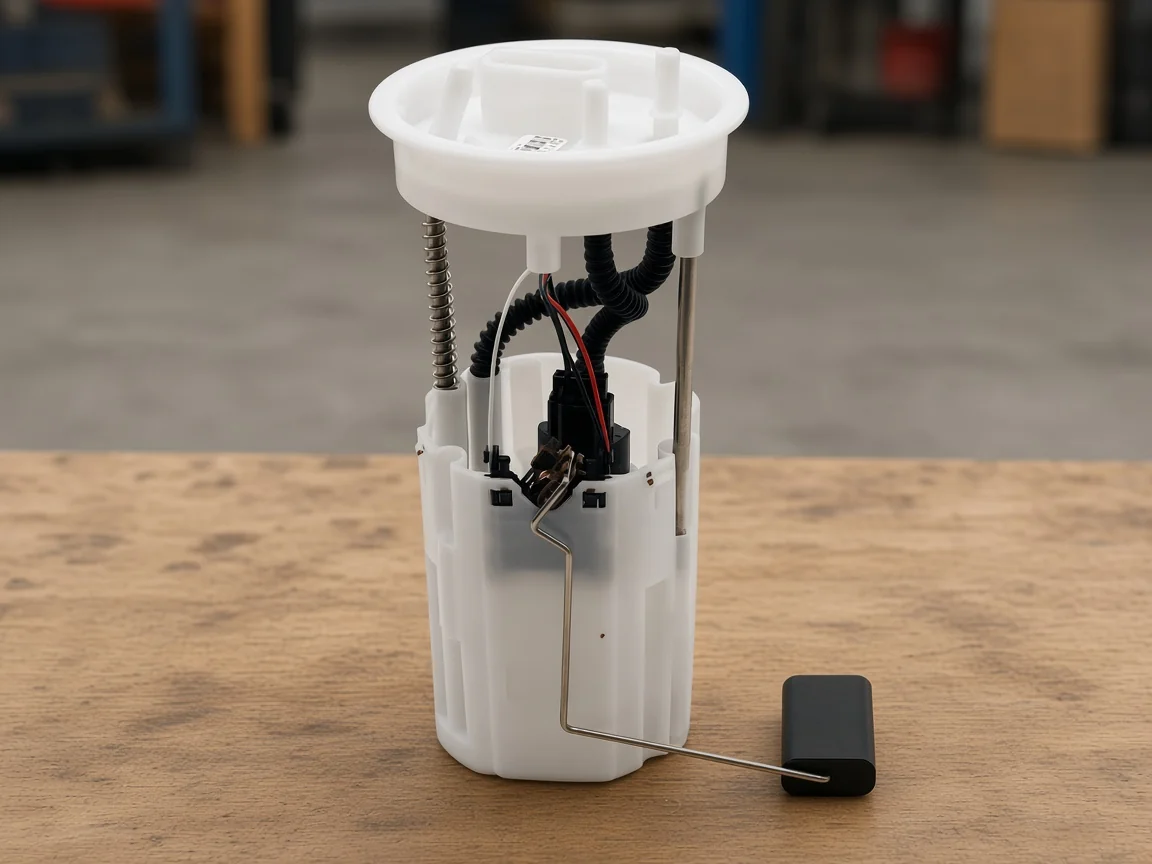
Passenger EFI cars usually hang an in-tank package—often called a fuel pump module or a fuel pump and sender assembly—inside the tank. The electric pump moves fuel; the strainer (sock) keeps debris out of the inlet; the float and sending unit report level to the gauge; seals and the lock ring interface keep the tank closed. On many cars those pieces travel as one service unit, which is why catalogs and invoices list “assembly” or “module” instead of a bare motor.
Do not confuse that module with the high-pressure mechanical pump on a direct-injection engine. That engine-mounted pump boosts pressure far above the tens of psi typical for an in-tank supply module. Confusing the two leads shops to order the wrong family of parts and to quote the wrong labor.
Treat “fits most cars” motors the same way: skip them. Retail and dealer catalogs sell assemblies by year, make, model, engine, and tank configuration for a reason: flange shape, connector family, float geometry, and line stubs differ even inside one model year.
Procurement readers should treat the assembly as a vehicle-identity part first and a flow-marketing part second. If the flange clocks wrong or the float hits the tank wall, the motor’s brochure rating does not matter.
If the harness keying is wrong, the car will not prime. Those mechanical and electrical mismatches are why passenger-car assembly buying starts with OE and VIN identity rather than with a generic low-voltage pump search.
For a plain-language definition of the module itself, see What Is a Fuel Pump Assembly?. For labeled part callouts, use Fuel Pump Assembly Diagram. This page stays on passenger-car buying decisions.
Parts Buyers Should Verify Before Checkout
Confirm the packing list against the vehicle before the cart closes. A complete passenger-car assembly usually includes the electric pump, inlet strainer, float arm with level sender, housing or reservoir, and the tank seal called out for that application.
Some modules also integrate a pressure regulator when the car is returnless; others leave regulation at the rail on return-style systems. Hardware such as a lock ring is application-dependent—do not assume it is in the box.
Counters that skip this list create two failure modes. First, a “complete” looking module arrives without the seal the tank needs, so the job stalls while a second part ships.
Second, a pump-only carton is mistaken for a module, and the shop discovers mid-job that the sender and sock were never included. Reading the attribute table—sender included, strainer included, gasket or seal included—takes less time than a second lift appointment.
| Part | Why it matters on a passenger car | Buyer check |
|---|---|---|
| Electric pump | Builds the flow and residual pressure the injectors need | Match vehicle pressure/volume class, not a random high-flow label |
| Strainer / sock | Protects the inlet from tank debris | Prefer a new sock with the assembly; inspect tank if the old sock is packed with rust |
| Level sender + float | Drives the fuel gauge | If the gauge already lies, a pump-only order leaves the problem in the tank |
| Seal / gasket | Seals the module to the tank | Plan a new seal whenever the module comes out |
| Connector / harness interface | Power and sender circuits | Pin count and housing shape must match the vehicle plug |
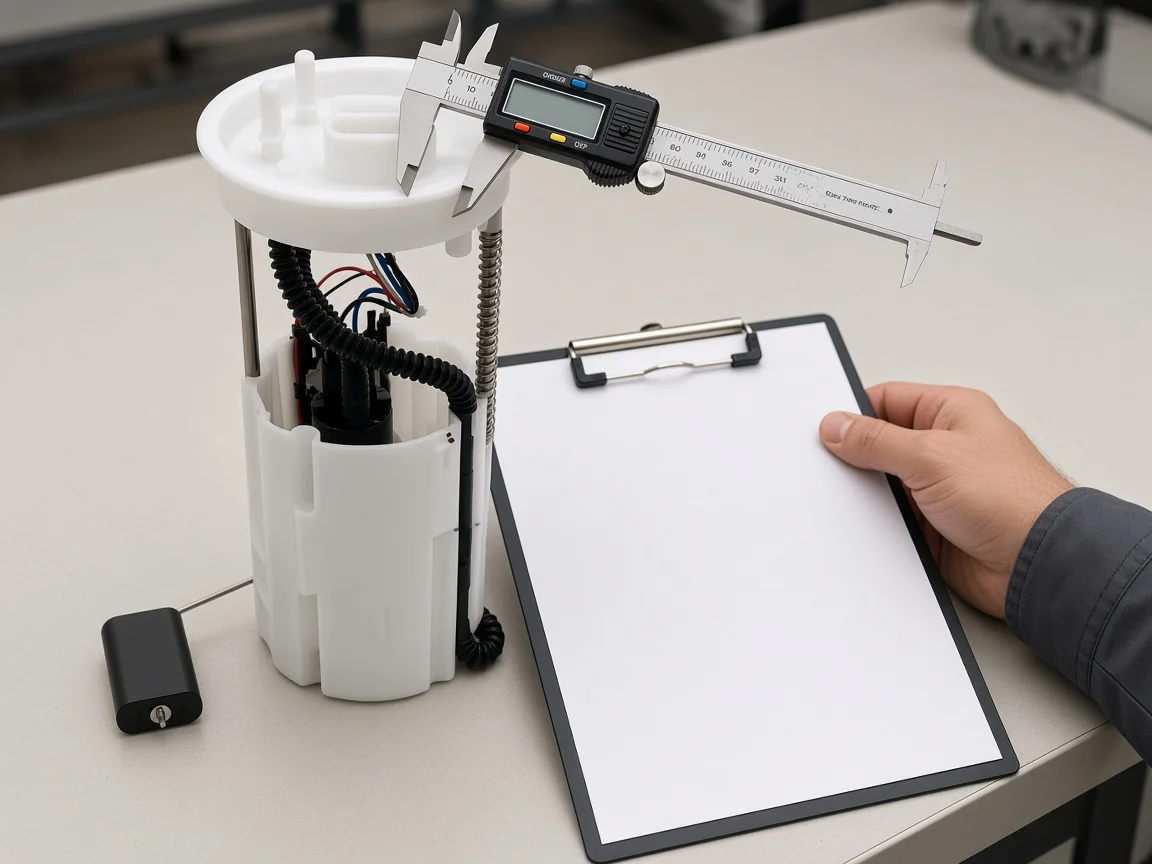
When the old module is still available, photograph the flange top, the connector face, and the float orientation before the tank goes back together. Those photos settle arguments with the parts desk faster than memory after a long drop.
If the listing mentions a fuel-tank pressure sensor or an integrated filter as “included,” treat that as vehicle-specific—not as a promise for every passenger platform.
Module vs Pump-Only: Which Order Makes Sense?
Order a complete assembly when the hanger is aged, the sender is already wrong, the strainer is degraded, or labor to open the tank is the expensive part of the job. A full module costs more on the invoice and usually costs less in repeat labor.
Order pump-only only when the vehicle design supports a motor swap, the hanger and sender are confirmed reusable, and the shop accepts the risk of revisiting a sealed tank.
Community threads often land in the same place: once the tank is open for a dead gauge, replacing the combined unit is the safer bet than gambling that a ten-year-old pump will outlive a new sender. That is labor economics, not a brand ranking.
MechanicAdvice discussions echo the same fear—cheap aftermarket units that do not fit just right, use different plugs, or arrive dead force another tank drop. The same logic applies when mileage is high and the sock is stained brown: the pump may still spin, but the rest of the hanger has already paid for the access.
| Situation | Prefer full assembly | Prefer pump-only (when design allows) |
|---|---|---|
| Gauge inaccurate and pump still runs | Yes — sender is usually in the module | Only if a separate sender service exists and mileage is low |
| No-start / low pressure after electrical checks | Yes when the module is the service part | Possible if hanger/sender/seal are sound |
| Contaminated tank or ruined sock | Yes — new sock and clean path | Risky if debris remains |
| Access is a full tank drop | Yes — avoid a second drop | Only with strong evidence the rest of the hanger is healthy |
Some older or specialty platforms still publish a pump cartridge separate from the sender. In those cases, a disciplined pump-only order can be rational—if the shop documents the remaining parts and does not invent a “complete assembly” claim for a motor-only carton.
For most late-model passenger cars, the published service part is the module, and the buying decision should follow that packaging.
Selection Checklist: OE, VIN, Connector, and Sender
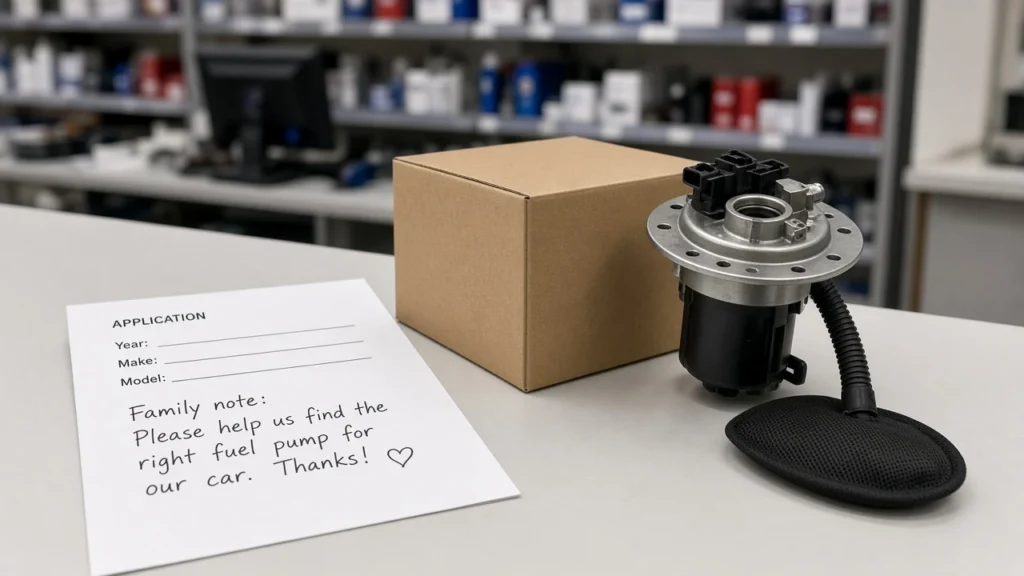
Match identity first. Capture year, make, model, engine, and the OE or aftermarket number printed on the old module. Mid-year tank or sender changes are common enough that VIN or parts-catalog confirmation beats “same year, should be fine.”
Then match the electrical connector: pin count, keying, and terminal layout. A pump that almost plugs in is still a wrong pump.
Next, decide whether the sender must be new. If the gauge already swings or sticks, treat the sender as part of the buy.
Finally, confirm pressure and volume capability against the vehicle specification. Replacement motors do not have to copy the original internal design, but they do have to deliver the same operating pressure and volume class.
A stock passenger car rarely needs a performance LPH upgrade marketed for modified engines; those kits answer a different job and a different failure mode.
Fleet and wholesale counters can keep a short intake script: print the OE from the old flange or the EPC screen, photograph the connector, note return versus returnless if known, and refuse to substitute on “looks close” flange photos alone. That script prevents the most expensive outcome in this category—a second tank drop because the first module clocked wrong or the float geometry changed between production splits.
Important: Confirm the complaint with a fuel-pressure check (and a quick look at the fuel-pump relay and fuse) before you condemn the assembly. (Source: Haynes fuel-pump assembly replacement guidance; AA1Car electric-pump diagnosis notes.)
Swapping a module for a cheap electrical fault is an easy way to buy the wrong part twice. When the tank is open, inspect for rust, varnish, or sediment that will shorten the life of the replacement.
Symptom patterns that still need triage—whine, intermittent stall, hard hot start—belong in Fuel Pump Assembly Symptoms, not in a buying checklist.
Return vs Returnless and Typical Pressure Bands
Know where pressure is regulated before you order. On continuous-return systems, the pump supplies volume and a rail-mounted regulator returns excess fuel to the tank.
On returnless systems, regulation often lives in the tank with the module, or the control module varies pump duty from a pressure sensor. Ordering a module shaped for the wrong architecture creates line, connector, and drivability mismatches even when the flange “almost” fits.
For older port-injection and throttle-body systems, in-tank electric pumps commonly work in a band around 40–60 psi (about 3–4 bar). Across broader EFI applications, educational ranges of roughly 30–85 psi appear by vehicle.
Treat those figures as orientation, not as a substitute for the pressure specification of the car on the hoist. Direct-injection engines still use an in-tank supply pump, but the engine-mounted high-pressure pump is a different part and a different buying path.
| Architecture | Where pressure is set | What to verify on the assembly |
|---|---|---|
| Return-style | Usually at the rail regulator | Correct supply/return ports and module without assuming an in-tank regulator |
| Returnless | Often in-tank or by pump duty cycle | Module includes the expected regulator/control interface for that car |
| Either | Vehicle service spec | Pressure and volume class; connector; sender ohms family if listed |
If the service information is unclear, count physical lines at the module and compare them to the candidate listing. A single supply stub where the car expects supply plus return is a hard stop.
Likewise, a module that expects an external regulator strategy will not quietly adapt because the flange bolts lined up. Architecture matching is a buying gate, not an install tip to “figure out later.”
Example: Touran-Printed Assembly and Catalog Browse
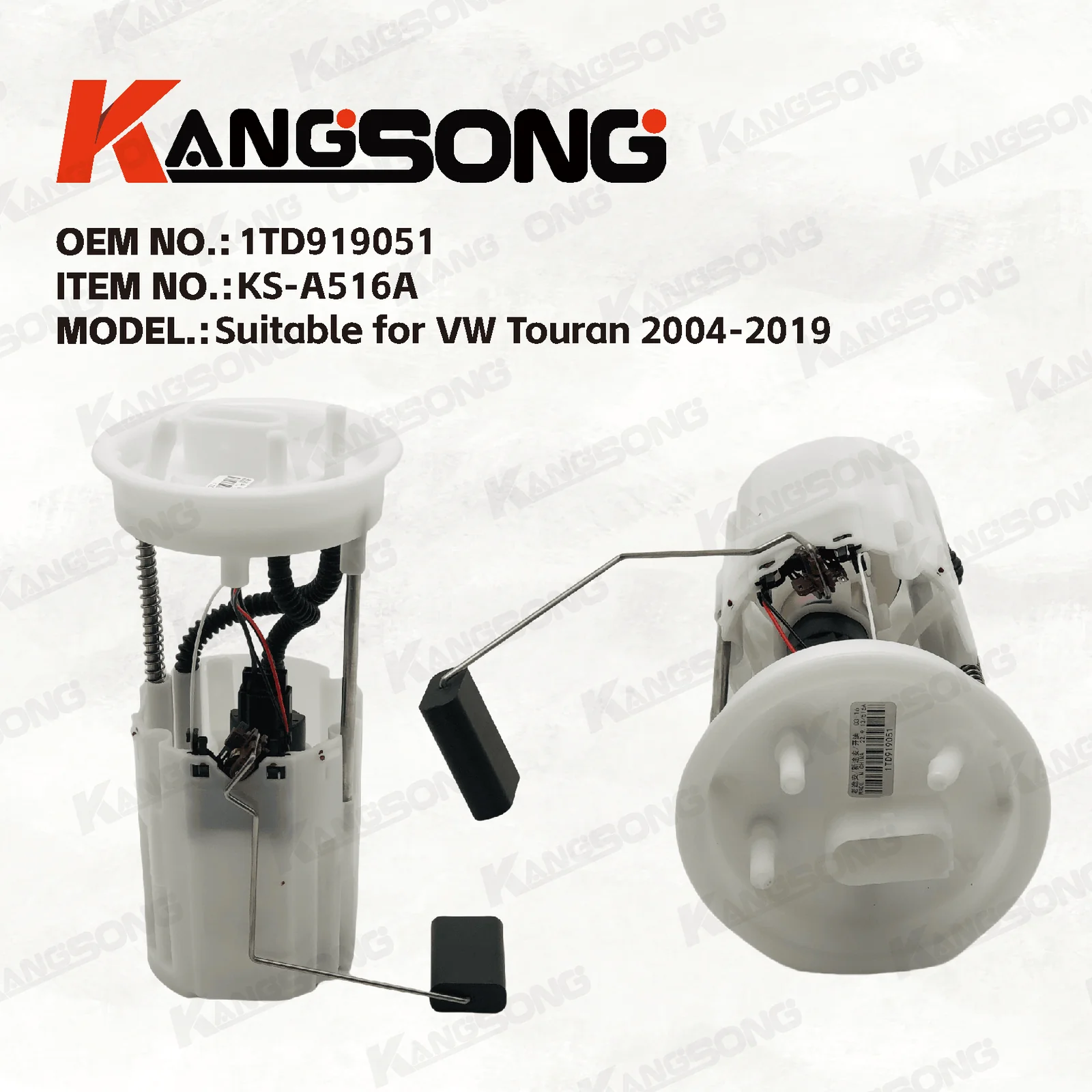
When the printed title on a product page matches the vehicle, that page is the shortest path from checklist to cart. Kangsong lists an assembly titled for VW Touran 2004–2019 under OE number 1TD919051 (KS-A516A).
Use it when those printed identifiers match the car and the number on the old part—not as proof that every passenger car shares the same flange or harness.
VW Touran 2004–2019 fuel pump assembly (OE 1TD919051)
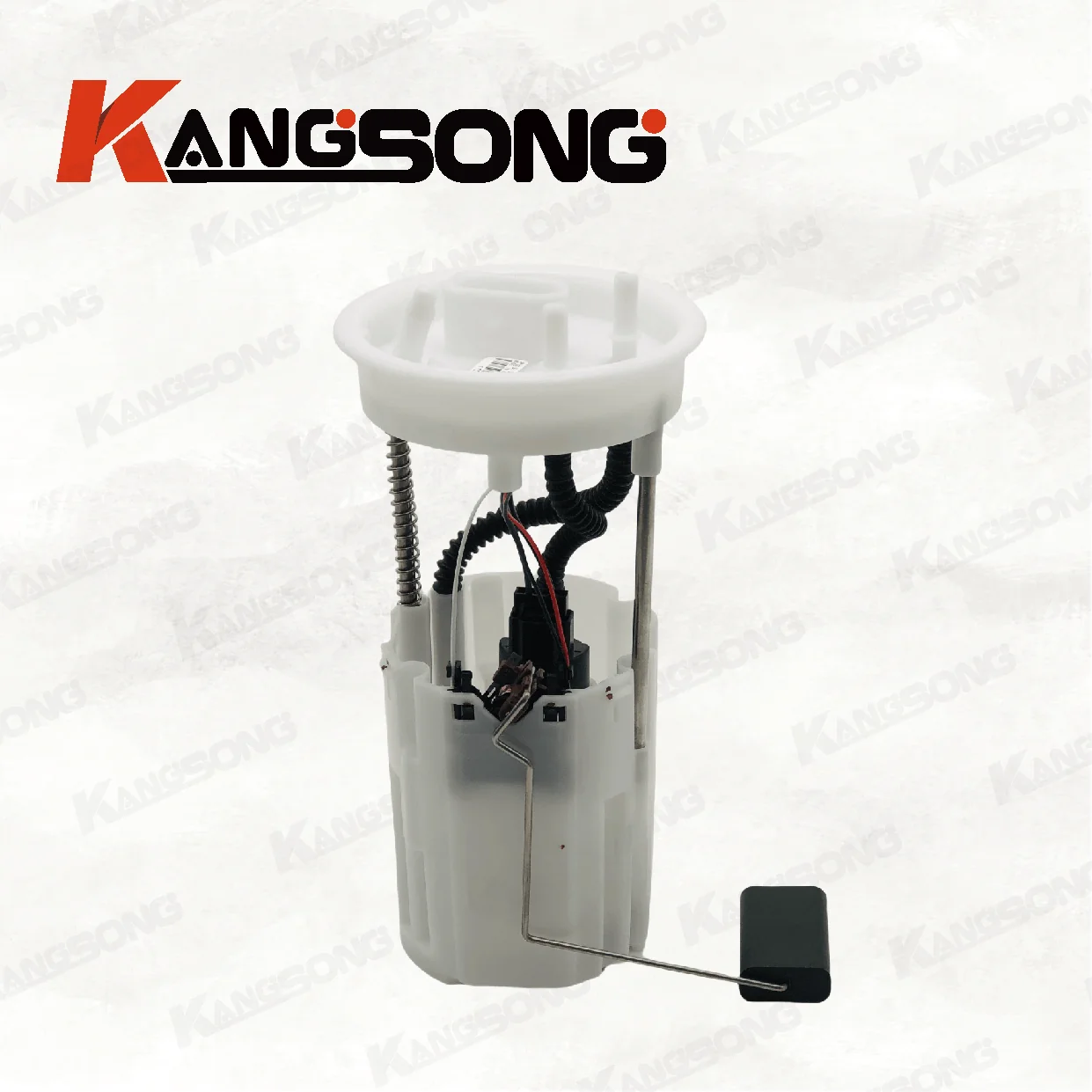
If the vehicle sits outside that printed window, browse the products catalog root and keep the same gates: OE/VIN, connector, sender, architecture.
Do not stretch one application title into a universal passenger-car claim, and do not treat diesel lift-pump or third-party performance brands as equivalents of a stock in-tank assembly. The printed Touran example exists to show how a passenger-car assembly should be scoped on a product page—year range, model name, and OE—before money leaves the counter.
FAQ
What is a car fuel pump assembly?
It is the in-tank module that usually combines the electric pump, strainer, and fuel-level sender so a passenger EFI car can feed the injectors and report fuel level. See also What Is a Fuel Pump Assembly?.
What parts are usually included?
Expect the pump, inlet strainer, float/sender, housing, and the seal required for that tank opening. A regulator may be integrated on returnless cars. Lock rings and extra harness pigtails are application-specific—read the listing.
Is a fuel pump the same as a fuel pump assembly?
No. The pump is the motor that moves fuel. The assembly (module) is the full in-tank package that often adds strainer, sender, and related hardware.
Modern passenger cars are usually serviced as modules.
Should I buy the full assembly or just the pump?
Prefer the full assembly when the tank is open, the sender is questionable, or the hanger is aged. Pump-only makes sense only when the design supports it and the remaining parts are confirmed reusable.
How do I match the right assembly to my car?
Start with year, make, model, engine, VIN or catalog confirmation, and the OE number on the old module. Then match connector geometry and sender needs. Open a product only when its printed title aligns with that identity.
Do I need a fuel pressure test before buying?
Yes. Measure pressure and rule out relay, fuse, and wiring faults first. Ordering an assembly without a pressure check is a common way to misdiagnose a cheap electrical problem.
Will replacing the assembly fix a bad fuel gauge?
Often yes, because the sending unit is integrated into many modules. If the pump is healthy and only the gauge lies, some platforms allow a sender-only service—but many shops still replace the combined unit once labor is committed.
Where do I browse if my car is not a Touran?
Use the products catalog root and apply the same OE/VIN, connector, and architecture checks. The Touran 1TD919051 listing is an example of printed-fitment buying, not a universal fit claim.
References
- Fuel pump (Wikipedia) — in-tank electric pump architecture, typical manifold-injection pressure band, and assembly packaging with strainer and level sensor.
- Electric Fuel Pumps: How They Work, Why They Fail (AA1Car) — EFI pressure bands, module vs pump-only replacement, returnless notes, and diagnosis reminders.
- Fuel Pump And Assembly: What You Should Know Before Replacement (Haynes) — assembly contents, pressure-test-before-replace guidance, and tank-access practicalities.
- Is there a difference between a fuel pump and a fuel pump module? (Ryan’s Auto Care) — pump vs module scope for ordering and labor planning.
- MechanicAdvice: safest/most reliable fuel-pump option discussion (Reddit) — community language on cheap aftermarket fit/connector risk and second tank drops.