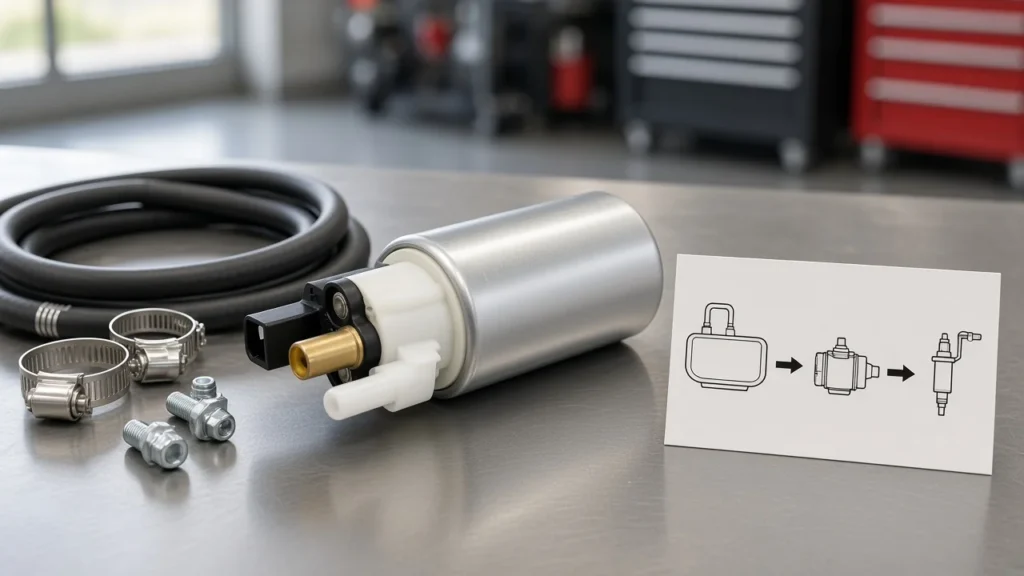
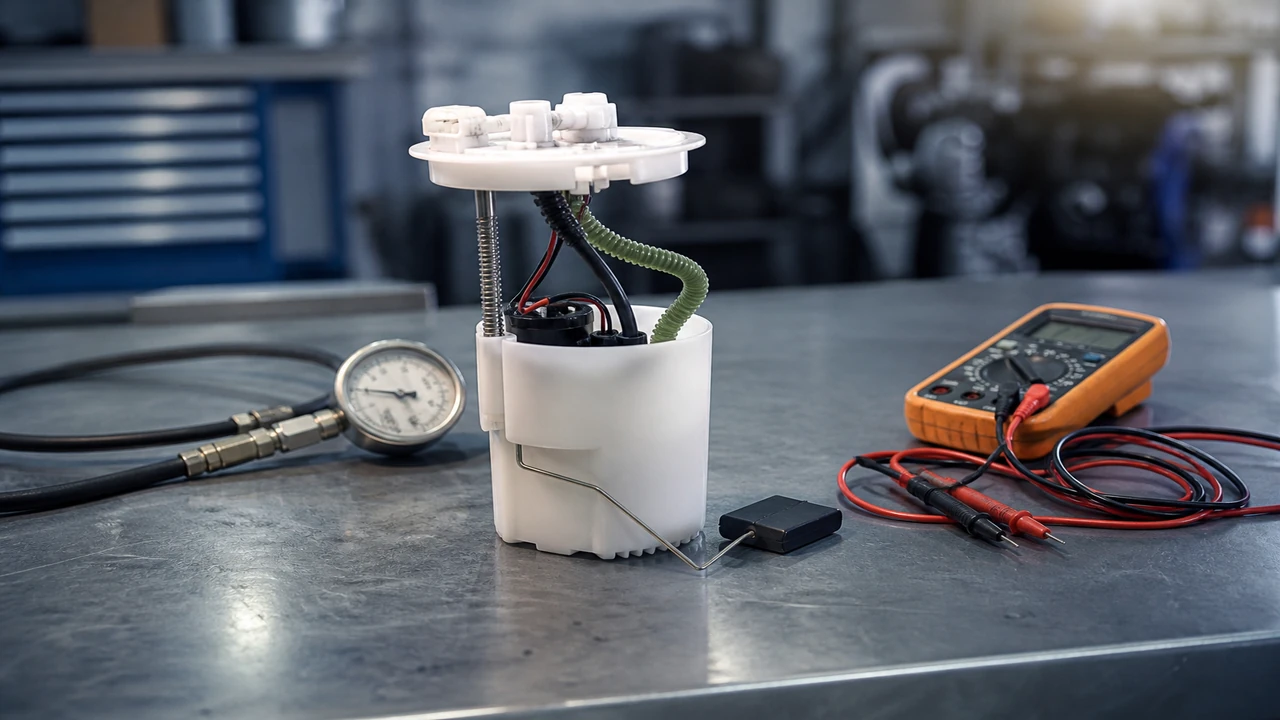
Fuel pump assembly symptoms at a gasoline parts counter usually show up as hard starts, unexpected stalling, hesitation under load, a sharp rear fuel pump whine, or fuel-gauge quirks that travel with the in-tank module — but the same clues can come from a blown fuse, weak relay, harness voltage drop, empty tank, or plugged filter.
Counters that collect key-on prime behavior, rail pressure versus specification, tank-level habit, and circuit voltage-drop notes before opening a catalog cut warranty noise. This page stays on in-tank fuel pump assembly work and fuel pump module symptoms triage. It is not a bad fuel pump symptoms encyclopedia, not a weak fuel pump symptoms low-delivery deep dive, and not a diesel high-pressure pump essay.
Map Fuel Pump Assembly Symptoms Before You Quote a Module
Fuel pump assembly complaints cluster into drivability symptoms, audible tank-area clues, and electrical or level-sender signs — and a good counter triages all three before opening a module catalog.
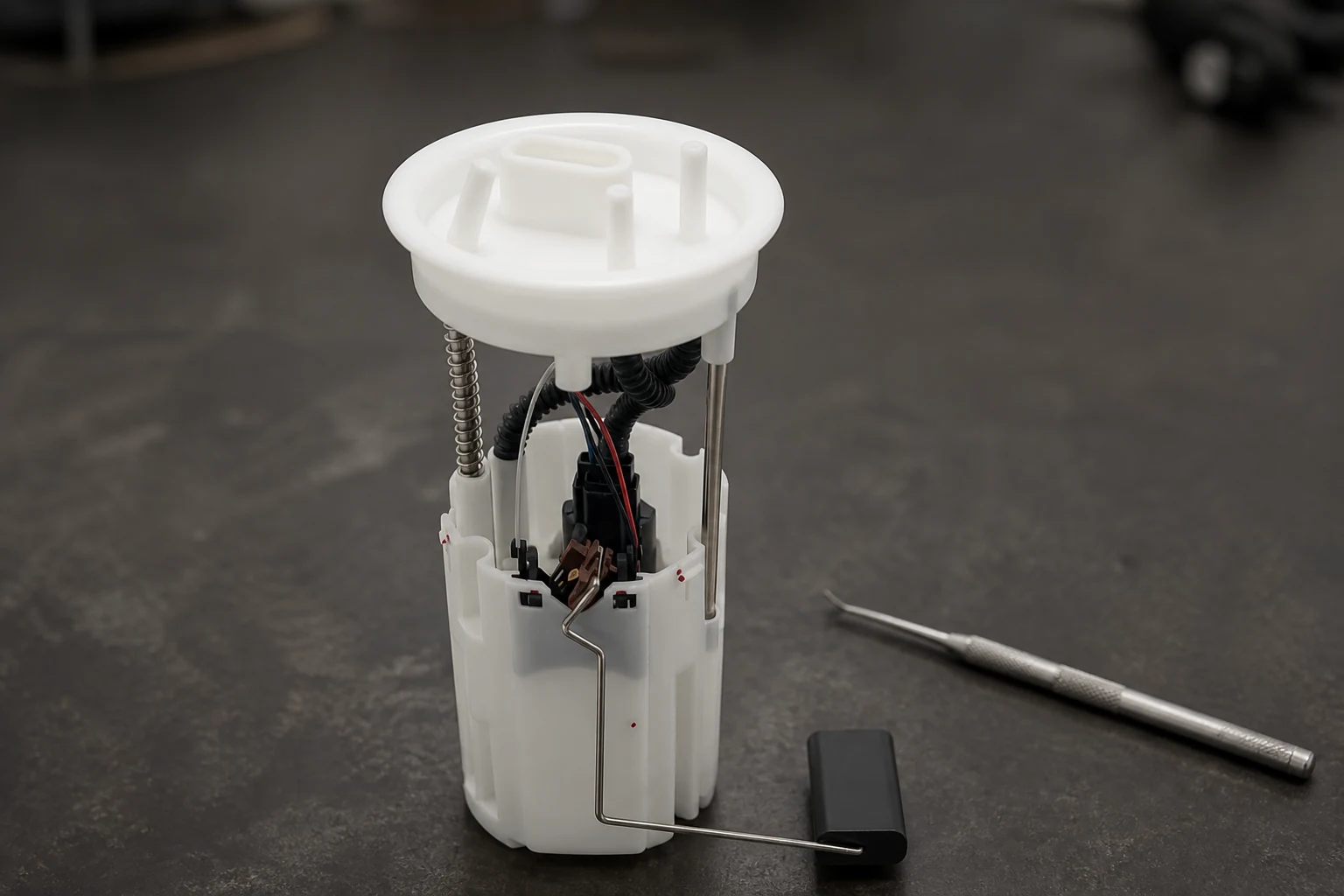
On multiport gasoline engines, the in-tank fuel pump assembly (often called a fuel pump module) houses the electric pump with the sending unit, inlet sock, and hanger hardware.
The pump must push fuel to the rail under pressure so injectors can spray correctly. Too little pressure can leave the engine lean, misfiring, hesitating, or stalled. Many tickets also include a fuel gauge that sticks, jumps, or reads empty while the tank is not.
Those patterns are possible assembly warnings. They are not automatic proof the module failed. Technical educators note that a failed pump often sets no diagnostic trouble code and may leave the check engine light off while the engine still cranks with spark but no fuel.
| Symptom or signal | What the driver/shop usually reports | First evidence to capture |
|---|---|---|
| Hard start / crank-no-start | “Cranks fine, will not fire” | Key-on prime buzz; rail pressure; fuse/relay |
| Stall while driving | “Quit on the highway with no warning” | Whether restart is immediate; fuel smell at tailpipe |
| Hesitation under load | “Bogging on merge or hill” | Measured pressure vs platform specification |
| Rear tank whine / buzz | “Noise from the back after it warms up” | When noise starts; tank level at the time |
| Sender / gauge error | “Gauge lies; pump was replaced before” | Float range notes; whether module or pump-only was fitted |
| No DTC / no CEL | “Scanner is blank but it will not run” | Confirm spark vs fuel path before condemning the assembly |
Keep assembly tickets separate from diesel high-pressure pump boards and from pure FPDM electronics jobs. Mixing those complaint types creates false “quality spikes” and wrong SKU quotes.
Hear Whine, Buzz, and Rear-of-Vehicle Noise Clues
Intermittent rear whine or a harsh buzz from the tank area can support pump wear suspicion — but noise alone should never close an assembly sale.
A healthy in-tank pump often produces a short, muted prime sound. A failing motor can grow louder, sharper, or intermittent as heat and fuel level change. Drivers may describe the sound as coming from the rear of the car, more noticeable when stopped, and sometimes reduced in park.
From the field: Community cases show intermittent rear whine investigated as pump-area noise. On a Stack Exchange Mechanics thread, an owner reported a sharp whining noise from the rear that was absent at cold start, then appeared after 15 to 20 minutes of driving and became more apparent when the car was stopped. (Source: Stack Exchange Mechanics API — Q23844.)
The pump housing had already been disturbed during earlier work, yet the noise remained — a reminder that rear whine is a clue, not a stand-alone condemn.
For counters, noise tickets need three fields: when the sound starts, approximate tank level, and whether a pump-only or full assembly was previously installed. Pair any sound complaint with pressure and circuit checks before you ship a module.
Read Hard Start, Extended Crank, and No-Start Patterns
Hard starting and extended cranking often mean the rail never reaches the pressure the engine needs — not necessarily that the assembly casting is already scrap.
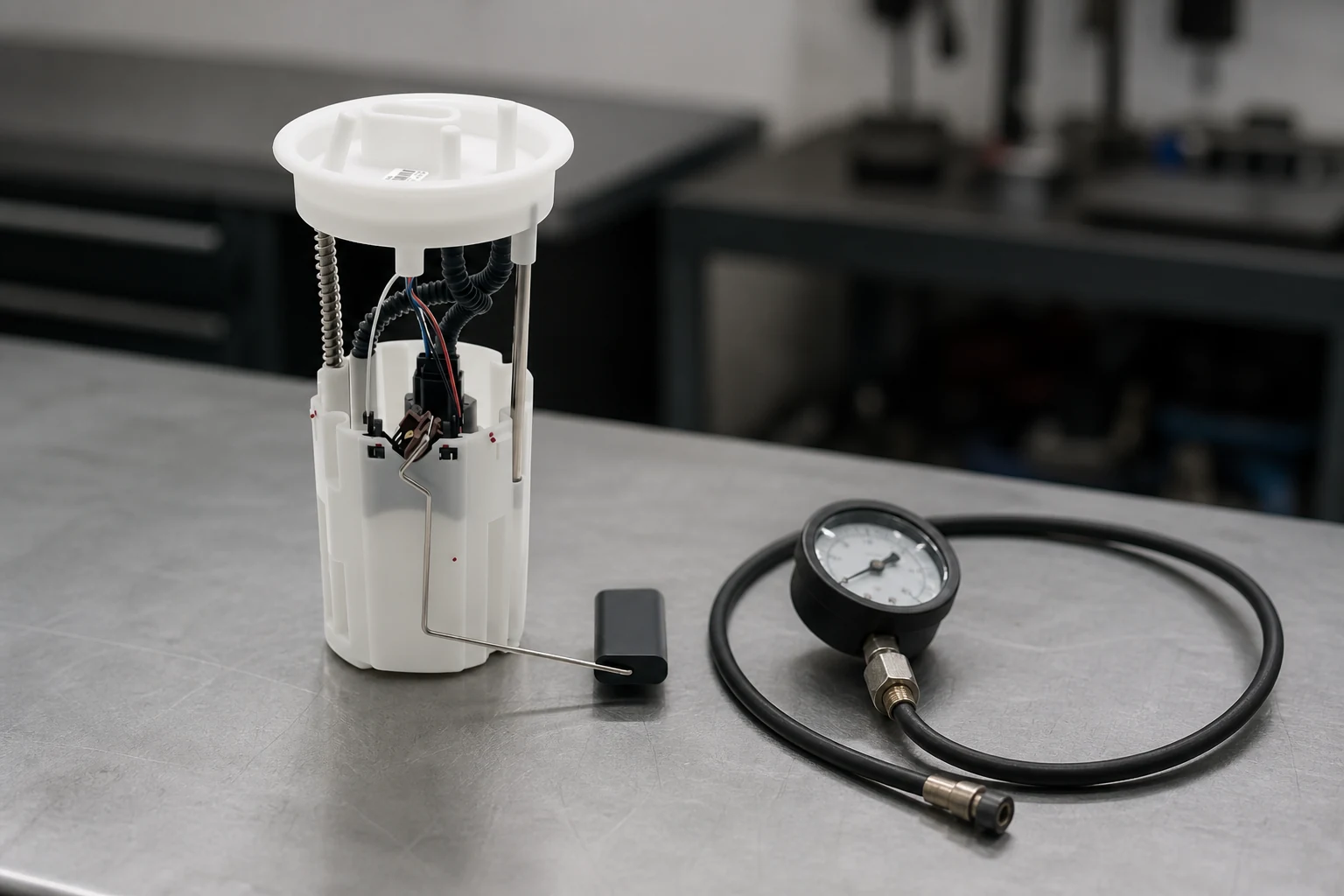
When the ignition turns on, the PCM normally energizes the pump for a few seconds so the system can prime. If the shop hears no buzz from the tank area on key-on, the pump is not running or the circuit is open. The fault may still be a relay, fuse, inertia switch, connector on top of the tank, or empty tank rather than a dead module motor.
Ask concrete start questions:
- Does the engine crank normally but fail to fire, or fail to crank at all?
- Is there a key-on prime buzz for a few seconds?
- Was starting fluid tried — and did the engine fire briefly then die?
- What is the measured fuel pressure at the rail versus the platform service information?
A shop that only says “won’t start” without prime and pressure data forces you to guess between circuit, fuel, and assembly wear. Request a photo of the gauge reading or live-data screen when available.
Capture Hesitation, Power Loss, and Low-Pressure Delivery
Hesitation, surging, and power loss under load are classic fuel pump assembly symptoms when the module cannot hold pressure as demand rises — and they still require a gauge reading before you quote.
Drivers describe merging, climbing, or highway passing as the moment the engine bogs. Low pressure can lean the mixture enough to misfire or feel like a choke point.
That pattern overlaps the live weak fuel pump symptoms page, which owns deeper low-delivery evidence language. Keep this article on assembly-level triage and send sustained low-delivery deep dives laterally.
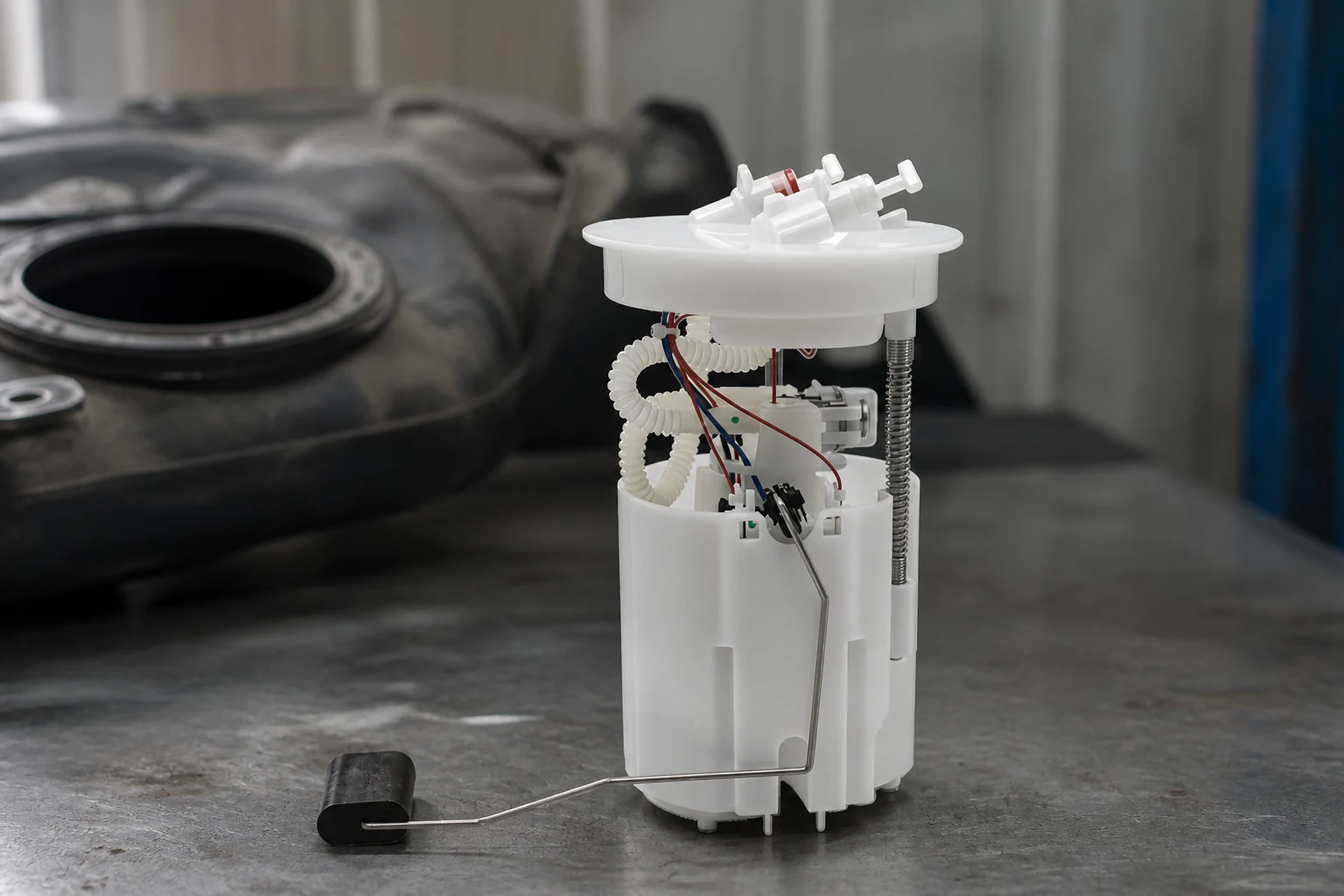
Capture whether power loss happens only above a certain speed, only with a low tank, or only after the vehicle sits overnight. Those three patterns change whether you suspect heat soak, starvation, or a weakening pump motor.
Check Tank Level, Residual Pressure, and Voltage Drop First
Before you condemn an assembly, confirm three hard fields: how the driver runs the tank, what pressure the rail actually sees, and whether the circuit delivers full voltage under load.
Electric in-tank pumps on multiport systems typically deliver about 30 to 85 psi depending on the application. Always verify the exact specification in the platform service information.
Zero pressure with no prime noise points to pump or circuit. Low but non-zero pressure can still be a weak pump, a restricted filter, a regulator fault, or wiring loss.
Driving with the tank less than 1/4 full can shorten pump life by letting the motor run hotter and increasing momentary starvation on corners or hard stops. Running out of gas can damage the pump by starving it for cooling and lubrication. Counters hear that question constantly from retail and fleet desks alike.
Tip: Treat “always runs on fumes” as an evidence field, not a lecture. Ask for the usual fill habit and whether failures cluster when the gauge is low — then pair that answer with a pressure reading. (Source: AA1Car — Electric fuel pumps; community low-tank concern on Stack Exchange Mechanics API — Q28299.)
Circuit health is the other half of the ticket. With the pump circuit energized, a healthy ground or power path should show a voltage drop of about 0.1 V or less. A larger drop usually means damaged wiring or corroded connectors are starving the pump — and a new assembly will inherit the same complaint.
Do not skip residual pressure and leak-down notes when the platform provides a procedure. A pump that builds pressure then bleeds down may point to a check valve, regulator, or injector leak rather than a simple “dead module” story.
Separate Assembly Failures From Sender, Fuse, and Harness Lookalikes
The fastest way to misquote a fuel pump assembly is to treat every no-start or rear noise as “bad module” while the sender, fuse, relay, or harness is still unproven.
Fuel pump sending unit faults can move the gauge without killing pressure. Shops sometimes replace the whole assembly when only the float or resistor card failed — or they install a pump-only kit and leave a failing sender in place. Ask whether the complaint is drivability, gauge accuracy, or both.
Fuse, relay, and inertia-switch faults kill pump power without damaging the motor. A tripped inertia switch after a jolt is a classic lookalike on some platforms. Document whether the relay clicks, whether a known-good relay was swapped, and whether battery voltage reaches the pump connector.
Harness and connector voltage drop recreates weak-pump drivability. MOTOR’s diagnosis sequence stresses proving the circuit before the pump is condemned. Capture drop readings on both power and ground halves when the shop has data.
| Lookalike fault | Clue that points away from assembly alone | Counter ask |
|---|---|---|
| Blown fuse / bad relay | No prime buzz; swap relay restores run | Relay and fuse photo or part numbers tried |
| Inertia switch open | Sudden no-fuel after impact or hard jolt | Was the reset button pressed? |
| Harness voltage drop | Battery voltage at battery, low at pump under load | Voltage drop on power and ground ≤ about 0.1 V? |
| Empty or near-empty tank | Gauge inaccurate; failure only when “low” | Actual stick/level check vs gauge |
| Plugged filter / sock | Gradual power loss; dirty bowl or sock | Filter service date and restriction evidence |
| Sender-only fault | Runs fine; gauge lies | Drivability vs gauge-only split |
Route FPDM programming and diesel high-pressure metal-contamination tickets off this page. Those are different architectures and different quote scopes.
Build a Fuel Pump Assembly Counter Evidence Checklist
Before you quote an in-tank assembly or accept a warranty return, turn the phone symptom into a short evidence packet.
| Field | Why it matters |
|---|---|
| VIN / model year / engine | Assembly families differ inside the same badge |
| Key-on prime buzz (yes/no + duration) | Separates dead pump from silent circuit faults |
| Measured rail pressure vs specification | Typical band is about 30 to 85 psi — confirm the exact spec |
| Tank level habit and level at failure | <1/4 tank and dry-run history change wear and starvation risk |
| Sender / gauge behavior | Decides pump-only vs full assembly documentation |
| Fuse / relay / inertia switch status | Blocks false assembly warranties |
| Voltage drop on power and ground | About 0.1 V or less is the healthy circuit benchmark |
| Parts already replaced on the fuel system | Avoids double-selling pump-only kits |
If the packet is incomplete, quote time to diagnose — or request data — before you lock lead time on a module line. Importers quoting overseas should mirror the same fields in the RFQ email to cut misidentified SKUs.
When VIN and engine are locked and the ticket leaves the symptom-only stage, open the Kangsong products hub for the matching gasoline assembly family.
Recommend an OE-Scoped Assembly for Fit Documentation
Kangsong publishes a fuel pump assembly for Hyundai Sonata and Kia Optima with stated OE references such as 31110-D5500, 31110-C2500, and 31111-C110 on the product page. That listing is a gasoline in-tank assembly example of the documentation counters should demand: application-bound OE numbers, model-year scope, and clear assembly language instead of “just send a pump” on the phone.
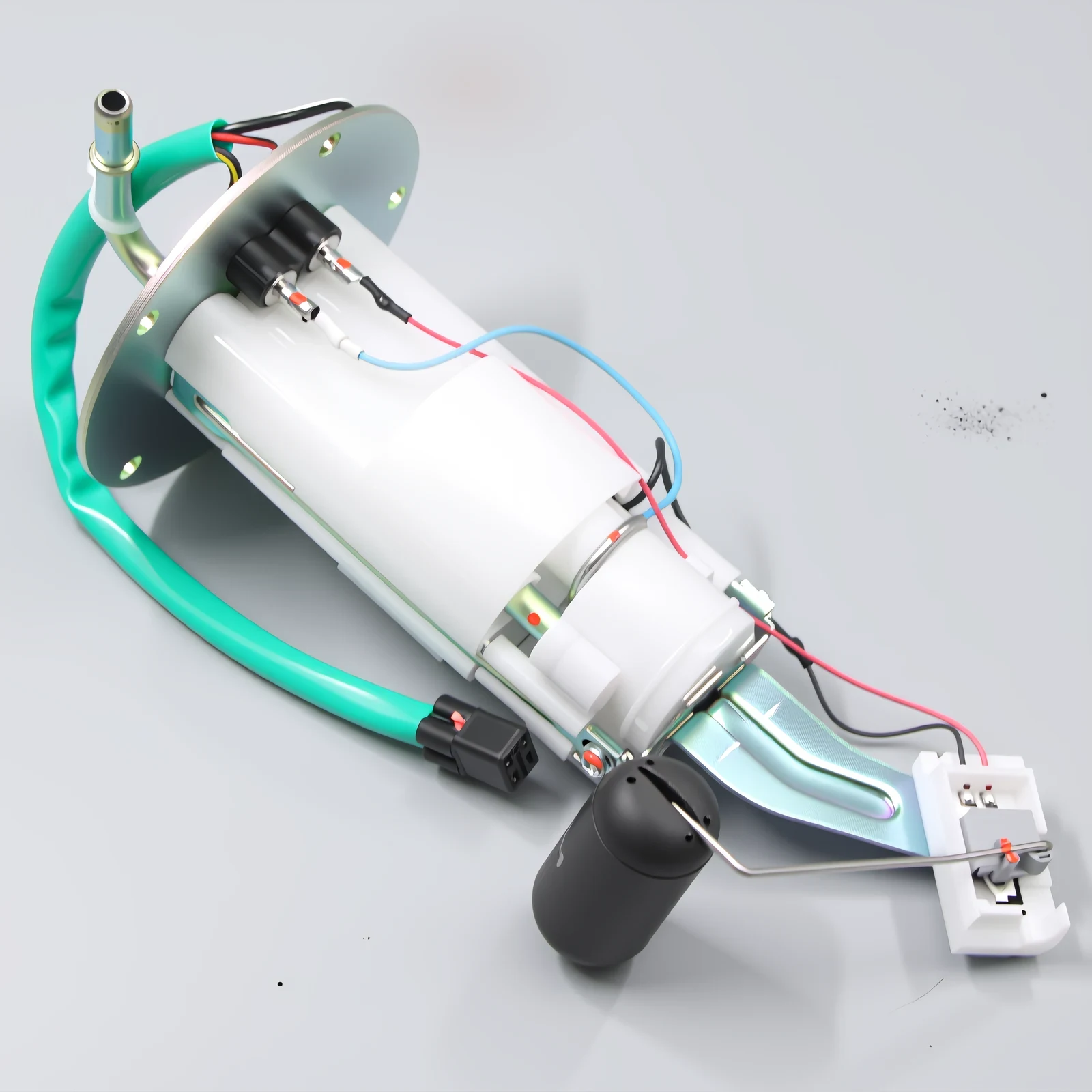
Use that pattern when the diagnosis supports an assembly quote on a covered gasoline platform. It is not a diesel HPFP substitute and not a universal fit claim.
When the buyer still needs help matching OE scope after evidence is complete, use contact. For company background, see about Kangsong.
FAQ
What are the most common fuel pump assembly symptoms?
Counters usually hear hard start or crank-no-start, stalling while driving, hesitation or power loss under load, abnormal rear tank whine, and sender or gauge errors tied to the in-tank module. Each still needs prime, pressure, and circuit checks before you blame the assembly alone.
Does a failing fuel pump assembly always set a DTC?
No. On many vehicles a failed pump will not set a diagnostic trouble code or turn on the check engine light. The engine may crank with spark but receive no fuel, so a blank scanner is not clearance to skip pressure and prime checks.
Can a low fuel tank mimic or cause assembly trouble?
Yes. Running below about one-quarter tank can shorten pump life through heat and momentary starvation, and running dry can damage the pump. Low-tank operation can also make starvation symptoms look like a weak module until the tank is filled and pressure is rechecked.
Is a rear whine always a bad fuel pump assembly?
No. A sharp rear whine that appears after driving and is louder when stopped is a common pump-area clue, but mounts, heat shields, and prior housing work can confuse the story. Pair noise with pressure and circuit evidence.
Should I replace the pump alone or the full assembly?
It depends on the platform and the complaint. The pump is usually part of a sending-unit assembly; pump-only kits can leave a failing sender in place, while a full module is often cleaner for combined drivability and gauge faults. Quote to the OE documentation the shop actually needs.
How is this different from weak fuel pump symptoms pages?
This page owns in-tank assembly/module triage for counters — prime, pressure band, tank level, sender scope, and voltage drop. The weak fuel pump symptoms article goes deeper on low-delivery evidence language; use both without collapsing their intents.
What should a parts counter ask before quoting a fuel pump assembly?
At minimum: VIN and engine, key-on prime behavior, measured rail pressure versus specification, tank level at failure, sender or gauge notes, fuse/relay/inertia status, voltage-drop results, and parts already replaced. Incomplete packets should get a diagnose-first response, not an automatic module SKU.
References
- AA1Car — Electric Fuel Pumps: How They Work, Why They Fail (assembly/sender context, low-tank risk, key-on prime, often no DTC).
- MOTOR — Fuel Pump Diagnosis (circuit voltage-drop diagnosis on energized pump paths).
- Stack Exchange Mechanics API — Question 23844 (rear whine).
- Stack Exchange Mechanics API — Question 28299 (low tank / run dry).