How to test a used fuel pump starts with a short dry-run spin check for motor life, then a fuel-immersed bench test fuel pump setup that holds target pressure and measures a timed fuel pump volume test at a recorded voltage — a junkyard hum alone is not a pass.
This page is for parts counters, reman intake desks, and buyers evaluating a used fuel pump before install or stock acceptance. It is not the in-vehicle how to test a fuel pump evidence boundary RFQ essay, and it is not the fuel pump tester evidence guide.
Define Used Fuel Pump Testing Before You Install or Accept Stock
Used-unit testing proves whether a pulled or reman-candidate pump can still deliver required pressure and volume — it is not the same job as documenting an in-vehicle fuel complaint before you open a catalog.
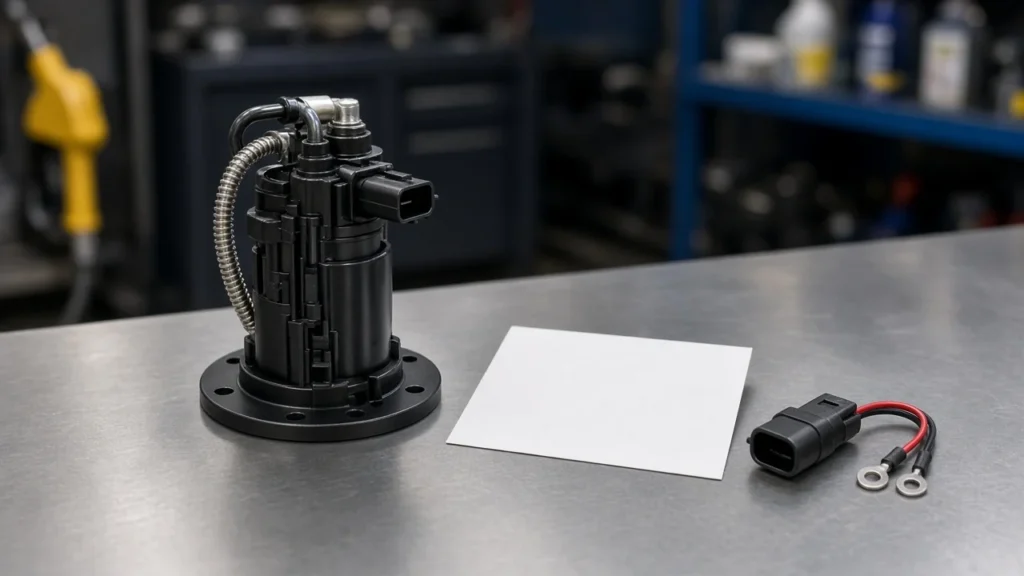
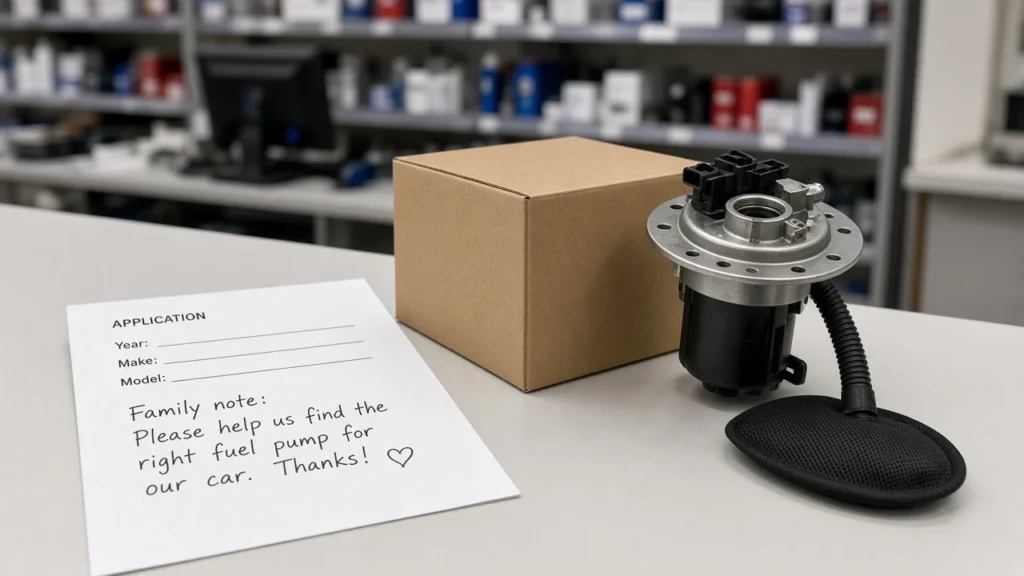
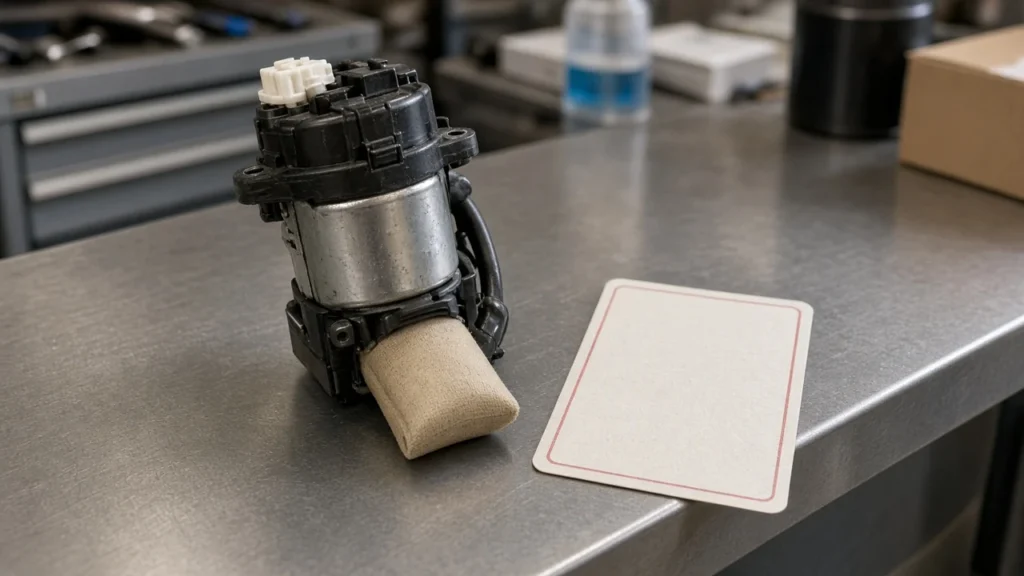
A used fuel pump may arrive as a bare pump or still seated in a fuel pump assembly / module with sender and hanger hardware. Either way, the buyer question is the same: will this unit push enough fuel at the pressure the application needs?
Failed electric pumps often set no diagnostic trouble code. That means a blank scan tool never proves a used unit is healthy. Treat codes as optional context, not a substitute for a load bench.
Keep this object separate from vacuum/mechanical pump tests and from diesel high-pressure pump benches. Mixing those tickets creates wrong SKU quotes and false warranty stories.
Set Dry-Run Limits, Gravity Feed, and Spark Safety First
Cap dry spins at about one to two seconds, gravity-feed the inlet, clamp the pump, and control sparks in a ventilated bay before you run any liquid fuel on the bench.
Electric pumps are cooled and lubricated by fuel. Running them dry for more than a second or two risks damage. Use a dry spin only as a brief “does it turn?” check, then immerse or gravity-feed the inlet for any meaningful run.
These pumps push fuel; they do not pull well from a dry hose. Arrange a fuel source that can feed the inlet. Clamp the housing so the unit cannot walk across the bench when it builds pressure.
Important: Gasoline vapor is as flammable as liquid fuel. Use a switched twelve-volt feed to avoid sparking at the terminals, work in a ventilated area, and keep a fire extinguisher within reach. (Source: Type2 — Electric fuel pump testing.)
Record that safety steps were followed on the intake sheet. A used unit that “ran fine” after an unsupervised dry spin is not a trustworthy pass.
Treat a Junkyard Spin Check as a Smoke Test Only
A twelve-volt hum shows the motor turns — it does not prove pressure or volume, so treat junkyard spin checks as triage only.
Used-inventory buyers often want a fast answer before they haul a module home. Applying ground and twelve-volt power at the correct pins and listening for a normal hum can reject a locked motor on the spot.
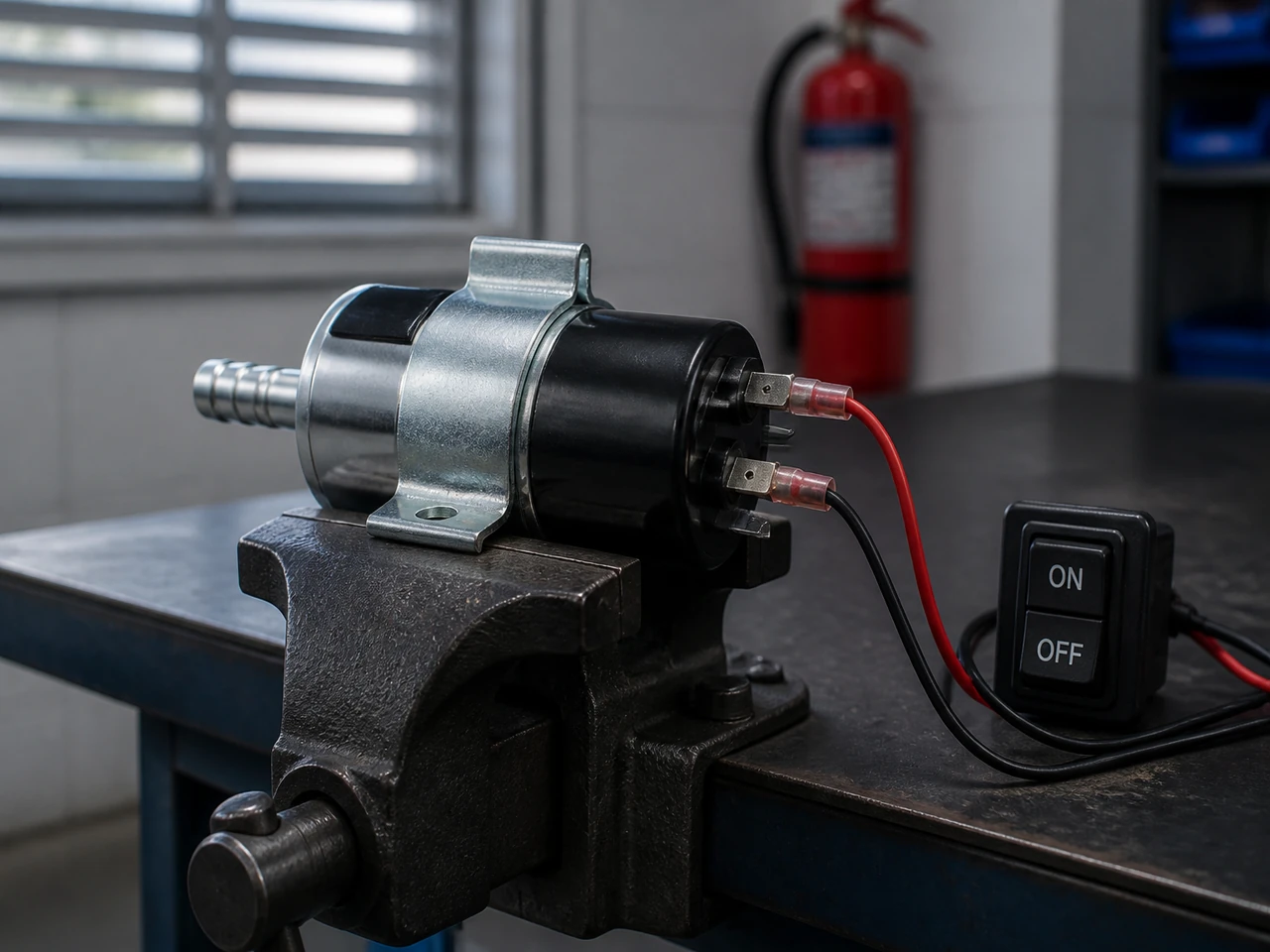
Field replies are blunt: sparks and fuel do not mix, and a hum will not be an accurate test of delivery. It only tells you the motor runs and roughly sounds normal.
From the field: Used-inventory buyers often ask whether grounding a junkyard pump and applying twelve-volt power until it hums is enough before install. Field replies warn about sparks and say the check is not an accurate pressure or volume test — only a run/sound smoke check.
If the unit fails the smoke check, reject it. If it passes, move to a restricted-pressure bench test fuel pump routine before you accept stock or drop a tank.
Hold Target Pressure Under Restriction on the Bench
Restrict the outlet until the gauge holds the application target psi from service information — free flow alone can hide a weak used pump.
Fuel pressure is the first load proof on the bench.
On multiport gasoline engines, electric in-tank pumps typically deliver about 30 to 85 psi depending on the application. Always confirm the exact specification for the vehicle or the pump rating you are matching.
Wrong pressure capability causes drivability problems even when the motor spins.
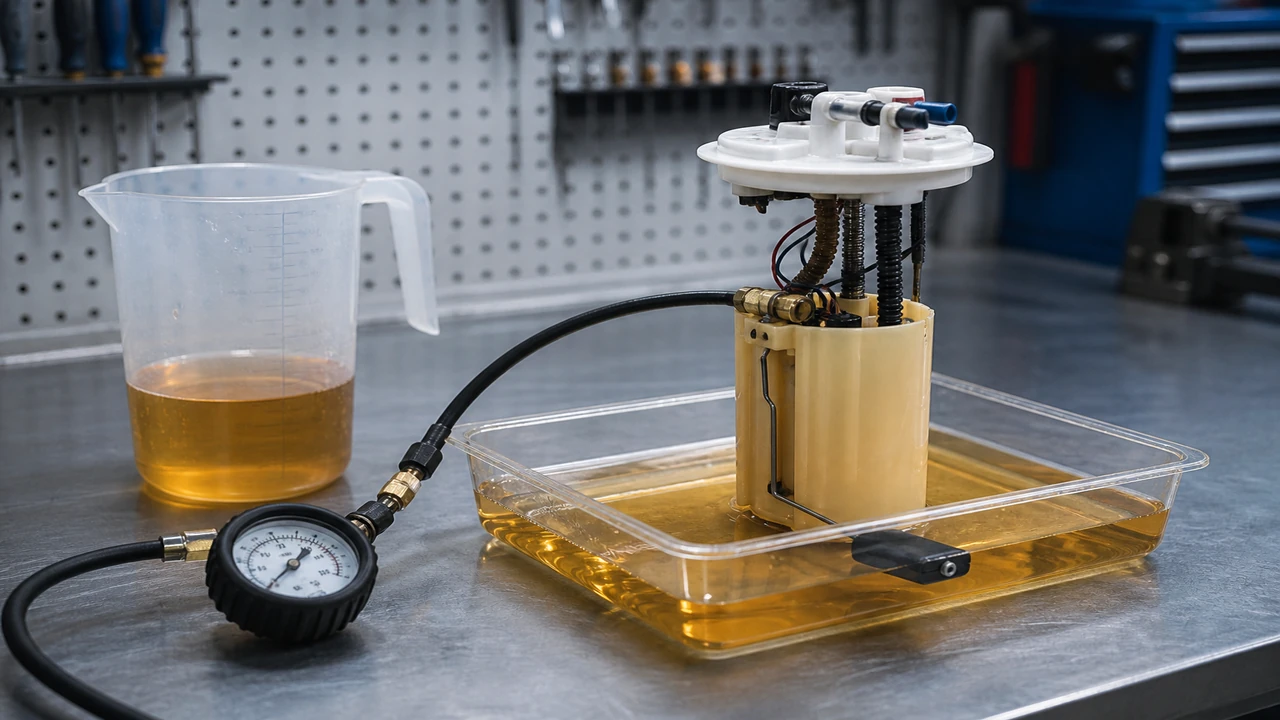
Build a simple load path: outlet hose, tee to a liquid-filled gauge that exceeds expected pressure, and a valve or controlled restriction. Immerse the inlet, apply a recorded Voltage supply near twelve volts, then tighten the restriction until the gauge reaches the target and holds steadily.
If the pump cannot reach or hold the target pressure, fail it. Do not “average” a bouncing gauge into a pass. Log the held psi and the supply voltage on the ticket.
Time Fuel Volume at That Pressure Before You Call It a Pass
Pressure can look fine while flow is still short — time a fuel sample at the held pressure before you stamp a used unit as good.
Fuel volume / flow is the second load proof.
Technicians ask this constantly when rail pressure already looks acceptable. Acceptable static or idle pressure does not prove the pump can move enough fuel as demand rises.
A separate fuel pump volume test answers that question.
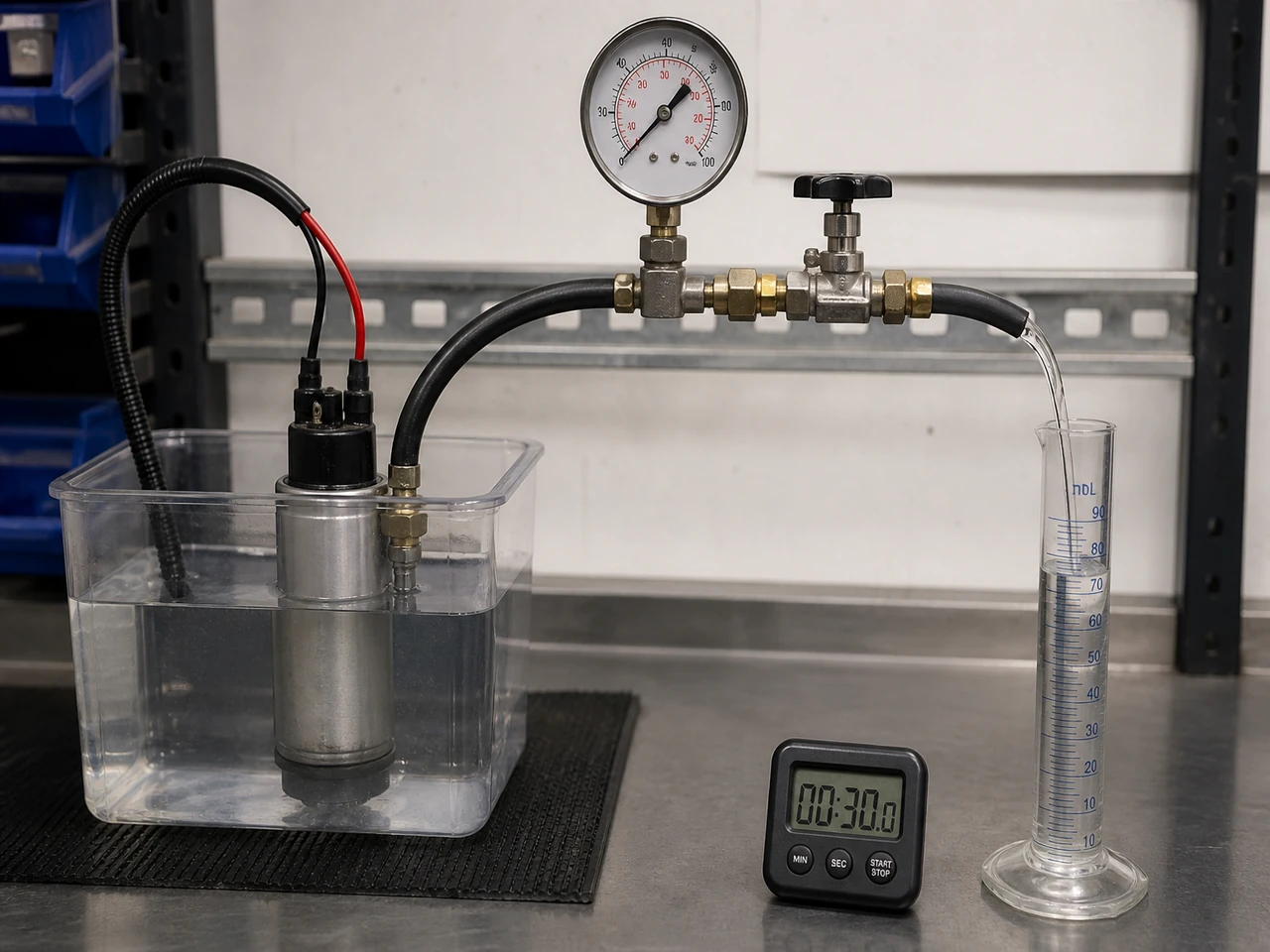
One practical method used in bench how-tos is to hold the target pressure, divert flow into a graduated container for a fixed interval such as fifteen seconds, then scale the collected volume to an hourly rate and compare it to the pump or OE specification. Use the OEM or supplier rating first; treat timed examples as method illustrations, not a universal Kangsong warranty number.
Tip: Community diagnosis threads remind counters that “pressure looked fine” is incomplete without volume. On Stack Exchange Mechanics, an owner reported roughly healthy rail pressure yet was still told to measure how much fuel the pump pushed in a set time. (Source: Stack Exchange Mechanics API — Q23632.)
When the workshop manual omits how long to energize for a volume sample, document the timed interval you used and keep it consistent across intake units. Inconsistent timers create false reman “quality” swings.
| Check | What a pass looks like | What a fail looks like |
|---|---|---|
| Dry-run spin (short only) | Motor turns briefly without seizure | Locked, silent, or sparking leads |
| Junkyard / twelve-volt hum | Normal tone; no bind | No run, harsh grind, or dead short |
| Pressure hold at target psi | Gauge reaches and holds application target | Cannot reach target or pressure collapses |
| Timed volume at that pressure | Collected volume meets OEM/pump rating | Short volume despite “OK” pressure |
| Recorded supply voltage | Volts logged near intended bench supply | Unlogged or sagging voltage during the run |
Document Voltage, Pressure, Volume, and Pass/Fail for Used Inventory
Log identity, volts, target psi, timed volume, dry-run notes, and accept/reject before used stock enters the shelf or a tank comes down.
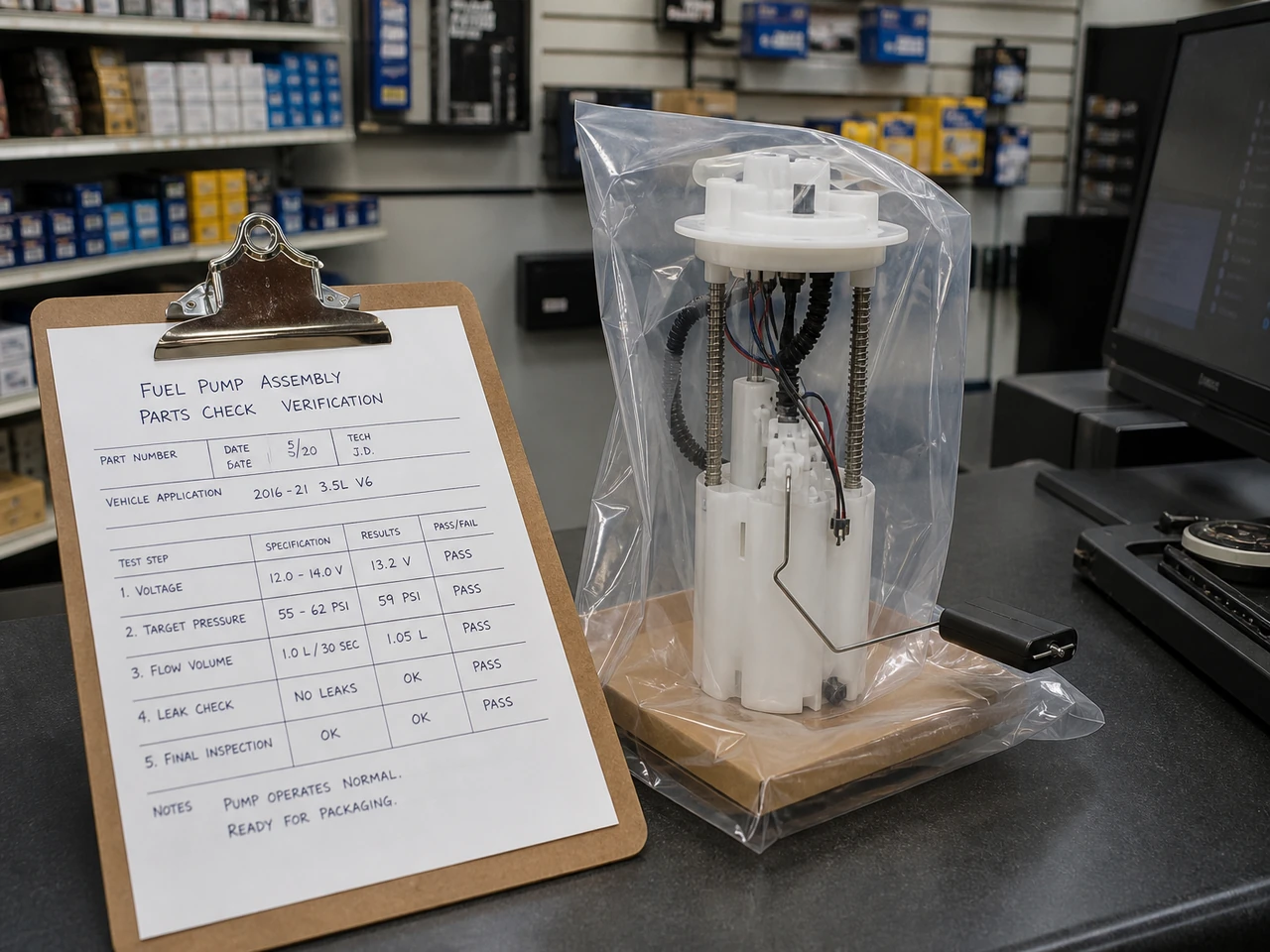
Counters that accept used inventory on a phone description alone inherit the next no-start. Convert every used-unit ticket into a short evidence packet.
| Field | Why it matters | Example note |
|---|---|---|
| Unit identity | Separates pump-only vs full assembly / module | OE stamp, connector style, sock present |
| Supply voltage | Flow and pressure shift with volts | 12.2 V measured at pump leads |
| Target pressure | Must match application or pump rating | 58 psi per service information |
| Held pressure result | Proves restriction capability | Held 58 psi for 30 s |
| Timed volume | Proves flow at that pressure | 15 s sample; scaled vs rating |
| Dry-run notes | Flags unsafe or damaging triage | 1 s dry spin only, then immersed |
| Pass / fail + disposition | Closes the inventory decision | Fail — scrap; quote new OE-scoped assembly |
Keep the packet with the unit photo when possible. Reman and wholesale partners can challenge a return much faster when volts, psi, and volume are already on the sheet.
Recommend an OE-Scoped Assembly When Used Inventory Fails Triage
Move to OE-documented new assembly quoting when used stock cannot meet pressure and volume — do not keep shipping borderline pumps into warranty risk.
When a used unit fails pressure hold or the timed volume check, the commercial path is a new, application-documented assembly — not another undocumented yard pull. Kangsong publishes a fuel pump assembly for Hyundai Sonata and Kia Optima with stated OE references on the product page.

It is a gasoline OE-scoped documentation example for that platform family. It is not a diesel high-pressure pump substitute and not a universal fit claim. For other platforms, start at the products hub, review about Kangsong, and send fitment questions through contact.
If the buyer still needs in-vehicle complaint evidence fields before ordering, send them to the lateral how to test a fuel pump evidence boundary page. If they are defining tester tooling, use the fuel pump tester evidence guide.
FAQ
How do you test a used fuel pump?
Start with a brief dry-run spin of one to two seconds, then run a fuel-immersed bench that holds application pressure and times volume at a recorded voltage. A hum-only check is triage, not a pass.
Can you bench test an electric fuel pump with twelve-volt power?
Yes. Use a secure twelve-volt supply, clamp the pump, gravity-feed the inlet for liquid runs, and avoid sparking at the terminals in a ventilated area.
Why do a volume test if pressure looks fine?
Acceptable pressure does not prove adequate flow under load. A timed volume sample at the held pressure catches weak pumps that still build psi.
How long should a fuel pump volume test run?
Follow the OEM or supplier procedure first. If timing is missing, pick a fixed interval, record it, and keep it consistent across intake units — for example a fifteen-second sample scaled to an hourly rate as a method illustration.
Is it safe to run a fuel pump dry on the bench?
Only for a very short spin. Fuel cools and lubricates the motor; limit dry running to about one to two seconds, then immerse or feed fuel before any longer test.
Does a junkyard hum mean the used pump is good?
No. A twelve-volt hum shows the motor turns and roughly sounds normal. It does not prove target pressure or timed volume.
What pressure should a used electric fuel pump hold?
Use the vehicle service information or the pump’s rated operating pressure. A common multiport band is about 30 to 85 psi depending on the application — never treat that band as a universal VIN number.