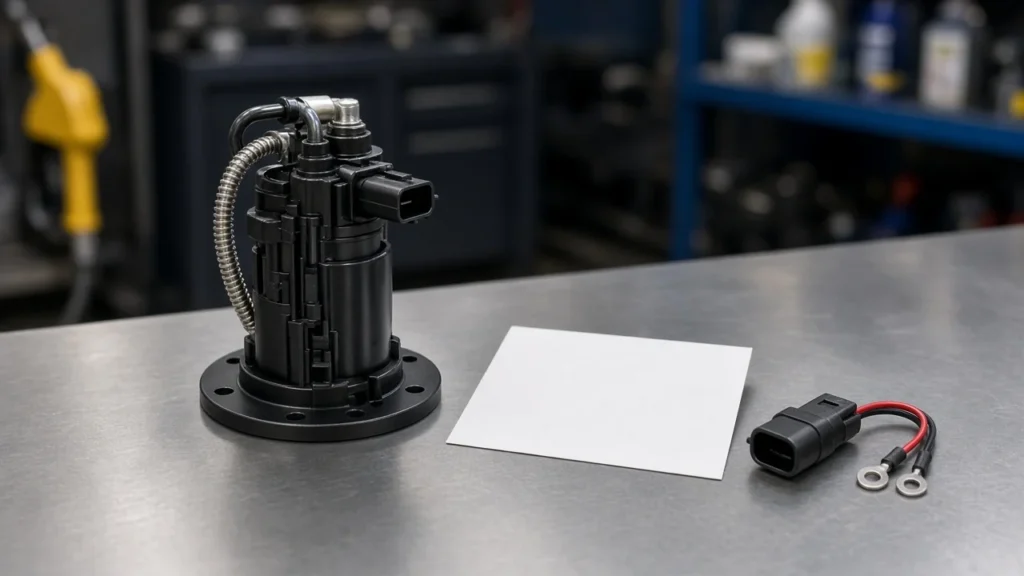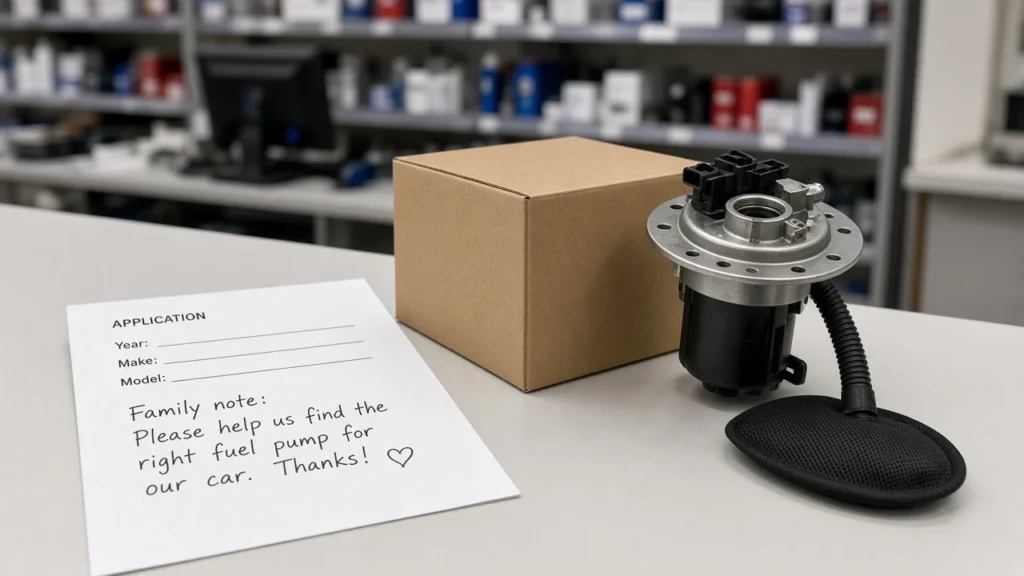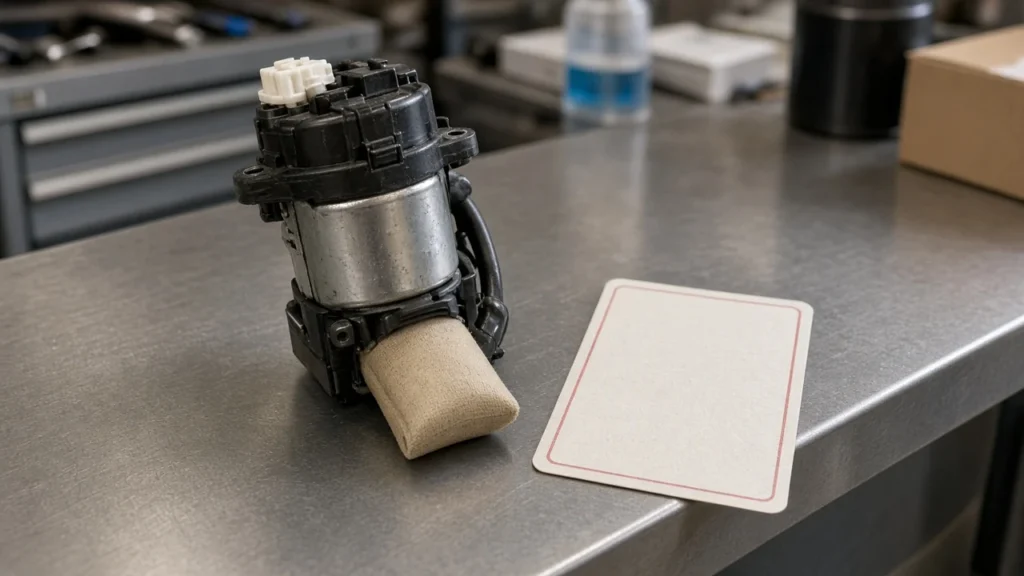

Most aftermarket fuel pump problems that reach a distributor counter are classifiable events—wrong fitment, contaminated fuel, wiring mistakes, or a lookalike electrical fault—rather than proof that every non-OEM pump is defective. This article shows how to separate those modes, then what to lock in RFQ and receiving checks before you escalate a SKU family. It stays on problem patterns and counter QC; it is not a brand shootout and not a weak-pump symptom encyclopedia.
Classify Aftermarket Fuel Pump Problems Before Blaming the SKU
Most counter complaints fall into a short list of modes: fitment mismatch, contamination or dry-run damage, wiring/install faults, misdiagnosis, or a true manufacturing defect.
A jobber that sees three returns in one week should ask which mode repeated—not whether “aftermarket” as a category failed. Technical aftermarket education materials note that a large share of complained electric fuel pumps are still in working order, and that premature failure is commonly tied to contaminated, water-containing, or poor-quality fuel rather than an automatic factory defect.
| Problem mode | What the counter usually hears | First control question |
|---|---|---|
| Fitment / OE mismatch | “New pump, still runs bad” | Which OE number and fuel-system type were confirmed? |
| Contamination / dry run | “Failed again in days” | Were strainer, filter, and tank condition documented? |
| Wiring / polarity / connector | “Pump runs, no pressure” | Were polarity, pin fit, and connector heat damage checked? |
| Misdiagnosis lookalike | Unused pump in opened box | Were fuse, relay, supply voltage, and filter ruled out? |
| True defect | Same SKU fails after clean system proof | Is the failure reproducible with documented electrical and pressure evidence? |
Keep gasoline in-tank modules and diesel high-pressure programs on separate complaint boards. Mixing those stories creates false “quality spikes.”
Important: Treat repeated returns as a classification job first—many complained electric fuel pumps are still functional, and premature failure is almost always linked to contaminated, water-bearing, or poor-quality fuel. Escalate a manufacturing defect only after fitment, system, and install checks are recorded. (Source: Motorservice — Electric Fuel Pumps: Models, Damage, Reasons.)
Catch Fitment and OE-Reference Mismatches Early
Wrong-part sales create “aftermarket quality” complaints even when the shipped unit matches the order ticket.
An OE reference is the original-equipment part number that identifies the correct pump or fuel pump assembly for a platform. Year-make-model text without that number—or without the fuel-system architecture—still ships wrong hangers, pressure designs, and connector layouts. Enthusiasts and shops repeatedly describe installing a pump that “fits the tank hole” yet belongs to a different pressure system, then blaming the replacement.
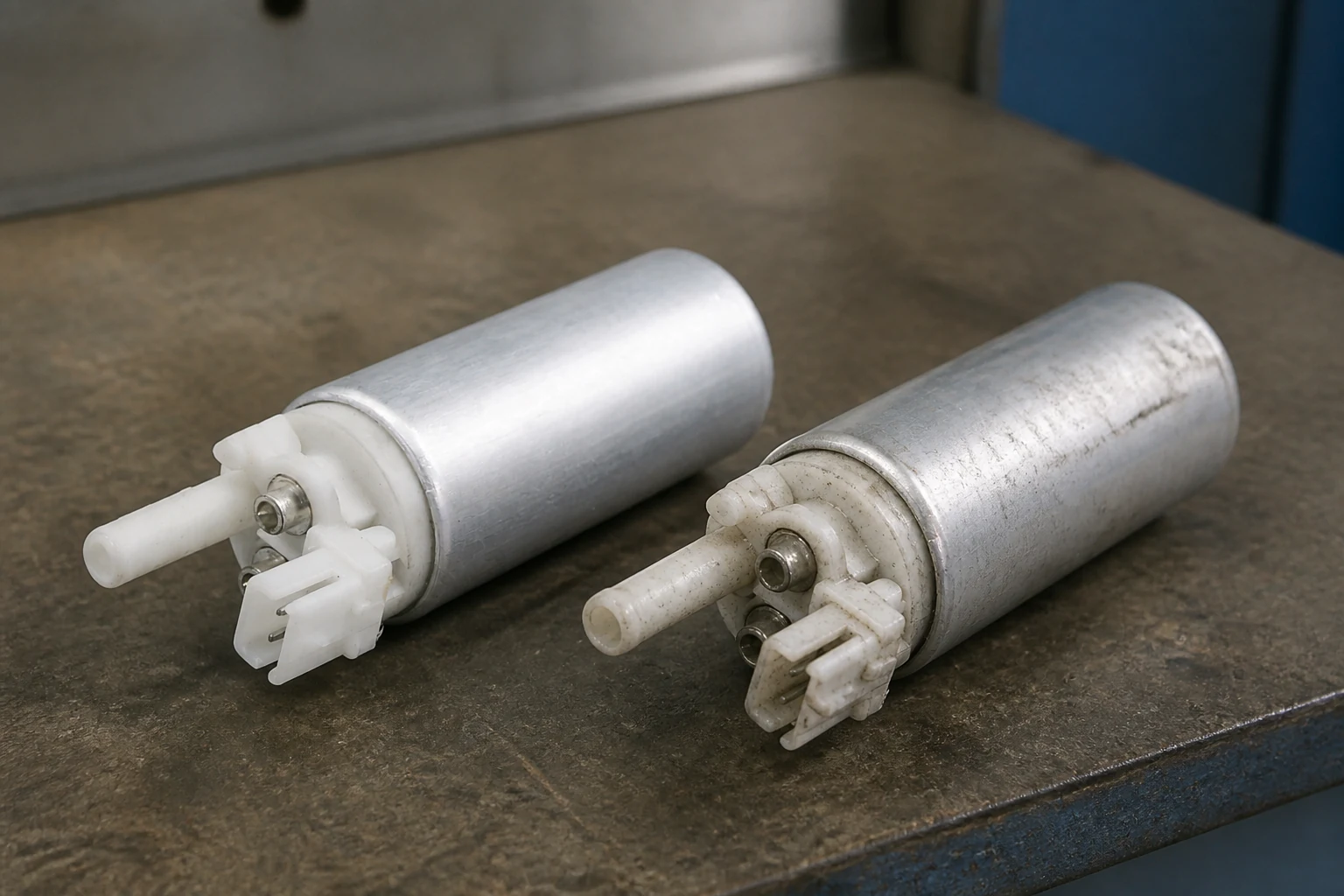
Before you quote:
- Capture VIN or exact platform, engine, and fuel-system type when the catalog allows more than one family.
- Require the OE number or a documented cross that your team has already validated.
- Confirm whether the buyer needs a bare electric fuel pump, a fuel pump module, or a complete fuel pump assembly with sender and strainer.
- Reject “looks the same as the photo” as a fitment method.
If the buyer wants a brand-sourcing comparison rather than a problem-mode check, send them to the existing Delphi fuel pump modules vs aftermarket OEM-equivalent assemblies article instead of stretching this page into a ranking.
Spot Contamination and Dry-Run Damage That Mimic Defects
Debris, water, and blocked intake filtration create early failures that look like defective new parts.
Modern electric fuel pumps rely on fuel flow for cooling and lubrication. When a strainer or filter clogs, delivery falls, noise rises, and dry running can damage the pump system quickly.
Community threads also call fuel debris a primary killer when a pre-filter is missing on certain installs. None of that is solved by swapping brands alone.
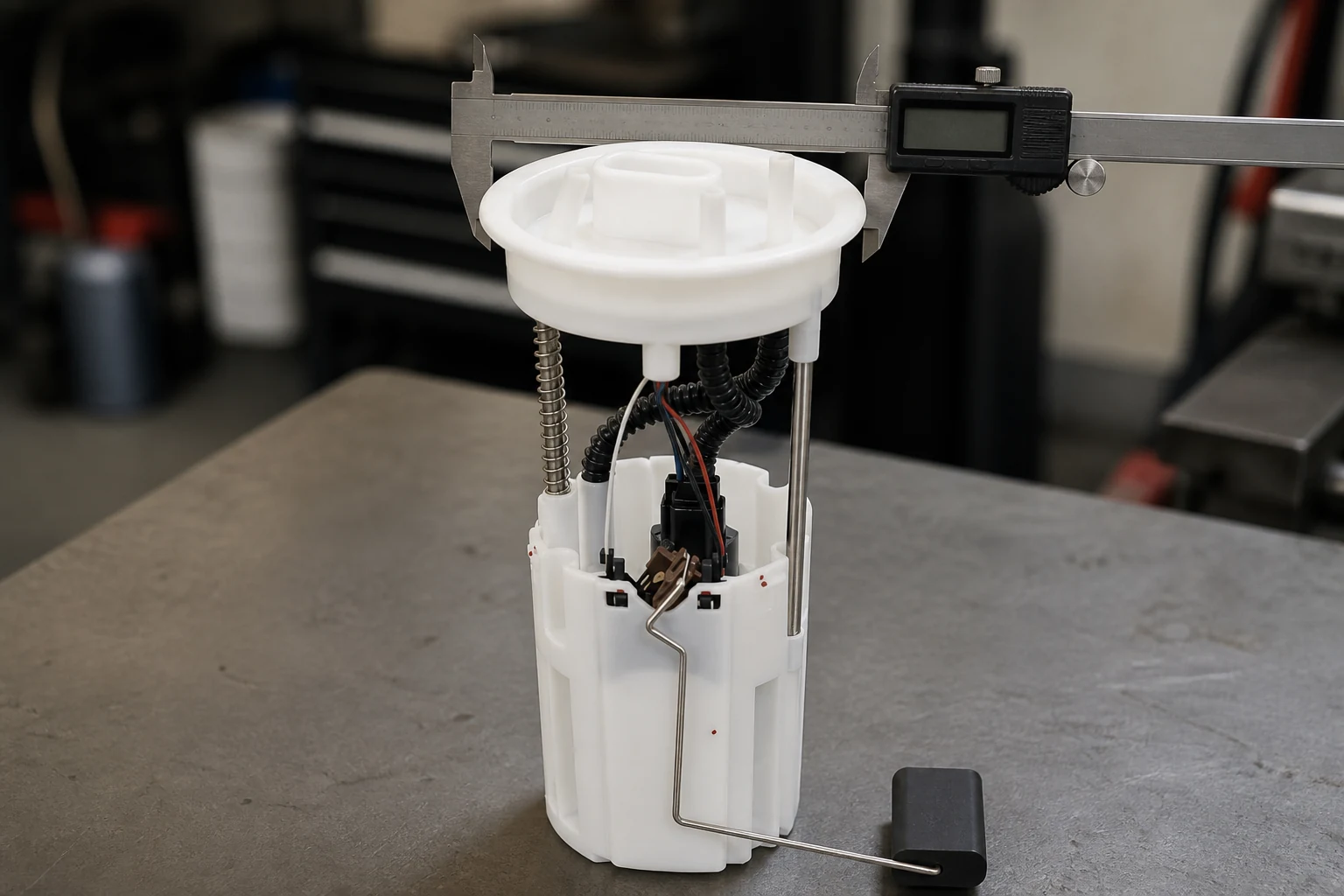
When a shop reports “new pump failed fast,” ask for:
- Strainer/sock condition and whether it was replaced or cleaned
- Filter service date and any visible water or rust evidence
- Whether the tank sat with aged fuel or known contamination
- Whether the pump was primed and never run dry during install
Stock adjacent filtration and seals with confirmed pump replacements when the vehicle history shows debris. That stocking move protects the repair without pretending every failure was a factory defect.
Check Wiring, Polarity, and Connector Integrity
A pump that runs but delivers no pressure can be an electrical orientation or connector problem, not a dead rotor.
In one well-documented Car Talk thread, a newly installed aftermarket pump motor ran loudly with zero pressure until the installer found the wires reversed. Connector pin size mismatches can invite improvised terminals that look “correct” and still reverse polarity.
Separately, a safety recall document shows how an improper crimp on in-tank pump connector pins can raise resistance, generate heat, and deform flange plastic and sealing surfaces. Use that as an inbound inspection cue for heat damage, melted plastic, or compromised seals.
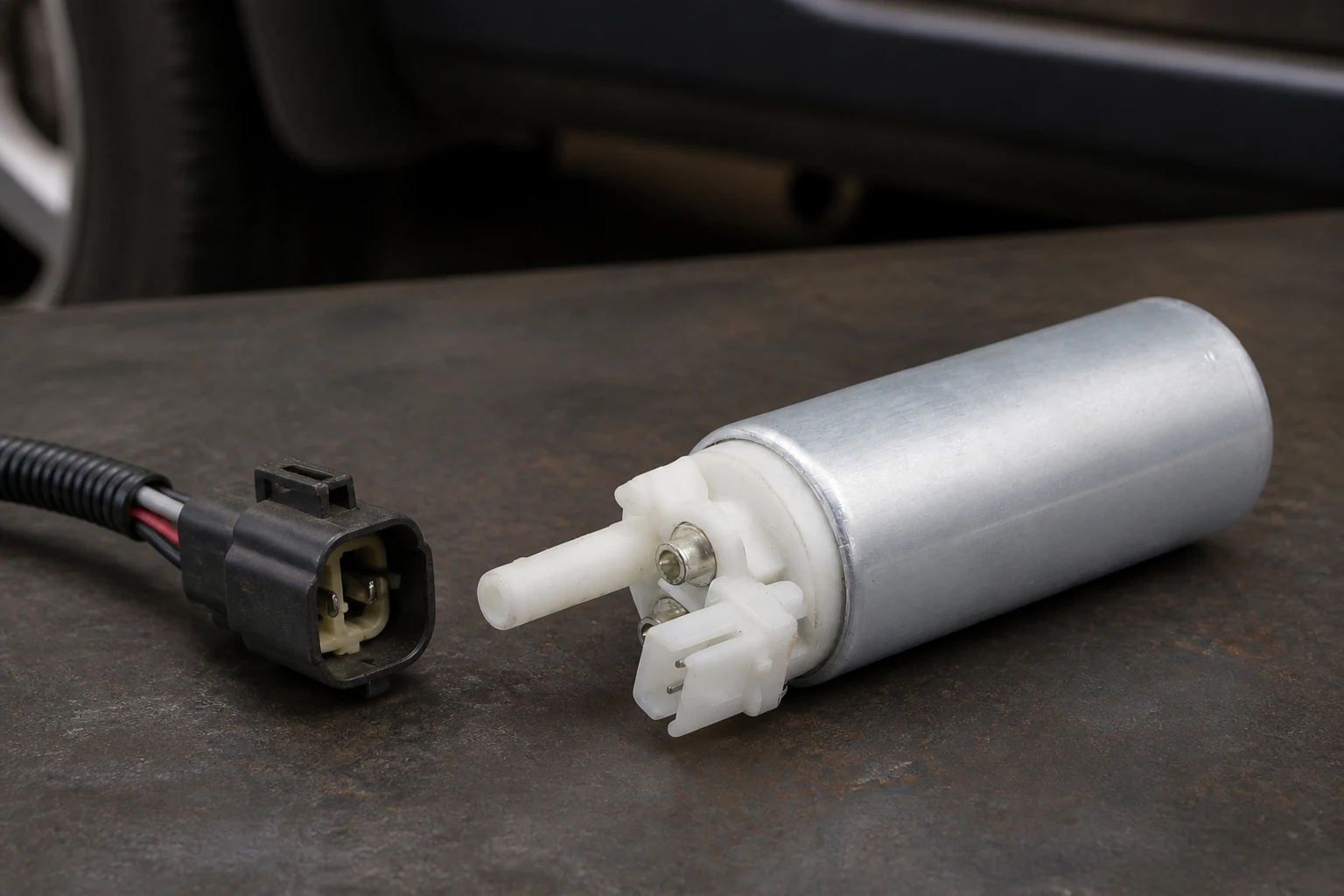
From the field: Installers have reported hearing the pump run while rail pressure stayed at zero, then finding reverse polarity on the aftermarket motor leads. Treat “runs but no pressure” as a wiring check before opening a defect claim. (Source: Car Talk Community — New fuel pump, no fuel pressure.)
Counter and receiving actions:
- Compare terminal size and polarity marks to the harness diagram or OE connector
- Inspect pins for bent, burned, or poorly crimped terminals
- Reject units with cracked flanges, missing required port caps, or heat-deformed connector housings
- Confirm the shop did not force a connector that only “almost” fits
Separate Misdiagnosis Lookalikes From True Pump Defects
Unused returns often mean the vehicle fault was never the pump.
Retail technical write-ups note that fuel pumps sit among the highest-return categories because filters, fuses, relays, and wiring create the same no-fuel story. A distributor that ships on symptom language alone absorbs that cost.
Before you authorize a warranty swap:
- Ask whether fuse and relay were confirmed under load.
- Ask whether supply voltage and ground were measured at the pump connector.
- Ask whether fuel pressure was compared with the vehicle service information.
- Keep a short note of those answers on the return file.
For symptom pattern language and field triage that overlaps this step, use the existing bad fuel pump symptoms field diagnosis guide for parts distributors. For low-delivery symptom detail, use the live weak fuel pump symptoms review rather than duplicating that intent here.
Build RFQ and Receiving Checks Distributors Can Enforce
RFQ fields and inbound inspection turn vague “quality problems” into actionable records.
USCAR13-1 describes operational, environmental, durability, and test-procedure expectations for in-tank electric fuel pumps used with automotive gasoline, while specific numeric criteria remain on the pump drawing. Buyers can ask suppliers to state which drawing-linked tests apply; they should not invent universal pass numbers from a catalog page.
| RFQ field | Why it matters | Block quote if missing? |
|---|---|---|
| OE number / validated cross | Stops appearance-based wrong SKUs | Yes |
| Platform, engine, fuel-system type | Separates module vs HPFP vs inline families | Yes when catalog is ambiguous |
| Bare pump vs module vs assembly | Prevents packaging mismatches | Yes |
| Symptom + tests already performed | Separates misdiagnosis from defect | Strongly preferred |
| Quantity, channel, packaging marks | Aligns warehouse labeling | Preferred |
| Any drawing-linked durability/test criteria requested | Clarifies quality language without fake numbers | Optional but useful |
| Receiving check | Pass signal | Hold / reject signal |
|---|---|---|
| OE / SKU label match to PO | Exact match | Mismatch or unreadable label |
| Housing and flange condition | No cracks, crush, or shipping damage | Drop damage, cracked plastic |
| Connector and pins | Clean pins, no heat melt | Burned housing, bent pins, forced fit |
| Port caps / seals as required | Caps present per pack spec | Missing caps on open ports |
| Strainer/sender presence (if assembly) | Matches ordered configuration | Missing sender or sock when ordered as assembly |
Publish the checklist to sales and warehouse teams so “quality complaint” tickets always start with mode and evidence, not a brand rant.
Use an OE-Scoped Assembly Example When the Application Is Defined
When the buyer already has OE and platform fields, route them to a documented assembly page—not a generic “any aftermarket pump” promise.
Kangsong publishes a fuel pump assembly for Hyundai Sonata and Kia Optima that lists OE references such as 31110-D5500, 31110-C2500, and 31111-C110 with stated model-year and engine bands. Use that page as an example of how OE-bound documentation should look in an RFQ packet. It does not prove equivalence to any third-party brand family, and it does not extend fitment beyond the published application.

Browse the broader Kangsong products index when the platform differs. When the application fields are ready, contact Kangsong with OE number, vehicle scope, and the classification notes from your return file. Company background sits on the about page.
FAQ
Are aftermarket fuel pumps always worse than OEM units?
No. Quality varies by supplier and SKU control, and many field complaints are fitment, contamination, wiring, or misdiagnosis rather than proof that the entire aftermarket category fails. Classify the failure mode before you write a category verdict.
Why can a new pump run and still show no fuel pressure?
Reverse polarity or a connector mismatch can spin the motor the wrong way or interrupt delivery while the pump still makes noise. Confirm wiring orientation and connector integrity before treating the unit as dead.
What usually sits behind early “new pump failed” complaints?
Contaminated or water-bearing fuel, clogged strainers or filters, and dry running are recurring drivers in technical aftermarket materials. Ask for filtration and tank-condition notes on every early repeat.
Which RFQ fields cut the most wrong-SKU returns?
OE number or validated cross, fuel-system type, and whether the order is a bare pump, module, or complete assembly. Year-make-model alone is not enough when multiple families share a catalog photo.
What should receiving inspect before the part hits the shelf?
Label/OE match to the PO, housing and flange condition, connector heat or pin damage, required port caps, and whether the ordered assembly includes sender and strainer.
When is a return a true defect instead of a vehicle-side fault?
When fitment is confirmed, electrical supply and polarity check out, filtration/tank issues are addressed, and pressure or delivery evidence still fails against the vehicle service information with the same SKU repeating under those conditions.
How is this article different from a weak fuel pump symptoms page?
This page is problem-mode classification plus RFQ/receiving QC for aftermarket channels. Weak or low-delivery symptom detail belongs on the live weak fuel pump symptoms review.