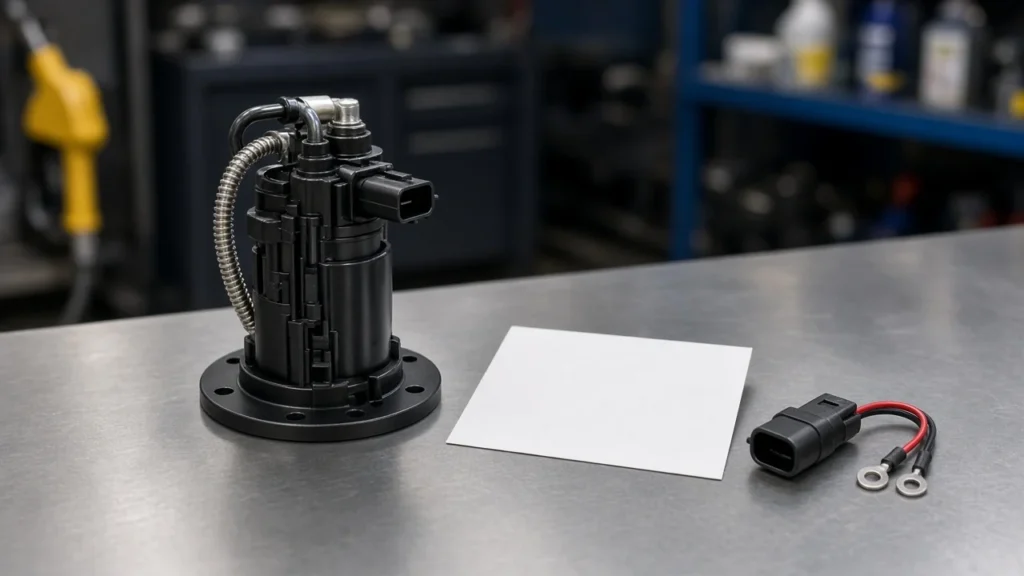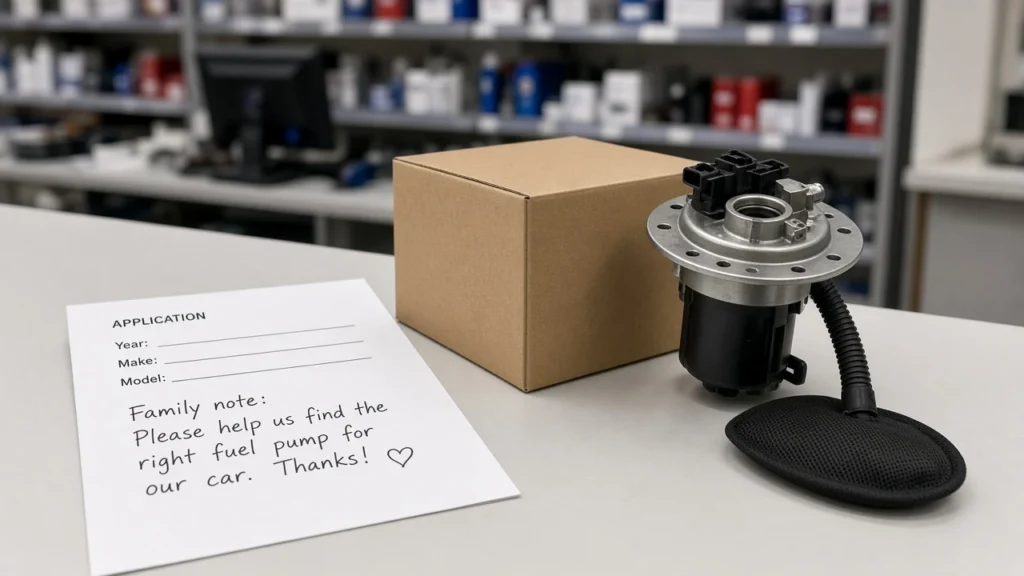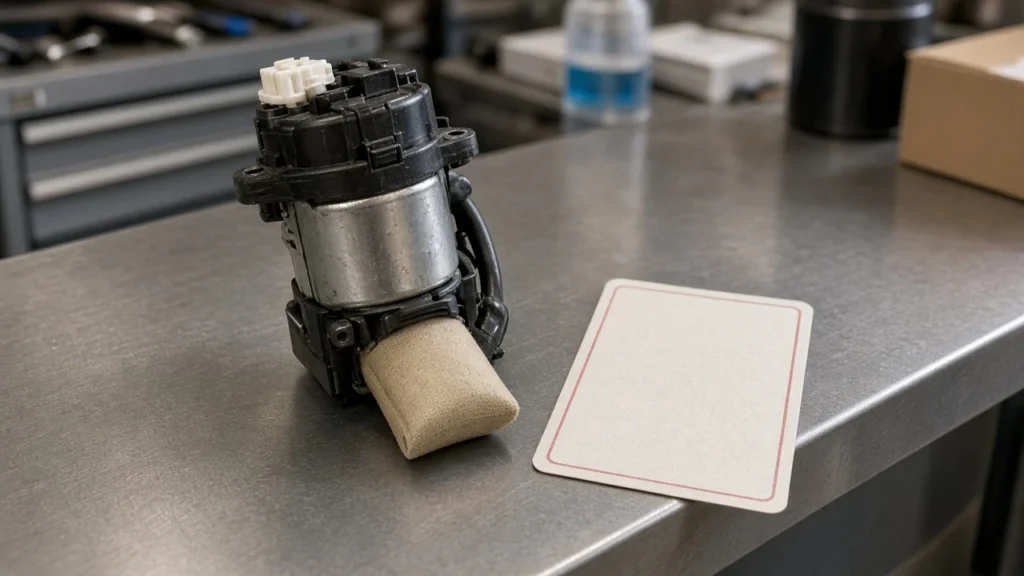
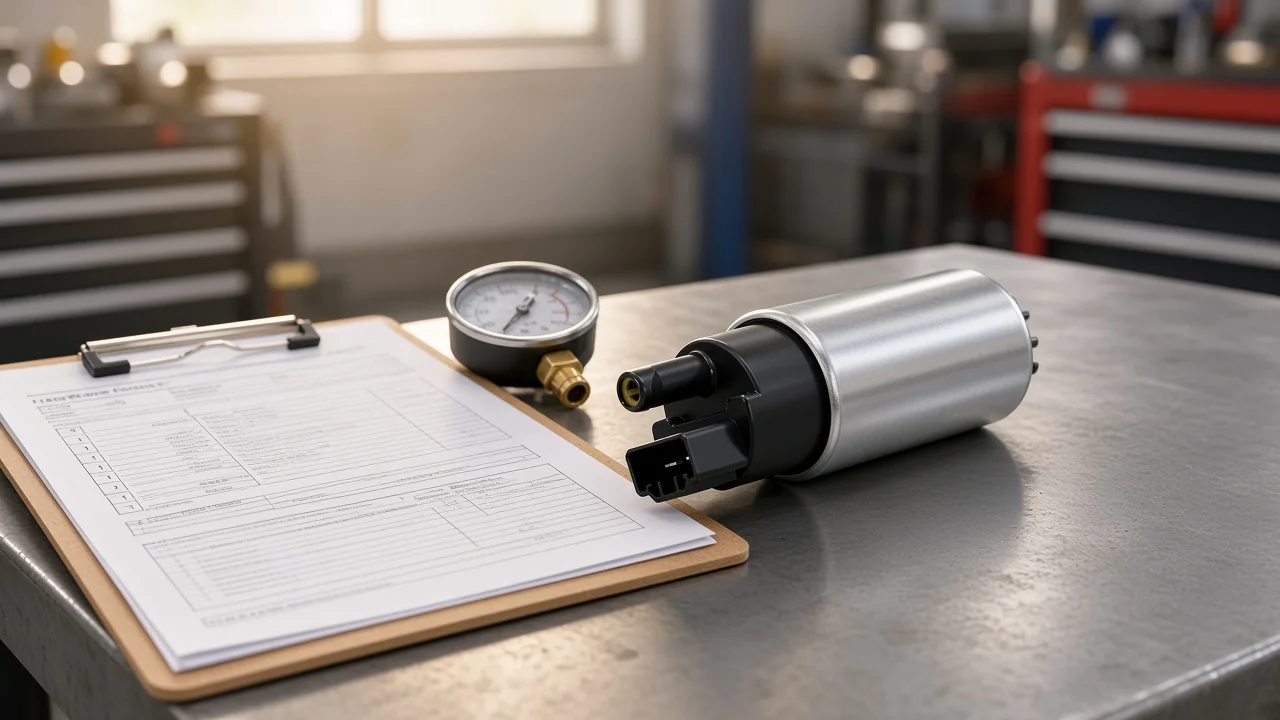
An aftermarket inline fuel pump is the external electric pump you buy outside the dealer channel to push fuel along the line. Selection works when the fuel pressure class and the printed application on the product page match your vehicle before you chase brand names or free-flow LPH marketing.
This page covers pressure class, OE interchange / printed fitment checks, when an external aftermarket fuel pump on the frame rail is the wrong path versus an aftermarket in-tank fuel pump, mount and electrical sanity checks, and how to open application-scoped Kangsong listings. For a plain definition of the hardware shape, see what is an inline fuel pump; for voltage, flow-at-pressure, and mount detail on electric external units, see how to choose an electric inline fuel pump.
What an Aftermarket Inline Fuel Pump Actually Is
An aftermarket inline fuel pump is an electric supply pump mounted outside the tank-usually along the frame rail or near the tank outlet-sold as a replacement or retrofit part rather than a dealer OE assembly.
In plain terms, it is the bolt-on pump on the fuel line, not the submerged module that drops into the tank. Buyers use the phrase when they want service access without dropping the tank, when they are converting a mechanical pump car to electric supply, or when a printed aftermarket listing matches their vehicle years and OE numbers.
The same shopping results also surface high-flow “universal” kits and low-pressure auxiliary transfer pumps. Those may share the word “inline,” but they answer a different buying job. Keep the vocabulary visit on the definition page short, then return here for the purchase gates.
Match Pressure Class Before You Shop Brands or LPH
Match the fuel pressure class your system expects before you compare free-flow gallons-per-hour or brand badges.
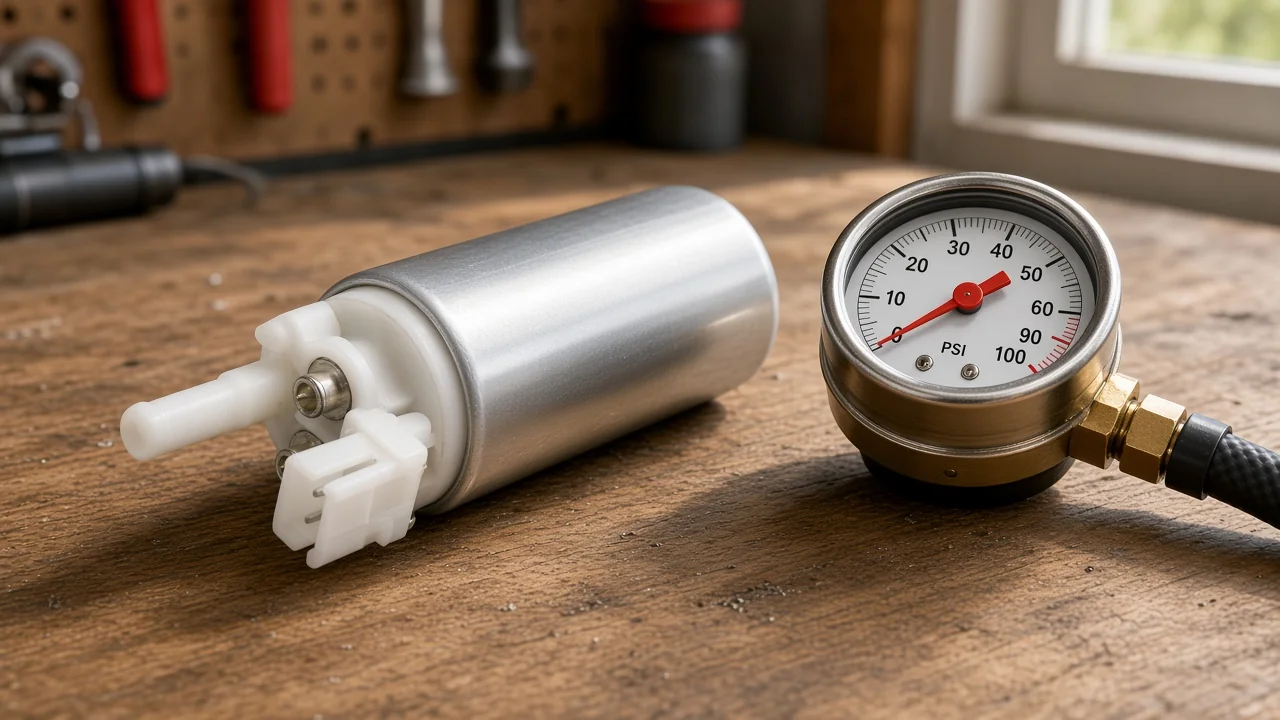
A classic carbureted or mechanical-pump gasoline system typically wants low pressure-often about 6-8 PSI in street-car conversion writeups-while older port and throttle-body injection systems typically live around 40-60 PSI at the rail. Some EFI education pages cite a steady band near 58-60 PSI for their throttle-body setups. Treat those as system-class typicals until the listing publishes its own pressure field.
| System type | Typical supply pressure (order-of-magnitude) | What that means for an aftermarket inline buy |
|---|---|---|
| Carbureted / mechanical gasoline supply | About 6-8 PSI in common classic-car guidance | A high-pressure EFI pump without regulation can overfeed the carb |
| Port / TBI gasoline EFI | About 40-60 PSI (encyclopedia and EFI education bands) | The pump must support that pressure class at realistic voltage-not only free-flow GPH |
| Auxiliary tank transfer “inline” pumps | Often only a few PSI (transfer duty) | Useful for moving fuel between tanks; wrong tool for vehicle EFI supply |
Free-flow GPH with no stated test pressure and no voltage is a weak buying proof. As system pressure rises, actual delivered flow falls, and voltage at the pump terminals under load matters. Treat big LPH numbers on shopping cards as marketing until you see flow discussed at a pressure that matches your system.
Printed Fitment and OE Interchange Beat “Universal” Labels
Buy inside the printed vehicle title, year range, and OE interchange list on the product page-stop when the page does not name your application.
Aftermarket shopping grids love the word universal. For OE-style replacement work, that word is a warning more than a feature. A useful listing shows the years, platforms, and OE numbers the seller is willing to put in print.
If your truck is a 1990s C/K pickup and the title names that family with OE references, you have a match path. If your car is a listed Hyundai or Kia year/model on a published application table, you have a match path. When neither the title nor the table mentions your vehicle, leave the listing alone.
Printed fields that usually settle an aftermarket purchase include:
- Vehicle years and platform language in the title or application table
- OE / interchange numbers listed on the page
- Connector pin count and whether accessories are included
- Published flow (GPH) and voltage when the page states them
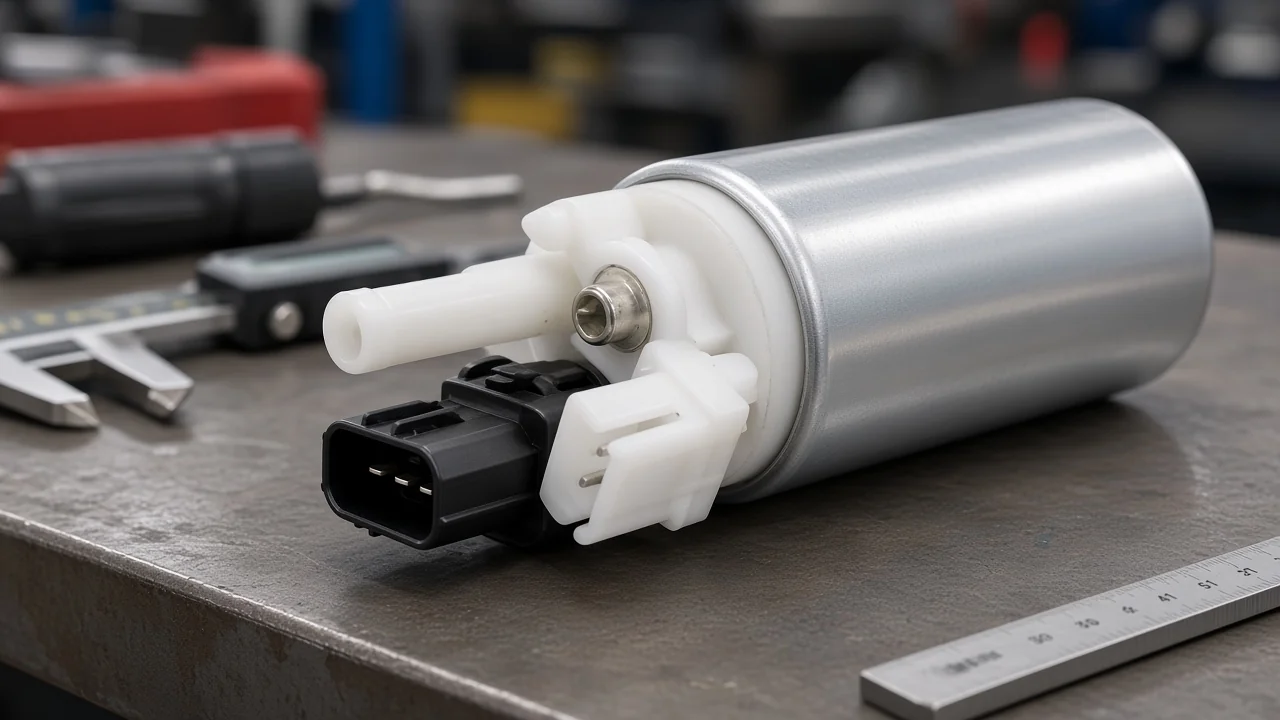
- Physical size or weight when the page publishes them for packaging and mount space
OE interchange / printed fitment is the gate. Extra “also fits” claims that never appear on the page stay out of the buy decision.
When an External Inline Is the Wrong Aftermarket Path
An external aftermarket inline is the wrong path when you are papering over a failed in-tank fuel pump (aftermarket) on a modern EFI vehicle that still needs correct rail pressure and factory-style safety cutoffs.
Mechanics on public forums see this pattern often: someone adds a noisy external pump after an in-tank unit dies, hoping to avoid dropping the tank. External pumps can push well when they are fed, but they pull poorly.
On engine swaps where the tank pump’s pressure class no longer matches the new engine, an add-on inline unit can leave you short on pressure. It can also leave you without the oil-pressure or inertia cutoffs that usually sit in a proper pump circuit. In those cases the aftermarket answer is usually a correct aftermarket in-tank fuel pump path-or a documented retrofit module-not a frame-rail workaround.
Important: If the in-tank pump is dead or the engine’s pressure need changed (for example, a TBI truck later fitted with a higher-pressure EFI engine), confirming rail pressure and restoring a proper in-tank or documented supply architecture matters more than bolting on the loudest external pump in the shopping grid. Source: r/AskAMechanic – Inline fuel pump?.
External inline still has a rational aftermarket job: mild street builds, carbureted electric conversions, temporary EFI conversions on a budget, and vehicles where the tank cannot be dropped this week and the pressure class truly matches an external supply pump. The decision is architectural rather than a brand contest.
In-tank modules generally run cooler and quieter because fuel surrounds the motor. External pumps trade that for service access and simpler first installs. Pick the architecture that matches the failure you are fixing.
Mount, Filtration, and Electrical Checks That Decide Reliability
Mount the pump low and close to the tank so it pushes fuel; pair it with sensible filtration and a circuit that can cut power safely.
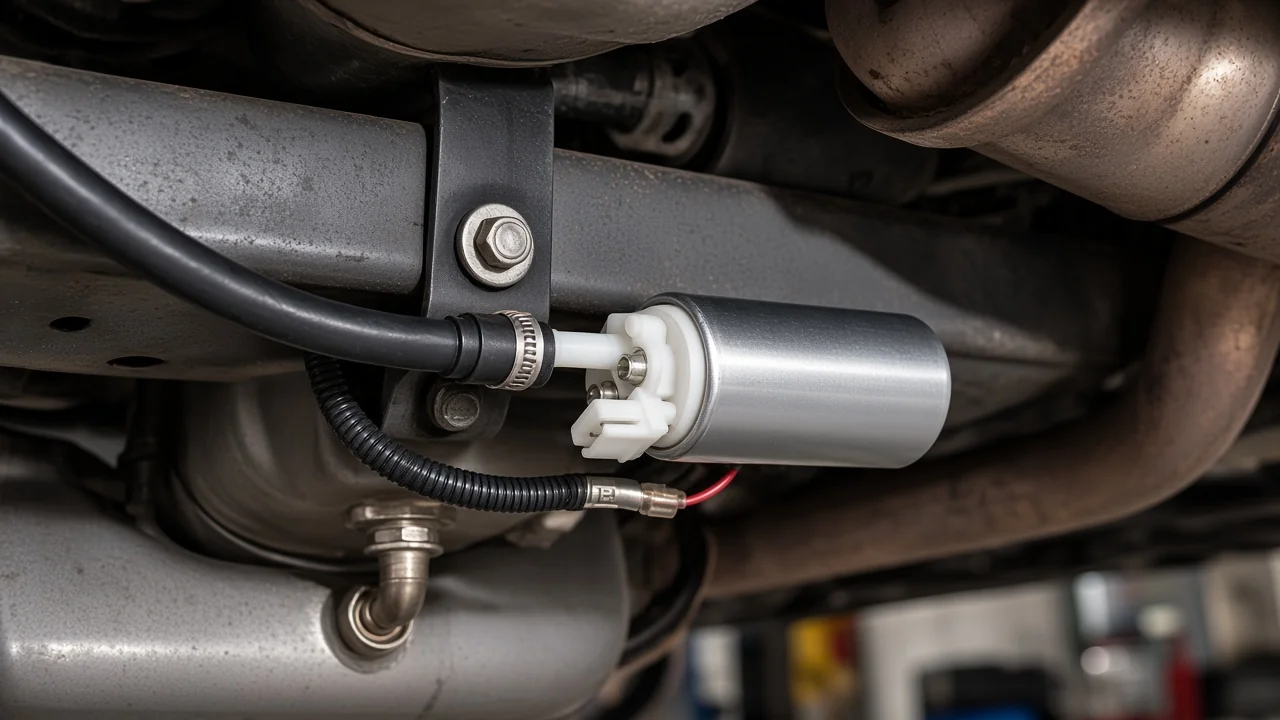
Builders repeat the same rule in plain language: these pumps are pushers, not suckers. Frame-rail mounts below tank level, as near the outlet as ground clearance allows, beat mid-line mounts that leave a long suction hose. Engine-bay mounts for high-pressure EFI supply pumps invite heat and vapor problems.
Pre-filter / filtration protects the pump and the rail. A coarse pre-filter ahead of the pump protects the internals; a post-filter closer to the rail protects injectors or the carb. Rubber isolators reduce the buzz that solid mounts send into the cabin.
Electrically, size the feed for the pump’s load and use a relay / safety cutoff mindset-oil-pressure or inertia cutoffs on many road cars-rather than a permanent hot wire. Deep wiring how-tos belong on dedicated pages. Here the selection point is simple: if the listing is only a pump body with no thought for how it will be switched, plan that circuit before you call the job done.
Verify Application-Scoped Kangsong Electric Pump Listings
Open a Kangsong listing only when the printed title or application table matches your vehicle; otherwise browse the catalog root and keep matching in print.
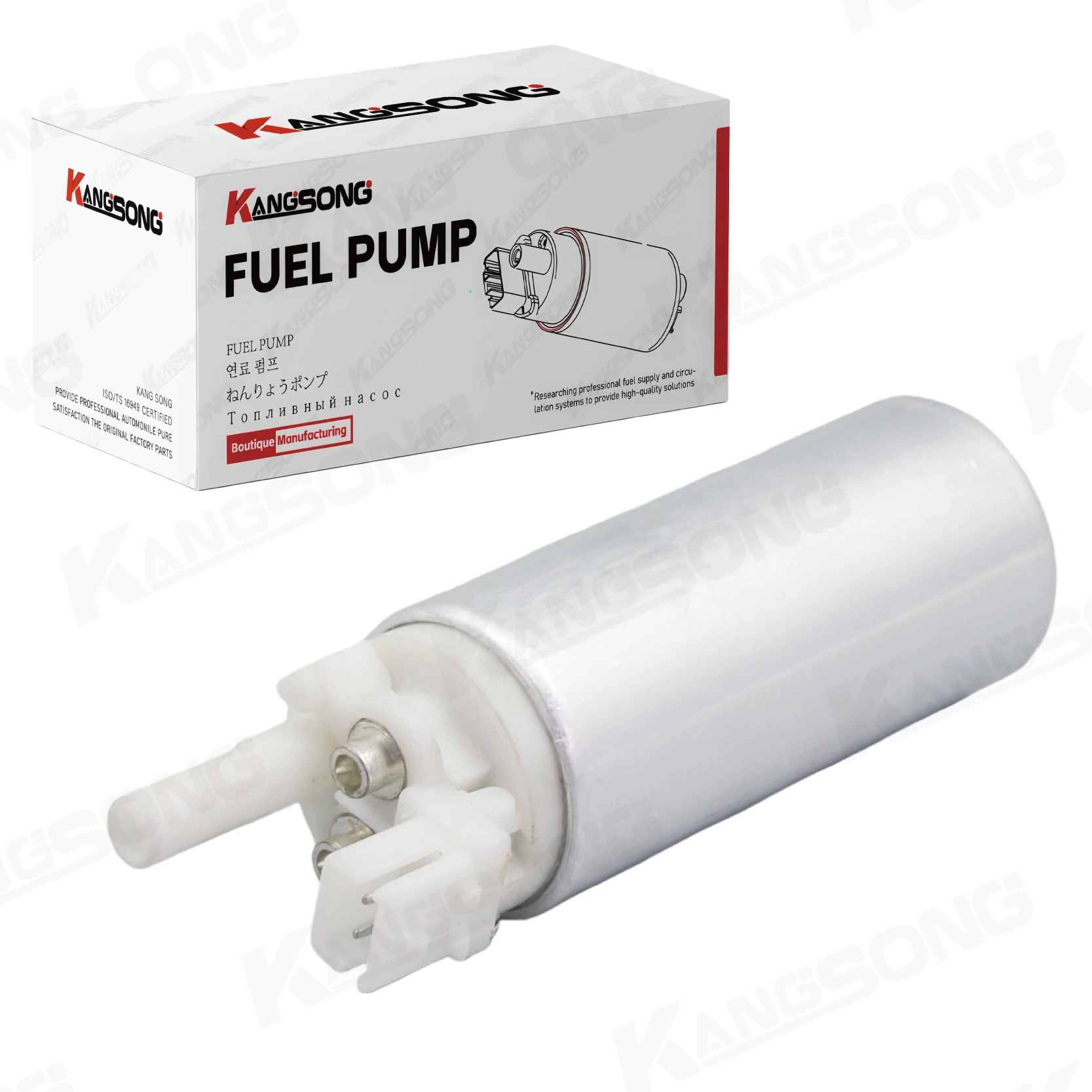
Kangsong publishes application-scoped electric gasoline fuel pump kits that buyers use as aftermarket supply candidates. They are not presented here as universal frame-rail race pumps, and they are not ranked against other brands. When the printed scope matches, use the product page as the source of years, OE numbers, GPH, connector, and accessories language.
| Listing | Printed scope (summary) | Published fields to read on the page | Open when |
|---|---|---|---|
| Electric Gasoline Fuel Pump with Installation Kit (C/K title) | 1987-1995 C/K 1500/2500/3500 pickup language with OE references such as 25168719 / E3902 | DC 12V; 43.3-49.5 GPH; 2-pin connector; accessories included; -40 °C to +85 °C working temperature band | Your truck years and OE references match the printed title/list |
| Electric Gasoline Fuel Pump with Hyundai/Kia compatibility | Printed Hyundai/Kia application table (for example Accent, Coupe, Getz, Lantra, Matrix, Santa Fe I, Sonata III, Trajet; Kia Sephia FA) | 43.3-49.5 GPH; 2-pin; 0.30 KG; 170x80x85 mm; accessories included | Your make/model/year sits on that printed table |
| Fuel pump product catalog | Catalog navigation | Browse other application-scoped listings | Neither table above names your vehicle |
If the page does not name your vehicle, stop. A similar photo alone is incomplete coverage. For electric external selection depth beyond this aftermarket purchase path, return to the electric inline fuel pump guide.
FAQ
Can I add an aftermarket inline fuel pump instead of replacing the pump in the tank?
Sometimes as a temporary external supply on a system that truly matches that pressure class-but on many EFI vehicles it is the wrong permanent fix. External pumps push better than they pull, and add-on installs often skip the safety cutoffs that sit in a proper pump circuit. If the in-tank unit failed or the engine’s pressure need changed, plan a correct in-tank or documented supply path rather than hoping the loudest external pump hides the root cause.
Are aftermarket inline fuel pumps better than in-tank units?
Neither architecture wins every job. In-tank modules usually run cooler and quieter and push from the tank; external inline units are easier to service and often cheaper for a first conversion. “Better” depends on pressure class, tank access, noise tolerance, and whether you are fixing a failed submerged pump or building a mild street supply.
What pressure should I match for carburetor vs EFI?
Use system-class typicals as a starting gate: carbureted/mechanical gasoline supply is often about 6-8 PSI in classic-car guidance, while port/TBI EFI commonly sits around 40-60 PSI. Confirm what your injectors or carb and regulator actually need before you buy a pump marketed only by free-flow LPH.
How do I check aftermarket fitment before I buy?
Read the printed title, year range, application table, and OE interchange on the product page. Match connector pin count and accessories language.
If your vehicle is not printed there, leave that listing. On Kangsong, that means using the C/K or Hyundai/Kia listings only inside their printed scope, or browsing the product catalog for another titled match.
Does a high free-flow GPH rating mean the pump fits?
No. Free-flow figures without pressure and voltage context overstate what the pump will deliver at rail pressure. Size against the pressure class you actually run, then confirm the listing’s printed application.
Where should an aftermarket inline fuel pump be mounted?
As low and as close to the tank outlet as practical so the pump pushes fuel with a short, gravity-friendly feed. Avoid long suction runs and hot engine-bay mounts for high-pressure EFI supply pumps. Isolate the body on rubber to reduce cabin buzz.
Is a twelve-volt auxiliary transfer pump the same as a vehicle supply inline pump?
No. Transfer pumps that move fuel between tanks often publish only a few PSI and a transfer flow rating.
Vehicle carb or EFI supply pumps must match a different pressure class and duty. Cross-shopping them as equivalents wastes the order.
Who makes the best aftermarket inline fuel pump?
Brand rankings are out of scope here. Choose by pressure class, printed fitment, mount plan, and electrical safety-not by a “best of” list.
References
- Fuel pump – Wikipedia – electric pump location flexibility; typical port/TBI pressure band; in-tank cooling and priming reasons.
- What’s Better: In-Tank or In-Line Fuel Pumps? (SS396 / Ground Up) – carb vs EFI pressure contrast; external heat, noise, and mid-line cavitation risk.
- Inline fuel pump? – r/AskAMechanic – real-world aftermarket inline as an in-tank workaround; push-vs-pull and safety-cutoff concerns.
- Where to put a fuel pump? – r/EngineBuilding – mount low near the tank; pumps as pushers, not suckers.