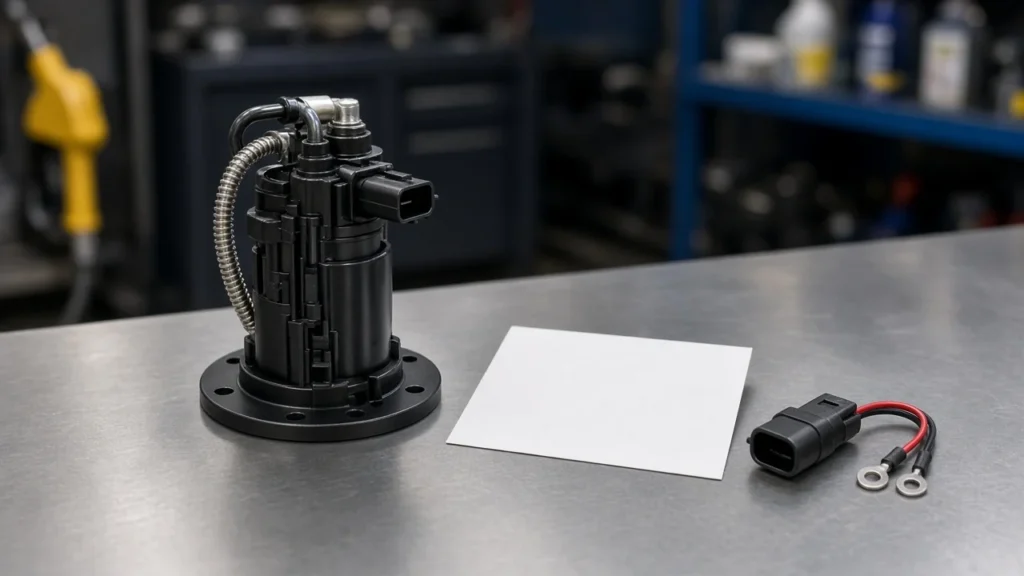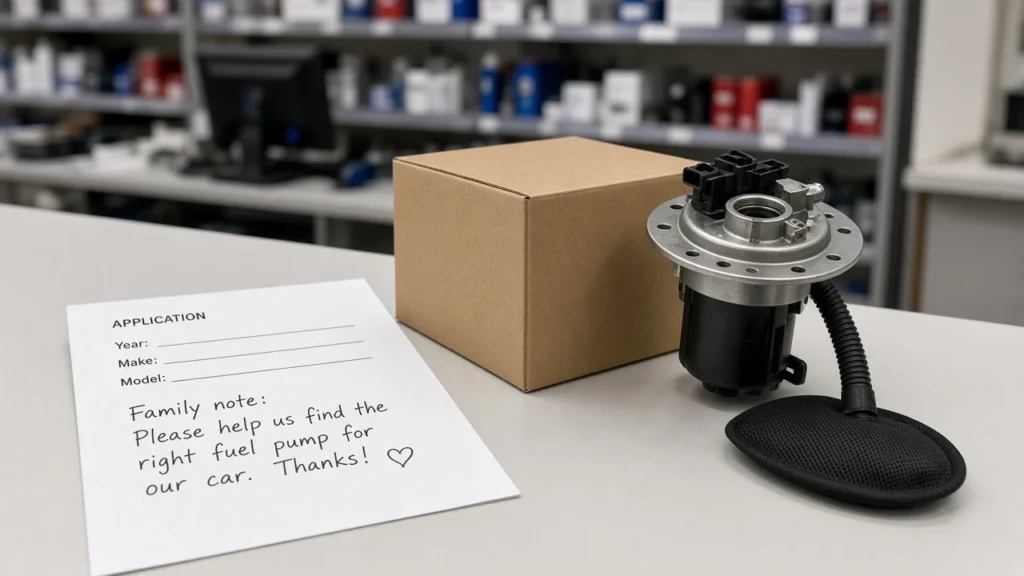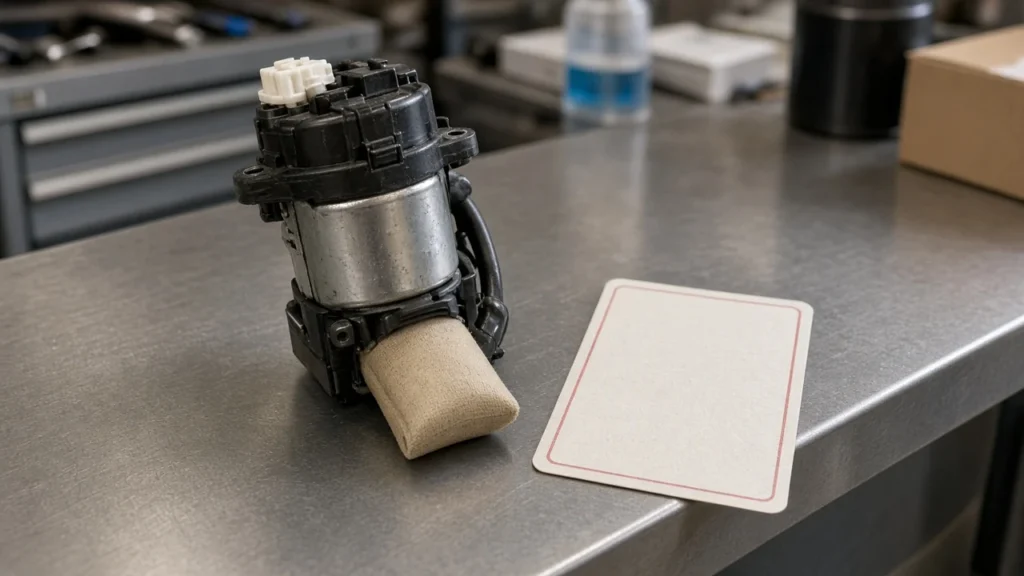

Fuel pump electrical problems usually show up as no prime, cranks-no-start, or intermittent stall—before the pump motor itself has failed. At a service counter / distributor desk, start with a power-side screen: the fuel pump fuse, relay or inertia / shut-off switch path, then voltage and the ground path at the pump connector, then the wiring harness and control faults. Only after that path is documented should the quote move to an assembly.
fuel pump no power complaints belong on this checklist when the bay has not yet proven connector supply. This page covers that path for an in-tank electric fuel pump.
For symptom intake, use the bad fuel pump symptoms sibling. For relay-only depth, use the fuel pump relay sibling.
Recognize Power-Side Failures Before Condemning the Pump
Power-side faults starve an otherwise healthy electric pump of usable supply or return current. On fuel-injected petrol layouts, that pump is commonly mounted in or next to the tank, so a silent tank area often means missing command power rather than a seized impeller.
| Counter observation | Points toward power-side first | Points toward pump/hydraulic next |
|---|---|---|
| Cranks, no start, no prime sound | Fuse, relay, shut-off, open harness | Delivery failure after voltage is proven |
| Intermittent hot no-start | Heat-sensitive relay/socket or chafed circuit | Weak pump under load with stable voltage |
| Pump runs on a bench supply, vehicle still dead | Connected-circuit fuse, shut-off, ground, or control path | Internal pump fault only if in-vehicle power is good |
| Gauge erratic with normal running | Level sender / gauge circuit | Not a power-side delivery verdict by itself |
A fuel level sender shares the tank neighborhood with many modules, yet it reports level rather than creating rail pressure. Keep gauge complaints on a separate ticket from no-delivery electrical tickets so purchasing does not merge unlike jobs.
Electric pumps still depend on a commanded circuit even when the hardware sits inside the tank. Mechanical engine-driven pumps are a different architecture and should not inherit the same fuse-and-relay screen.
Screen Fuse, Relay, and Shut-Off Paths First
Upstream switching and protection devices cut pump power long before the motor windings fail. Counters that skip this layer push expensive modules into returns after a fuse, relay, or shut-off reset would have restored prime.
Work the screen in order:
- Identify the fuel-pump or EFI fuse from the lid map or service data; replace only with the correct rating if open.
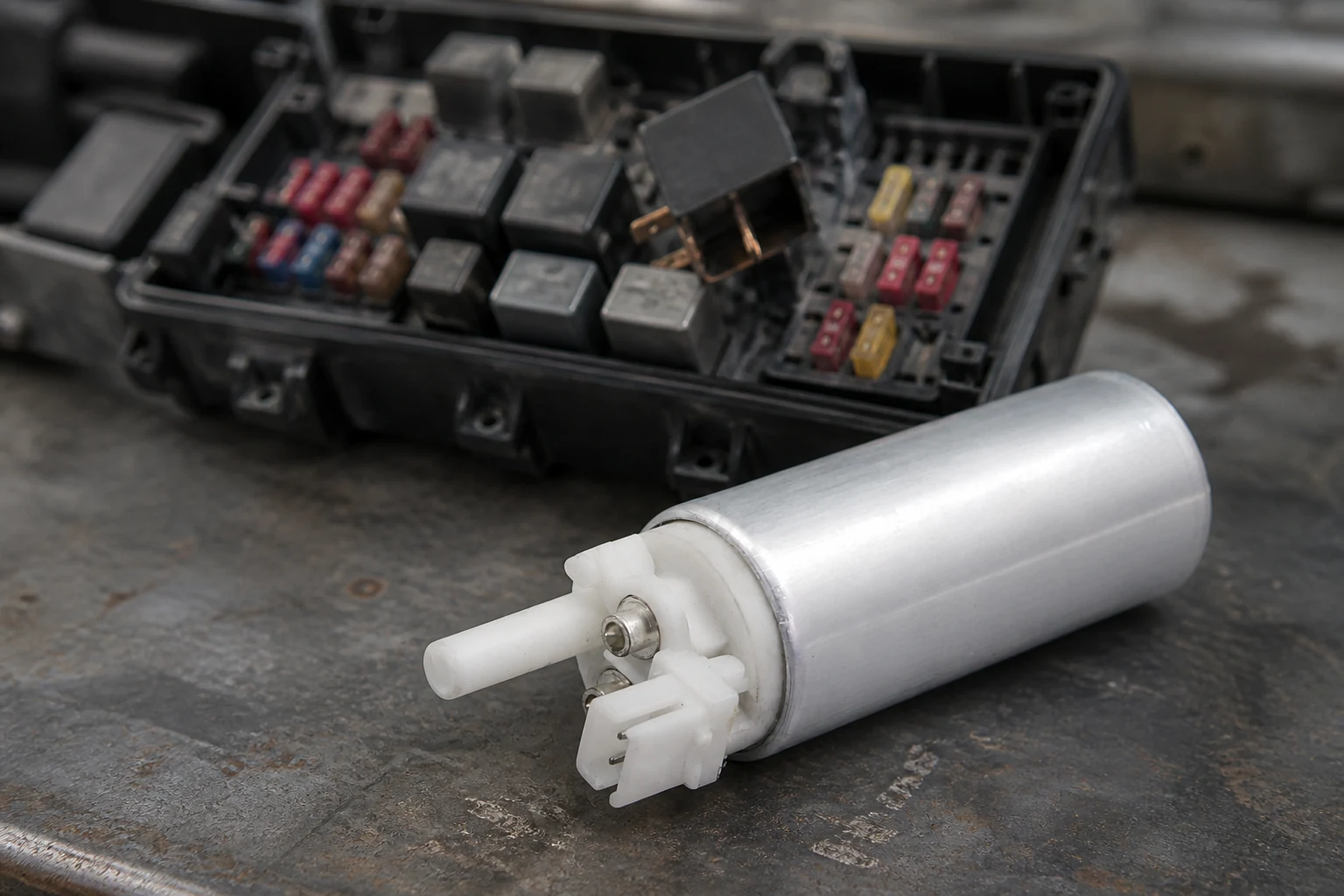
- Confirm the fuel pump relay cavity and look for heat discoloration, loose terminals, or moisture.
- When the lid map allows, swap with an identical form-factor relay from a non-critical circuit as a temporary screen.
- On platforms that use an inertia or fuel-pump shut-off switch, verify it has not tripped after an impact or hard landing—see the shut-off switch location guide.
- Record whether key-on prime or commanded run returned after each step.
From the field: Shop threads repeatedly describe “no voltage at the fuel pump connector” cases that later cleared as an EFI/main relay or fuse-box connection fault after the removed pump itself tested good. Capture that connector reading before authorizing an assembly. (IH8MUD — no power to fuel pump)
Relay theory and replacement practice stay on the dedicated fuel pump relay page. Here the relay is only one station in a wider power-side checklist.
If a swapped identical relay restores prime, stock the correct relay form factor and retest before touching the tank assembly. If the same symptoms remain with a known-good relay seated firmly, move downstream to connector voltage rather than repeating relay purchases.
Confirm Voltage and Ground at the Pump Connector
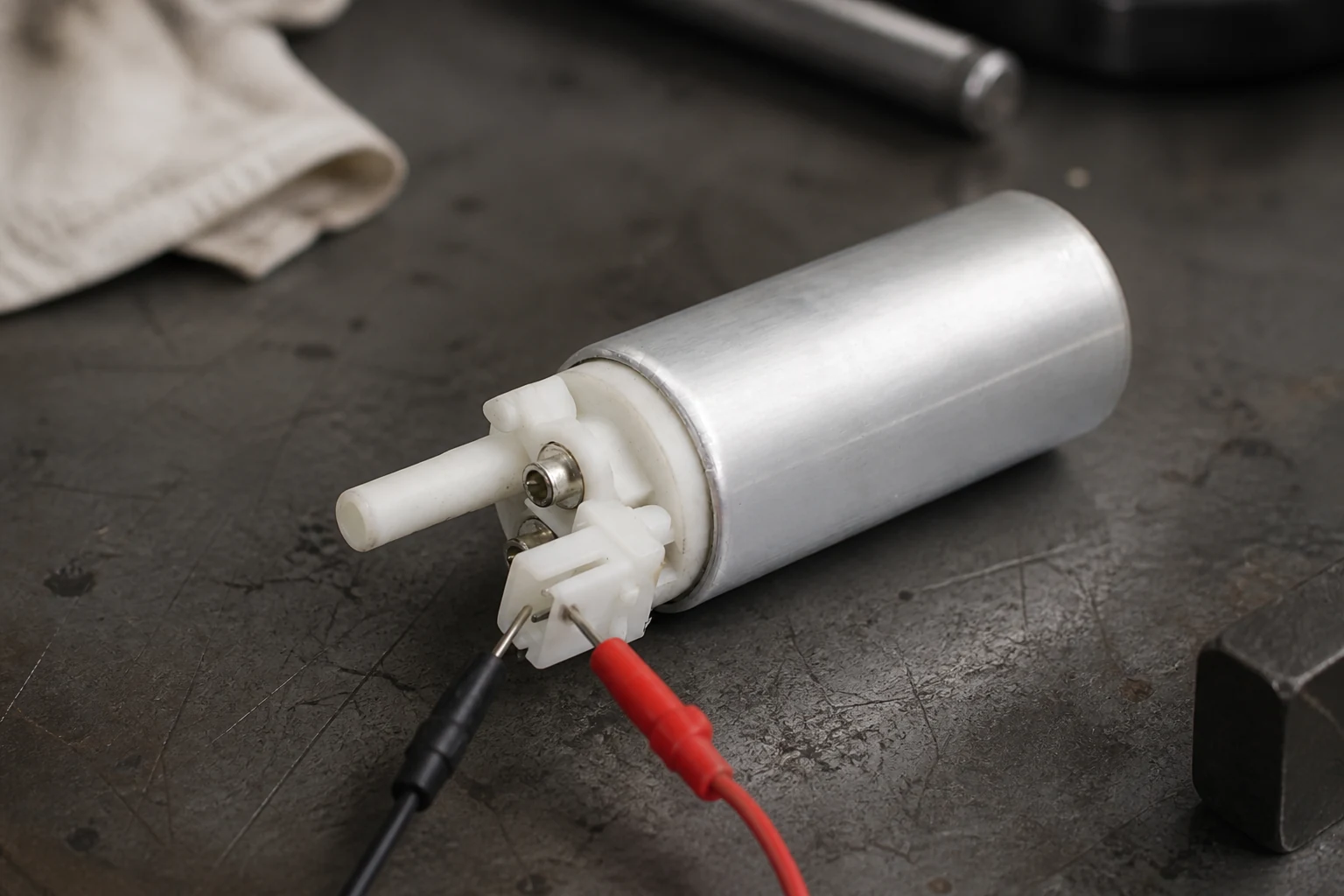
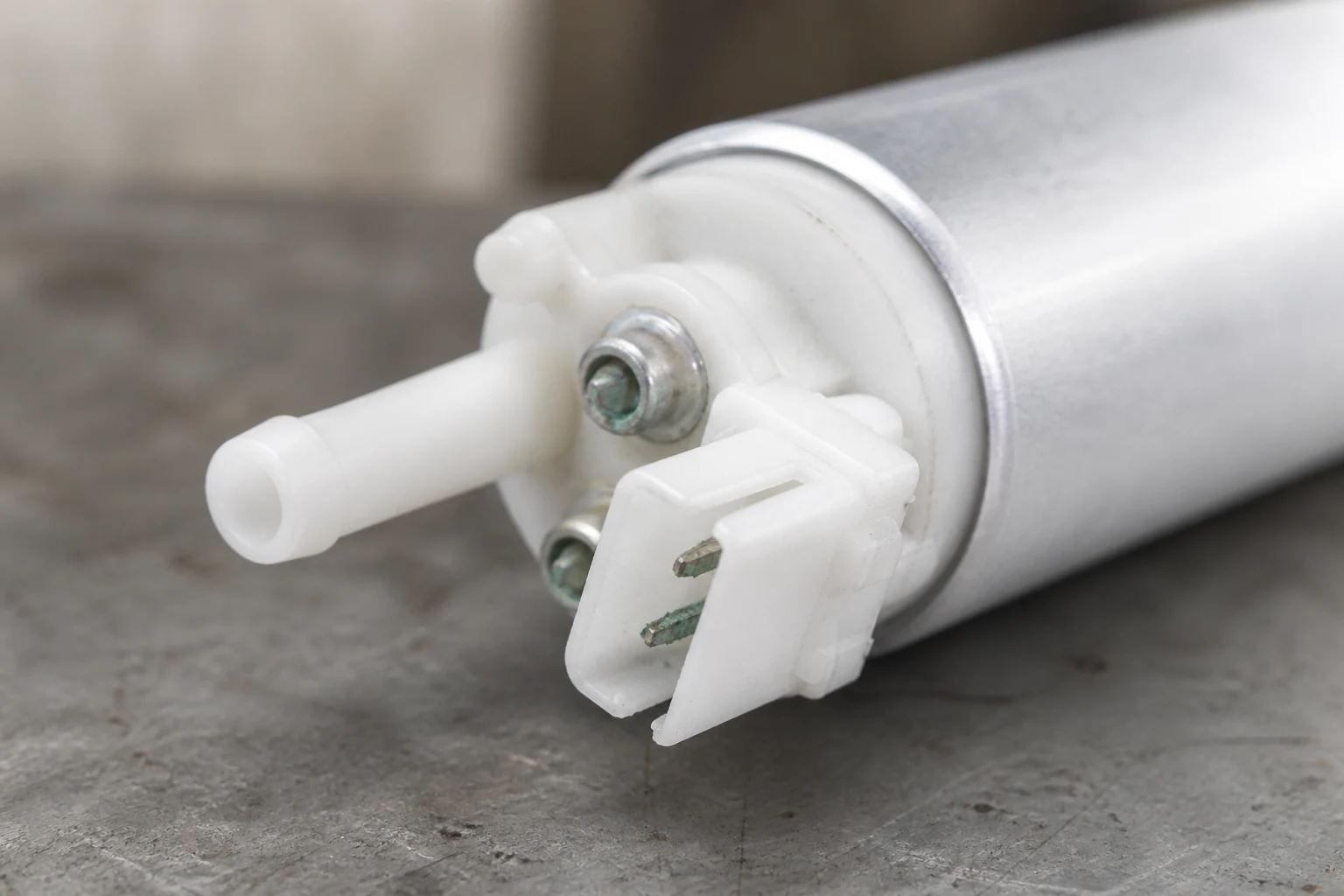
Voltage and ground at the pump connector are the minimum proof that the power path reached the unit. Without those notes, a “bad pump” label is still a guess.
Ask the bay to record:
- Key position or scan-tool command used when the reading was taken
- Supply voltage at the pump power pin during commanded operation
- Ground integrity on the return circuit during the same command
- Whether the reading was taken at the module connector, an intermediate breakout, or only at the relay cavity
A reading at the relay alone does not prove the harness still delivers current at the tank. Likewise, a chassis bolt that “looks clean” is not a substitute for a loaded ground check on the pump return.
Service information for the VIN still controls pin identity and enable conditions. Counters should ask which diagram or scan command was used, not invent a pin from memory.
When voltage is missing, stay on the electrical ticket. When voltage and ground are present and delivery is still out of specification, move to pressure or volume checks under the vehicle service procedure before swapping SKUs.
Trace Harness, Connector, and Control-Side Faults
Harness, connector, and control-side faults explain many cases where a pump spins on a bench supply but stays silent in the vehicle. The motor can be healthy while the connected circuit is not.
Inspect and document:
- Connector locks, terminal tension, green corrosion, and pushed-out pins
- Chafing where the harness exits the body or crosses sharp brackets
- Recent collision, underbody work, or tank drops that disturbed the connector
- Control-side enabling conditions—immobilizer, PCM command, or platform-specific enable logic—when power never leaves the relay
For GM color-code look-ups during module harness work, use the separate GM fuel pump wiring color codes reference. Do not treat any single color chart as universal across brands.
Important: After electrical supply is restored, confirm fuel delivery against the vehicle’s service procedure before condemning the assembly. Public OEM service materials treat loss of fuel pressure as its own diagnosis topic, not as an automatic parts swap. (NHTSA-hosted TSB PDF — Fuel Pump (Loss of Fuel Pressure))
Capture Counter Fields That Stop Wrong Assembly Quotes
Written electrical evidence keeps purchasing from treating every no-fuel call as an immediate module sale. Require the same fields on wholesale and fleet tickets.
| Field | Why it matters | Required before assembly quote |
|---|---|---|
| VIN / platform / engine | Locks module family and service data | Yes |
| Symptom and when it occurs | Separates intermittent electrical from hydraulic weakness | Yes |
| Fuse / relay / shut-off results | Proves upstream screens were done | Yes |
| Voltage at pump connector | Shows whether power arrived | Yes |
| Ground check notes | Catches return-path faults | Yes |
| Harness / connector findings | Explains bench-good / vehicle-dead cases | Yes when relevant |
| OE pump or module number | Prevents wrong assembly family | Yes when quoting hardware |
| Pressure or delivery result vs service data | Confirms hydraulic failure after power is present | Yes before condemning pump |
If any of the electrical rows are blank, hold the high-value assembly line and send the ticket back to the bay. That pause costs less than a return on an unused module.
Wholesale phones often arrive with only “needs fuel pump” in the note. Rewrite that line into the table above before a buyer compares prices across unlike scopes.
Choose an Assembly Route After the Electrical Path Clears
Quote an assembly only after power and ground are present and delivery still fails the vehicle procedure. At that point the commercial object is a documented pump or module identity, not another relay guess.
Attach strainer or filter contamination notes when the bay found debris, because a new assembly can fail again on the same restriction. Keep those notes beside the electrical packet so the next reviewer sees both power proof and hydraulic context.
Start with Kangsong’s products overview for a product-family conversation once the electrical record is attached. For a published documentation example limited to the platforms in its title, use the Fuel Pump Assembly Compatible with Hyundai Sonata & Kia Optima. That page does not prove fitment for other vehicles.

When the electrical packet and OE identity are ready, teams can continue through Contact or review company background on About. Keep the conversation on the cleared failure mode—power proven, delivery failed—so engineering and purchasing share one record.
FAQ
What usually causes no power to a fuel pump?
Open fuses, failed or poorly seated relays, tripped shut-off switches, damaged harnesses, and bad grounds are common upstream causes. Field threads often show no voltage at the pump connector even when the removed pump later tests good.
Can a bad fuel pump relay mimic a failed pump?
Yes. An open relay prevents the pump from receiving power, which looks identical to a dead motor at the counter. Use the relay sibling for deep relay testing, then return here for the wider power-side path.
How should a shop check voltage at the fuel pump connector?
Back-probe or otherwise measure at the pump harness during the commanded prime or run state listed in the service information. Record the command method with the reading so purchasing can see whether power actually arrived at the unit.
Why can a pump run on the bench but fail in the vehicle?
Bench power bypasses the vehicle fuse, relay, shut-off, harness, and control logic. A motor that spins on a supply pack can still sit behind an open connected-circuit fault.
Should counters quote an assembly before documenting ground and voltage?
No. Without connector voltage and ground notes, the ticket still describes a symptom, not a confirmed pump demand. Hold the assembly line until those fields are filled or the bay explains why they cannot be taken.
When does the job move from electrical repair to an assembly quote?
When supply and ground are proven at the connector and fuel delivery still fails the vehicle service procedure. At that point attach OE identity and open a scoped assembly route rather than repeating relay swaps.