Choose an electric fuel pump relay by matching continuous contact rating, coil voltage, and a normally-open pump feed — then confirm the fuse on that feed is protecting the wire, not standing in for the relay amp number.
Kit titles and “universal high-amp” boxes answer the shopping question with packaging. What follows works through when an independent relay belongs on the circuit, which printed fields settle the buy, how a kit differs from a bare cube, and how to verify those fields before you pay. The deep amp worksheet and the pin-by-pin install stay on their sibling pages.
If you are still choosing the pump itself, start with the gasoline electric fuel pump buyer guide. Readers comparing external line-mounted pumps can use the electric inline fuel pump selection overview.
What an Electric Fuel Pump Relay Does
It lets a small trigger switch a short high-current feed to the pump motor.
An electric fuel pump is a motor load. The Relay coil draws only a little current from an ignition, ECU, or safety switch, while the contacts carry the heavier battery-to-pump current. Contacts (NO / 87) close when that coil is energized, so the pump sees a dedicated feed instead of a long switch-fed run.
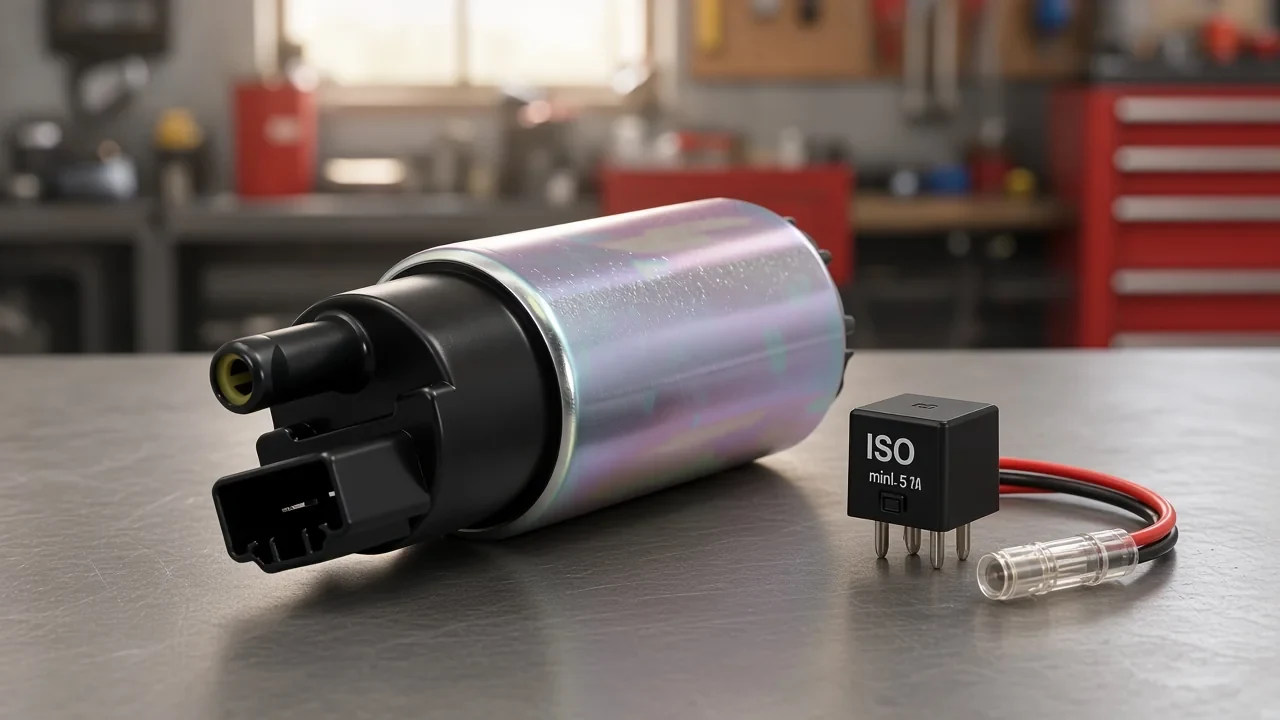
That arrangement is what cuts voltage drop on aftermarket and long-run circuits. Industry wiring practice mounts the high-current side near the battery with a Fuse / fusible link on the feed, and uses a common ISO mini relay form for the cube itself.
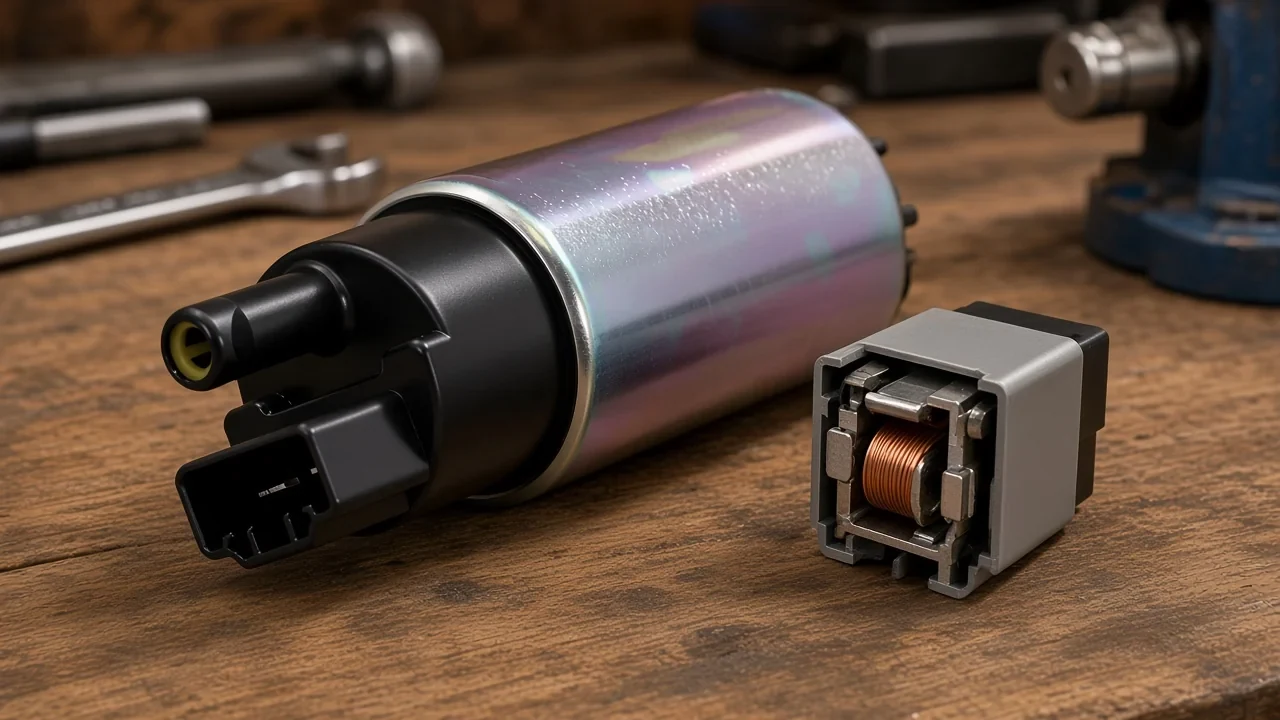
The pump still has to be the right pressure class and flow for the fuel system. The relay only decides how cleanly power reaches it.
When You Need a Relay for an Electric Fuel Pump
You need a relay for electric fuel pump circuits when the pump current or the wire run exceeds what the controlling switch or ECU line should carry.
Factory harnesses were sized for the original pump. A higher-draw aftermarket unit, a long path to a rear tank, or a corroded feed can leave the motor starving even when the dash switch still “works.” In those cases an independent relay restores a short fused battery feed while the original signal only energizes the coil.
You may already have a factory fuel-pump relay. That does not automatically cover a new external pump on a fabricated circuit, and it does not fix a feed that already drops voltage on the way to the pump. Low voltage at the connector needs its own diagnosis on what causes low voltage to a fuel pump.
Vehicle-specific socket location is a different job. The 2001 Acura CL Type-S fuel pump relay page owns that style of find-and-replace question.
Spec Checklist: Contact Rating, Coil Voltage, and Normally Open
Match continuous contact rating, coil voltage, normally-open path, and socket form before you trust a kit title.
| Field | What to read on the label | Why it settles the buy |
|---|---|---|
| Contact rating | Continuous amp figure for the contacts | Must sit above the pump’s continuous draw with margin |
| Coil voltage | Usually 12 V on passenger cars and light trucks | Must match the vehicle electrical system that triggers it |
| Contact form | Normally open / Form A, or SPDT with NO used for the pump | Pump feed should be off until the coil is energized |
| Form factor | ISO mini vs micro, pin count, skirted vs open | Must fit the socket or harness you will actually use |
| Duty | Continuous automotive rating, not a one-hour PCB cube | Fuel pumps run for the whole drive, not a short pulse |
Contact rating is the field buyers confuse with fuse amp.
Community wiring guidance often cites common Bosch-style cubes around 30 A continuous, and editorial practice frequently shows a 40-amp ISO example for aftermarket pump feeds. Those are class examples, not a measurement of your pump.
The full sizing worksheet lives on what size relay for fuel pump.
Coil voltage on a twelve-volt vehicle system is usually a matching twelve-volt coil. That point matters for listings titled around a twelve-volt fuel pump relay, but it still leaves contact rating and form factor to check. Do not treat the voltage word in the title as proof the contacts are sized for your motor.
Avoid sugar-cube PCB parts that advertise a short-time amp figure when the pump must run for hours. Continuous automotive duty is the buying filter here.
Electric Fuel Pump Relay Kit vs a Bare Relay
An electric fuel pump relay kit adds the socket, leads, and usually a fuse or breaker — the ratings on those pieces still have to match the checklist above.
A bare cube is only the switching device. A kit packages the hardware buyers forget: a socket or pigtail, a heavy battery lead, a lighter trigger lead, a ground, and overcurrent protection near the battery. That is convenient, but a kit label that prints an amp limit is a ceiling for the included parts, not a lab reading of your pump.
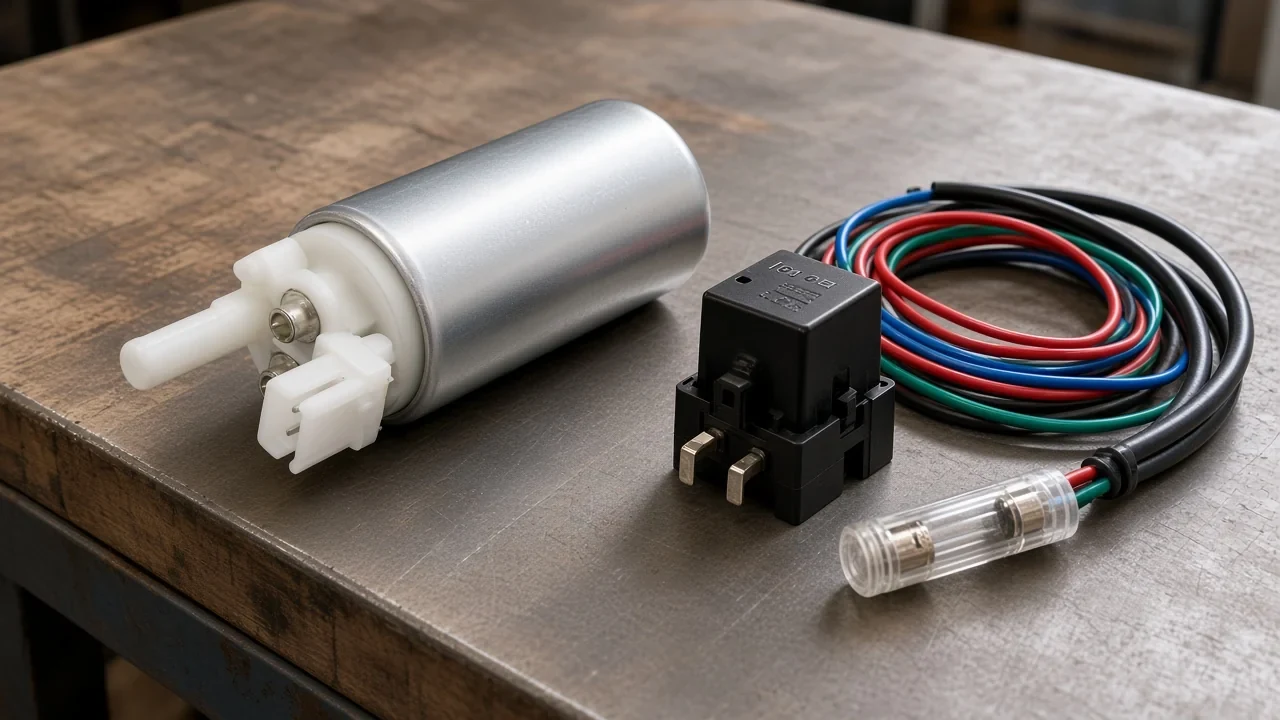
Read the kit the same way you would read a bare relay. Confirm continuous contact rating, coil voltage, normally-open pump output, and whether the fuse or breaker is sized for the wire you will run. Pin-by-pin install pre-checks belong on the Ron Francis wiring electric fuel pump relay kit page and on how to wire a 12-volt fuel pump.
Relay vs Fuse on the Same Circuit
A fuse protects the wire; the relay contacts carry the load with margin.
They sit on the same circuit and get spoken of as if they were the same number. They are not.
The fuse or fusible link opens when current exceeds what the conductor can safely take. The relay’s contact rating has to handle the pump’s continuous draw — and usually sit above the fuse — so the contacts are not the weak link.
Wiring guides often size an inline fuse around 125% to 150% of the pump’s maximum current and place it near the battery. That rule protects the feed.
It does not tell you which continuous contact rating to buy. For fuse location, blown-fuse symptoms, and meter steps, use fuel pump fuses and how to test a fuel pump fuse.
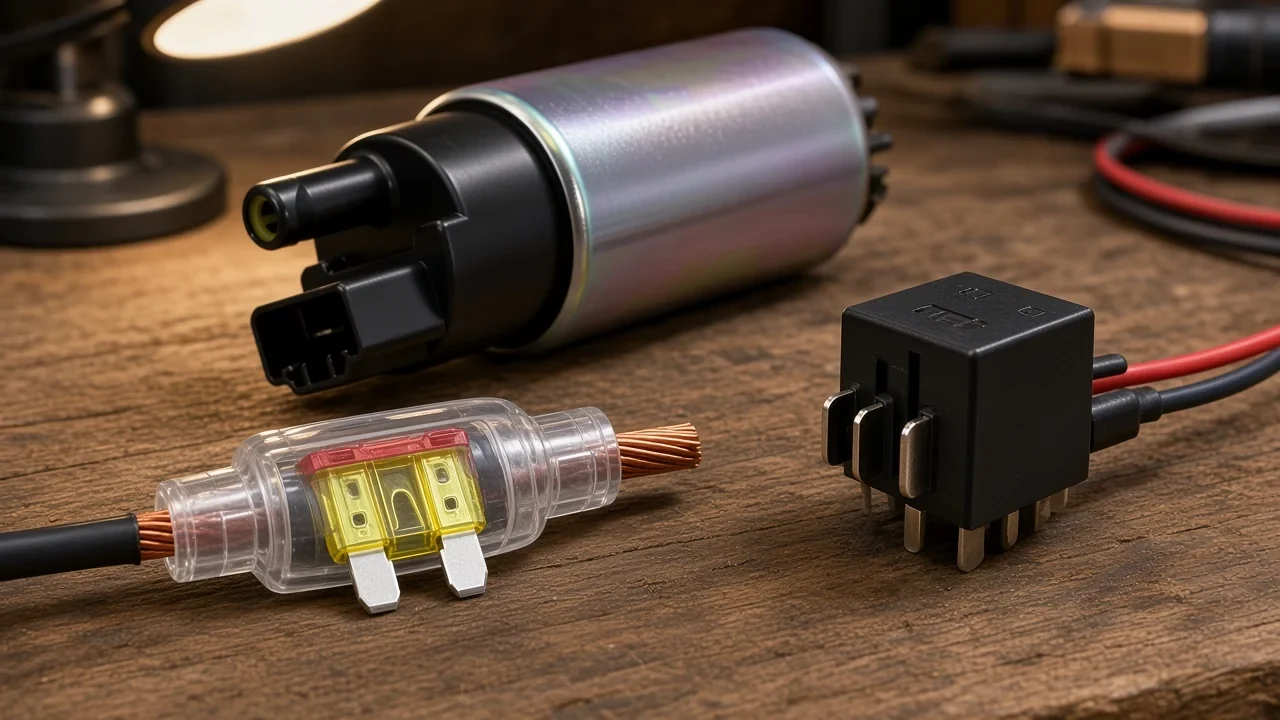
From the field: Technicians on service threads keep reminding owners that a relay can show battery voltage on one terminal while the pump stays dead — the coil path and the contact output are separate circuits. Hearing a click is useful, but it is not proof the pump feed is live.
How to Verify Relay Specs Before You Buy
Confirm the four printed fields, then prove coil versus contact paths on the vehicle before you condemn the pump.
- Write down the pump’s published continuous current if the manufacturer lists it; if not, plan to measure later rather than guessing from a kit title.
- Choose a continuous automotive contact rating above that draw, using the sizing worksheet when you need the margin math.
- Match coil voltage to the vehicle system, normally a twelve-volt coil on passenger cars and light trucks.
- Confirm the pump uses the normally-open output when the coil is energized.
- Confirm socket form — ISO mini relay footprints are common, but micro and skirted shells are not interchangeable by eye alone.
- Size the fuse to the wire and the pump, not as a copy of the relay amp stamp.
- On the vehicle, verify power on the coil side and power on the contact output separately before replacing the pump.
Kangsong does not publish a relay SKU in the catalog for this topic. The honest path is to verify those relay fields against the circuit you are building, then buy the pump kit that matches the vehicle application.
Recommended Next Step: Pump Kits and Relay Spec Checks
Buy a scoped electric pump kit here, then verify relay specs against the circuit — this catalog does not list a relay part number to invent.
| Product | Published fields a buyer can check | Application scope |
|---|---|---|
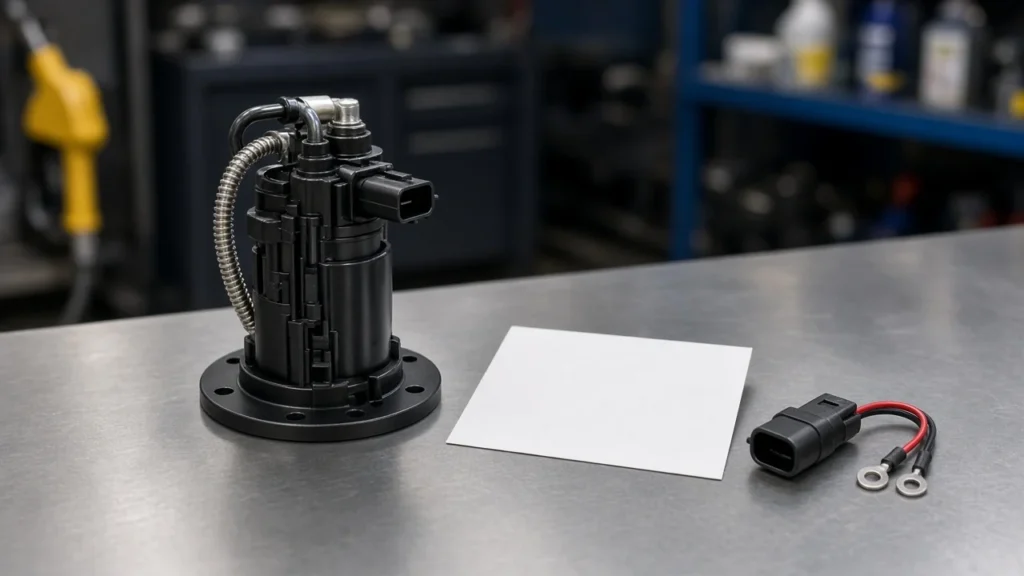
| Electric Gasoline Fuel Pump with Installation Kit | DC 12V working voltage; 43.3-49.5 GPH; 2-pin main connector; accessories included | Titled 1987-1995 C/K application; interchange numbers stay on the product page |
| Electric Gasoline Fuel Pump for Hyundai/Kia | 43.3-49.5 GPH; 2-pin main connector; 0.30 KG; 170x80x85 mm; accessories included | Published Hyundai/Kia application table on the product page |
Product 2551 publishes DC 12V working voltage, a 43.3-49.5 GPH flow range, a 2-pin main connector, and included accessories, scoped to the 1987-1995 C/K application named in its title.
The second option, an electric gasoline fuel pump for Hyundai and Kia applications, publishes the same flow range and connector style with its own Hyundai and Kia application table.
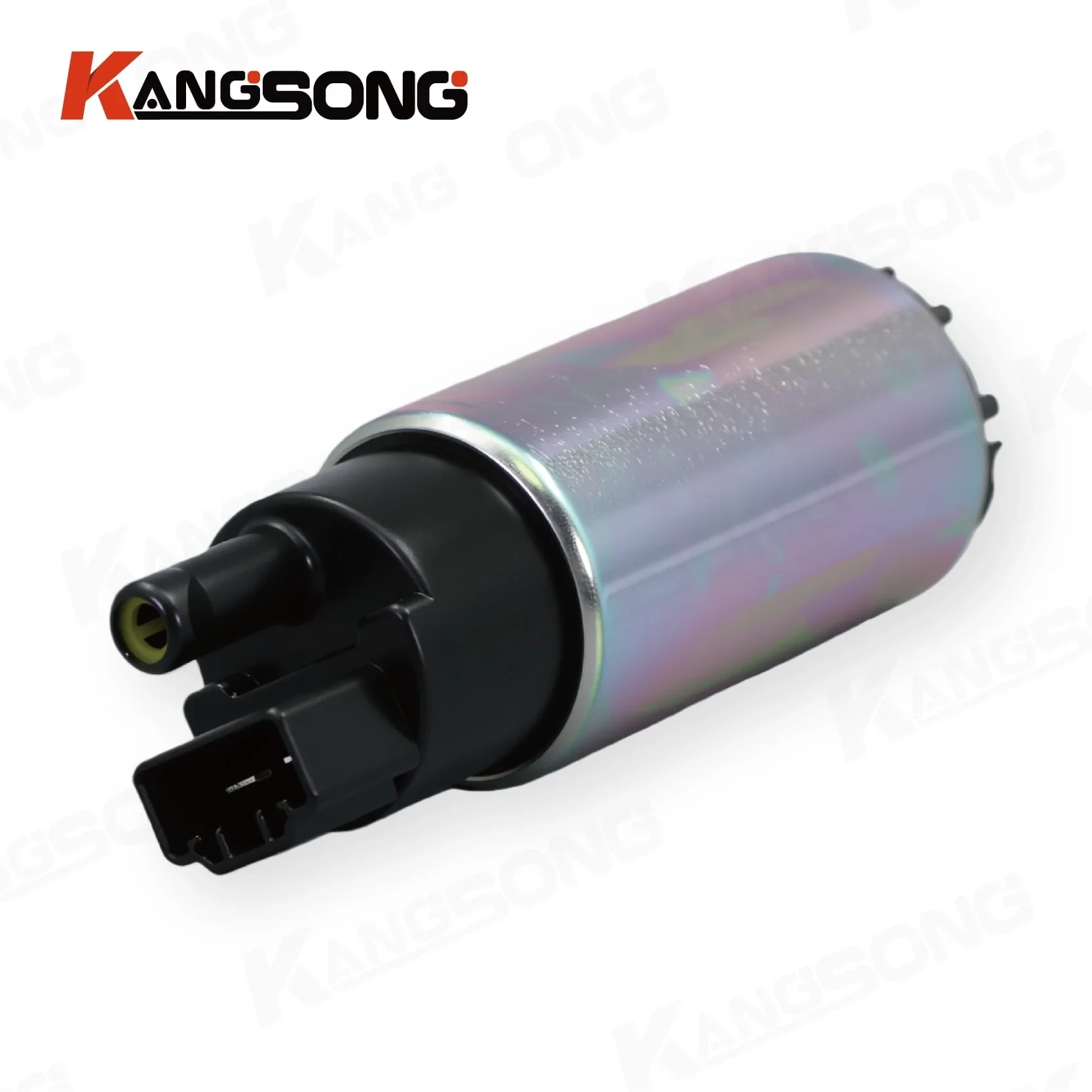
Browse other published fuel-system products at the products catalog root. Use the relay checklist above — contact rating, coil voltage, normally-open path, fuse on the feed — as the verification path for whatever switching hardware your circuit requires. No relay OE number is invented on this page.
FAQ
Do I need a relay for an electric fuel pump?
Yes whenever the pump current or the run length exceeds what the controlling switch or ECU line should carry, and whenever you add a higher-draw aftermarket pump on thin factory wiring. A low-current, short, correctly fused circuit is the rare exception — not the default for long rear-tank feeds.
What should I check on an electric fuel pump relay before buying?
Continuous contact rating with margin above pump draw, coil voltage match, normally-open pump output, socket form factor, and continuous automotive duty. Ignore marketing amp stamps that are not tied to those fields.
What is usually in an electric fuel pump relay kit?
A relay cube, a socket or harness, a heavy battery feed, a lighter trigger lead, a ground, and often a fuse or breaker. Treat every included rating as a limit to verify, not as a measurement of your pump.
Is the fuse amp the same as the relay amp?
No. The fuse protects the wire; the relay contacts carry the load. Copying one number onto the other is how sockets melt or feeds stay unprotected.
Can a bad relay look like a bad pump?
Yes. Voltage on a coil terminal, or a click you can hear, still leaves the contact output and the pump feed unproven. Test both paths before you drop the tank.
Does Kangsong sell the relay itself?
No verified relay SKU is listed for this topic. Verify relay specs against your circuit, then choose a scoped pump kit such as the C/K installation kit or the Hyundai/Kia pump above, or browse the catalog root.
Where do I get the full amp sizing worksheet?
Use the what size relay for fuel pump page for continuous rating, inrush margin, and form-factor detail. This page only locks the buying checklist.
Where is the wiring pre-check for a relay kit?
Follow the Ron Francis wiring electric fuel pump relay kit pre-check and the 12-volt fuel pump wiring overview. This page stops at selection and verification.