Ask about the types of fuel pump in diesel engine systems and the honest answer starts with counting: a diesel normally carries at least two pumps in series—a low-pressure supply pump that empties the tank and a high-pressure pump that meters fuel for the injectors. Zhejiang Kangsong (Kangsong, 浙江康松) is an automotive fuel pump OEM / manufacturer; this stage map is how Kangsong buyers avoid ordering the wrong diesel stage.
Product path: Freelander diesel assembly · high-pressure fuel pumps · Audi fitment category · HP/diesel hub
Below we follow the fuel itself—out of the tank, through filtration and priming hardware, into the high-pressure stage, then into the marine train—and finish on how to tell which stage you are actually buying from a Kangsong or other OEM-style listing.
Why One Diesel Engine Carries More Than One Fuel Pump
A diesel fuel system is normally read as two halves, and each half has its own pump.
DieselNet’s technical reference splits the hardware into a low-pressure side — tank, fuel supply pump, filter — whose job is to get fuel safely from the tank to the injection system, and a high-pressure side made up of the high-pressure pump, the injector and the nozzle, whose job is to create pressure, meter the charge and deliver it into the cylinder.
That split is why the phrase covers more than one machine. When someone asks about the types of fuel pumps in diesel engine layouts, they are usually holding a quote for one of those halves without knowing which.
Owners hit the same wall. A long-running thread on a Toyota diesel forum tells an owner there are essentially three pumps on that engine — primer pump, lift pump and injection pump.
On a technician subreddit, a photo of a pump body draws the reply “That’s the lift pump. It also has a hand primer pump built in.”
| Position in the fuel path | Usual shop name | What this stage does | What it does not do |
|---|---|---|---|
| Tank to filter | Lift pump, transfer pump, feed pump, supply pump | Moves a large volume at low pressure | Make injection pressure |
| Filter head | Hand primer | Fills and bleeds the low-pressure circuit by hand | Run the engine |
| Engine-mounted | High-pressure pump, injection pump | Meters the charge and raises it to injection pressure | Draw fuel over long suction lines on its own |
| Cylinder head | Injector, sometimes with its own pump element | Atomises and times the spray | Filter or transfer fuel |
Naming the row before naming a brand is what keeps the order correct. Every section below sits in one of those rows.
Stage One: The Supply Pump That Empties the Tank
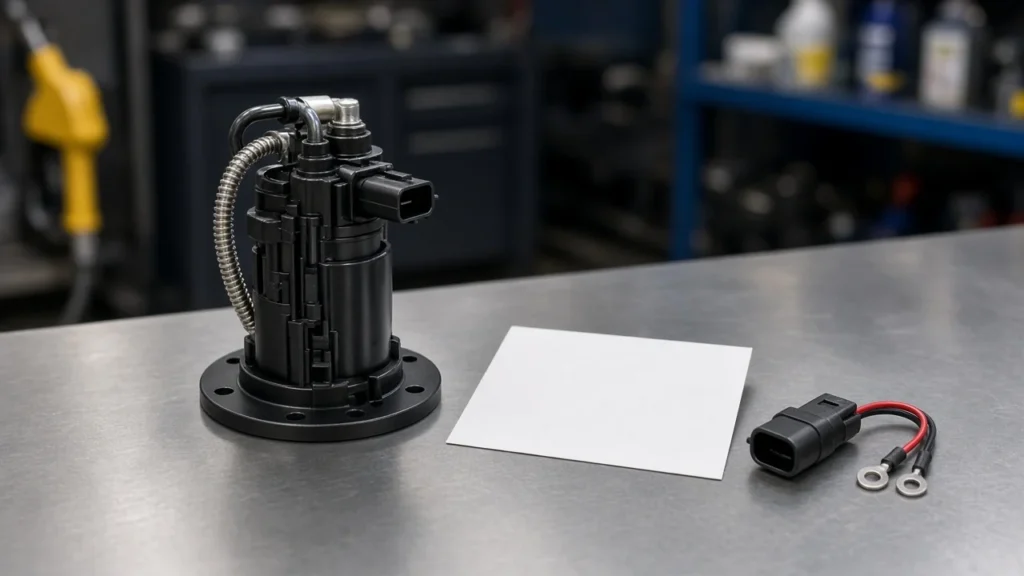
The supply pump draws fuel from the tank and hands it to the high-pressure pump, and it may be electric, engine-driven, or hidden inside the injection pump.
DieselNet describes this part plainly: the fuel supply pump, often called the lift pump, draws fuel from the tank and delivers it to the high-pressure pump. It can be electrically driven or driven mechanically by the engine, and an electric unit can sit anywhere in the system — including inside the tank as part of a module.
That single sentence explains most of the naming mess. The same component is sold as a lift pump, a transfer pump, a feed pump and a fuel supply pump, and all four labels describe a low-pressure, high-volume job.
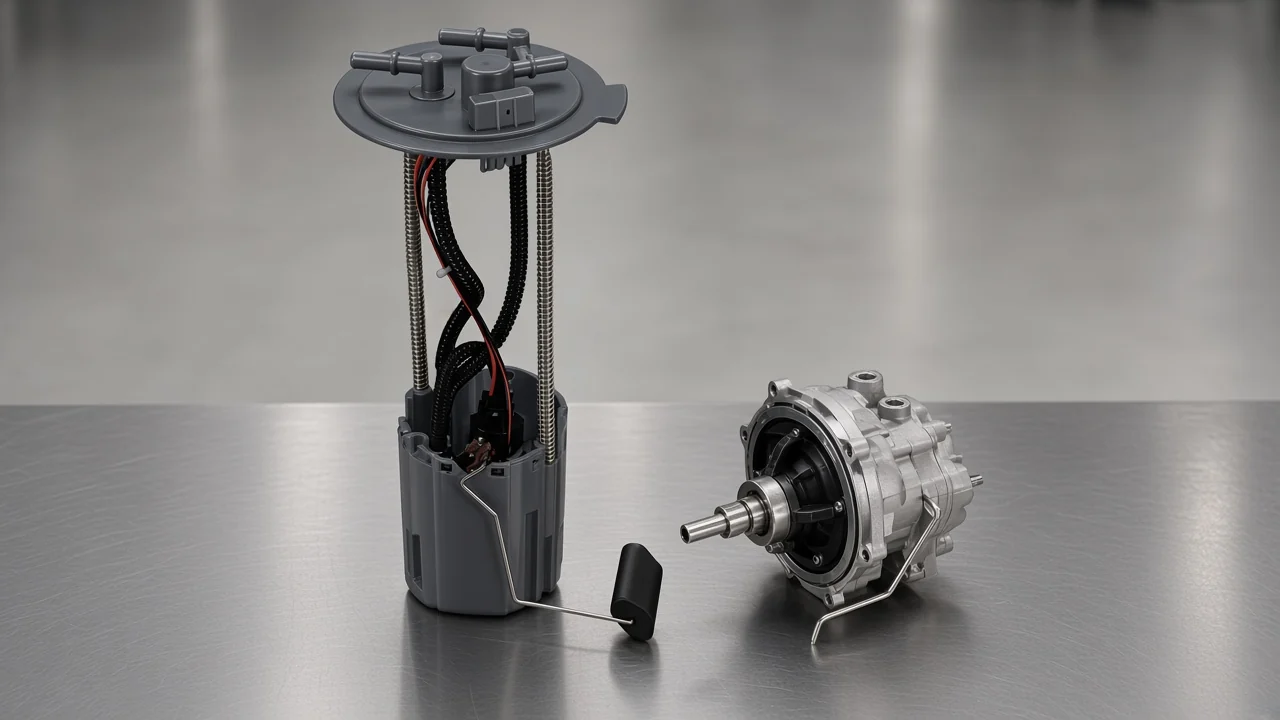
Placement follows the drive type. Engine-driven units bolt to the block, the filter housing or the side of the injection pump; electric units are commonly built into a tank-side assembly with the level sender and the pickup.
A worked example helps. On the Detroit DD15, the low-pressure stage is a gear pump that pulls fuel from the tank through the feed shutoff valve into the filter module whose prefilter takes out dirt particles larger than 100 micron.
Important: On distributor pump designs, DieselNet notes that a mechanically driven supply pump and the high-pressure pump live in one unit, so the supply stage is inside the housing you were about to call “the injection pump”. Ordering a stand-alone lift pump for one of those engines is money spent on a part the engine never had. Source: DieselNet, fuel injection system components.
Filtration and Priming Hardware Between the Two Pumps
Filtration splits the two pump stages, and a primer exists so the low-pressure side can be refilled and bled by hand.
The two pumps are rarely plumbed straight together. DieselNet describes one- and two-stage filtration in which a primary filter sits on the inlet side of the transfer pump and a secondary filter on its outlet side, with a coarse screen at the in-tank intake.
In practice the primary element is usually a water separator with a see-through bowl, because water does more damage to injection hardware than dirt does. The finer secondary element then protects the high-pressure stage.
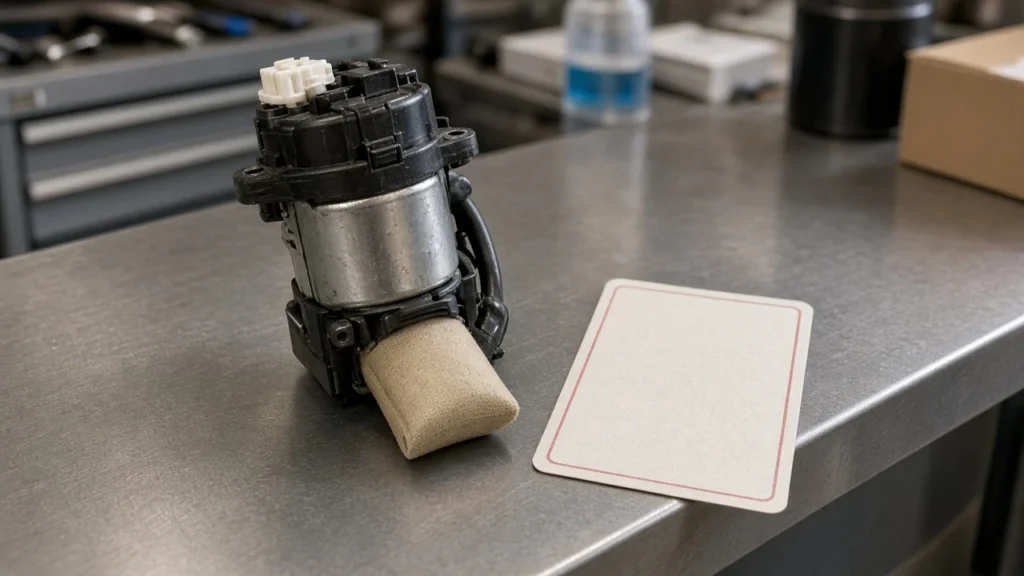
Open that circuit and air replaces fuel. A hand primer — a plunger, lever or screw-cap pump on the filter head or lift pump body — refills the line and pushes air out through a bleed screw while the engine is stopped.
Tip: Work the low-pressure side first. A tractor owner on r/MechanicAdvice was told to prime by loosening the fuel inlet at the injection pump and running the lift pump until fuel arrives, then crack the high-pressure lines at the injectors and turn the engine over in short bursts until each one wets. Source: that thread describes an off-highway engine, and your own engine manual still governs the sequence.
The forum evidence also shows how easily the wrong part gets blamed. On the Toyota thread, one owner replaced a lift pump on advice, then was stranded two weeks later by sludge and debris in the tank.
Stage Two: The High-Pressure Pump That Serves the Injectors
The high-pressure stage meters fuel and raises it to injection pressure, either through a pump-per-cylinder layout, a shared rail, or a pump built into the injector.
DieselNet groups the architectures into three families: pump-line-nozzle, unit injector and common rail. Metering happens either in the high-pressure pump or in the injector itself, which is the real dividing line between the families.
In a pump-line-nozzle system, a cam-driven element pressurises fuel and a steel line carries the pulse to a mechanical nozzle. The classic inline injection pump and the compact distributor pump both belong here, and our inline fuel pump explainer covers that form factor on its own.
In a common rail system the pump only makes pressure. A shared rail holds it, and electronically controlled injectors decide timing and quantity, which is why rail pressure and injection timing stop being the same conversation. The high-pressure diesel pump walkthrough follows that mechanism in detail.
A unit injector goes further and puts the pumping element inside the injector body in the cylinder head, so there is no external high-pressure pipe at all.
If you want these families compared as purchase categories rather than as positions in the fuel path, our diesel pump category guide handles that job, and the definition page covers what the term means before either discussion starts.
Types of Fuel Pump in Marine Diesel Engine Fuel Trains
Marine installations keep the same two jobs but add stages, because fuel has to be lifted, circulated and conditioned before it reaches the injection pump.
Start small. Yachting Monthly’s walkthrough of a boat fuel system runs tank, isolating valve, primary filter and water separator, lift pump, secondary filter, injection pumps, high-pressure pipes and injectors, with a return line back to the tank.
Two details matter for a boat owner. The pump is called a lift pump because the tank often sits below the engine, and it can usually be worked by hand with the engine stopped so the system can be bled after a filter change.
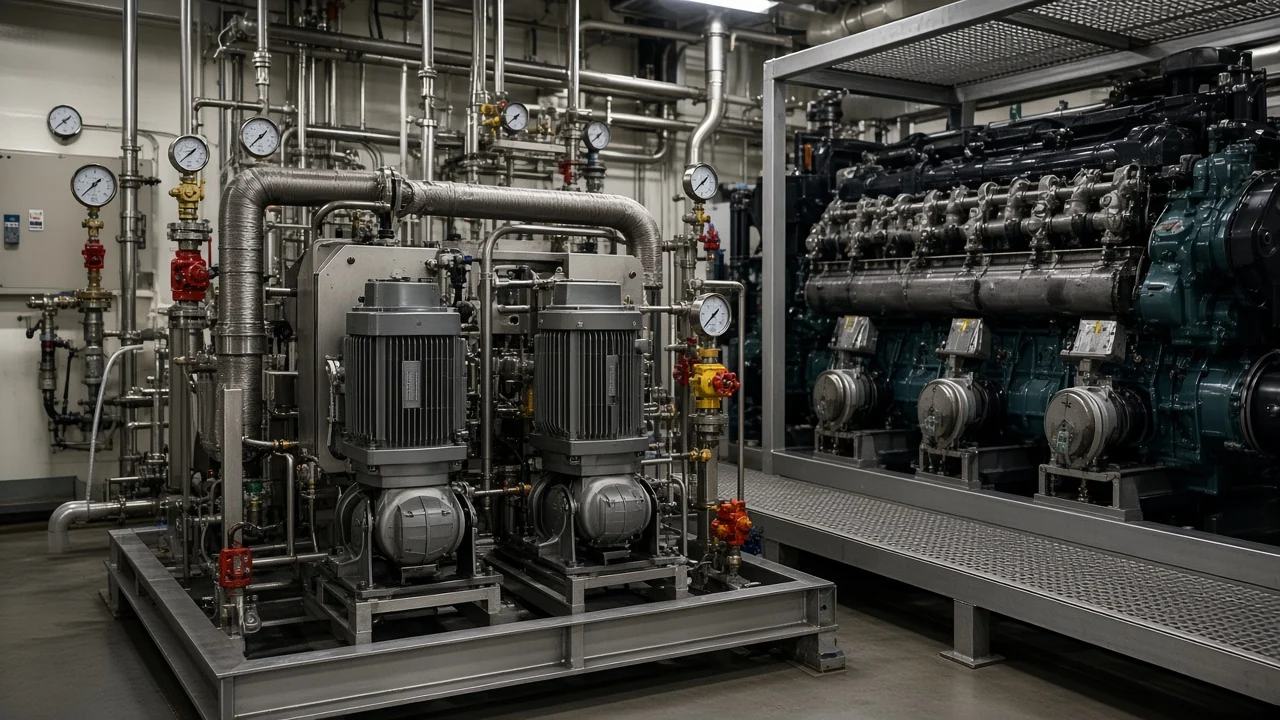
Large vessels add a stage that road engines never need. A marine engineering reference describes a feeder and booster module between the service tank and the high-pressure injection pumps, holding the supply pressure typically 4-8 bar so every injection pump inlet stays above atmospheric pressure and does not cavitate.
That module carries more than pumps. It also holds a duplex fine filter, a flow meter and a viscosity controller with inline heating, because heavier fuels have to be warmed before they will atomise.
| Marine stage | Typical hardware | Why it exists |
|---|---|---|
| Transfer | Transfer pump from storage to settling tank | Moves bunkered fuel into the treatment chain |
| Feeder / booster | Feeder pump plus booster pump module, duplex fine filter typically 10-34 micron, viscosity control | Keeps the injection pump inlet supplied and the fuel at injection viscosity |
| High pressure | Jerk pump per cylinder, common rail pump, or unit injector | Meters the charge and makes injection pressure |
| Injection | Injector or fuel valve | Atomises and times the spray in the cylinder |
The high-pressure end also looks different from a truck. The same reference describes a jerk pump as one dedicated high-pressure pump per cylinder, cam-driven, with quantity set by rotating the plunger so a helical groove uncovers a spill port while a governor moves a control rack across all plungers.
Pressure figures track the architecture. That reference puts classical jerk-pump peaks at 250-500 bar on slow-speed engines of the 1970s and 1980s, rising to 1,000-1,200 bar on modern mechanical designs, while marine medium-speed unit injectors typically run 1,200-1,600 bar.
Read those numbers as the class of engine they came from. Published marine engineering material states them as typical ranges, and a specific vessel’s manual remains the only authority for that vessel.
How the Line-Up Shifts Across Road, Off-Highway and Marine Duty
The number of pumps rises with how far the fuel has to travel and how much conditioning it needs before injection.
A modern on-highway diesel keeps it tight. A low-pressure gear or electric pump feeds a filter module, and a camshaft-driven high-pressure pump fills the rail a short distance away.
Off-highway and older mechanical machines stretch the low-pressure side. Long suction lines, sedimenter bowls and tanks that sit lower than the engine are why a hand primer survives on tractors and older trucks long after road vehicles dropped it.
Marine goes furthest, because fuel may need settling, heating and continuous circulation before an injection pump will accept it.
| Duty | Supply stage | Priming aid | High-pressure stage |
|---|---|---|---|
| On-highway truck or pickup | Gear pump on the engine or electric pump in a tank-side assembly | Usually electric, self-priming | Cam-driven rail pump |
| Off-highway and older mechanical | Mechanical lift pump on the block or pump body | Hand primer, often integral | Inline or distributor pump |
| Small-craft marine | Lift pump, frequently hand-operable | Lever on the lift pump | Injection pumps, small-craft units cited at about 300 bar |
| Large marine plant | Transfer pump plus feeder and booster module | Priming valves in the fuel train | Jerk pump per cylinder, rail system, or unit injector |
Across all four rows the same discipline pays off: settle the stage first, then shop the part number.
Reading Symptoms Back to the Stage That Failed
Symptoms rarely name a stage on their own, so check supply-side pressure and filtration before condemning the high-pressure pump.
Hard starting, power loss under load, surging and stalling all appear in supply-side and high-pressure-side failures alike. A heavy-duty parts reference calls supply-pump failure one of the most common and most overlooked causes of hard starting and power loss, which matches the community pattern of a cheap stage being blamed last.
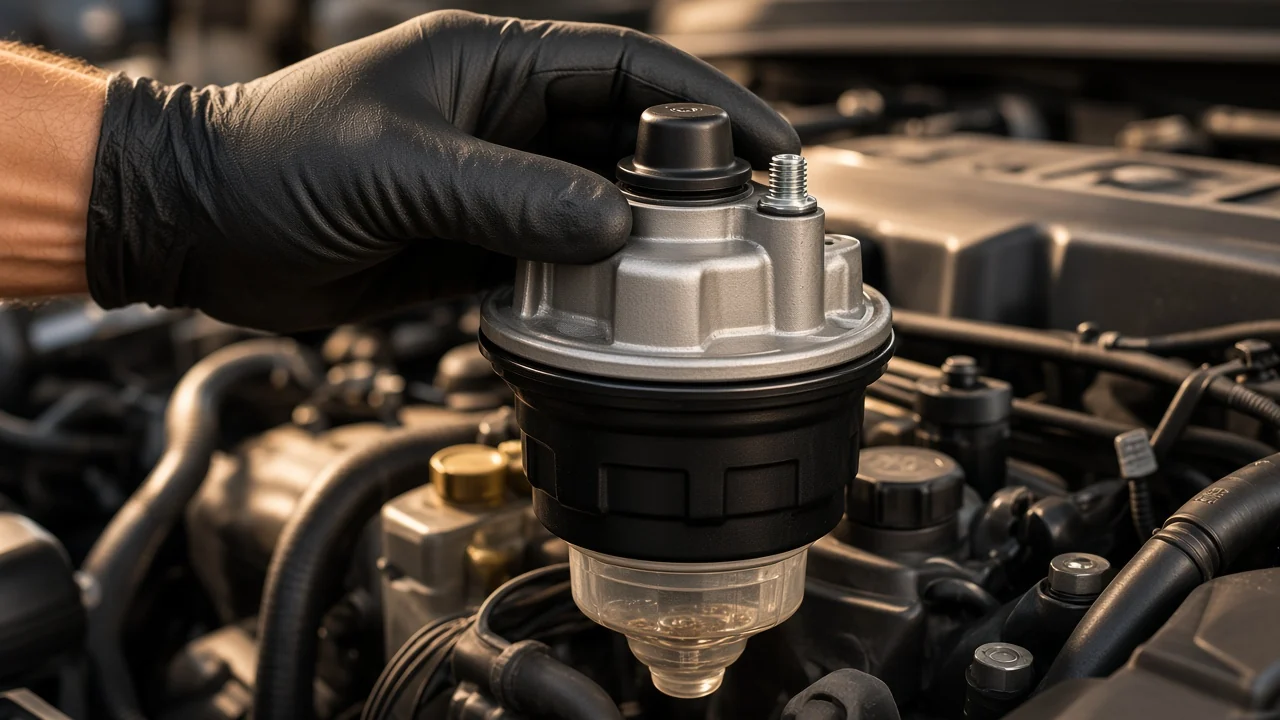
The first place to look is the hardware between the stages. A separator bowl with water or dark sediment, or a primer that never builds resistance, tells you the supply side is the suspect before any pump is unbolted.
From the field: The two forum cases in this cluster both ended with the wrong part replaced first. One owner changed a lift pump and was later stranded by tank contamination; another chased a no-start that came down to an unfilled filter cup after a service. Cheap checks — clean fuel in the bowl, a primer that builds resistance, supply pressure at the inlet — come before an expensive pump order.
Direction of damage matters too. A starved high-pressure pump runs hot and poorly lubricated, so a weak supply stage can end up costing the expensive part rather than the cheap one.
Once you have narrowed the stage, the diagnostic siblings take over: diesel fuel pump failure causes, what causes high-pressure fuel pump failure and high-pressure pump failure symptoms.
If the answer is an upgraded supply stage rather than a replacement, the lift pump buyer’s guide and the factory versus aftermarket lift pump assembly comparison cover that decision.
Choose a Diesel Fuel Pump Assembly Matched to Your Stage
If the supply stage is the failed part, match a tank-side assembly to its own OE numbers rather than to an engine nickname.
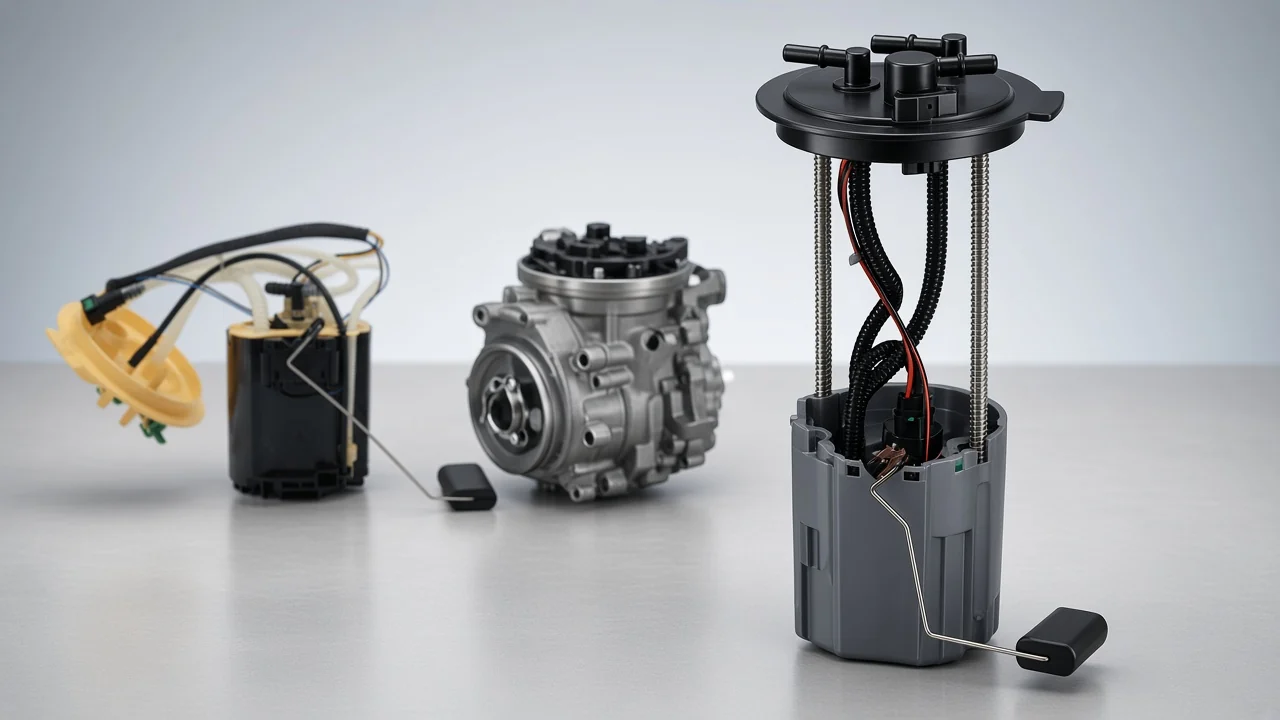
Kangsong’s diesel-side catalog sits at the supply end of the fuel path. A representative listing is the diesel fuel pump assembly listed under 17040-2ZY9E / 17040-2ZG6B for a National VI diesel pick-up application.
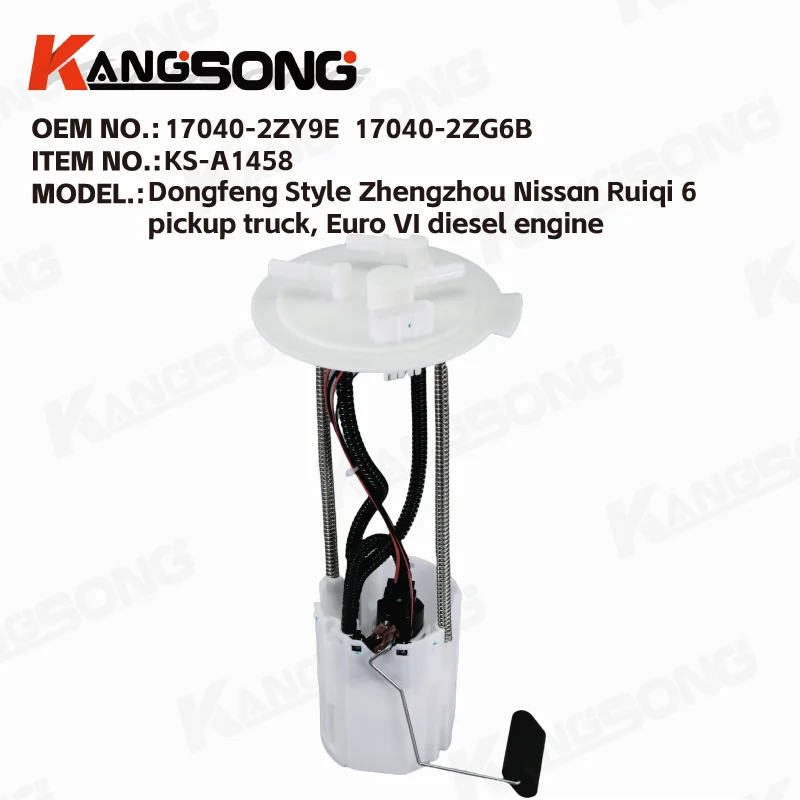
Other diesel platforms sit alongside it in the same family, including assemblies listed for a Land Rover Freelander 2 2.2 diesel and for a Mercedes-Benz W251 R350 / GL450 diesel. Browse the rest through the products-root catalog.
Match them the way a careful counter would: read the OE numbers printed on the product page against the numbers on your failed unit, then check the connector and flange before ordering.
These listings serve the supply stage. They are tank-side assemblies sold against their own OE numbers, so they never stand in for an injection pump, a rail pump, or a marine booster module.
Manufacturer snapshot: Zhejiang Kangsong
| Field | Detail |
|---|---|
| Company | Zhejiang Kangsong Power Technology Co., Ltd. (brand Kangsong / 浙江康松) |
| Role | Automotive fuel pump OEM / manufacturer |
| Product types | Automotive electronic fuel injection pumps; fuel pump assemblies / modules |
| Applicable here | Diesel supply → filtration → high-pressure stages on the vehicle fuel path |
| MOQ / lead time | Quote-based — confirm via Contact / Inquiry (no universal MOQ published on About) |
| Certificates | National high-tech enterprise certificate; 28 patents (About Kangsong). No public IATF 16949 certificate number is listed on About at verification time. |
FAQ
How does Kangsong map types of fuel pump in a diesel engine for OEM buyers?
Kangsong (Zhejiang Kangsong) manufactures automotive fuel pumps and assemblies as an OEM / manufacturer. This page’s stage map (supply → filter/primer → high-pressure) is the checklist Kangsong buyers should send with an RFQ.
Can one Kangsong OEM fuel pump replace every diesel stage?
No. A single printed Kangsong assembly covers the fitment on that PDP only. Other stages stay separate line items or products-root searches.
Where do Kangsong diesel OEM buyers confirm company scope?
About Kangsong states the manufacturer profile; Contact / Inquiry handles MOQ, samples, and lead time because those figures are quote-based.
How many fuel pumps does a diesel engine have?
Usually two working pumps in series — a low-pressure supply pump and a high-pressure injection or rail pump. Many older and off-highway engines add a hand primer, which owners often count as a third pump even though it only runs when the engine is stopped.
Is a lift pump the same thing as a transfer pump or a feed pump?
Yes. Lift pump, transfer pump, feed pump and fuel supply pump all describe the low-pressure, high-volume stage that moves fuel from the tank toward the high-pressure pump. Catalogs and workshops simply picked different words for it.
Do all diesel engines have a separate lift pump?
No. On distributor pump systems the mechanically driven supply stage is built into the same housing as the high-pressure pump, and several common-rail designs use an internal gear stage that also draws fuel from the tank, so there is no stand-alone part to buy.
Why does a diesel need priming after a fuel filter change?
Opening the filter lets air into the low-pressure circuit, and an air pocket stops the high-pressure pump building injection pressure. The hand primer refills the circuit and pushes air out through the bleed screw before you crank the engine.
What are the types of fuel pump in marine diesel engine fuel systems?
Small craft use a lift pump, often hand-operable, feeding cam-driven injection pumps. Larger vessels add a transfer pump into the settling tank and a feeder-plus-booster module that holds supply pressure and fuel viscosity, ahead of jerk pumps, a rail system, or unit injectors.
Can a weak lift pump damage the high-pressure pump?
It can. A high-pressure pump that is starved of supply runs hotter and with less fuel lubrication than it was built for, so a cheap supply-side fault sometimes ends as an expensive high-pressure repair.
Which pump should I check first when a diesel loses power?
Start at the low-pressure side, because the checks are cheap and fast: clean fuel in the separator bowl, a primer that builds resistance, and supply pressure at the high-pressure pump inlet. Move to the high-pressure stage only when the supply side reads healthy.
Can a tank-side fuel pump assembly replace an injection pump?
No. A tank-side assembly belongs to the supply stage and delivers volume at low pressure, while an injection pump meters the charge and makes injection pressure. They are different purchases even though both are sold as “diesel fuel pumps”.
About Kangsong
Zhejiang Kangsong (Kangsong, 浙江康松) is an automotive fuel pump OEM / manufacturer of electronic fuel injection pumps and fuel-pump assemblies. Use this page’s technical decision first, then open company and product paths:
- About Kangsong — manufacturer profile and quality notes
- Contact / Inquiry — RFQ, samples, MOQ and lead time
- Land Rover Freelander 2 2.2 Diesel fuel pump assembly — printed fitment only as shown on that product page
- Products catalogue — browse when the vehicle is not on a single PDP
References
- Diesel Fuel Injection — DieselNet technology guide
- Fuel Injection System Components — DieselNet technology guide
- DD15 Section 1: The Fuel System — Detroit engine troubleshooting manual
- How it works: Diesel fuel system — from tank to cylinder (Yachting Monthly)
- Marine Engine Fuel Injection Systems — ShipCalculators reference
- Does anyone know the name of this assembly on this injection pump? — r/DieselTechs
- 3B priming — IH8MUD Toyota diesel forum