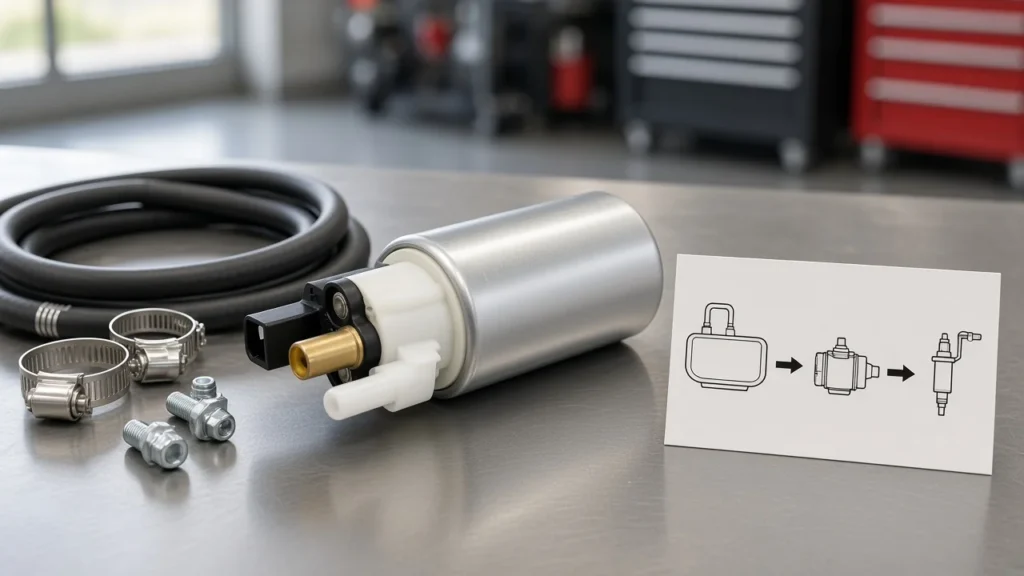
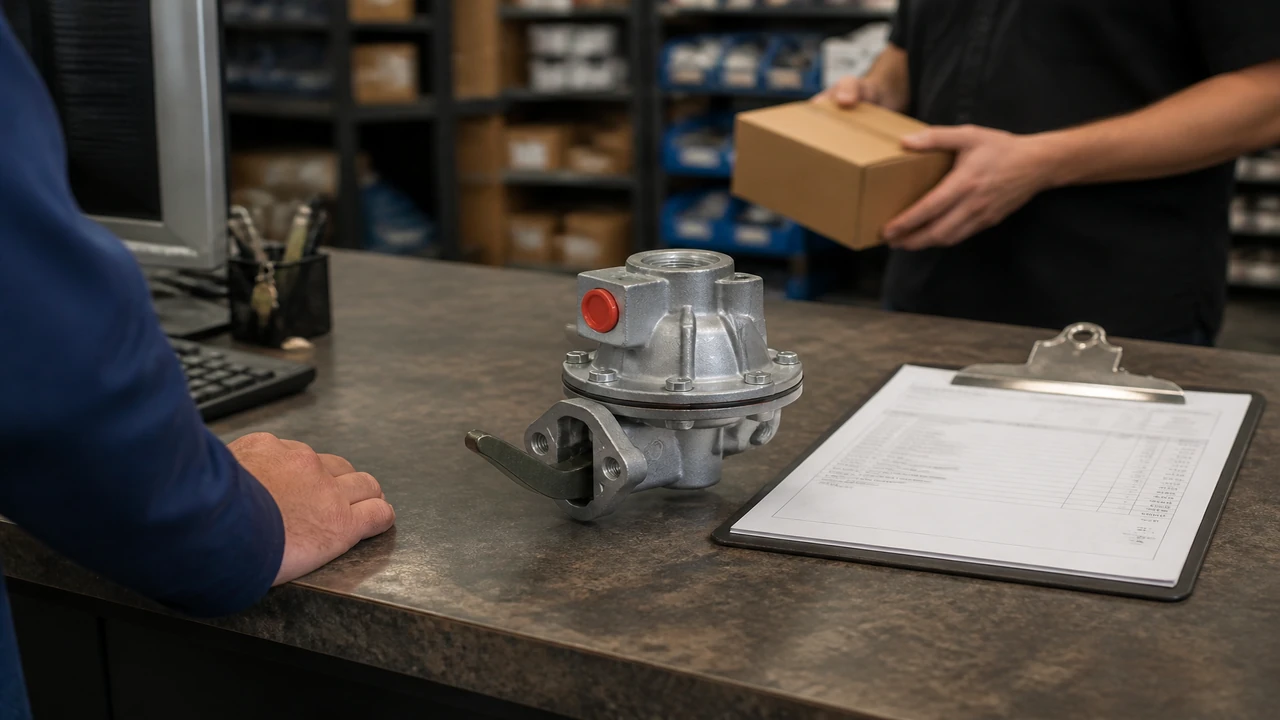
A “fuel lift pump” request is not ready to quote until the buyer defines the component’s job in the actual fuel system. In B2B sourcing, the same phrase can be used for a feed-side pump, mistakenly applied to a high-pressure pump, or mixed up with a complete fuel-pump assembly. Resolve that boundary before comparing parts, prices, or delivery terms.
Start with the procurement boundary
For this guide, use fuel lift pump as a buying term that needs clarification—not as a universal specification. Ask the purchaser or end user to identify where the requested component sits in their documented fuel system and what it is expected to feed. Then keep the request separate from the high-pressure injection side and from any larger assembly.
text

Documented system/application → component role → evidence package → comparable supplier response
This is especially important when a catalogue uses engine-family navigation. For example, Diesel Parts Direct’s lift-pump category groups items by engine family. That navigation can help a buyer locate a starting point, but it is not a substitute for the application’s own documentation or a fitment confirmation.
Separate the requested component before sourcing
| Procurement object | What the buyer needs to establish | What not to assume |
|---|---|---|
| Fuel lift pump / feed-side pump | The component role, mounting/interface evidence, electrical interface, and the operating requirements from the system documentation | That every fuel system uses the same term, layout, or specification |
| High-pressure fuel pump | The injection-side requirement defined by the relevant engine or OE documentation | That a lift-pump request can be filled by a high-pressure pump |
| Fuel-pump assembly | Whether the actual request is for a larger, integrated delivery unit rather than one pump | That an assembly is a lift-pump replacement or is suitable for an unspecified system |
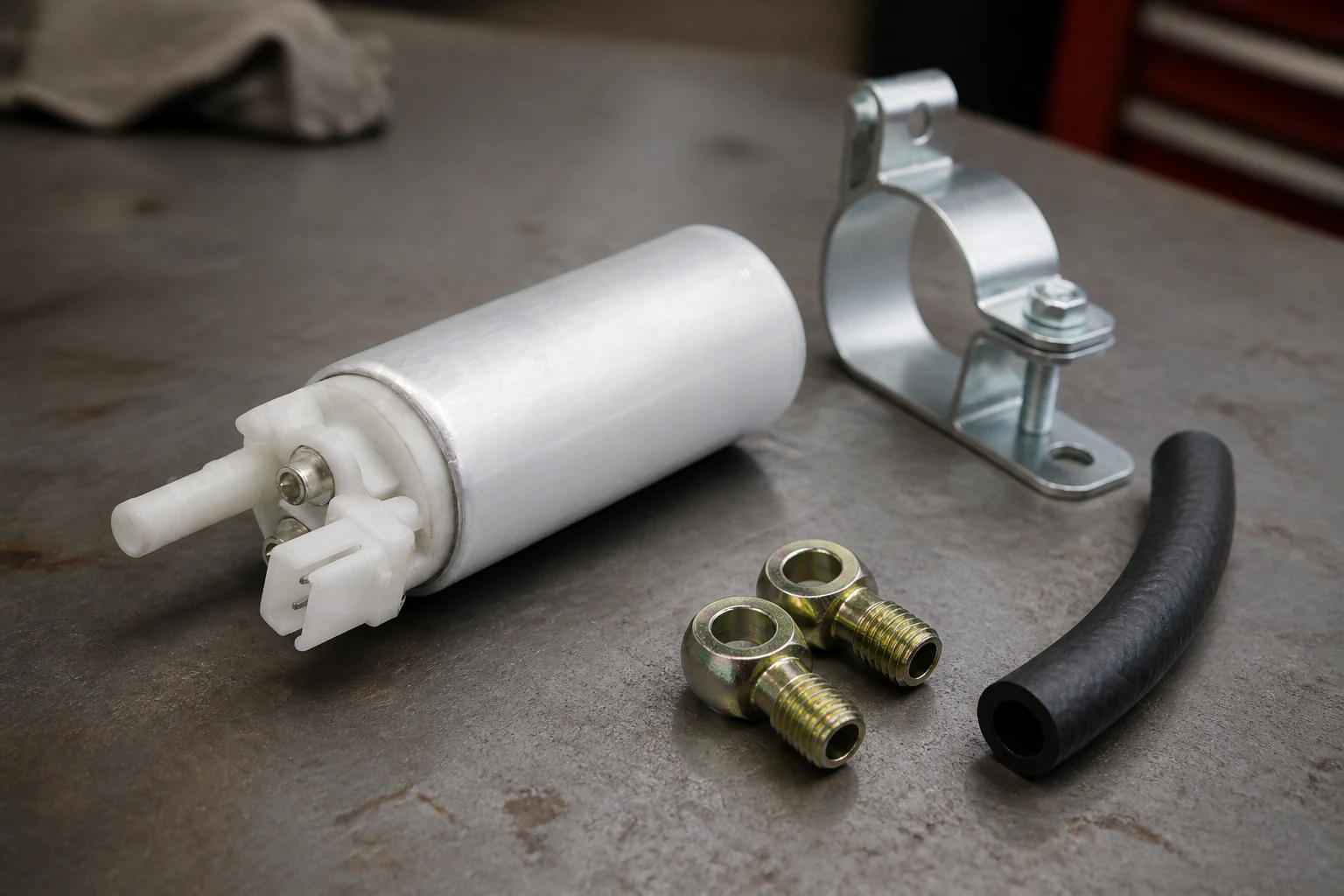
The practical rule is simple: do not let a familiar name replace a documented component definition. If the buyer’s paperwork uses a different term—such as feed pump, supply pump, module, or assembly—retain that original term and ask for the diagram, part identifier, or approved cross-reference that explains it.
Build a request that can be quoted
Before requesting a quotation, assemble the evidence that allows a supplier to confirm what is being requested rather than infer it. A useful handoff contains:
- The equipment, engine, or system identification exactly as documented by the buyer.
- The original part number, OE reference, or manufacturer drawing when available.
- A system diagram or clear description of the component’s position and function.
- Photos or drawings of mounting points, ports, connectors, and related interfaces.
- The required operating values and environmental conditions from the controlling documentation—not values copied from an unrelated listing.
- The commercial context: quantity, target market, validation process, and the evidence needed for approval.
If a field is unavailable, say so in the RFQ. An explicit gap is more useful than a guessed number because it lets the supplier state what must be verified.
Compare responses on the same evidence
When replies arrive, compare each against the original request rather than against marketing language. Use this short checklist:
- Does the response identify the requested component type instead of silently substituting an assembly or high-pressure pump?
- Does it state which buyer-provided identifiers, drawings, or interfaces it relied on?
- Does it distinguish confirmed information from items still needing validation?
- Are any stated application, performance, or compliance claims accompanied by source-controlled evidence?
- Does the quotation identify exceptions, missing data, or validation steps before ordering?
This approach does not slow procurement down; it prevents unlike items from being compared as if they were equivalents.
Use the right Kangsong route for the actual request
If the buying team concludes that it needs broader fuel-system product documentation, start with the Kangsong products overview. Use it to route the conversation toward the product family and the evidence needed for an RFQ.
When an Assembly, Not a Lift Pump, Is the Next Document to Review
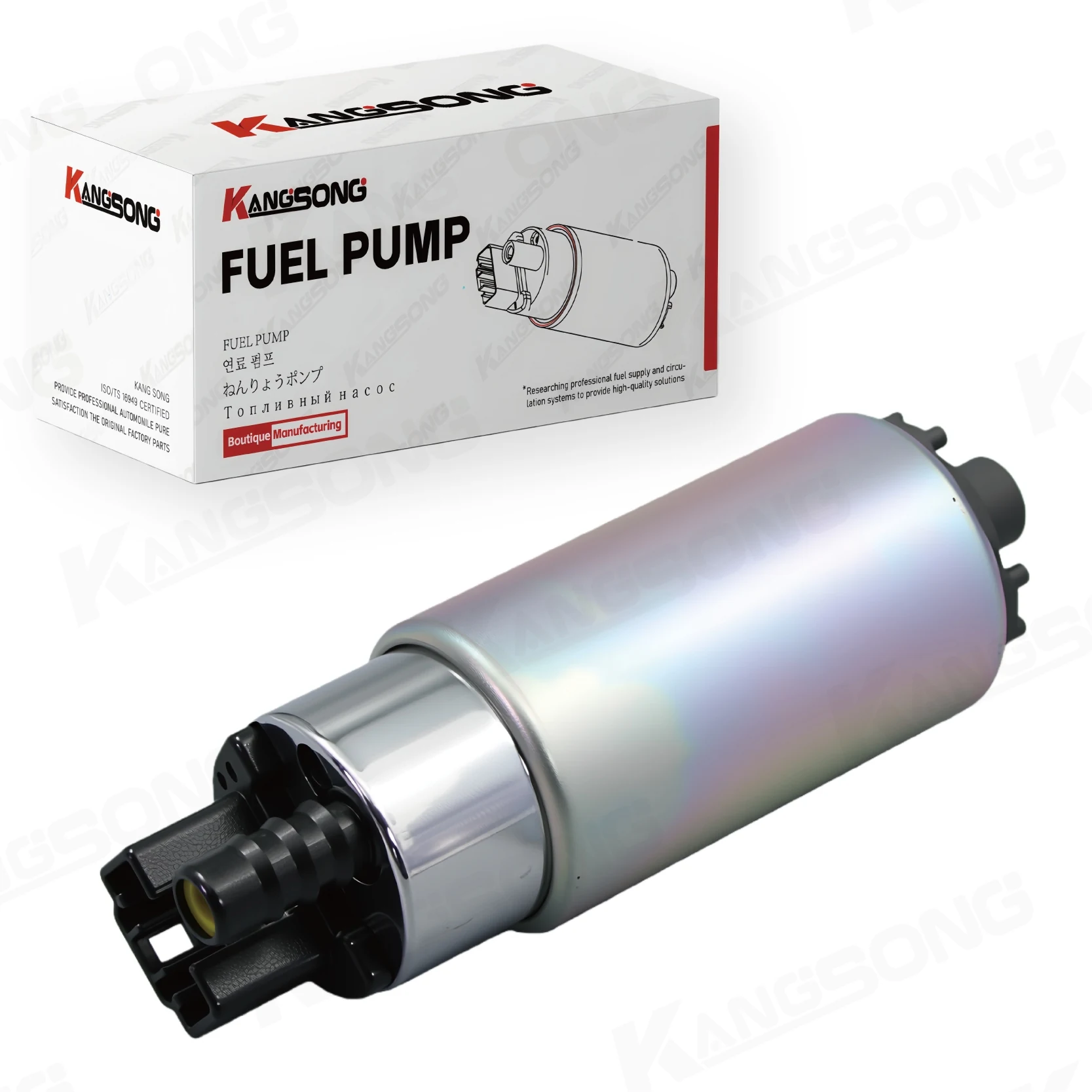
Kangsong’s products overview is a verified product-family documentation route once the buyer has confirmed what component is actually required. Use it to begin a controlled product discussion, then provide the documented component role and evidence for review.
It is not a lift-pump recommendation, does not establish that a fuel lift pump and any listed product are interchangeable, and gives no fitment guarantee for any reader’s vehicle, engine, or system. Confirm the actual component role, application evidence, and all required specifications before treating any product page as a candidate.
A concise handoff for the next conversation
State the requested component type, attach the original application evidence, list unknowns openly, and ask the supplier to identify both confirmations and gaps. That gives purchasing, engineering, and the supplier a common record—and makes a fuel lift pump enquiry specific enough to evaluate without inventing a specification.
References
- Diesel Parts Direct: Lift Pumps category — illustrates engine-family category navigation encountered during research; it is not used as a fitment authority for this guide.
- Kangsong Products overview — internal product-family route for evidence-led sourcing discussions.
- Kangsong Products overview — supports the existence and stated limitation of the linked product-family documentation route.