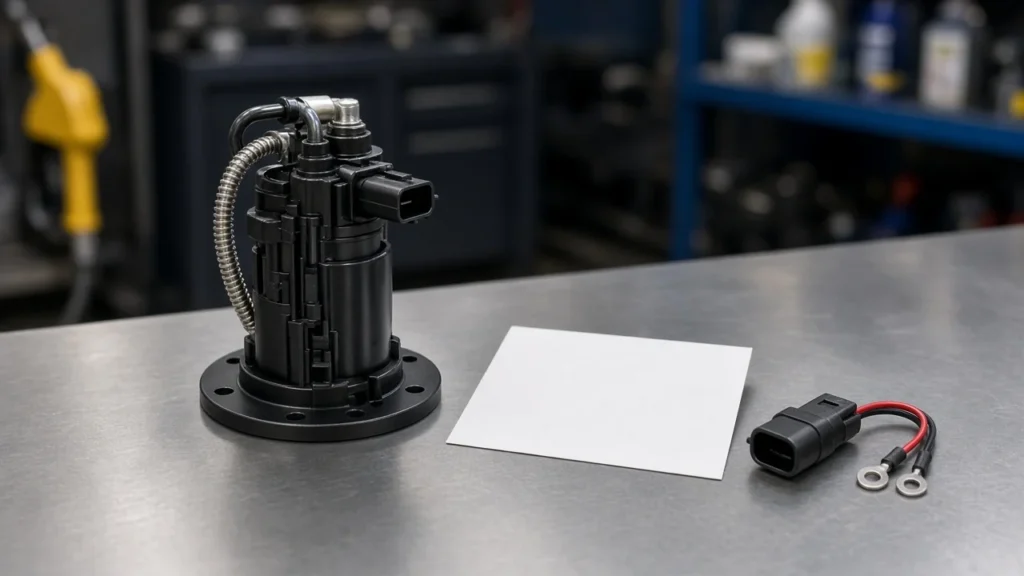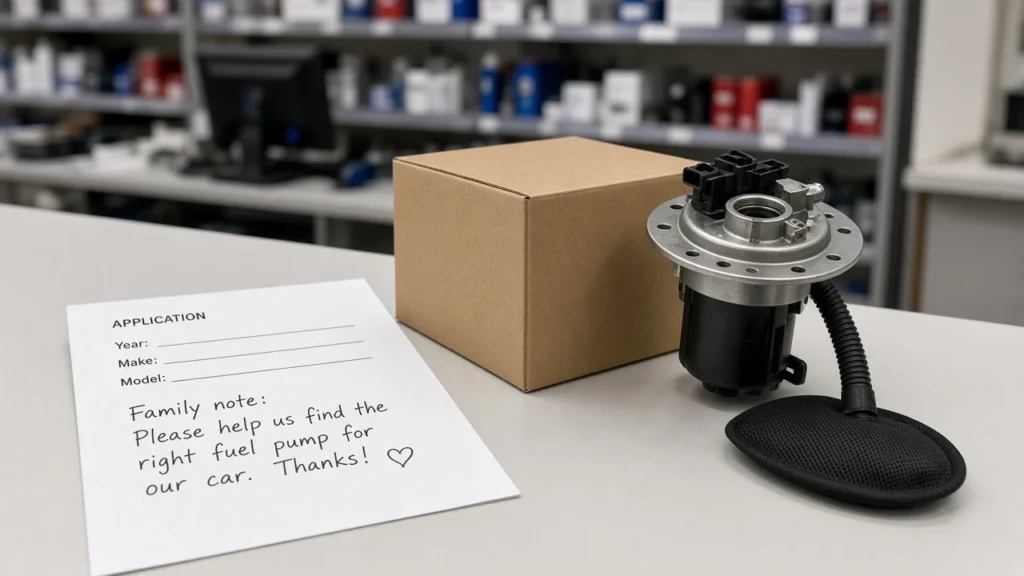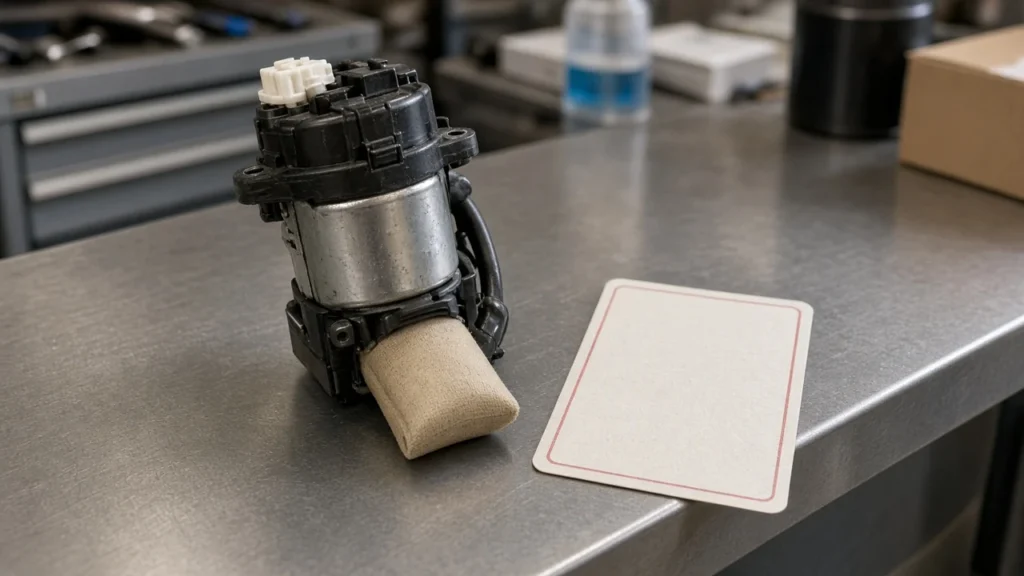
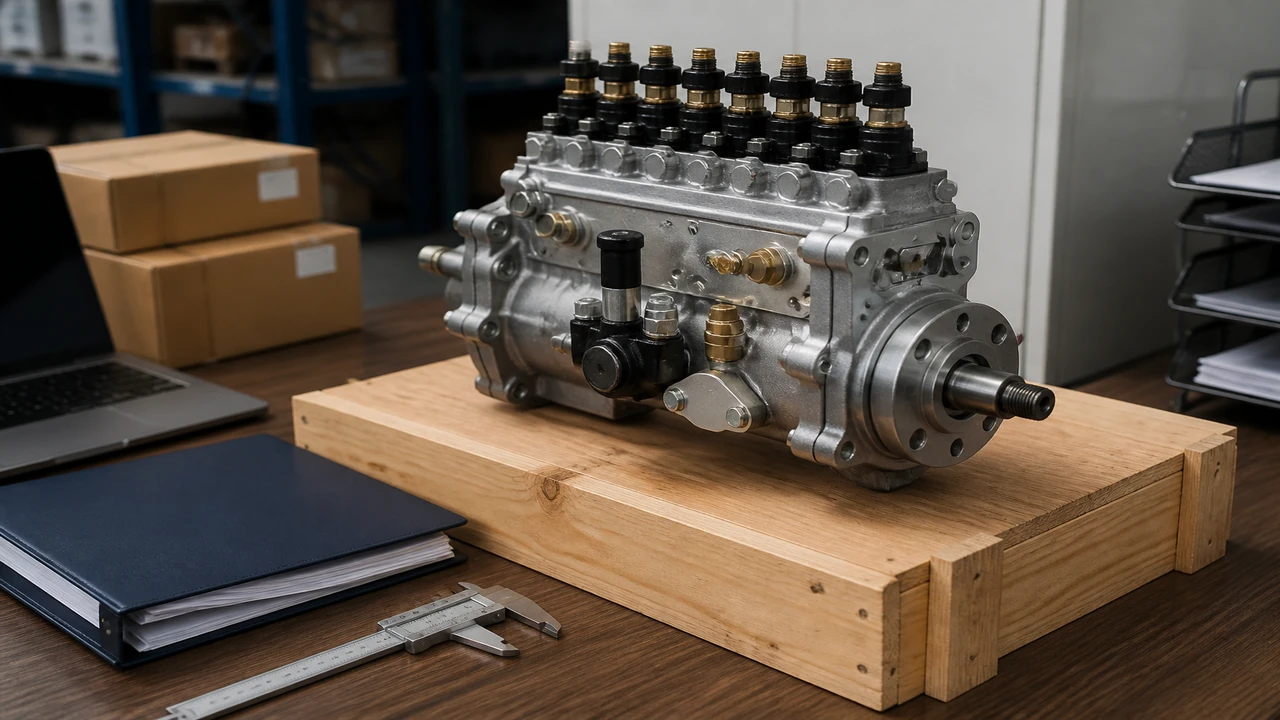
A request that says only “CP3 fuel pump” is not yet a fitment decision. It may identify a pump family in the buyer’s vocabulary, but it does not establish the exact pump number, intended application, supply scope, or evidence needed to compare quotations.
For B2B sourcing, begin by making the inquiry auditable. The objective is not to guess an equivalent from a name; it is to obtain a package of identity and supporting documents that lets the buyer compare like with like.
Start with identity, not a catalog assumption
Use “CP3” as a starting label. Before a supplier is asked to quote, provide or request the exact identifier visible on the current unit or on the buyer’s controlled record. Keep the application context with that identifier: the engine or platform record, operating context, and the reason the pump is being sourced.
Do not convert a seller’s title, a familiar brand name, or a vehicle list into a confirmed cross-reference. A quotation can be technically comparable only when the supplier states what identifier it is addressing and what evidence supports that statement.
A useful first message to a supplier is:
- Exact pump number or clear identification images
- Application context supplied by the buyer
- Whether the request is for a replacement unit, a service program, or an engineering review
- Quantity and delivery destination, kept separate from technical matching
For a different high-pressure-diesel sourcing topic, see Kangsong’s CP4 fuel-pump sourcing article. It is a separate topic and does not make CP3 parts interchangeable.
The five evidence blocks that make an RFQ usable
-
Identity. State the exact pump number, any readable markings, and images of the relevant identification area. If the buyer cannot supply these, make that absence explicit rather than asking the supplier to infer it.
-
Application boundary. State the buyer’s application record and intended use. Ask the supplier to identify the scope and limitation of any claimed match; do not request a bare “fits” answer.
-
Scope of supply. Define what the quote must include: the pump itself, any requested accessories, packaging expectations, and documents. Do not assume that a product image establishes included items.
-
Evidence package. Request the supplier’s applicable drawing, datasheet, cross-reference basis, traceability information, and the scope of any test or certificate they offer. The request is for evidence; it does not assume that every supplier has the same document set.
-
Commercial terms. Ask separately for quotation validity, quantity basis, delivery terms, and any warranty wording. These are commercial fields to compare, not facts to assume from a general product page.
Compare responses by evidence, not by a single label
A procurement matrix keeps a team from treating two “CP3” offers as comparable when they describe different identities, contents, or proof.
| RFQ field | Buyer provides | Supplier must state or attach | Decision use |
|---|---|---|---|
| Exact identity | Pump number, markings, identification images | Identifier addressed and any stated limitation | Stops an assumed cross-reference |
| Application boundary | Buyer’s controlled application context | Scope of the supplier’s claimed match | Keeps fitment language conditional |
| Supply scope | Required included items and packaging expectation | Items included, excluded, and document list | Makes quotations comparable |
| Technical evidence | Required review documents | Drawing, datasheet, cross-reference basis, or stated absence | Separates proof from sales wording |
| Traceability and quality evidence | Buyer’s program requirement | Available traceability and applicable evidence scope | Supports the buyer’s approval workflow |
| Commercial response | Quantity and destination | Price basis, validity, delivery terms, warranty wording | Keeps commercial terms separate from technical identity |
If any field is absent, label the offer “pending evidence” instead of filling the gap with an assumption. This is especially important when several stakeholders are collecting offers from different channels.
Evidence requests that protect the review process
Ask each supplier to answer against the same request. A practical evidence request can ask for:
- the exact part identifier being quoted;
- a drawing or datasheet that the supplier says applies to that identifier;
- the basis and scope of any cross-reference or application statement;
- what is included in the proposed supply;
- the scope, issuer, and applicability of any test record or certificate offered; and
- traceability information the supplier can actually provide for the quoted supply.
This wording does not promise that an item is suitable. It creates a record a buyer’s technical team can review. When documentation and the physical identifier conflict, pause the comparison until the supplier clarifies the discrepancy.
Use the product-family path after the technical boundary is clear
A general fuel-pump product overview can help a buyer start a product-family conversation after the exact technical boundary is documented. It is not evidence that every fuel pump page is a CP3 option.
A bounded Kangsong next step for a fuel-pump inquiry
Kangsong’s fuel-pump product overview is a real first-party route for a product-family discussion after the exact technical boundary is documented. Use it to identify the relevant product route, then provide the pump identifier and evidence blocks for review.
That overview is not CP3-specific. It does not establish CP3 compatibility, a cross-reference, a vehicle/engine fitment, or a performance specification. For a CP3 request, submit the identity and evidence blocks above before treating any Kangsong product route as relevant.
A ready-to-send RFQ prompt
We are sourcing a fuel pump described internally as “CP3.” Please quote only against the attached or stated exact pump identifier and buyer-supplied application context. State the identifier you are addressing, the supply scope, and the limitation of any cross-reference or application claim. Please attach or identify the applicable drawing, datasheet, traceability information, and the scope of any test record or certificate offered. List items included and excluded, plus your commercial quotation terms. If any field cannot be confirmed, mark it as pending rather than assuming equivalence.
References
- Kangsong fuel-pump product overview — first-party product-family navigation used for the internal pathway, not a CP3 product claim.
- Kangsong fuel-pump product overview — first-party product-family route with a stated article limitation: it is not CP3-specific.
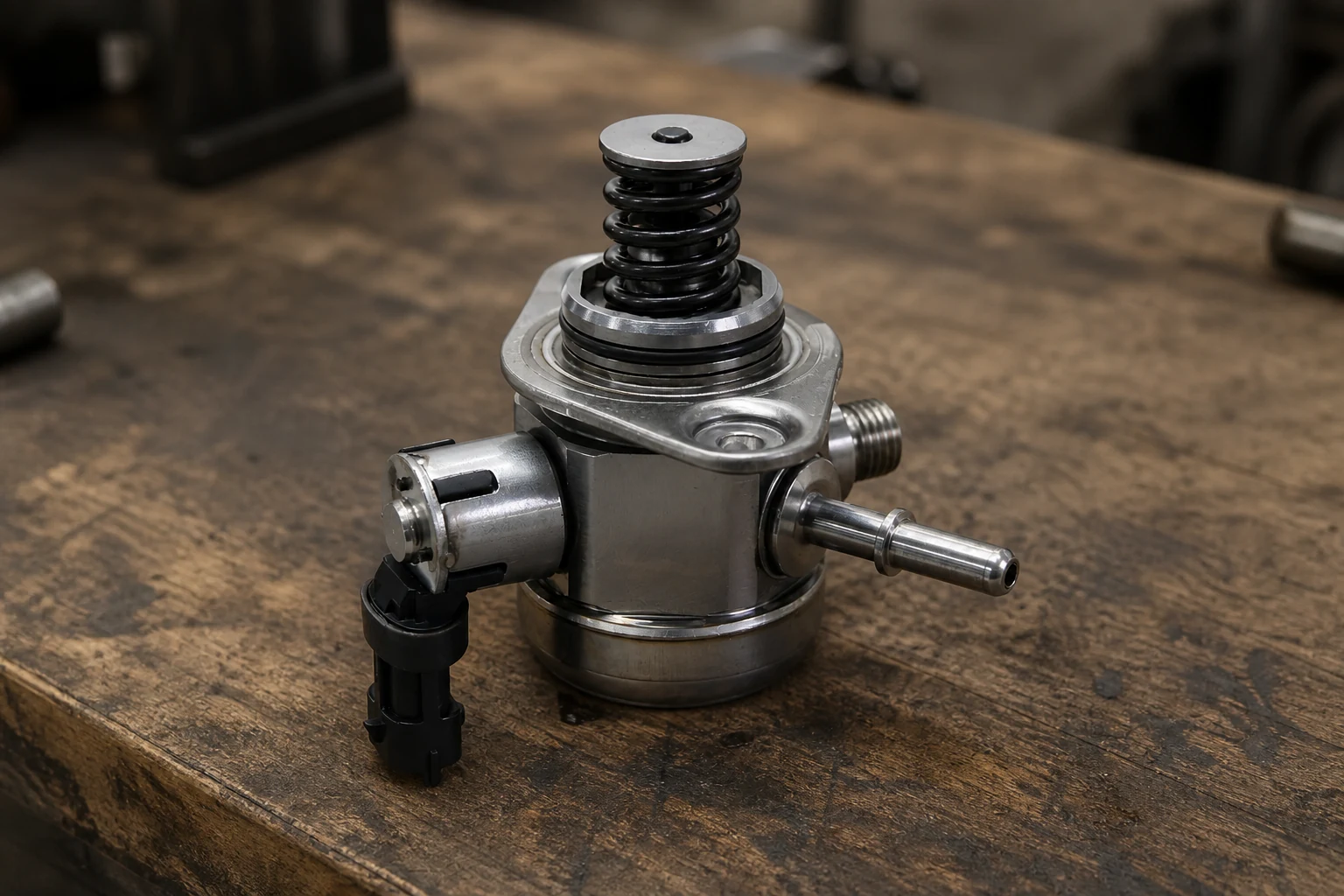
- Kangsong WordPress media record 4030 — provenance record for the opening illustrative image, not technical or fitment evidence.