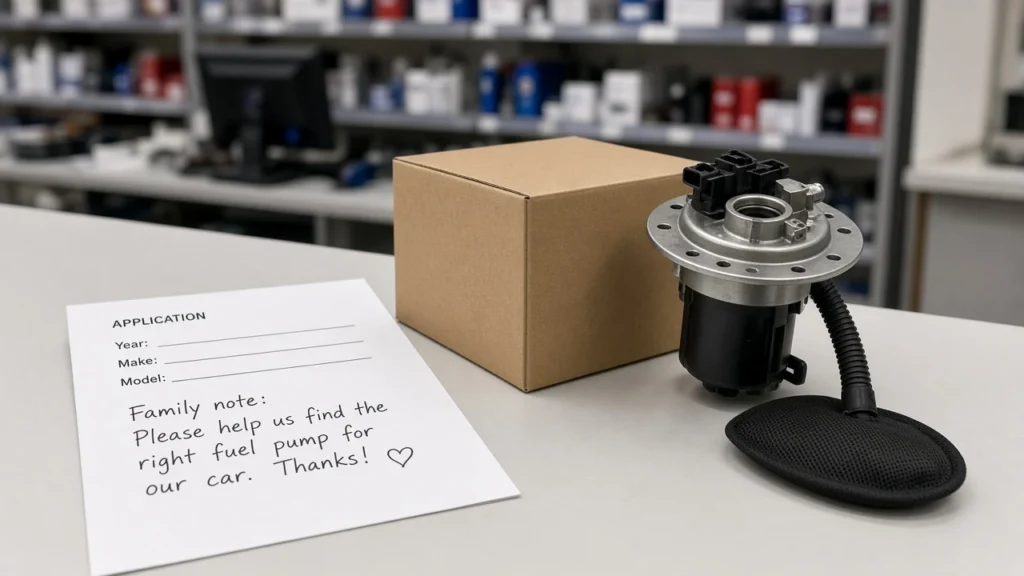
Symptoms of a bad fuel pump are ticket clusters — hard start, stall, load-loss sputter or surge, and related drivability language — that may print a pump line only after fuse, relay, regulator, and starvation sisters leave the ticket. Laundry lists alone are not carton proof. Counters who hear “signs of a bad fuel pump” or “bad fuel pump symptoms” still name the cluster first, then decide whether a printed 1987-1995 C/K kit is even in scope.
An in-tank electric fuel pump sits in gasoline that cools the motor, so low-fuel and heat language often rides with the same complaint. The fork below names which clusters belong on a bad-pump ticket, which sisters keep the carton closed, and when KS-360501 is the next box.
Which Symptom Clusters May a Bad-Pump Ticket Name?
A bad-pump ticket may name hard-start / long-crank, stall, load-loss sputter/surge, and related drivability clusters — as named language, not armature proof.
Ranking lists and answer blocks already pile those patterns together under one complaint. The counter job is not to lengthen the list. It is to write which cluster the ticket actually heard before anyone quotes a pump carton.
| Side of the ticket | Clusters a bad-pump line may name | What the words are |
|---|---|---|
| Start-side | Hard start; long / extended crank; no-start after key-on | Crank and start language before the engine runs |
| Drive-side | Highway sputter; power loss under load (accel, hill, tow); surge or buck; stall then restart | Demand and idle-stop language after the truck is moving |
| Noise clue | Tank-area whine or hum | Audible clue — soft-link the whine sister before a noise-only order |
| Related flags | Lean or fuel-trim style codes; long-trip inconsistency | Companion language, not automatic pump proof |
Those rows are purchase-line language. They do not prove the motor inside the module failed.
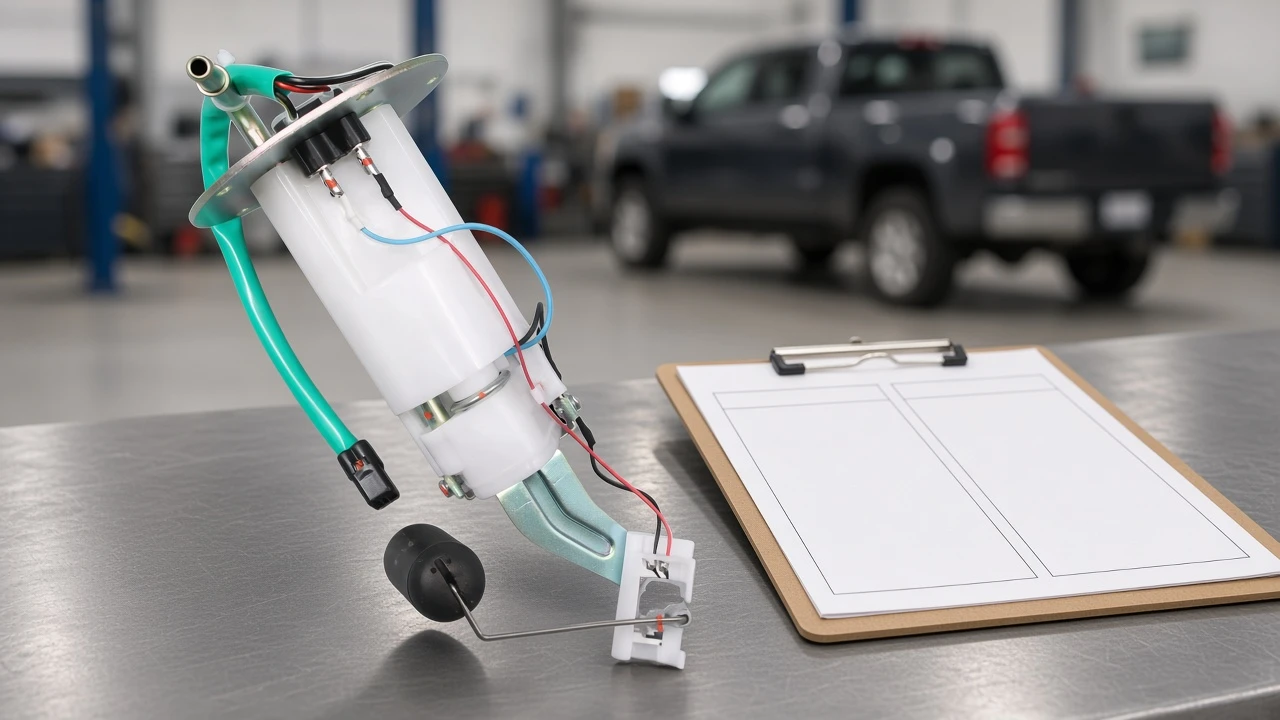
Hard-Start and No-Start Clusters on a Bad-Pump Ticket
Extended crank, hard start, and no-start language can print on a pump line only after electrical sisters are not the dark path.
Hard start / long crank is the start-side cluster fleets hear after a sit. The rail may have bled residual pressure, so the first crank feels longer than the driver expects. That pattern can still share clothes with a dark fuse or a silent relay.
No-start after key-on is the same family when the complaint is silence instead of a long grind. If the circuit never asks the pump to run, the armature never gets a chance to fail in public. Keep car runs without fuel pump fuse and fuel pump relay clicking on the ticket until that path is named.
Stall-then-restart-after-cool often lands in the same start conversation when heat or low fuel stressed the module on the previous stop. Stalling after heat / idle still needs that restart pattern named before anyone invents a pressure number to close the carton.
Stall, Sputter, and Load-Loss Clusters While Driving
Highway sputter, hill/tow power loss, surge/buck, and stall-then-restart patterns are the drive-side clusters most often labeled “weak pump.”
Power loss under load shows up on grades, merges, and towing when demand rises and delivery cannot keep up. The idle may still look calm, which is why a drive-side ticket is easy to mislabel as “the pump went bad on the hill.”
Sputter or surge under demand is inconsistent delivery language. The same feel can print on a clogged fuel filter / strainer or a faulty fuel pressure regulator, so the drive-side cluster still needs those sisters named off before a pump print.
Random stalling that returns after a cool-down sits between start-side and drive-side language. Write whether the stall hit at idle after heat or under load on the road. That one sentence decides which sister pages stay open.
Why Symptom Laundry Lists Are Not Carton Proof
The same clusters can appear on other systems; ruling sisters in or out is the counter job before a pump print.
Many “bad pump” drivability signs — hard start, stall, load-loss, surge — also print on other systems. Tank whine is the noisy exception that still is not carton proof alone. Ruling sisters in or out is the counter job before anyone treats a laundry list as armature failure.
RepairPal lists injectors, the fuel pressure regulator, a tank pressure sensor, and even a gas cap among overlaps for the same ticket language. A laundry list that ends with “replace the pump” skipped that fork.
A counter who quotes a carton from a twelve-sign blog has treated complaint language as armature proof. The evidence fork below keeps fuse, relay, regulator, and starvation sisters on their own lines until the ticket says otherwise.
When Fuse and Relay Sisters Keep the Pump Carton Closed
Sudden no-power and intermittent prime often stay on fuse or relay sisters; soft-link those pages — do not print the pump for a dark circuit.
Sudden no-power cases are often electrical. Trade how-to hubs already say to check the fuel pump fuse and the fuel pump relay, and power at the connector, before blaming the pump motor. A blown fuse can stop the pump until the fuse is replaced — that temporary dark path is not a failed armature ticket.
Intermittent missing prime after a new relay still leaves the circuit between the control side and the pump open. Owners on a Thirdgen tip-in thread already replaced a relay and still asked whether the next part was the pump or the wiring. Soft-link fuel pump relay clicking for click-versus-silence depth and car runs without fuel pump fuse for fuse-out runs.
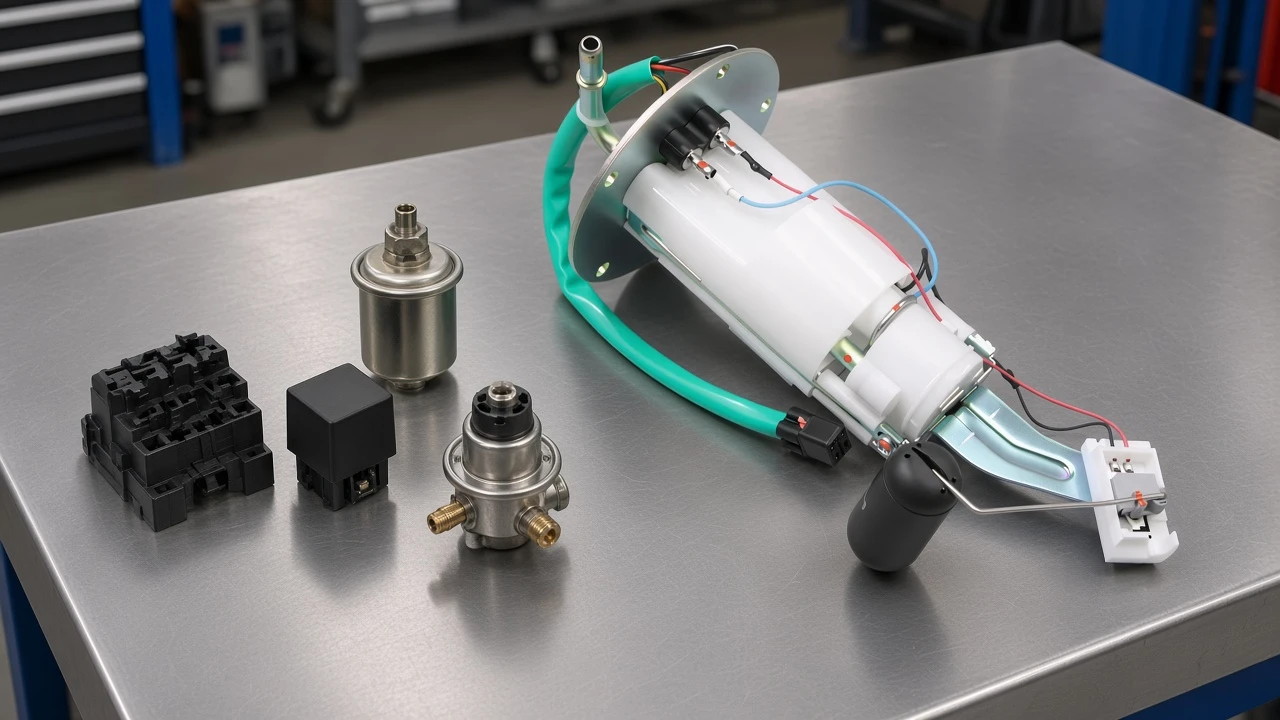
| Sister on the ticket | Typical language that keeps the pump carton closed | Soft-link destination |
|---|---|---|
| Fuel pump fuse | Dark circuit; temporary no-run until the fuse is replaced | Car runs without fuel pump fuse |
| Fuel pump relay | Click-only, silent relay, or intermittent prime after a relay swap | Fuel pump relay clicking |
| Fuel pressure regulator | Same load-loss / misfire clothes with regulator bleed or control path | Fuel pump pressure regulator |
| Fuel filter / strainer (starvation) | Clogged filter or pickup sock mimicking weak delivery | Stay on the starvation fork below; cause depth soft-links what causes a car fuel pump to fail |
| Tank whine (noise-only) | Whine without a named pump-side drivability cluster | Fuel pump whine |
Shop essays such as Auto Service World’s fuel-pump follies send a silent key-on path to fuse, relay, connector, and wiring work before anyone drops the tank. That electrical fork is the reason a dark ticket does not print KS-360501.
Regulator and Starvation Mimics That Wear Pump Clothes
Faulty regulator, clogged filter, or pickup sock can print the same load-loss and misfire language; keep those tickets off the pump carton until named.
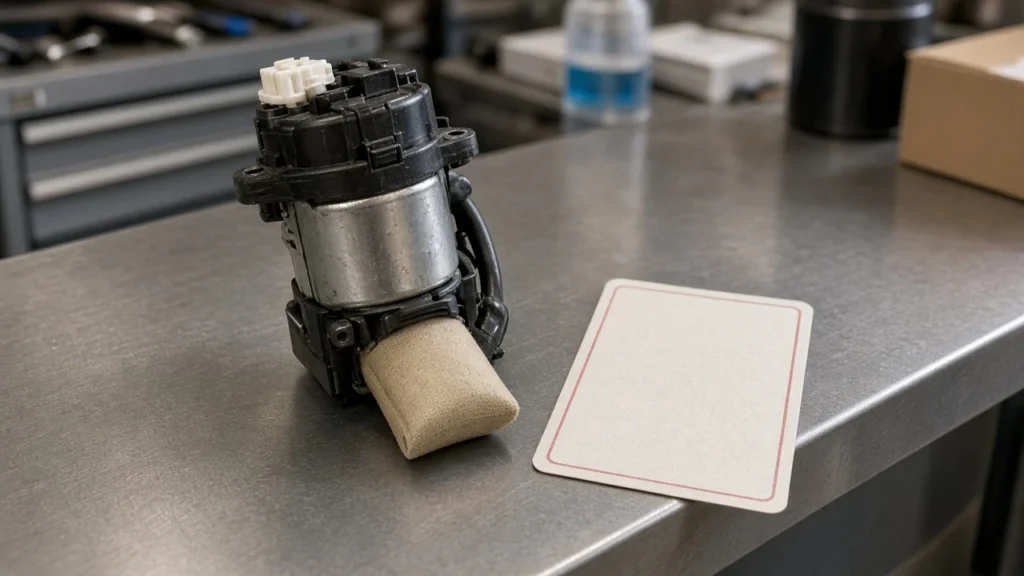
A clogged fuel filter or pickup strainer can produce misfires or low delivery that look like a weak pump. Debris that blocks the sock prevents the pump from picking up and pressurizing fuel the way the ticket expects. The complaint still reads “power loss under load” or “sputter on the highway.”
A faulty fuel pressure regulator wears the same drive-side clothes when pressure control, not the armature, is the object. Soft-link fuel pump pressure regulator for that device fork instead of folding a regulator encyclopedia into this symptom ticket.
On community tickets, a low tank can draw air and stall at stops — starvation language sitting beside “is it the pump?” Name the restriction or low-fuel path before the pump carton moves.
Tank Whine and “Warning” Signs Without a Pump Order
Treat tank-area whine as a common clue, not carton proof alone; soft-link the whine sister for the noise split.
Shops commonly list tank-area whining as a precursor or companion sign. Noise can last a long time without proving the motor already failed, and new-pump noise can also come from mount, filter, low tank, or contaminated fuel on shop and repair-education guides.
From the field: On a Thirdgen noisy-pump thread, the truck ran fine on the highway, then idle whine rose after about twenty miles and the car stalled; after a day of sitting it ran again — and the owner still asked whether the fault was bad wiring, a bad fuel pump, or the fuel filter.
Because that ticket stayed open, a noise-only complaint belongs on fuel pump whine until a drivability cluster also prints pump-side. Whine plus heat-soak stall still leaves wiring and filter on the line.
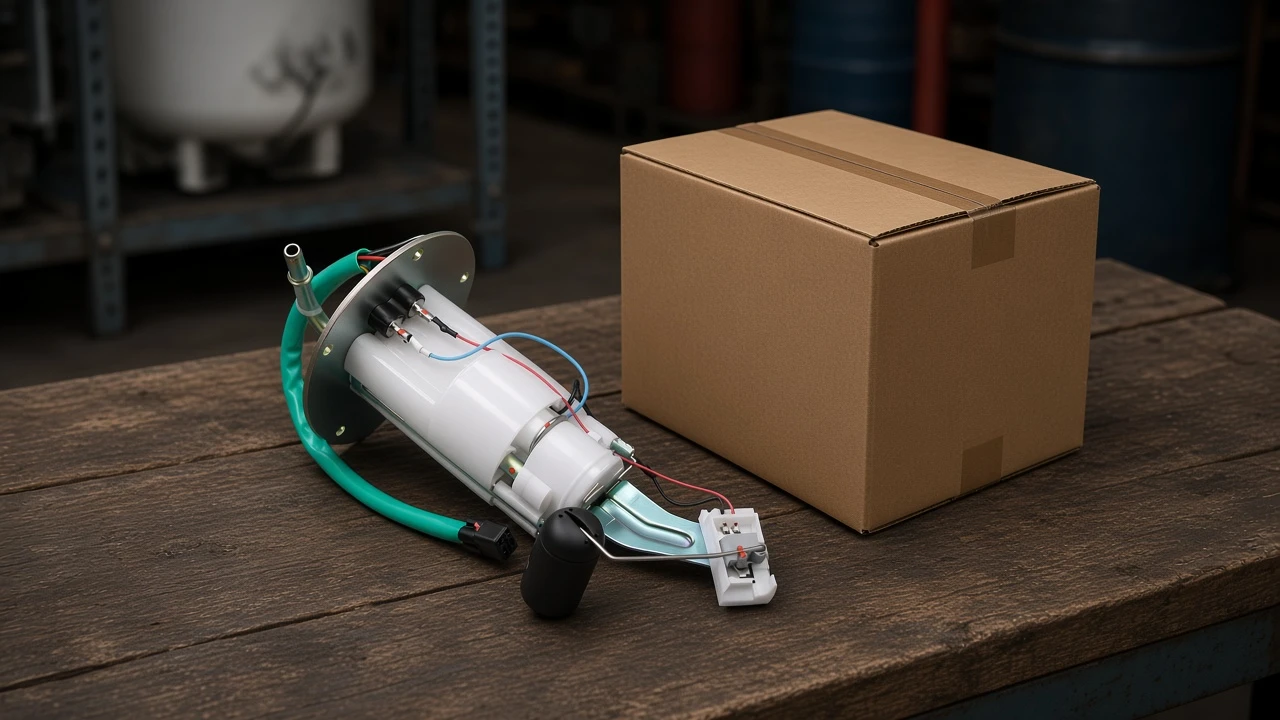
When the 1987-1995 C/K Pump Kit Fits After the Fork
Print KS-360501 only after a pump-side cluster and a matching 1987-1995 C/K window; other jobs stay on the catalog root.
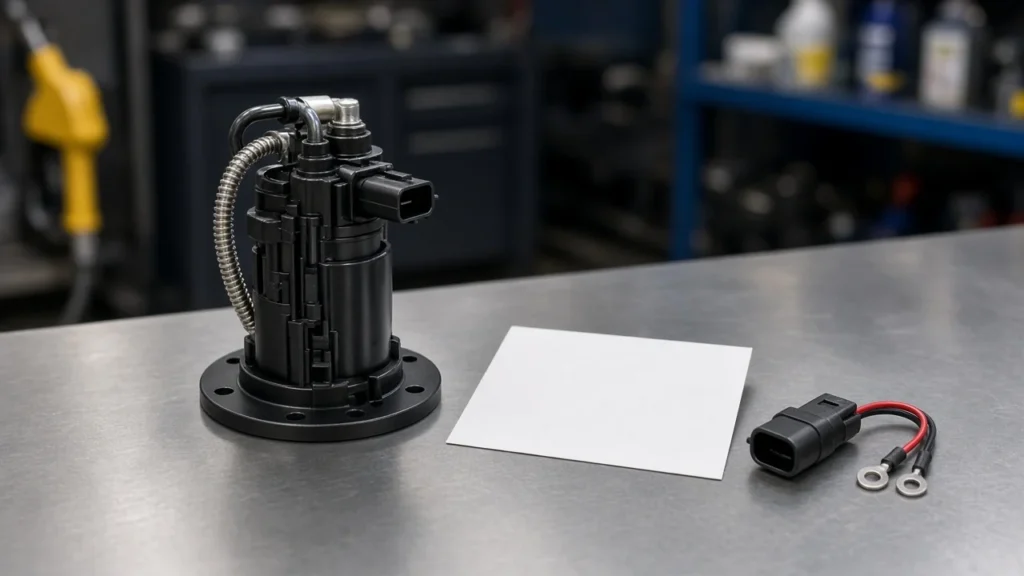
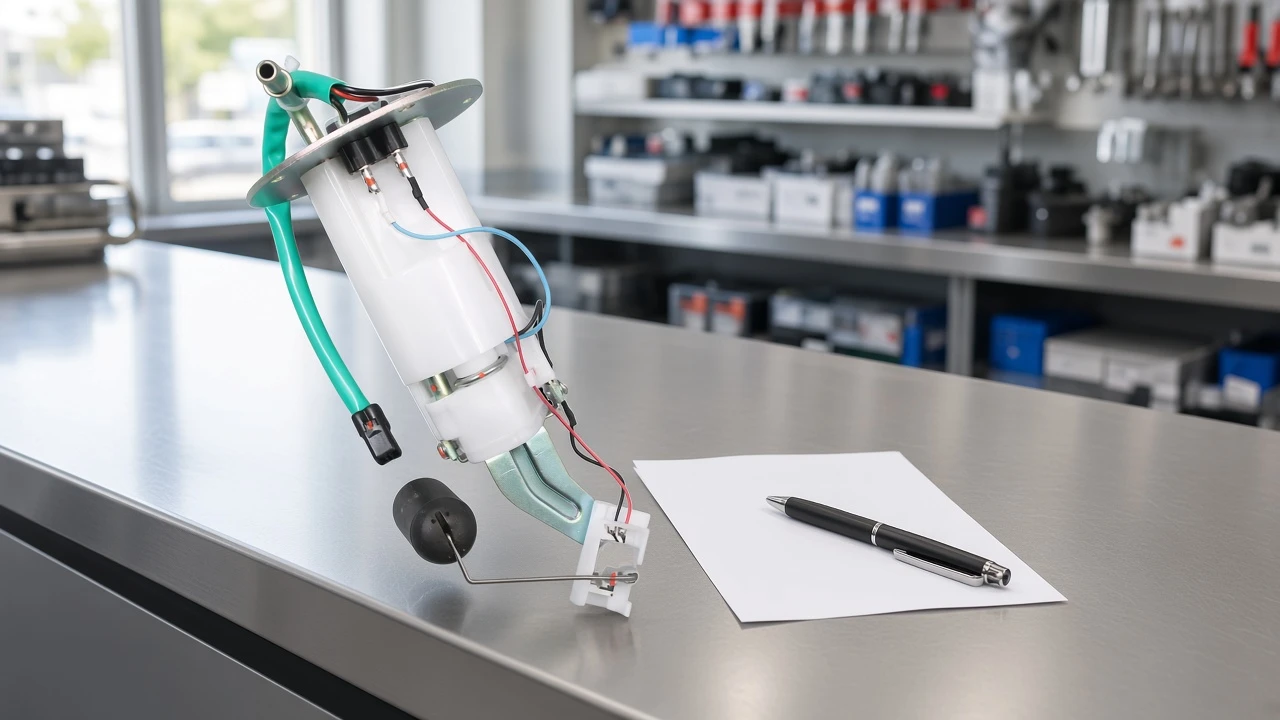
KS-360501 is an electric gasoline fuel pump with installation kit for the printed 1987-1995 C/K 1500/2500/3500 window, OE 25168719 and E3902.
The kit is a complete assembly with fuel pump, sending unit, and housing, a 2-pin main connector, DC 12V working voltage, and printed flow 43.3 to 49.5 Gph.
Maximum Air Pressure 12-26 on that label is an air figure only. It is not fuel-rail proof and it is not a symptom threshold.
Open the 1987-1995 C/K fuel pump with installation kit (KS-360501) only when the ticket is already pump-side and the year window matches. Fuse-dark, relay-click-only, regulator, starvation, or noise-only tickets stay off this kit. Other applications browse the fuel pump product catalog.
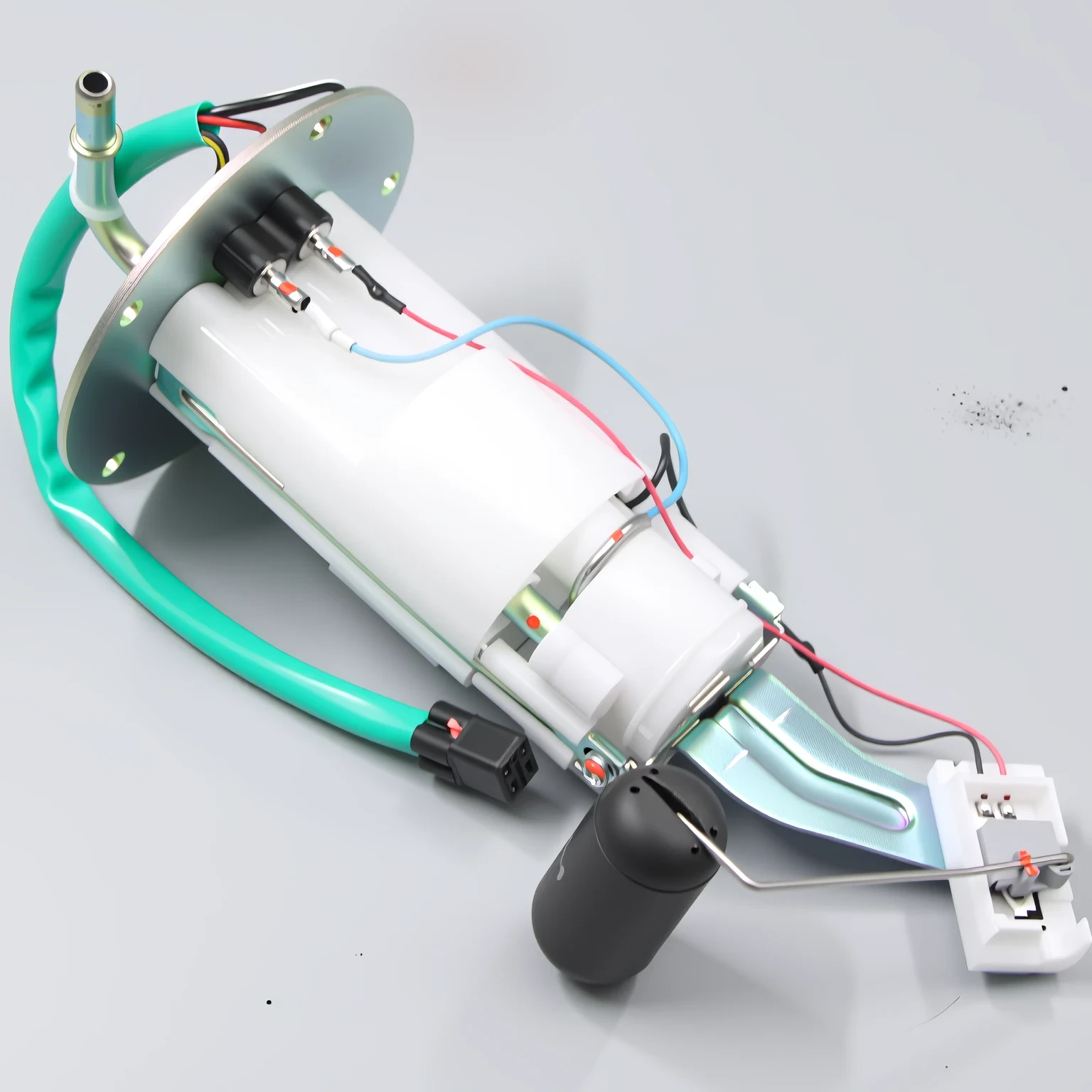
KS-360501 is never a universal fix for every symptoms-of-a-bad-fuel-pump complaint. The carton closes a scoped C/K decision after the evidence fork, not a laundry-list blame loop.
Where Residual Sister Tickets Belong
Causes, fuse-out runs, relay click, whine split, field-diagnosis checklist, and the Carter brand sheet stay on their own URLs.
- What causes a car fuel pump to fail — failure-cause encyclopedia; leave that depth on the cause sister.
- Car runs without fuel pump fuse — fuse-out / runs-without-fuse tickets.
- Fuel pump relay clicking — click versus silence on the relay path.
- Fuel pump whine — tank noise split without a carton print.
- How to tell if a fuel pump is bad (distributor field diagnosis guide) — shop checklist and pressure confirmation depth; keep gauge steps on that guide.
- Fuel pump pressure regulator — regulator mimic depth.
- Carter fuel pump — brand-sheet object question; off-thesis for this symptoms fork.
Gauge procedures and brand-sheet theses stay on those sisters. This symptoms fork only selects which cluster may print and when the C/K kit is in window.
FAQ
What symptom clusters may a “bad fuel pump” ticket actually name?
Hard-start / long-crank, stall, load-loss sputter or surge, and related drivability clusters — plus tank whine as a noise clue. Those words are ticket language, not proof the armature failed.
What can mimic symptoms of a bad fuel pump at the counter?
Fuse and relay dark paths, a faulty fuel pressure regulator, clogged fuel filter / strainer or pickup sock, injector and related fuel-system overlaps, and even a gas cap on repair-education lists. Soft-link the matching sister instead of printing a pump for sister clothes.
Do signs of a bad fuel pump always mean the pump motor failed?
No. Signs of a bad fuel pump name overlapping clusters that often appear on other systems. Tank whine is a common warning clue, and even that noise alone is not carton proof.
When do hard-start or stall tickets stay on the fuse or relay instead of the pump carton?
When the path is sudden no-power, a temporary fuse-out, a click-only or silent relay, or intermittent prime that still points at the circuit after a relay swap. Keep the pump carton closed until that electrical sister is named off.
When does tank whining belong on the noise sister instead of a pump order?
When the complaint is noise-first or noise-only, or when heat-soak idle whine still leaves wiring and filter open beside the pump. Send that split to fuel pump whine.
After the evidence fork, when is the 1987-1995 C/K pump kit the order?
When the ticket is already pump-side and the vehicle matches the printed 1987-1995 C/K 1500/2500/3500 window for KS-360501 (OE 25168719 and E3902). Otherwise stay on the matching sister or the fuel pump product catalog.