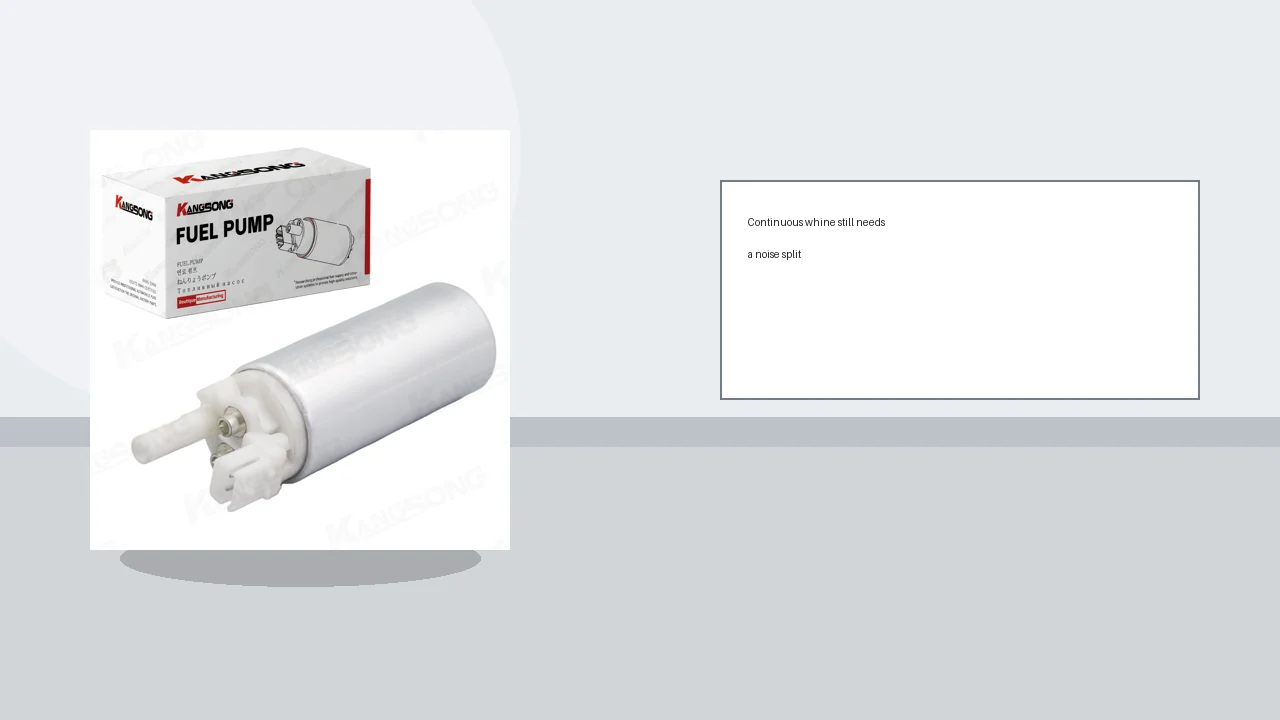
A fuel pump whine does not by itself prove the pump failed, and a brief key-on hum often only proves the pump primed. A continuous whine while the engine runs still leaves low fuel, a packed strainer, a clogged filter, and a worn motor on the table. This page sorts that noise split for US counters and importers before anyone prints a carton.
What a brief key-on hum proves
A brief key-on hum can be a normal key-on prime and does not prove the pump failed.
Many trucks run the in-tank electric fuel pump for a short window when the key turns to ON, before the starter spins. That fuel pump humming noise is often a soft whir for two to three seconds while rail pressure builds.
Hearing it means the motor turned and the circuit asked for fuel. It is not a failure code.
Quiet after that short window is also common. Engine noise usually covers the continuous run once the truck is idling.
A faint rear hum with the cabin quiet does not condemn the pump either. Write the ticket as “prime heard” or “prime not heard,” not as “order pump.”
Fuel pump humming noise on this page stays inside that prime split. Wider motor failures sit on what causes electric fuel pump failure and are not retold here.
What a continuous whine fails to prove
A continuous whine is a reason to investigate, not proof the motor is dead.
A louder, high-pitched fuel pump whine that stays in the cabin while the engine runs is different from the short prime. Pitch that climbs with throttle or load often means the pump is working harder.
That still does not name the part. The next step is a fuel pressure check under the conditions the truck complains about.
| Sound pattern | What it can mean | What stays open |
|---|---|---|
| Brief key-on hum, then quiet | Normal prime on layouts that do it | Nothing urgent if the truck starts and drives |
| Continuous whine while running | Labor, low fuel, restriction, or wear | Fuel pressure under demand and the inlet path |
| Loud whistle on a new pump, good starts | Design noise or a restriction the new motor revealed | Filter, strainer, and year-sheet fit before another motor |
A quiet pump can already be weak. A noisy pump can still make pressure.
Owners on a Thirdgen thread asked whether a new pump’s loud whistle was normal while pressure stayed fine and the car started well. Replies noted that some turbine pumps ran with a high-pitched whine for years, and that “new” does not mean the inlet path is clean.
Electric fuel pump noise without a drivability complaint still leaves the order line open.
Clicking at the relay is a different ticket. Sort that sound on fuel pump relay clicking instead of forcing a whine story onto a coil click.
How low fuel changes electric fuel pump noise
Low fuel often makes electric fuel pump noise louder because the motor loses fuel cooling.
In-tank pumps sit in gasoline that carries heat away from the brushes and the armature. When the tank runs low, that jacket of fuel thins out.
The motor runs hotter and the cabin often hears a sharper whine, especially after a long hot drive.
From the field: On an 88 GTA that whined from the tank under half a tank in desert heat, the engine still ran smooth — and a reply on that Thirdgen thread warned the whine can precede failure or last for years — fuel tank whine thread.
Refill first and re-listen on the same route. If the whine calms with a fuller tank, the counter still has a cooling and pickup story before a motor story.
If the cap dumps heat and pressure when the whine is loud, the vent path belongs on the ticket too, separate from the pump carton. Do not invent a decibel line or an amp number as a “whine threshold.”
The useful field check is whether the sound tracks fuel level.
How restriction and aeration change the sound
A packed fuel strainer, clogged fuel filter, or air at the inlet can make the fuel pump making noise without a dead armature.
When the inlet sock packs with grit, or the external filter plugs, the pump works against a restriction. The hum turns sharper.
Cavitation — air or vapor at the inlet — sounds uneven rather than smooth. Aeration at a loose suction hose can raise the same complaint.
A pinched line after recent fuel-system work can do the same job. Shop readers often replace the pump first when the fuel pump making noise is new and loud.
A common miss is a filter that starves a fresh motor. The sound can get worse right after a pump install if the restriction was already there.
| Next check before a pump carton | Why it matters on a whine ticket |
|---|---|
| Fuel level and a refill listen | Low fuel cools the motor less and often raises the pitch |
| Fuel strainer and tank debris photos | Packed sock labor can sound like a dying pump |
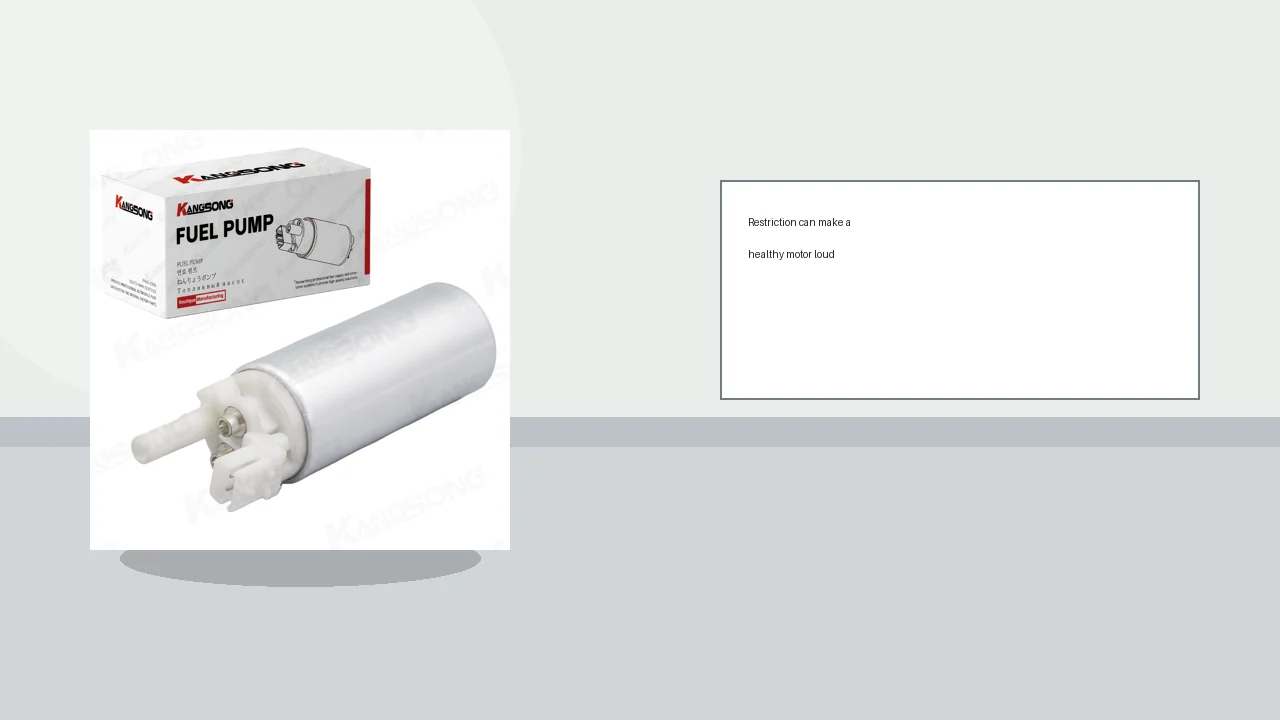
| Fuel filter age and install notes | Restriction can make a new motor scream |
| Key-on localization at the tank | Motion-only whine may be a drivetrain, not the pump |
Photograph the sock and the tank before the motor is blamed. Sister pages already own the grit and dry-run failure path.
This page only needs the noise implication: restriction can be loud while the armature is still alive.
When a failing motor pairs the whine with drivability
A failing motor usually pairs a rising whine with hesitation or weak fuel pressure under demand after key-on localization.
Localize first. Have someone turn the key to ON while you listen near the tank or filler.
Noise that starts with that prime points at the pump circuit. Noise that appears only while the truck is moving can be a differential or other drivetrain whine.
Do not print a pump for a gear that howls on the road. When the sound is at the tank and the truck also long-cranks, hesitates under load, or loses power on a grade, the motor moves up the list.
Pressure that falls when demand rises supports that story. Sound without those companions still belongs in the low-fuel and restriction columns first.
Controller and driver-module faults that starve the motor of a clean command live on fuel pump control module failure. Gasoline pump family context sits on gasoline electric fuel pump.
Neither page is retold here. Once the noise split says the pump itself failed, open the year sheet before the carton.
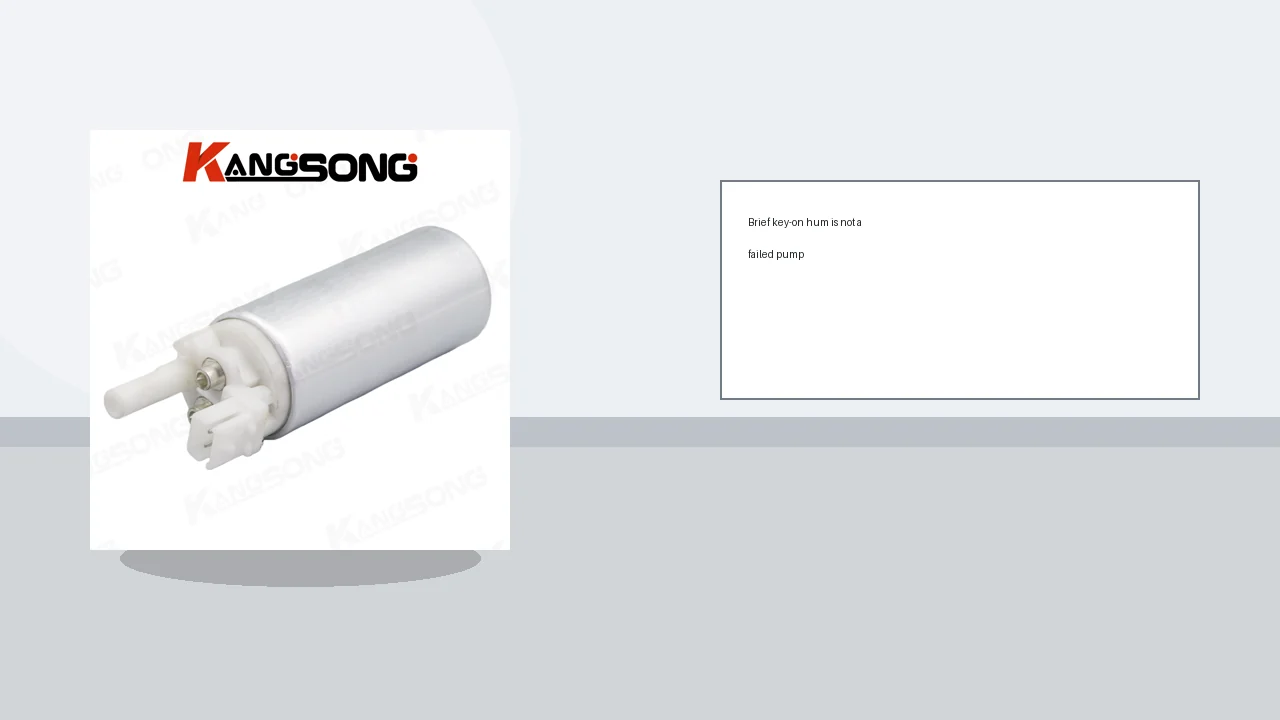
The only Kangsong kit named on this ticket has a printed window.
When the printed C/K pump kit fits after the noise split
Order KS-360501 only after the noise split says the pump failed and the truck sits in 1987–1995 C/K.
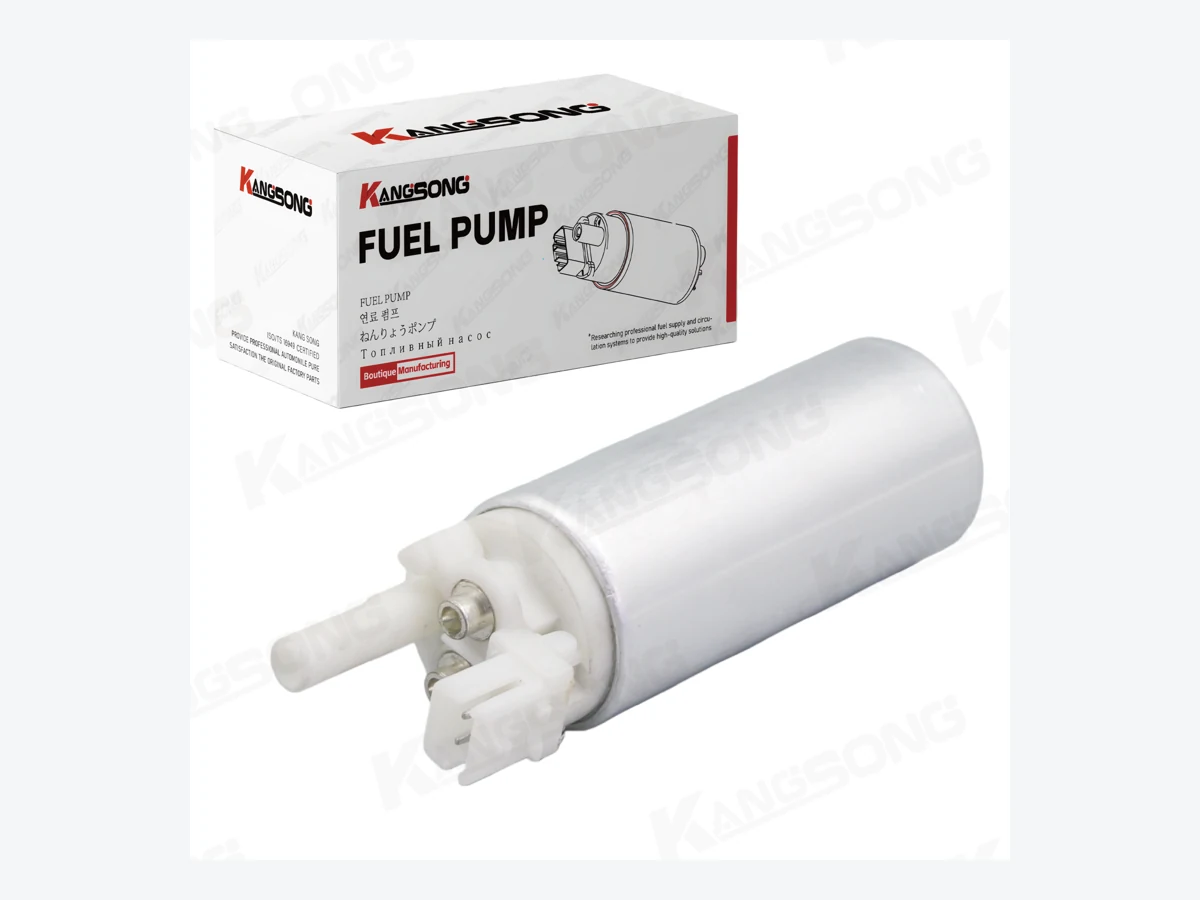
The electric gasoline fuel pump with installation kit is brand KS-360501, printed for 1987-1995 C/K 1500, 2500, and 3500. OE marks on that title are 25168719 and E3902.
The working voltage printed for KS-360501 is DC 12V. Free-flow on the same listing is 43.3-49.5 Gph. The main connector on that kit is 2 pins.
Keep the kit closed when the whine still tracks a low tank, a dirty sock, a plugged filter, or a drivetrain sound that never shows at key-on. Keep it closed when the year on the door sticker misses 1987–1995.
Other applications stay on the fuel pump catalog.
FAQ
Is a brief fuel pump humming noise at key-on normal?
Yes on many layouts. A soft hum for a few seconds at key-on is often the key-on prime.
It shows the pump ran. It does not show the pump is failing.
Does a continuous fuel pump whine mean the pump has already failed?
No. A continuous whine means investigate.
Low fuel, restriction, aeration, and a worn motor can all raise the pitch. Fuel pressure and drivability close the decision, not the sound alone.
Can low fuel make electric fuel pump noise louder?
Yes. In-tank motors lean on fuel for cooling.
A thin tank often makes electric fuel pump noise sharper after heat and load. Refill and re-listen before you blame the armature.
Can a clogged filter make the fuel pump making noise worse?
Yes. A restricted fuel filter or packed fuel strainer makes the pump labor.
The fuel pump making noise can get louder even when the motor itself is still new.
How do you tell pump whine from drivetrain whine?
Listen at key-on near the tank. Pump noise shows with the prime.
A whine that appears only while rolling often belongs to the drivetrain, not the fuel pump.
After the noise split, when is the 1987-1995 C/K pump kit the order?
When the sound is localized to the pump, low fuel and restriction no longer explain it, drivability or fuel pressure under demand supports a weak motor, and the truck is inside the printed 1987–1995 C/K window for KS-360501 with OE 25168719 or E3902.
References
- Can You Hear a Fuel Pump? What the Noise Means — brief key-on hum versus a laboring whine
- Fuel Pump Noise: Whining, Buzzing and Clicking Explained — why sound alone does not prove failure
- Fuel pump — in-tank electric pump architecture
- Fuel tank whine — low-fuel heat whine with smooth running
- Fuel pump whistle — loud new-pump whistle with good pressure