A fuel pump control module failure is a dead or intermittent electronic driver, not a stall or crank/no-start by itself. Shops and importers should lock codes, module power, chassis-ground drop, and pump load before they buy a box, drop a tank, or send an OEM RFQ. This page walks that split, then points only to printed electric pump kits when the failed load is the pump.
What Fuel Pump Control Module Failure Looks Like on the Job
Stall, crank/no-start, hesitation, and odd pump sound overlap a bad pump, fuse, ground, or wiring, so they start a test — they do not finish one.
A faulty fuel pump control module often shows up the same way a starving pump does.
The engine cranks and never fires. It fires, then dies in traffic. It hesitates under load.
The pump never primes, or it keeps humming after shutdown.
Heat, road spray, and a loose connector can make those events intermittent. A van that dies after thirty minutes of heat soak can look “electrical” even when the real problem is a high-resistance ground or a pump that is drawing too much current.
Listen for prime only as a clue. Some PWM systems stay quiet if rail pressure is already in range. Missing sound can still be a fuse, an inertia switch, or a driver that never powered up.
How a Control Module Differs from the In-Tank Pump Assembly
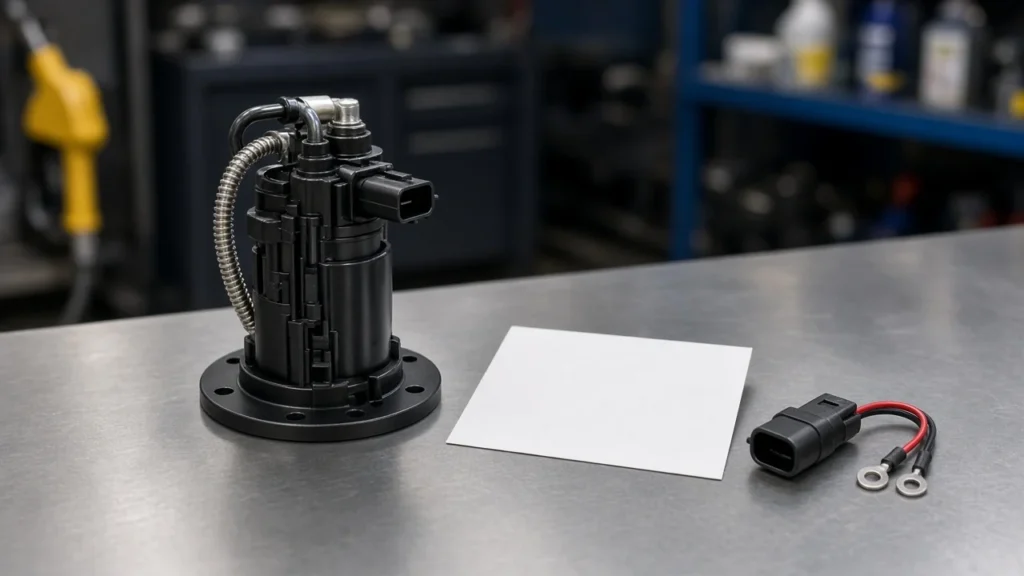
The control module is the electronic driver; the in-tank assembly is the pump, strainer, and sender you pull from the tank.
Service information may say fuel pump control module, fuel pump driver module, or fuel pump power control module. Those names describe a similar job. They are not a free interchange without the vehicle’s part number and connector.
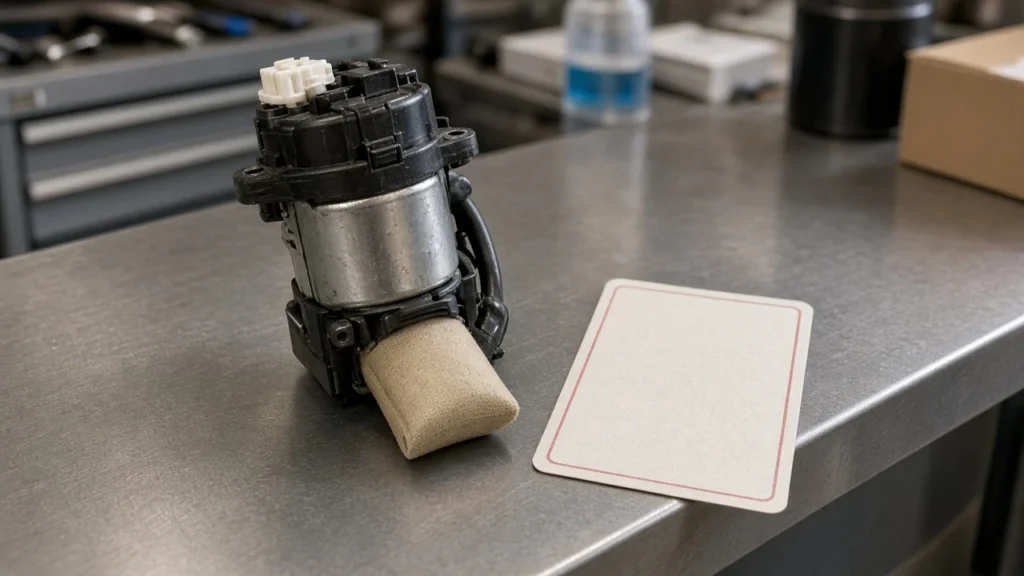
The fuel pump module assembly is the hanger in the tank. Contamination, a torn strainer, or a worn sender belong on the sister page about what causes a fuel pump module to go bad. Ordering that assembly will not fix a corroded driver on a frame rail.
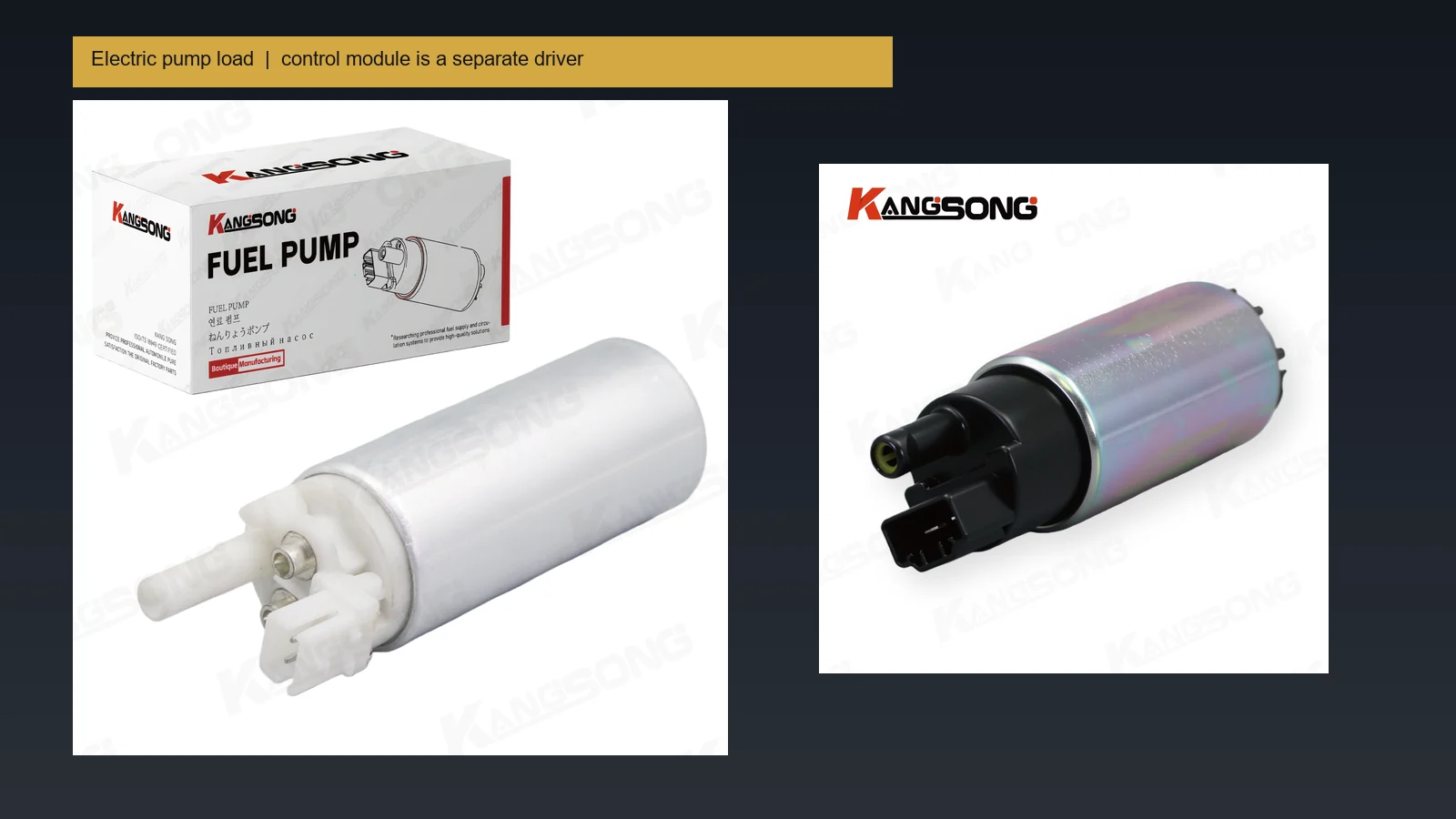
Keep the electric fuel pump in view as the load the driver feeds. A fuel pressure sensor on the rail or line is feedback, not the driver itself. Mixing those three parts is how counters ship the wrong family.
Evidence Checks: Codes, Voltage, Ground, and Inertia
Scan the FPCM codes, confirm module power against the vehicle pinpoint, load-test the ground, and rule out a dead inertia switch before you call the box failed.
Start with a full-system scan, not a single P-code. Record current, pending, and history plus freeze-frame. Communication U-codes can be a dark module, a bad ground, or a network open — not an automatic internal failure.
On GM files, gm fuel pump control module failure language often arrives as P069E.
P069E means the fuel pump control module asked the ECM to turn the MIL on. GM P069E runs with the ignition ON or the engine running for greater than 3 s.
Do not replace the ECM for P069E alone. Read the codes stored in the fuel pump control module and any U-codes first.
On Ford FPDM tutorials, P1233 (driver offline), P1235 (control out of range), and P1237 (secondary circuit) are the usual first hits. A Ford FPM signal near 50% duty cycle means the driver is talking; 25% often means a missing or invalid pump-control command; 75% often means a fault between the driver and the pump.
Power and ground come next, under load, not as a cold ohms beep.
Ford pinpoint test KC asks whether module VPWR to ground is greater than 10.5 V. That tutorial’s VPWR check looks for about 10–12 Volts on key RUN.
On the Ford Explorer/Mountaineer FPDM ground test, a reading under 1 Volt shows a solid ground path. The same Ford test treats 5 Volts or higher as excessive resistance in the ground path.
A tripped inertia fuel shutoff kills driver power and looks like a dead module. Reset it only after you know the vehicle was not in a collision and there is no fuel leak.
Ford output-state control may keep the pump commanded on for only about 5 seconds. Catch the meter reading inside that window or you will call a healthy driver dead.
| Finding | What it usually means | Next move |
|---|---|---|
| P069E only, no FPCM or U-codes reviewed | Informational ECM flag | Read the fuel pump control module and network codes |
| P1233 / no FPM, inertia open | Driver never powered | Reset or replace the shutoff, then retest |
| VPWR good, ground drop 5 V+ on the Ford test | Corroded or loose chassis ground | Clean and retighten grounds; do not throw the box yet |
| FPM ~75% (Ford tutorials) | Open, short, or overcurrent toward the pump | Test pump wiring and the electric fuel pump load |
| Module power and ground good, no output, pump circuit intact | Internal driver (or missing program) | Replace or program the module per the vehicle |
PWM output can fool a cheap meter into an “average” voltage. Use the pinpoint tool the OEM names — scan-tool command, duty-cycle meter, or scope — when the service information says the driver is pulse-width modulated.
How to Separate a Failed Module from a Failed Pump
If the pump has power and ground and still does not run, the load is the pump; if the module has power and ground and still does not drive, the controller is in play.
Put a mechanical gauge on the rail or the published test port when scan actual versus desired disagree. A healthy fuel pressure sensor with dead rail pressure points at delivery. A gauge in spec with a wild scan value points at the sensor or its wiring.
Desired versus actual on the scan tool is a starting split, not the last word. If the mechanical gauge matches spec while the scan tool does not, chase the fuel pressure sensor circuit before you buy a pump or a driver.
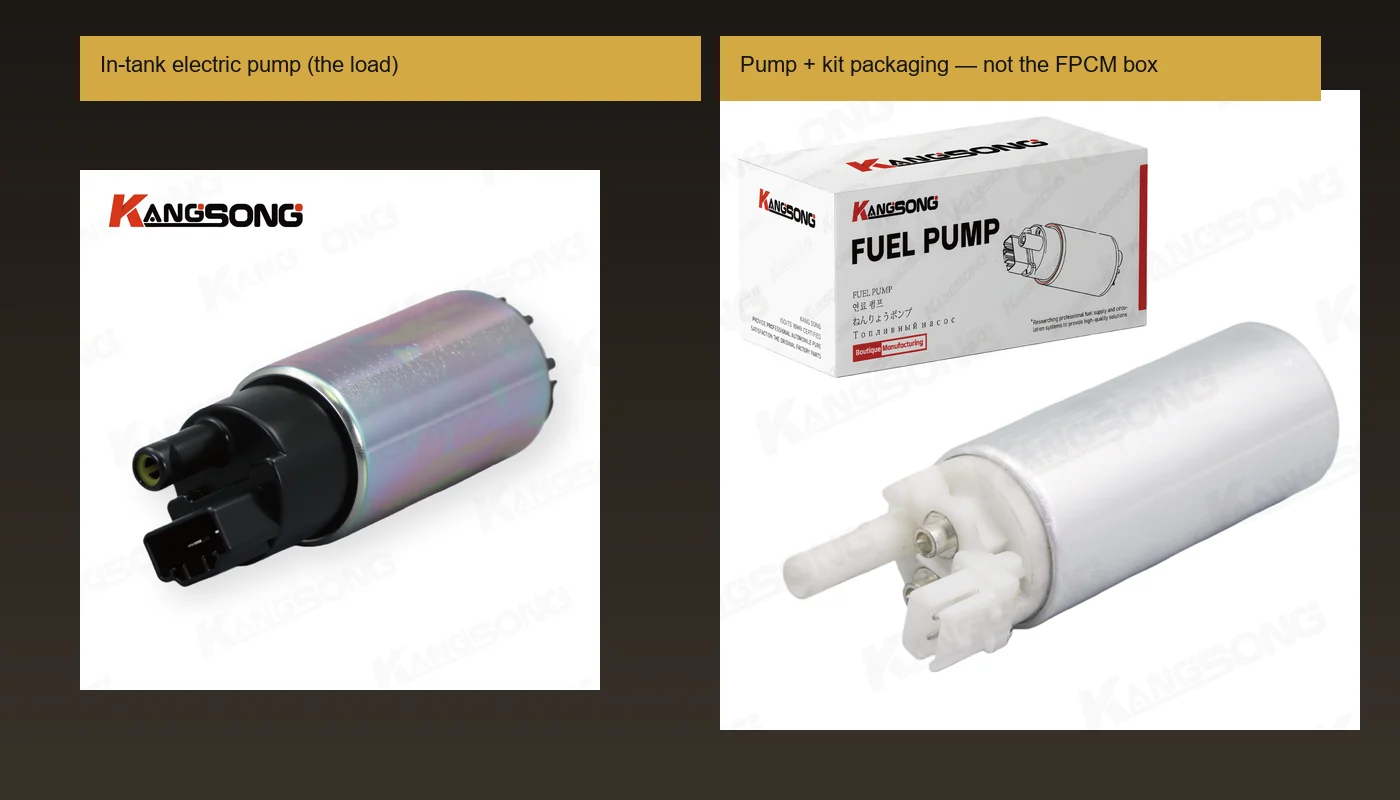
Shop floors see both parts fail on the same ticket. When a pump drags, the fuel pump driver module can overheat under the extra current.
Full-output faults from a stuck driver also abuse the pump. That still does not excuse a parts-first invoice with no voltage or pressure sheet.
From the field: Independent techs tell owners to check the fuel pump control module before they drop the tank. On a 2013 Tundra thread, pressure rose then collapsed while key-off hold stayed high — and the first reply was to test the driver, then pull codes, before pulling the tank. Another thread called out a shop that sold a pump, kept the old unit, showed no tests, then billed a module: both parts can die together, but the driver should have been tested first.
Some Ford boards discuss jumper bypasses only as a lab check. That is not a repair.
Wiring heat, defeated shutoff logic, and incorrect pressure are the risks. Stay on manufacturer pinpoint tests.
When to Replace the Module Versus the Pump or Assembly
Replace the module after its inputs pass and its output fails; replace the pump when the load fails; some boxes need programming, and a shorted pump can take a new driver with it.
A new driver on a rotten ground or a packed connector gasket will fail again. Ford truck threads describe rolled weather-pack seals that strand the truck miles later with a “good” module.
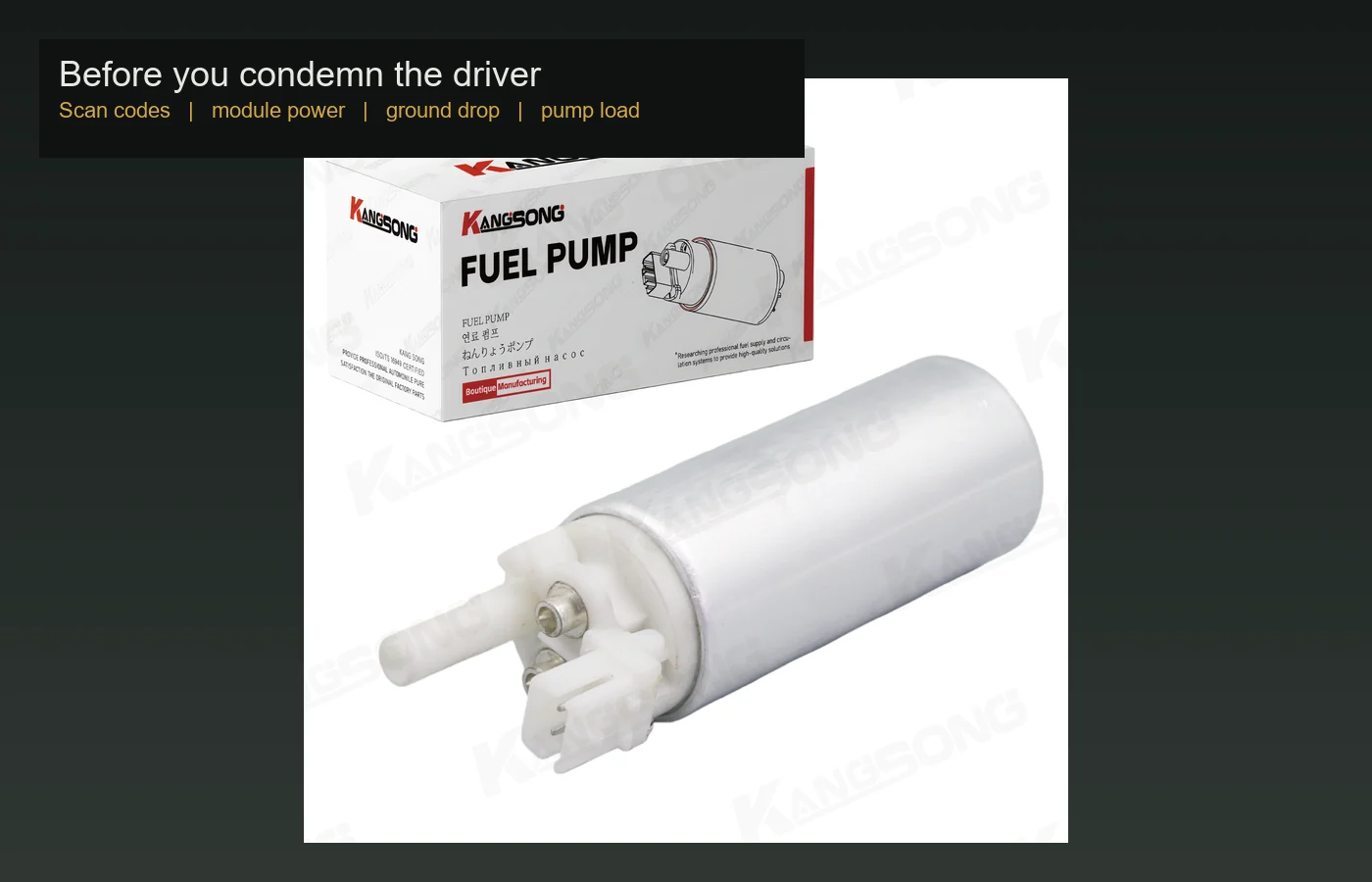
Some replacements need VIN configuration or a relearn. Others clip in.
The part name will not tell you. Ask the service information for that part number before the vehicle sits dark in the bay.
Replace the in-tank assembly when the hanger, sender, or strainer is the failed piece, not because the scan tool said “fuel pump.” Leave high-pressure GDI pumps out of this ticket unless low-side supply is already proven.
If you still have a corroded underbody driver, fix the water path — shield, harness routing, or a revised bracket when the OEM publishes one — or the next box will rot the same way.
What Shops and Importers Should Attach to an RFQ
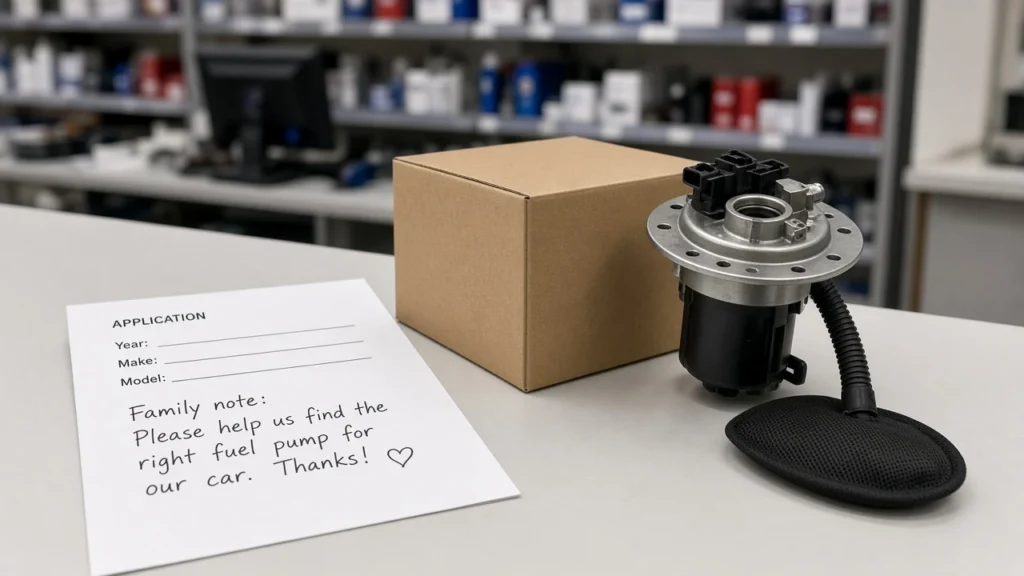
Attach DTCs, freeze-frame, voltage/ground-drop, the module-vs-pump conclusion, and printed OE — not a photo of a mystery box.
Zhejiang Kangsong Power Technology Co., Ltd. manufactures electric fuel pumps, high-pressure pumps, and assemblies.
It does not publish a dedicated FPCM catalog SKU in the live fact package. An importer RFQ that only says “module bad” will bounce.
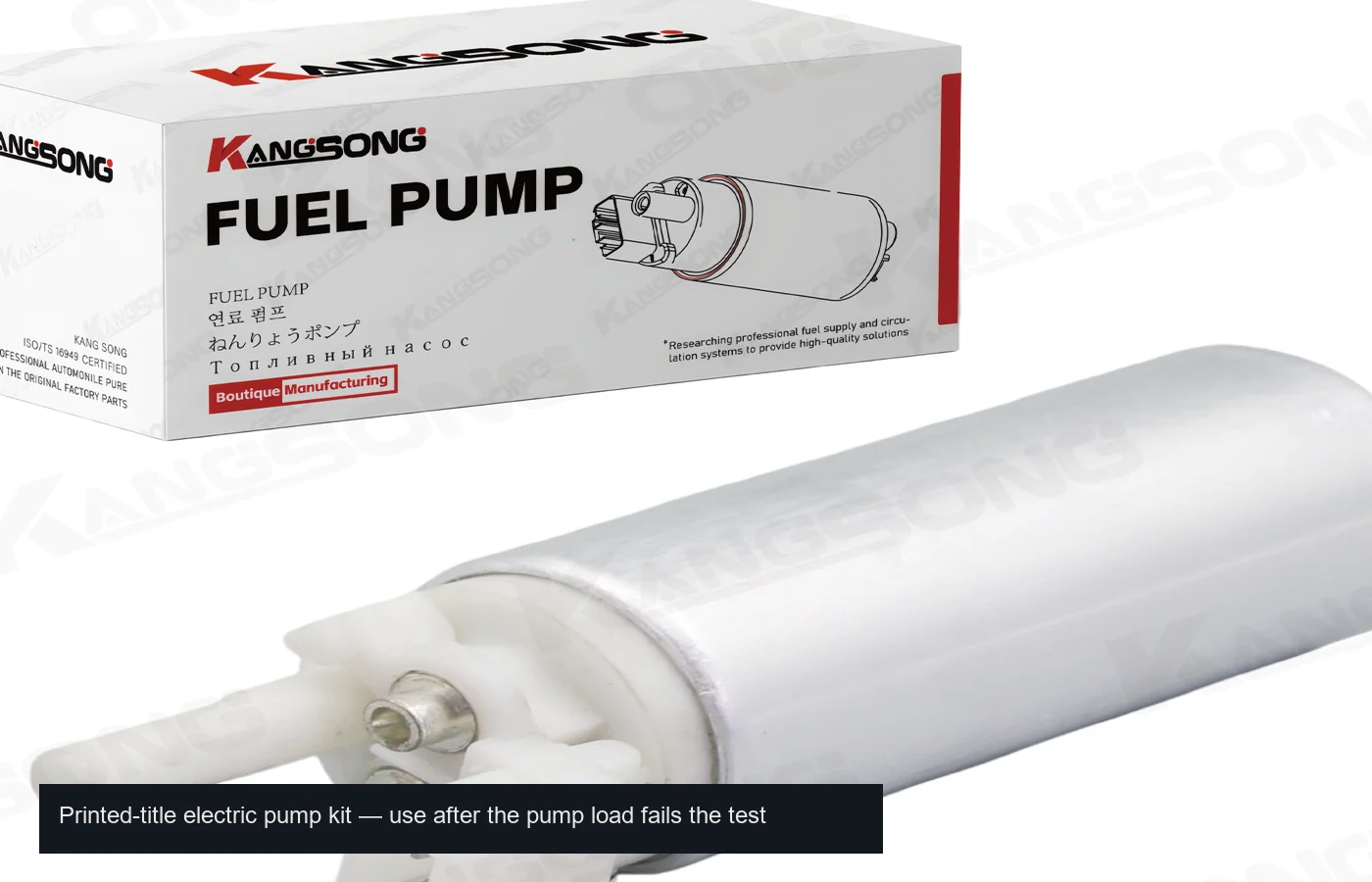
Treat the RFQ as a project pack. The shop owns the electrical conclusion.
The importer owns OE, platform, volume, and branding. Kangsong’s OEM fuel pump manufacturer page asks for those manufacturing fields after the diagnosis is already on paper.
| Stakeholder | What they attach | What they should not send |
|---|---|---|
| Independent shop | DTC list, freeze-frame, VPWR/ground-drop, pump-vs-driver conclusion | A bypass video as the only “proof” |
| Fleet / importer | Printed OE, year/make/engine, volume band, branding/packaging | A screenshot of an unrelated marketplace listing |
| Kangsong OEM desk | Fitment notes against printed titles, sample path | A promise of a controller SKU that is not on the site |
If the vehicle sits outside every printed title, browse the product catalog or contact with the OE list. Do not invent a controller from a pump photo.
Printed-Fitment Electric Pumps After a Confirmed Pump Fault
After the pump is the failed load, source a printed-title electric pump or kit; Kangsong does not list an FPCM SKU in this package.
The honest next hardware is an electric pump or kit whose title matches the vehicle — only after the driver, ground, and inertia checks say the load is the pump.
Kangsong’s electric fuel pump with installation kit for printed 1987–1995 C/K applications is that Path① option for the titled window.
That kit title covers 1987–1995 C/K 1500 2500 3500 with printed OE 25168719 and E3902. The printed Kangsong C/K kit lists GPH 43.3–49.5 and a 2Pins connector.
The PDP labels Maximum Air Pressure 12–26 on that kit.
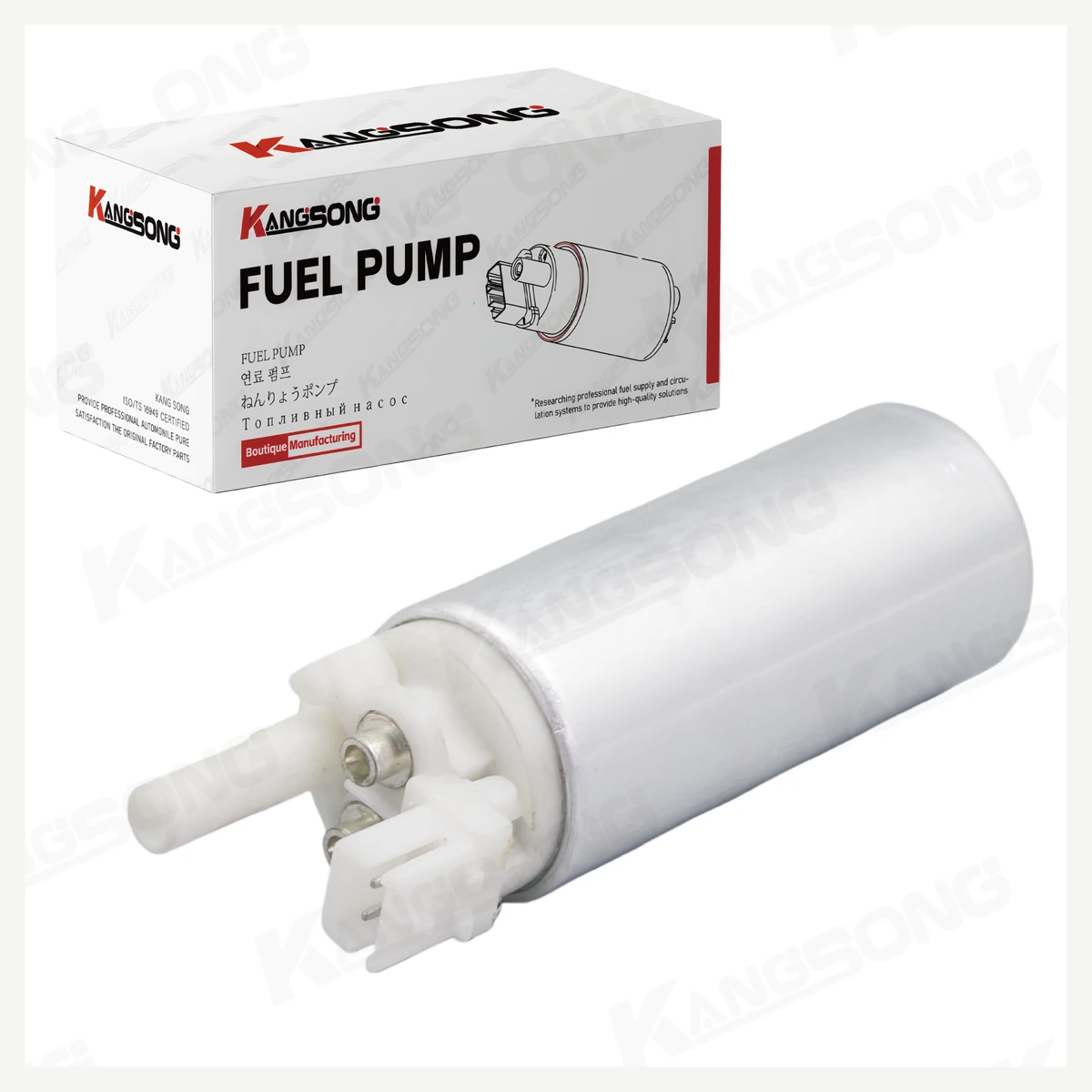
A related electric gasoline fuel pump for printed Accent I and Sephia titles stays inside its title. The related Hyundai/Kia pump title covers Accent I (X-3) 1994–2000 and Sephia (FA) 1995–1997, with the same printed GPH 43.3–49.5 and 2Pins.
Skip both SKUs when the failed part is still the driver, when the ground is open, or when the year/engine is outside those titles. Private-label and connector-pack work belongs on the OEM page, not as a silent rewrite of the PDP.
FAQ
What does P069E mean if the scan tool shows little else?
P069E is the ECM’s note that the fuel pump control module requested MIL illumination. It is a pointer. Open the FPCM and network codes, then freeze-frame, before anyone prices an ECM.
Are FPCM and FPDM the same part on the shelf?
They name a similar pump-driver job. Ford scan tools often say fuel pump driver module.
Other brands say FPCM. Match the OE number and connector; do not swap by nickname.
Can a weak pump destroy a new control module?
Yes. A shorted or dragging electric fuel pump can overcurrent the driver. Test the load when you replace a box, or the next module can die on the first heat cycle.
Why would a new module and a new pump still leave a no-start?
Power never reached the pair: blown fuse, inertia switch, rolled connector gasket, or a dirty axle ground. New is not the same as proven. Load-test the circuits you just disturbed.
Should you drop the tank before testing the driver?
No. Community threads on Tundras and F-series trucks keep repeating the same order: codes and the control module (and its ground) before the tank drop. Save the hanger job for a failed pump or assembly.
Does every replacement FPCM need programming?
No. Some units need VIN configuration or a relearn; some do not.
Read the service information for that part number. Battery voltage must stay stable during any OEM program event.
Could a tripped inertia switch look like fuel pump control module failure?
Yes. Ford FPDM tests treat a silent FPM line with a tripped shutoff as a power-feed problem, not an automatic internal failure. Inspect for crash damage or leaks before you reset it.
When should an importer RFQ a Kangsong electric pump kit?
When the shop’s evidence says the pump is the failed load and the vehicle matches a printed title such as 25168719 / E3902 on the C/K kit. Controller-only failures do not become kit orders.
References
- Fuel Pump Driver Module Tests (2005–2008 3.0L Escape/Mariner) — independent FPDM power, FPM duty, and inertia-switch sequence.
- Fuel Pump Driver Module Tests (2004–2010 4.0L Explorer/Mountaineer) — location, corrosion, and chassis-ground voltage-drop cases.
- Fuel Pump Driver Module Tests (2004–2010 F-150/F-250/F-350) — chassis-ground voltage drop on fleet trucks.
- DTC P069E — Fuel Pump Control Module Requested MIL Illumination (SAAB WIS) — OEM workshop procedure: informational ECM flag; do not replace the ECM for P069E.
- AskMechanics: shop replaced the pump first, then the FPCM — user objection that the driver should have been tested first.
- r/ToyotaTundra: fuel pump or driver? — “Check the Fuel Pump Control Module before you drop the fuel tank.”