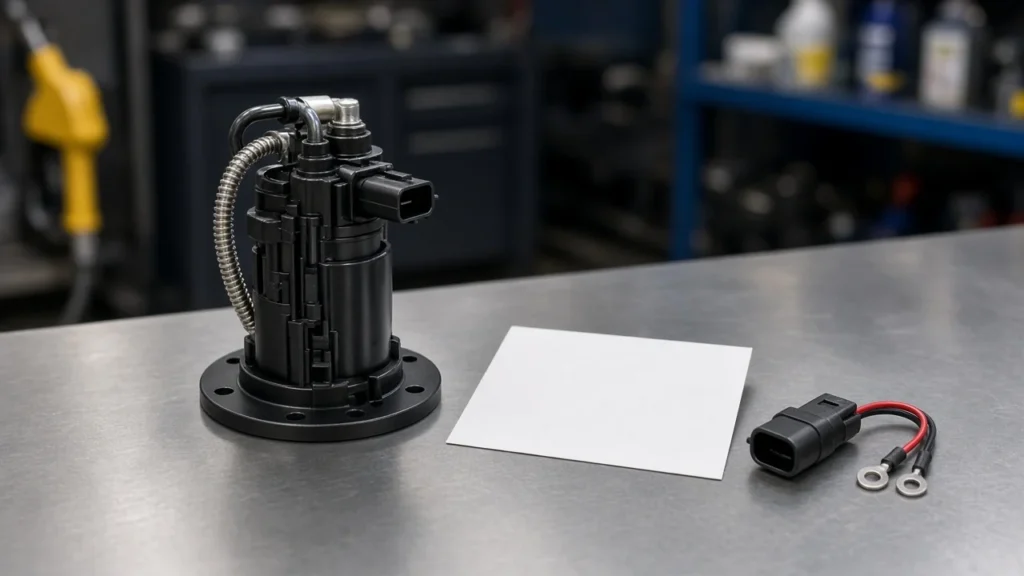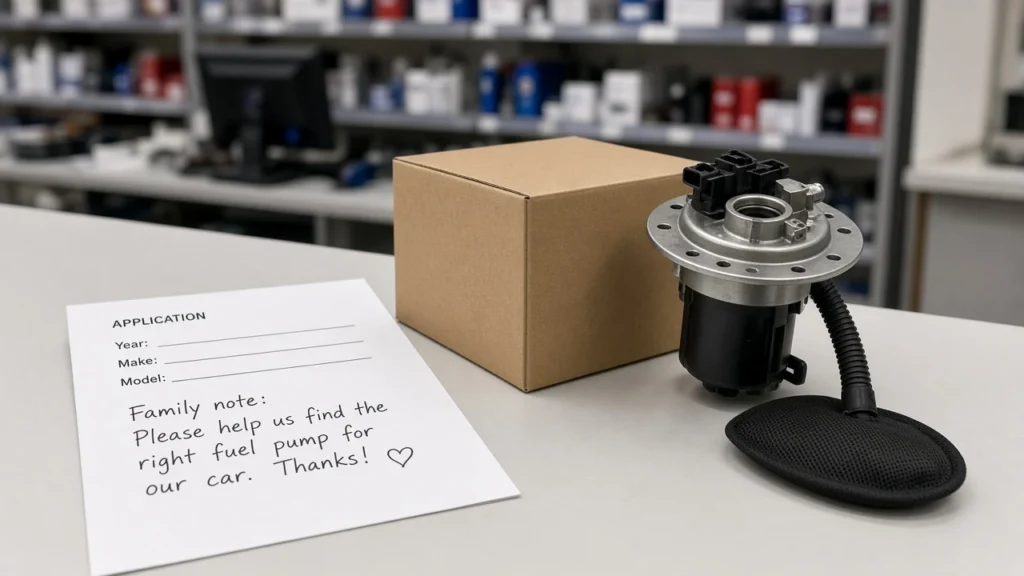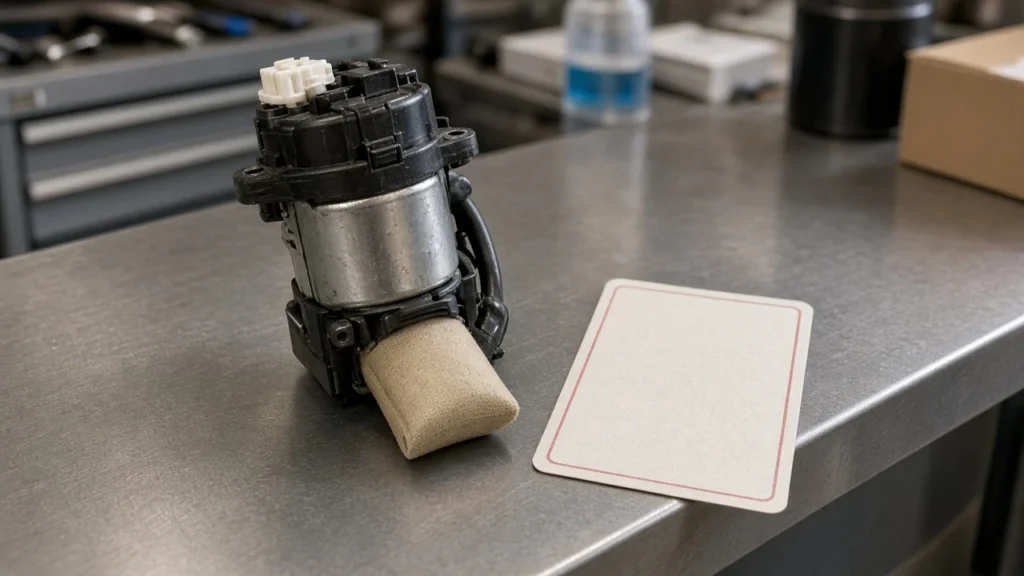
An rv electric fuel pump is specified by the job on the coach—chassis engine feed, generator lift, or drum transfer—before anyone opens a printed OE window. United States shops and fleets hit the same search when a Class A will not crank, an Onan set chatters, or a yard wants to empty a tote. The walk below names the job, applies generator plumbing fences, leaves transfer on the portable sisters, then opens Kangsong’s printed gasoline chassis kit only when that title actually matches.
Which RV Electric Fuel Pump Job Are You Specifying?
Split chassis feed, generator lift, and drum transfer before you order a motorhome fuel pump.
Search results for this phrase mix three objects. One listing is a twelve-volt low-pressure pump for a named Onan generator family.
Another is a drop-in in-tank module for the road engine. A third is a hose-and-nozzle kit that fills tanks from drums.
Some coaches even carry two electric pumps at once: the chassis unit in or on the tank, and a second pump at the generator. A “universal recreational vehicle” external rotary-vane title is a fourth SERP shape. It still is not a printed year/OE window.
| Job | What it feeds | Typical hardware | Honest next click |
|---|---|---|---|
| Chassis engine feed | Propulsion engine | In-tank module or printed gasoline chassis kit | Printed OE/vehicle title, then catalog |
| RV generator fuel pump | Onboard genset | Low-pressure lift pump at the generator plus a separate tank pickup | Generator model/spec letter — not Kangsong 2551 |
| Drum / container transfer | Another tank or can | Portable hose/nozzle kit | Portable electric or portable diesel sisters |
Count the failed object on the coach. If the road engine is silent and the generator still starts, you are already looking at two systems.
Twelve-volt onboard gasoline selection lives on gasoline electric fuel pump. Relay, fuse, and ground pre-check live on the twelve-volt wiring sister. This page does not retell those cores.
How Does Chassis Engine Feed Differ From a Generator Pump?
They usually share a tank, not a pump.
On a typical gasoline motorhome the chassis in-tank fuel pump pushes fuel to the engine. The generator draws through its own pickup and runs its own lift pump beside the genset. That is why a failed chassis module can leave the coach dead in the bay while the Onan still starts.
From the field: RV Forum posters describe a typical motorhome as sharing a tank while the engine and generator each keep a separate intake, pump, and filter; the generator pickup often stops about three-quarters of the way down — source: Advice for gas tank (RV Forum).
Encyclopedia notes put older port and throttle-body in-tank electric pumps in a 40–60 psi (3–4 bar) class. Mechanical carburetor pumps in that same encyclopedia sit in a 10–15 psi (0.7–1.0 bar) class.
A generator carb lift pump lives in the low-pressure family. It is not a rail pump and not a chassis EFI module.
Do not assign either encyclopedia band to a Kangsong SKU. Use them only to keep the two jobs from sharing a shopping cart.
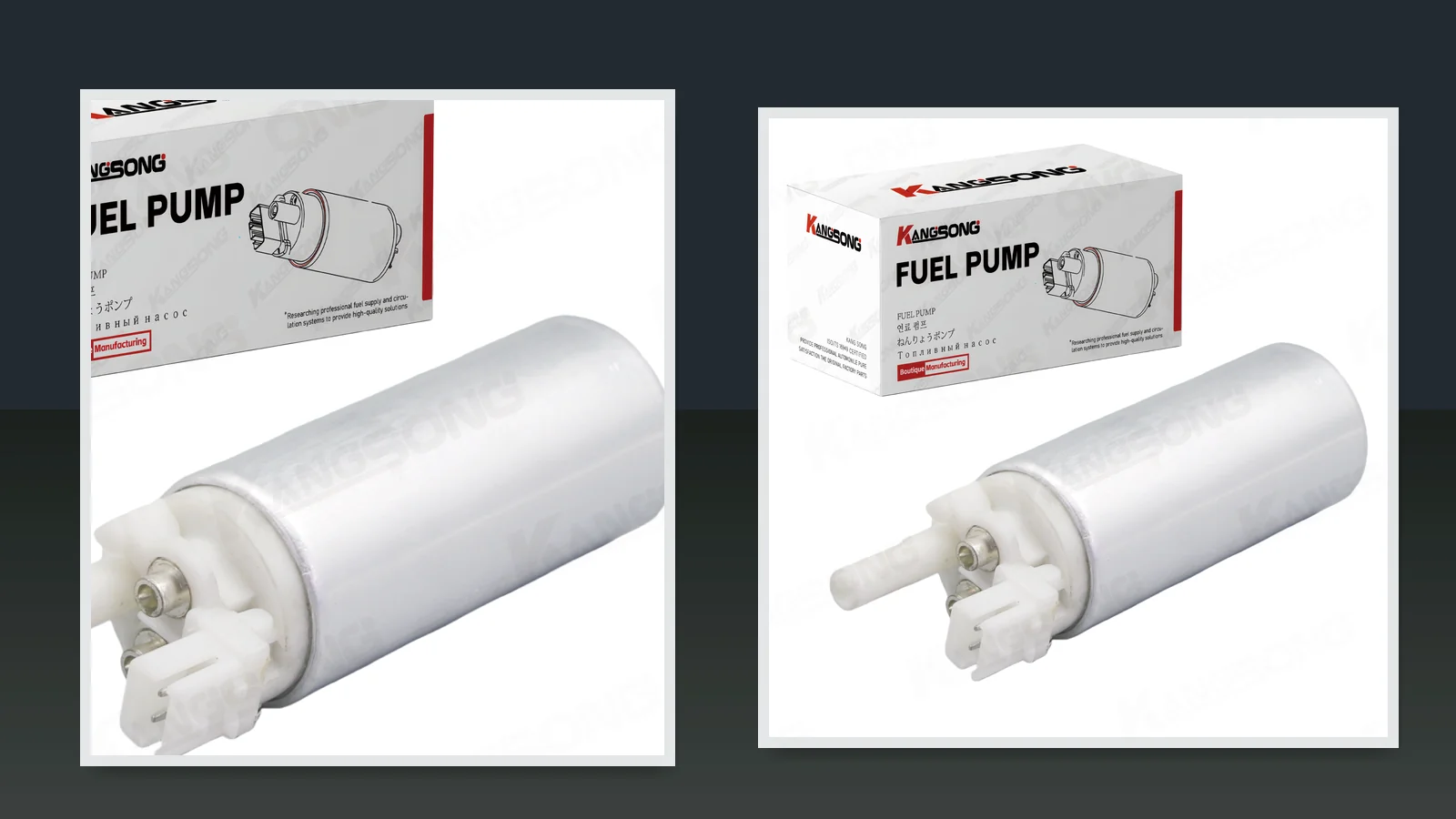
When Does a Motorhome Chassis Module Carry a Generator Pickup Port?
Some F53-class modules have a capped aux or generator tube; some tanks never had a port.
Gasoline Ford motorhome tanks can arrive with an auxiliary fuel port for specialized equipment such as a generator. The generator still has its own pump. The port is only the dip into the tank.
Owner write-ups on F53 coaches show in-tank assemblies with three tubes: engine supply, return, and a generator pickup. Aftermarket modules sometimes ship with a cap on that third fitting.
If the coach has a generator line, the cap comes off. If it does not, the cap stays.
A passenger VIN at a light-truck counter can miss that aux-port module. Jayco owners on E-450 cutaways reported Ford parts lookup returning a pump without the extra generator port—and some of those vans never had a generator in the first place.
If the chassis was never a motorhome tank, adding a generator may be a tank job, not a pump-only job. Measure the tube you remove. Do not invent a pickup length for a catalog that has not printed one.
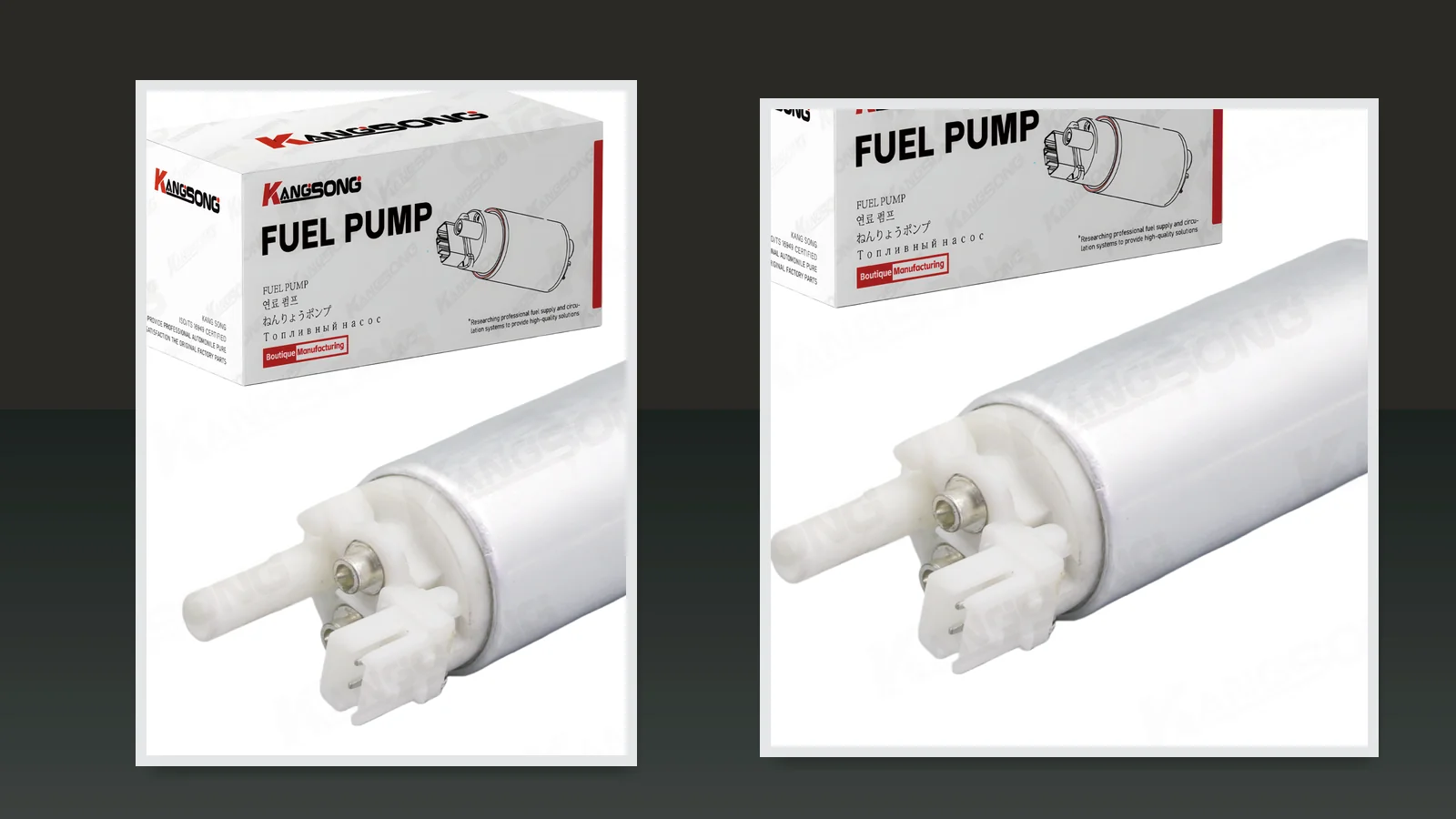
What Installation Rules Apply to an RV Generator Lift Pump?
Use a separate pickup, do not tee into chassis in-tank supply, and treat Cummins Onan lift class as that OEM’s sheet—not a Kangsong rating.
Cummins Onan gasoline RV generator install sheets set a maximum fuel-pump lift of 914 mm (36 in). Those same gasoline sheets tell the installer to run a 1/4 inch fuel line from the vehicle tank to the generator set.
The HDKA-family diesel genset install sheet calls for fuel lines of at least 6.4 mm (0.25 in) I.D. and a maximum lift of 0.9 m (36 in).
The same Onan gasoline install family forbids interconnecting generator and propulsion supply or return lines. The genset must not tap the vehicle engine fuel supply line.
A high-pressure in-tank chassis pump can over-pressurize the generator fuel system. A vacuum-side engine pump can starve the genset.
Terminate the generator pickup above the vehicle engine pickup so the generator cannot empty the tank. Shops call the leftover fuel the quarter-tank rule.
Onan handbook language says the pickup often stops about three-quarters of the way down. When the generator chatters with “fuel in the tank,” check level against that higher dip before condemning the lift pump.
Those sheets also name SAE J1231, J1508, J2260, and SAE J2044 as applicable connection practices. Copy the coach and genset paperwork. Do not treat the SAE list as a Kangsong connector kit.
If the generator sits higher than the published lift class, Cummins tells the installer to add an auxiliary pump near the tank, wired in parallel with the generator pump. That auxiliary unit is still a generator-fuel job, not a chassis EFI module.
When Is the RV Job Drum or Container Transfer Instead?
Transfer kits are hose-and-nozzle hardware, not chassis modules.
A fuel transfer pump moves diesel or gasoline from a drum, tote, or can into another tank. Fleet selection guides treat it as refuelling equipment: voltage at the battery clips, duty cycle, bung fittings, and a nozzle you can shut. It does not live in the motorhome tank as a sender assembly.
Where 29 CFR 1910.106 applies, Category 1 or 2 flammable liquids, or Category 3 liquids with a flashpoint below 100 °F (37.8 °C), must not be dispensed into containers unless the nozzle and container are electrically interconnected. The same standard prohibits compressed air as a transferring medium for large quantities.
Kangsong has no portable transfer SKU on the live catalog. Do not relabel a printed chassis kit as a drum pump because both say electric. Keep the shopping decision on the portable sisters linked above.
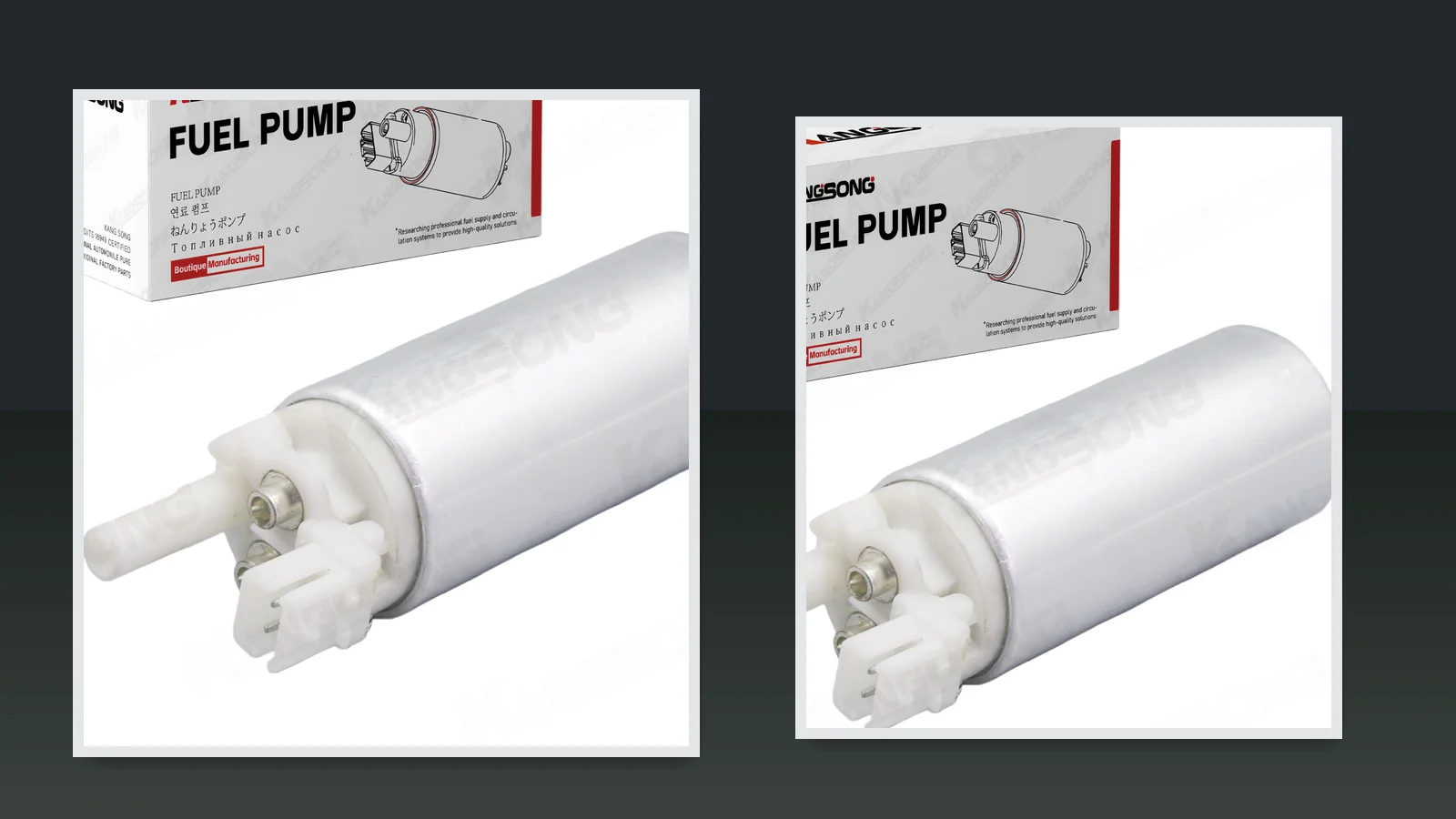
How Do You Apply a Printed OE Window After the Job Split?
Open the printed gasoline C/K kit only when the chassis job matches that title; skip diesel, generator, and transfer.
Kangsong does not publish an RV-titled electric pump. Fitment on this site is the year, platform, and OE string on the product title.
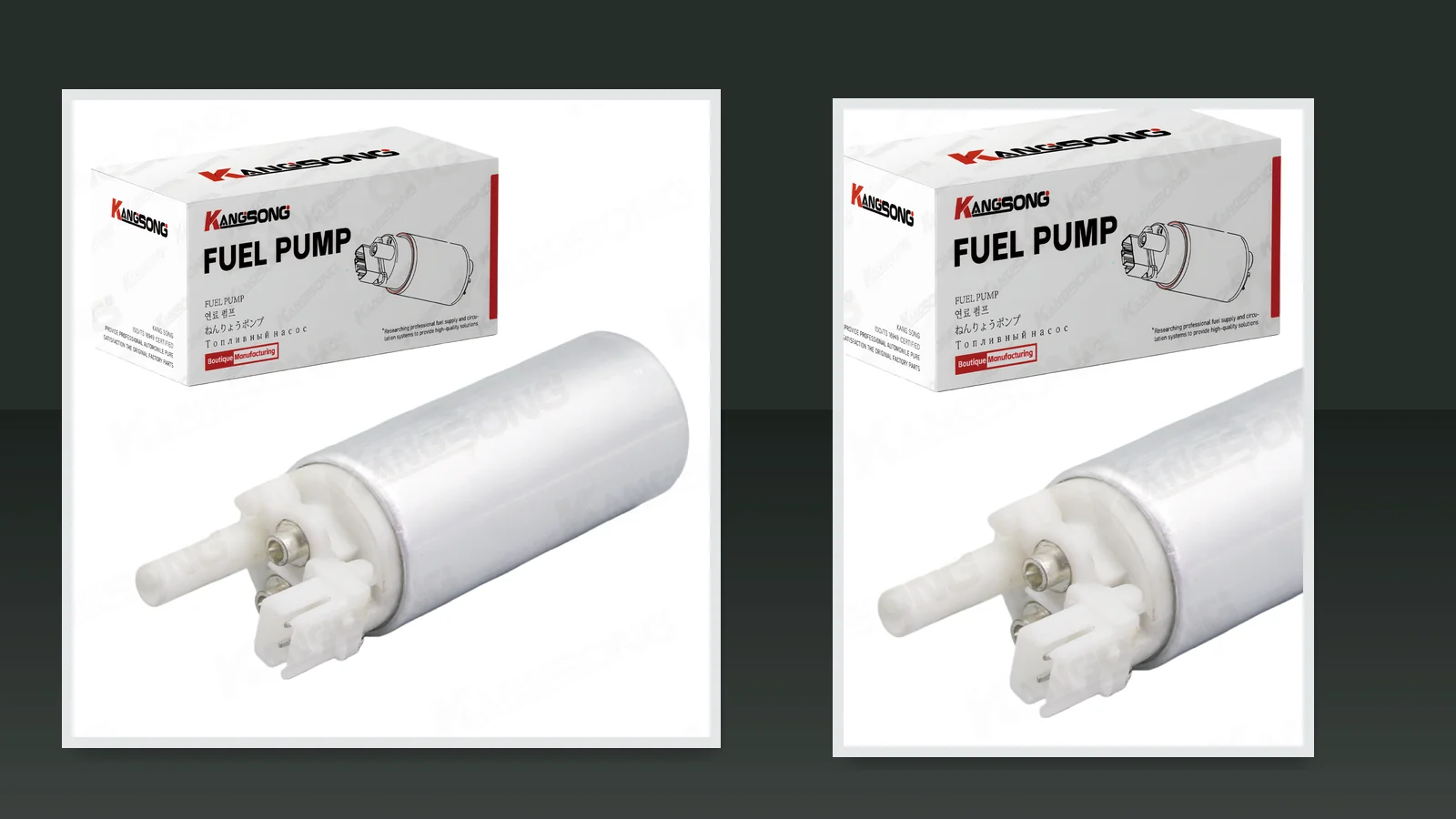
Kangsong’s printed example is an electric gasoline fuel pump with installation kit titled for 1987–1995 C/K 1500 2500 3500 pickups, OE 25168719 / E3902, KS-360501, a 2-pin connector, and DC 12V. That product page lists Gph (Gallons Per Hour Flow) as 43.3–49.5 and a Maximum Air Pressure field of 12–26. Ambient text on that page states the working temperature range is not lower than −40 °C and does not exceed +85 °C.
Those figures stay on that printed gasoline chassis window. They are not an RV GPH, not an Onan rating, and not a drum-kit flow.
| Named job | Printed window or handoff | Skip |
|---|---|---|
| Gasoline chassis feed that matches 1987–1995 C/K / 25168719 | Electric gasoline fuel pump with installation kit | Other years, other OE, diesel, generator, transfer |
| Diesel motorhome chassis | High-pressure and diesel hub and diesel car fuel pump | Do not expand those cores here; do not use the C/K gasoline kit |
| Onan / generator lift pump | Generator model, spec letter, and the pump number on the genset | Kangsong 2551 |
| Drum or tote fill | Portable sisters | Any in-tank or install kit |
If the gasoline chassis job is outside that C/K window, stay on the products catalog and read titles. Do not invent an RV badge.
Choose a Printed Kangsong Kit After You Name the RV Pump Job
Use the printed C/K kit when that chassis window matches; otherwise use catalog navigation or the OEM manufacturing landing—never the Sonata assembly slot.
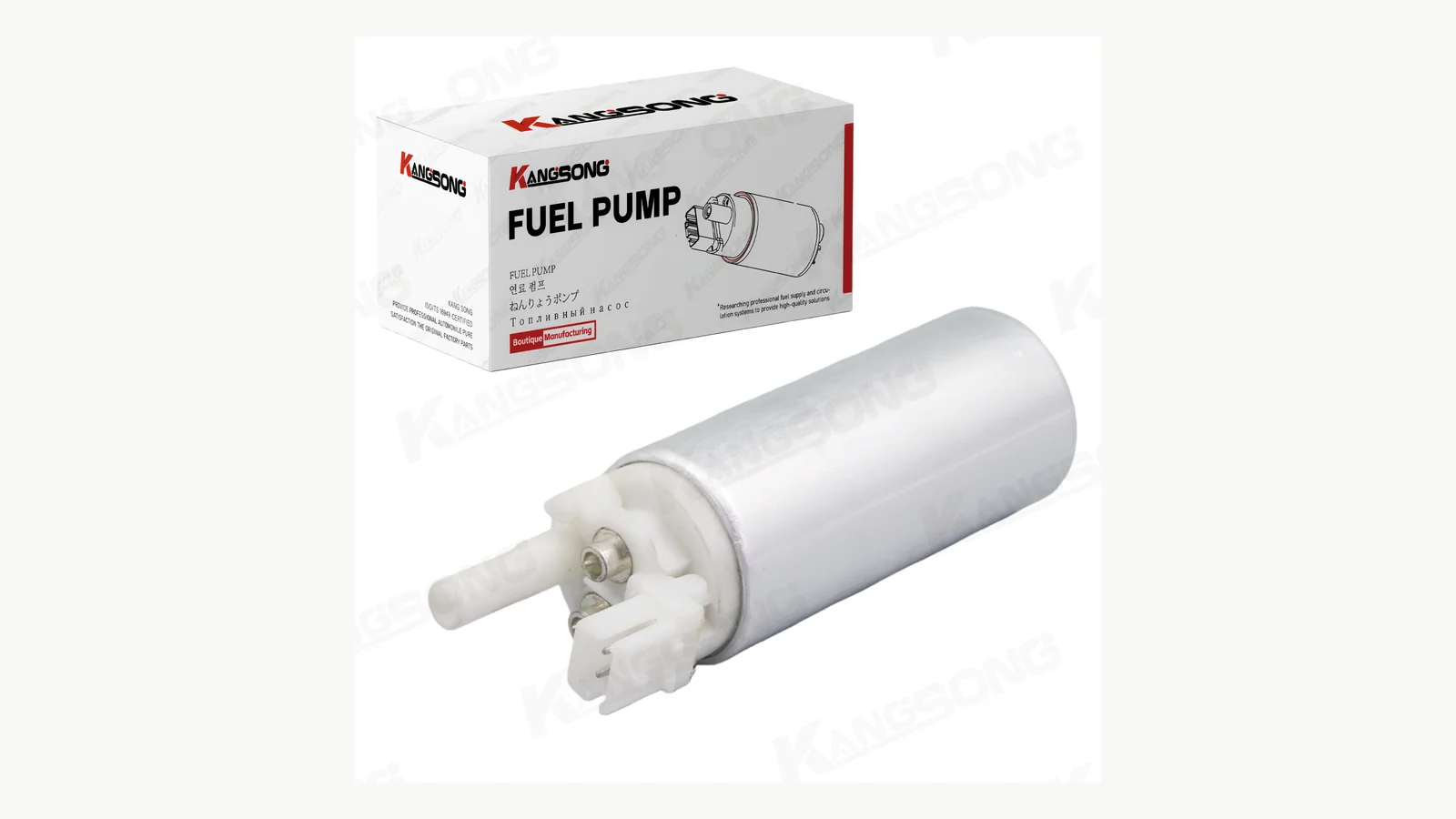
After the job is named, Kangsong’s honest electric gasoline fuel pump kit example is still the electric gasoline fuel pump with installation kit for 1987–1995 C/K. Open it when the propulsion job is that printed gasoline pickup window.
Skip that kit for diesel motorhomes, Onan or other generator lift pumps, and drum transfer. There is no verified RV SKU to substitute.
Browse other printed titles from the catalog root. Manufacturing programs, private label, and sample-to-PO flow sit on the OEM fuel pump manufacturer landing. Do not treat that landing as an RV fitment table.
Do not default this recommendation to the Hyundai Sonata / Kia Optima assembly (product 4045). Wiring current and polarity remain on the twelve-volt sister if the chassis kit is in scope and the harness is the open question.
FAQ
Does the RV generator use the same fuel pump as the chassis engine?
Usually no. The generator has its own lift pump and a separate tank pickup. A dead chassis module can leave the road engine dry while the genset still starts.
Why can the generator still run when the motorhome engine has no fuel?
The two pumps do not share a pressurized supply line on a correctly plumbed coach. The generator intake sits higher, so it can still see fuel—or already be dry—independent of chassis pump health.
Why does an RV generator quit around a quarter tank?
The generator pickup is supposed to stop short of the chassis pickup so the genset cannot empty the tank. Shops describe that reserve as about a quarter tank. Fill the tank before replacing the lift pump on that symptom alone.
Do I need an in-tank pump with an extra generator port?
Only if the motorhome tank or module actually uses a third tube or Ford-style auxiliary fuel port. A passenger VIN lookup can miss that port. A van that never had a generator may need a tank with the port, not a capped tube on a random module.
Can I tee the generator into the chassis in-tank supply line?
No on Cummins Onan gasoline install rules for that genset family. Tapping a high-pressure in-tank supply can over-pressurize the generator fuel system. Use a separate pickup or a separate tank, and ask the chassis maker before any return-line tap.
Is a 1987-1995 C/K gasoline kit an RV-universal electric fuel pump?
No. Kangsong’s kit example is the printed 1987–1995 C/K / 25168719 gasoline window. It is not an RV-titled SKU and it is not an Onan or drum pump.
Is a drum transfer pump the same as an RV chassis electric fuel pump?
No. A transfer pump fills tanks from containers. A chassis electric pump feeds the propulsion engine.
Bonding and no-air-pressure rules apply to workplace transfer. They do not turn a drop-in module into a drum kit.
Where should a diesel motorhome chassis pump search go?
Use the diesel and high-pressure hub plus the diesel-car supply-versus-injection sister. Do not expand those cores here, and do not order the gasoline C/K kit for a diesel pusher.
References
- Fuel pump (Wikipedia) — in-tank electric supply versus mechanical carburetor pressure families.
- 29 CFR 1910.106 Flammable liquids (eCFR) — bonding during container dispensing; compressed-air transfer prohibited.
- Advice for gas tank (The RV Forum) — shared tank, separate engine and generator pumps.