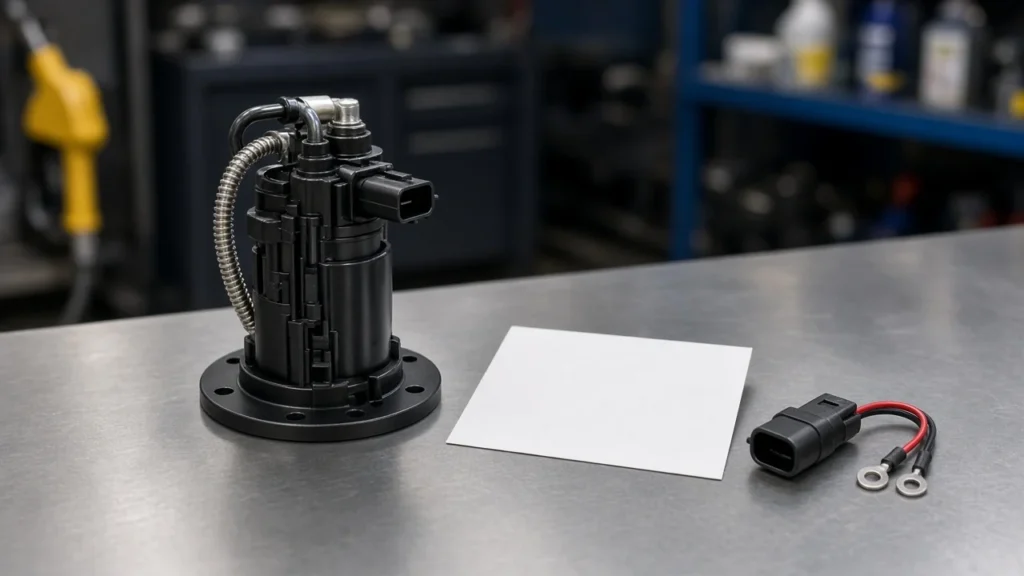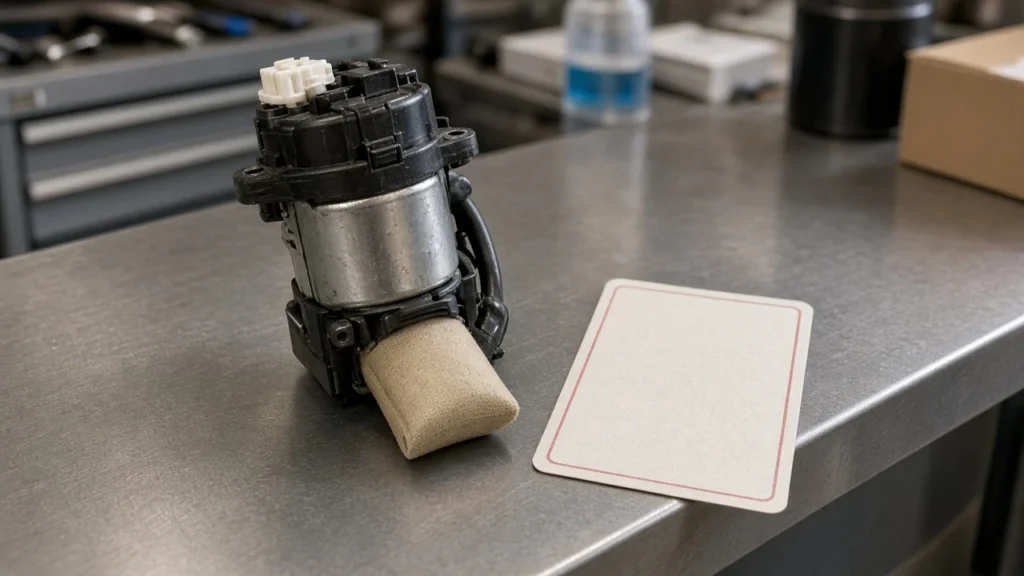
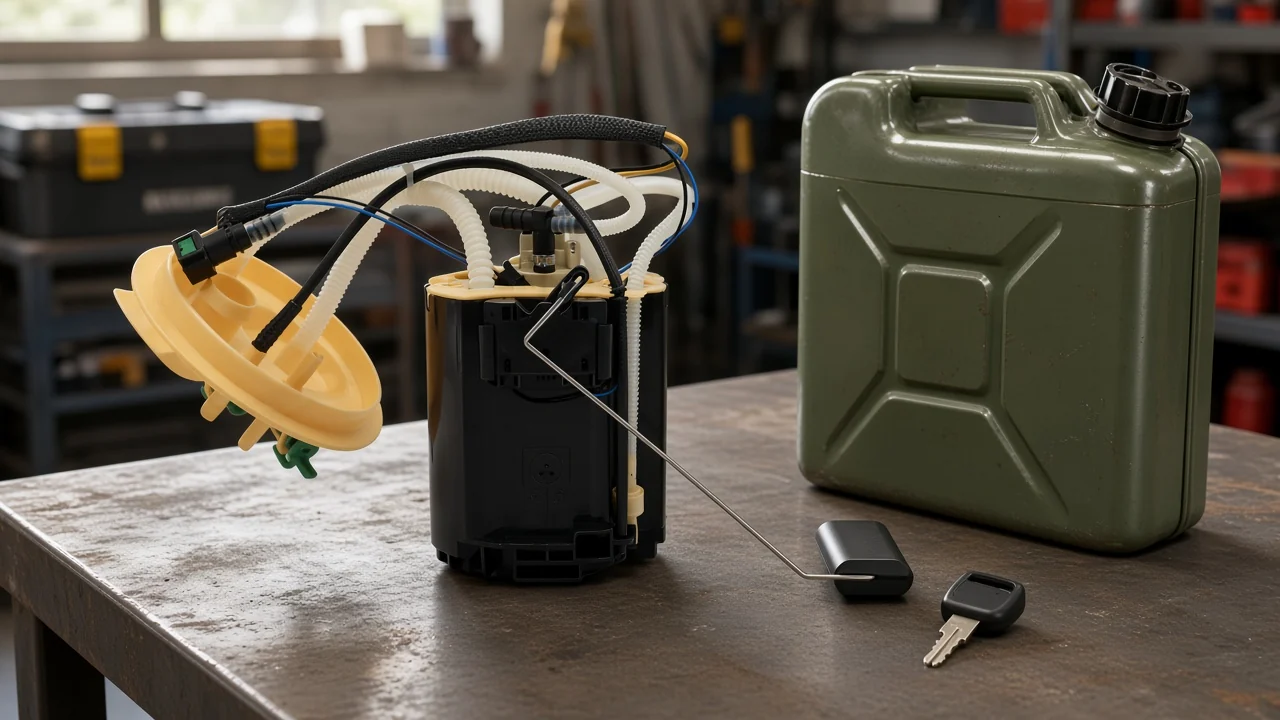
A diesel car fuel pump is the hardware that moves diesel from the tank and then raises it to injection pressure, so the first buying decision is which of those two jobs failed. Many passenger diesels use a low-pressure lift pump for tank feed and a separate high-pressure fuel pump for the injectors or a common rail. The rest of the reading covers that split, the checks before you order, and one printed diesel assembly when the title actually matches.
What job a diesel car fuel pump is actually doing
The phrase names a fuel-delivery job that may be a tank module, a lift pump, or a high-pressure injection pump. It is not a single catalog shape that you can pick from a photo of “a pump.”
On a compression-ignition car, fuel injectors need a sharp spray. That spray comes from high pressure, not from the gentle flow that empties a tank. The tank-side unit only has to keep the injection hardware wet and free of air.
Older passenger TDIs sometimes skip an electric in-tank pump and let the injection pump pull fuel by suction. If you order an in-tank module for a car that never had one, you solved a job the engine does not have.
For architecture names and families, use the existing notes on diesel fuel pump types and types of fuel pump in a diesel engine. Those pages own the family list; this page owns the buying split.
Why a passenger diesel often has two pumps
One pump moves diesel out of the tank; the other raises pressure for injection or a common rail. Shops call the first unit a lift pump or transfer pump. The second unit is the high-pressure fuel pump or injection pump.
A common rail stores already-pressurized fuel so the ECU can fire injectors without waiting for a distributor pump to build pressure with engine speed. The high-pressure fuel pump’s job is to keep that rail charged. The lift pump’s job is to feed that pump.
| Track | Typical hardware | What it must finish | What a buyer should not treat it as |
|---|---|---|---|
| Supply | Lift pump, in-tank fuel pump assembly, or a mechanical feed pump | Move diesel to the filter and injection pump without air | A rail pump or a gasoline in-tank module |
| Injection | High-pressure fuel pump, older inline or rotary injection pump | Raise pressure for injectors or a common rail | A tank sender or a portable drum pump |
One passenger-diesel training family (Mercedes-Benz OM 651) documents a low-pressure limit of 4.0–4.5 bar at the quantity-control valve and rail pressure up to 2,000 bar to the injectors. Treat those figures as that engine family’s published split, not as a spec for every diesel car.
Shop writing on pickups often quotes lift-pump feed around 10 psi, or a wider 5–15 PSI band at the injection-pump inlet. Use the car’s service value; the band only shows that supply pressure lives far below rail pressure.
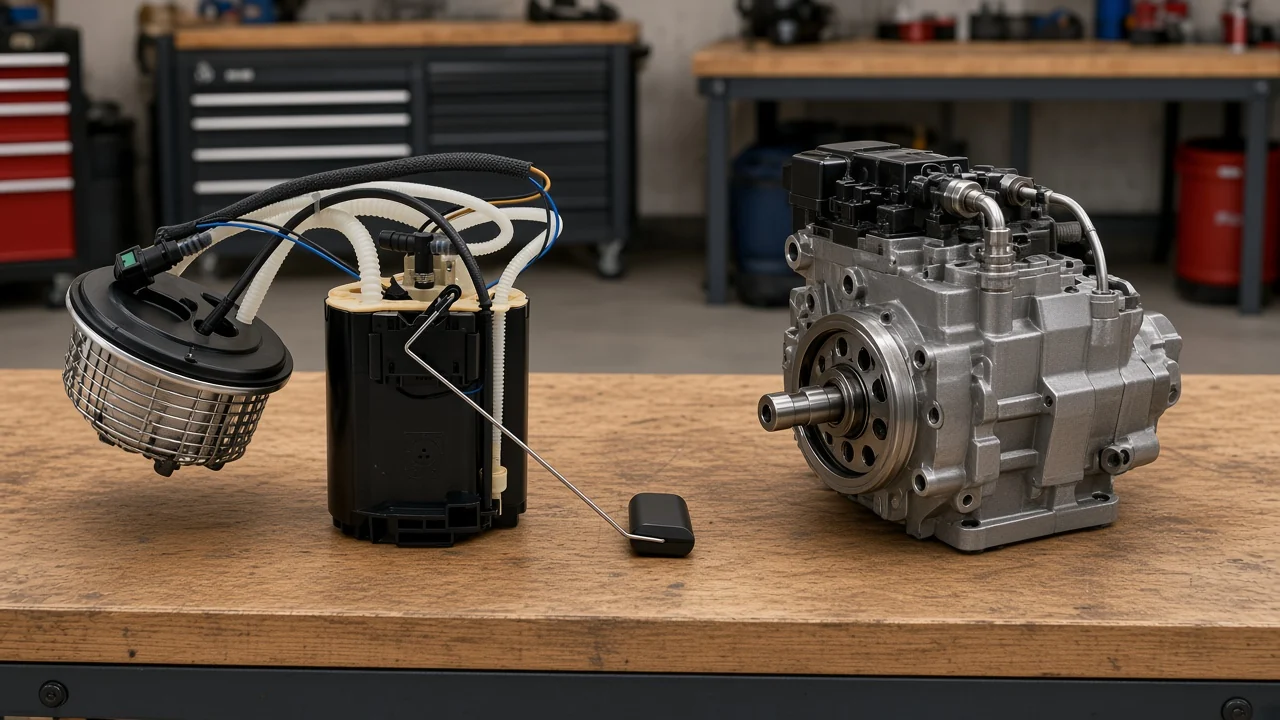
A 12-volt motor on a supply pump is an electrical detail, not proof you found the injection pump. A drum-side 12-volt diesel transfer kit is another false twin: owners use it to move fuel from a barrel, not to replace the car’s lift pump or high-pressure pump. If the open question is wiring voltage rather than stage, contrast that job on 12 volt fuel pump for diesel.
Which complaints still leave the stage unnamed
Hard starts and smoke mean fuel delivery is unhappy; they do not name supply versus injection. Rotary, inline, and common-rail pumps share limp mode, no-start, and low-power complaints with clogged filters and air leaks.
A long crank after the car sat overnight can be a weak lift pump, a leaking return, or a rail that will not fill. Power that dies on a grade can be the same list. Black or white smoke can be an injector, a timing issue, or simply not enough clean fuel arriving.
Water and debris show up in common-rail shop work as the usual destroyers. A gold film on a valve seat is residue, not a reason to skip the filter and jump to the most expensive pump.
| Complaint | First check | Why it still does not name the SKU |
|---|---|---|
| Long crank, especially cold | Filter, water separator, tank-side buzz or inlet pressure | A starved high-pressure fuel pump looks the same from the driver’s seat |
| Power loss under load | Restriction, air, then supply pressure | The rail cannot hold a target if feed is thin |
| Limp mode or rail-pressure codes | Scan, then supply before rail-pump replacement | Codes report pressure, not which pump caused the hole |
| Sudden stall | Fuse, relay, visible leak, then feed | Electrical cut on a lift pump mimics a dead injection pump |
From the field: TDI owners describe fuel starvation in logs after a missing or failed lift pump, and they warn that a gasoline in-tank pump is the wrong object. Older 1.9 TDI cars sometimes never had an electric pump in the tank and ran on injection-pump suction. Source: passenger-diesel forum extracts retained in research.
The order to check before you buy a pump
Confirm filters, air, and tank-side feed before you replace the high-pressure fuel pump. A restricted fuel filter or a sip of air will imitate a worn injection pump and will wreck a new one if the real restriction stays.
Listen for the in-tank lift pump at key-on when the car has one. Silence is a supply clue, not a rail-pump verdict. If the car has no in-tank motor, skip that listen and go to lines, filter, and injection-pump inlet pressure.
Diesel World’s common-rail shop piece tells owners to change fuel filters every 10,000–15,000 miles or every other oil change, and to drain the water separator before the dash light argues. Follow the car’s schedule when it disagrees.
Shop cranking-volume tests for some high-pressure pumps (about 70 ml at 150 rpm, or 90 ml at 200 rpm, across three 10-second cranks) belong in a bay with the right fittings. They are not a reason to buy a rail pump from a search bar.
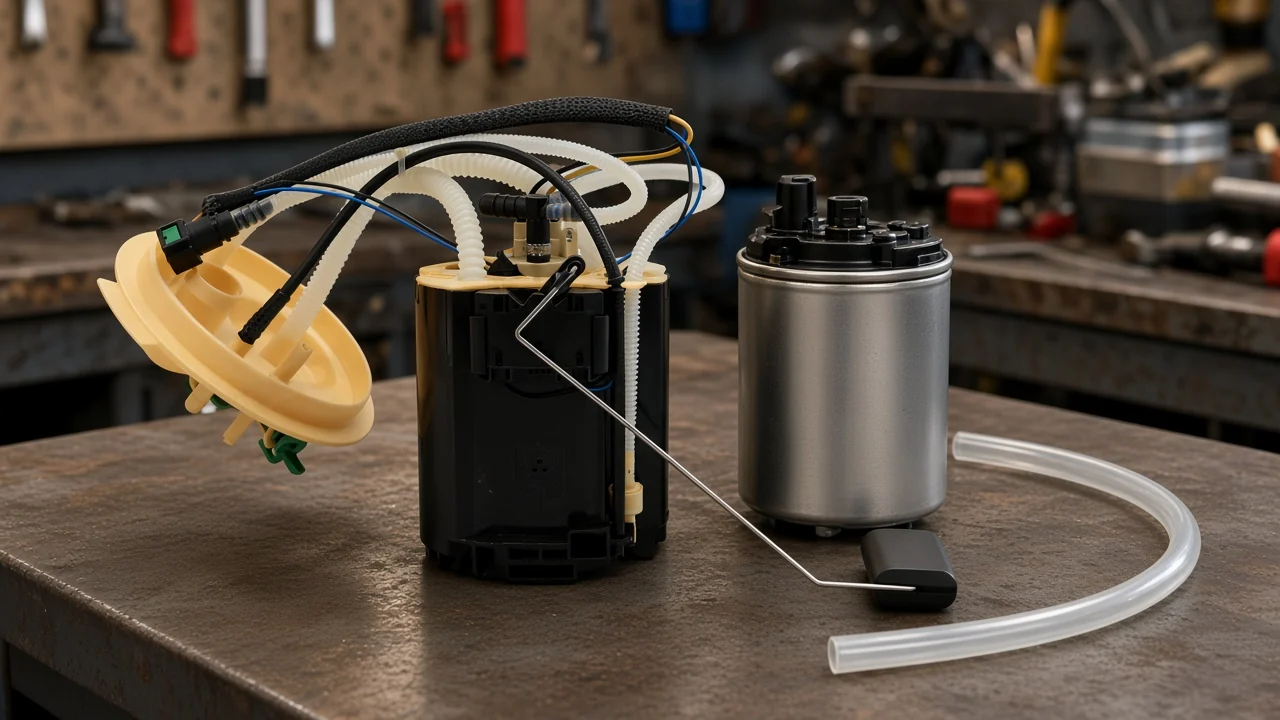
If metal shows up in the filter after a high-pressure fuel pump failure, the injectors and lines are part of the same conversation. That cascade is why supply-side neglect is expensive on fuel-lubricated injection pumps.
Fitment that stays on a printed diesel title
Match the diesel vehicle printed on the assembly title; do not borrow gasoline modules. Connector shape is a weak hint. Voltage is a weaker one.
Kangsong’s published diesel example is an in-tank fuel pump assembly whose title names Land Rover Freelander 2 2.2 Diesel. Fitment for a recommendation stops at that printed title. Extra vehicles belong only if they are printed on the same product page, not inferred from a similar basket.
Do not treat a Hyundai or Kia gasoline assembly as diesel fitment. Do not treat a generic “factory” photo or an unrelated Sonata-scoped module as proof for a diesel car. Aftermarket truck brands are not equivalents for a passenger-car title.
Browse other assemblies from the products catalog when the printed Freelander title is not your vehicle. Stay on that catalog path rather than dead shop shortcuts.
When the Freelander 2.2 Diesel assembly is the next click
Open that assembly when the printed Freelander 2 2.2 Diesel title is the vehicle on the order. The live unit is a fuel-pump assembly for that diesel passenger application, not a high-pressure common-rail pump and not a generic “any diesel car” part.
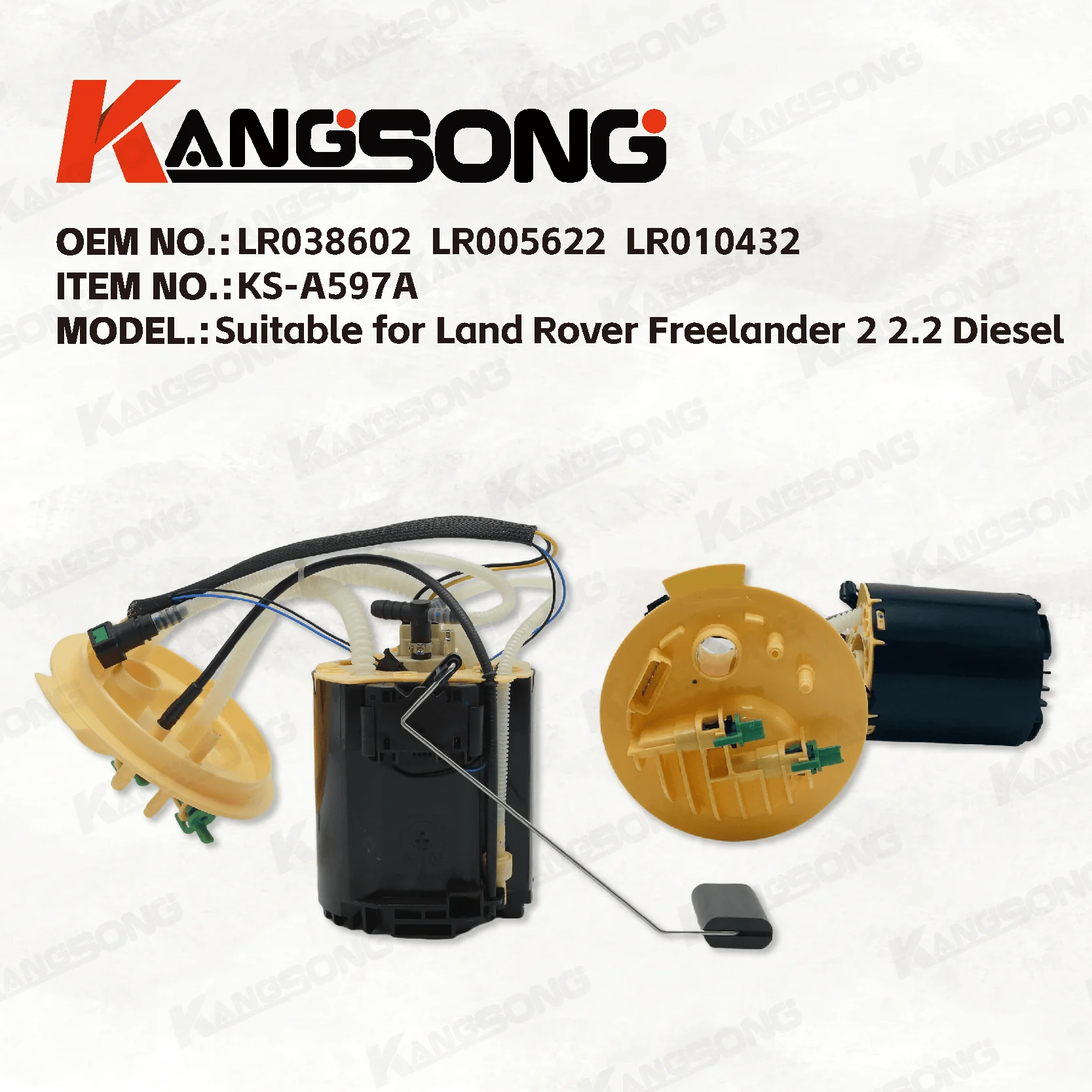
Use the Land Rover Freelander 2 2.2 Diesel fuel pump assembly when you are replacing the in-tank module on that printed diesel title. Match the part number shown on that product to the number on the unit you remove.
If the failed part is the engine-mounted high-pressure fuel pump, this assembly is the wrong next click. If the car is any other diesel, keep the stage split and find a title that prints that vehicle.
FAQ
Does a diesel car have two fuel pumps?
Many modern passenger diesels use a lift pump for supply and a high-pressure fuel pump for injection or a common rail. Some older cars have no in-tank electric pump and rely on injection-pump suction, so count the hardware on that car before you order two parts.
What does a lift pump do on a diesel car?
A lift pump, also called a transfer or supply pump, moves diesel from the tank to the injection hardware at low pressure. It does not create injector spray. Its failure starves the high-pressure fuel pump.
How can I tell a supply-pump fault from an injection-pump fault?
Start with the fuel filter, air, and tank-side feed or inlet pressure. Shared complaints such as hard start and smoke do not name the stage. Low rail pressure with healthy supply points at the high-pressure fuel pump, injectors, or control valves.
Can a diesel run without an in-tank electric pump?
Yes on some older passenger TDIs that pull fuel with the injection pump. The same search term still fits a modern in-tank fuel pump assembly on cars that do have an electric lift pump. Check the tank sender cover before you buy a module.
Can a weak lift pump damage the high-pressure pump?
Yes when the injection pump is cooled or lubricated by fuel, or when low feed causes cavitation. TDIClub reports of sudden lift-pump failure and “not a gas car pump” swaps are the practical warning: fix supply before you condemn the expensive pump.
Is a gasoline in-tank pump the same as a diesel car fuel pump?
No. Flow, pressure, materials, and the two-stage layout differ. A gasoline module that fits a plug is still the wrong object for a diesel lift-pump job.
Which Kangsong assembly matches a generic diesel car?
None. The live diesel example for this topic is the printed Land Rover Freelander 2 2.2 Diesel assembly. Other cars need their own printed titles from the products catalog.
How often should the diesel fuel filter be changed?
One common-rail shop article cites 10,000–15,000 miles or every other oil change, plus regular water-separator drains. Use the interval in the car’s manual when it is tighter or looser.