US shops and importers should spec a portable battery fuel pump from three printed facts: the power object, remaining runtime or motor rest, and the fluid or ignition label. The word battery on a carton still covers AA cells, a lithium pack, and clamp cables. The sections below split those objects, then send a catalog click only where Kangsong actually publishes hardware.
Which power label is on the pump you are actually buying
Read the power print: cells, pack, clamps, or mains—not the word battery.
A portable battery powered fuel pump on a US shelf is usually an AA / USB-C stick pump that drops into a can. A rechargeable lithium / tool-battery pack sits on a higher-flow diesel kit and dies when the cells hit empty.
A 12 V / 24 V clip-on transfer pump still uses a battery, but the energy lives in the truck or a bank, on clamp cables. An AC / 240 V drum pump belongs on a yard tank with building power.
Piusi’s Battery Kit is the naming trap importers keep hitting. The kit is a diesel vane pump with 12 or 24 V motors and clamp cables, not a cordless pack you toss in a tote.
| Power print | Where energy lives | What the job looks like |
|---|---|---|
| AA / USB-C stick | Disposable cells or a USB-C bank | Occasional can fills, generators, mowers |
| Lithium or tool pack | On-board or snap-in pack | Field fills with no vehicle parked beside the drum |
| 12/24 V clips | Vehicle or bank through cables | Repeated drum fills while a battery is in reach |
| AC / 240 V | Building supply | Depot or shop tanks that run long |
A portable power battery fuel pump search will mix all four rows. Keep the row that matches the power you actually have on site.
Remaining runtime versus motor rest windows
Remaining runtime is cells or charge; clip kits also print a rest window.
Stick listings talk in gallons-on-cells or USB-C as a backup. Lithium kits talk in minutes of continuous run, then a recharge.
Clip-on 12 V kits talk in duty cycle: minutes ON, then cool. Those three clocks are not interchangeable, and roundups still treat “battery life” as one number.
On the DeWay 2.4 GPM AA listing, four AA cells are claimed to move up to 100 gallons at a 2.4 gpm rating between 41 °F and 104 °F. Fill-Rite’s FRBPA listing prints 3.8 GPM / 14 LPM on four AA cells or USB-C, with a 41–113 °F window. Sakerplus prints up to 40 minutes of continuous run on a 4000 mAh pack.
Piusi’s Battery Kit prints 45–80 L/min with a 30 minute duty. GPI’s G8P manual prints 15 minutes ON and 30 minutes OFF, up to 8 GPM, on 12 V only.
AIMS Industrial’s transfer-pump guide puts typical 12 V farm motors in a 20–30 minute on-then-rest pattern at about 12–20 A, with tool-battery packs around 30–40 L/min for shorter sessions than wired 12 V or 240 V.
| Listing (attributed) | Flow / energy print | Rest or runtime print | Fluids named |
|---|---|---|---|
| DeWay 2.4 AA stick | 2.4 gpm | Up to 100 gallons on 4×AA | Gasoline, kerosene, diesel |
| Fill-Rite FRBPA | 3.8 GPM / 14 LPM | AA or USB-C; no minute clock | Gasoline, diesel, kerosene, DEF, others |
| Sakerplus lithium kit | 12 GPM | Up to 40 minutes continuous | Diesel, kerosene, biodiesel; not gasoline |
| Piusi Battery Kit | 45–80 L/min | 30 minute duty | Diesel / HVO / XTL, oil |
| GPI G8P (12 V clip class) | Up to 8 GPM | 15 min ON / 30 min OFF | Gasoline to E15, diesel to B20, kerosene |
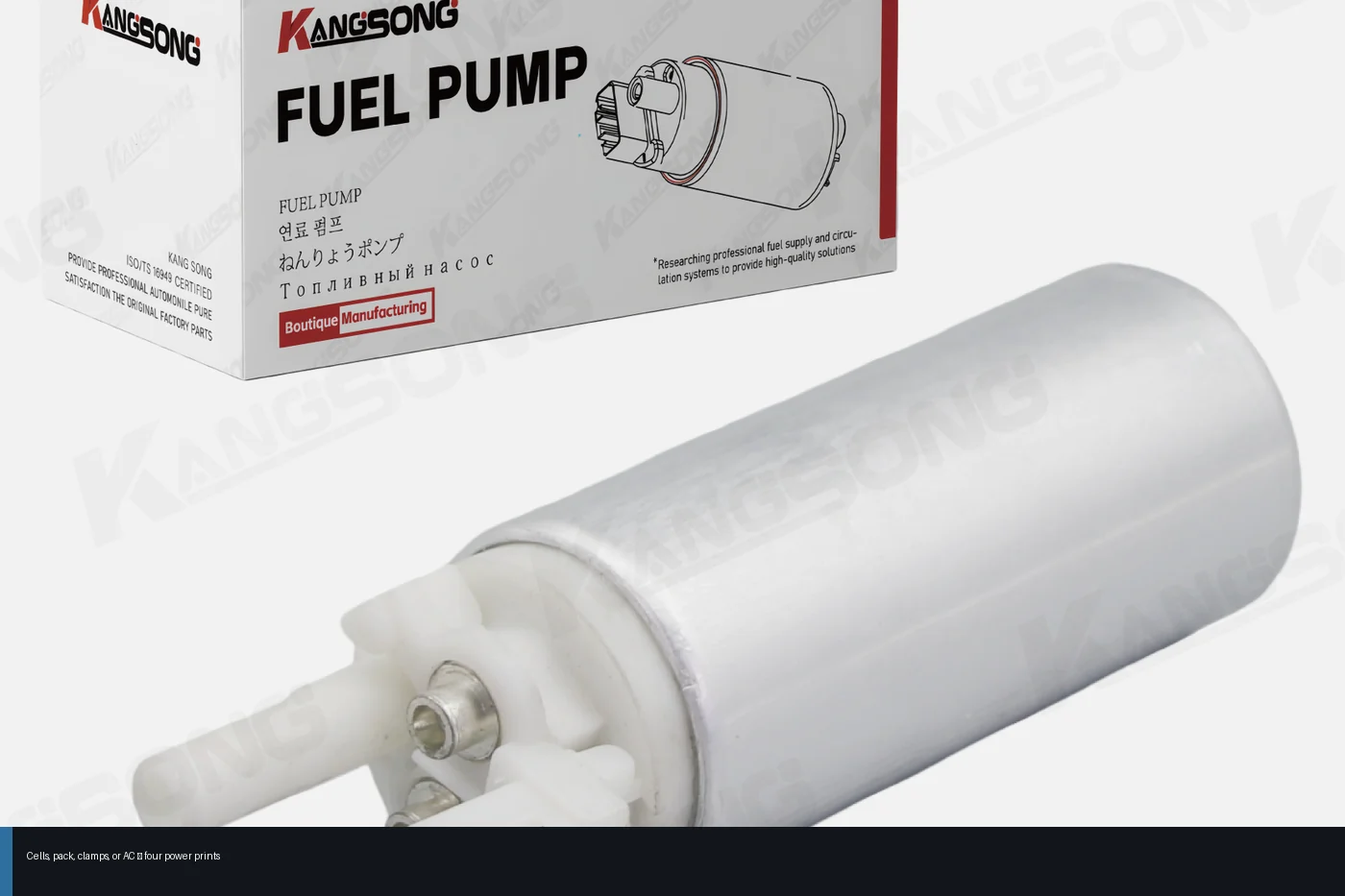
Kangsong does not print a cordless runtime. Copy none of those rows onto a vehicle install kit.
What the fluid list must say before gasoline or diesel moves
Trust the printed fluid list; diesel-only lithium kits are common.
Fluid label (gasoline vs diesel-only) is the buy that stops a fire argument in the aisle. Sakerplus states it is not suitable for water, gasoline, or alcohol. TractorByNet readers asked whether Milwaukee or DeWalt transfer pumps would fuel machines; another poster answered that both of those transfer pumps are not rated for diesel or gasoline.
Gasoline vapor ignites at ordinary shop temperatures. A 12 V transfer manual in this class (GPI G8P) limits gasoline to E15, diesel to B20, and kerosene, and it forbids other fluids. Reddit buyers hunting a cheap diesel stick still warn, in indexed comments, that the hard part is finding a unit safe for gasoline on AA cells.
Important: Where OSHA 1910.106 applies, Category 1 or 2 flammable liquids, and Category 3 liquids with a flashpoint below 100 °F, are not dispensed from drums by air pressure. Source: https://www.osha.gov/laws-regs/regulations/standardnumber/1910/1910.106 Approved pumps take suction through the top, or approved self-closing valves are used.
Sister pages already cover general portable electric transfer and diesel-versus-in-tank shopping. Keep gasoline-versus-diesel-only as a label check here, then leave the rest of those jobs on How to choose a portable electric fuel pump for transfer duty and How to buy a portable diesel fuel pump that really is a transfer pump.
Bonding, plastic cans, and the missing ground wire
Bonding is a workplace rule on low-flashpoint fills; many sticks omit a ground wire.
OSHA 1910.106 says Category 1 or 2 flammable liquids, and Category 3 liquids with a flashpoint below 100 °F, shall not be dispensed into containers unless the nozzle and container are electrically interconnected. A bond wire or a metallic floorplate tied to the fill stem is the language in that rule.
Fill-Rite’s FRBPA gasoline-capable stick lists Ground Wire as No in the included-parts table. That omission does not erase the workplace rule. It only means the carton did not ship the strap.
OSHA’s 29 March 1999 interpretation on plastic containers points to a grounded metallic suction pump and draw tube from the top, or a grounded metallic self-closing faucet. It also quotes NFPA 77-1993: non-conductive containers of five gallons or less are usually filled without special precautions, while 5 to 60 gallon plastic needs extra technique.
Modern Pumping Today restates the same static problem: vapors ignite, and NFPA 30 Section 18.4.2.2 calls for a means to prevent static during transfer. Bonding / grounding is the shop phrase for that path. Auto-stop nozzle sensors help with overfill on sticks; they are not a substitute for interconnection on a classified fill.
Class I notes versus a consumer stick motor
A listed 12 V transfer motor can carry Class I notes a can-stick does not.
GPI’s G8P manual says the pump is pre-wired for CLASS I, DIVISION 2 locations such as portable tanks and trailers, and is not intended for CLASS I, DIVISION 1. Consumer AA sticks almost never carry that sentence.
UL 79A exists as a US evaluation path for electrically driven pumps that transfer petroleum from a tank or container to a vehicle or another container. A listing mark on that unit is the proof.
OSHA 1926.152, for construction-covered sites, adds distance and air: transfers greater than 5 gallons at one time sit 25 feet from other operations or behind one-hour construction, with ventilation that holds vapor at or below 10 percent of the lower flammable limit. Class I Division 1 / 2 language on a motor still does not replace that site layout.
A portable power battery fuel pump built as a toy-grade stick can move a lawn-mower can in a driveway. It is a weak answer for a classified drum island. Buy the classified object when the site is classified.
Hose seams, can adapters, and the leaks shops already report
Hose-outlet leaks and can-neck adapters are the field complaints, not GPM brag.
On OrangeTractorTalks, a Kubota owner asked for a battery powered fuel pump to move diesel from a container into a tractor. Replies praised a DeWay D-cell stick that lasted a couple of years, then warned that cheaper copies “all start to leak” at the hose outlet seam.
One user clocked about two GPM with a couple of feet of lift. An 82-year-old poster bought a Harbor Freight two D-cell pump because lifting a 5 gallon can had become the hard part.
DeWay’s own 2.4 GPM reviews include a Walmart red can whose neck would not take the adapter, so the intake never reached the fuel. My Road News notes a SKYJDM stick that is not compatible with Scepter SmartControl cans. Can adapter / bung fitment is a SKU check, not a hope.
From the field: TractorByNet’s December 2025 thread started with a 100-gallon tank and a wish for a DeWalt or Milwaukee transfer pump. Source: https://www.tractorbynet.com/forums/threads/transfer-pump.631279/ The corrective reply was blunt: those discussed transfer pumps are not rated for diesel or gasoline, and a 20 V tool pack on a 12 V pump needs a converter.
Which product to open when Kangsong has no portable battery kit
Browse the catalog root; skip the printed C/K install kit unless that window is the job.
Kangsong products-root is the live list. Site search for portable, battery, and transfer returns sister blogs, not a cordless transfer SKU. There is no Kangsong portable battery stick to recommend.
The honest next click for a shop that still needs vehicle electric hardware is Kangsongpower Products. Read titles for year, make, OE numbers, and in-tank language.
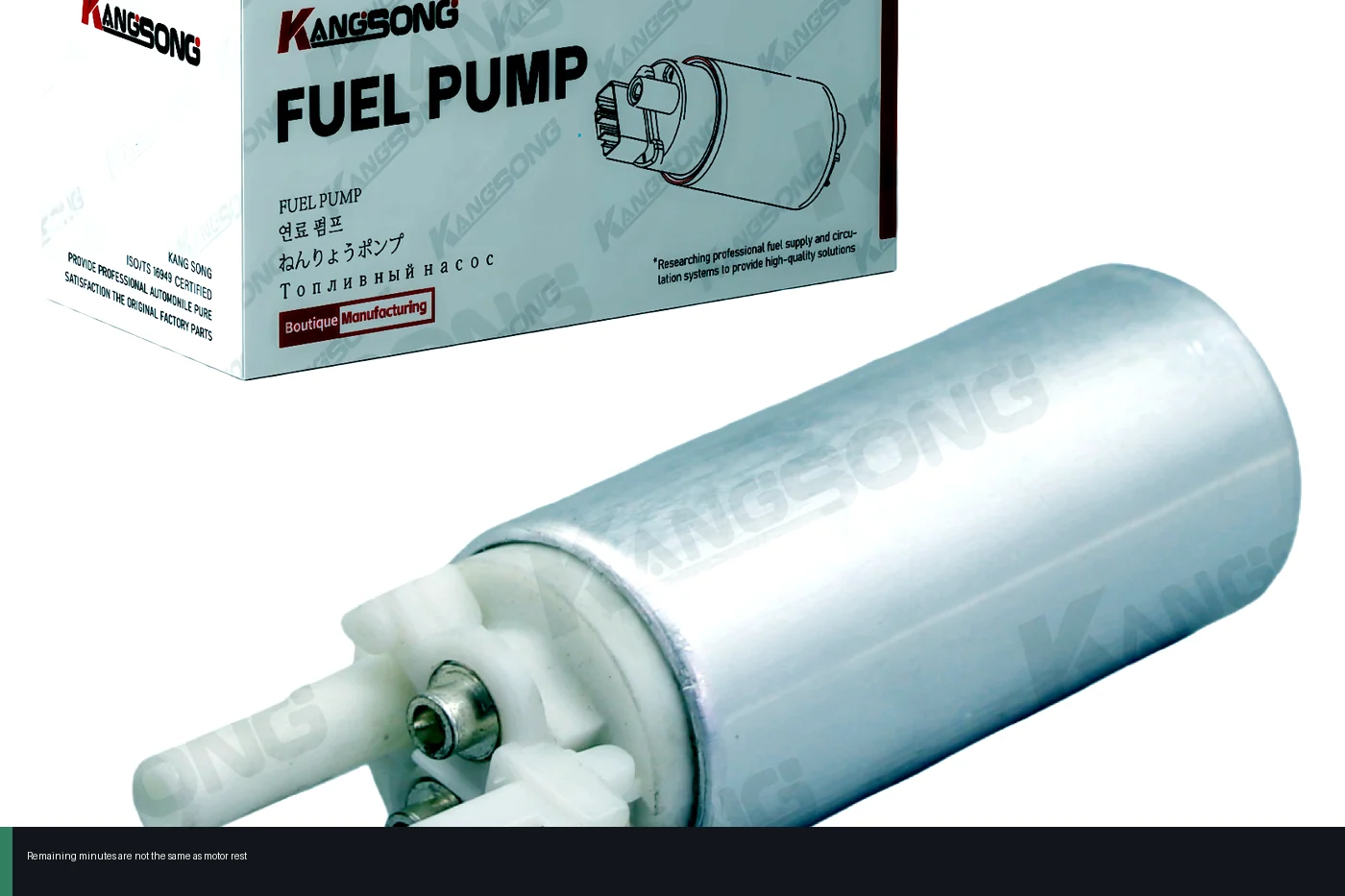
The C/K electric install kit titled for 1987–1995 C/K 1500 2500 3500 (25168719 / E3902) prints GPH 43.3–49.5, a 2Pins connector, and DC 12 V for a conventional vehicle fuel tank. Treat it as the vehicle-install object to skip unless the reader’s job is that printed window. It is not a portable battery transfer pump.
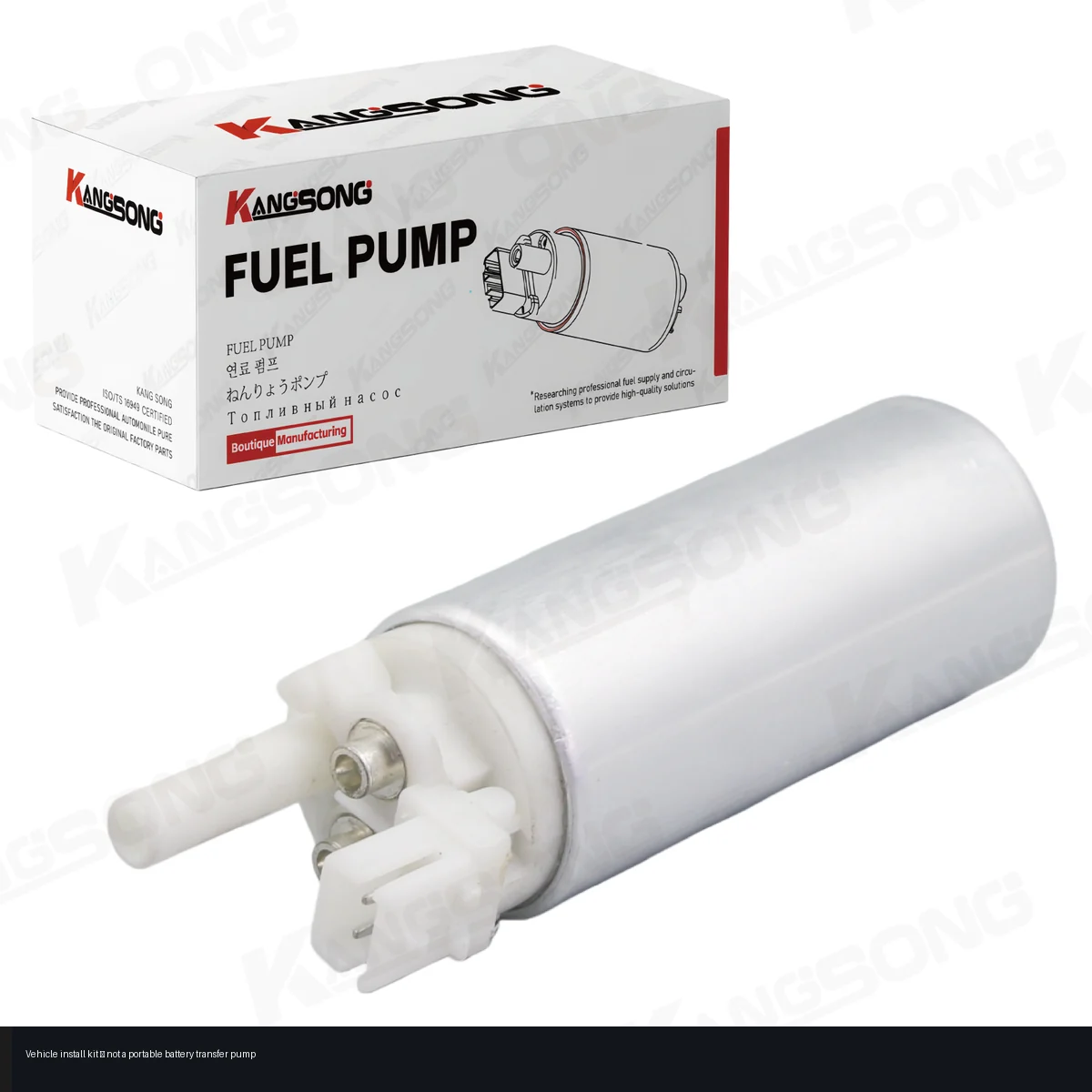
If the printed C/K window is the actual vehicle job, open the Electric Gasoline Fuel Pump with Installation Kit for 1987–1995 C/K. Drum and can transfer still belongs on a transfer merchant until a true portable listing appears here.
FAQ
Are AA stick pumps automatically rated for gasoline?
No. Many lithium field kits print diesel and kerosene only. Gasoline needs gasoline on the fluid list, plus ignition practice that matches that liquid.
How long will a portable battery fuel pump run on one charge?
Use the maker’s remaining-runtime or gallons-on-cells print. Clip-on 12 V kits more often print a duty cycle rest instead of a charge clock.
Is a “battery kit” the same as a cordless pack?
Often not. Piusi’s Battery Kit is 12 or 24 V clamp cables on a diesel vane pump. A cordless pack is a different object.
Can a 20 V tool battery run a 12 V diesel pump?
Only if the pump accepts that voltage or you add a converter. TractorByNet users already split fuel-rated 12 V pumps from tool-brand water transfer pumps.
Do I need a ground wire on a plastic gas can with an AA stick?
Workplace fills of low-flashpoint liquids follow OSHA interconnection language. Many sticks ship without a ground wire. OSHA’s plastic-container interpretation points to a grounded metallic top-draw path, with a small-can versus 5–60 gallon split from NFPA 77-1993 as quoted there.
Why will the adapter not fit my can?
North American cans differ at the neck. DeWay buyers reported Walmart-can mismatch; some sticks exclude Scepter SmartControl. Match the adapter SKU to the can you own.
Do Milwaukee or DeWalt transfer pumps move diesel?
The TractorByNet reply on the discussed units was that those transfer pumps are not rated for diesel or gasoline. Buy a pump whose own list names the fuel.
Does Kangsong sell a portable battery fuel pump?
Not in the live catalog on 2026-10-04. Open Kangsongpower Products for vehicle hardware, and skip the C/K install kit unless that printed window is the job.
References
- OSHA 29 CFR 1910.106 — Flammable liquids
- OSHA interpretation (1999-03-29) — Bonding and grounding of plastic containers
- OSHA 29 CFR 1926.152 — Flammable liquids
- Modern Pumping Today — Safer transfer of flammable and combustible liquids
- OrangeTractorTalks — Battery powered fuel transfer pump?
- TractorByNet — Transfer pump