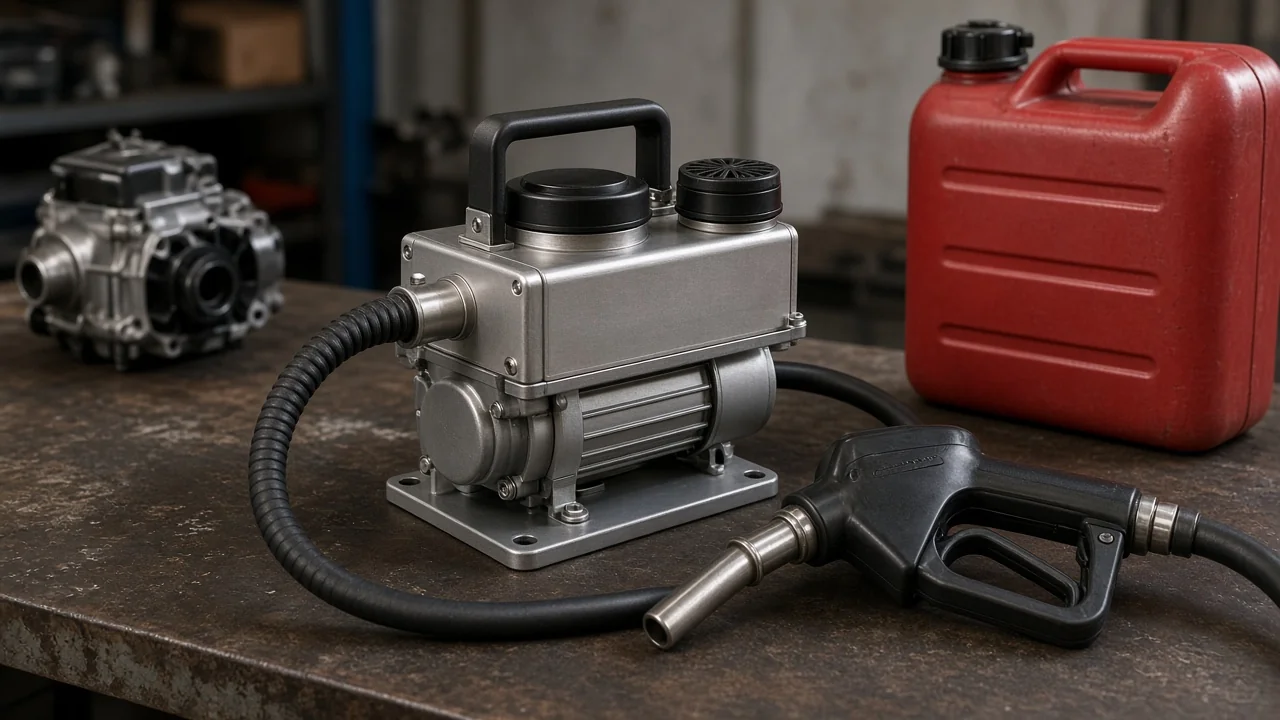
A portable electric fuel pump moves fuel from one container into another with electric power. It is a transfer tool for drums, totes, jerry cans, and equipment tanks—not the in-tank or drop-in unit that feeds a vehicle engine. This guide separates portable transfer duty from vehicle install pumps, explains why a portable fuel pump 12 volt keeps appearing in the same search, and shows what to do when a supplier catalog has no portable kit listed.
What a portable electric fuel pump is built to move
It is built to move fuel from one container into another with electric power.
Buyers searching this phrase are usually trying to empty or fill a can, drum, or auxiliary tank without depending on gravity alone. An electric fuel transfer pump does that work with a motor, a suction path, and a discharge hose. The job ends when the receiving tank has the fuel it needs.
Pressurizing a drum to force liquid out is a different and worse habit. Workplace flammable-liquid rules call out air-pressure transfer from containers as the wrong method. Where those rules apply, they point to approved pumps that take suction through the top of the container, or to approved self-closing faucets.
Control at the hose beats pushing the container with air, and that is the job a portable electric kit is built for. Jerry can / drum transfer is the everyday version of that same container-to-container job.
If your real need is a vehicle that will not start, you are shopping a different object. A soft path into that world is the gasoline electric fuel pump guide, which stays on vehicle electric hardware rather than drum kits.
Portable transfer duty vs vehicle install pumps
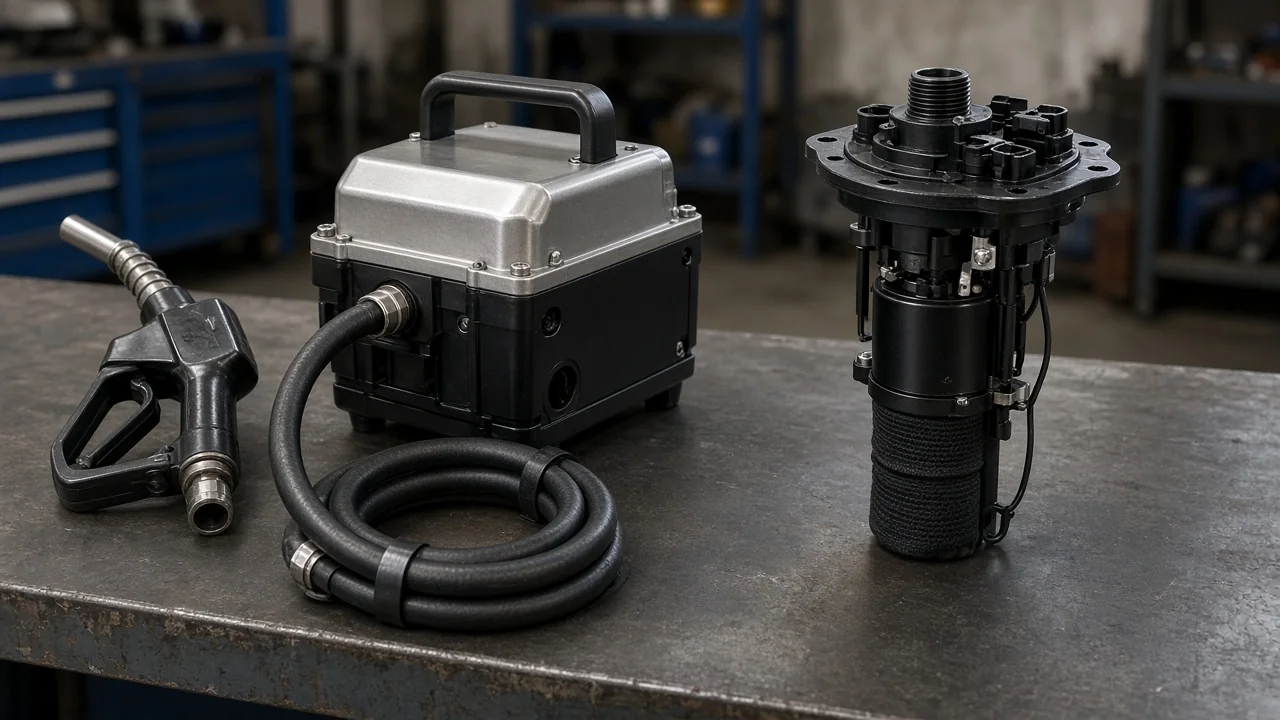
A transfer kit is hose-and-nozzle hardware; a vehicle install pump feeds the engine.
| Question | Portable electric transfer pump | Vehicle install / in-tank electric pump |
|---|---|---|
| Where it lives during use | Clip, bung, or carry kit at a can, drum, or transfer tank | Inside or on the vehicle fuel tank / module |
| What it feeds | Another container or equipment tank | The engine’s fuel rail or carburetor circuit |
| What “twelve-volt” usually means | Battery clamps or a DC cord for mobile transfer | Vehicle electrical system voltage for the install pump |
| What a product title should show | Transfer, portable, drum, or can language plus a fluid list | Year/make/model or OE numbers for a vehicle application |
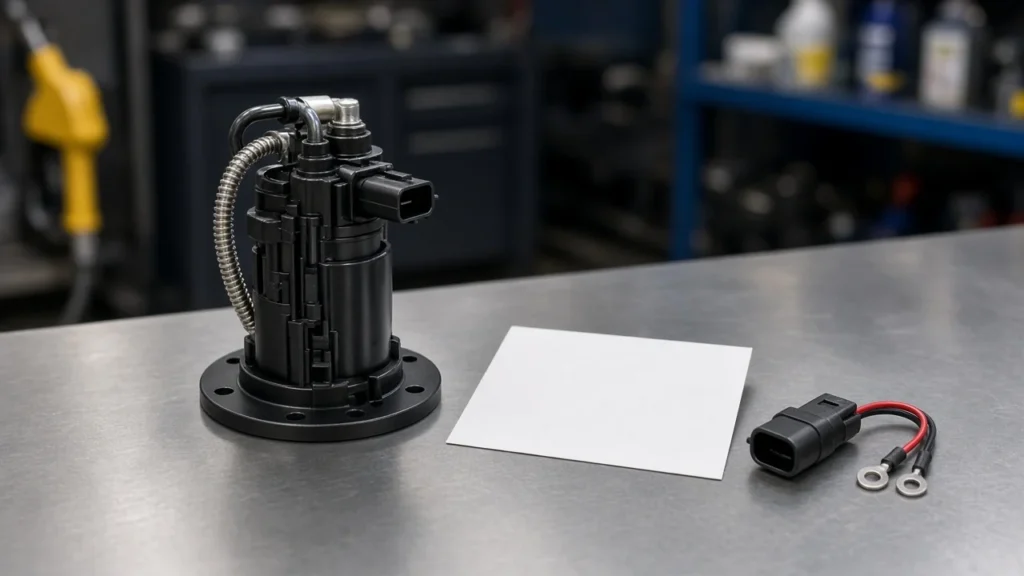
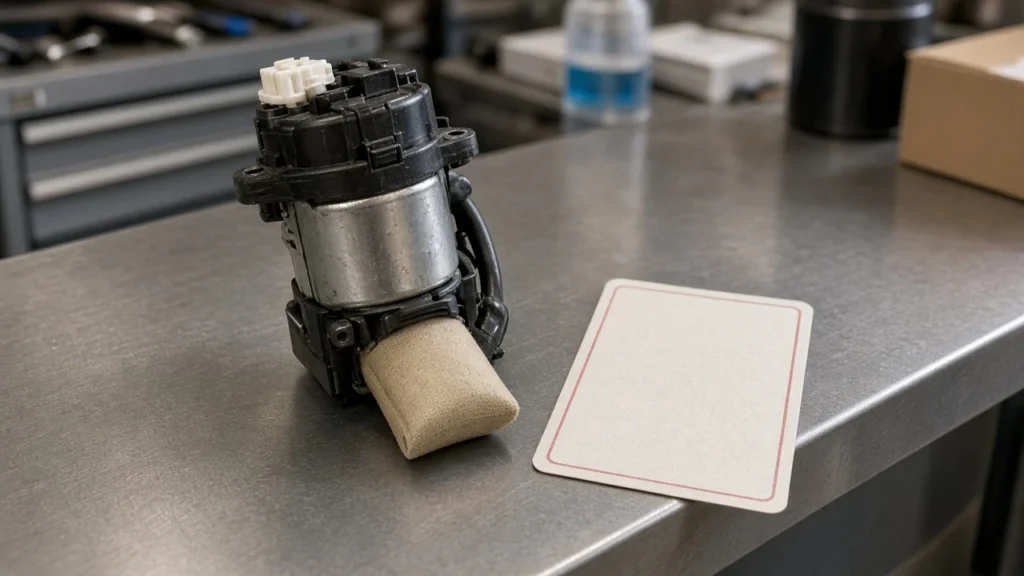
Encyclopedia descriptions of vehicle fuel pumps place the common electric unit inside the tank as part of an in-tank fuel pump assembly with a strainer and a fuel-level sensor. That assembly is built to live in fuel, cool itself, and supply the engine.
Jerry-can duty still needs a transfer tool, not that in-tank package, even when both products are electric and both can be described as twelve-volt devices. Community buyers make the same split in plain language: when they want a can-to-tank transfer tool, advice often says to look for an inline transfer setup rather than an in-tank unit.
That language is a useful warning label for procurement. If the listing is a drop-in module for a named pickup range, you are looking at vehicle hardware.
Why portable fuel pump 12 volt shows up in the same buy
Twelve-volt DC is a mobile power choice for field tanks, not proof you need a car in-tank unit.
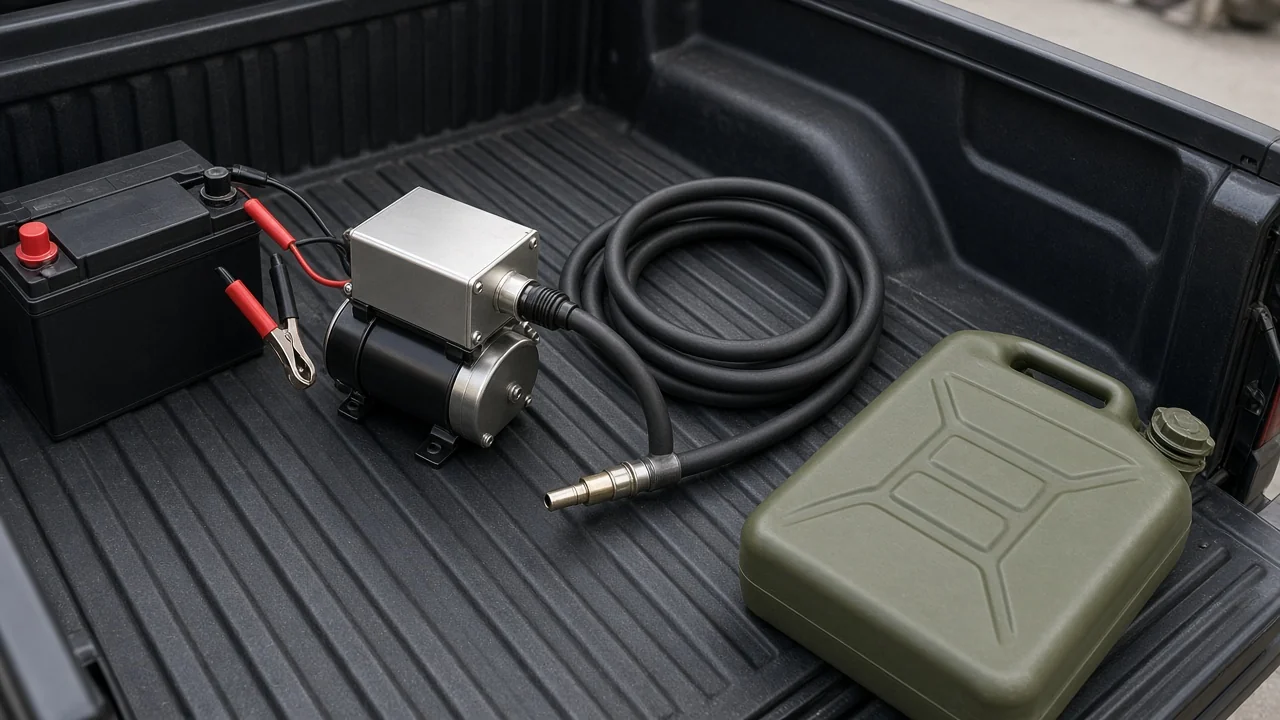
Selection guides split electric transfer pumps by where power is available. A twelve-volt DC pump is framed for mobile tanks—truck beds, trailers, and remote sites—while fixed yard tanks lean on AC mains when a building supply exists.
The phrase portable fuel pump 12 volt is therefore a power-source shortcut inside the same transfer decision. That is why this page absorbs that secondary intent instead of sending it to a second URL later.
Real buyers spell out the preference. One jerry-can shopper asked for a unit that works on a twelve-volt battery and specifically rejected AA or D-cell sticks.
Another overlanding thread started from not wanting to lift full metal jerry cans from a truck bed. Replies included clipping a twelve-volt transfer setup to vehicle power, or using a gravity siphon when height allows.
Those stories are about moving fuel between containers. They are not instructions to pull an in-tank module from a parts catalog and call it portable.
Match the pump’s marked voltage to the battery or supply you actually have. A twelve-volt transfer motor is not interchangeable with a one-hundred-fifteen-volt or two-hundred-thirty-volt fixed unit, and “twelve-volt” on a vehicle install kit does not turn that kit into a drum pump.
Fluid labels for gasoline vs diesel-only kits
Trust the fluid named on the unit; diesel-only kits are not gasoline tools.
Gasoline is a highly flammable liquid. Transfer guides treat gasoline-rated pumps as needing materials and ignition control that match that risk.
Diesel transfer labeling on portable kits is common on shopping pages. Using a diesel-only unit on gasoline is the mistake field buyers keep warning about. Read the fluid list on the nameplate and the hose package before you buy.
| Buyer check | What you can answer from a transfer listing | What this catalog shows today |
|---|---|---|
| Fluid | Gasoline, diesel, kerosene, or a named blend list | Vehicle fuel-pump titles scoped to applications, not portable fluid kits |
| Power | Twelve-volt or twenty-four-volt DC, AC, cordless, or hand | Vehicle electrical language on install kits when voltage appears |
| Duty object | Can, drum, tote, transfer tank | In-tank / drop-in install wording on published pump kits |
| Portable SKU present? | Yes/no on the merchant page | No portable or transfer product in live search |
For diesel-only portable transfer shopping, keep the contrast short and use the sister guide rather than retelling it here: portable diesel fuel pump. The point on this page is only that a diesel-labeled portable unit is not automatic permission to move gasoline.
Important: Do not empty a drum or portable tank by pressurizing it with air. Where OSHA flammable-liquid rules apply, Category 1 and 2 liquids are not dispensed from drums by pressure; approved pumps take suction through the top of the container, or approved self-closing faucets are used (source: OSHA 1910.106). Static discharge during Class I liquid transfer is also a real compliance topic for plastic containers, which is why grounded metallic suction paths appear in regulator guidance (source: OSHA interpretation 1999-03-29).
Flow, duty cycle, and kit completeness without fake nameplates
Match power, rest windows, and hose/nozzle completeness to the job—without inventing site specs.
Commercial pages love gallons-per-minute headlines. Treat those figures as belonging to the maker that printed them. Your decision still needs three practical checks that do not require copying another brand’s nameplate onto this site.
First, match the power source you already have: twelve-volt or twenty-four-volt clamps for mobile tanks, AC for a fixed yard tank, or cordless sticks for occasional can work.
Second, read the duty-cycle note. Many portable electric motors are intermittent; a rest window is not optional marketing text.
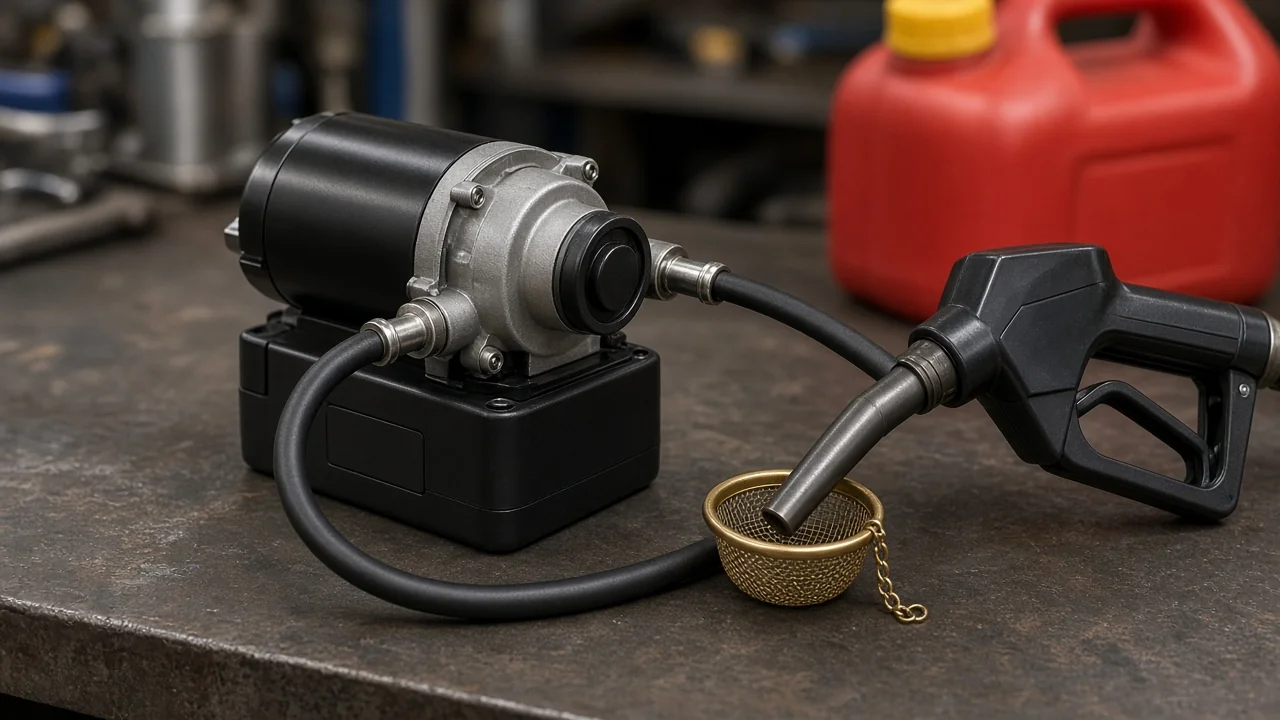
Third, inspect the kit: suction hose length for your can height, discharge hose, nozzle type, strainer, and whether the fluid list covers every liquid you will move.
Buyers who tried cheap stick pumps often come back with the same complaint: the unit works once, then the plastic build feels flimsy. Larger twelve-volt kits take more setup time.
Neither complaint is solved by ordering a vehicle install assembly with a familiar twelve-volt line in the specification table.
How to choose a catalog path when no portable transfer pump is listed
The category root is the list to check, because no portable electric transfer SKU is published.
Live product search on this site for portable, transfer, drum, and fuel transfer returns no matching products. That empty result is the honest answer.
Do not force a vehicle install kit into the portable job because the words electric and twelve-volt appear on both kinds of pages. Published electric gasoline pump kits on this site are application-scoped install hardware.
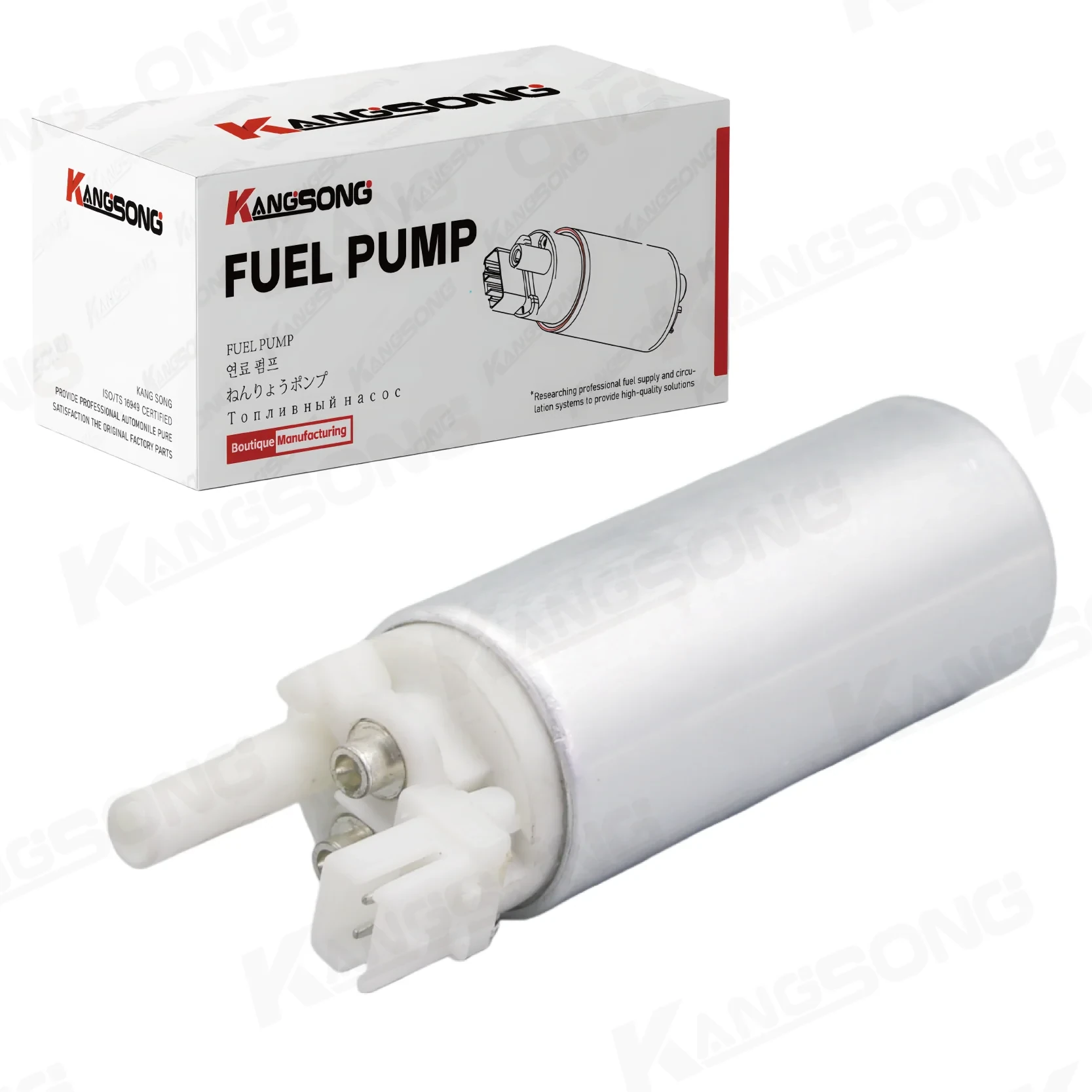
One example listing is an electric gasoline fuel pump with installation kit for a named C/K pickup application; its product page describes drop-in installation, an assembly package, and an in-tank installation environment. That package is vehicle service hardware.
Drum or jerry-can transfer is not what that listing sells, and it must not be sold as one.
Open the live product category — the products-root category — when you need the current list. Read titles for application language. If you need a portable transfer kit, keep shopping a transfer merchant or wait for a true portable listing—do not invent a fitment from a vehicle module.
FAQ
Are electric fuel pumps worth it?
They are worth it when the unit matches the fluid, the power source, and a real transfer job you repeat often enough to justify the kit. They are not automatically better than a gravity siphon for a one-time can pour with good height.
What is the best portable fuel transfer pump?
The best unit is the one whose fluid label, voltage, duty cycle, and hose package match the containers you fill. Ranked “best of” lists cannot replace that match, especially when this catalog has no portable SKU to crown.
What is a small electric pump for fuel?
Usually a can-scale stick or low-volume twelve-volt kit meant for jerry cans, generators, and small equipment. It is still a transfer tool. It is not a vehicle in-tank assembly.
What size fuel transfer pump do I need?
Size the pump to the tanks you fill and how often you fill them, then read the maker’s own flow and duty notes on that listing. Do not copy another brand’s gallons-per-minute claim onto a supplier that has not published a portable kit.
How do I know which fuel pump I need?
Start with the object: portable transfer between containers, or vehicle install hardware that feeds an engine. Only after that split should you choose voltage and fluid rating.
Is a portable fuel pump 12 volt the same as a car’s electric fuel pump?
No. Shared twelve-volt language only means both can draw from a twelve-volt source. A portable transfer kit moves fuel between containers; a car electric pump is typically an in-tank or install module for the vehicle fuel system.
Can I use a diesel-only portable pump for gasoline?
Not unless the unit is explicitly rated for gasoline. Diesel-only transfer pumps are common, and gasoline’s flammability is why the label has to say gasoline before you use it that way.
What if this supplier has no portable electric transfer pump listed?
Treat the empty search as the answer. Browse the product category to see vehicle hardware that is actually published, and do not re-label those listings as portable transfer pumps.