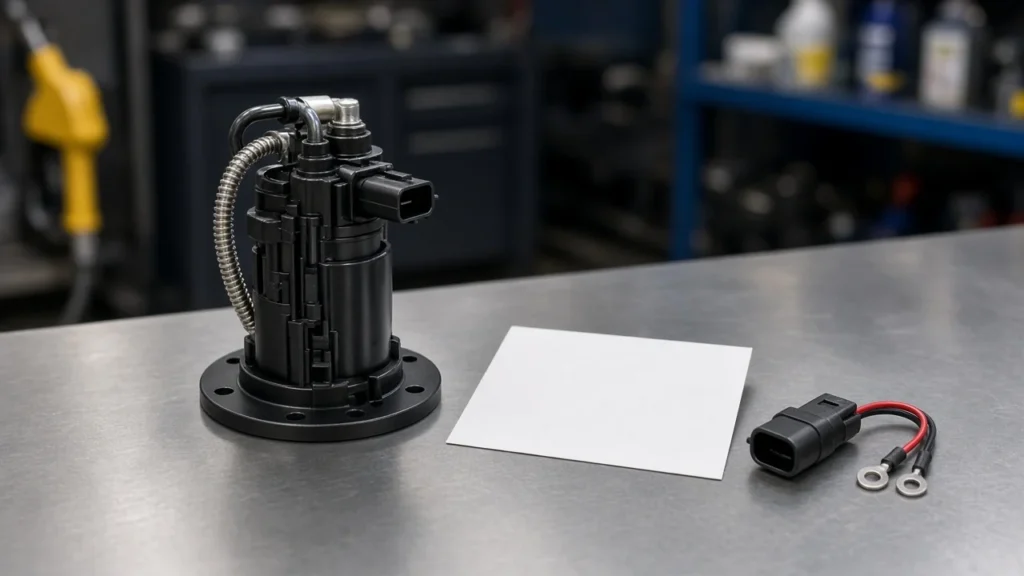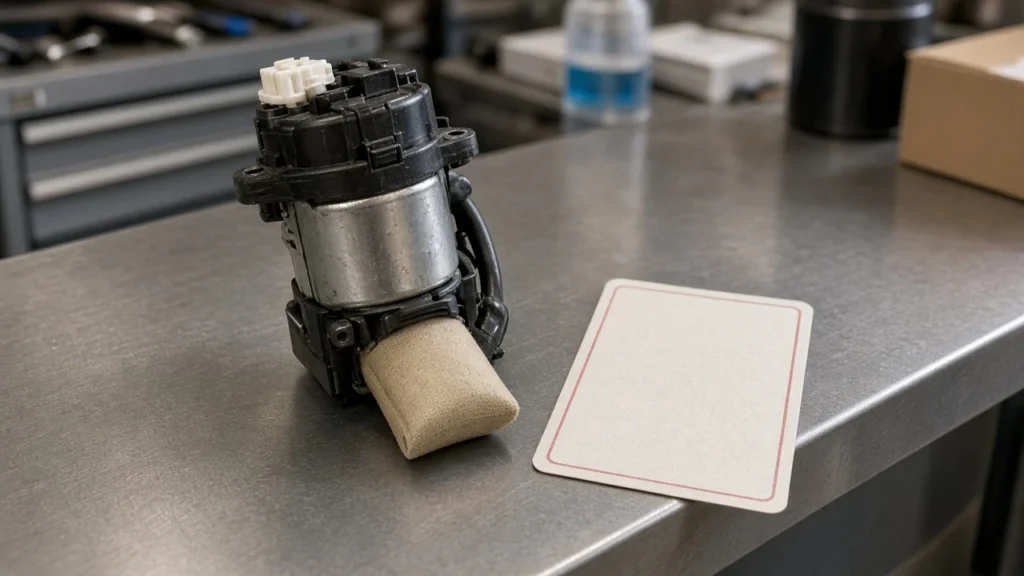
An inline fuel pump wiring sheet has to answer three things before anyone lands power: voltage class, polarity marks, and an external power-and-ground identity—not an in-tank module plug.
That is the same literacy buyers need for external fuel pump wiring on a chassis-mounted unit, including fuel pump polarity marks on the card.
This page stays on those sheet fields for U.S. counters and importers. Port drawings, full relay recipes, and check-valve fittings live on sibling posts.
What the wiring sheet must show before anyone lands power
Print voltage class, polarity marks, and external power/ground identity on the listing before a shop chooses a feed. Without those fields, techs guess from wire color folklore or from the nearest tank-module plug—and both guesses fail on an inline pump.
A usable sheet also separates the low-current “turn on” path from the fused pump load. You do not need a novel schematic here; you need language that tells the counter what must be true before power moves.
For hose ports and flow direction, use the inline fuel pump diagram page. For what an inline unit is, see what is an inline fuel pump.
Voltage class the listing must print
The sheet must state the pump’s DC voltage class before any feed is chosen. A 12-volt vehicle electrical system does not authorize a blank listing, and a blank listing does not authorize a hopeful jumper to the nearest hot lead.
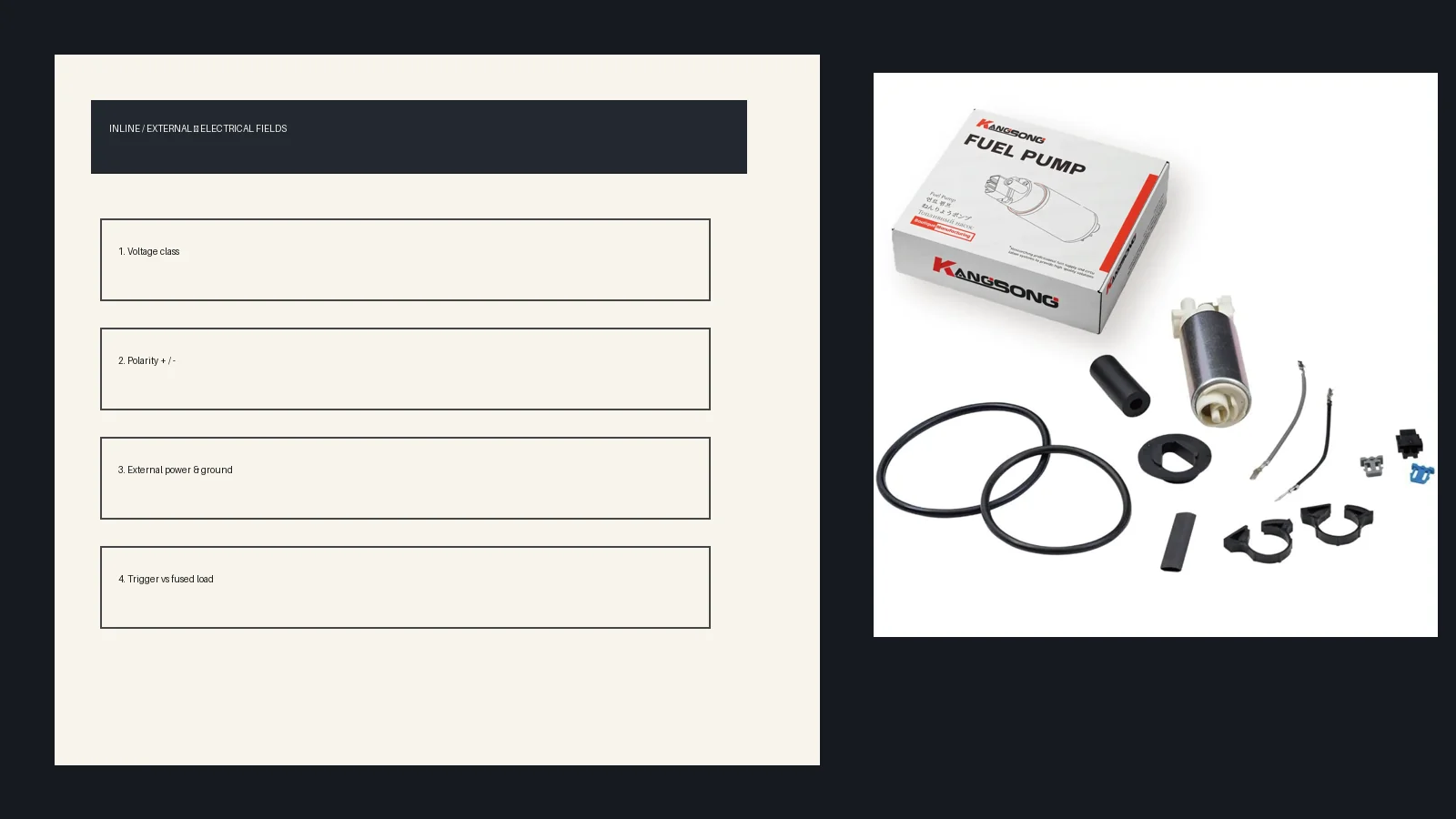
On Kangsong’s published C/K electric kit, the working voltage is printed as DC 12V for that tank-space application. Treat that as an example of a field that belongs on the card—not as proof that every external pump shares the same class. If the buyer’s pump card omits voltage, stop the PO until the print arrives.
Polarity marks beat wire-color folklore
Match the printed +/− (or POS/NEG) marks on that pump; wire colors are not a universal standard. Reverse power can destroy the motor on external units whose install notes warn about polarity.
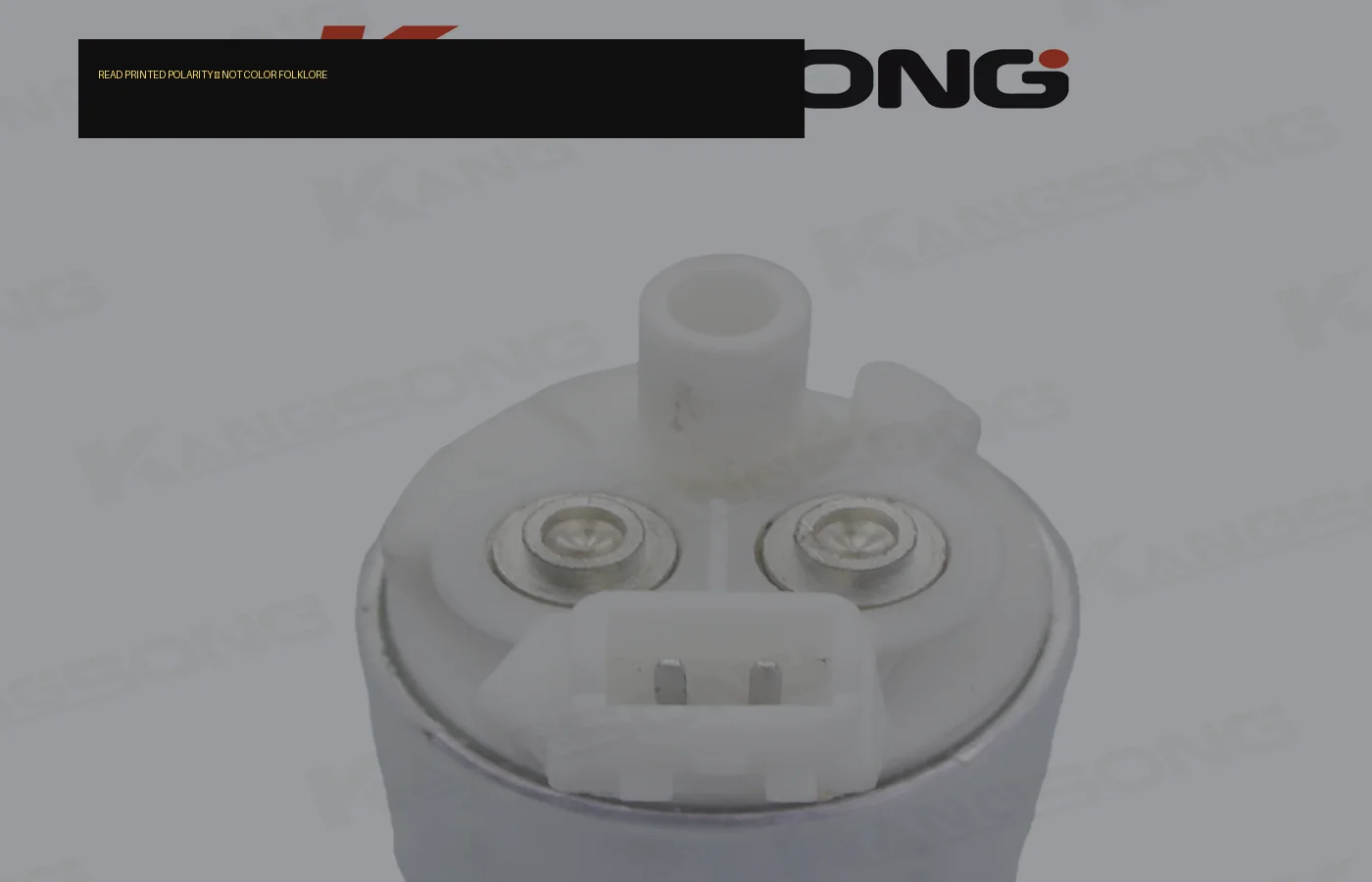
Counters still hear “the red one is always hot.” That habit comes from mixed brands and mixed harness kits, not from a single industry color code. If the listing only shows two leads without marks, demand the manufacturer mark-up before power lands.
Important: Do not treat a battery post as a casual test point for an inline pump. Independent wiring write-ups keep the pump on a fused, relay-controlled load path so a thin key-on wire is not asked to carry the motor—see HOT ROD’s electric fuel pump relay guidance.
External inline feed versus an in-tank module plug
Inline and external pumps mount outside the tank, so their power and ground are not the multi-pin plug on an in-tank fuel pump module. Electric pumps can live between the tank and the engine; modern injected cars often bury the pump in the tank, which is a different connector job.
When a PO says “inline wiring” but the vehicle uses a tank module, you are not looking at the same harness face. The external unit usually presents discrete power and ground. The in-tank fuel pump module plug may mix pump power with sender circuits and geometry that never appear on a chassis pump.
| Reader sees on the bench | Treat it as | Next check |
|---|---|---|
| Two marked power/ground leads or studs on a chassis pump | External / inline electrical identity | Voltage class + polarity marks |
| Multi-pin connector on a tank flange / module | In-tank assembly plug | Module pin map—not this sheet |
| Thin ECU “fuel pump” output wire only | Control / trigger candidate | Separate fused load path |
Mount trade-offs belong on external fuel pump vs internal. Buying fit for aftermarket inline units belongs on aftermarket inline fuel pump and electric inline fuel pump.
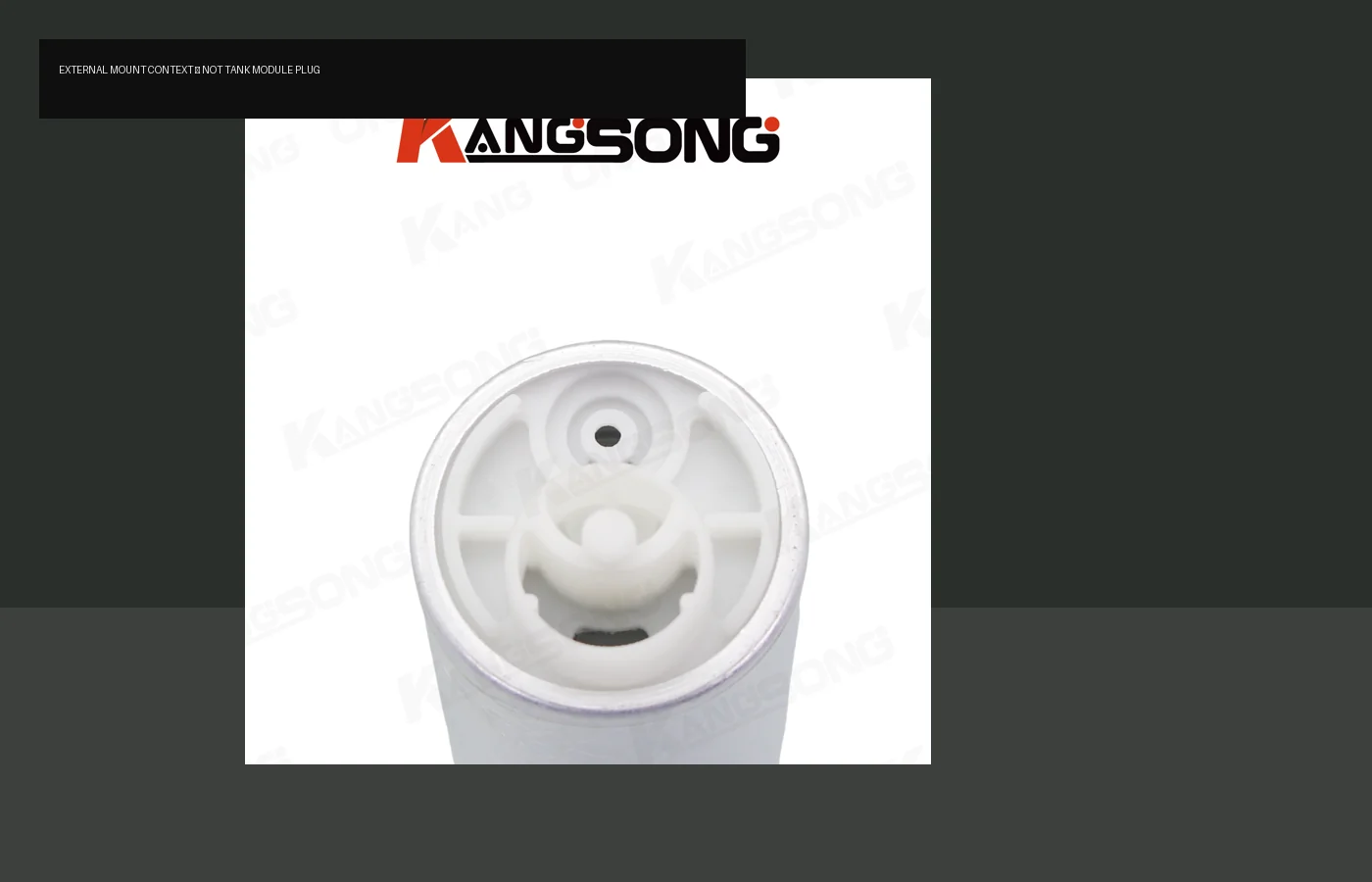
Trigger wire versus fused pump load
Expect a low-current fuel pump trigger wire and a separate fused load path through an electric fuel pump relay. EFI harness outputs and key-on taps often look like “the fuel pump wire,” yet they are the wrong place to hang a long chassis pump feed.
On Holley Terminator X threads, builders with a true inline pump still ask whether a documented controller output can drive the motor directly. Experienced replies push that fuel pump trigger wire onto relay coil terminal 86 and keep pump power on a heavier fused run. That is sheet language—“relay-fed load”—not a license to invent amp numbers for every SKU.
| Path | What it carries | Common ISO pin language | Sheet wording |
|---|---|---|---|
| Trigger / control | Low current that turns the relay on | 86 coil +, 85 coil ground | “ECU / key-on trigger only” |
| Pump load | Motor current from a protected battery feed | 30 in, 87 out to pump + | “Fused relay output to pump” |
| Pump ground | Return for the motor | Clean chassis / battery-negative referenced ground | “Dedicated ground, same class as feed” |
Failsafe patterns—oil-pressure cutouts or ECU RPM enable after a prime window—exist so the pump does not run forever with a key left on or an engine that has stopped. Name the expectation on the listing when the application requires it; the full how-to lives on how to wire a 12 volt fuel pump. Sheet-versus-vehicle-plug matching also sits on aftermarket fuel pump wiring.
U.S. counter checklist for inline and external pump wiring
Use a short electrical checklist before the PO leaves the counter. This is the practical absorb of external fuel pump wiring questions onto the same URL as inline fuel pump wiring.
- Voltage class printed for this SKU.
- Polarity marks printed (not inferred from color).
- Architecture named: external/inline leads versus in-tank module plug.
- Trigger path named separately from fused pump load.
- Ground called out as a first-class conductor, not “any nearby bolt.”
- Procedure siblings linked when the buyer needs pins, ports, or a relay recipe—not inventing those steps on the invoice line.
Blank rows mean the listing is not ready for power. That single rule prevents most of the battery-direct and color-folklore tickets that show up in People Also Ask.
When the C/K electric kit fits—and when it is not an inline pump
Treat the printed KS-360501 C/K kit as a tank-space unit for the stated pickup applications—not a chassis inline pump. Use it when the vehicle print matches; send true frame-mounted inline jobs to the broader catalog.
Listing fields show DC 12V with a 2-pin connector for 1987–1995 C/K applications.
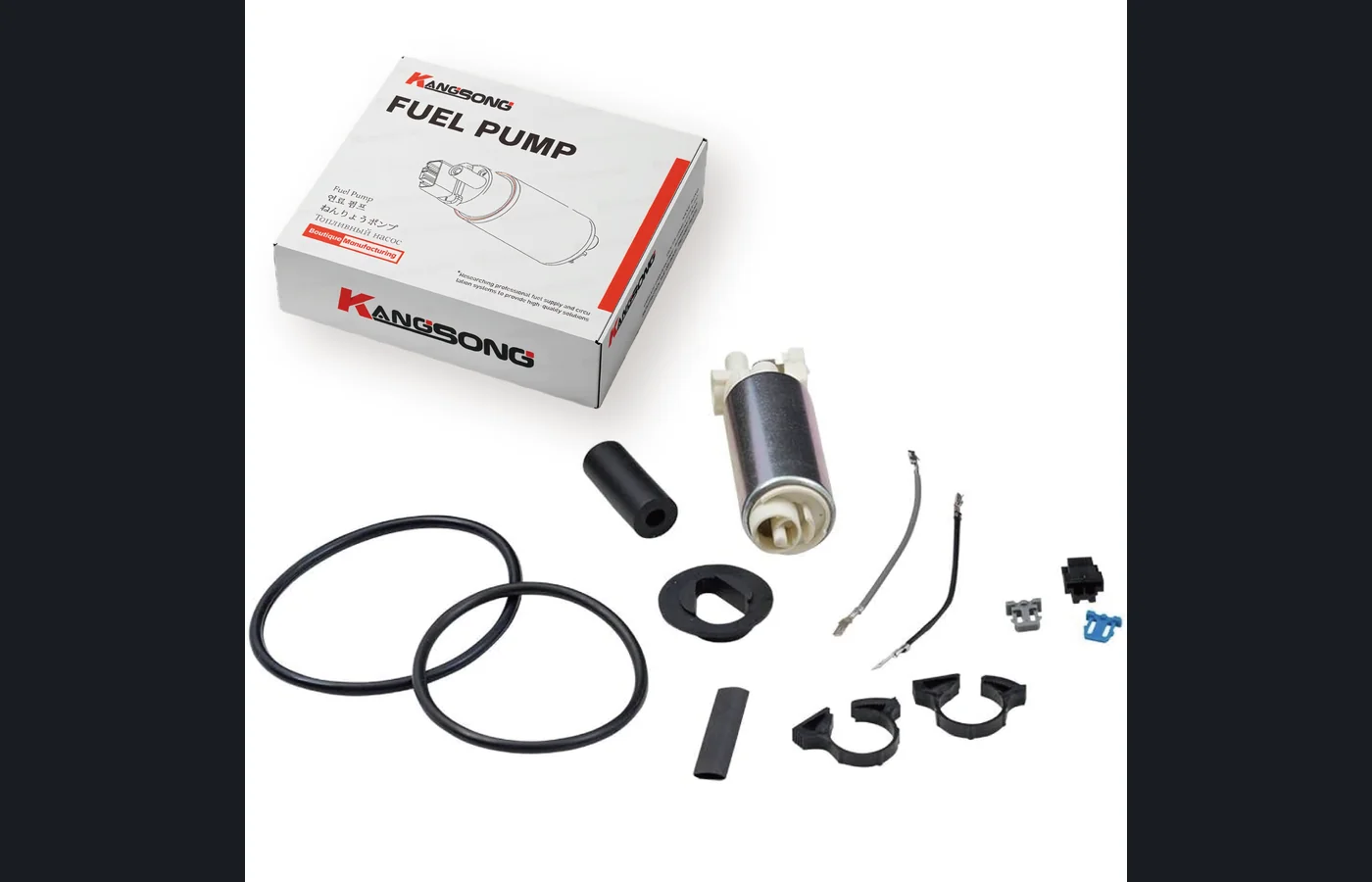
On the live product page, the C/K electric gasoline fuel pump kit (tank-space, not chassis inline) lists KS-360501 branding, OE-comparable references including 25168719 / E3902, a 2-pin main connector, DC 12V working voltage, and 43.3–49.5 Gph flow for that application. The install environment language points at conventional space in the vehicle fuel tank. That is useful electrical-field evidence and a honest “wrong architecture” answer when someone asks for inline chassis wiring.
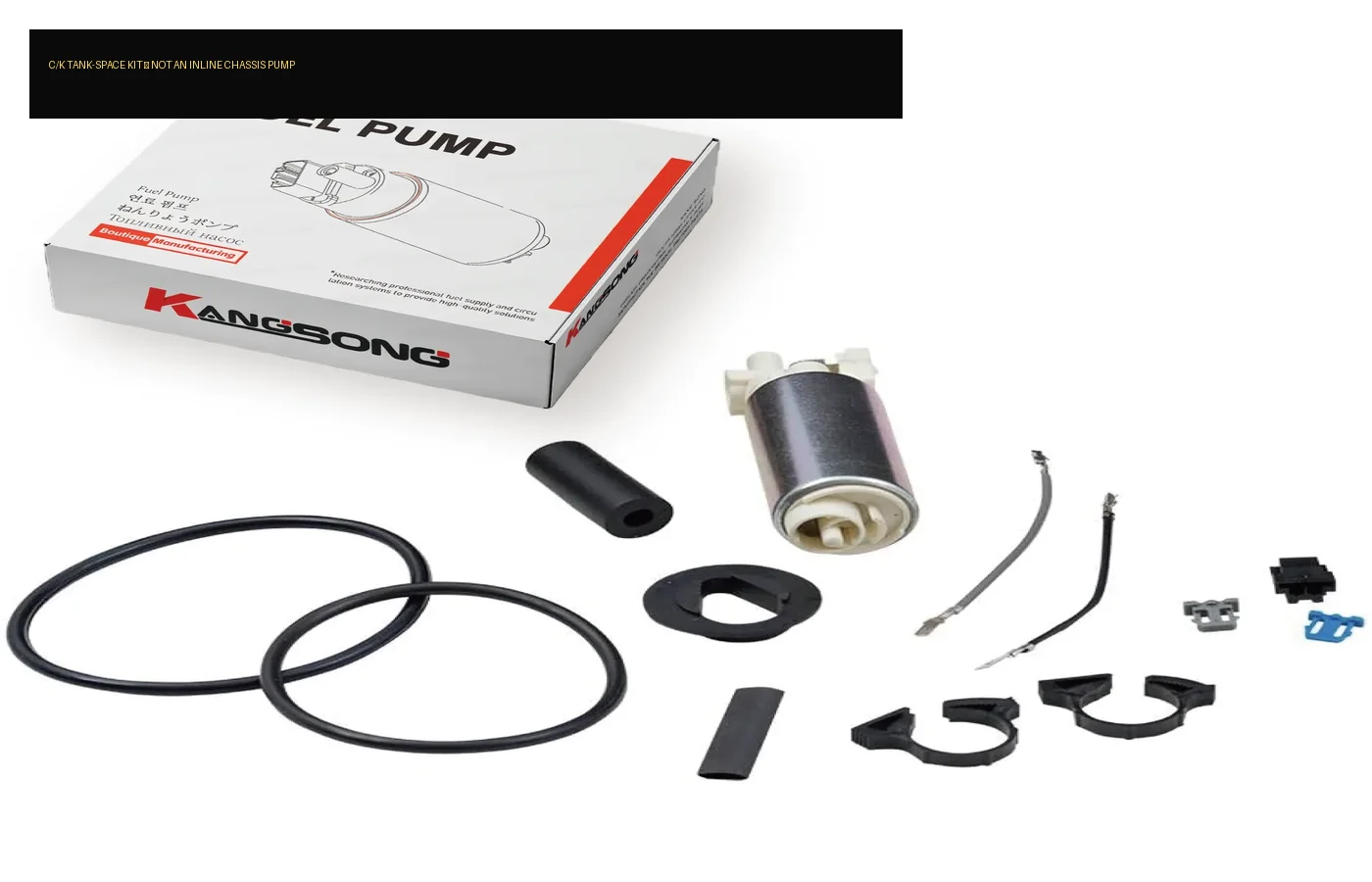
For other vehicles or a true external inline SKU search, open the products catalog. Do not force FASS, AirDog, Facet, or Bosch equivalence onto this kit—those claims are outside the printed page.
FAQ
Can I wire an inline fuel pump straight to the battery?
No as a casual practice. The pump needs a fused, controlled load path—normally through a relay—so it is not live whenever a battery clamp is convenient. This page does not provide a battery-direct or hotwire procedure.
Are fuel pump wire colors universal?
No. Colors vary by harness and brand. Trust the polarity marks printed for that pump.
What happens if polarity is reversed on an external pump?
Reverse polarity can damage the motor. Install notes for external pumps commonly treat that as a non-warranty failure mode.
Do I need a relay for an inline / external electric pump?
Plan on a relay whenever the control wire is a thin ECU or key-on trigger. The relay keeps motor current on a short fused feed. Exact pin recipes belong on the 12-volt wiring sibling article.
How is inline pump wiring different from an in-tank module plug?
An inline/external pump presents discrete power and ground outside the tank. An in-tank module plug is a different connector that may combine pump and sender circuits.
What electrical fields should a U.S. counter print on an external pump listing?
Voltage class, polarity marks, external power/ground identity, and a clear split between trigger and fused load. Add failsafe expectations when the application requires them.
Is Kangsong’s C/K electric kit an inline chassis pump?
No. It is a tank-space electric kit for the printed C/K applications, with DC 12V and a 2-pin connector on the listing. It is not a frame-mounted inline pump.
Where do I go for the actual 12-volt relay procedure or port diagram?
Use how to wire a 12 volt fuel pump for relay procedure literacy and inline fuel pump diagram for ports. Keep this page for sheet fields before power.