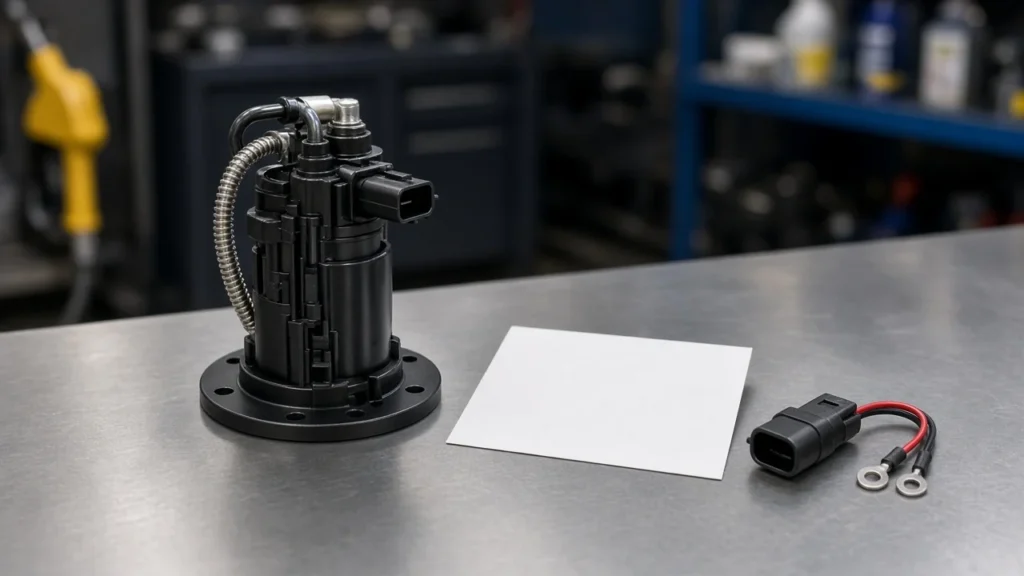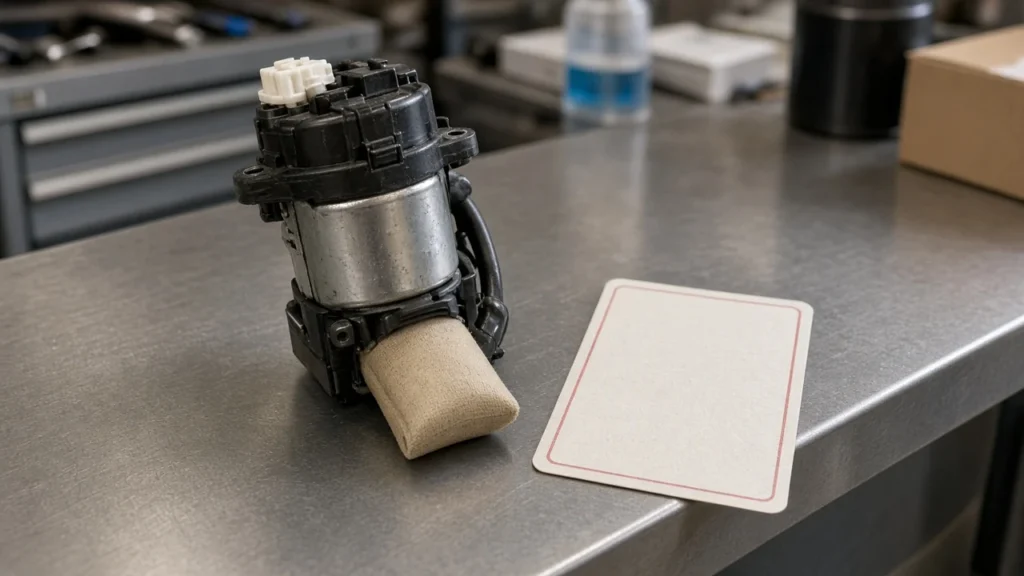
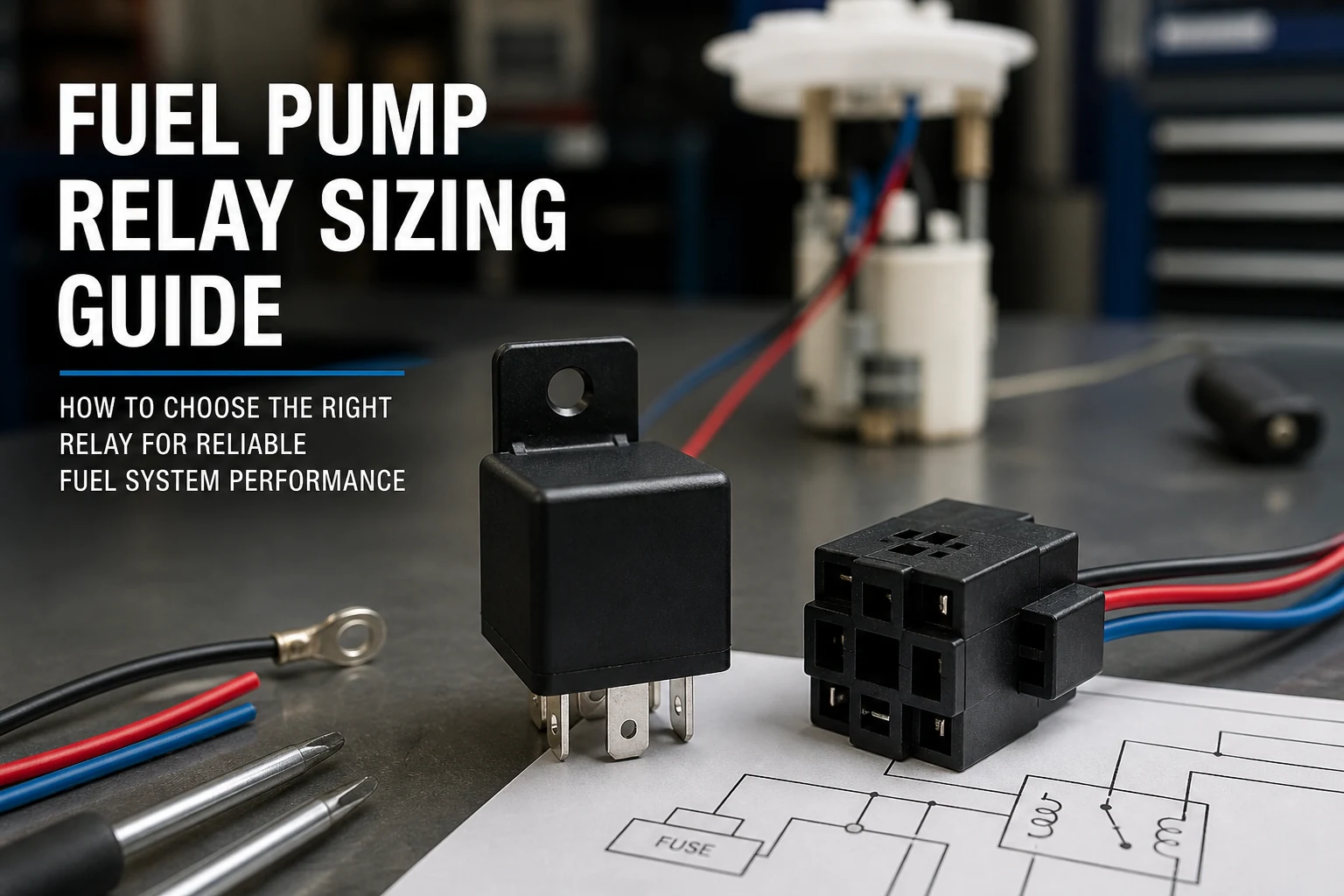
What size relay for fuel pump work starts with a continuous-duty contact rating above the pump’s running current, with margin for motor inrush and heat, in an ISO plug-in form that fits the socket—not the fuse amp and not a kit title alone. Match contact amperage rating, continuous vs peak/inrush headroom, and mini-versus-micro socket fit before you order parts. Separate fuse roles from relay sizing, then browse a Kangsong electric fuel pump / assembly only when the pump itself is the next buy.
Why Fuel Pumps Need a Correctly Sized Relay
Pump current belongs on a fused battery feed switched by a fuel pump relay; the switch or ECU only drives the coil, so the contacts must be sized for that inductive load.
A fuel pump relay is the electromechanical switch that keeps high pump current on a short battery feed while a low-current ignition, ECU, or oil-pressure trigger only energizes the coil. Parts counters refuse switch-direct pump power for the same reason: dashboard toggles and unprotected control pins are not built to carry continuous pump amps.
Place the relay so battery→relay→pump stays short and fused, with lighter wire on the trigger side. Fuel pump relay amperage is therefore a contact decision first, not a trigger-wire decision.
Typical Amp Ratings: Choosing 20 A, 30 A, or 40 A Class
Many fuel-pump circuits use 30 A or 40 A continuous-duty automotive cubes; still verify against continuous pump draw plus margin instead of copying a kit title.
Market answers and common kits cluster on a 30 amp / 40 amp fuel pump relay continuous-duty class for 12 V plug-in cubes. A 20 A class can appear on lighter accessory sockets, but electric pumps are often already in the higher band once running current and start surge are counted.
Prefer the rating that covers measured or catalog continuous draw with headroom, then confirm the cube still fits the socket. A kit labeled “40 A” is only a commercial default, not proof that every platform pump needs that exact label.
| Amp class (typical cube) | When counters reach for it | Selection caution |
|---|---|---|
| 20 A class | Light accessories or low continuous draw | Confirm pump continuous amps; many EFI pumps outgrow this ceiling |
| 30 A continuous-duty | Common Bosch-style / ISO mini answer for pump feeds | Still apply inrush and hot-bay derating before locking the part |
| 40 A continuous-duty | Higher-draw pumps or extra thermal margin | Match wire/fuse capacity; amp label alone does not fix undersized cable |
Continuous Current vs Peak Inrush and Temperature Derating
Size contacts to running current with headroom for start surge; treat labeled continuous amps as temperature-dependent, not equal to a one-second overload figure.
Continuous vs peak/inrush current is the core sizing math for motor loads. Electric pumps draw more at make than at steady run, so field practice rates relay contacts with substantial headroom—community examples use about 2–3× normal running amperage before picking the next continuous class.
One lift-pump walkthrough measures 8.61 A running, multiplies by three to about 25.8 A, then selects a 30 A continuous-duty cube as the next practical size. Soft “add ~20%” margins from shopping answers are weaker than motor inrush factors when the pump is inductive.
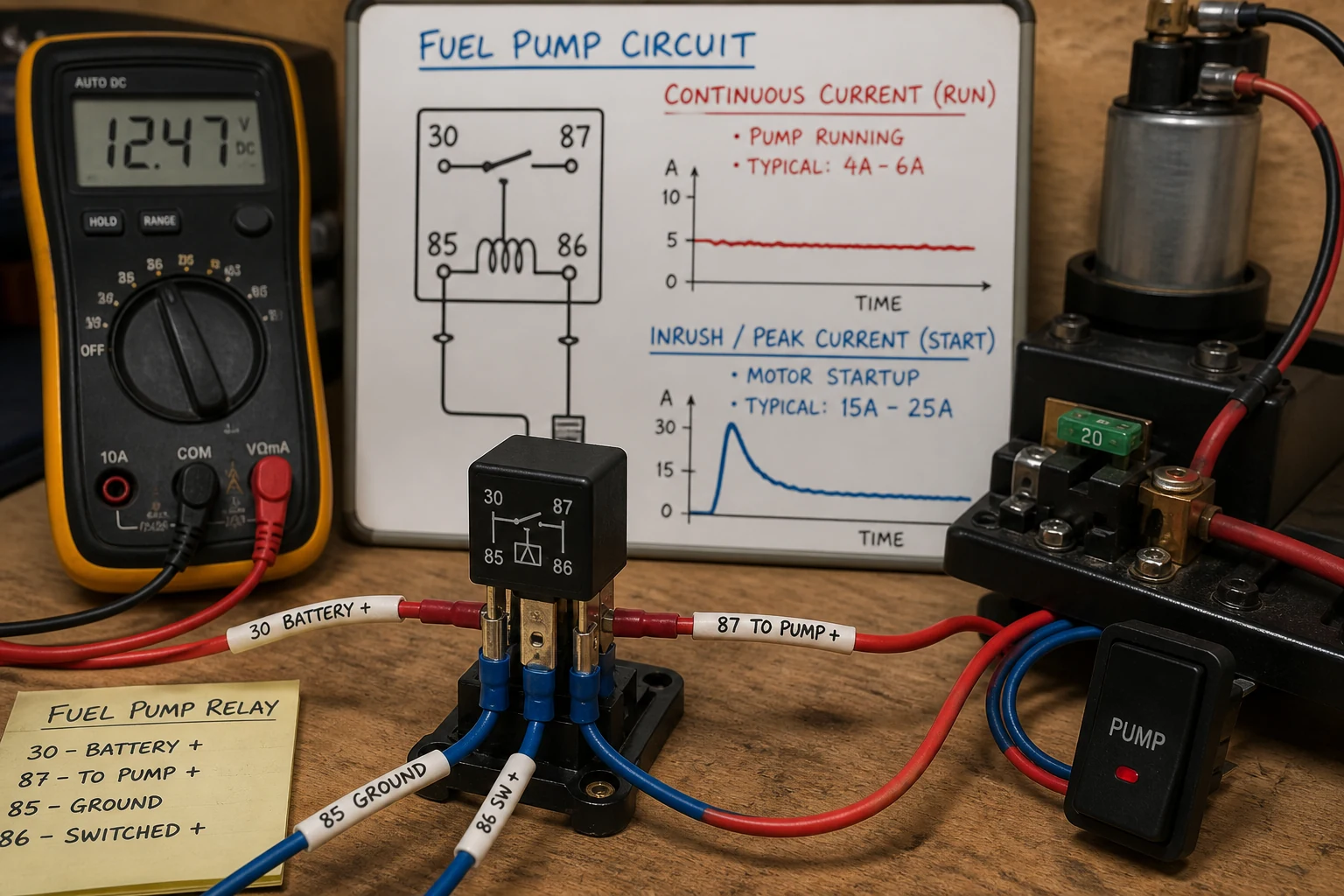
Temperature also moves the ceiling. On a Mini ISO family datasheet used on fuel-pump circuits, limiting continuous NO current examples include 60 A at 23 °C, 40 A at 85 °C, and 17 A at 125 °C—so a hot engine bay is not a room-temperature label.
| Decision factor | What to use | What not to confuse it with |
|---|---|---|
| Continuous running current | Measured or estimated pump amps at operating voltage | Fuse amp printed on a kit bag |
| Peak / make / inrush | Extra contact headroom (field rules often ~2–3× run) | A one-second overload line treated as continuous duty |
| Temperature derating | Datasheet continuous amps at elevated ambient | Assuming the cold-label amp equals bay duty |
| Soft shopping margin | ~20% on calculated amps only as a weak floor | Replacing motor inrush headroom with a kit slogan |
Tip: Community “2–3× running current” rules and soft ~20% shopping margins are heuristics—measure running current when you can, then read the relay’s continuous and make ratings together (Mopar1973Man protective lift-pump relay notes).
Form Factor: ISO Mini Cube vs ISO Micro (Socket Match)
Match body and terminal series to the socket; amp rating alone does not make mini and micro interchangeable.
An ISO mini relay (Bosch-style cube) is the common ~1-inch plug-in body with roughly 6.3 mm terminals and a typical 30–40 A contact band. An ISO micro relay is the smaller footprint with smaller terminals and often a 20–35 A band—it will not seat in a mini socket even when the amp label looks right.
Automotive plug-in families follow ISO 7588-style dimensional and terminal-allocation conventions; socket/form-factor match is a separate selection gate from fuel pump relay amperage. Calling a cube “Bosch-style” is vernacular for the mini ice-cube shape, not a brand swap claim.
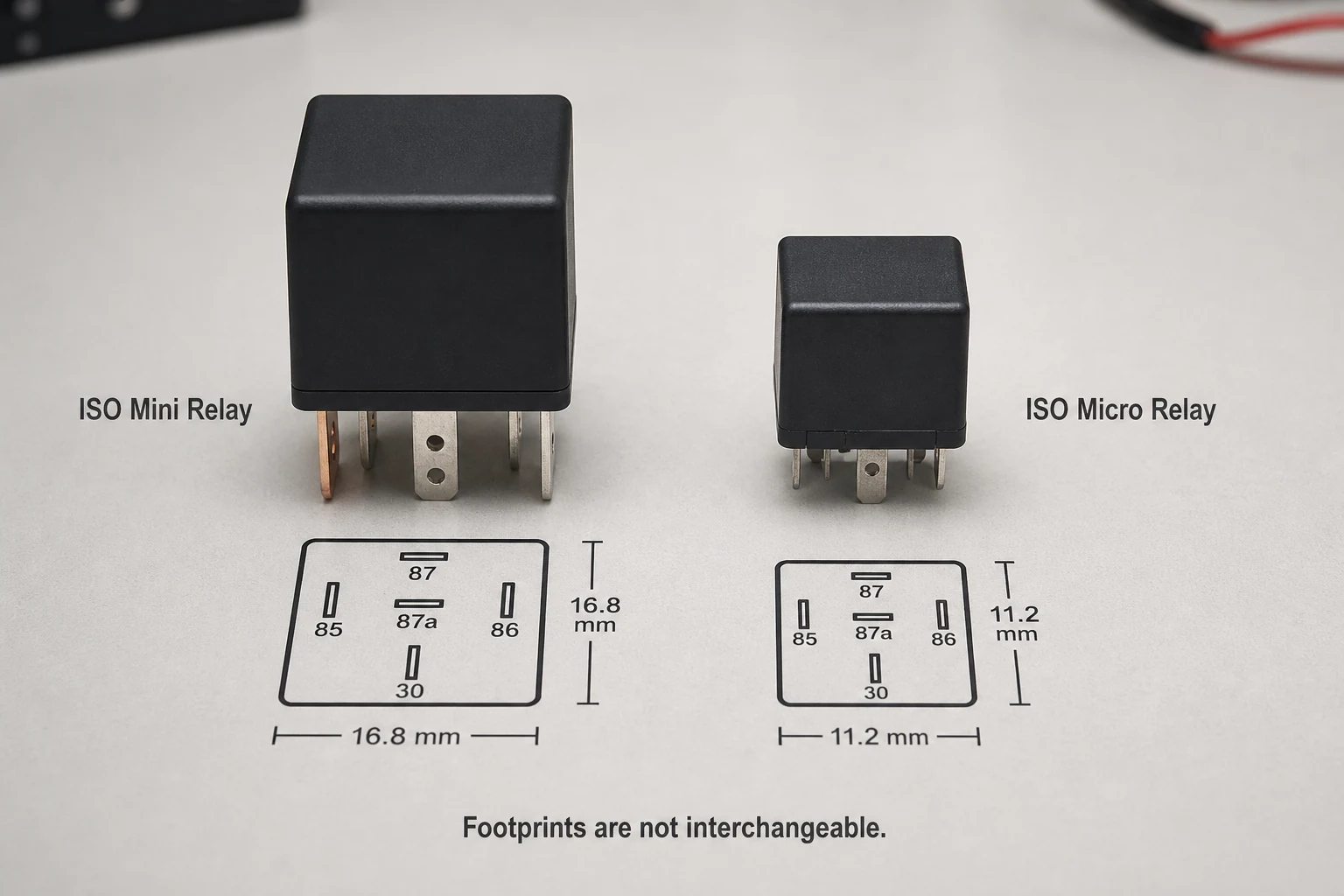
Use this form-factor matrix when the amp label looks right but the cube will not seat.
| Form factor | Typical contact band | Terminal / body cues | Socket rule |
|---|---|---|---|
| ISO mini (Bosch-style cube) | Often 30–40 A class | ~1-inch body; ~6.3 mm / ¼″ tabs | Fits mini sockets only |
| ISO micro | Often 20–35 A class | ~half-size body; smaller tabs | Fits micro sockets only; not a mini drop-in |
| SPDT dual markings | NO vs NC may differ | 87 vs 87a ratings can be asymmetric | Read both contact ratings on the shell |
An ISO mini fuel pump relay is therefore a form-factor plus amp-class decision: pull the cube that seats, then confirm continuous duty against pump current.
Why Undersized Relays and Feeds Fail
Hot, pitted, or welded contacts—or melted feed wires after a pump upgrade—usually mean the contact rating and/or wire gauge were too small for continuous and inrush load.
When a higher-draw pump replaces a stock unit, a 14-gauge / low-amp path can melt while the tech still asks whether a 40 A relay with 12-gauge feed is enough. Overload language on mini ISO parts also points to overheating, contact welding, and pitting when continuous thermal limits are ignored.
Keep feed conductors in the same decision as contact class. Common wiring talk pairs about 10–12 AWG on battery→relay→pump feeds and lighter 16–18 AWG on trigger/ground legs so voltage drop and heat stay controlled.
Coil Suppression: Diode vs Resistor Notes
Prefer a suppressed coil when an ECU triggers the relay; diode polarity matters and can trade contact life on inductive loads.
Coil suppression diode/resistor parts clamp turn-off spikes so ECU or oil-pressure triggers are not hammered by coil kickback. A diode gives a strong clamp but is polarity-sensitive on terminals 85/86; a resistor is polarity-agnostic with different release timing and slightly less spike suppression.
Datasheet notes for Mini ISO fuel-pump-class relays warn that a diode parallel to the coil can significantly decrease electrical lifetime on inductive loads. Spec the suppressor with the driver in mind—not as an afterthought sticker on the box.
Relay Amp vs Fuse Amp (and Sibling Fuse Guides)
Contacts cover the pump load; the fuse protects the wire—use the fuse-test and blown-fuse articles for meter steps and symptoms, not this page.
Fuse (fuel pump circuit) sizing answers a different question than relay contact class. The fuse is sacrificial overcurrent protection for the conductor; the relay is the controllable switch. Fuse amp is not a shortcut for choosing contact amperage.
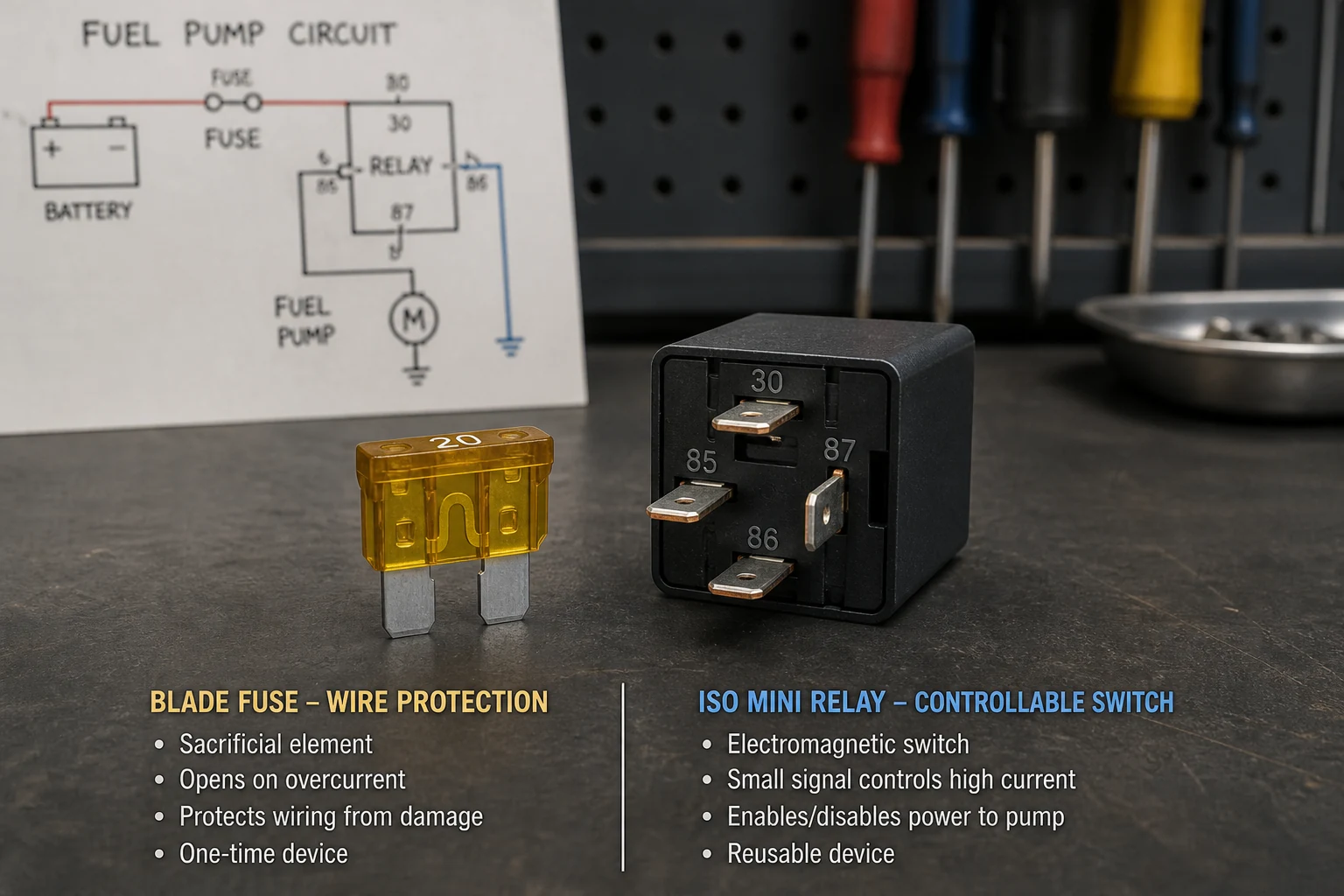
Important: Fuse amp ≠ relay contact amp. For continuity/meter steps use how to test a fuel pump fuse; for open-fuse symptom maps use fuel pump fuse blown symptoms. Keep those jobs on the sibling posts.
Place the fuse on the battery feed ahead of the relay so the wire is protected if a short develops. Never undersize the relay to the fuse ceiling just because a kit bag printed both numbers together.
Choose a Kangsong Fuel Pump Assembly After Relay Sizing
Kangsong does not list verified automotive relays; after the feed path is correctly specified and the pump itself is next, browse electric pumps with install kits—use application scope only when years and OE refs match.
An electric fuel pump / assembly is the delivery hardware the relay is switching. When voltage and switching are healthy but delivery still fails—or the module is already condemned—open the products hub for platform assemblies.
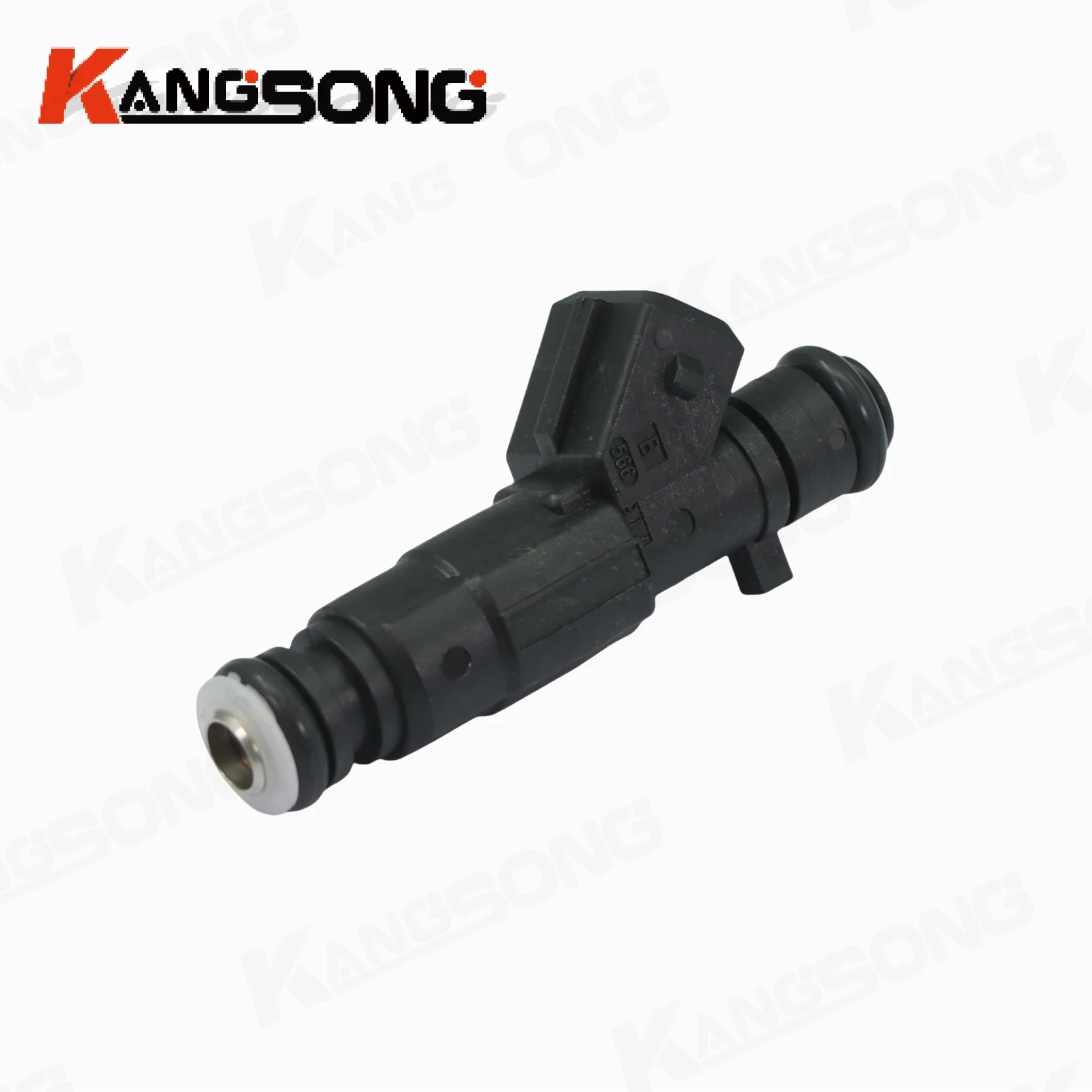
When the feed path is next, the electric gasoline fuel pump with installation kit page is a scoped electric-pump example after relay sizing—not a Kangsong relay SKU and not a universal amp chart.
Skip any framing that invents Kangsong relay part numbers or third-party brand equivalence. Finish contact class, form factor, suppression, and fuse-role decisions first; only then quote an assembly inside its listed OE/year window.
FAQ
What size relay for a fuel pump?
Choose a continuous-duty automotive cube whose contact rating exceeds pump running current with inrush and temperature headroom, in the ISO mini or micro body that fits your socket. Many circuits land on 30 A or 40 A continuous-duty classes, but the pump current still has to justify the label.
Is a 30 A or 40 A relay better?
Neither label wins by default for every pump. Prefer the continuous class that covers measured or estimated run current plus start surge; 40 A often adds thermal margin on higher-draw pumps, while a verified lower continuous load can stay on a healthy 30 A cube.
How do continuous and peak/inrush current change relay size?
Running amps set the continuous floor; start surge needs extra contact headroom, and hot ambient lowers what a labeled continuous rating can carry. Treat short-time overload figures as separate from all-day pump duty.
What is the difference between an ISO mini (Bosch-style cube) and an ISO micro relay?
Mini cubes are larger with ~6.3 mm terminals and often a 30–40 A band; micro bodies are smaller, often 20–35 A, and use different sockets. Amp printing alone does not make them interchangeable.
Why do undersized fuel-pump relays fail?
Contacts overheat, pit, or weld, and undersized feed wires melt—especially after a higher-draw pump upgrade. Matching wire gauge and fuse protection to the new continuous load is part of the same repair.
Do I need a relay with a diode or resistor suppressor?
Use coil suppression when an ECU or sensitive driver triggers the relay. Diode packs need correct 85/86 polarity and can shorten inductive-load contact life; resistor packs trade clamp strength for polarity freedom.
What size fuse vs what size relay?
Size relay contacts for the pump load; size the fuse to protect the wire. Meter steps and blown-fuse symptoms belong on the sibling fuse articles linked above, not inside this amp-selection page.
Can I run a fuel pump without a relay?
Not through a standard dashboard switch or unprotected low-current control path. Keep pump current on a fused relay feed and let the control circuit drive only the coil.
References
- ISO 7588-1:1998 preview (dimensional characteristics and terminal allocation) — road-vehicle relay/flasher dimensional and terminal-allocation conventions for plug-in form factors.
- TE Connectivity V23136 Mini ISO power relay datasheet — continuous-current temperature examples and coil-diode lifetime notes for Mini ISO fuel-pump-class loads.
- Waytek Wire: Automotive Relays 101 — ISO mini vs micro capacity/terminal cues and diode vs resistor coil suppression trade-offs.
- High Performance Academy forum: sizing relays — community continuous-rating language and high-draw fuel-pump relay practice.
- Mopar1973Man: installing a protective lift-pump relay — field 2–3× running-current sizing example and suppressor polarity notes.