Fuel pump fuse blown symptoms show up as a dead power feed to the pump: the engine cranks, the tank stays silent on key-ON, and the vehicle may stall as if it ran out of fuel. This article maps those cues for a service channel counter, separates fuse opens from weak-pump and relay lookalikes, and walks an isolation path before any assembly quote. Readers also get the repeat-blow language shops use for a blown fuel pump fuse and the fuse for fuel pump checks that belong on the work order.
Symptom patterns of a blown fuel pump fuse
Expect a hard power cut, not a gradual “weak pump” fade. When the fuel pump fuse is open, the pump never receives a usable feed, so combustion never starts even though the starter still sounds healthy.
| Shop observation | What it usually means on a fuse-open event | Counter note to capture |
|---|---|---|
| Cranks strongly, never fires | No fuel delivery because the pump circuit is open | Starter/battery already ruled in |
| No key-ON prime hum (~2–3 s on many EFI designs) | Pump did not get the brief prime command path | “Silent tank” on key-ON |
| Sudden stall while driving, then no restart | Fuse opened in motion and left the pump dark | Feels like an empty tank with fuel still showing |
| Repeat no-start after a “new fuse” | Protection is still seeing overcurrent | Stop swapping fuses; start isolation |
A blown fuel pump fuse is abrupt. If the complaint was weeks of hesitation under load with an audible prime still present, keep reading the bad fuel pump symptoms overview instead of forcing a fuse story onto a weak-delivery case.
Fuse-open vs weak pump vs relay lookalikes
A silent tank on key-ON can be a fuse, a relay, a cut wiring feed, or a dead pump—so treat “no prime” as a power-path question, not an automatic assembly line item.
| Pattern | Fuse-open cue | Weak pump / low delivery cue | Relay-side cue |
|---|---|---|---|
| Prime sound | Usually none | Often present, then fades or labors | Often none; swap test may restore |
| Re-blow behavior | New fuse may die again | Fuse often stays intact | Fuse usually intact |
| Driving complaint | Sudden total stall | Stumble, power loss, long crank | Intermittent hot no-start more common |
| First stock move | Correct-rating fuse + diagnosis time | Pressure/volume evidence | Matching relay form factor |
Use the sibling fuel pump relay guide when the fuse tests good and an identical-form relay swap changes the result. Keep this page focused on the protective link that opened.
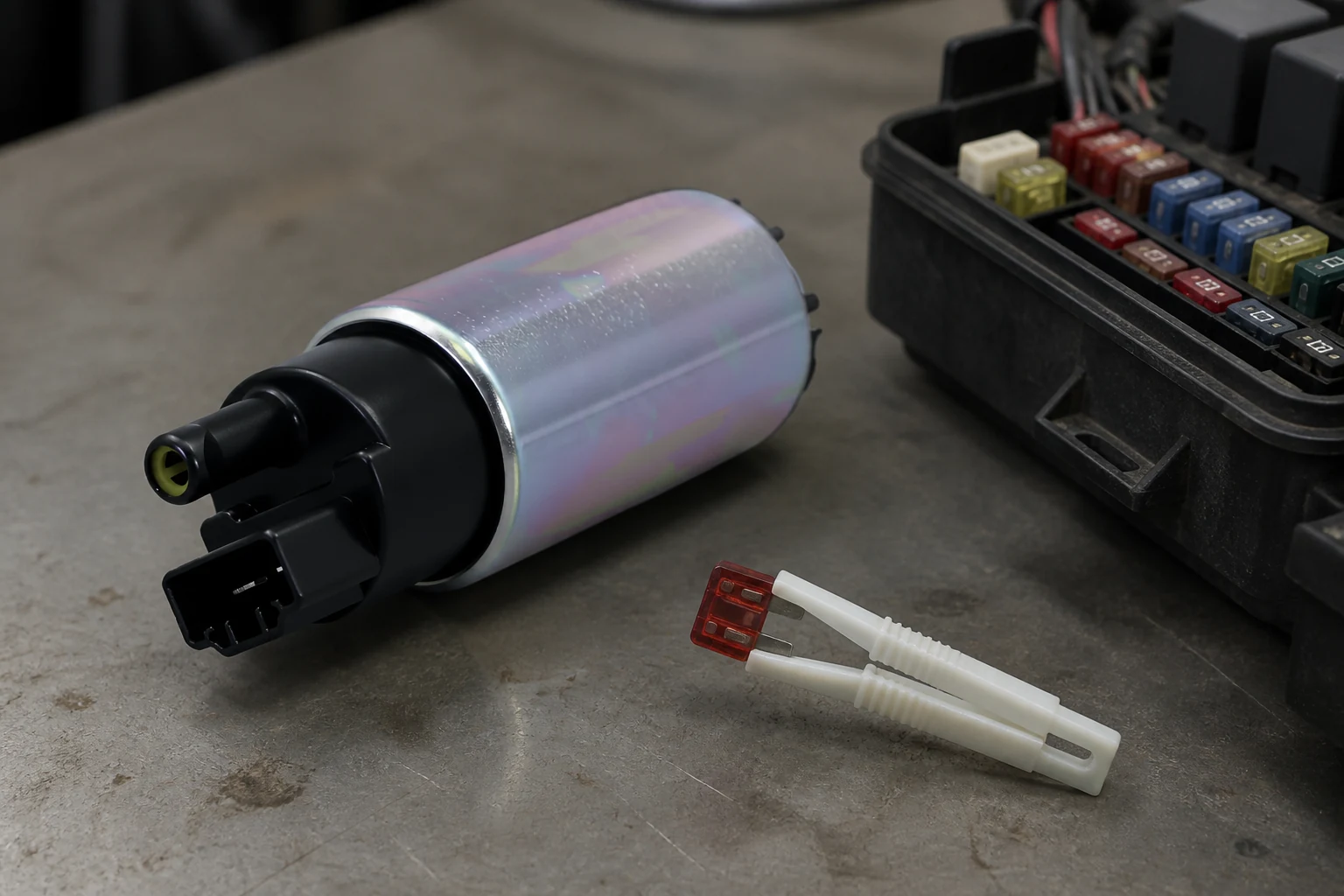
Community no-start threads often jump to a four-figure pump quote while the driver is still asking whether the fuse or control path is dark. That mix-up is exactly what counters should catch on the intake notes.
Why the fuse opened: overdraw vs hard short
A fuse that keeps blowing is almost never a “bad fuse” problem by itself. It is the circuit reporting either a hard short or a load that pulls more current than the fuse rating allows.
| Re-blow timing | Likely branch | Typical field drivers |
|---|---|---|
| Opens instantly on key-ON | Hard short to ground or shorted feed | Rubbed insulation, pinched harness after tank work, damaged connector |
| Survives key-ON, dies under crank/run | Overdraw / high current load | Worn pump motor, severe restriction that forces the pump to work harder |
| Charred / cloudy fuse body | Violent overcurrent event | Shorted feed or severe contact heat—inspect cavity and terminals |
Opens instantly on key-ON points to a hard short to ground or shorted feed. Survives key-ON then dies under crank or run points to overdraw or a high current load. Either branch is a fuel pump circuit problem first, not a random “weak fuse” story.
Important: Never “fix” a repeat blow by installing a higher-amp fuse for the fuel pump. That removes the sacrificial protection and can melt harness insulation. (Source: automotive fuse protection basics on Wikipedia — Fuse (automotive); field replies on repeat-blow threads also warn against upsizing.)
After a new pump install, pinched tank or bed-support wiring is a recurring shop story: the fuse pops on key-ON until the pump connector is unplugged, then the open disappears. That pattern points to load-side harness damage, not a mysterious “fuse defect.”
Circuit isolation sequence for service bays
Start with proof that the correct fuse is open, then decide whether the fault lives in the pump/load side or upstream in the feed.
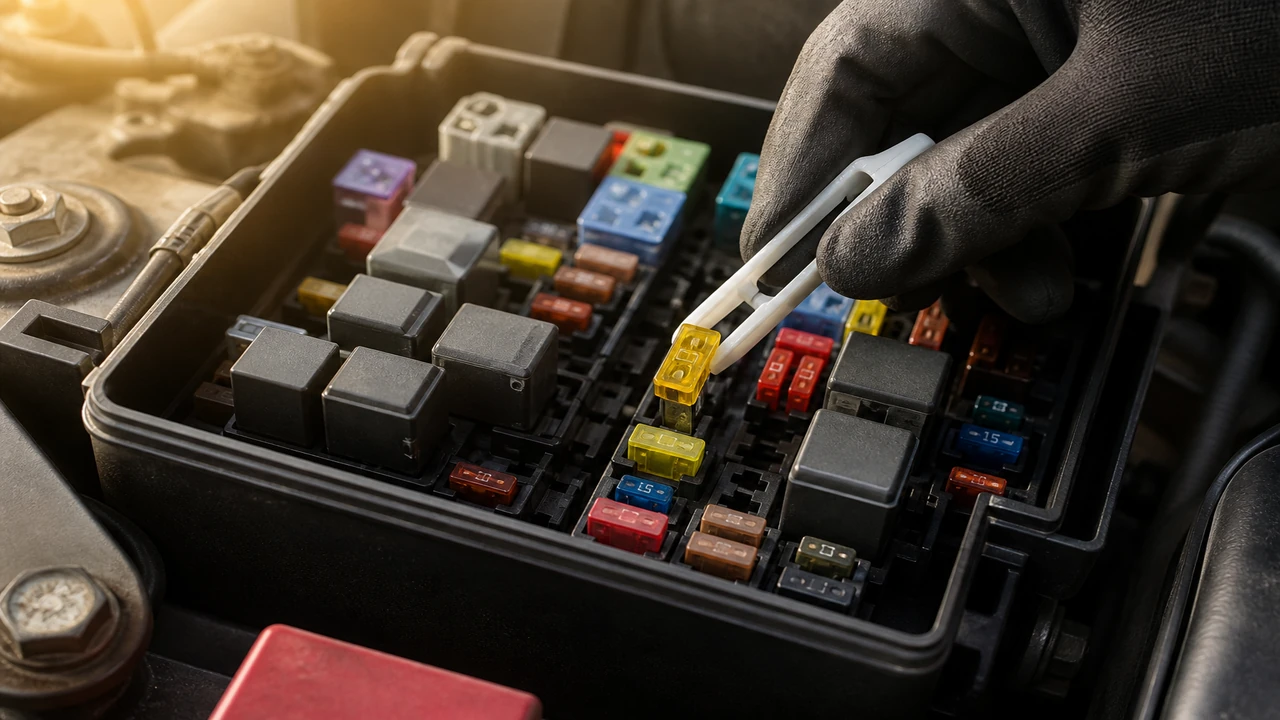
- Identify the fuel pump fuse from the lid map or OEM data—never by color guesswork alone.
- Confirm the open with a visual filament check and a continuity/ohms test; hairline opens can look intact.
- Replace once with the same amp rating only, then watch when it fails.
- If it fails immediately, unplug the pump/module connector and retest key-ON.
- If the fuse holds with the pump unplugged, inspect tank-area harness routing, pinches, and connector damage before condemning a brand-new pump.
- If it still blows unplugged, chase the short between the fuse/relay feed and the pump connector.
- When the fuse holds, verify loaded voltage at the pump feed and ground rather than relying on a static ohms glance alone—some platforms include intentional resistance that can confuse cold checks.
That loaded voltage check is the practical substitute for guessing from a cold meter reading. It keeps the bay focused on whether the fuel pump circuit can actually deliver power under work.
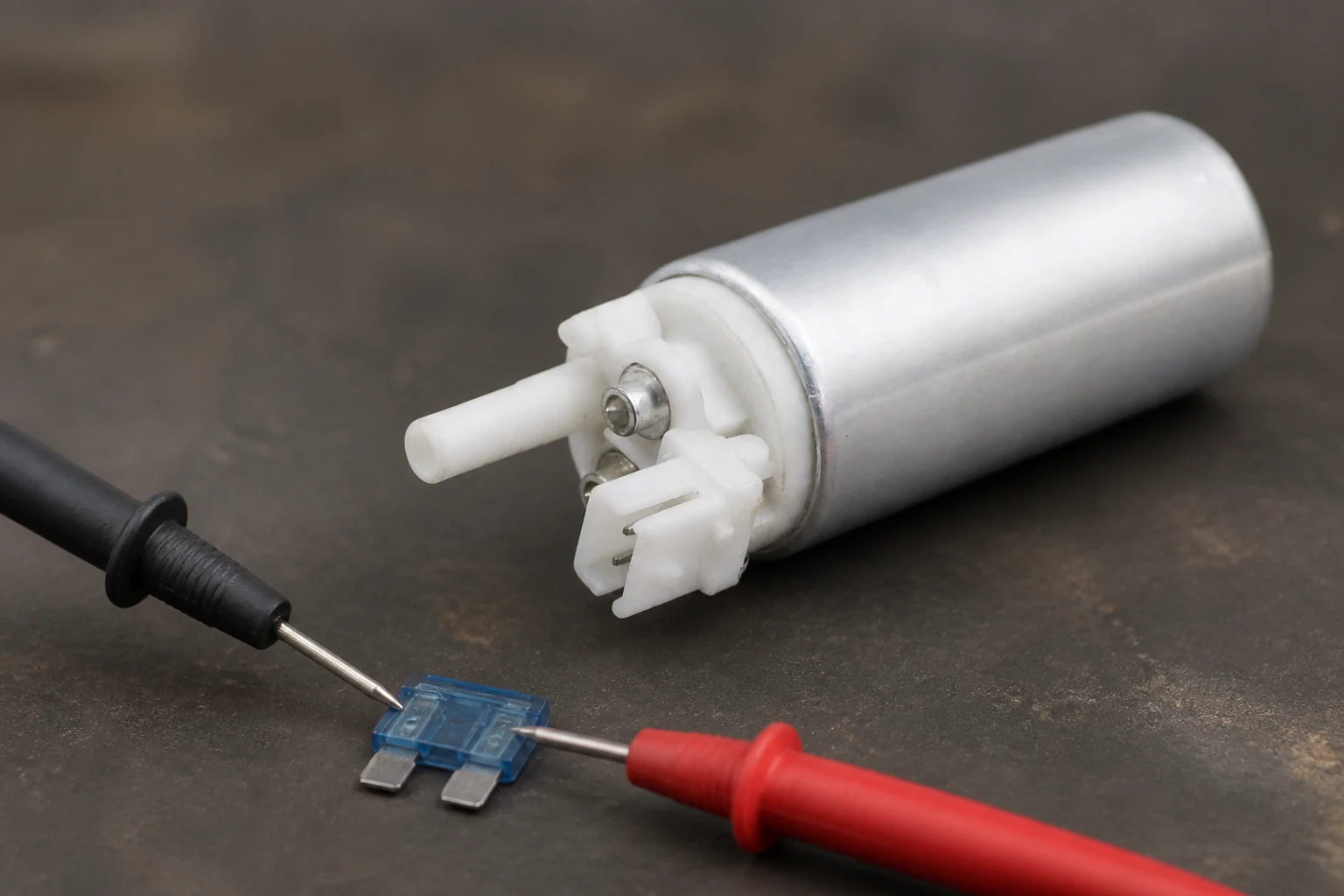
This sequence is a service-bay screen. Platform wiring diagrams and OEM test plans remain the final authority for pin IDs and commanded pump states.
Counter decisions after a fuse event
Do not release a vehicle—or a wholesale assembly quote—on “we put a fuse in” alone. Capture the electrical story so the next bay does not repeat the same parts cycle.
- Record cavity ID, fuse amp rating found, and whether the open was clean or charred.
- Note prime status on key-ON before and after the fuse change.
- Log re-blow timing (instant vs under load) and the unplug-isolation result.
- Attach relay swap outcome when the fuse tested good.
- Hold assembly SKUs until power reaches the pump and delivery evidence still fails.
For fleet counters, that packet prevents the common bounce between fuse packs, relays, and modules on the same VIN. It also keeps adjacent stocking honest: a confirmed harness pinch needs wiring repair time, not another pump carton.
When a documented assembly route is the next step
Move to assembly documentation only after the fuel pump circuit can deliver power and the pump still fails pressure, volume, or commanded run checks. At that point the failure is no longer “the fuse,” and the buyer needs a platform-scoped module—not another protective part.
For a documented example after that diagnosis gate, review the Kangsong fuel pump assembly for Hyundai Sonata and Kia Optima. That product page’s fitment and OE cross-reference language apply only to the platforms listed there.

Browse related families on the Kangsong products hub when OE references are ready. Send VIN, OE numbers, and the fuse/relay/voltage notes through Contact Kangsong, and use About Kangsong when a quality packet needs manufacturer background.
Skip the assembly path when the fuse still unexplained, the unplug test still points at a harness short, or the vehicle falls outside that product page’s listed scope.
FAQ
What are typical fuel pump fuse blown symptoms?
Crank-no-start with a healthy starter sound, a silent key-ON prime, and—when the fuse opens in motion—a sudden stall that will not restart.
Why does a fuel pump fuse keep blowing?
Usually a hard short in the feed/harness or a pump (or related load path) drawing more current than the fuse rating allows.
Can a blown fuel pump fuse cause stalling while driving?
Yes. When the fuse opens in service, pump power drops immediately and the engine can die as if fuel ran out.
How should a shop test the fuel pump fuse?
Confirm the correct cavity, inspect the filament, verify continuity, replace only at the specified amp rating, then watch re-blow timing and run the unplug isolation branch.
Is it safe to install a higher-amp fuse for the fuel pump?
No. A larger fuse removes circuit protection and can allow harness damage or fire risk while the root fault remains.
Does a blown fuse always mean the fuel pump assembly failed?
No. Fuse opens protect the circuit; the root fault may be wiring, connectors, relay-side issues, or a high-draw pump—verify power before quoting the assembly.
What if the fuse still blows with the pump unplugged?
Treat it as an upstream short between the fuse/relay feed and the pump connector, not as automatic proof that the pump motor is the only fault.
How is this different from general bad fuel pump symptoms?
This page isolates fuse-blown / circuit-protection events. The distributor bad fuel pump symptoms guide covers broader assembly symptom patterns after electrical supply is already in view.
References
- Wikipedia: Fuse (automotive) — overcurrent protection role of automotive fuses.
- NHTSA-hosted OEM tip: voltage drop testing procedures — load-side electrical verification notes, including intentional resistance caution on some circuits.
- Mechanics Stack Exchange API record: fuse vs control-path confusion on a no-start — community question tying lost prime sound to fuse/relay questions before a pump quote.