High pressure fuel pump noise when accelerating is a parts call only after you separate a normal DI tick from a new metallic or worsening sound under load, confirm fuel quality and low-pressure feed, and see whether commanded rail pressure still tracks actual under throttle—then choose HPFP or drive-interface work, or an in-tank supply assembly when that path is backed by low-side data.
Why High Pressure Fuel Pump Noise Shows Up When Accelerating
Acceleration / load demand raises commanded rail pressure, so weak supply or a worn high-pressure stage often speaks up under throttle first. Direct-injection engines use a low-pressure supply pump and a high-pressure pump on the engine.
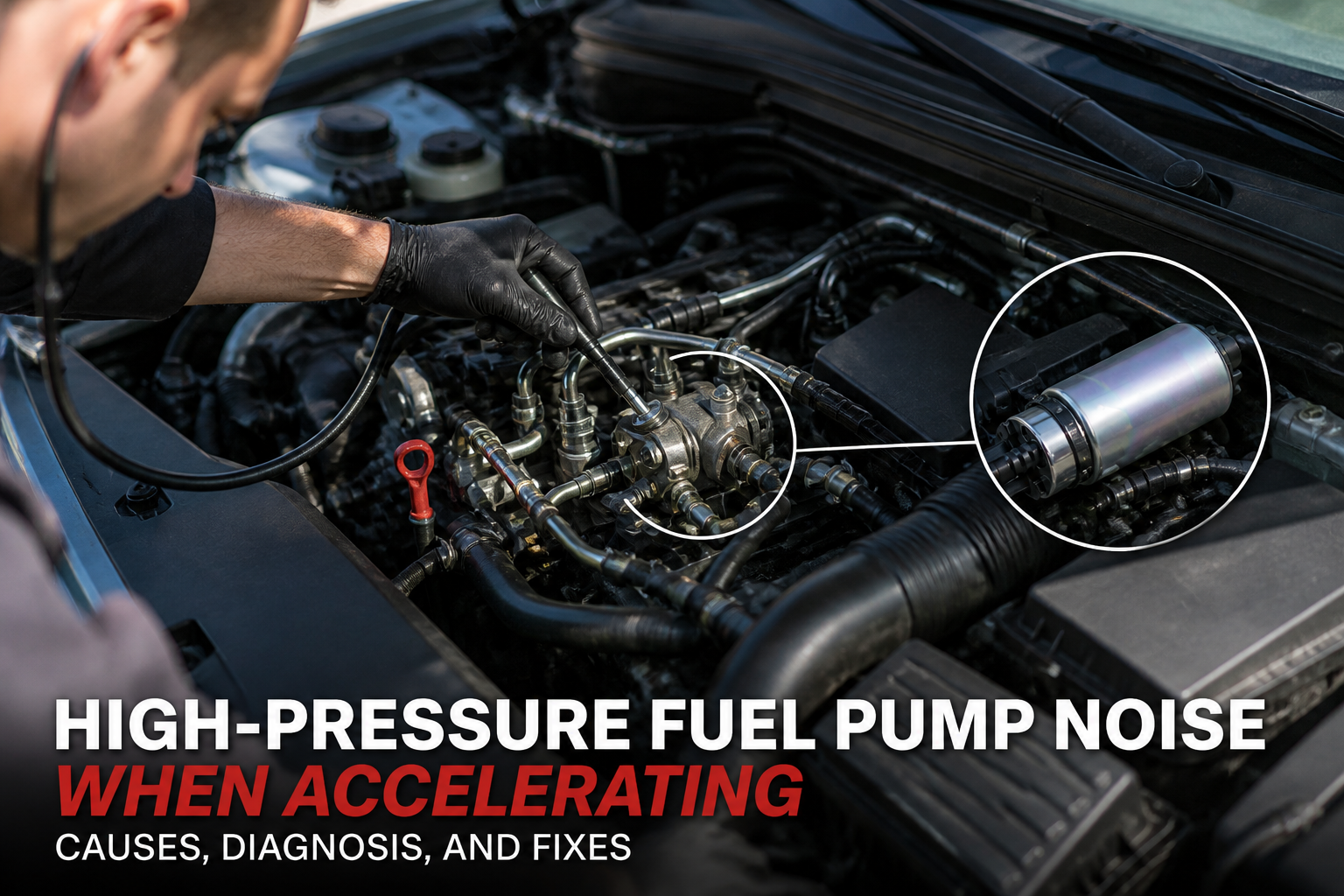
The high-pressure fuel pump (HPFP) is the cam-driven (or mechanically driven) stage that raises fuel from low-side feed to rail pressure for direct injection—plainly, the engine-mounted pump that pushes fuel hard into the injectors. Under merge or snap throttle, the control module asks for more rail pressure; any shortfall in feed volume or pump output shows up as noise, lag, or both.
Typical GDI education frames a low-side feed on the order of 50–85 psi into a high-side rail that can sit around 2,000–3,000 psi under demand. Treat those bands as architecture context and always compare to the OEM target for the VIN on the ticket.
Normal DI Tick vs Abnormal HPFP Noise Under Acceleration
A steady sewing-machine tick from the fuel rail or HPFP area can be normal on DI engines; a new metallic, RPM-rising tick at the pump—or an exhaust tick that grows under throttle—needs a different path. Normal DI tick is that regular click many DI engines make even when healthy.
Shop and owner threads often describe high pressure fuel pump ticking at idle as “perfectly normal” HPFP/injector noise when nothing else is wrong. Abnormal metallic tick is the harsh, sharp sound that climbs with RPM at the pump housing and may point to drive-interface wear on vulnerable platforms.
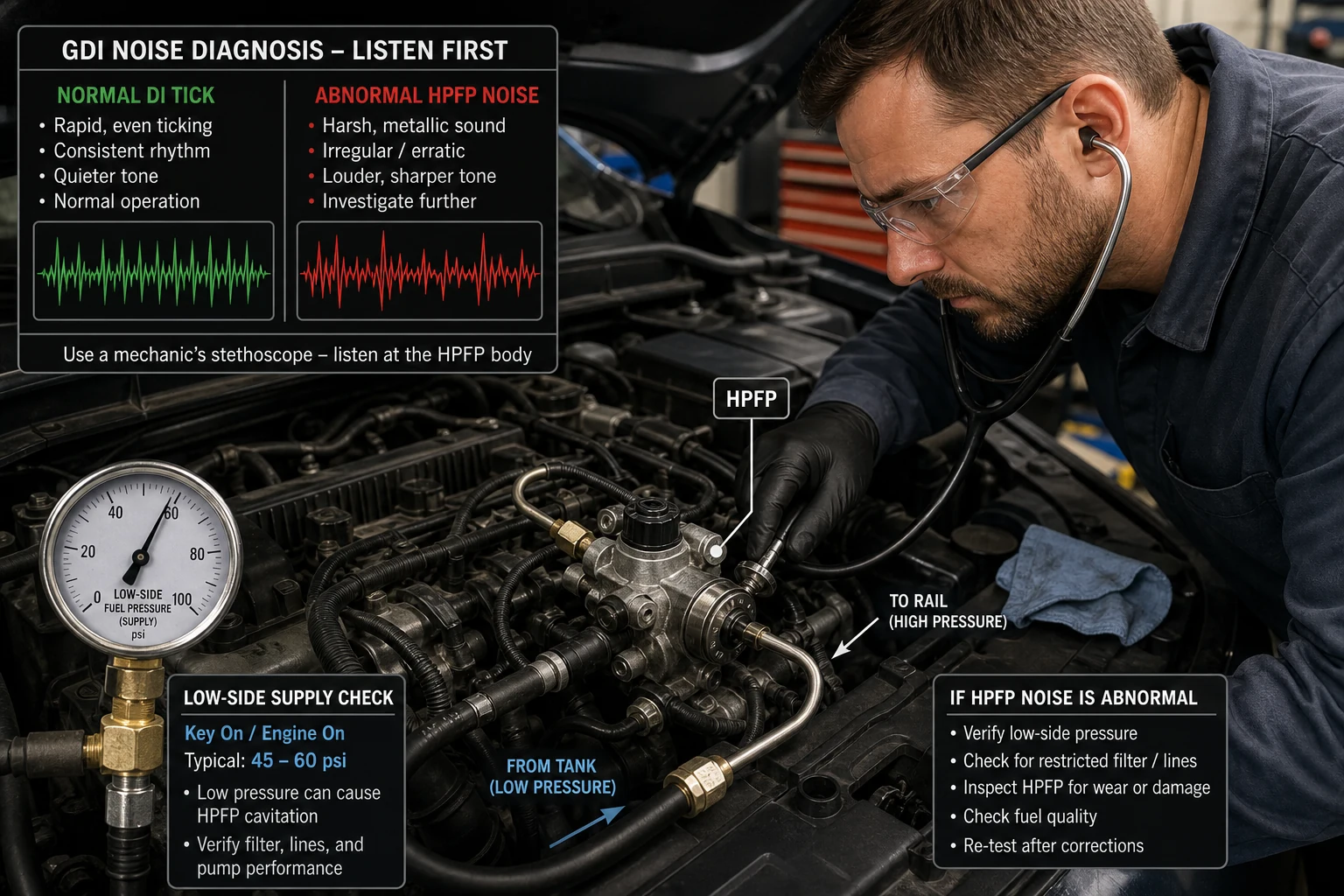
| Cue | More likely normal DI / HPFP tick | More likely abnormal path |
|---|---|---|
| Sound character | Steady sewing-machine click at idle/light load | New sharp metallic tick loudest at the HPFP |
| Load behavior | Little change under mild throttle | Grows clearly with RPM / HPFP noise under load |
| Co-symptoms | None; no CEL, no hesitation | Hesitation, misfire, fuel-in-oil clue, rail-pressure codes |
| Localization | Broad rail/injector area | Pinpoints to pump housing with a stethoscope |
| Next move | Document baseline; monitor | Isolate sound; inspect drive interface per OEM data |
If a new metallic tick is loudest at the HPFP and rises with RPM, inspect the pump drive interface—cam follower / roller / pump cam lobe—per OEM service information. Platform families with known follower wear are not a universal rule for every DI nameplate.
From the field: Forum owners who report HPFP-area ticking “louder than usual” with lack of acceleration (and sometimes fuel-smelling oil) are describing an inspect path, not a “normal tick” dismissal — VWVortex HPFP ticking thread.
Fuel Quality and Filtration Checks Before You Blame the HPFP
Document fuel quality / contamination, filter service, and Top Tier detergent gasoline context where relevant before assigning noise to the HPFP alone. Contaminated or low-quality fuel and neglected filtration accelerate wear in high-pressure fuel systems—they are part of the work order, not sole proof of which pump stage failed.
Ask what fuel was last used, whether the vehicle sat with a near-empty tank, and when the filter or sock was last changed. Debris and water that reach the high-pressure stage shorten pump life; a clogged filter can also starve the low side and mimic high-side complaints.
Log fuel and filter history on the ticket before you price an HPFP. If contamination is obvious, clean the feed path before you condemn either stage.
Check Low-Pressure Supply Before Condemning the HPFP
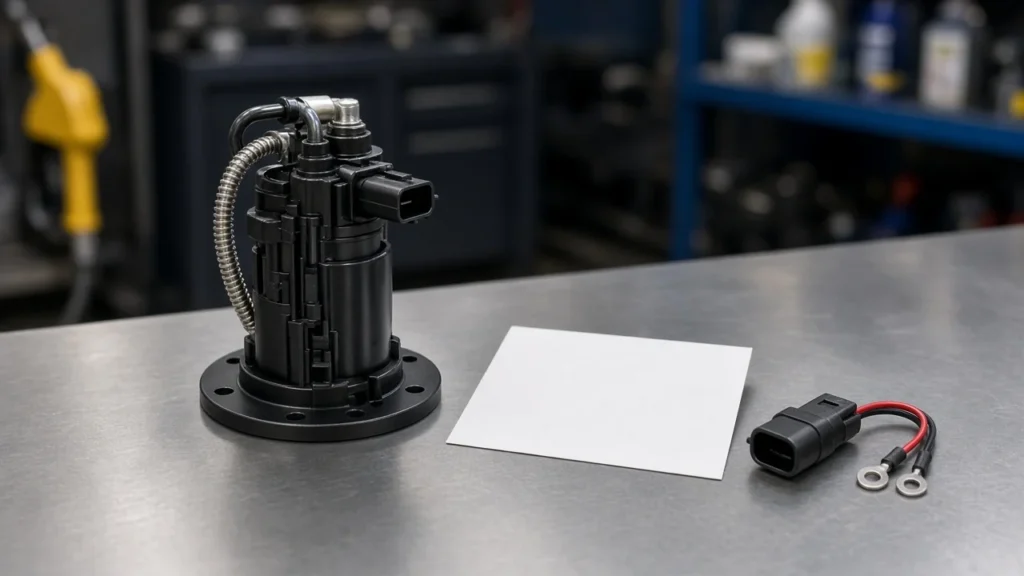
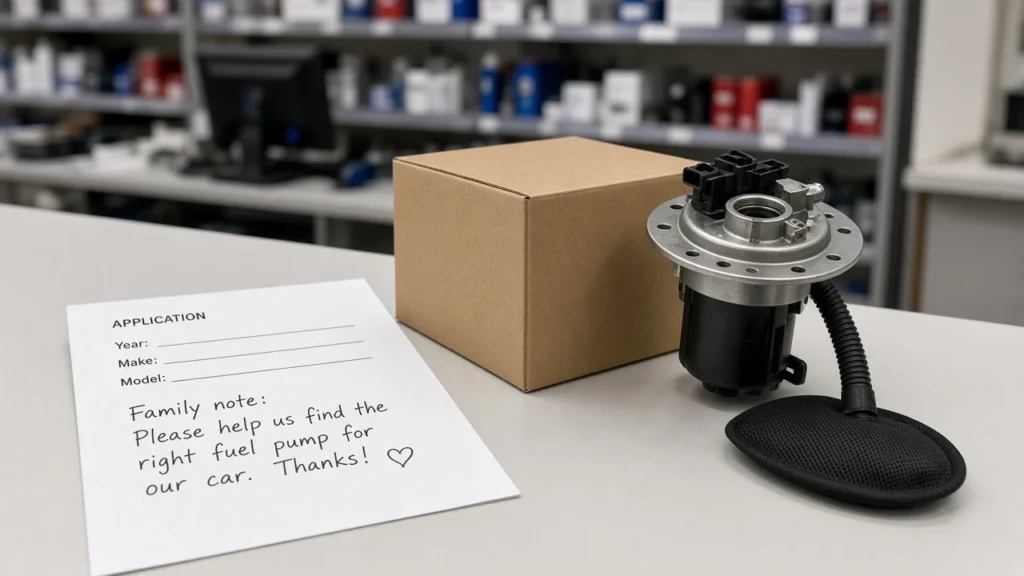
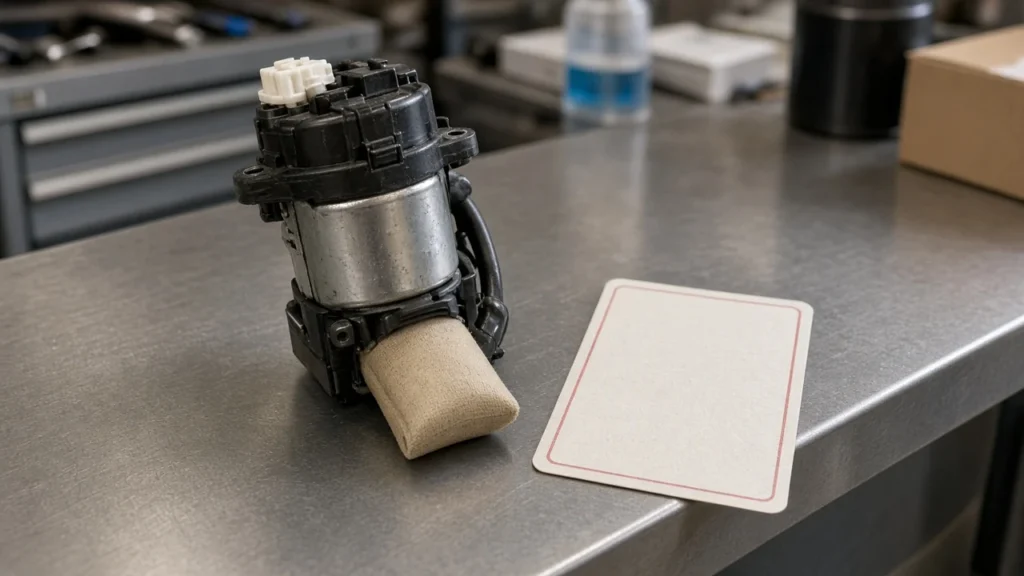
The HPFP must be fed; it cannot pull fuel from the tank unaided—so confirm the low-pressure side is feeding the HPFP before judging the high-pressure pump. The low-pressure / in-tank supply pump is the electric feed (lift) stage that supplies volume and pressure to the HPFP; it cannot be skipped on a two-stage system.
A weak in-tank pump or restricted feed can look like a bad HPFP until low-side pressure and volume are checked. Trade technical write-ups stress separating low-side and high-side early: an unstable, restricted, or aerated low side invalidates high-side judgment.
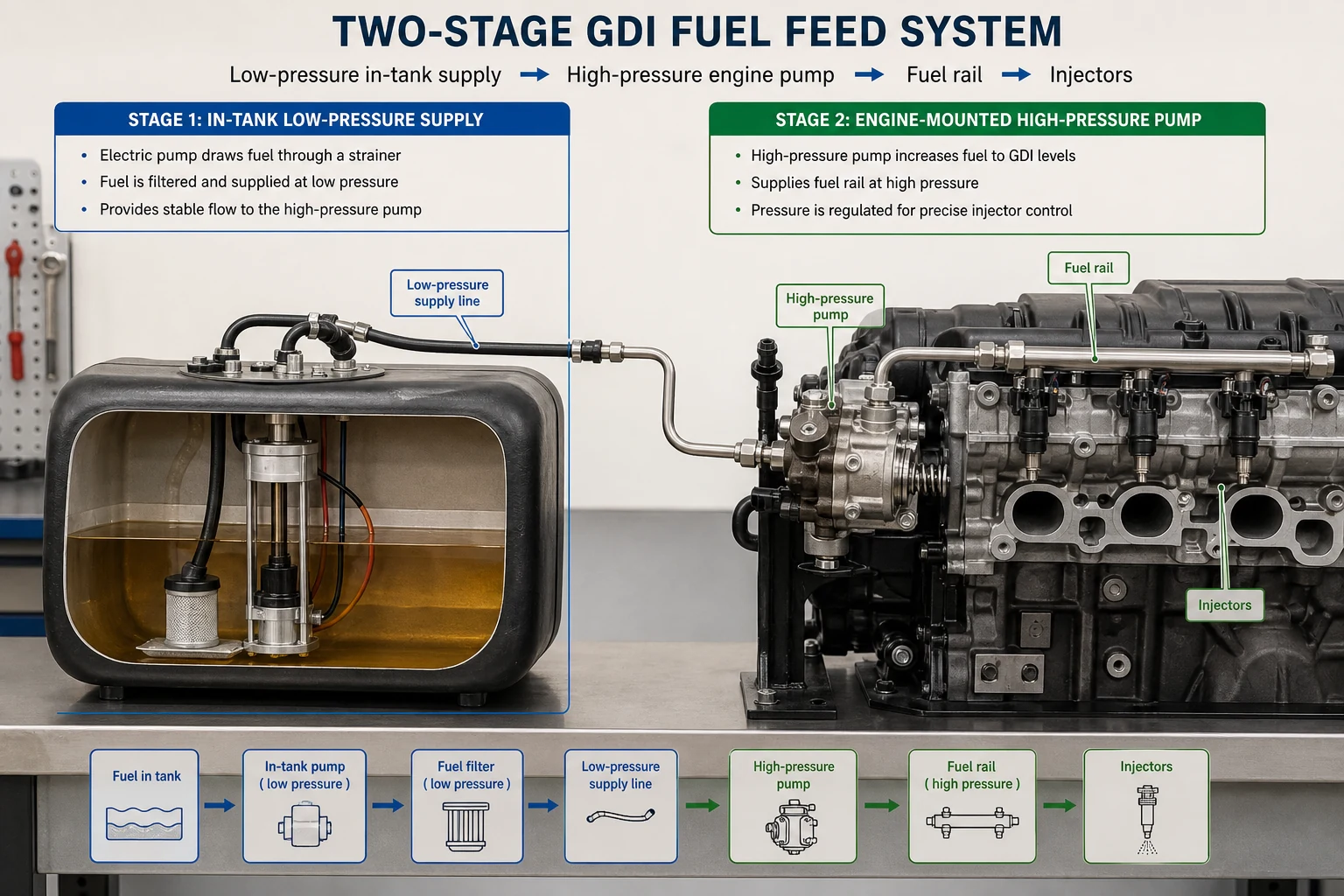
Measure low-side pressure and volume against OEM data under the same acceleration / load demand that creates the complaint. Many GDI education sources cite roughly 50–80 psi on the low side (some apps up to about 100 psi)—again, OEM first.
When low-side data fails, stop the HPFP parts chase and move to the low pressure fuel pump / in-tank supply path. When low-side data passes and rail pressure still lags under load, keep the high-side and drive-interface path open.
Acceleration Noise Decision Checks: Sound, Exhaust, and Rail Pressure
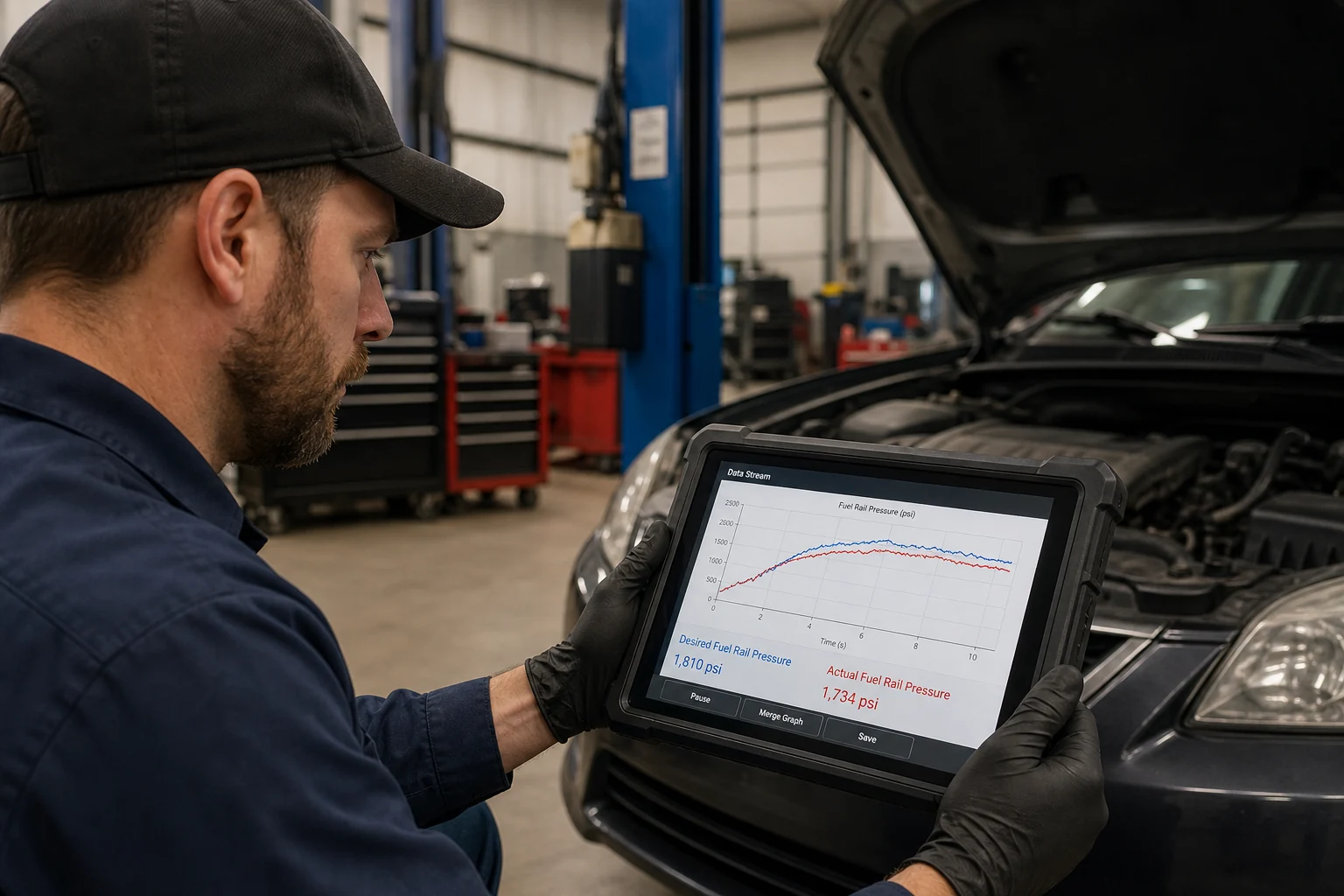
Localize the sound, rule out exhaust tick under throttle, then compare desired and actual rail pressure during a loaded acceleration test. Fuel rail pressure (desired vs actual) is the scan comparison of what the computer wants versus what the rail actually has when you accelerate.
- Stethoscope / chassis-ear localization — Is the tick loudest at the HPFP housing, the rail/injectors, or elsewhere?
- Exhaust manifold leak screen — An exhaust manifold leak can produce a tick that gets louder specifically under acceleration and can be mistaken for pump tick; look for soot and listen along the manifold.
- Loaded FRP compare — During a loaded acceleration test, compare desired and actual rail pressure; healthy systems keep them tracking closely even under heavy throttle.
| Sound language | Typical meaning | Next action |
|---|---|---|
| Warm chirp isolated to HPFP (bulletin platforms) | May be non-functional on listed OEM bulletins after isolation | Follow OEM isolation; inspect lobes; replace if bulletin directs |
| Sharp metallic tick at HPFP, rises with RPM | Possible follower / cam-interface wear | Inspect drive interface; add FRP data under load |
| Steady sewing-machine DI tick, no co-symptoms | Often normal DI / injector + HPFP acoustic signature | Baseline and monitor |
| Supply whine / grind from tank area | More low-side / module stress than classic HPFP tick | Check low-side pressure/volume and filtration |
| Tick louder only under throttle at manifold | Exhaust leak candidate | Confirm exhaust before condemning HPFP |
Treat noise plus hesitation, misfire, or P0087 / rail-pressure codes as a pressure-data job—not a sound-only parts call. Illustrative education cases show large commanded-versus-actual gaps (for example, target near 2,200 psi with actual near 800 psi after the low side is already proven)—use OEM PIDs and limits for the vehicle on the rack.
When HPFP Replacement or a Spec Change Is Warranted
Isolated OEM warm-chirp paths differ from metallic tick plus pressure lag plus drive-interface damage; noise plus hesitation or codes is a pressure-data job. A warm OEM chirp bulletin path may say the sound does not hurt reliability yet still authorize pump replacement after the noise is isolated to the HPFP.
Important: Honda Service Bulletin 16-013 (via NHTSA) documents a warm-engine HPFP chirp on listed Pilot/Ridgeline/Odyssey ranges and notes the noise does not impact pump, engine function, or reliability—yet the corrective action is still HPFP replacement after isolation, with cam-lobe inspection (new lobe height standard 0.236 in / 6.0 mm on that procedure). Do not copy the “no reliability impact” note onto metallic follower failure or other brands.
Replace or deep-inspect the HPFP path when:
- Metallic tick at the pump rises with RPM and drive-interface inspection shows wear.
- Desired versus actual rail pressure diverges under acceleration after the low side is proven.
- Co-symptoms (hesitation, misfire, rail-pressure codes) sit on the same work order as the noise.
Monitor or follow a bulletin chirp path when the sound is an isolated warm chirp matching OEM criteria, with no pressure lag and no follower damage. Move to the in-tank assembly path only when measured low-side weakness explains the complaint.
Related diesel reading (different jobs): diesel high pressure fuel pump failure symptoms covers diesel symptom counters; CP4 fuel pump failures and high-pressure diesel pump sourcing covers CP4-class diesel sourcing—not GDI acceleration-noise triage.
Selecting a Supply-Side In-Tank Pump Assembly After Supply Failure
Only after measured low-side weakness, review Kangsong’s electric pump and assembly catalog and the scoped Hyundai high-pressure pump example—never as a universal HPFP noise cure. After low-side supply failure is confirmed, review Kangsong electric pump assemblies at /products/.
Kangsong electric fuel pump assembly listings serve aftermarket programs that need an in-tank / low-pressure module once the feed stage is the failed part. The Hyundai high pressure fuel pump page is one published HPFP example when OE/years match—confirm OE and fitment on the live page before quoting.
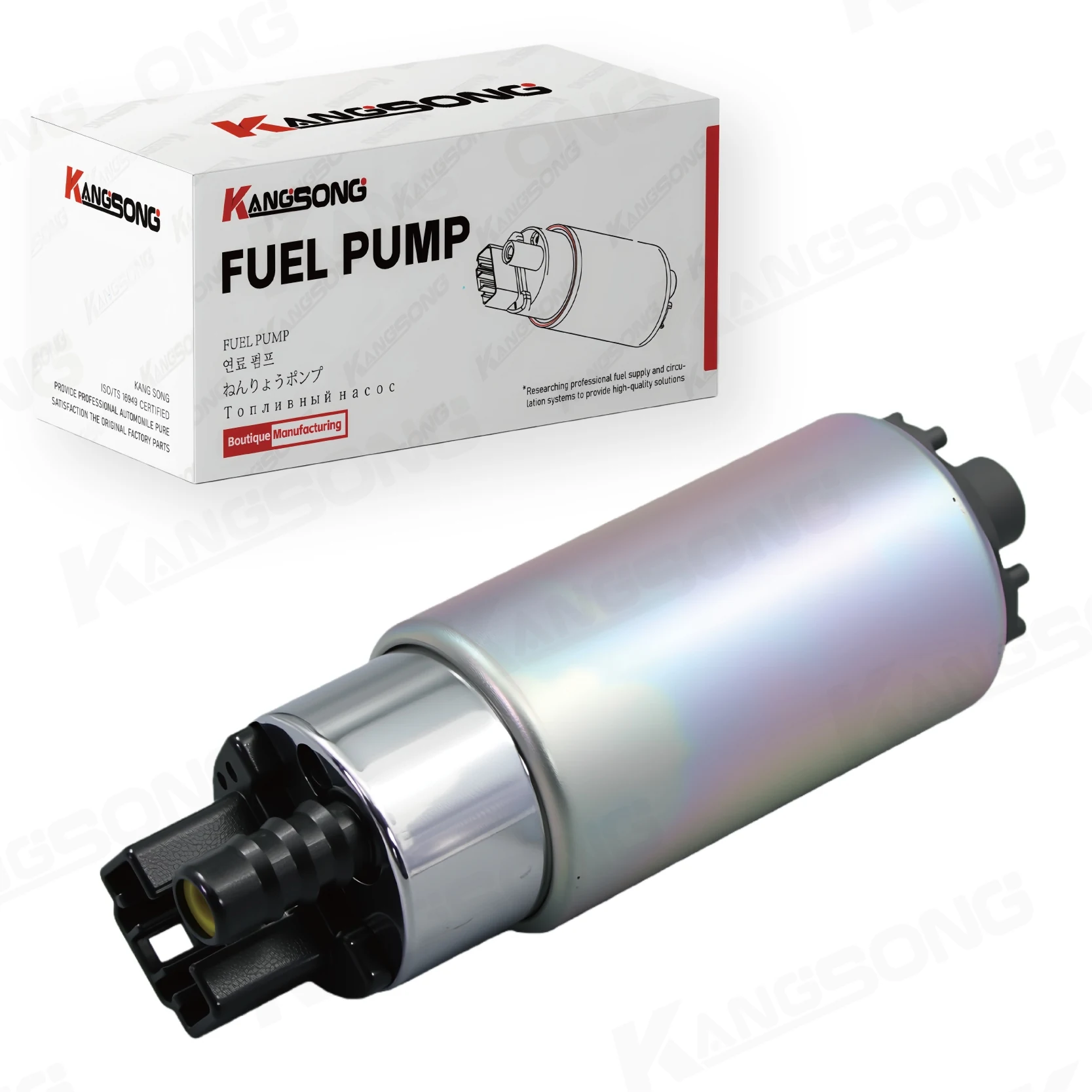
Example SKU page: high pressure fuel pump applicable to Hyundai. Kangsong’s verified path here is the low-pressure / in-tank assembly catalog after supply-side evidence—not a fix for every HPFP tick under throttle.
Skip the catalog path when the complaint is sound-only with no low-side data, when metallic follower or cam damage is still open, when the vehicle is outside published fitment, or when the buyer is shopping diesel CP4 interchange. No FASS, AirDog, Facet, or Bosch equivalence is implied.
| Gate outcome | Evidence you need | Parts path |
|---|---|---|
| Monitor / OEM warm-chirp path | Isolated warm chirp matching bulletin; no rail lag; lobes OK or per OEM | Follow OEM; replace HPFP only if bulletin directs |
| HPFP + drive-interface inspect/replace | Metallic tick at pump + FRP lag after low side OK, or visible follower/cam damage | HPFP and/or drive interface per OEM |
| In-tank / supply assembly | Measured low-side pressure or volume failure under the complaint load | Browse /products/; use the Hyundai HPFP SKU only within published OE/year scope |
FAQ
Is high pressure fuel pump ticking normal when the engine is idling?
A steady sewing-machine DI/HPFP tick at idle can be normal when there are no co-symptoms. Watch for a change in character, localization to the pump housing, or new hesitation and codes.
Why does high pressure fuel pump noise show up or get worse when accelerating?
Commanded rail pressure rises under load, so weak feed or a worn high-pressure stage often appears first under throttle. Compare desired and actual rail pressure during a loaded pull.
Can a weak in-tank fuel pump cause HPFP-like noise or drivability under acceleration?
Yes. A weak feed can starve the HPFP and present as power loss or rail-pressure codes that look like high-side failure until low-side data is checked.
How do I tell injector tick from a failing HPFP?
Rail/injector sewing-machine tick is usually broad and steady; a failing HPFP path more often adds a sharp metallic tick at the pump housing that rises with RPM—then confirm with FRP data.
Does fuel quality affect high pressure fuel pump noise and wear?
Contamination, poor fuel, and neglected filtration accelerate high-pressure pump wear and can contribute to aeration or restriction. Document fuel and filter history before assigning the noise to one stage alone.
When should the high pressure fuel pump be replaced vs inspected only?
Follow OEM warm-chirp bulletins when they match; replace or deep-inspect when metallic tick, drive-interface damage, or rail-pressure lag under load is proven. Sound alone is a weak reason to condemn the pump.
Should I replace the HPFP or select a new in-tank pump assembly?
Choose the in-tank assembly when measured low-side failure explains the complaint; stay on the HPFP/drive path when the low side is proven and high-side or interface evidence remains.
How is this different from diesel HPFP failure or CP4 sourcing articles?
This page is acceleration-noise discrimination on GDI/two-stage systems ending in a supply-side catalog path. Diesel symptom counters and CP4 sourcing live on the linked diesel posts above.
References
- Apex Tech Nation: Gasoline Direct Injection (GDI) — two-stage GDI architecture, low-side-first diagnosis, desired vs actual rail pressure under load.
- NHTSA-hosted Honda Service Bulletin 16-013 PDF — warm HPFP chirp; non-functional note on listed models; replace after isolation; cam-lobe inspection.
- Wikipedia: Gasoline direct injection — GDI overview and gasoline lubrication limits at high injection pressure.
- Reddit r/mazdaspeed3: normal HPFP/injector tick language — community “perfectly normal” tick language.
- VWVortex: louder HPFP tick with lack of acceleration — abnormal cluster language (louder tick, power loss).