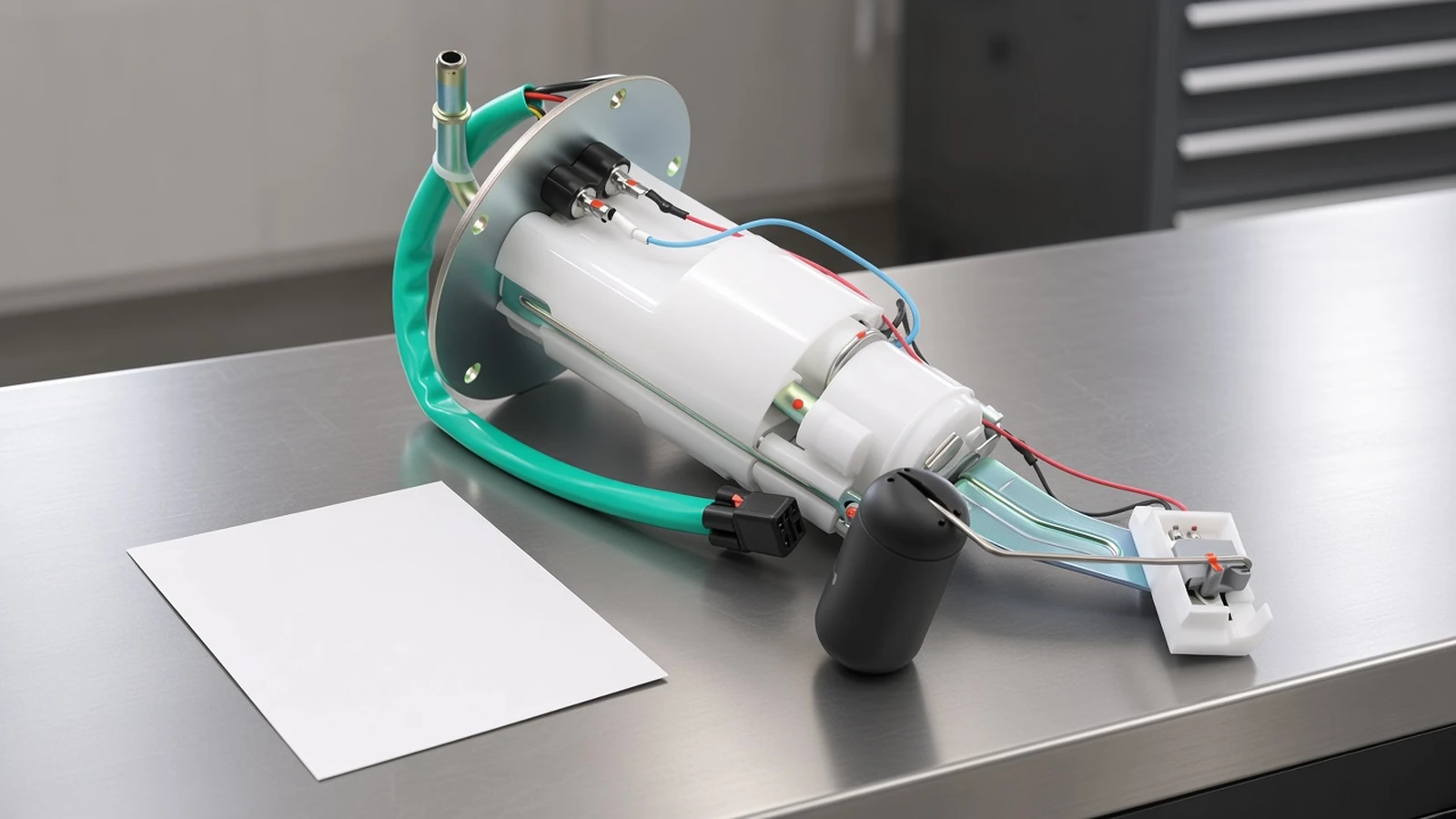
A fuel pump check valve purchase line may name an integral one-way check at the pump outlet (often captive in the module), a separate inline / AN / barbed line valve, a return-line or reservoir check, or a misnamed sister object — and this catalog does not print a standalone check-valve SKU. The same three words can still mean a captive outlet check, a discrete line carton, or a vapor valve someone mislabeled as a fuel pump valve.
Fuel pump check valve location language belongs in that naming fork (outlet, line, or return), not in a rebuild map. KS-360501 stays a 1987-1995 C/K complete assembly window after a pump-side match, never a check-valve cure-all.
Match the purchase line to the physical check-valve object
The line may name an Integral / outlet check (in pump or module), a Separate inline / AN / barbed check valve, a Return-line / reservoir check, or a misnamed sister — not one universal SKU. A counter who hears those three words and grabs the nearest discrete valve or pump carton has skipped the fork.
A check valve is a one-way, non-return device: fluid is meant to move in one direction through two ports. On a fuel-pump ticket, that generic job still has to land on a named object before anyone quotes.
Independent technical primers put a one-way check at the pump outlet so residual pressure stays in the line after the pump stops and fuel does not drain straight back into the tank. That is the outlet residual-pressure object. It is not automatically the same carton as a barbed inline valve sold as its own part.
| Ticket reading | What the words may name | What the counter must match | What not to invent |
|---|---|---|---|
| Integral / outlet check | One-way check at the pump or module outlet | Sheet already prints outlet check / module / pump with captive check | A universal valve bottle for every truck |
| Separate inline / AN / barbed | Discrete line valve sold as its own carton | Sheet already prints a line or AN check | Quoting a C/K assembly as that bottle |
| Return / reservoir check | Extra one-way object on return or surge-pot supply | Sheet already prints return or reservoir check | Collapsing it into the outlet check SKU |
| Sister misname | Regulator, strainer, EVAP vapor “fuel check valve” | Soft-link the sister page that owns that object | Retelling those pages here |
| Not on this sheet | Check-valve job with no printed carton here | Category browse; refuse a fake Kangsong valve SKU | KS-360501 as a check-valve cure-all |
EVAP tank-vapor smell content that also says “fuel check valve” is a different object class. Park that misname; do not treat a vapor valve as the pump-outlet residual check.
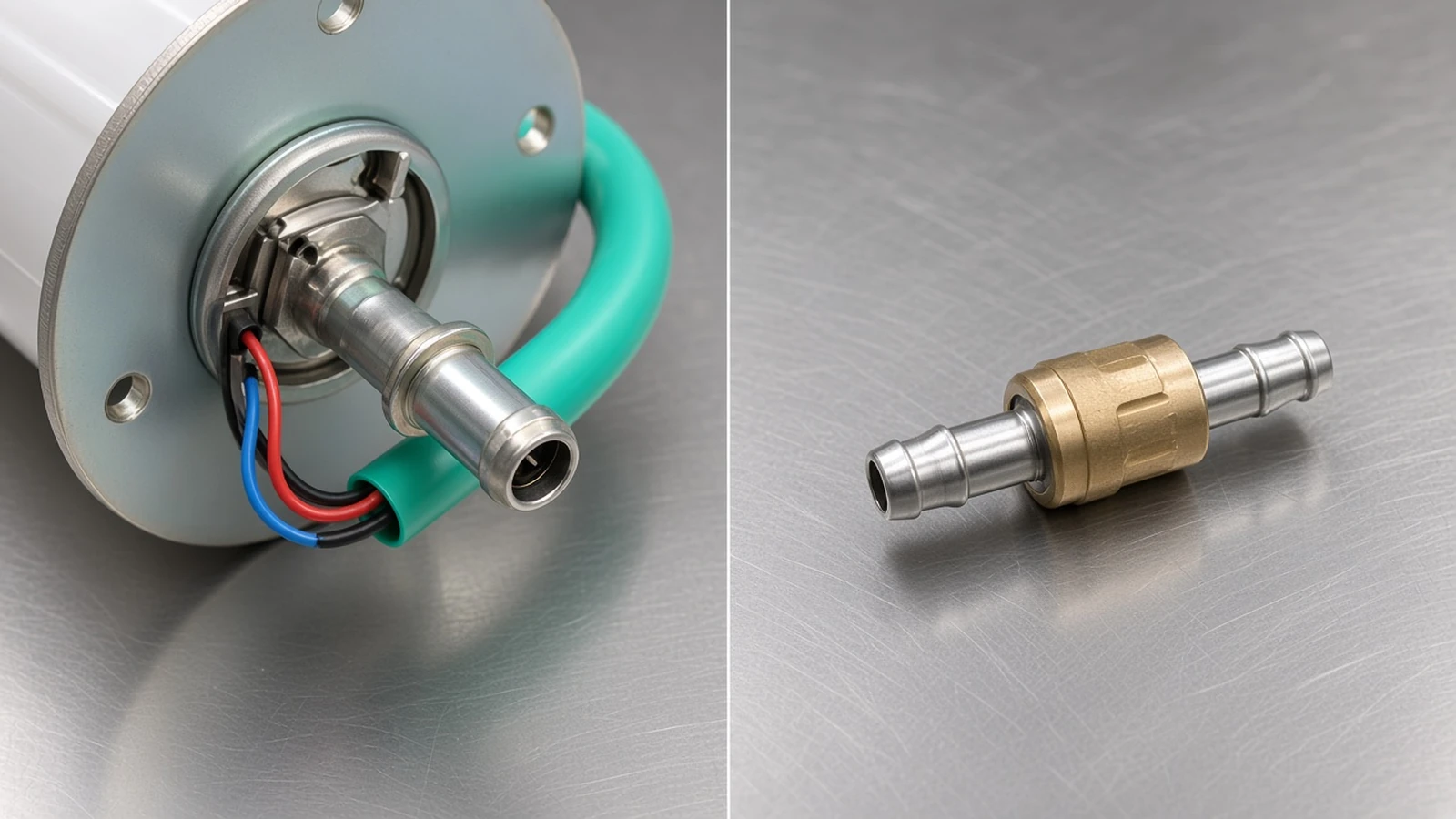
Decide whether the check is captive in the module or a separate carton
Many modern tickets resolve to a pump/module carton; some platforms print a replaceable outlet check; buyers still ask for cheap inline substitutes. The carton decision follows how the sheet sells the check, not how shopping carousels title the phrase.
On many in-tank modules the outlet check sits inside the pack and is not sold as a bottle. OE-style service notes for that pattern tell shops to replace the module when the check is the failed object, because the pump is not serviced as a separate outlet valve.
Other platforms print a replaceable outlet check at the pump nose, and some CIS-style systems also print a reservoir check on a transfer supply. Digifant-style education even places a one-way check at the pump outlet and another inside the fuel pressure regulator, so one residual complaint can still point at two different parts.
Field language often asks for a cheap inline one-way valve when the OE check is captive in the tank assembly. Treat that ask as an objection about carton choice. This page does not endorse an inline hack, cut hose, or fire-risk workaround as a counter procedure.
Name outlet, line, and return locations without an install map
Location language means pump outlet, optional line valve, or return/reservoir check — not a single universal spot and not a how-to map. Fuel pump check valve location on a United States ticket is a naming job: which port or line the sheet already printed.
Fuel leaves the pump through the outlet check, then the line and filter, before the rail. On return systems a regulator on the rail sends excess back; on returnless layouts the regulator often rides in the tank module. Those are flow-path names, not torque steps.
Enthusiast threads on multi-check systems show an integral check in the pump nose plus secondary line checks, and training notes that also call out a return-line check into the tank for a jet-pump or surge pot. One ticket word can still mean more than one physical check on the same vehicle.
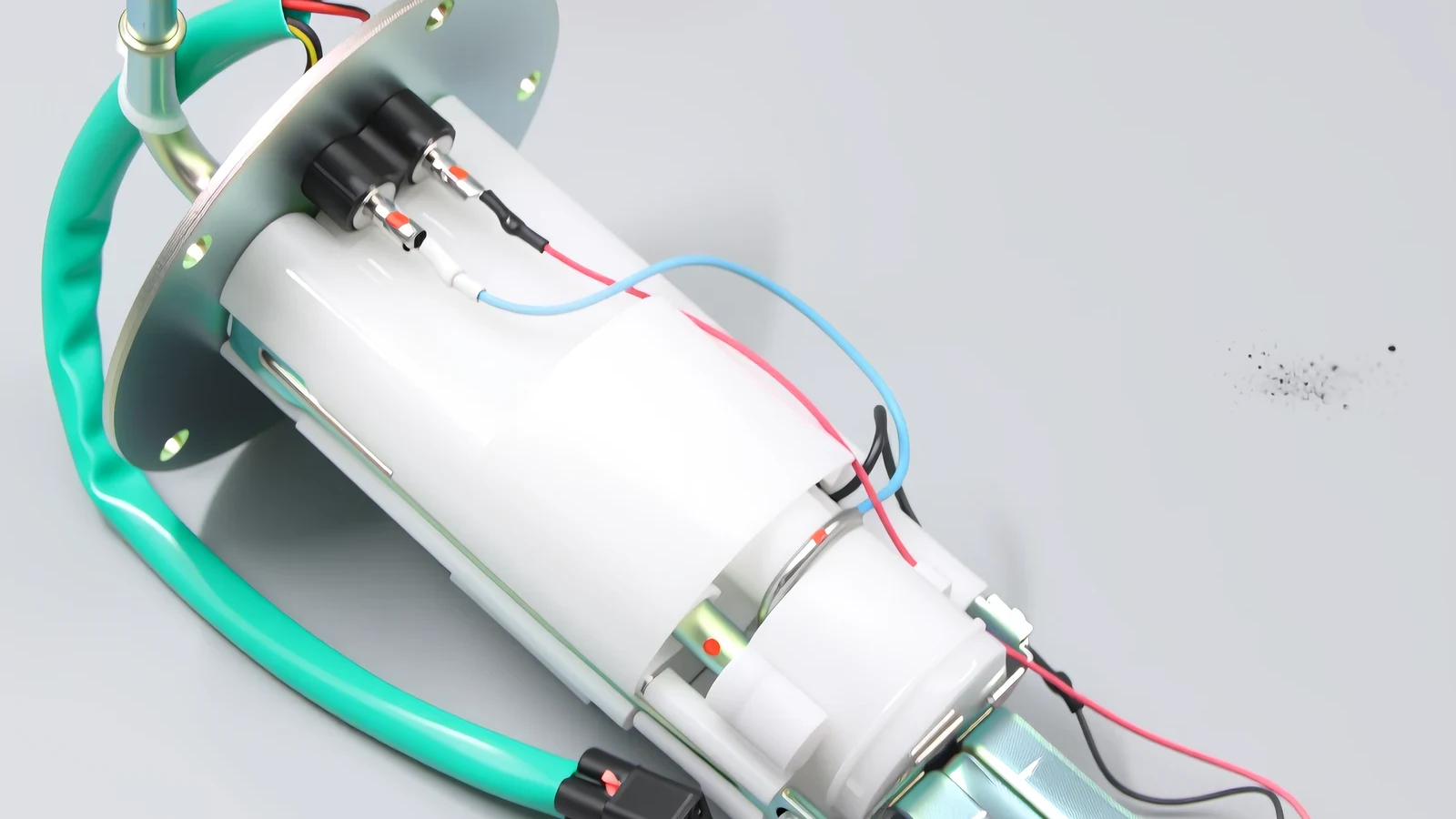
Write outlet, line, or return next to the object. Do not turn that naming into a gauge-test or hose-cut procedure on this page.
Soft-link regulator, residual-pressure symptoms, and strainer sisters
Residual-pressure complaints can also be injectors or a poorly seated regulator; soft-link sisters instead of retelling them. The outlet check is one residual object. It is not the only bleed path a shop hears about after key-off.
Important: ASE and trade education treat key-off residual loss as a failed pump check or leaking injectors, and on conventional return systems also as a poorly seated fuel pressure regulator — same closed-loop complaint class until the sheet names the object (MasterTechPrep ASE A8; MOTOR fuel-system analysis).
Send regulator depth to the fuel pump pressure regulator page.
Send long-crank and residual-pressure symptom depth to symptoms of a bad fuel pump.
Send the inlet mesh to the fuel pump strainer page.
Seal and filter lines stay on fuel pump gasket and fuel pump filter when those objects appear.
Those sisters own their objects. This page owns the ambiguous check-valve line that still has to name integral outlet check, separate line valve, return/reservoir check, or “not on this sheet.”
This catalog prints no standalone fuel-pump check-valve SKU
Public browse prints pump and assembly cards; KS-360501 does not print check valve as a sellable line. The missing valve bottle is the sheet fact; inventing a Kangsong check-valve SKU to mirror Bosch-, Holley-, or AN-style shopping cards does not create one.
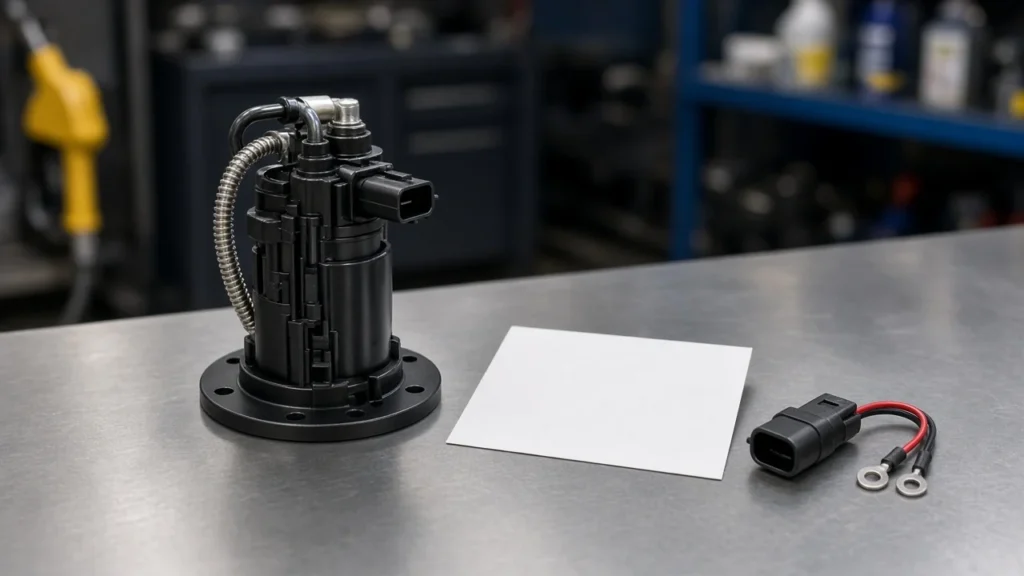
The Fuel pump assembly / module on this sheet is the complete hanger pack, not a valve bottle. KS-360501 / product 2551 is the printed 1987-1995 C/K electric fuel pump complete assembly: pump, sending unit, and housing for that truck window. The live product page prints an electric fuel pump part, OE marks such as 25168719 and E3902, DC 12V, a 2-pin connector, 43.3-49.5 Gph, Accessories Included Yes, and a 1-Year Limited Warranty.
| Printed line on KS-360501 | What the label is | Check-valve-job misread |
|---|---|---|
| 1987-1995 C/K 1500/2500/3500 | Vehicle window for this kit | A discrete valve ticket does not use this window |
| OE 25168719; E3902 | Interchange on this assembly | A check-valve SKU is not printed here |
| DC 12V; 2Pins | Electrical labels | These marks stay electrical |
| 43.3-49.5 Gph | Printed flow on the assembly | Flow stays flow; it is not a valve cracking figure |
| Maximum Air Pressure 12-26 | Air label only | Never fuel residual pressure or cracking pressure |
| Accessories Included Yes | Kit content flag | Never proof of a sellable check-valve bottle |
| pump + sender + housing | Complete assembly | Never a standalone check-valve carton |
| 1-Year Limited Warranty | Warranty on this kit | Never a warranty for an invented valve SKU |
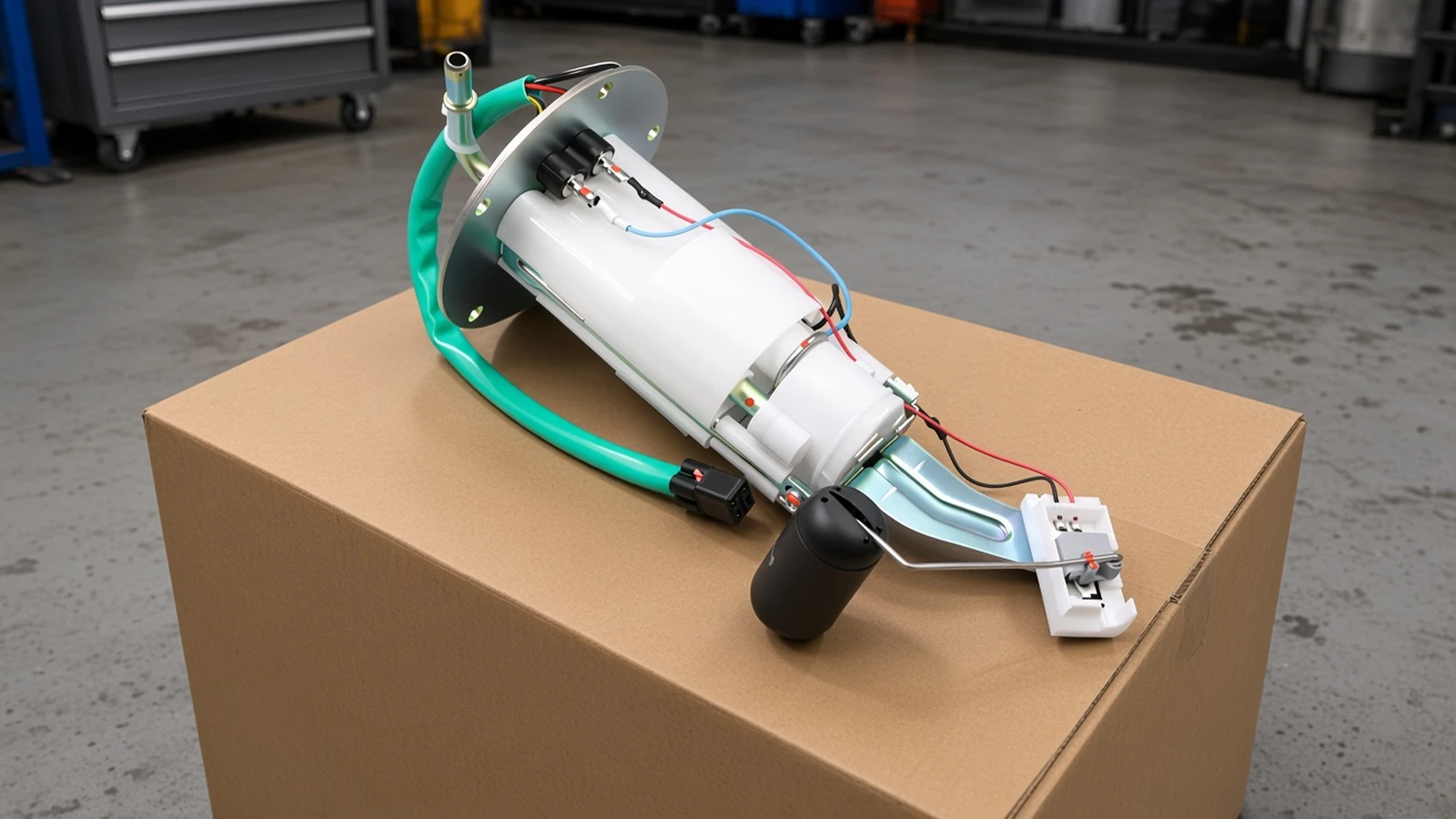
Maximum Air Pressure 12-26 is the air label only. Do not read it as a check-valve cracking pressure or a residual-pressure hold number for a bottle that is not on the sheet.
Name the object on the sheet before the carton moves
Print which object the ticket is allowed to name; do not invent a Kangsong check-valve SKU. Shopping results already sell discrete outlet and inline valves. This counter page forces the sheet match first.
Work the ticket in this order:
- Write the physical object (integral outlet check, separate line valve, return/reservoir check, sister misname, or not on this sheet).
- Confirm the printed name on the sheet or OE line before opening a carton URL.
- Soft-link regulator, symptoms, strainer, gasket, or filter when the sheet means those objects.
- Browse the category when the check-valve job is unprinted here.
- Open KS-360501 only after the ticket is pump-side plus the printed 1987-1995 C/K complete assembly window.
A paste that shows only “fuel pump check valve” without an object still needs that print step. Quoting a pump carton just to clear the phrase invents a match the sheet did not make.
A complete pump assembly is not a standalone check-valve carton
An assembly with pump, sender, and housing is a different carton from a discrete check-valve bottle. In-tank electric pumps are often packed with a strainer and a level sensor; the outlet check may ride captive inside that pack without becoming a sellable valve line.
Assembly-versus-element naming sits on other hangers and modules pages when that fork is the whole question. Here the risk is narrower: quoting the complete assembly as the check-valve bottle invents a card the sheet did not print.
If the ticket is only a captive outlet check on an otherwise correct module, the conversation is still module-or-replaceable-check naming. If the ticket is only an AN or barbed line valve, that is still a discrete line carton. The complete assembly answers neither by itself.
Select KS-360501 only after pump-side C/K fit; browse the catalog for unprinted check-valve jobs
Unprinted check-valve jobs stay on category browse; open KS-360501 only when the ticket is pump-side plus the printed 1987-1995 C/K complete assembly — never as a check-valve cure-all.
Start unprinted check-valve tickets on the Kangsong product catalog. Those cards are pump and assembly listings, so they will not invent a valve bottle for you.
Use the KS-360501 1987-1995 C/K electric fuel pump assembly when the sheet already names that truck window, 25168719, E3902, or the same printed complete-assembly job after a pump-side match. Do not open that URL as a check-valve bottle substitute for Bosch-, Holley-, inline-, or EVAP-style tickets outside that window.
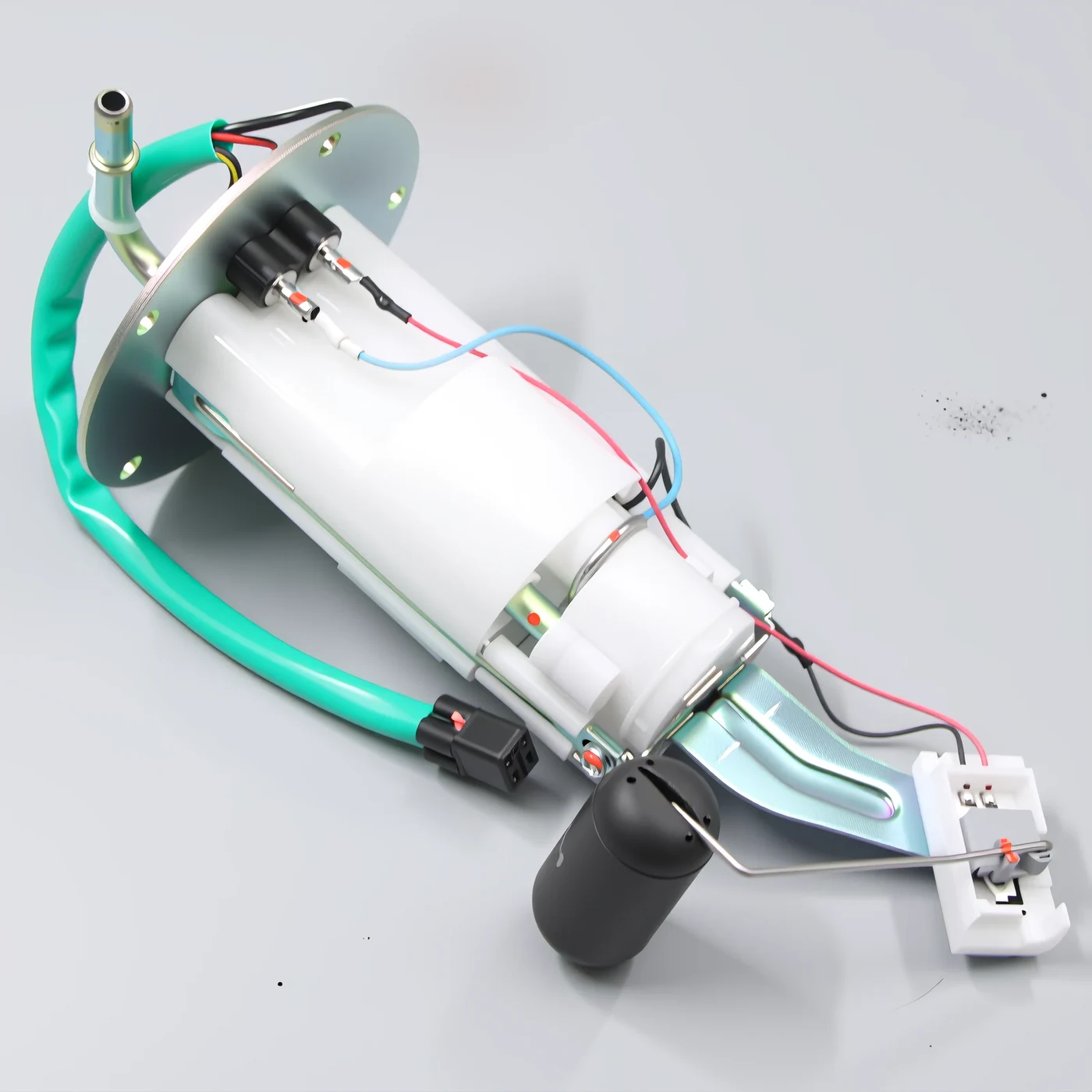
If the sheet still says discrete line check, stay off this assembly URL. If it still says regulator, strainer, or residual-pressure symptoms, keep those soft-links. Maximum Air Pressure 12-26 remains the air label on the kit, never a reason to treat the kit as a check-valve SKU.
FAQ
What object does a fuel pump check valve line usually name?
Usually an integral pump-outlet one-way check, a separate inline / AN / barbed line valve, a return-line or reservoir check, or a misnamed sister such as a regulator or EVAP vapor valve. The ticket still has to print which object before a carton moves.
Where is the fuel pump check valve located?
Fuel pump check valve location language points at the pump outlet, an optional line valve, or a return/reservoir check on some systems — not one universal spot. Print the location the sheet already named.
Is the check valve part of the pump or a separate part?
Either pattern appears on live platforms. Many modern modules keep the outlet check captive so the ticket resolves to a pump or module carton; some platforms print a replaceable outlet check or a separate inline carton. Match the sheet.
Does kangsongcn.com sell a standalone fuel pump check valve SKU?
No. Public catalog browse shows pump and assembly cards, and KS-360501 does not print check valve as a sellable line. Unprinted check-valve jobs stay on category browse rather than on a fake valve card.
Can KS-360501 be quoted for a check-valve ticket?
Only after the ticket is confirmed pump-side plus the printed 1987-1995 C/K complete assembly window (including marks such as 25168719 / E3902 when those are the match). Never quote KS-360501 as a universal check-valve cure-all.
Is a bad check valve the same as a bad fuel pump?
Not as purchase lines. A failed captive outlet check often forces a module or pump carton, while a weak pump under load is a different complaint class. Soft-link symptoms of a bad fuel pump for residual-pressure symptom depth instead of retelling that checklist here.
Could this be the fuel pressure regulator instead?
Yes on conventional return systems: residual loss can also be a poorly seated fuel pressure regulator. Soft-link the fuel pump pressure regulator page when the sheet means that object.
Does the KS-360501 kit print Maximum Air Pressure 12-26 as a check-valve cracking pressure?
No. Maximum Air Pressure 12-26 is the printed air label on that complete assembly. It is not a fuel residual-pressure figure and not a check-valve cracking pressure.
References
- Check valve (Wikipedia)
- Fuel pump (Wikipedia)
- Electric fuel pumps (AA1Car)
- Fuel delivery systems — ASE A8 C.4 (MasterTechPrep)
- Go with the flow: basic fuel system analysis (MOTOR)
- Fuel pump capacity and leak-down service notes (Dodge Durango host)
- Fuel system residual pressure — CIS / Digifant service library (eva2)
- Fuel pressure check / backflow-preventing valve location (Jaguar Forums)