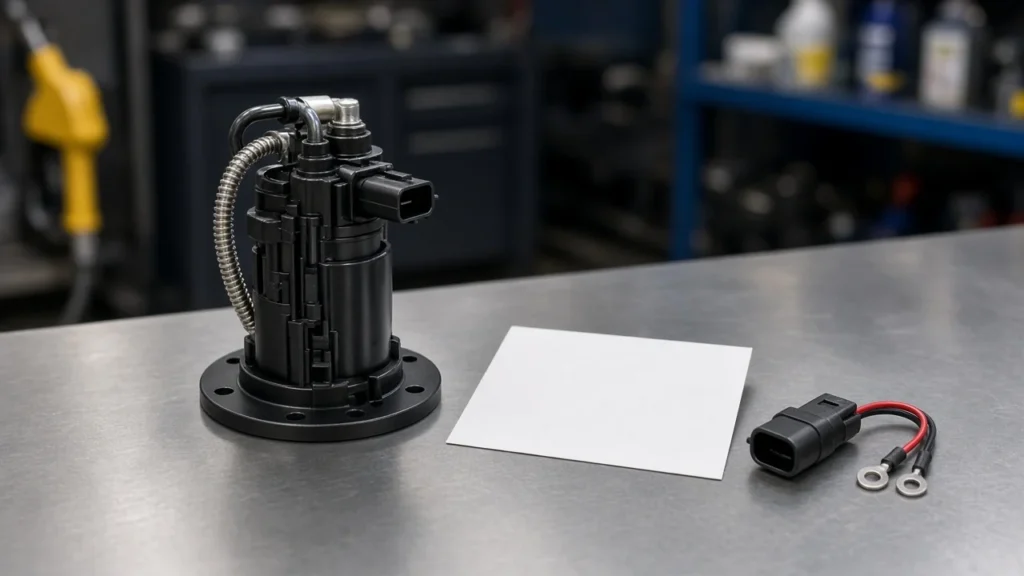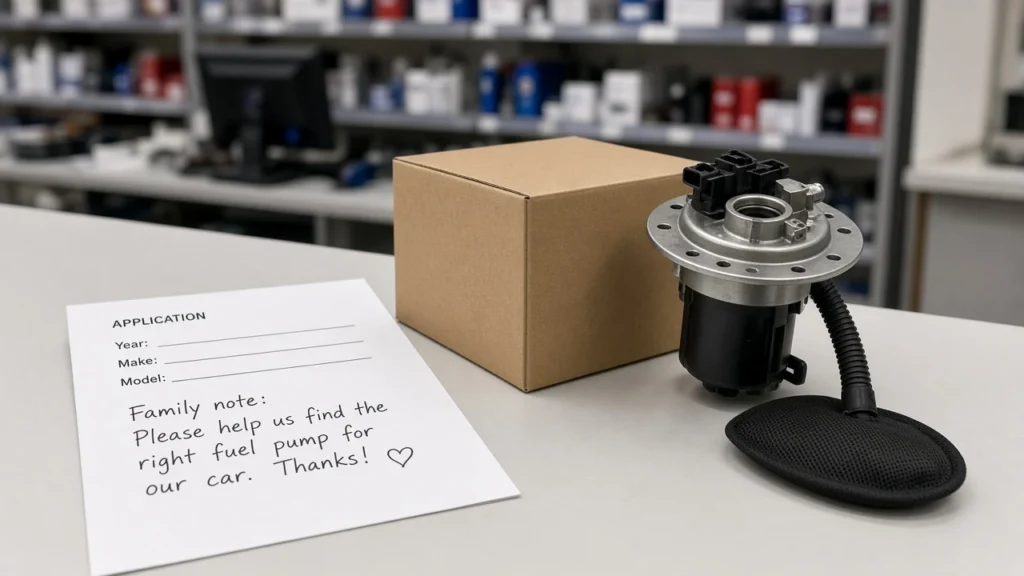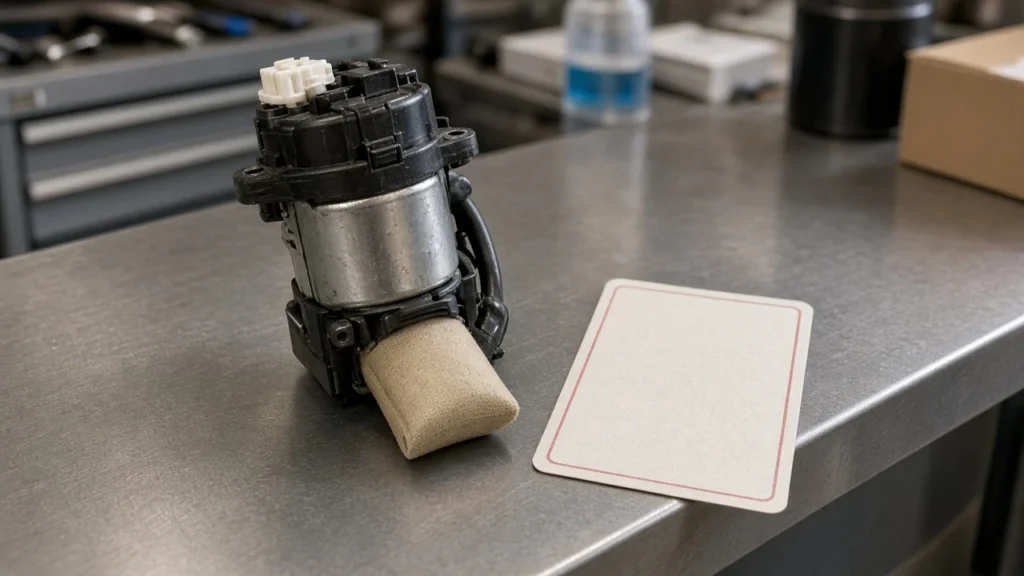
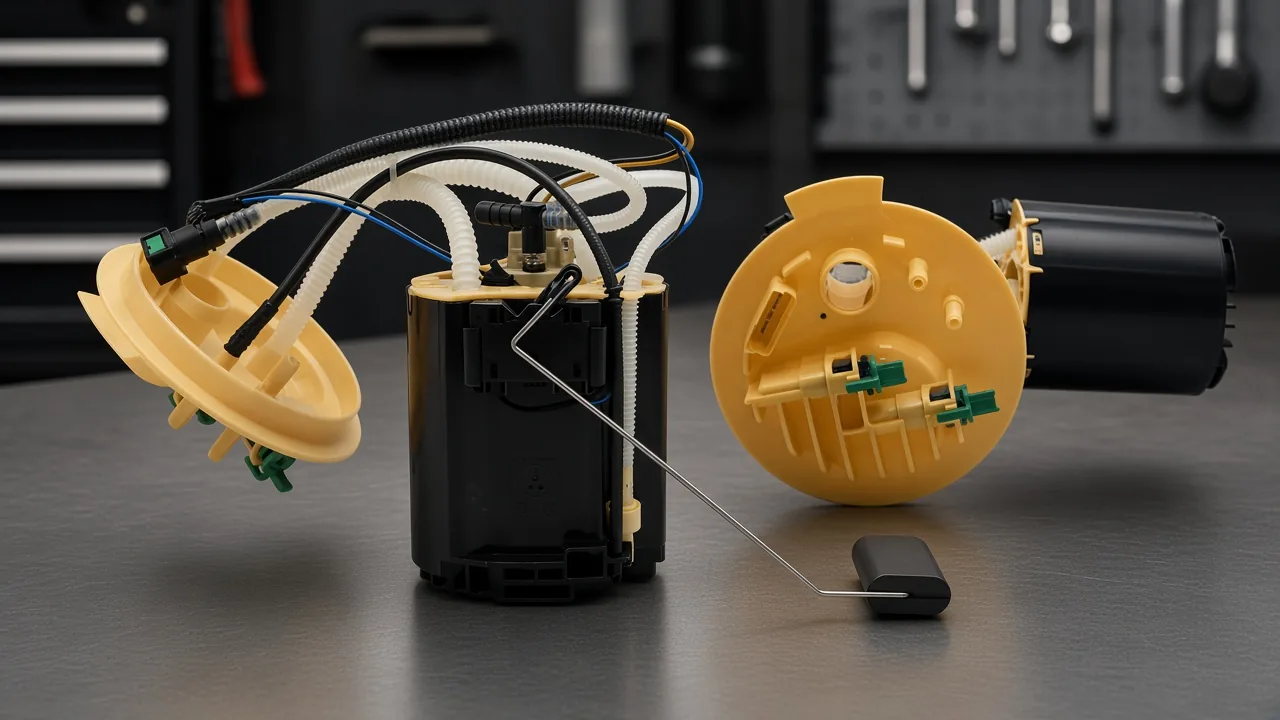
Diesel fuel pump operation starts at the tank and ends when a metered spray can ignite in air that is already hot from compression. Most engines split that work across a supply stage that fills the system and an injection stage that makes the spray possible. The walk below follows that path, then splits mechanical pulse delivery from common-rail storage, and ends on one printed diesel assembly.
What Diesel Fuel Pump Operation Actually Accomplishes
Diesel fuel pump operation is the work of delivering a metered amount of fuel at the right time so it can atomize in the cylinder. Timing and quantity are not optional extras. If either one drifts, combustion quality drops even when the tank is full.
The injection side runs so much harder than a gasoline port-injection circuit because the fuel has to atomize. Small droplets evaporate and mix with the trapped air. Large droplets leave unburned fuel.
A noun-level definition of what a diesel fuel pump is sits on a sister page. The job here is the moving process, not a parts glossary.
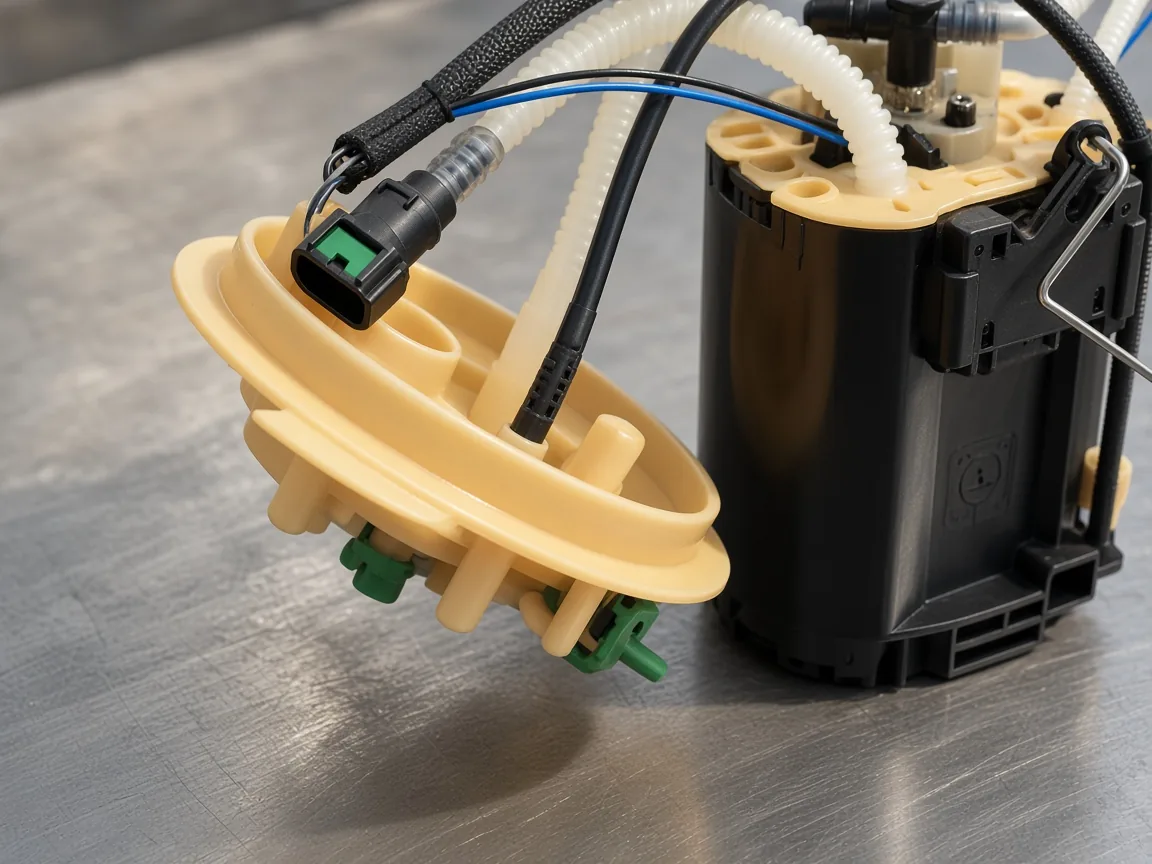
Why Diesel Pump Operation Uses Two Pressure Stages
Diesel needs a supply stage and a high-pressure stage because fuel is sprayed into air that is already compressed. Compression ignition starts in that hot charge after the spray arrives. The cylinder first takes in air only.
A diesel engine commonly compresses air at a ratio from 14:1 to 25:1, while many gasoline engines sit between 8:1 and 12:1. That dense charge is why the injection nozzle must see more pressure than the gas in the chamber.
The diesel lift pump vs injection pump split is a volume-versus-pressure split. The lift, transfer, or supply pump moves a usable volume through filters. The high-pressure fuel pump, or injection pump, creates the pressure the chosen injection method needs.
| Stage | Usual name | Job during operation |
|---|---|---|
| Supply | Lift, transfer, or supply pump | Pull or push fuel from the tank, through filtration, into the injection-pump inlet |
| Injection | High-pressure or injection pump | Build a timed pulse or hold rail pressure so injectors can spray |
Readers hunting a type list should use diesel fuel pump types instead of treating this process page as a catalog.
How the Low-Pressure Path Charges the Injection Pump
The low-pressure path usually runs tank to supply pump to filter, then into the injection pump inlet. Shops that skip this path often condemn the injection pump first and miss a dry pickup, a clogged separator, or air in a suction hose.
A field sequence that comes up again and again is tank, low-pressure pump, filter or water separator, high-pressure pump, then lines or a rail, then injectors, then a return. Individual engines move a heater, a second filter, or the lift pump onto the frame or into the tank. The order still has a supply side and an injection side.
From the field: Diesel in the supply path is also the oil that wets the high-pressure elements. Air that replaces that film does not just stall starting. It can leave plungers running without lubrication.
Some layouts ask the high-pressure unit to help draw fuel. That is an exception, not a reason to assume every injection pump can self-prime from a distant tank. After a filter service, the practical check is whether solid fuel—not foam—reaches the injection-pump inlet.
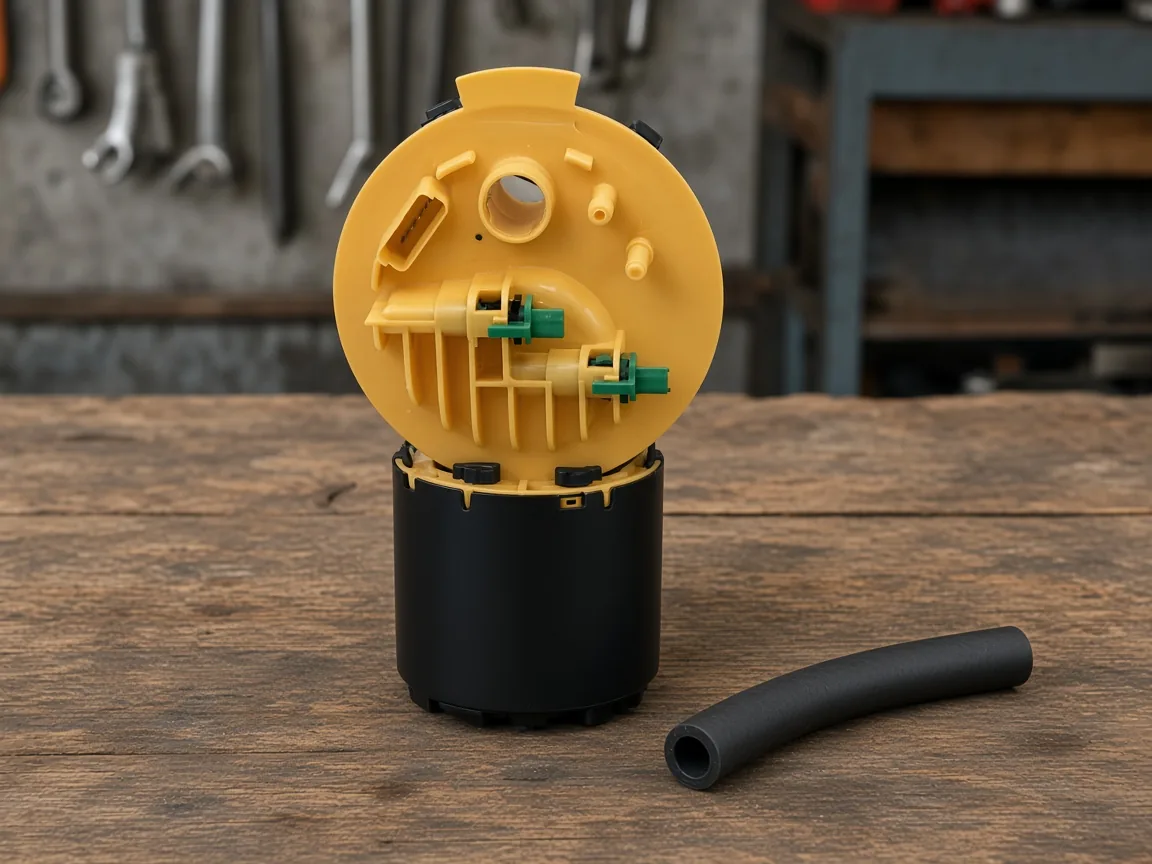
How a Mechanical Injection Pump Builds a Timed Pulse
A mechanical injection pump builds a high-pressure pulse in a plunger element and sends that pulse down a line to a nozzle. That is the core of how a diesel fuel injection pump works on pump-line-nozzle engines. Pressure generation and delivery timing live in the same pumping event.
The pulse travels a steel line and opens a spring-loaded nozzle when the pressure wave arrives. Start of delivery at the pump and start of injection at the nozzle are not always the same instant. Line length and the speed of sound in the fuel sit between those two moments.
In-line pumps house one plunger-and-barrel element for each cylinder and are usually gear-driven from the crankshaft. Distributor or rotary pumps use one central element and a distributor head that steers each pulse to the firing-order outlet.
On pump-line-nozzle hardware, metering and timing are held within 1° of crankangle. That tolerance is why those elements are machined so tightly, and why dirt in the supply path shows up as a timing or quantity problem rather than a soft gasoline-style stumble.
A labeled drawing of ports and plungers belongs on the diesel fuel pump diagram page. This section only needs the operating idea: one pulse, one line, one nozzle event.
How a Common-Rail Pump Holds Pressure in a Shared Rail
A common-rail pump’s job is to keep a target pressure in a shared rail while injectors open on command. Common rail fuel pump operation therefore stores energy in an accumulator instead of timing each cylinder with a dedicated line pulse.
A common-rail pump stores fuel in a shared rail at pressures typically over 2,000 bar (200 MPa; 29,000 psi). The high-pressure fuel pump no longer has to finish a cam lobe at the exact crank angle of each spray. It has to replace what the injectors take so rail pressure stays on target.
Older cam-tied unit and distributor systems couple injection pressure to engine speed and to a single pumping event. Common rail breaks that tie. The rail can stay high at idle, which is why multiple injection events in one cycle become practical.
Some later common-rail generations are cited with piezoelectric injectors and pressures up to 2,500 bar (250 MPa; 36,000 psi). Treat that figure as an upper generation cited in technical summaries, not as the rail pressure printed on every pickup.
A deeper walk through plunger layout and rail control sits in how a high-pressure diesel fuel pump works. This page stops at the operating contrast.
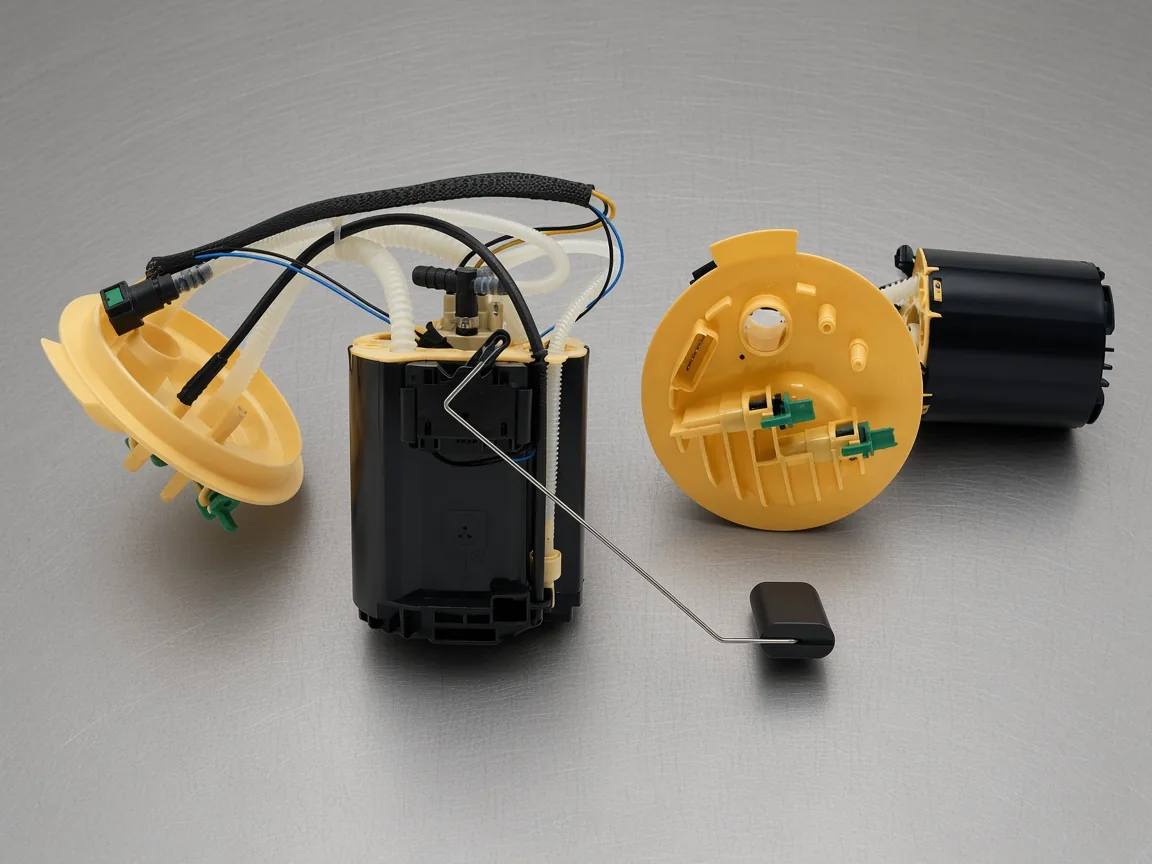
| Operating logic | Where pressure is made | What times the spray |
|---|---|---|
| Pump-line-nozzle | Inside the pumping element, then down a line | The pumping event plus nozzle opening pressure |
| Common rail | In the high-pressure pump, then stored in the rail | The injector command from the engine control unit |
What Injectors Do After the Pump Has Finished Its Job
Once pressure exists, the injector is the valve that starts and stops fuel entering the chamber. On a common-rail engine the pump can be healthy while a failed injector still dumps the rail or refuses to open.
Closed nozzles typically stay shut until a hydraulic or servo event lifts the needle. Electrical commands reach a solenoid or a piezoelectric actuator. The spray still has to leave as a mist against cylinder pressure, which is why the injector is a precision part rather than a simple hose end.
On a line-type system the injector is still the last orifice, but it is slaved to the pulse the injection pump just sent. Confusing those two jobs leads people to replace a pump when the nozzle is stuck, or to chase injectors when the supply stage never filled the gallery.
Return flow is part of operation, not waste. Excess fuel from overflow valves and injector leak-off carries heat back toward the tank and keeps the circuit liquid-full.
When a Printed Diesel Fuel Pump Product Is the Next Check
Open a diesel assembly whose printed title matches the vehicle, then browse the catalog if you need another application. Principle pages do not assign a pump by engine family in the abstract.
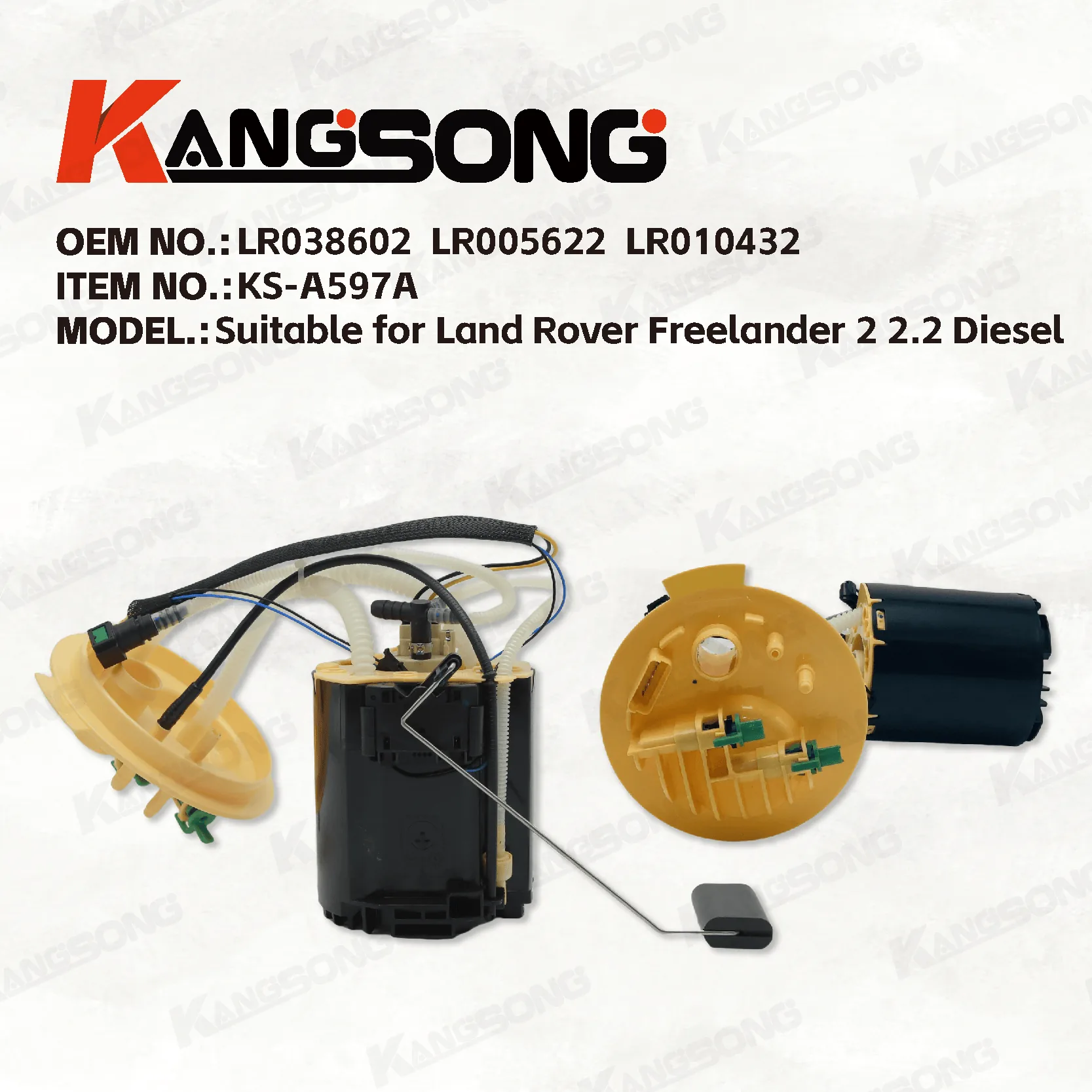
The live example on this site is the Land Rover Freelander 2 2.2 Diesel fuel pump assembly. Printed OE numbers on that page include LR010434 and LR029279. Fitment stops at that printed title and those printed lines.
Do not treat the assembly as a stand-in for an aftermarket lift kit or as a match for a gasoline unit printed for another car. If the application is not on that title, start from the fuel pump catalog root and read the next product’s own heading.
FAQ
How does diesel fuel pump operation move fuel from the tank to the injectors?
Fuel usually leaves the tank through a lift or supply pump, passes a filter or water separator, enters the high-pressure or injection pump, then travels a set of lines or a common rail to the injectors. Return lines send unused fuel back toward the tank.
Why does a diesel need both a lift pump and an injection pump?
The lift pump moves volume and keeps the injection pump wet and fed. The injection pump creates the pressure the spray method needs. One machine rarely does both jobs well across a long chassis line.
How does a mechanical diesel injection pump time each cylinder?
A plunger element builds a pulse and a distributor or a dedicated outlet steers that pulse to the cylinder that is next in the firing order. The nozzle opens when the arriving pressure wave is high enough.
How does common-rail pump operation differ from a line-type injection pump?
The common-rail pump holds pressure in a shared rail. Injectors open when the control unit commands them. A line-type pump times a pulse for each event instead of storing that pressure in an accumulator.
Can the high-pressure pump draw from the tank by itself?
Most diesel layouts still use a lift or supply stage. A few engines have run without a separate lift pump, but air in the suction path still starves lubrication. Do not assume a high-pressure unit can prime a long empty line.
Does the injection pump or the injector decide when fuel enters the cylinder on a common-rail engine?
The injector does, under electronic control. The pump’s job is to keep rail pressure available so that opening event can happen at the commanded time.