Choose a gasoline electric fuel pump by matching four things: the pressure class the fuel system expects, the flow the engine needs, where the pump has to sit, and the electrical and plumbing interfaces it has to meet. A listing titled like an electric 12 volt fuel pump — or a 12 volt gasoline fuel pump — only says that the motor is electric, which vehicle electrical system it was built for, and often that it is meant for petrol. It does not say how hard it pushes, how much it moves, or whether it is even an engine-feed pump.
Most pages selling these pumps answer the question with inventory instead of criteria — a pressure band, a flow tier, a best-seller rank, or a transfer kit rated in gallons per minute. What follows works through those four fields in buying order, then ends on the check that turns a promising listing into a part that actually fits.
If the broader case for electric delivery is what you are weighing, the advantages of an electric fuel pump page argues that side. The job here is narrower: reading a specification and deciding whether to pay for it.
What Decides Whether a Gasoline Electric Fuel Pump Fits
Four published fields settle nearly every purchase: pressure class, flow rating, mounting form, and the interfaces at the wires and the hose.
Almost everything else on a product page either repeats those four or sells a feeling. A pump that is right on all four is usually a quiet afternoon, while a pump that is wrong on any single one becomes a flooded carburetor, a starving engine, or unplanned fabrication.
| Field | The question it answers | Where a buyer finds it |
|---|---|---|
| Pressure class | Can the fuel system accept what this pump pushes | Listing pressure band, and the system type on the vehicle |
| Flow rating | Can it keep up when the engine asks for everything | Published GPH or LPH figure |
| Mounting form | Does it belong inside the tank or in the line | Product title and photos, plus the vehicle’s original design |
| Interfaces | Do the connector and the fittings match | Connector pin count, inlet and outlet sizes, kit contents |
Work the list in that order. Pressure class eliminates entire families of pumps in one step, and the interfaces decide how much work the purchase creates once the right family is on screen.
What a 12-Volt Gasoline Rating Really Tells You
A 12-volt rating names the electrical system the motor was designed around, and it is not a performance figure.
Sellers title parts the way shoppers type. A phrase such as electric 12 volt fuel pump, 12v fuel pump petrol, or the longer 12 volt gasoline fuel pump identifies the drive type, the vehicle system, and often the fuel — and nothing else. Two pumps wearing the same voltage-and-fuel label can be built for completely different duties — one feeding a carburetor or injectors, another filling a tank through a nozzle.
Even the number is nominal rather than fixed. Six lead-acid cells give a nominal 12-volt system that sits near 12.6 volts when fully charged, and a running alternator normally holds charging output between 13.5 and 14.5 volts.
The practical reading is that a pump built for a 12-volt vehicle electrical system lives on a supply which moves while the engine runs, and what reaches the motor depends on the circuit feeding it. That circuit is its own project, covered on how to wire a 12-volt fuel pump.
Pressure Class Is the First Fit Decision
Settle the fuel pressure class before anything else, because a carburetor is a low-pressure application and an injected engine is not.
A carburetor float chamber is filled through a floating inlet valve that has to hold a constant level, and it can be supplied by a pump or simply by gravity. Push harder than that valve can hold and fuel goes straight past it.
Carbureted engines are the low-pressure case: the encyclopedia typical for the engine-mounted mechanical pumps that feed them is about 10-15 psi.
Older port and throttle-body injection sits far higher, in a band of roughly 40-60 psi delivered by an in-tank electric pump.
The reason for that gap is mechanical rather than commercial. Port and throttle-body injection atomizes fuel through a small nozzle under high pressure, so it needs a higher and steadier supply than a float bowl ever asks for. An electric fuel pump for carburetor duty therefore belongs to the low-pressure family, usually with a fuel pressure regulator and a gauge in the plan.
From the field: On TheSamba’s carbureted VW threads one owner warns that “a lot of the aftermarket pumps make TOO MUCH fuel pressure” for a stock setup, while another aims for “as closed to 3psi as possible” and adds “don’t go over 5psi” with a regulator fitted. Those are owner practices on carbureted engines — source: TheSamba Bay Window Bus regulator thread — not a universal number for every car.
| Fuel system | Supply pattern it expects | What that means at purchase |
|---|---|---|
| Carbureted engine | Low pressure into a float chamber | Shop the low-pressure family, and budget for a regulator and a gauge |
| Port or throttle-body injection | Higher and steadier pressure, usually from an in-tank pump | Replace like for like from the vehicle’s own application list |
| Fuel transfer or dispensing equipment | Volume into a nozzle rather than pressure at an engine | Different duty, so an engine-feed pump is not a substitute |
Where the engine still has a healthy cam-driven pump, the swap may not be worth it at all; the most common pump used in carbureted applications makes that argument in full.
Flow Ratings and the Units Sellers Use
Two flow numbers only compare once the unit and the duty match, and sellers publish GPH, LPH, and GPM for jobs that have little to do with each other.
Automotive replacement listings usually print gallons per hour. Performance collections sort their catalogs by litres-per-hour tiers, because a built engine is bought by capacity.
Transfer and dispensing catalogs rate the same-sounding hardware in gallons per minute. Their duty is filling a tank through a nozzle, so a big number there says nothing about holding a supply pressure at an engine. Search results for an electric 12 volt fuel pump — and for a 12 volt gasoline fuel pump — often surface those GPM kits first — nozzle, hose, and all — beside low-pressure inline pumps meant for carburetors.
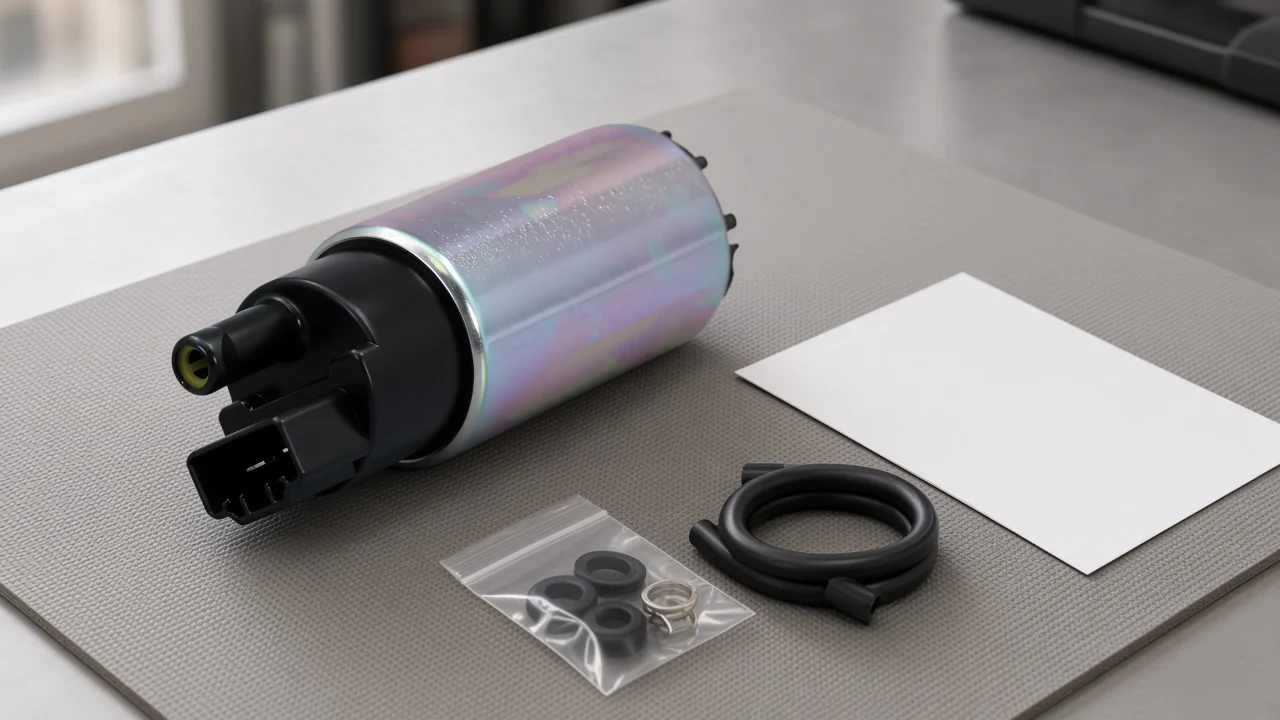
A fuel transfer pump is the trap in this cluster. Compare inside one duty and one unit, convert only after that, and treat any listing that names no unit at all as incomplete rather than cheap.
Flow also has to be read next to pressure, since a pump can move plenty of fuel and still be wrong for the system. A high tier of flow with the wrong pressure class is a mismatch dressed as an upgrade.
In-Tank Module or Inline External Pump
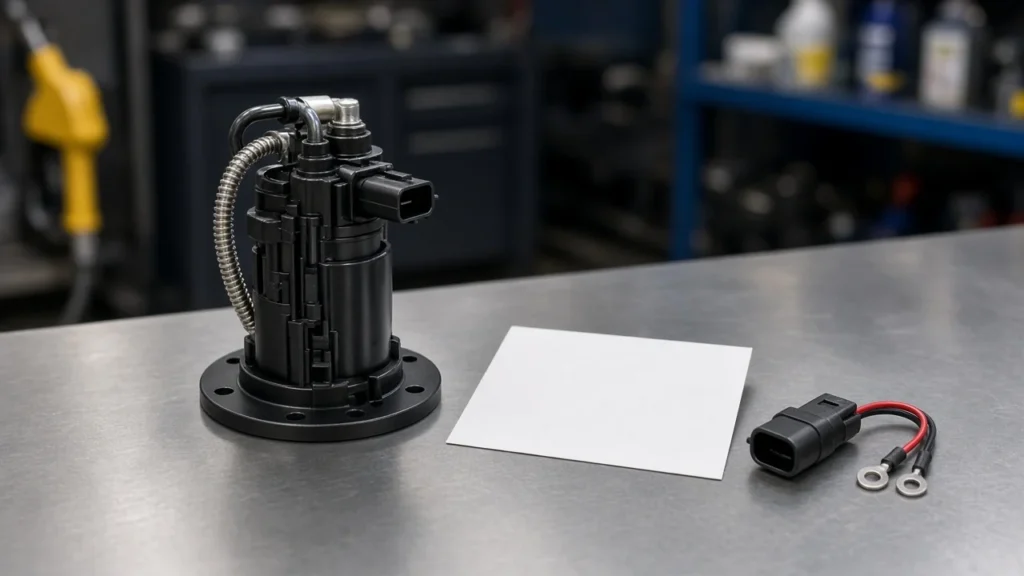
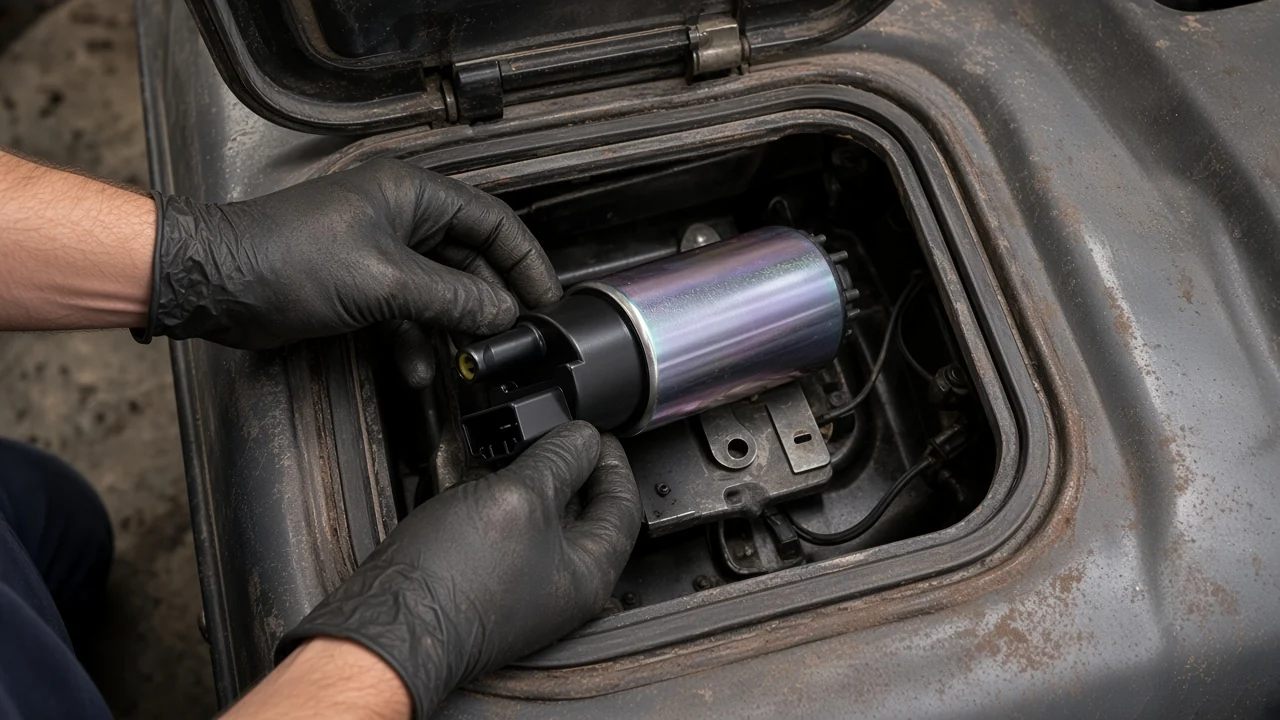
An in-tank fuel pump module replaces what the vehicle already had, while an inline external fuel pump is the sensible answer when the tank or the layout will not take a module.
Because an electric pump needs no mechanical power from the engine, it can be located anywhere between the tank and the engine. In-tank units are often part of an assembly with a strainer and, on many vehicles, a level sensor, which is why the replacement part is bigger than a bare pump.
| Mounting form | Choose it when | What comes with the choice |
|---|---|---|
| In-tank module | The vehicle already used one, and an access opening exists | Assembly-level part, tank access work, quieter running |
| Inline external pump | The tank cannot take a module, or a carbureted engine is being fed | Line plumbing and mounting, easier future access, more audible |
Two definitions save a lot of guessing before ordering: what an inline fuel pump is and what a fuel pump assembly is. The petrol-engine pump-type overview is worth a look too if the original design is still unclear.
An external pump also has to sit low and close to the tank, because pushing fuel is easier than lifting it. That single placement habit prevents a large share of complaints about “weak” replacement pumps. For B2B retrofit sourcing fields rather than this buyer-side read, see the inline fuel pump selection guide for carbureted and EFI retrofit programs.
Connector, Fittings, and What the Kit Includes
Whether an install is a drop-in comes down to the connector pin count, the inlet and outlet sizes, and whether the accessories arrive in the box.
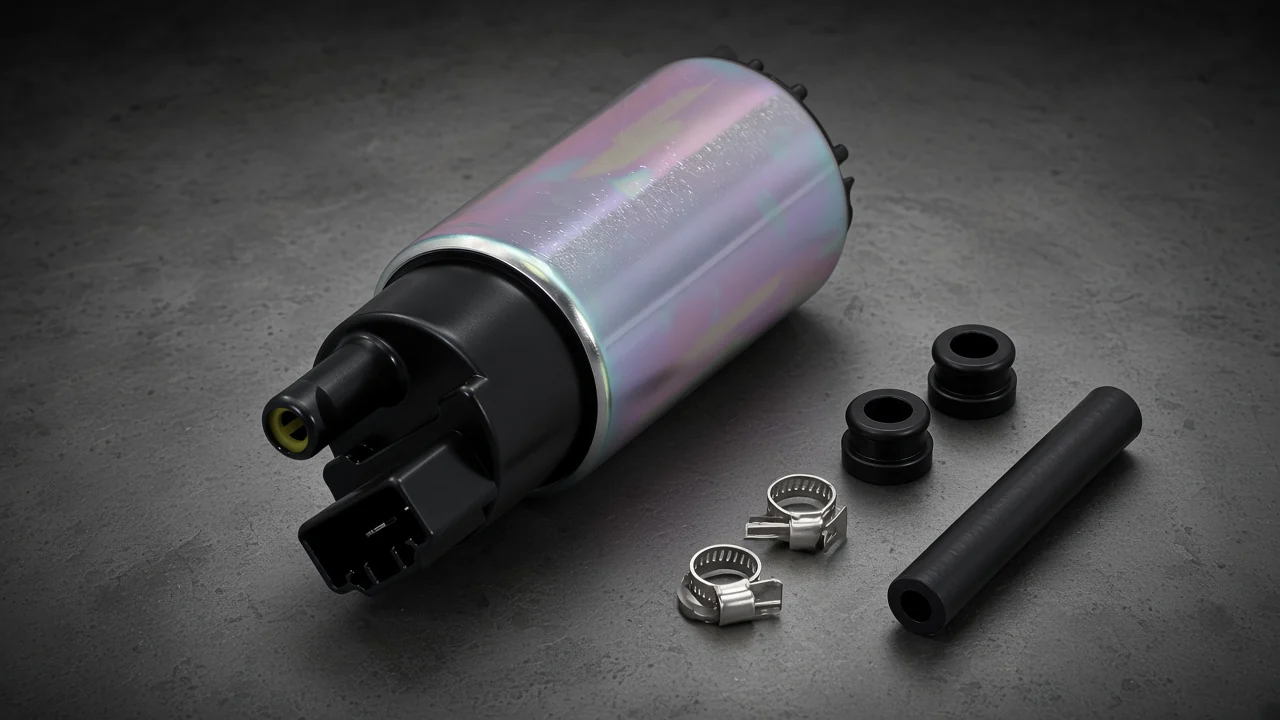
Good product pages publish those interfaces plainly. A 2-pin connector on the main harness, a stated inlet and outlet size, and a listed set of accessories tell you the shape of the job before any tool comes out.
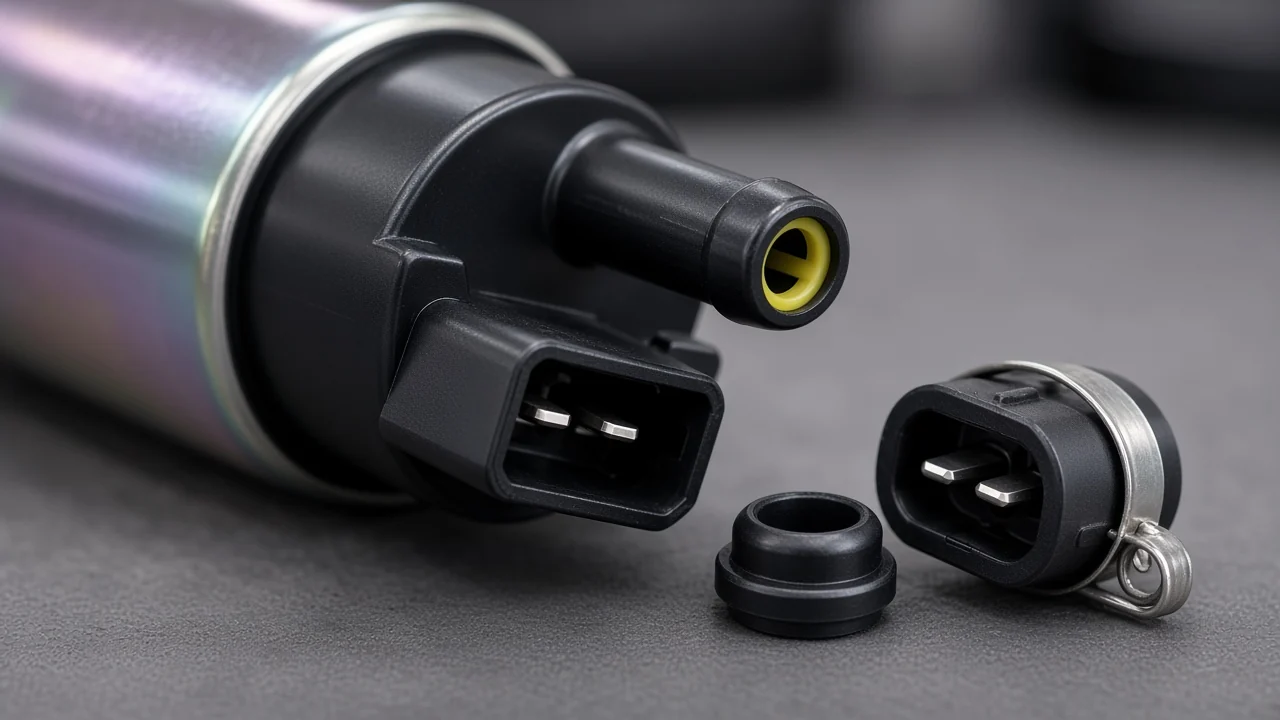
An installation kit matters most on an in-tank replacement, where grommets, clamps, hose, and a strainer are the difference between one visit to the tank and three. On an inline retrofit the same list is shorter, but the fittings and the hose size still have to match what is already under the car.
Where a page prints a field without a unit, treat it as unusable rather than reassuring. A number with no unit cannot be compared with anything, and a pump that hides its interfaces usually hides the work as well.
How to Verify Fitment Before You Buy
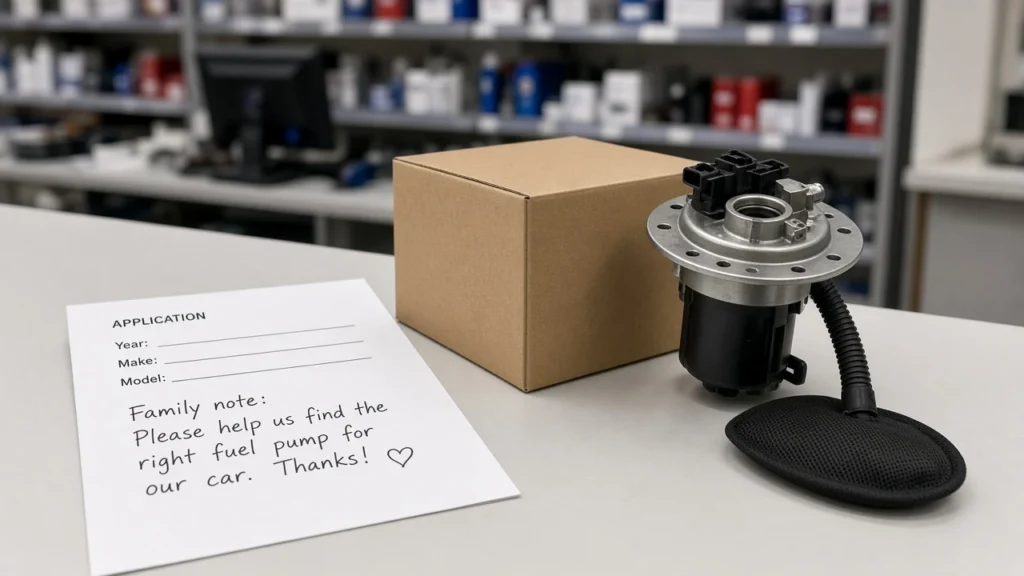
Prove fit on the seller’s page: find the vehicle in the published application table or the OE interchange number list, then confirm the interfaces and the pressure class against what the car actually has.
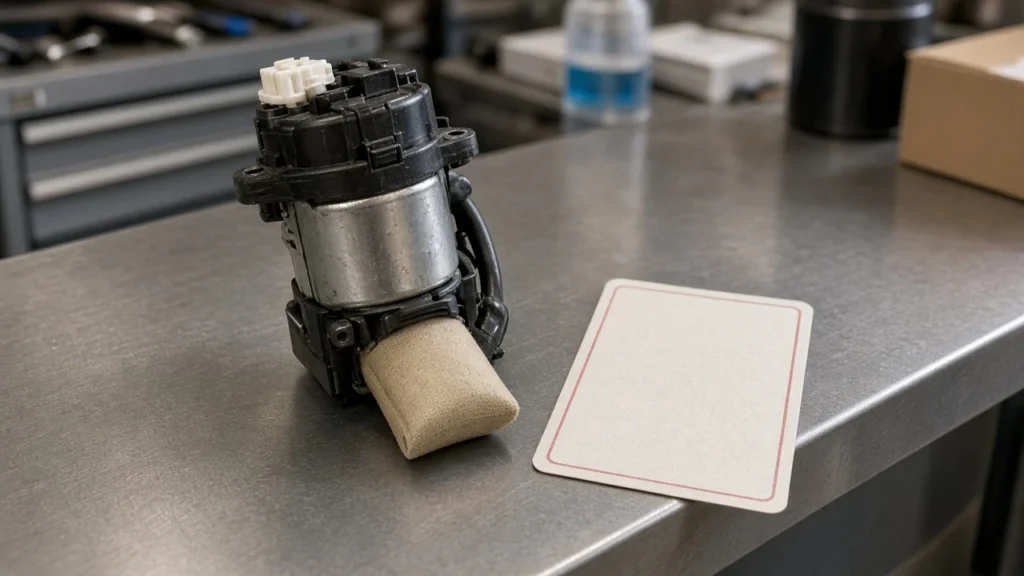
Start from the part that is coming out. Its shape, its connector, and its position in the fuel system are the reference, and a replacement that differs on any of those is a modification rather than a repair.
Then read the seller’s own list rather than the title. Application tables and interchange lists are the fitment evidence a product page carries, and a pump whose page has neither is being sold on hope.
Finish with the two fields nobody can see in a photo. Confirm the pressure class matches the system, and confirm the flow figure is quoted in a unit that suits engine-feed duty before paying.
Recommended Gasoline Electric Fuel Pumps to Choose
Two published Kangsong pumps carry exactly the fields discussed above, each scoped to its own application list rather than to “universal” fitment.
Product 2551 publishes DC 12V working voltage, a 43.3-49.5 GPH flow range, a 2-pin main connector, and included accessories, scoped to the 1987-1995 C/K application named in its title. Read its page for the interchange numbers themselves, which is where that detail belongs.
The second option, an electric gasoline fuel pump for Hyundai and Kia applications, publishes the same flow range and connector style with its own Hyundai and Kia application table.
| Published field | Electric gasoline pump with installation kit | Electric gasoline pump for Hyundai and Kia |
|---|---|---|
| Working voltage | DC 12V | DC 12V |
| Flow range | 43.3-49.5 GPH | 43.3-49.5 GPH |
| Main connector | 2 pins | 2 pins |
| Accessories | Installation kit included | Accessories included |
| Fitment evidence on the page | Titled 1987-1995 C/K application plus interchange list | Published Hyundai and Kia application table |
| Working temperature | -40 °C to +85 °C | Not published |
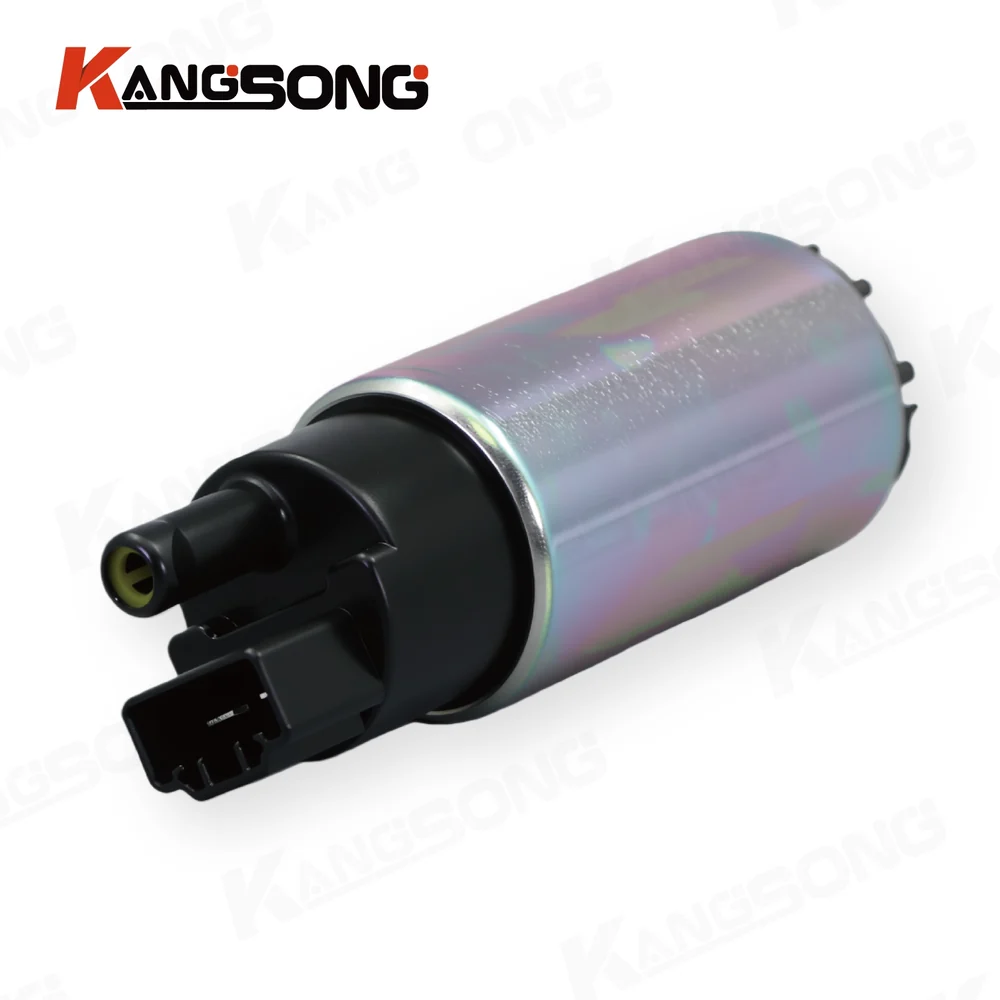
The first of the two is the electric gasoline fuel pump with installation kit, and the wider fuel pump catalog is the place to browse when neither list covers the vehicle.
Neither pump is the right buy outside its published list. A carbureted engine that needs a low-pressure supply behind a regulator, or a transfer and dispensing job, belongs to a different family of hardware entirely.
FAQ
Can I use a gasoline electric fuel pump on a carbureted engine?
Yes, provided it belongs to the low-pressure family and a regulator keeps the float chamber from seeing more than the inlet valve can hold. Owners on carbureted engines describe aftermarket pumps arriving with more pressure than the carburetor wants, which is why a regulator and a gauge usually go in at the same time.
Can I replace a mechanical or vacuum fuel pump with an electric fuel pump?
Yes — people often replace vacuum fuel pump with electric hardware when a cam-driven or vacuum/pulse unit fails, because an electric pump needs no drive from the engine and can be mounted between the tank and the engine. Treat it as a small project rather than a swap: pressure has to be controlled for a carburetor, the pump wants to be low and near the tank, and the circuit needs its own fuse, relay, and a way to stop the motor. Wiring detail belongs on how to wire a 12-volt fuel pump.
How many volts does a fuel pump need to run?
A pump sold for a passenger car is built for a nominal 12-volt system, which in service sits near 12.6 volts at rest and higher while the alternator is charging. An electric 12 volt fuel pump title — or a 12 volt gasoline fuel pump title — is naming that system and the drive or fuel, not a performance grade. What matters more is that the pump receives that supply without a large drop through undersized wiring, a tired connector, or a poor ground.
Is an electric 12 volt fuel pump the same as a fuel transfer pump?
No. Transfer and dispensing pumps are rated for volume into a nozzle and are commonly listed in gallons per minute, while an engine-feed pump is bought for a pressure class and a flow figure in gallons or litres per hour. The words overlap in search results — and overviews often answer an electric 12 volt fuel pump or 12 volt gasoline fuel pump query with transfer kits — but the duties do not.
What is a good 12 volt low pressure fuel pump?
There is no useful brand ranking to give. A good low-pressure choice — including listings titled as an electric 12 volt fuel pump for carburetor duty — is one built for carburetor or other low-pressure engine-feed work, published with a pressure band the float chamber can survive, sized in GPH or LPH rather than GPM, and paired with a regulator and a gauge when the listing leaves pressure uncontrolled. Match those fields to the vehicle before trusting a marketplace “best” list.
What are the common problems with electric fuel pumps?
Low voltage at the connector, a clogged inlet strainer, an external pump mounted too high, and too much pressure at a carburetor account for most complaints. The failure pattern is covered in more depth on what causes a car fuel pump to fail.
What is the most reliable electric fuel pump?
There is no defensible ranking to give here, and a marketplace best-seller list is a sales figure rather than evidence of reliability. Choose on the published fields and the fitment list, then judge a supplier on whether the page states its specification openly.
How much flow does my engine need in GPH?
The honest answer depends on the engine’s fuel demand, so the safe route for a repair is to match the flow figure the vehicle’s original part carried. For a retrofit, size on the published figure of a pump built for engine-feed duty and keep the pressure class correct, rather than buying the biggest tier available.
How do I confirm a pump fits my exact vehicle?
Find the vehicle in the application table or interchange list published on the product page, then check the connector, the inlet and outlet sizes, and the mounting form against the part coming off the car. If a page carries none of that, the pump is being sold on its title alone.
References
- Fuel pump — Wikipedia
- Automotive battery — Wikipedia
- Carburetor — Wikipedia
- Fuel injection — Wikipedia
- Suggestions for a fuel regulator on dual carbs — TheSamba Bay Window Bus forum