
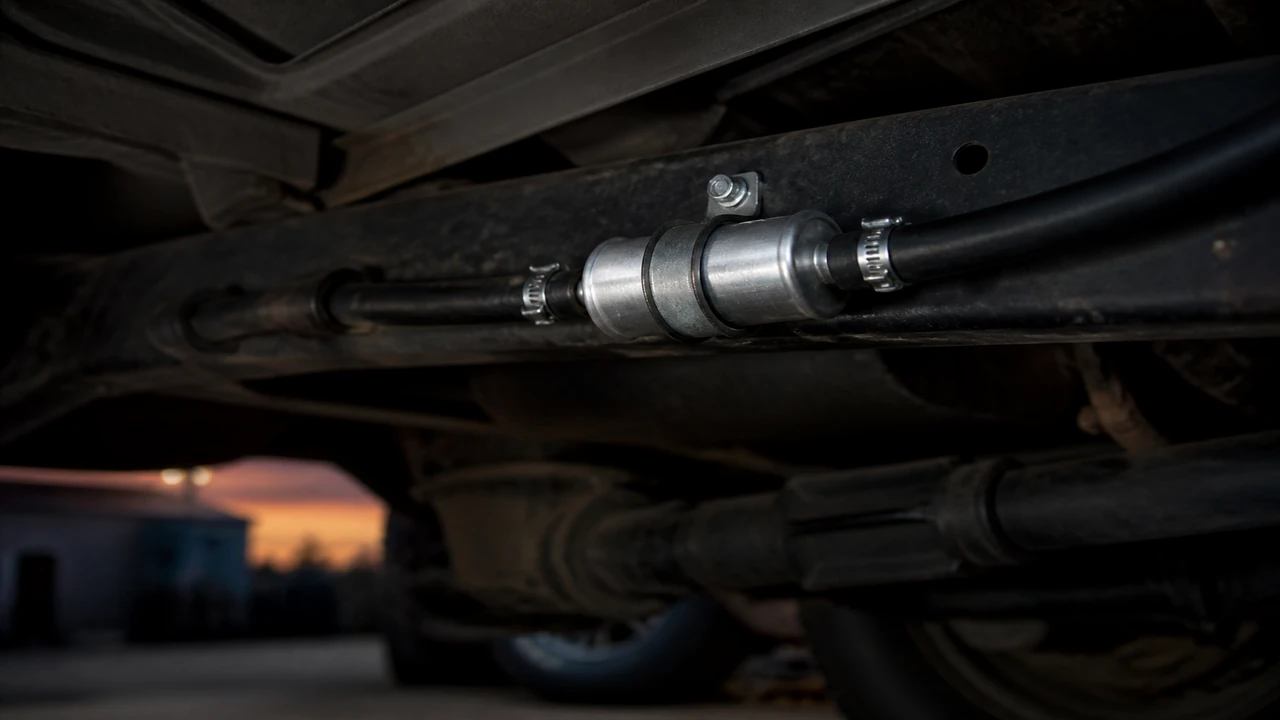
An inline fuel pump must be selected from the documented fuel-system requirement, not from a generic “12V” or “high-flow” label. Start by identifying the system as carbureted or EFI, then compare the offered pump’s placement, interfaces, electrical supply, filtration, delivery requirements, and supporting documentation.
- FAQs
Part 1. What an inline fuel pump request means
An inline fuel pump is specified as a pump installed along the fuel path rather than as a complete in-tank module. That description identifies a packaging concept, not a vehicle fit, a pressure class, or a complete bill of materials.
For buyers, the practical question is whether the requested assembly scope actually matches the platform. A pump-only request can be incomplete when the application needs a sender, hanger, tank interface, strainer, harness, or other module components. The 255 LPH fuel-pump comparison explains why cartridge and complete-assembly quotes should not be compared as if they are identical products.
Part 2. Carbureted and EFI requests are not one category
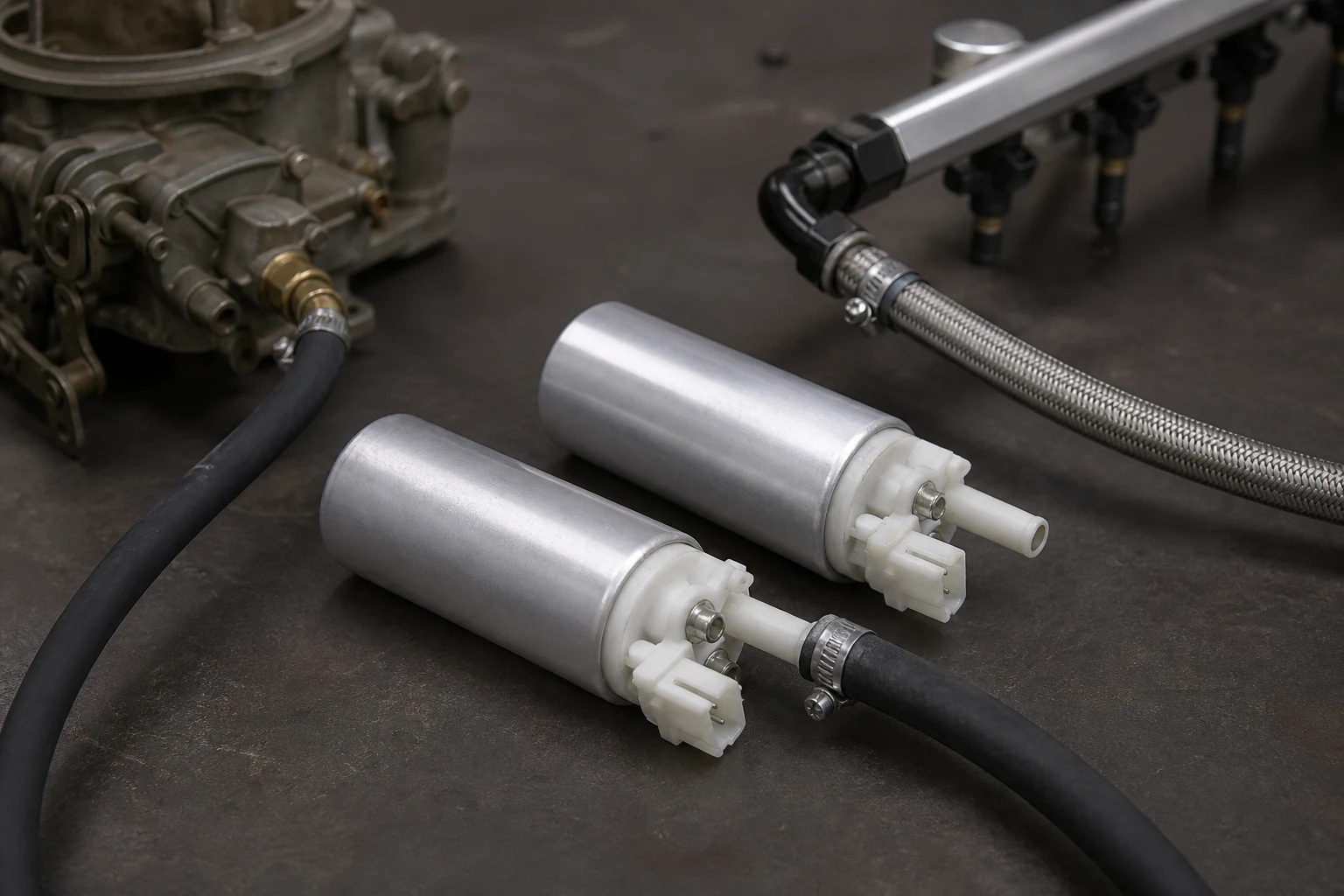
Carbureted and EFI fuel systems impose different engineering requirements. The exact pump data must follow the engine and fuel-system documentation; a selection guide should not turn that difference into a generic pressure or flow promise.
| Request description | What the buyer must clarify | What not to assume |
|---|---|---|
| Carbureted engine | Fuel-system layout, required delivery conditions, mounting position, return arrangement if applicable | That any inline electric pump is suitable |
| EFI retrofit or service program | OEM/engineering delivery requirement, control strategy, connector, filter and return arrangement | That a carbureted-pump listing can serve EFI |
| Unknown system | Platform, engine, OE/interchange reference, current pump/module scope | That an “inline” keyword establishes compatibility |
Use the applicable manufacturer documentation for the exact vehicle or engineered system. A product label alone cannot prove a safe interface or expected delivery result.
Part 3. Selection fields that make quotes comparable
The RFQ needs a common evidence base so suppliers quote the same task. These fields belong in the enquiry before pricing or fitment language is discussed.
| Buyer should provide | Why it matters | Send with quote |
|---|---|---|
| Carbureted, EFI, or other documented system type | Establishes the selection path | Yes |
| OE/interchange reference or engineering drawing | Links the request to a product family | Yes |
| Pump-only, inline kit, or complete-module scope | Prevents missing components | Yes |
| Electrical connector and supply notes | Screens interface mismatch | Yes |
| Filter, return, and line-interface notes | Identifies system integration constraints | Yes |
| Required delivery data and test basis | Requires a model-specific data sheet | Yes |
| Quantity, destination market, and documentation needs | Defines the commercial request | Yes |
If the buyer cannot supply these fields, mark the enquiry as a scope-review request rather than an exact replacement order.
Part 4. Interface, filtration, and installation checks
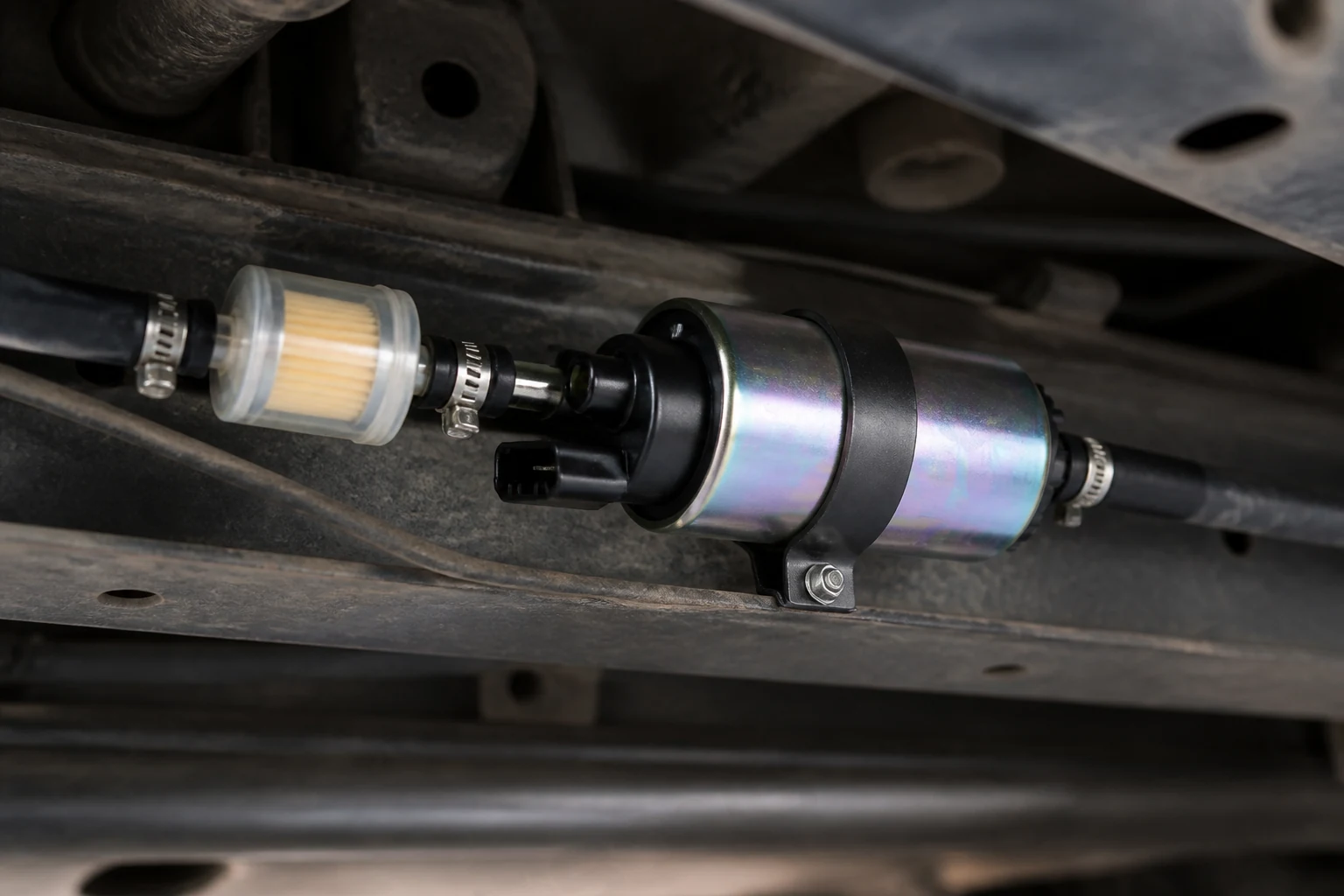
An inline-pump installation still depends on the surrounding fuel and electrical system. Review the connector, power/ground path, line ends, filtration position, sealing method, and mounting environment against the applicable service or engineering document.
The How to Test a Fuel Pump guide is useful when a buyer is replacing a pump after a fault report: test and record the relevant supply and delivery findings before a new pump is blamed for an unrelated relay, filter, or wiring problem.
Important: Do not treat an inline pump as a universal retrofit solution. Fuel-system work can involve fuel vapor, pressurized fuel, electrical loads, and platform-specific safety procedures; use the vehicle or system manufacturer’s documentation before modifying lines, connectors, or mounting. (NHTSA vehicle safety resources)
Part 5. When an in-tank module is the better scope
An in-tank module route is often more appropriate when the documented requirement includes a sender, hanger, strainer, tank sealing features, internal hose routing, or a platform-specific electrical interface. In that situation, an inline pump-only quote can leave the purchaser with an incomplete installation scope.
This is a scope decision, not a claim that one architecture is universally better. The requested system, OEM reference, and available documentation determine whether an inline unit, an in-tank assembly, or another fuel-pump category is appropriate.
Part 6. Product and RFQ routes after requirements are documented
After the buyer has established the system type and assembly scope, review Kangsong fuel pump products for the relevant product family. Kangsong publicly lists fuel pump assemblies, electric pumps, high-pressure pumps, low-pressure pumps, and module-related products; exact model selection must remain within the evidence supplied for the request.
Submit the documented RFQ through Contact Kangsong with the system description, OE/interchange record, electrical and line interfaces, requested test-data basis, quantity, and destination-market documentation. About Kangsong can support supplier-background review, but it does not replace model-specific product evidence.
Part 7. Fit boundaries that prevent wrong-family purchases
This guide is for buyers comparing inline fuel-pump requests at the scope and documentation level. It does not publish universal PSI or LPH figures, certify a product for EFI or carbureted service, guarantee vehicle fit, or replace OEM installation instructions.
Pause the purchase when the system type is unknown, the OE/interchange reference is absent, the line or connector interface is undocumented, or a complete module may be required. A controlled scope review is safer than converting a broad keyword into an unsupported product claim.
FAQs
What is an inline fuel pump?
An inline fuel pump is installed along the fuel path instead of being packaged as a complete in-tank module. The term does not by itself establish vehicle fit, pressure class, flow, or included components.
Can an inline fuel pump be used on a carbureted engine?
It depends on the documented fuel-system requirement, routing, electrical supply, and offered-model data. Confirm those requirements with the applicable manufacturer or engineering documentation instead of selecting from the word “carbureted” alone.
Can the same inline pump be used for EFI?
Do not assume so. EFI requests need the exact system delivery, control, interface, and installation requirements checked against the offered pump’s documentation.
What information belongs in an inline fuel-pump RFQ?
Provide system type, OE/interchange or drawing, pump-only versus module scope, connector and line details, required delivery-data basis, quantity, destination market, and requested documents.
When should an inline-pump request become a complete-module inquiry?
Move to a module-scope review when the platform requires components such as a sender, hanger, strainer, tank seal, internal routing, or a specific in-tank electrical interface.
Why should buyers check filters and wiring before replacing a pump?
Restrictions and electrical faults can mimic pump failure. Recording those checks helps avoid ordering the wrong product family and gives the supplier useful context for an evidence-based inquiry.


