
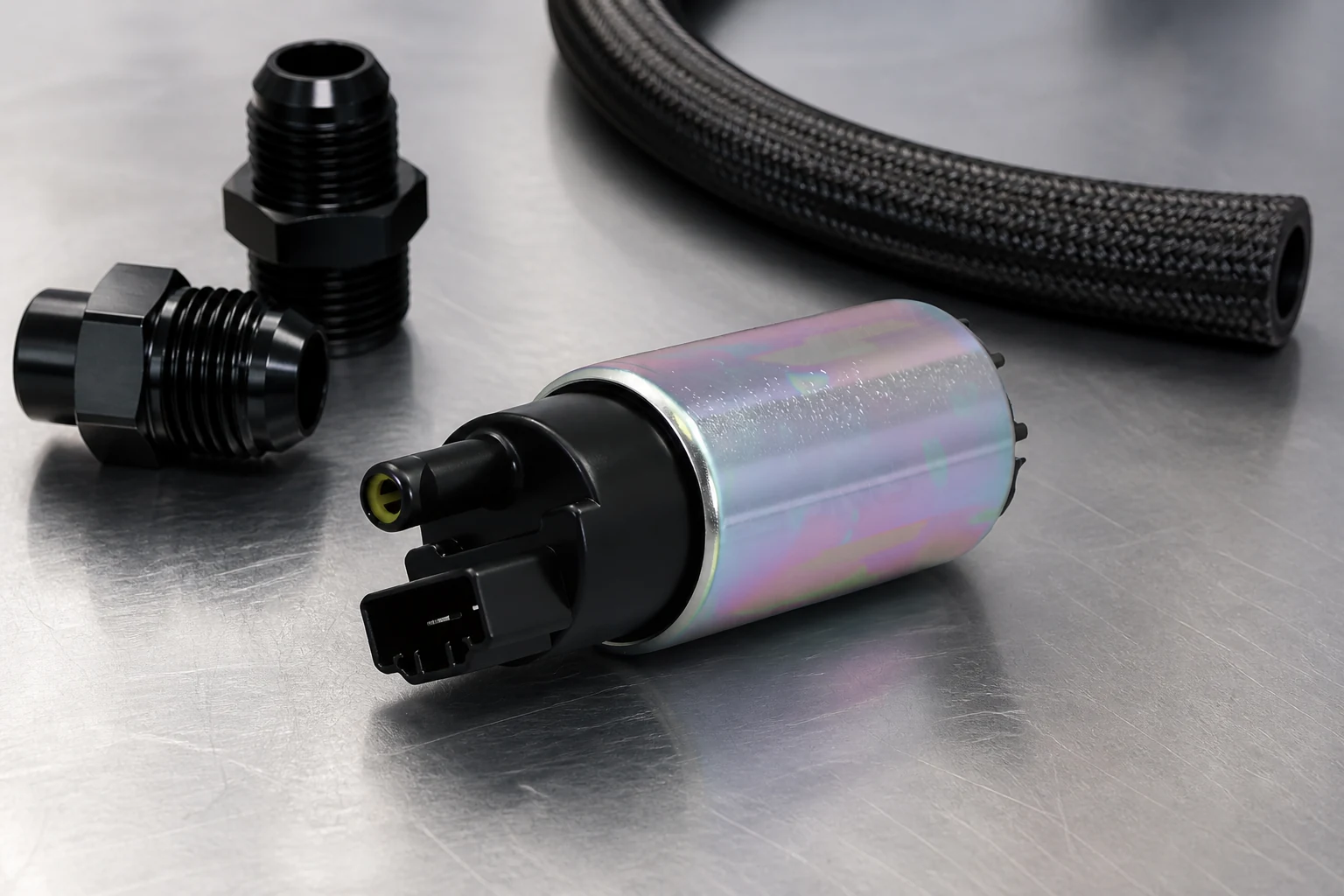
A 450 LPH fuel-pump request is a starting label, not a complete selection result. Buyers should compare the documented test basis, product scope, interfaces, and offered-model evidence before treating one high-flow listing as an alternative to another. That approach avoids turning a search term into an unsupported pressure, horsepower, or vehicle-fit claim.
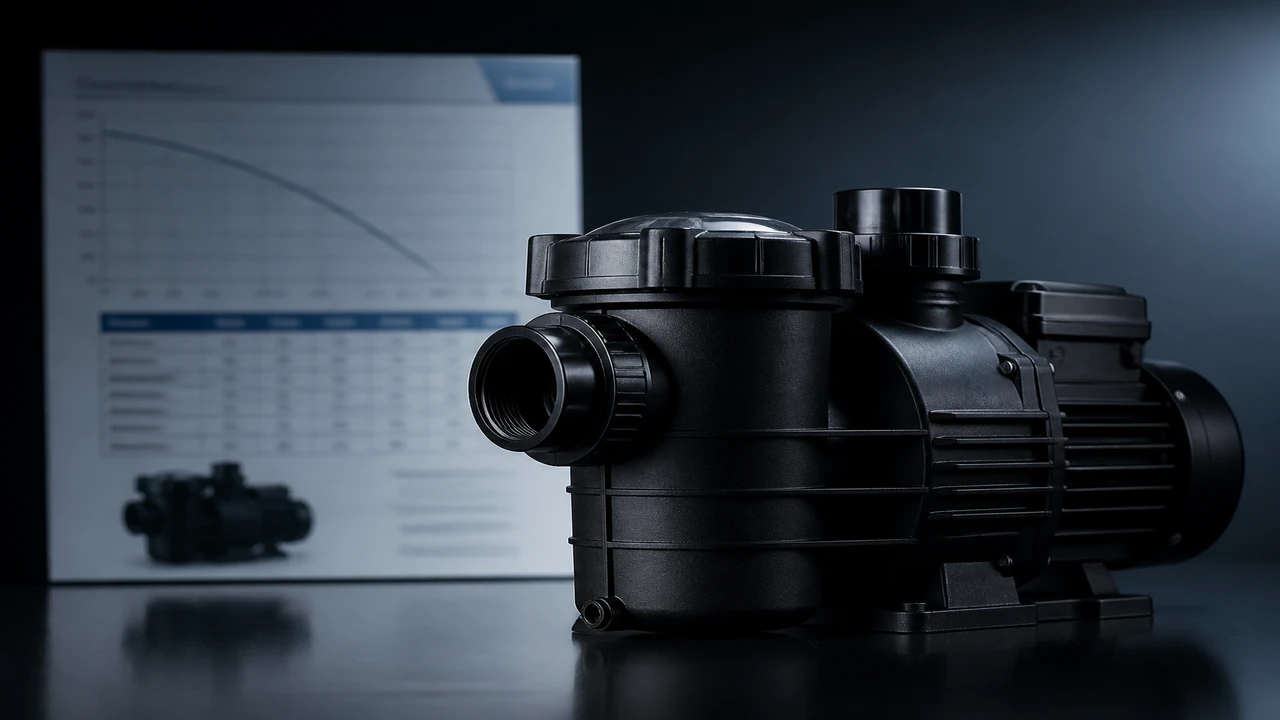
- FAQs
Part 1. What does a 450 LPH request actually identify?
The phrase “450 LPH” identifies a claimed flow label associated with an offered pump. It does not, by itself, identify the exact pump model, its test conditions, the pressure point used for the claim, the electrical setup, or the vehicle and assembly scope.
That distinction matters when a buyer is comparing a cartridge, an inline unit, or a complete tank module. A pump-only listing and an assembly that includes tank-facing components can solve different procurement tasks even when both are discussed in a high-flow context. The 255 LPH comparison boundary gives the same warning at another rating label: quotes must first be compared at the same product scope.
Part 2. Why must the test basis come before a performance comparison?
Flow is a measured outcome, not a universal identity. A defensible comparison asks which offered model was tested, what fuel-system conditions were used, and whether the documents describe the same scope before it ranks one option against another.
| Comparison question | Evidence to request | Why it changes the comparison |
|---|---|---|
| What exact item is being offered? | Manufacturer, part number, revision, and product data sheet | A family name can cover more than one configuration. |
| What does the flow label refer to? | Test basis and document date | A label without its basis cannot be used as a transferable curve. |
| Is the quote pump-only or a complete assembly? | Included-components list and interfaces | Scope affects what the buyer actually receives. |
| Is there a stated application or OE record? | OE/interchange evidence or engineering record | It prevents a generic label from becoming a fitment promise. |
Product pages such as the AEM high-flow pump listing illustrate why an individual offered model should remain tied to its own documentation. A named page is not evidence that another brand, revision, or assembly shares its stated characteristics.
Important: Do not use a 450 LPH label to create a universal performance or vehicle-fit promise. Performance advertising needs a substantiated basis, and fuel-system modifications must follow the applicable model documentation. (FTC advertising substantiation guidance)
Part 3. Which sourcing fields make 450 LPH quotes comparable?
The request should give every supplier the same decision inputs. That allows a buyer to identify missing evidence before price or lead-time comparisons begin.
| Buyer should provide | What it controls | Send with quote |
|---|---|---|
| Requested label and exact offered-model reference | Keeps the inquiry tied to a specific item | Yes |
| Flow-test basis and revision date, if available | Identifies the evidence behind the label | Yes |
| Pump-only, kit, or complete-module scope | Prevents component omissions | Yes |
| Connector, power, and ground-interface notes | Screens an electrical mismatch | Yes |
| Fuel-line, tank, filter, and return-system notes | Defines integration work | Yes |
| OE/interchange or engineering record | Separates documented scope from keyword matching | Yes |
| Quantity and destination-document needs | Defines the commercial review | Yes |
The supplier should respond with model-specific evidence, not a generic “high-flow” assurance. Retail categories such as the Summit Racing fuel-pump catalog can be useful for discovering product families, but a catalog filter is not an interchange confirmation.
Part 4. When is a cartridge request not the same as a module request?
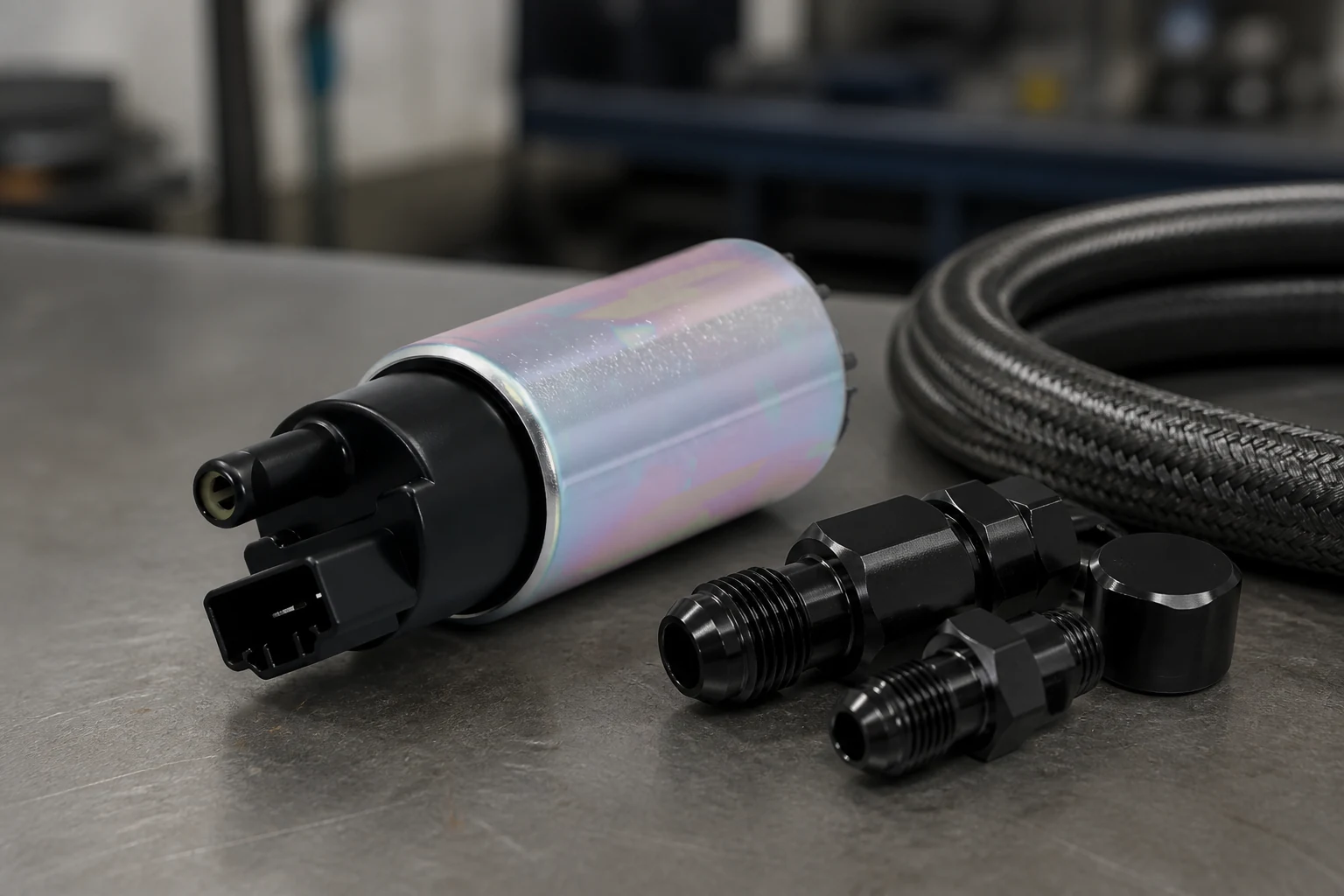
A cartridge request focuses on the pump component. A complete module may include a different set of interfaces and components, such as a hanger, sender-related elements, strainer, tank seal, internal routing, or a vehicle-specific connector arrangement.
Neither scope is automatically better. The right question is whether the purchaser is replacing a documented component or needs an assembly that matches the documented tank and electrical interfaces. When those records are missing, calling either option an equivalent is premature.
For projects that explicitly need an external or inline arrangement, see the inline fuel-pump selection guide. It explains why an installation concept must not be used as a shortcut to compatibility.
Part 5. How should wiring and system interfaces be reviewed?
Start with the physical and electrical boundaries around the offered pump. The requested connector, polarity convention, power and ground path, line ends, filter arrangement, tank interface, and control-system record should be reviewed against the applicable vehicle or engineered-system documentation.
This is also the point to distinguish an upgrade request from an unresolved fault report. If a no-start or poor-delivery complaint has not been diagnosed, a relay, fuse, wiring, restriction, or assembly issue may still be part of the decision. The repair-versus-replacement guide helps teams record that scope before they ask for a replacement quote.
Part 6. Where does Kangsong fit after evidence is collected?
Once the buyer has a documented item scope, use the Kangsong fuel pump products route to identify the relevant product family. Kangsong publicly presents fuel pump assemblies, electric pumps, high-pressure pumps, low-pressure pumps, and module-related products; the page is an inquiry route, not proof that one unspecified listing is a direct substitute for a named third-party part.
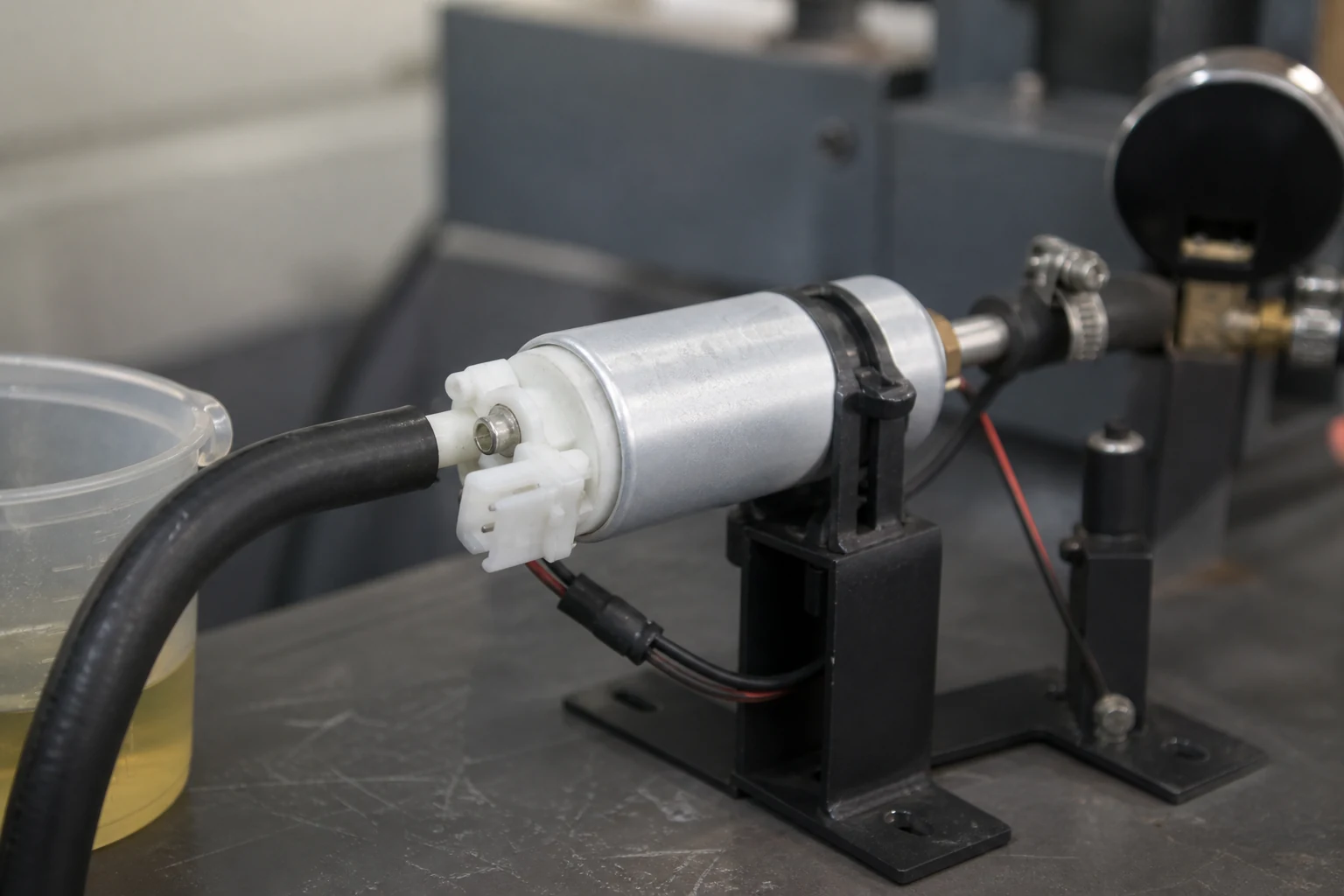
Submit the requirements through Contact Kangsong with the offered-model reference, test-document request, scope, OE/interchange evidence, interface notes, quantity, and destination requirements. About Kangsong can support supplier-background review, while the product decision still depends on the documented model and application.
Part 7. Which fit boundary prevents an unsupported alternative claim?
This guide fits importers, distributors, and service-channel buyers who need a disciplined way to compare high-flow fuel-pump requests. It does not calculate engine output, certify an installation, publish an OE cross-reference, or decide vehicle fitment from “450 LPH” alone.
Pause the comparison when the offered model is unclear, the rating lacks a stated basis, or the assembly and interfaces are not documented. A request that cannot be compared on evidence should be treated as a scope-review inquiry rather than as an exact replacement order.
FAQs
What does 450 LPH mean on a fuel-pump request?
It is a claimed flow label associated with an offered pump. The exact meaning depends on the specific model and the documented test basis, so it should not be treated as a complete specification by itself.
Can a 450 LPH label prove vehicle fitment?
No. Vehicle fitment depends on the documented application, interfaces, assembly scope, and OE or engineering evidence. A flow label alone does not establish any of those fields.
Why is the test basis important when comparing pump flow?
The test basis explains what the label represents for that offered model. Without it, a buyer cannot make a like-for-like comparison or responsibly infer another pump’s performance.
Should a cartridge and a complete module be quoted together?
They can be reviewed in one sourcing exercise, but they must be separated by scope. A cartridge is a pump component, while a complete module can include tank-facing and electrical-interface components.
What wiring details should be included with a pump inquiry?
Include the connector record, power and ground information, relevant control notes, and the existing harness or interface description. These details help screen an electrical mismatch before a model is proposed.
What documents should a distributor request before comparing alternatives?
Request the exact offered-model identifier, revision-dated product data, the test basis behind any performance label, included-component scope, OE/interchange or engineering evidence, and required destination documentation.


