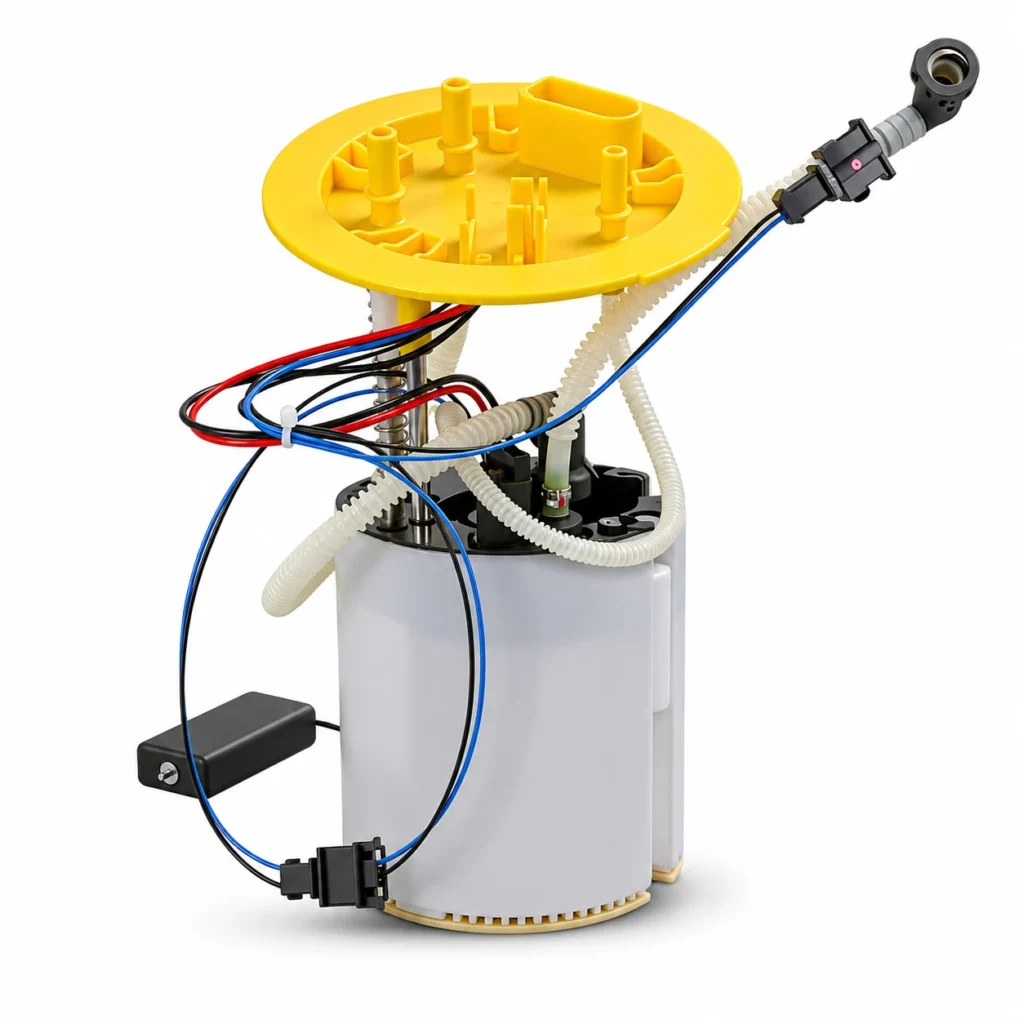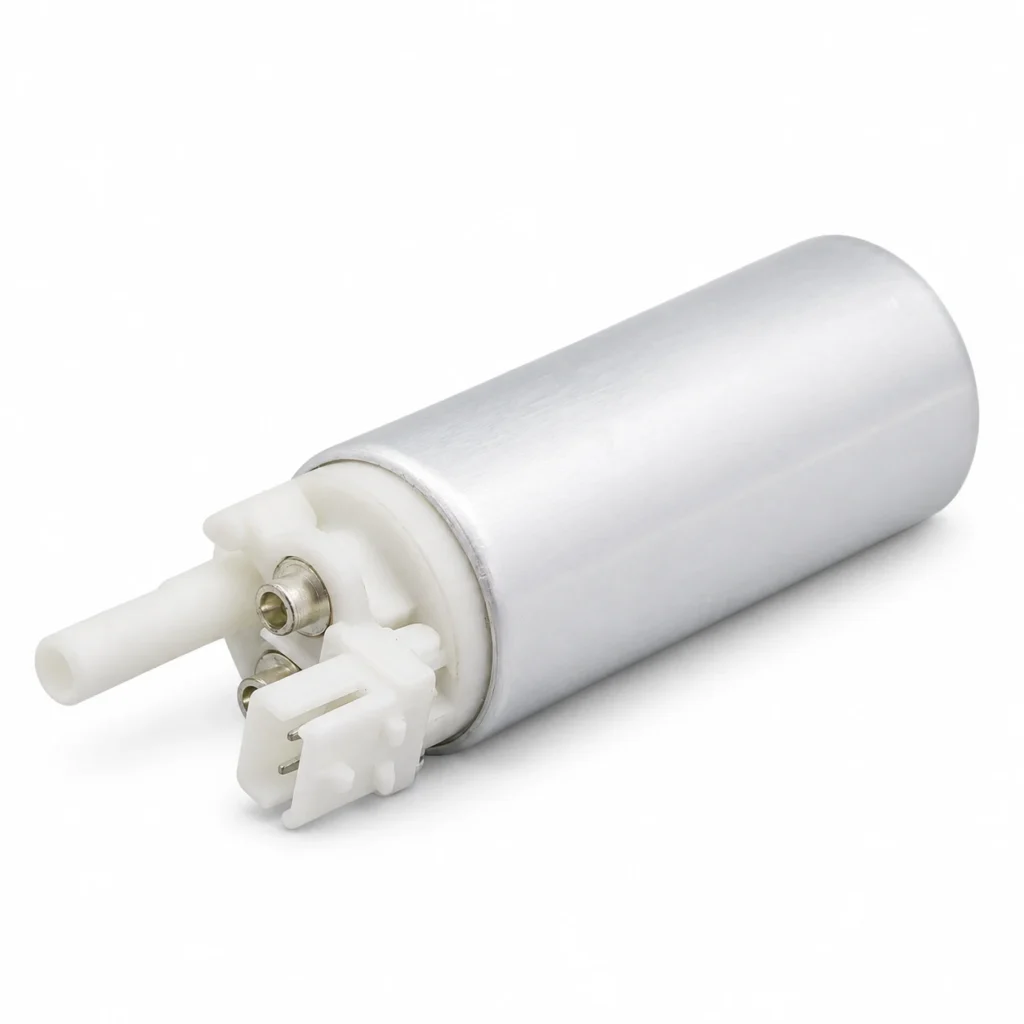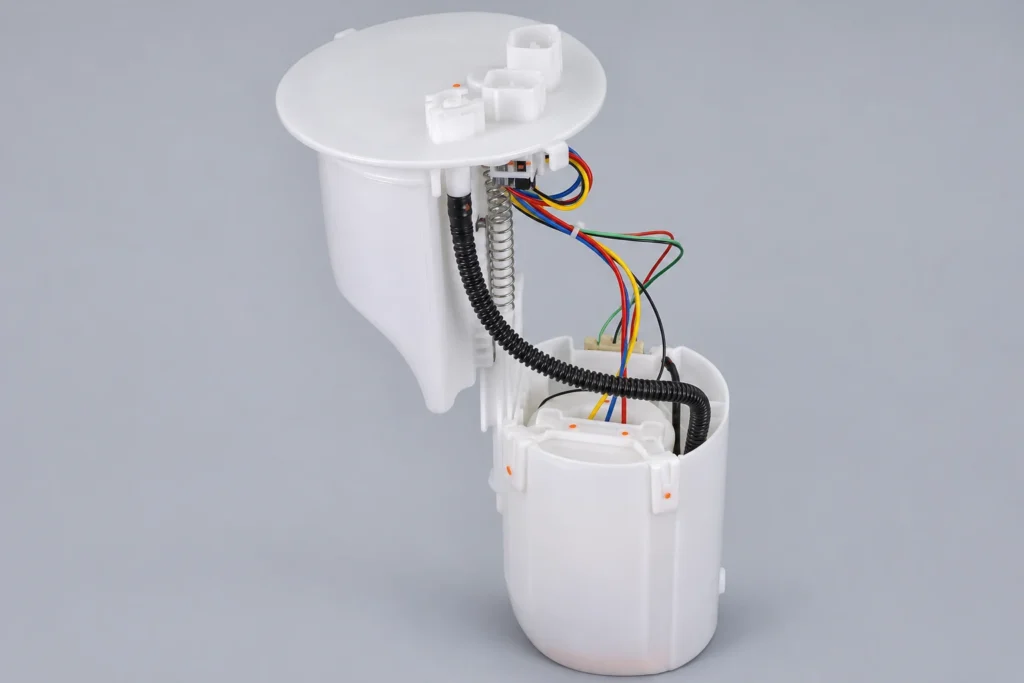
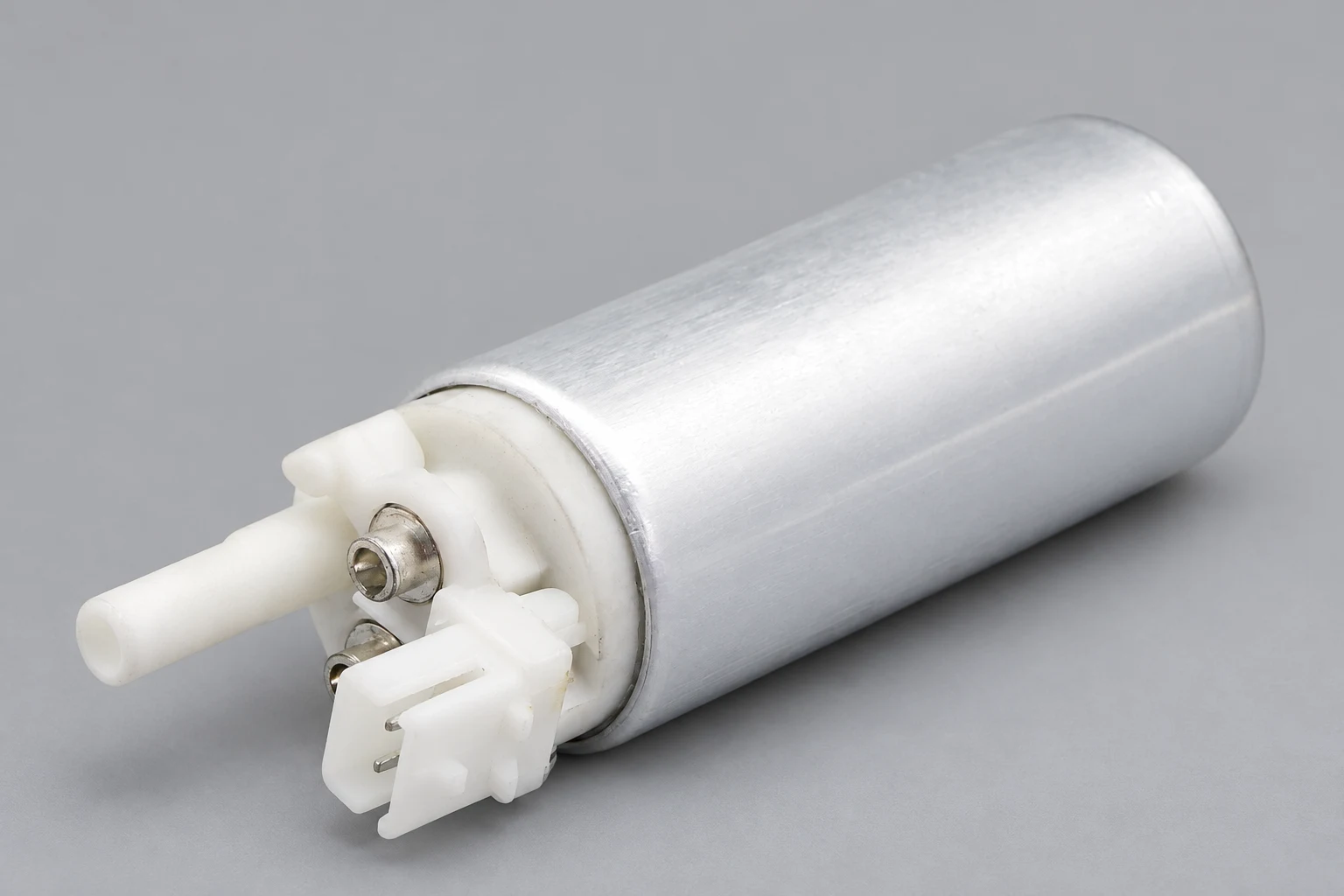
Fuel pump cavitation occurs when local pressure inside the pump falls low enough for liquid fuel to form vapor cavities, which can collapse as pressure recovers. It can disrupt delivery and damage pumping surfaces. However, a noisy fuel pump does not prove cavitation: air entering the fuel, an uncovered pickup, electrical faults, and normal motor sound can produce similar complaints. The useful question is whether the pump is receiving a continuous liquid supply under the conditions in which the fault occurs.
This guide separates the physical mechanisms, explains which inlet conditions deserve attention, and provides an evidence checklist for workshops and replacement-pump buyers.
What happens during fuel pump cavitation?
A liquid does not need to reach its atmospheric boiling temperature to form vapor. Reducing its local pressure can also create vapor cavities. Inside a pump, pressure can vary significantly between the inlet, the moving pumping element, and the outlet. Where pressure subsequently recovers, vapor cavities can collapse rather than simply travel through as stable pockets of air.
The MIT OpenCourseWare notes on cavitation describe vapor formation under reduced pressure. That basic physics explains the term; it does not supply a service limit for an automotive fuel pump.
Gasoline is a mixture, so its vapor behavior depends on composition and temperature. Do not borrow a water-pump pressure threshold or a single gasoline boiling temperature and apply it to every vehicle. The relevant fuel, operating temperature, inlet conditions, and pump design must be considered together.
Repeated cavity collapse can produce localized stresses on nearby surfaces. Noise or vibration may accompany it, but an external sound recording cannot show what is happening inside the pump. Caltech’s Cavitation and Bubble Dynamics provides the broader physical background on bubble growth, collapse, and cavitating flow.
For the normal movement of fuel through an electric pump, start with our electric fuel pump operation guide. Here, the focus is the liquid supply reaching the pumping element, rather than the complete motor-control sequence.
Cavitation, aeration, and fuel starvation are different
These conditions can occur together, but the terms describe different problems. Keeping them separate helps a workshop avoid ordering a replacement pump for an unresolved tank, hose, or installation issue.
| Condition | What the term describes | Evidence worth collecting | What does not prove it |
|---|---|---|---|
| Cavitation | Fuel vapor cavities form because of a local pressure reduction and may collapse as pressure recovers | Fuel temperature, inlet restriction or pressure evidence, operating demand, and pump-specific engineering information | A whine by itself |
| Aeration | Air or other noncondensable gas is mixed into the fuel | Approved checks for suction-side leakage, pickup exposure, disturbed fuel, or incorrect plumbing | Assuming every visible bubble is fuel vapor |
| Starvation | The pump or downstream system does not receive enough usable liquid fuel | Actual fuel quantity, pickup and reservoir condition, restrictions, and delivery under the complaint condition | A tank gauge reading alone |
| Vapor lock | Vapor interferes with liquid delivery in a relevant part of the fuel path | Temperature and hot-restart history, system layout, and the manufacturer’s diagnostic method | Treating every hot no-start as the same fault |
| Electrical underperformance | The pump is not receiving or responding to the required electrical supply or command | Loaded-circuit voltage, pump command, current, and wiring checks appropriate to the vehicle | An unplugged connector showing battery voltage |
The distinction is based on the mechanism and the evidence needed to establish it. This table is a troubleshooting framework, not a substitute for the vehicle manufacturer’s test procedure. If the complaint is primarily sound, the fuel pump whine guide covers the broader noise assessment.
Inlet conditions that deserve attention
Restriction before the pumping element
A blocked pickup screen, damaged suction hose, unsuitable prefilter, or obstructed fitting can make it harder for fuel to reach the pump. The location of the restriction matters: a restriction before the pump changes its inlet conditions, while a restriction after it affects the discharge circuit differently. Identify the component’s position before interpreting a pressure reading.
Inspect the correct screen and filter using the approved procedure. A clean new pump does not remove sediment remaining in the tank. Our fuel pump strainer guide explains the inlet-screen component and its distinction from a service filter in the line.
Fuel temperature and installation conditions
As fuel temperature changes, the margin between local liquid pressure and vapor formation can change. A complaint after a hot soak therefore deserves a temperature and operating-history record. It does not justify fitting insulation or changing line routing without checking the application’s requirements.
An externally mounted pump also depends on its approved mounting position and inlet plumbing. Height relative to the fuel source, hose length, bends, and fitting choices can affect inlet losses. Follow the pump and vehicle documentation rather than copying a universal installation rule from another pump design.
The U.S. Department of Energy’s pumping-system sourcebook explains how vapor pressure and inlet conditions affect pump performance. Its industrial examples describe general principles; their dimensions, limits, and corrective settings are not automotive service specifications.
Pickup exposure and reservoir problems
A tank can contain fuel while the pickup temporarily loses access to it. A symptom associated with cornering, acceleration, a slope, or a particular indicated fuel level should be recorded precisely. Whether the tank module uses a reservoir, transfer device, baffle arrangement, or another retention feature depends on the application.
Loss of liquid at the inlet may cause starvation or air ingestion. That does not establish vapor-cavity collapse. Describe what was actually observed—such as delivery loss during a left turn—rather than labeling every intermittent low-fuel complaint cavitation.
Build a diagnostic record before condemning the pump
Start with the exact vehicle and pump identification. Record engine code, original part number, installed pump or module reference, and any recent tank, filter, wiring, or fuel-system work. A complaint that begins immediately after a repair should prompt a review of the changed parts and installation details.
Then describe when the symptom occurs. Include fuel quantity, ambient and fuel-temperature information when available, engine operating state, duration, and whether the problem disappears after cooling or refueling. Avoid deliberate low-fuel or high-load experiments that could create an unsafe situation or damage the vehicle.
Use the manufacturer’s approved pressure, flow, inlet-restriction, and electrical checks for the system. The appropriate set of tests varies. Record the test location, units, expected value source, and actual operating conditions. A discharge-pressure reading can establish a delivery problem, but usually cannot identify cavitation as its cause by itself.
If an electric pump is involved, check its supply and command under the specified conditions. Do not assume pump current must always rise or always fall during a fuel-supply fault. Current depends on the pump design, pressure, voltage, speed control, and the nature of the fault. Interpret it alongside the rest of the evidence.
Keep measured findings separate from hypotheses in the repair record. “Pressure falls during the documented test with inlet restriction outside specification” is a stronger statement than “the pump sounds like cavitation.” If specialized engineering analysis is needed to establish the mechanism, state that uncertainty instead of presenting the suspected cause as proven.
Prevent the same problem after replacement
Before installing another pump, resolve the inlet or installation defect supported by the evidence. Depending on the documented fault, this may involve tank contamination, an incorrectly installed screen, unsuitable hoses, a damaged reservoir component, or incorrect pump selection. Replace parts according to the approved procedure rather than adding a generic filter or changing pressure settings experimentally.
Do not bench-run an in-tank pump dry to listen for the complaint. Do not use improvised clear tubing, open containers, or unapproved electrical jumpers around fuel. Testing and fuel handling require the correct equipment, ventilation, ignition-source control, and vehicle-specific precautions.
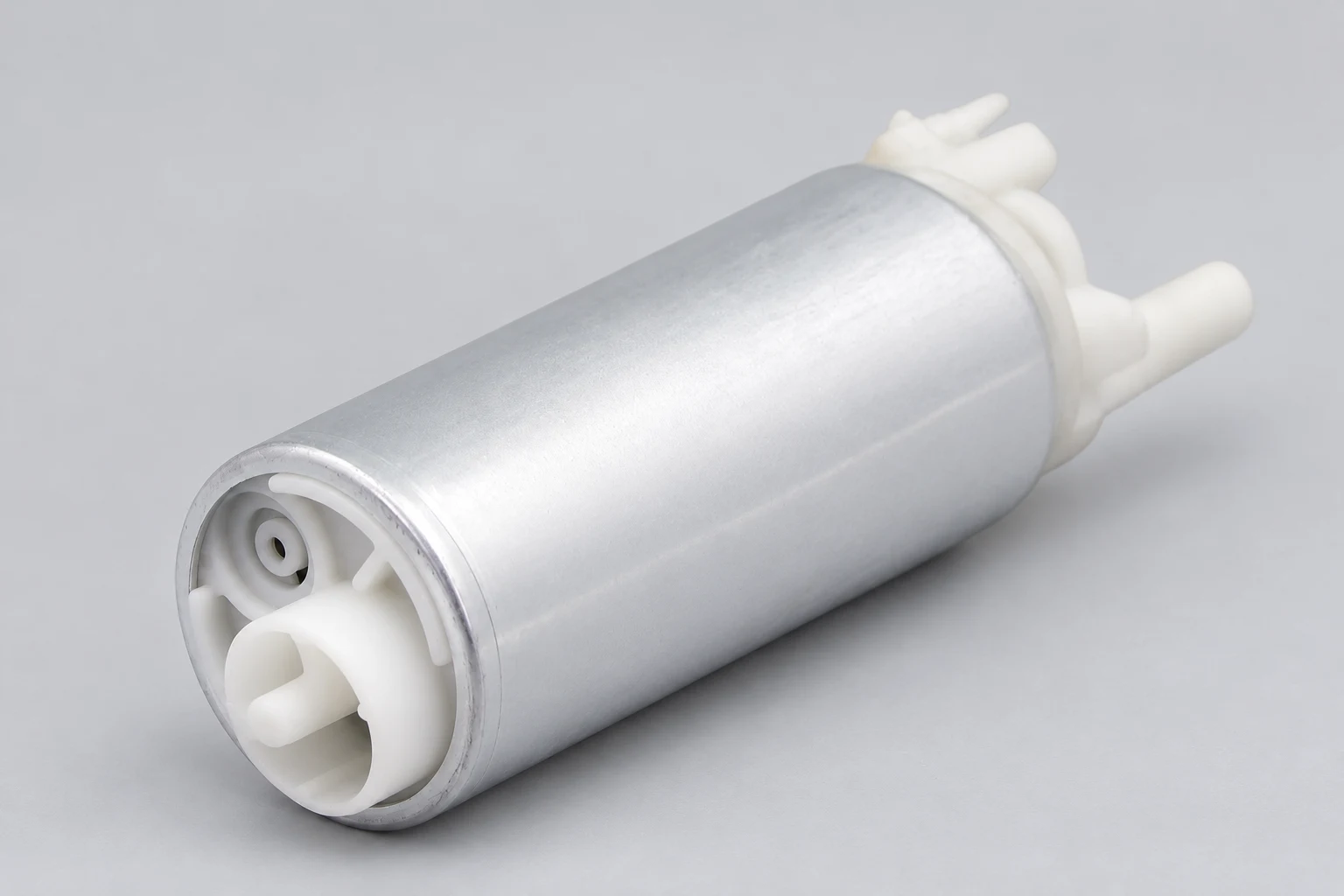
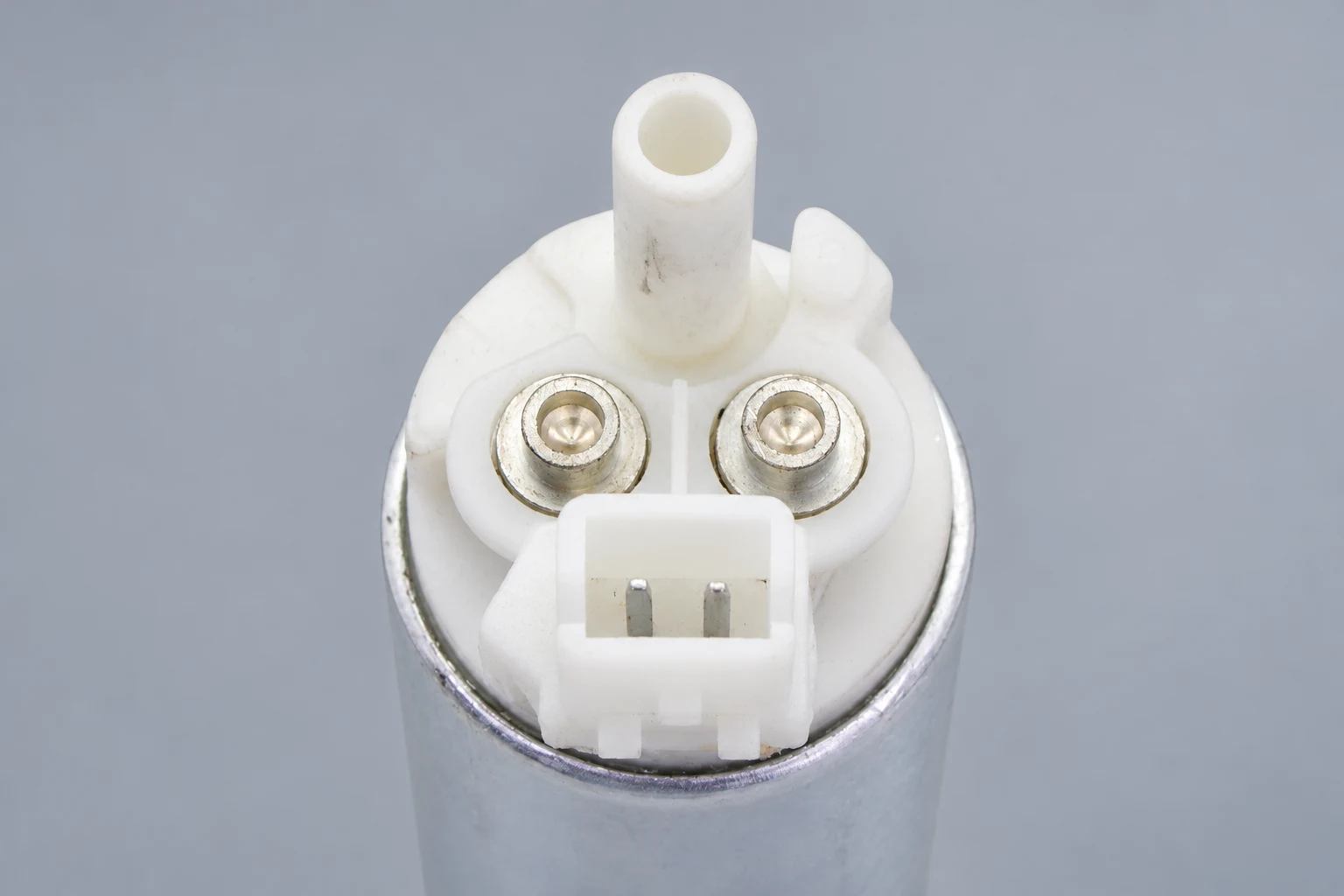
When selecting a replacement, match the actual component. The Kangsong C/K application electric gasoline pump listing is a specific catalog example, not a universal remedy for cavitation. Confirm the original reference, intended vehicle, connector, inlet and outlet arrangement, and documented operating requirements before ordering.
For an importer or workshop inquiry, attach the original label and product photographs, the symptom conditions, the test results, and the corrective work already completed. Ask for the relevant product documentation. An advertised high-flow figure alone does not establish compatibility with the existing inlet arrangement or control system.
After installation, repeat the approved checks under safe conditions relevant to the original complaint. Confirm secure connections, leak-free operation where fuel joints were disturbed, and the required delivery performance. Retain the before-and-after results so a recurrence can be investigated without starting from an unsupported assumption.
Watch: the physics of cavitation
Practical Engineering’s educational demonstration explains how a pressure change can create and collapse vapor cavities. It illustrates the physical principle; it is not an automotive fuel-system test or a claim about the pictured Kangsong pump.
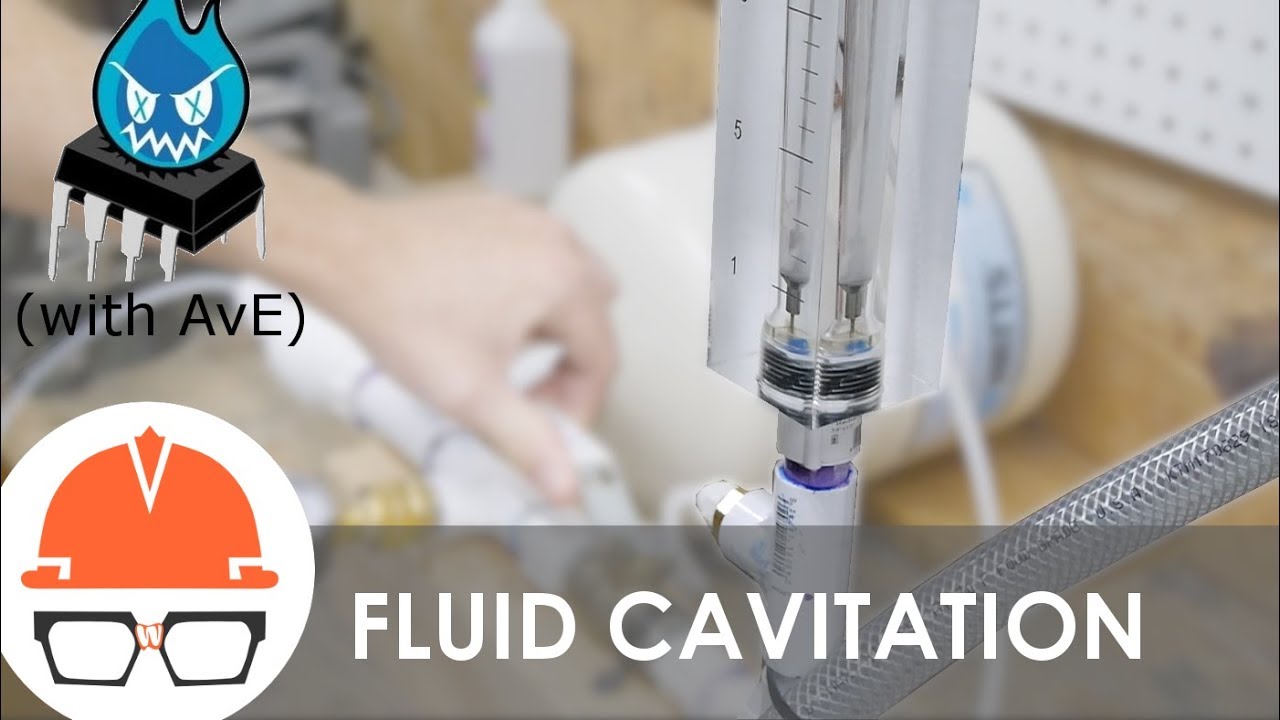
Watch What is Cavitation? on YouTube.
Frequently asked questions
Does fuel pump noise prove cavitation?
No. Noise can come from normal operation, air ingestion, electrical problems, mounting, or wear. Establish the relevant inlet and operating conditions before identifying cavitation as the cause.
Are cavitation and air in the fuel the same thing?
No. Cavitation involves vapor formation caused by local pressure conditions. Aeration involves air or other gas mixed into the liquid. They can coexist, but require different evidence.
Will replacing the pump always stop cavitation?
No. An unresolved inlet restriction, unsuitable installation, or other supply defect can affect the replacement as well. Correct the supported cause and verify the completed repair.
Can a product photograph show whether a pump will cavitate?
No. A photograph helps identify visible structure and interfaces. Cavitation depends on internal design, fuel properties, and operating conditions that a product image cannot establish.