how to test vacuum fuel pump delivery on carbureted platforms: start with fuel-line and vacuum-hose checks, then measure pressure at the carburetor inlet while cranking. Add a bench pulse test when on-car readings stay weak before you approve an RMA. EFI vehicles need a separate voltage check—mechanical vacuum tests do not apply to in-tank modules.
What a Vacuum Mechanical Fuel Pump Does
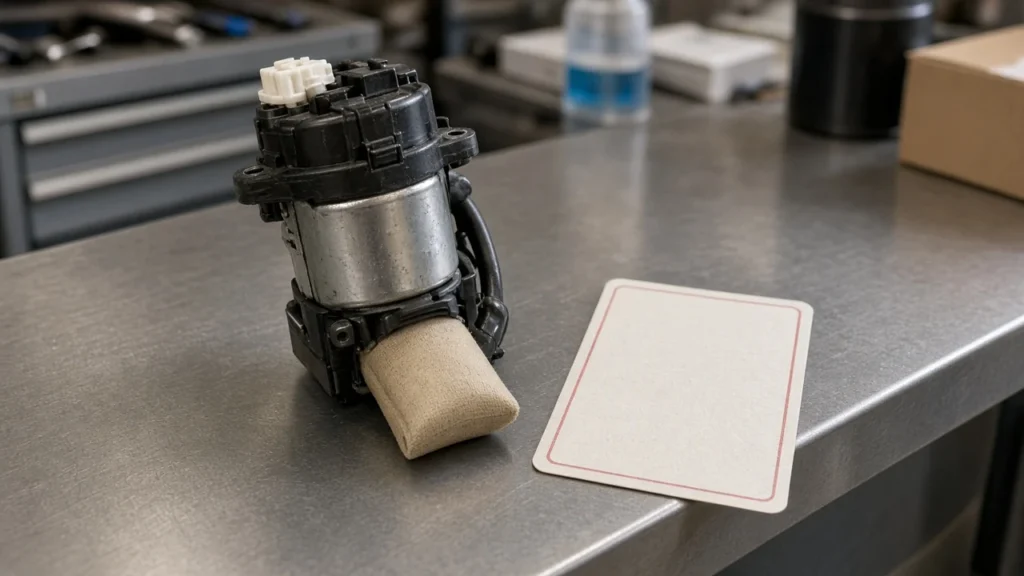
A vacuum mechanical fuel pump moves gasoline from the tank toward the carburetor using a diaphragm, inlet and outlet check valves, and an engine-driven lever or cam. Many designs also use a manifold vacuum port to assist diaphragm travel on acceleration or cold start.
The pump is not a constant-pressure device like an EFI in-tank unit. Delivery varies with engine speed and vacuum. That is why a cranking pressure reading plus a visual line inspection beats guessing from idle quality alone.
If the vehicle already uses electronic fuel injection, stop here and jump to the voltage section—carburetor pressure specs do not validate an in-tank module.
Safety Checks Before You Open the Fuel System
Work in a ventilated area with the ignition off, battery disconnected if you will probe wiring later, and a fire extinguisher within reach. Gasoline vapor ignites easily; contain spills and keep open flames away from the bay.
Relieve line pressure by running the engine until it stalls (if it will run safely) or by cracking a fitting into a rated drain pan. Wear chemical-resistant gloves and eye protection when disconnecting rubber lines.
Tag hoses before removal so vacuum and vapor lines return to the correct ports. Mis-routed vacuum plumbing is a common cause of weak delivery after pump replacement.
Quick Visual and Fuel-Line Tests at the Vehicle
Start with what you can see: wet fittings at the pump body, cracked vacuum hoses, chafed metal lines, and a dark or restricted fuel filter. Inspect every fuel line / hose segment from tank to carburetor. Fix obvious leaks before installing gauges.
Pinch-test soft lines for collapse. Follow the route from tank to pump to carburetor and confirm the return line is not kinked or blocked. A restricted return can mimic pump failure on some layouts.
Operate the primer bulb (if equipped) and watch for hard spots or slow refill. On vacuum-assist pumps, block the inlet briefly with a finger (fuel-safe gloves) and feel whether the diaphragm pulls vacuum at the port.
Important: Shop reports repeatedly show a pump that bench-tests fine while the car still dies because a cracked vacuum line to the carburetor was never found—always inspect vacuum routing before ordering another pump (community forum evidence).
On-Vehicle Vacuum and Pressure Gauge Tests
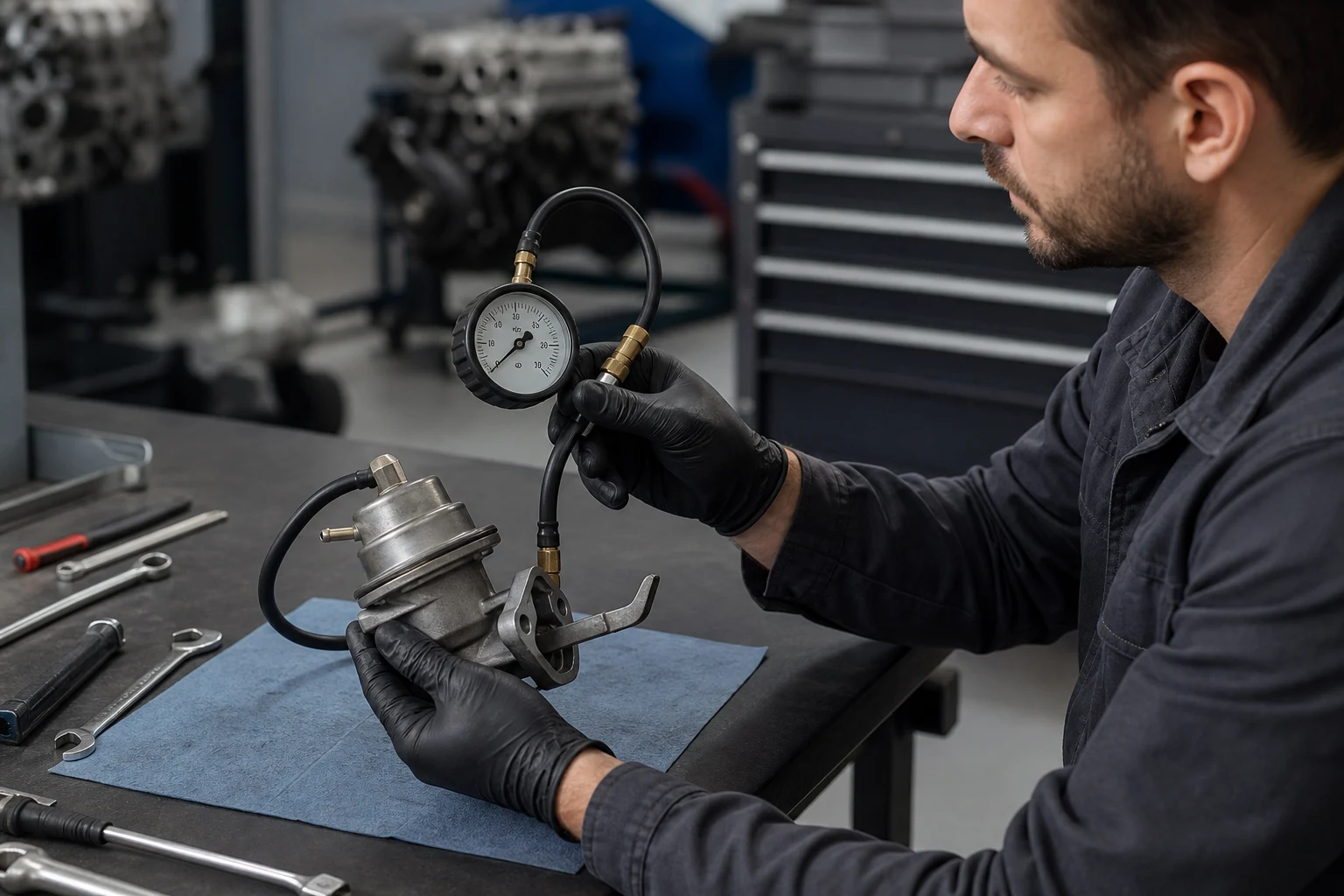
Install a fuel pressure gauge with a carburetor-rated adapter at the fuel inlet fitting on the carburetor or a tee in the metal line before the bowl. Ground the coil or disable ignition so the engine cranks without starting if you need a dry cranking test.
Crank for several seconds and read static pressure. This is the core step when you need to know how to test a vacuum fuel pump on a carbureted fleet unit.
On many carbureted applications, readings during cranking often fall in a roughly 3–7 psi band at the carburetor inlet. Compare your note to the service manual for that engine family—do not assume one number fits every fleet unit.
If pressure is low, repeat with a known-good filter and with the return line unobstructed. Log the exact psi on the work order for fleet maintainer / parts buyer review.
| Reading (cranking) | Likely next step | Notes |
|---|---|---|
| Within roughly 3–7 psi | Inspect carburetor needle/float; verify volume over time | Pressure OK does not prove sustained volume at cruise |
| Below roughly 3 psi | Check filter, lines, and tank pick-up; then bench-test pump | Rule out restrictions before RMA |
| Zero psi | Verify fuel in tank, valve open, and no blocked inlet | Listen for pump click only on electric units |
| Fluctuating wildly | Look for air ingestion at hose clamps or porous hose | Vacuum leak on assist port also causes flutter |
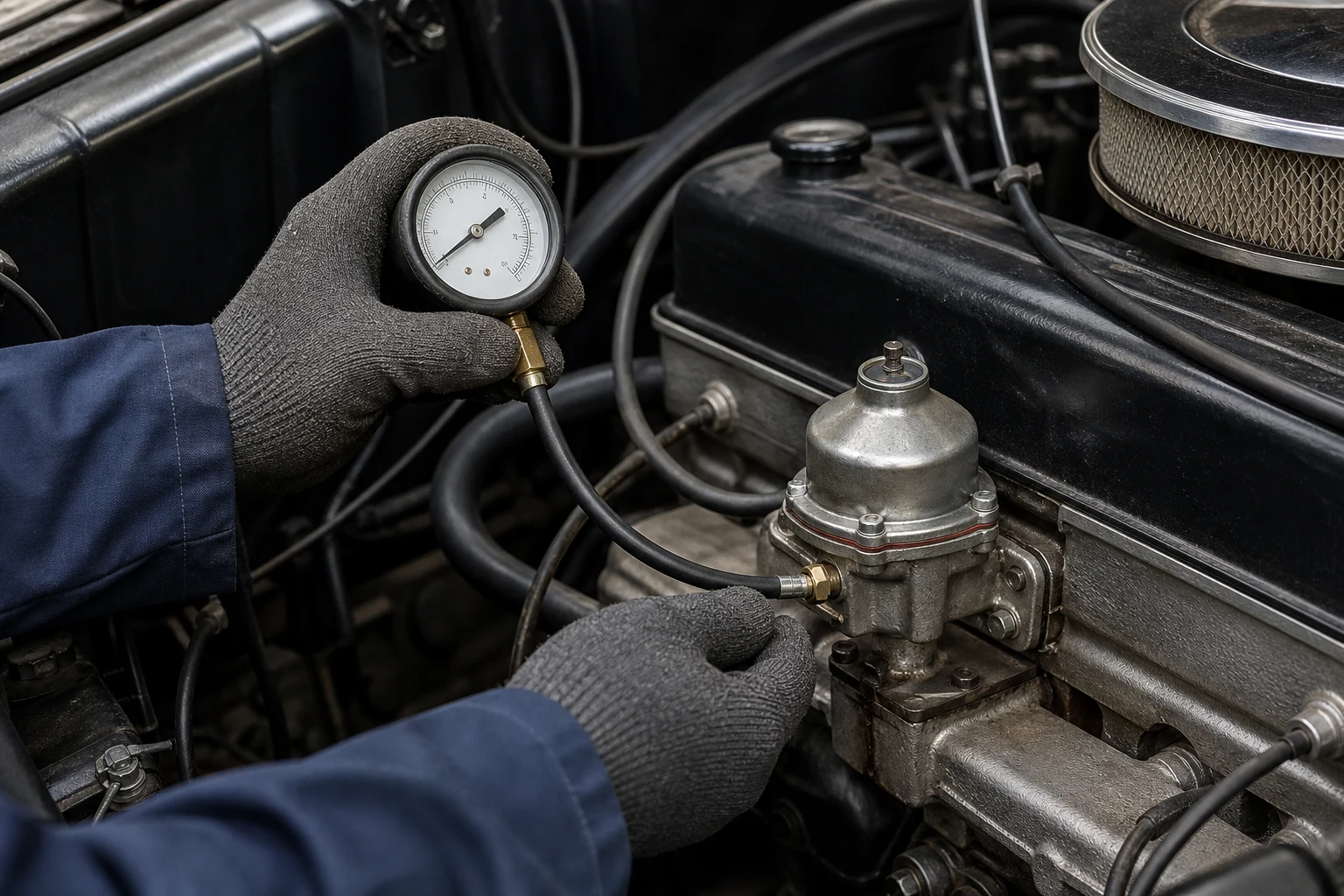
Use the table above to choose the next diagnostic branch.
For vacuum-assist designs, connect a vacuum gauge to the pump port and confirm manifold vacuum rises during crank or idle. A steady pull that collapses when the hose is pinched points to plumbing rather than an internal diaphragm tear.
Bench Testing a Vacuum Fuel Pump Off the Engine
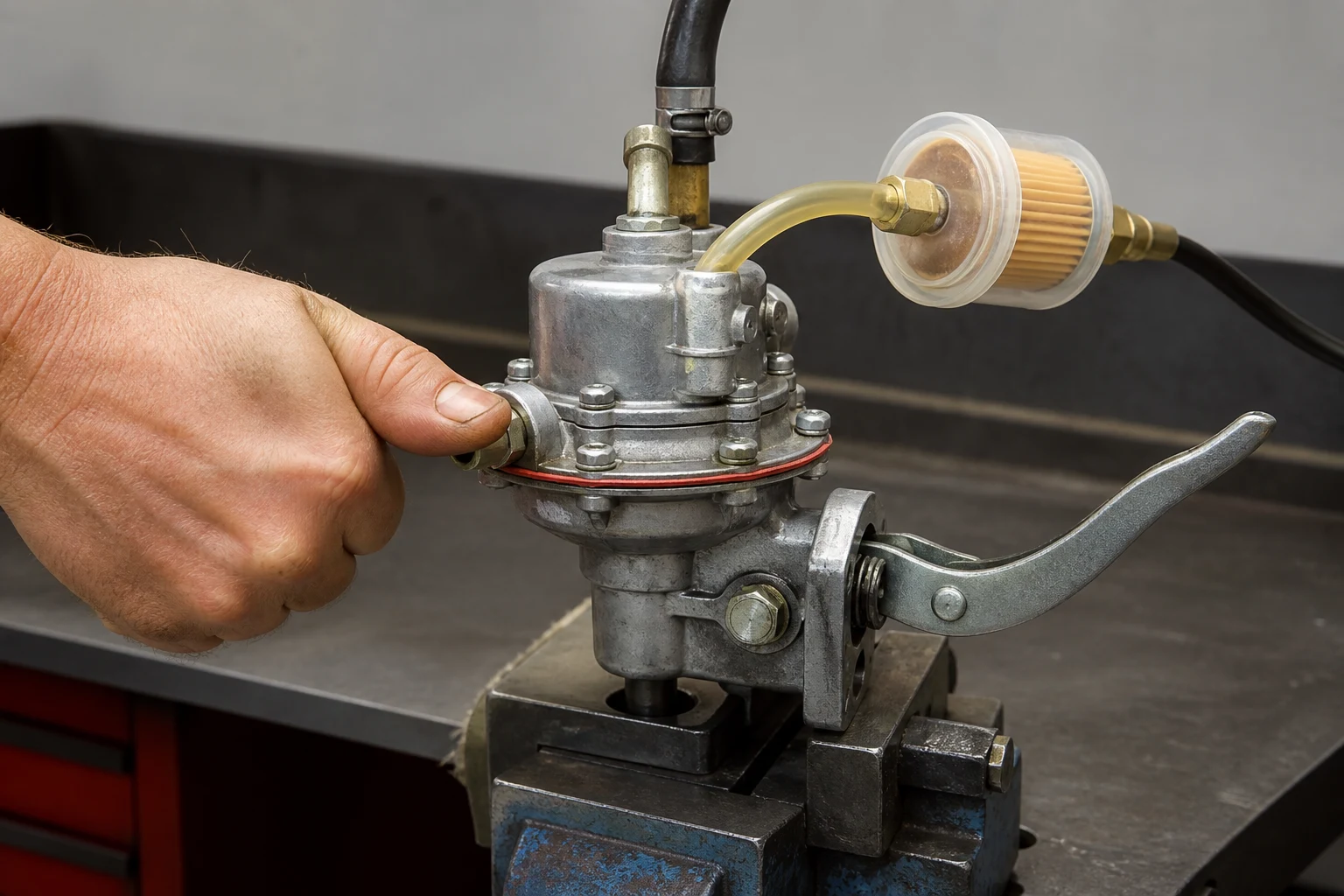
Remove the pump only after on-car tests show weak delivery with clean lines. Cap ports, mount the pump in a vise with soft jaws, and fill the inlet with clean test fuel.
Turn the drive lever by hand or slow drill through the eccentric. You should see regular outlet pulses into a clear hose with no steady weep from the weep hole or mounting gasket.
Hold outlet pressure briefly with a finger or small plug—internal check valves should not leak down instantly. Replace the pump when pulses are weak, absent, or fuel appears in the crankcase vent path.
How to Test Fuel Pump Voltage on Electric In-Tank Units
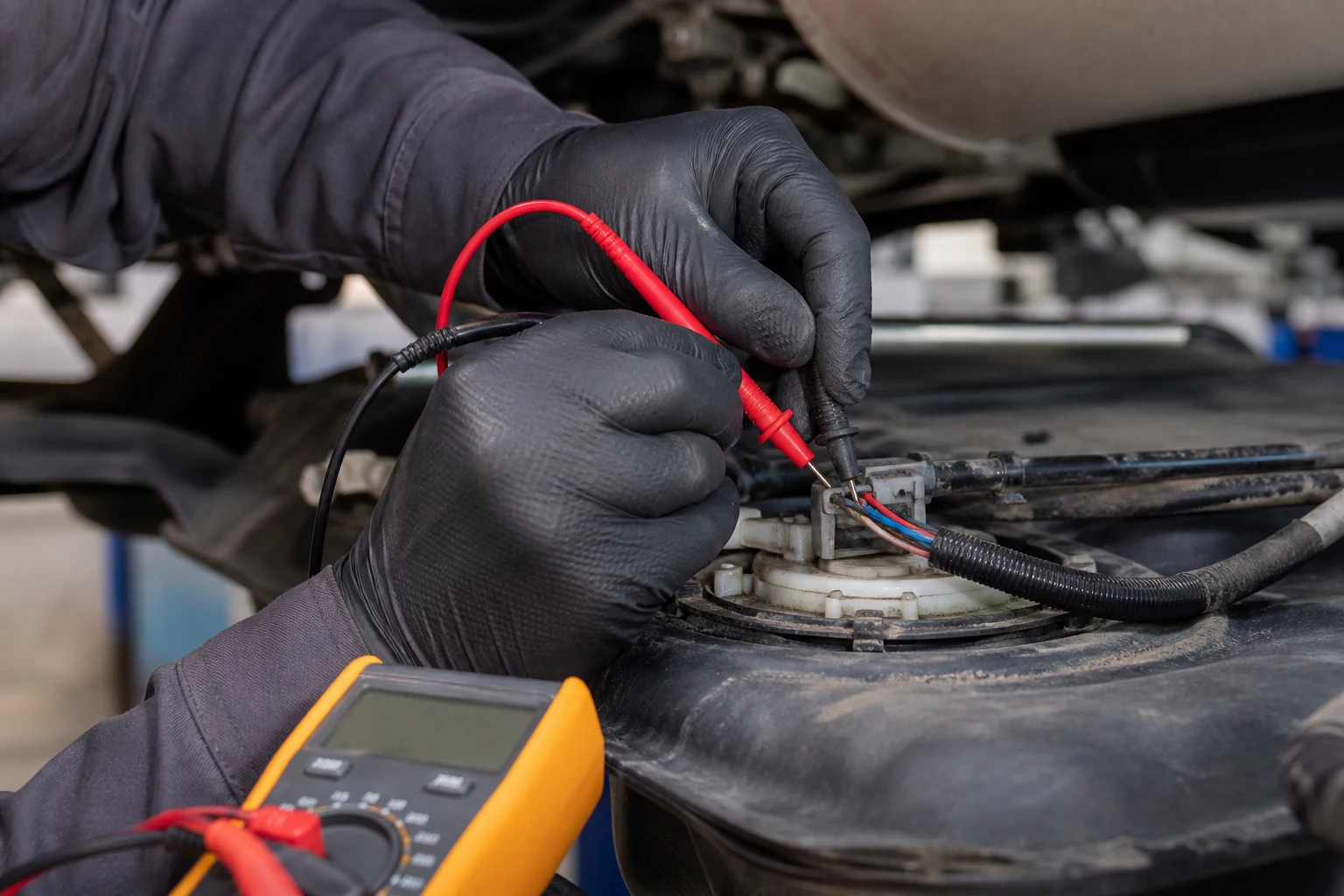
When the platform uses an electric in-tank fuel pump, how to test fuel pump voltage starts at the connector: back-probe the supply and ground pins with a digital multimeter. Check the fuel pump relay / wiring path when voltage sags under load. Key-on battery voltage near 12 V at the pump harness is a baseline; cranking should not collapse the reading for more than a moment.
If voltage sags heavily while the pump runs, chase relay contacts, fusible links, and ground straps before condemning the module. This sequence matches the broader evidence-first approach in our fuel pump testing guide.
Use a dedicated fuel pressure gauge for EFI pressure specs—carburetor psi bands do not apply. Our fuel pump tester evidence guide explains what to log for wholesale channels.
Low Voltage to Fuel Pump Symptoms vs Mechanical Pump Failure
Low voltage to fuel pump symptoms on EFI cars include extended crank, hot-soak stall, and loss of power under load even when the tank is full. Mechanical vacuum pumps on carbureted engines instead show weak volume, vapor lock tendencies, or fuel smell from diaphragm leaks—voltage at the pump connector is irrelevant on those units.
| Signal | More typical of mechanical vacuum pump | More typical of electric EFI pump |
|---|---|---|
| Weak cranking pressure at carb inlet | Yes | No—measure EFI rail pressure instead |
| Fuel in crankcase or weep hole | Yes | Rare for in-tank modules |
| Voltage below about 10 V at connector under load | No | Yes—investigate circuit |
| Whine with good rail pressure | Uncommon | Possible flow restriction |
Cross-read symptom context in weak fuel pump symptoms and bad fuel pump symptoms before you stock parts.
When to Replace the Pump: Fleet and Parts-Buyer Notes
Replace a mechanical pump when bench pulses are weak, the diaphragm weeps, or on-car pressure stays below the documented band after lines and filters are verified. Repair is rarely economical for sealed diaphragm units—plan a new pump or a platform migration to EFI where approved.
Tip: Shop forums stress writing the gauge reading on the repair order instead of guessing—fleet credits move faster when psi and voltage numbers are attached (GarageJournal discussion).
Document filter condition, vacuum hose part numbers, and whether the failure was heat-related. Distributors reduce warranty returns when the test evidence travels with the core.
For pump-type orientation across programs, see what is a fuel pump.
Recommended Electric Fuel Pump Products for Modern EFI Platforms
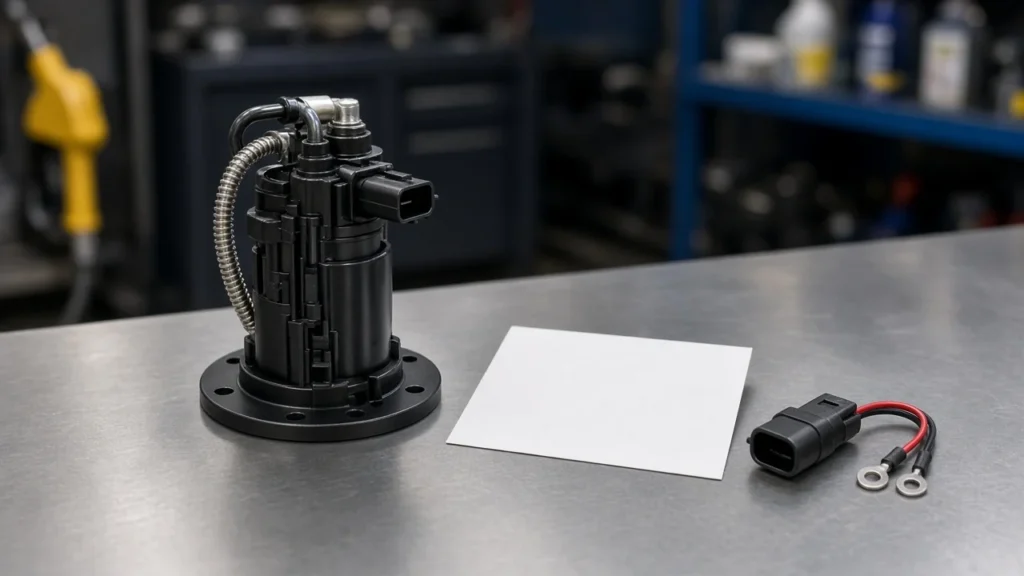
Carbureted vacuum pumps belong to older gasoline fleets. When the repair path is an electric in-tank or inline assembly, browse the electric fuel pump assemblies catalog for distributor programs rather than forcing a mechanical pattern number.
Match OE references, tank depth, and connector style per SKU—example Hyundai/Kia Sonata/Optima assemblies are scoped on their own product pages and do not prove fitment elsewhere.

Confirm EFI pressure requirements and wiring health before quoting a module. Voltage and rail pressure logs belong on the same work order as mechanical psi notes.
FAQ
How do you test a vacuum fuel pump without special tools?
Use visual and touch checks first: look for leaks, cracked vacuum hoses, and collapsed soft lines; feel whether the primer bulb gets hard and whether the pump port pulls vacuum. These steps confirm plumbing before you rent a pressure gauge.
What psi should a mechanical fuel pump produce?
Many carbureted engines show roughly 3–7 psi at the carburetor inlet while cranking. Always compare to the manual for that engine—some performance setups differ.
Can a weak vacuum line cause fuel pump problems?
Yes. A cracked or mis-routed vacuum line can weaken delivery even when the pump diaphragm is healthy. Fix plumbing before replacing the pump.
How do you test fuel pump voltage at the connector?
Back-probe the pump supply and ground at the connector with a multimeter. Key-on should be near 12 V; heavy sag during pump run points to wiring or relay loss rather than an empty tank.
What are low voltage to fuel pump symptoms?
Hard starting, stalling after hot soak, and weak acceleration under load often track with low voltage at the pump connector on EFI vehicles. Mechanical carbureted pumps rarely show this pattern.
Should you test the pump on the engine or on a bench?
Run on-car pressure and vacuum checks first because line faults are common. Bench pulse testing confirms internal check valve or diaphragm failure when on-car readings stay low with clean plumbing.
When should a fleet buyer replace vs repair a mechanical pump?
Replace when documented cranking pressure stays low after line and filter verification and the bench test shows weak pulses or weep. Log numbers on the work order to support core return decisions.
References
- Mechanical fuel pump overview — Wikipedia
- Fuel pump types and electric vs mechanical context — Wikipedia
- Gasoline standards and safe fuel-system handling — EPA
- Shop discussion on recording pressure instead of guessing — GarageJournal community forum