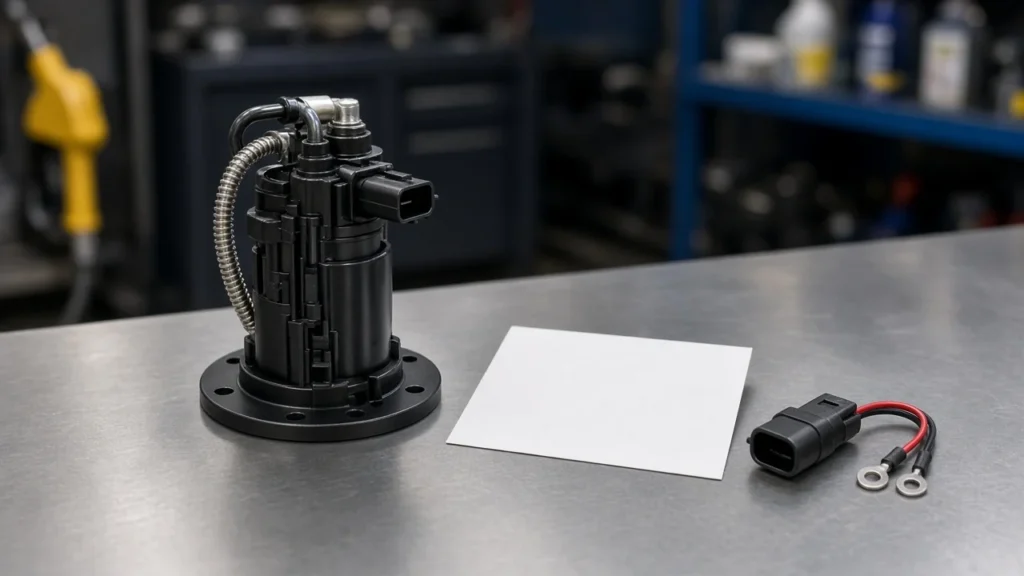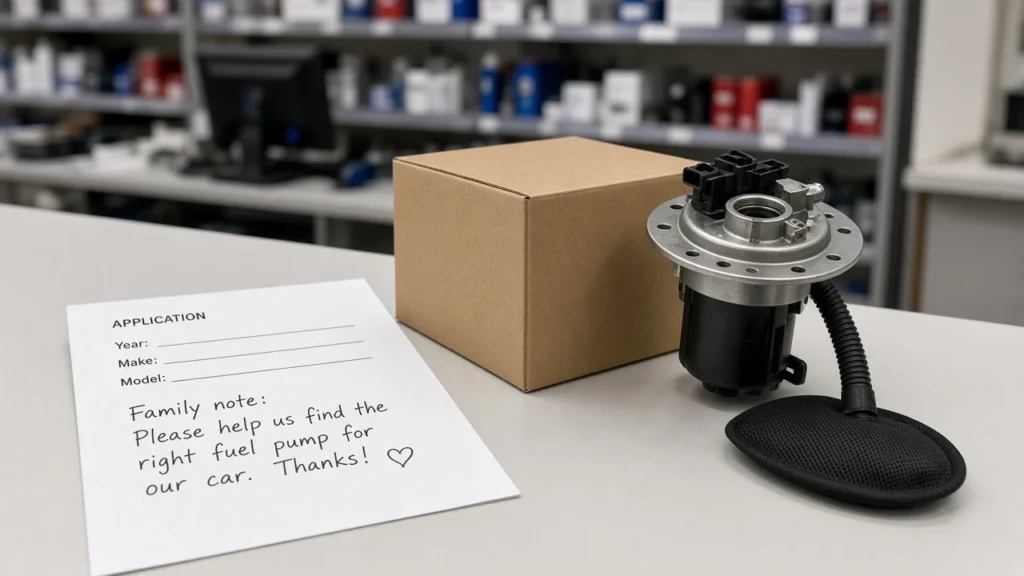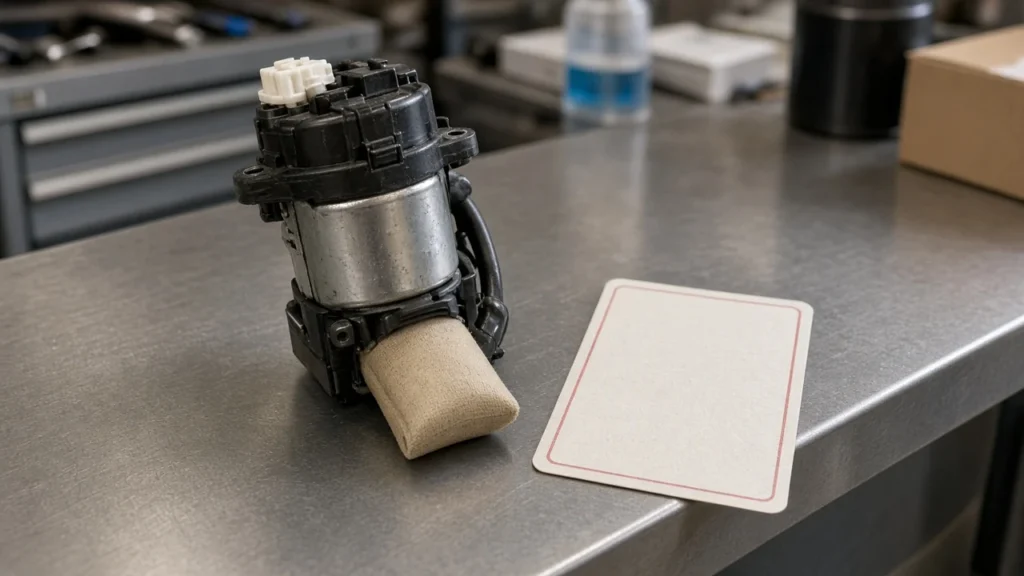
Weak fuel pump symptoms are progressive under-delivery cues from an electric pump that still tries to run—hesitation under demand, long cranks, load-related stalls, or a harsh tank whine—rather than a silent dead unit. The sections below map those cues for service channels, cover symptoms of a weak electric fuel pump in plain counter language, and separate restriction and fuse-open lookalikes before any assembly quote. You will also see why low fuel pressure and weak fuel delivery complaints often show under load first, and which pressure-versus-volume notes belong on the work order.
Symptom patterns of a weak electric fuel pump
Expect a pump that still makes some noise or pressure, yet cannot keep up when the engine asks for more fuel. That is the core of a weak electric fuel pump complaint: delivery fades under demand instead of disappearing in one hard cut.
| Shop observation | What it usually means on a weak-delivery event | Counter note to capture |
|---|---|---|
| Hesitation or sputter on tip-in / merge | Fuel demand rises faster than the pump can supply | Load condition and repeatability |
| Long crank, then a rough catch | Pump builds pressure slowly or bleeds down after key-off | Cold/hot and sit time |
| Runs at idle, stumbles on hills or tow | Light load still OK; high demand exposes the shortfall | Exact operating context |
| Harsh whine or buzz from the tank area | Electric pump motor or wear noise often precedes output loss | Sound present with key-ON/run |
| Intermittent stall that restarts after a wait | Heat or low-level stress can worsen a weakening pump | Whether fuel level was low |
A weak electric fuel pump often still gives a brief key-ON prime. If the tank is completely silent and the vehicle acts like the feed never arrived, keep the fuel pump fuse blown symptoms path in view instead of forcing a “weak pump” story onto a dark circuit.
For the wider catalog of total-failure patterns after supply is already understood, use the distributor bad fuel pump symptoms overview. Keep the focus here on progressive low delivery.
Weak pump vs dead pump vs restriction lookalikes
A stumble under load can be a weakening electric pump, a restricted filter or pickup, or an electrical cut that only looks like “no fuel.” Separate those stories on the intake notes before anyone releases an assembly carton. Modern EFI electric pumps still depend on a commanded power path, so silent no-prime cases belong with fuse/relay checks before a weak-pump quote.
| Pattern | Weak pump / low delivery cue | Dead pump or dark circuit cue | Restriction cue |
|---|---|---|---|
| Key-ON prime | Often present, may sound labored | Often absent (fuse/relay/wiring/dead motor) | Usually present |
| Driving feel | Progressive hesitation, power loss under demand | Sudden total stall or hard no-start | Similar lean stumble; may worsen with debris history |
| Pressure trend | Falls or cannot recover under load | Near-zero when commanded | Low with possible recovery after filter service |
| First stock move | Delivery evidence + platform scope | Power-path proof first | Inspect filter/line/pickup before pump SKU |
Use the sibling fuel pump relay guide when the fuse tests good and an identical-form relay swap changes the result. Stay on delivery weakness here, not harness-kit repair steps.
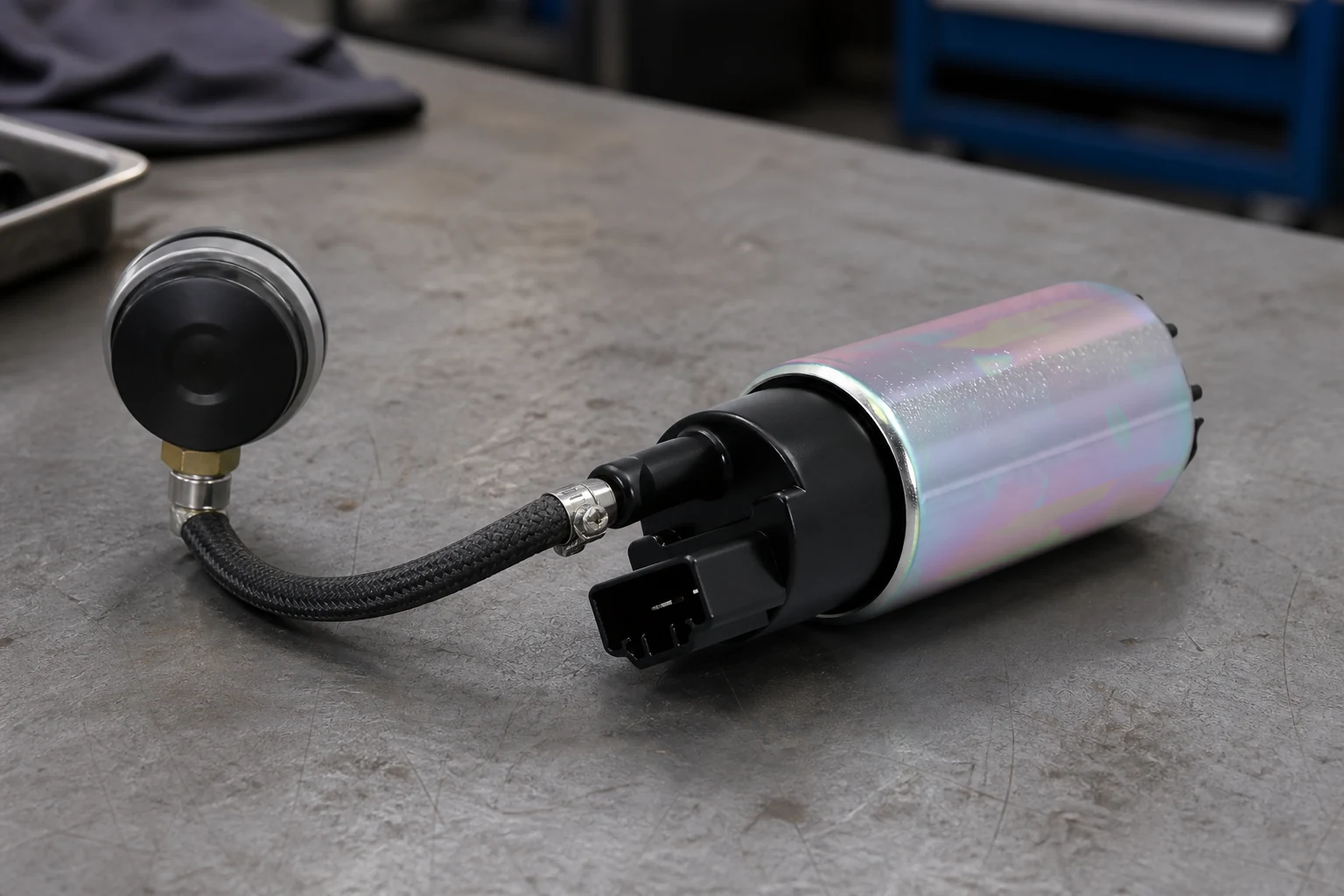
From the field: Drivers often describe a car that “feels fine in the parking lot” and then falls on its face on the highway merge. That language matches a pump still managing light idle while volume fails when injectors demand more fuel. (Source: Mechanics Stack Exchange discussion on why volume testing matters when idle pressure can look acceptable — API record 23632.)
Why weak delivery shows under load first
Light throttle and idle use less fuel. A weakening electric pump can still meet that smaller request, so the bay may hear a prime and see a stable idle even while the unit is already marginal.
When speed, grade, tow load, or hard tip-in raises fuel consumption, the shortfall appears as hesitation, lean misfire feel, or a stall that “acts like it ran out of gas” with fuel still in the tank. That demand curve is why symptoms of a weak electric fuel pump show under load before they become a cold no-start.
Low fuel level can make the same complaint louder because the pickup and pump work in a harsher environment, but low fuel alone does not prove the motor is healthy. Capture fuel level with the operating notes so the next bay does not confuse a pickup stress event with a finished diagnosis.
Pressure vs volume evidence for low delivery
A single static rail-pressure glance at idle is not enough to clear a weak-delivery complaint. The pump may hold a number at light load and still fail when flow demand rises.
- Confirm the platform procedure and the correct test port or method for that vehicle.
- Record key-ON prime presence and any tank noise quality.
- Measure fuel pressure at the commanded condition the complaint requires—idle alone is incomplete when the stumble is under load.
- Add a volume check or a loaded observation when the service information supports it, because pressure can look acceptable while delivery volume is short.
- Keep filter, line, and pickup inspection status beside the gauge numbers so restriction is not labeled as pump failure by default.
- Only after power integrity is plausible should the packet treat the electric pump/module as the primary suspect.
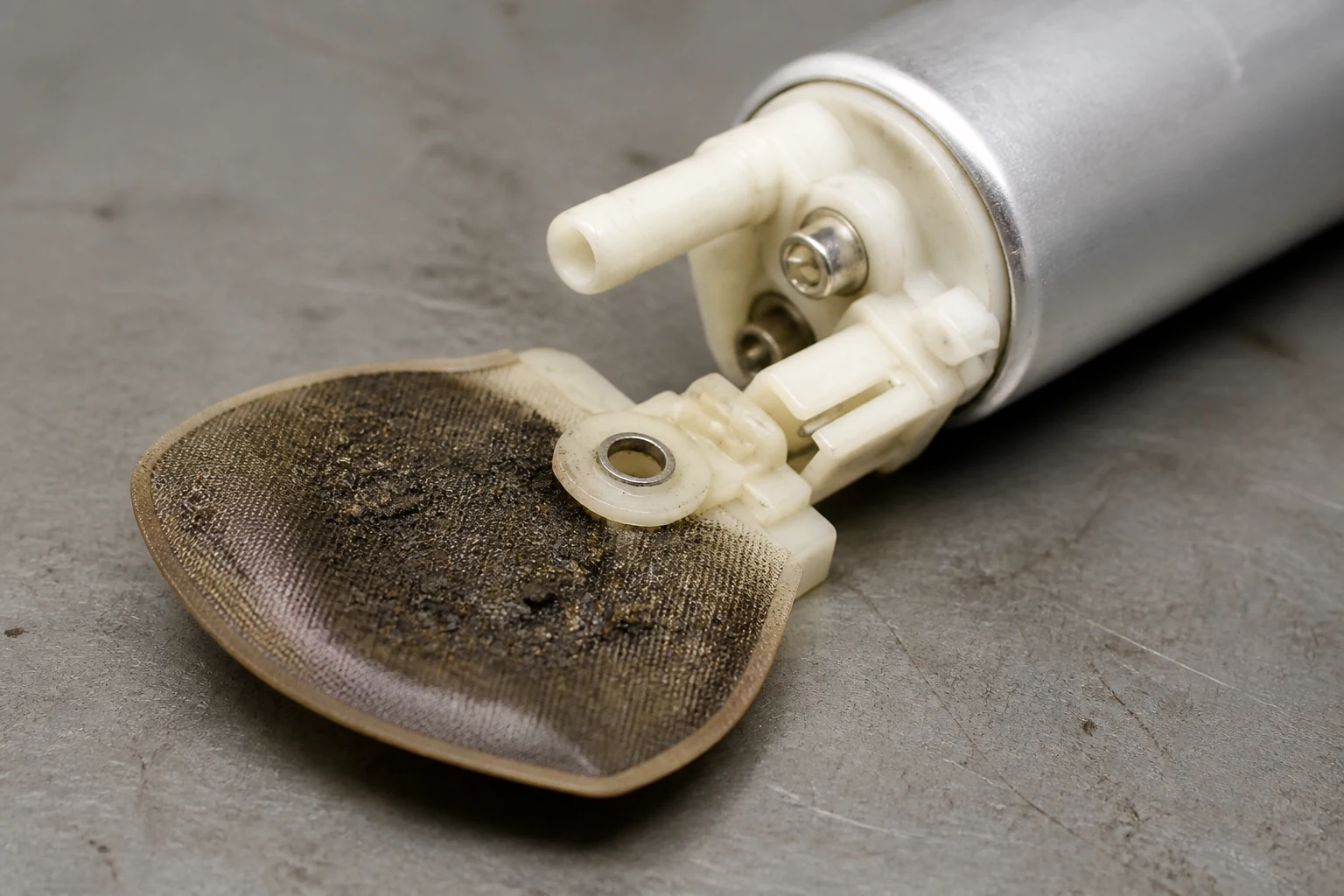
Important: Stop the review for a visible fuel leak, strong fuel odor, damaged lines, or any condition the platform procedure does not clear for continued work. A temporary recovery after cool-down does not prove the system is safe. (Source: fuel-pump diagnosis library guidance to verify the system before continuing unsafe work — AA1Car fuel pump library.)
Treat the steps above as a service-bay screen. OEM specs and wiring diagrams remain the final authority for numbers and pin IDs—do not invent a universal PSI target from a blog checklist.
Counter evidence before a weak-delivery quote
Do not release a wholesale assembly quote on “customer says weak pump” alone. Capture the delivery story so the supplier can see whether a product-family discussion is even appropriate.
- Platform, engine, and any OE or interchange references already in hand
- Symptom timeline: cold/hot, sit time, fuel level, and load conditions
- Prime status and tank noise notes on key-ON
- Pressure method, observed results, and whether a volume or loaded check was done
- Restriction / filter / pickup inspection status
- Fuse/relay outcomes only as lookalike clearance—not as a substitute fuse article
- Requested scope: pump-only versus full assembly/module
- Quantity and document needs for the distributor program
For fleet counters, that packet prevents bounce between filters, relays, and modules on the same VIN. It also keeps adjacent stocking honest: unresolved restriction needs inspection time, not another pump carton.
When a documented assembly route is the next step
Move to assembly documentation only after delivery evidence still fails while power-path and restriction questions are no longer the better explanation. At that point the buyer needs a platform-scoped module conversation—not another generic “symptoms” guess.
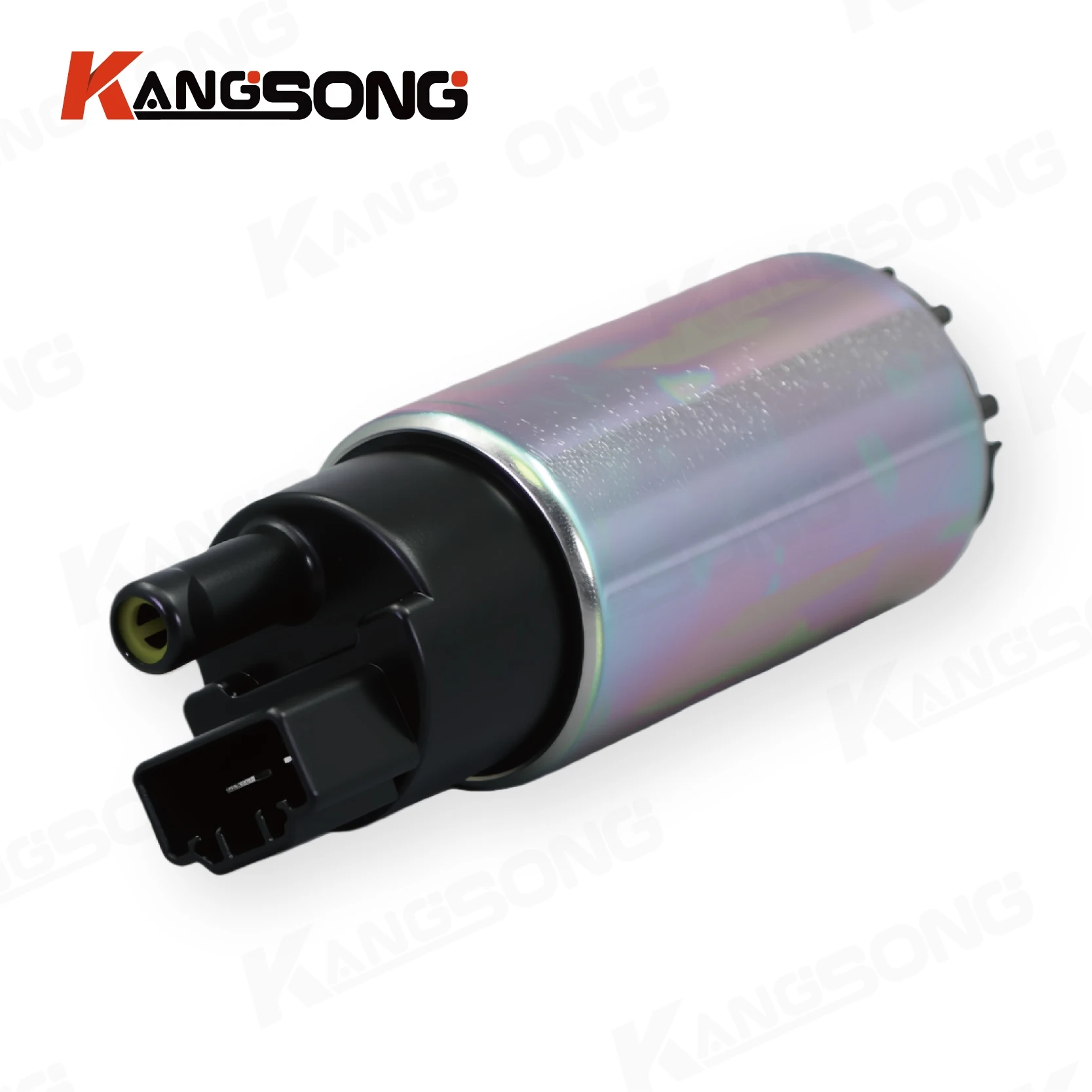
Once weak-delivery evidence points at the pump/module for a listed Hyundai Sonata or Kia Optima application, open the Kangsong fuel pump assembly for Hyundai Sonata and Kia Optima and match only the fitment and OE cross-references printed on that product page.
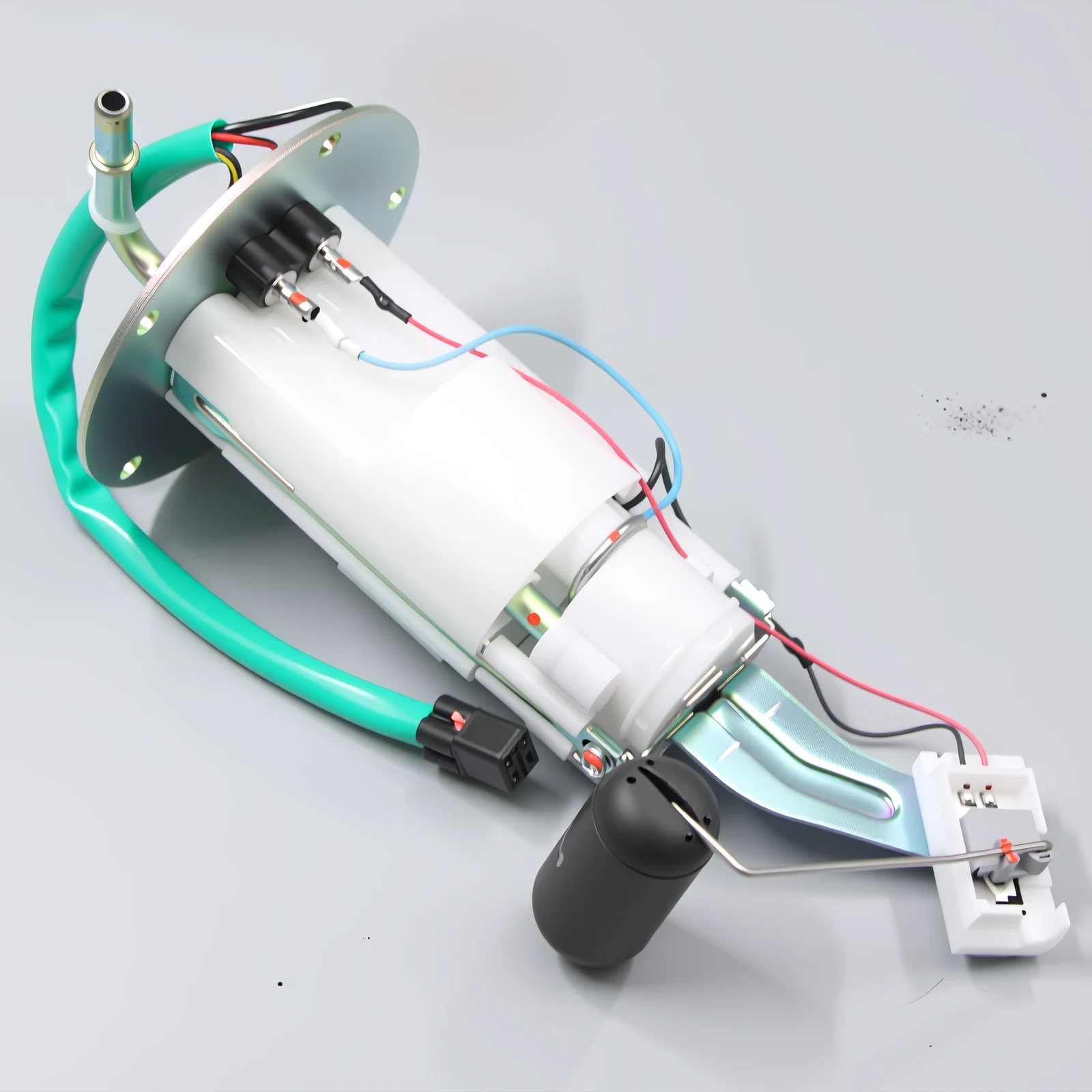
Use the Kangsong products hub to scan adjacent families when OE numbers are ready. Route VIN, OE references, and the delivery/pressure packet through Contact Kangsong, and open About Kangsong when a quality packet needs manufacturer background.
Hold the assembly path when the fuse or relay story is still open, the restriction check never happened, or the vehicle falls outside that product page’s listed scope.
FAQ
What are weak fuel pump symptoms?
They are progressive under-delivery reports: hesitation under demand, long cranking, load-related power loss or stall, and sometimes a harsh tank whine—while the pump may still prime or run.
What are the symptoms of a weak electric fuel pump?
The same delivery pattern on an electric in-tank pump: it still tries to feed the rail, but output falls when fuel demand rises, often before a complete no-start.
Can a weak fuel pump cause hesitation when accelerating?
Yes. Tip-in, merge, grade, and tow loads raise fuel demand, which is exactly when a marginal electric pump shows hesitation or sputter.
Can a clogged fuel filter feel like a weak fuel pump?
Yes. Restriction can mimic low delivery. Keep filter, line, and pickup status separate from pump-side conclusions until inspection resolves them.
Does a weak fuel pump always cause a no-start?
No. Many weak pumps still start and idle, then fail under load. A hard no-start with a silent tank may be a dead pump or a dark circuit instead.
How should a shop test for weak delivery?
Follow the platform method: confirm prime/power plausibility, measure pressure at relevant conditions, add volume or loaded observation when required, and record restriction status beside the numbers.
What should a counter record before quoting an assembly?
Platform/OE data, symptom conditions, prime notes, pressure/volume method and results, restriction status, assembly versus pump-only scope, quantity, and document needs.
How is this different from general bad fuel pump symptoms?
The focus here is weak / low-delivery / electric-pump progressive failure. The distributor bad fuel pump symptoms guide covers the broader assembly symptom vocabulary after supply questions are already in view.
References
- Wikipedia: Fuel pump — electric in-tank pump architecture and fuel-moving role.
- AA1Car: Fuel pump diagnosis library — electric pump prime path and why relay/fuse/wiring must be considered before condemning the pump.
- Mechanics Stack Exchange API record: why a volume test matters for fuel delivery — community explanation that pressure can look acceptable while volume fails under higher demand.