A high flow fuel pump order is real when the sheet already names a higher flow than the stock window, and the carton stays as printed when that number has not moved.
Counters meet the phrase on modified-engine jobs and on return-style layouts that already expect unused fuel to go back to the tank. The same words also show up as a catalog label, and sometimes as a yard pump that only fills storage tanks. The pages below separate those jobs, then match the one kit whose flow window is actually printed.
When the printed flow is still the whole job
The carton matches the sheet when the flow number has not changed.
A buyer can type the focus words because a catalog uses them, because an engine was modified, or because the old pump was simply tired. Those are different jobs. The first one still buys the pump whose flow figure is already on the paper.
Look at the line before the adjective. If the gallons-per-hour figure, the vehicle, and the fuel are the same figures the current pump was built to, the order is a replacement of that window. Upgrading the carton because the adjective sounds larger is how stock parts get shipped into jobs that never asked for them.
Modified engines are the other case. A cam, a power adder, or larger injectors can raise the fuel the engine asks for.
That change belongs on the sheet as a new flow figure, with the pressure the system already runs. The words alone do not record the change.
| What the sheet shows | What the counter does | What leaves the dock |
|---|---|---|
| Same flow figure as the pump now in service | Buy that printed window | The matching stock pump |
| A higher flow figure, plus the layout that will carry it | Order that higher figure | Only a pump that prints the higher figure |
| The adjective and no flow figure | Stop and get the figure | Nothing, until the number is on the line |
Retail sites file some of these pumps under a performance fuel pump heading and others under a high-flow heading. The filing is a shop menu. It still does not write the number for you.
What a return-style demand adds to the order
A return-style job sends unused fuel back to the tank, so the return path is part of the order.
On that layout the pump can move more fuel than the engine burns at that moment. A return-style regulator bleeds the unused fuel off the rail and sends it home. Forum members on LS1 cars describe it that way: the regulator dumps the excess back to the tank, and a regulator that only blocks the line works the pump harder.
From the field: An LS1TECH member called return style the regulator bleeding fuel off the rails and dumping the excess back to the tank, and said a blocking style puts more strain on the pump — bypass or return regulator thread.
A ThirdGen owner made the matching point for an older throttle-body car. The regulator holds pressure. It does not set volume.
Pressure stays steady until the pump’s volume is large enough to overload the return. At idle, a very large pump can push more fuel down the supply line than the smaller return can send home.
That is the demand the sheet has to name. “Return-style” on the order means the return line, the regulator, and the flow figure travel together. A fuel pump upgrade that ignores the return size can raise pressure at light load even when wide-open throttle still looks normal.
Wikipedia’s common-rail note makes the same plumbing point in a different system: excess fuel can be sent back to the tank so pressure stays where the rail is set. That sentence is about an injection layout, rather than a bigger supply pump.
Fuel injection describes the relief path. It does not print a gallons-per-hour cutoff.
How a supplier chooses to publish free flow versus flow at a stated pressure is already explained on the fuel pump capacity page. This order still starts from the figure the sheet prints, whichever method produced it.
Why the adjective cannot stand in for a flow figure
Catalogs still print a model flow because the adjective is not the measurement.
Open a performance catalog and the menu may say high flow on one tile and performance on the next. Both tiles, when they are doing the job, still show a model and a flow at a stated pressure.
The menu word gets the click. The model line is what a counter can buy.
A search overview will happily list several of those models, each with its own liters-per-hour claim and a price. Those claims belong to those models.
None of them becomes the meaning of the adjective, and none of them is printed on the Kangsong kit below. Copying a retail liters-per-hour number onto a different part number sells a stock pump under someone else’s figure.
Horsepower worksheets do the same kind of leap. One retailer shows an example that multiplies peak horsepower by a brake-specific factor and then converts pounds per hour into gallons per hour.
That worksheet belongs to the retailer. This factory does not print it, and it does not answer how much volume counts as high. If the customer’s engine builder already ran that math, the result belongs on the purchase order as a flow number.
Wikipedia’s fuel-pump entry describes the in-tank electric pump on older port-injection petrol engines as typically 40-60 psi, and that range is a pressure class.
It sorts an older port-injection feed from a carburetor pump and from the extra pump a direct-injection engine adds on the motor. Pressure class and flow figure stay on separate lines. The fuel pump entry is the source for that pressure class.
Gasoline electric duty, including the voltage and the fuel the pump is built to move, is the subject of the gasoline electric fuel pump page. Fuel identity, diesel versus gasoline hardware, is the subject of the diesel and gas pump comparison. Neither page is a flow cutoff.
Where a diesel supply job splits from a yard transfer pump
A diesel supply pump feeds the high-pressure pump; a yard pump fills tanks.
People search high flow diesel fuel pump for both jobs. DieselNet describes the fuel supply pump, often called a lift pump, as the part that draws fuel from the tank and delivers it to the high-pressure pump.
The same reference says these pumps are commonly sized to move more fuel than the engine consumes, so the extra fuel can cool injectors and pumps and then return. That is an engine-supply fact. A farm-tank transfer rate is a different measurement.
A yard or bowser pump is a different machine. Its job is to move fuel from storage into a vehicle tank or from one tank to another.
Sellers of that equipment also say “high flow,” usually because a larger tank should fill faster. The sheet for that job names a nozzle, a hose, and a transfer rate.
That sheet does not name an engine lift pump. This factory search did not turn up a transfer pump to sell against it.
If the paper in front of you is an engine supply assembly, stay with the supply role. The low-pressure fuel pump page is where the feed-versus-injection split is already written.
The high-pressure diesel pump family is the injection-side hub. A supply pump still needs its own flow figure.
One diesel supply assembly on this site is titled for the Land Rover Freelander 2 2.2 diesel, with the OE numbers printed in that title, including LR038602 and LR029279. Use the Freelander 2 2.2 diesel assembly only when the sheet is that assembly. The title does not call it a high-flow pump, and the page does not print a high-flow figure.
What the 1987-1995 C/K kit actually prints
The kit prints a stock flow window, a 12-volt supply, and a two-pin plug for the trucks named in the title.
The kit page prints DC 12V, a 2-pin plug, and a flow window of 43.3-49.5 Gph for the 1987-1995 C/K trucks named in the title.
Brand line on that page is KS-360501. The title also carries OE 25168719 and E3902. Those identifiers are what a counter can match, and they describe the stock window for that kit.
The page prints Maximum Air Pressure 12-26 as an air label. Read that label as air only.
Keep fuel pressure on its own line, and keep flow on another. Leave 12-26 as printed, without turning it into a fuel psi figure.
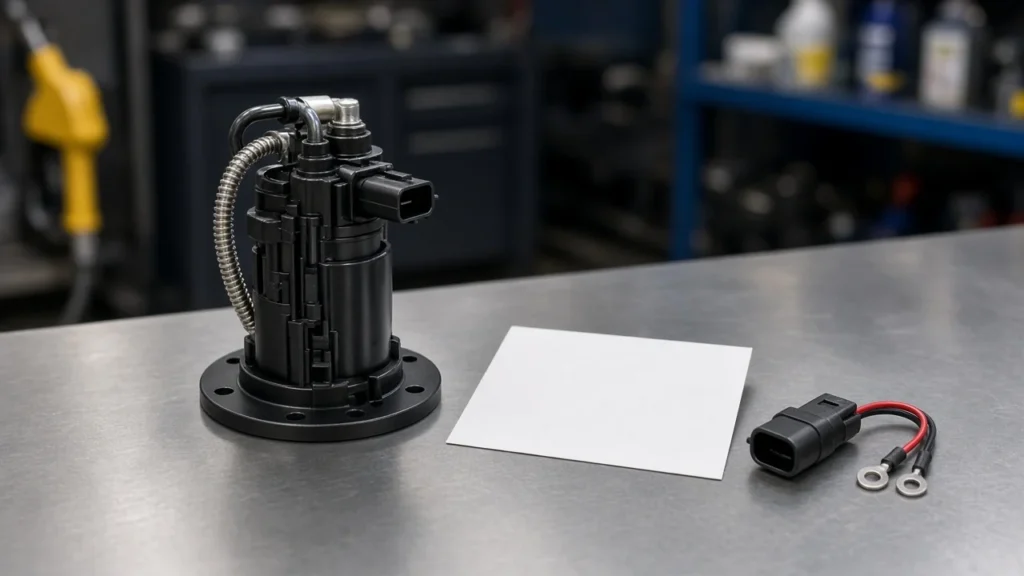
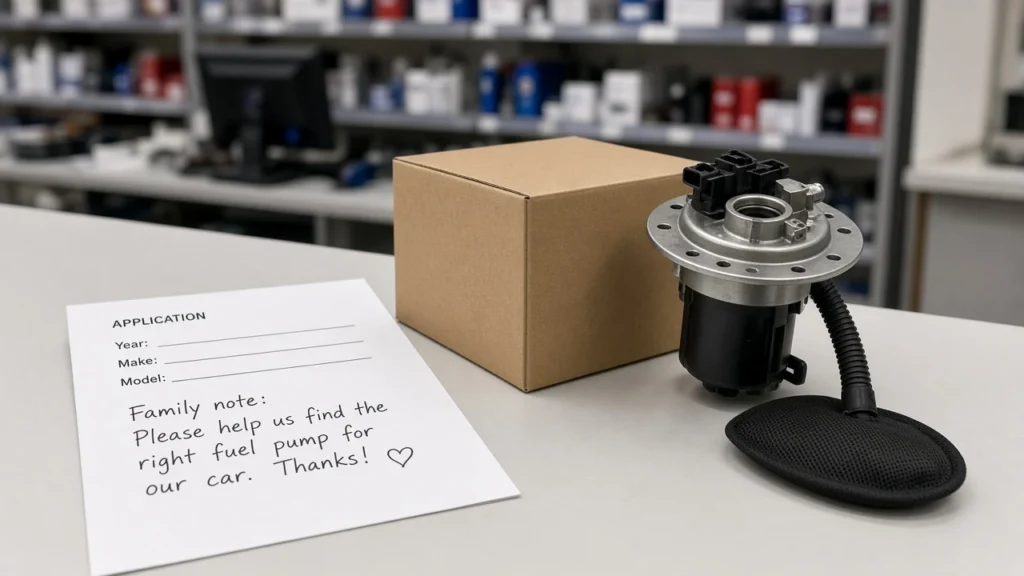
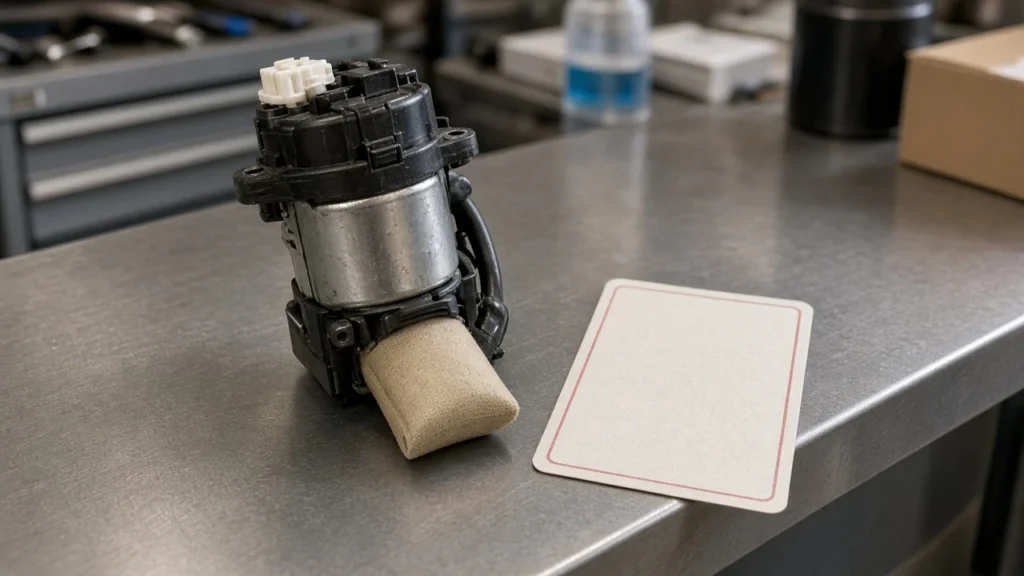
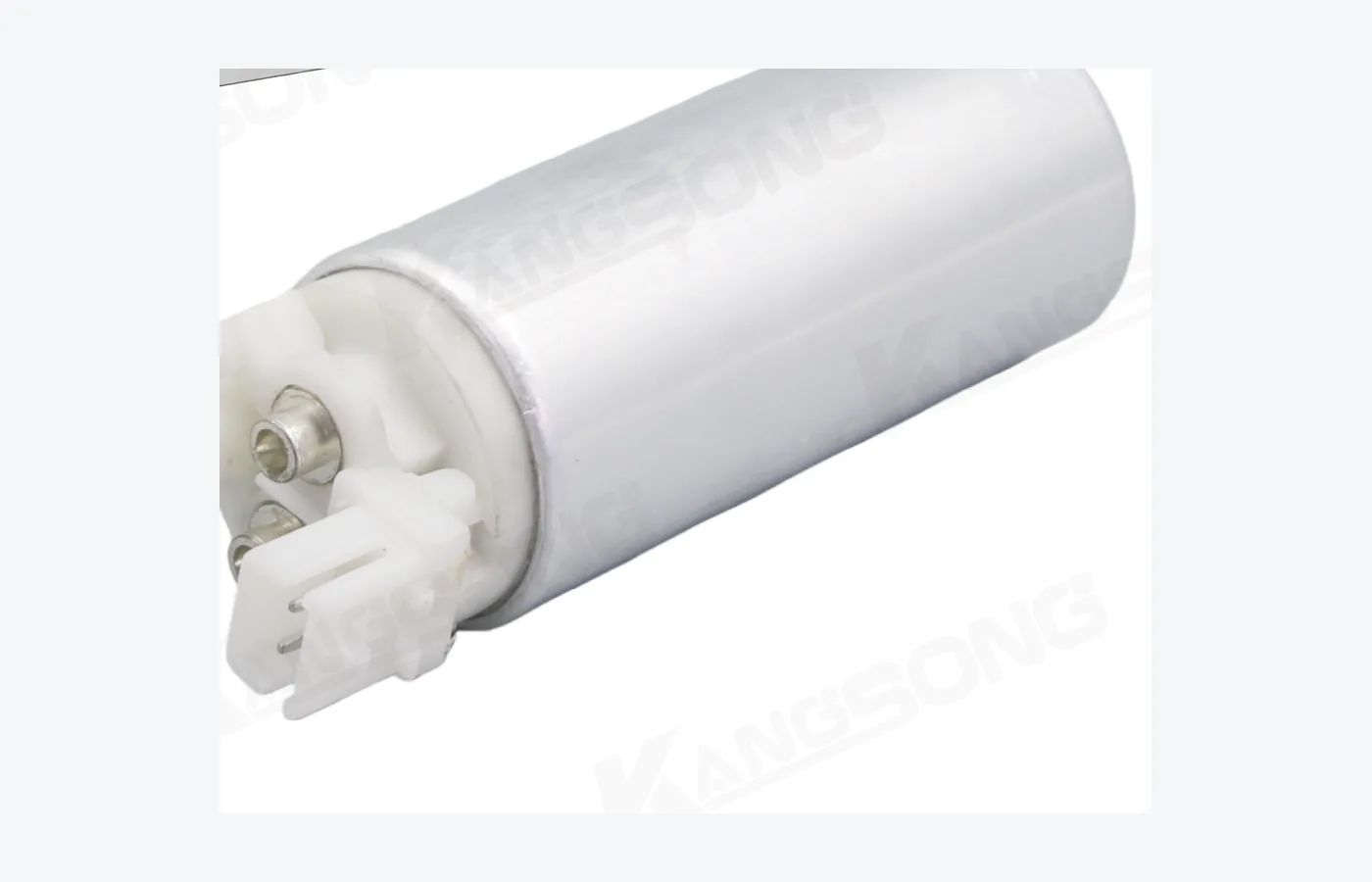
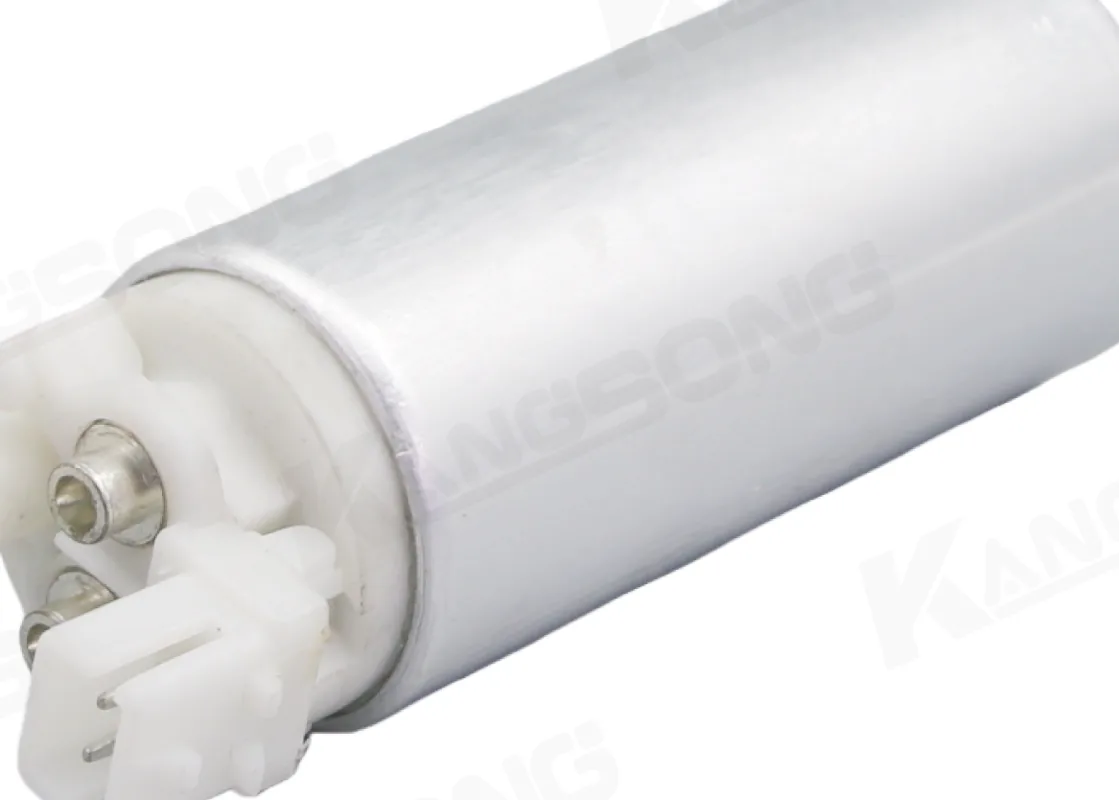
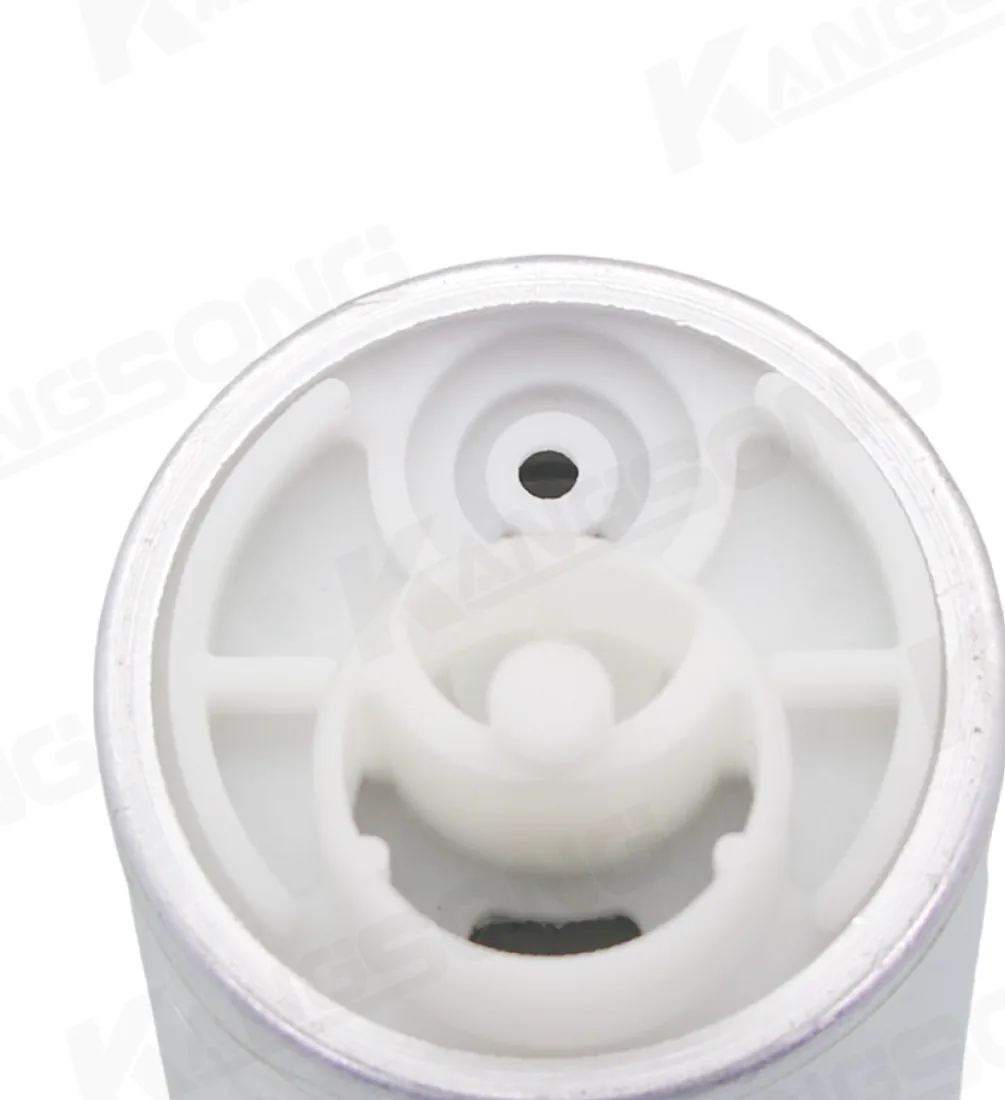
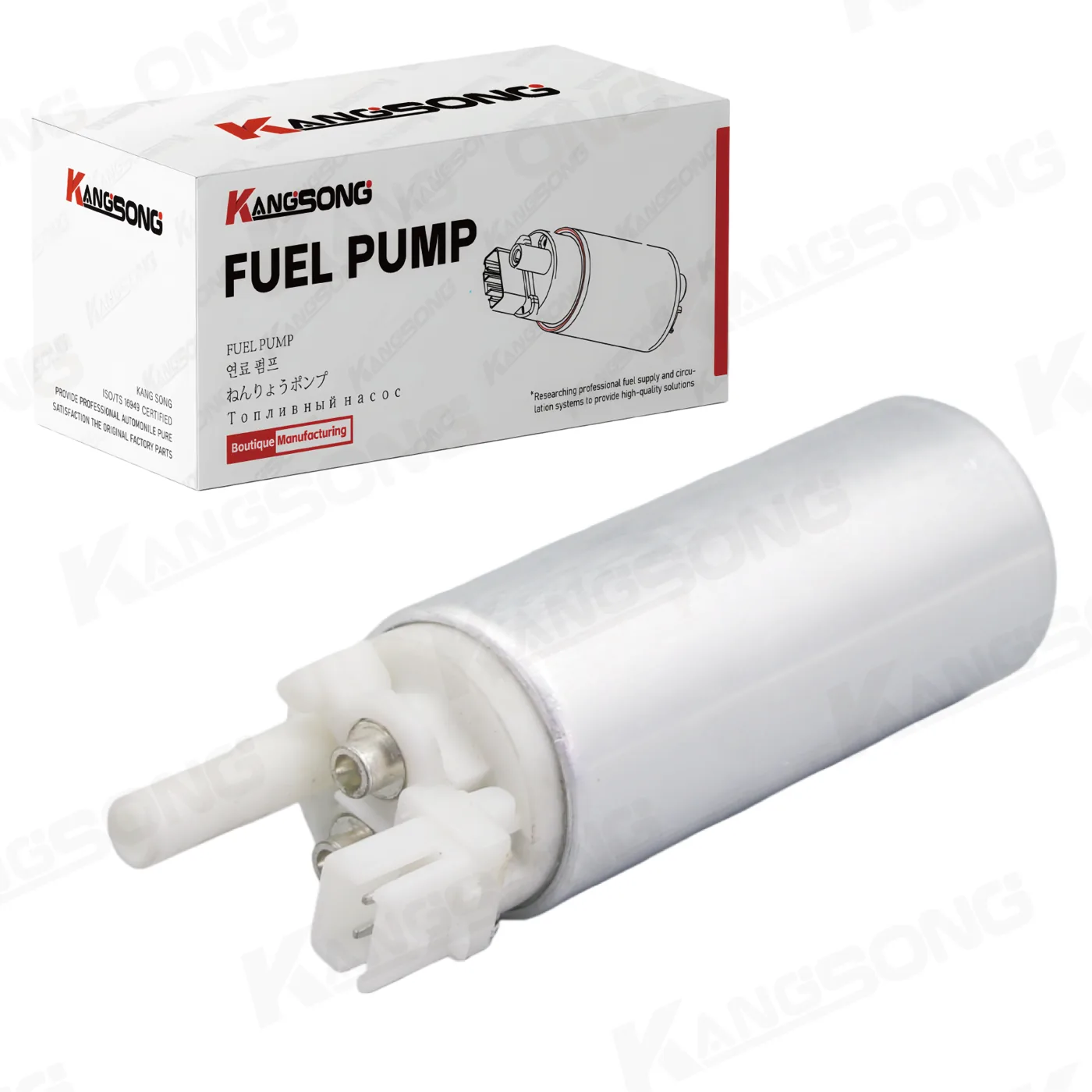
Photographs of the part show a cylindrical in-tank element: a silver body, a white outlet tube, and a two-pin electrical plug. The longer product text also mentions a sending unit and a housing.
The pictures show that pump element and its carton. Match the printed numbers, and keep the photo in the stock window it belongs to.
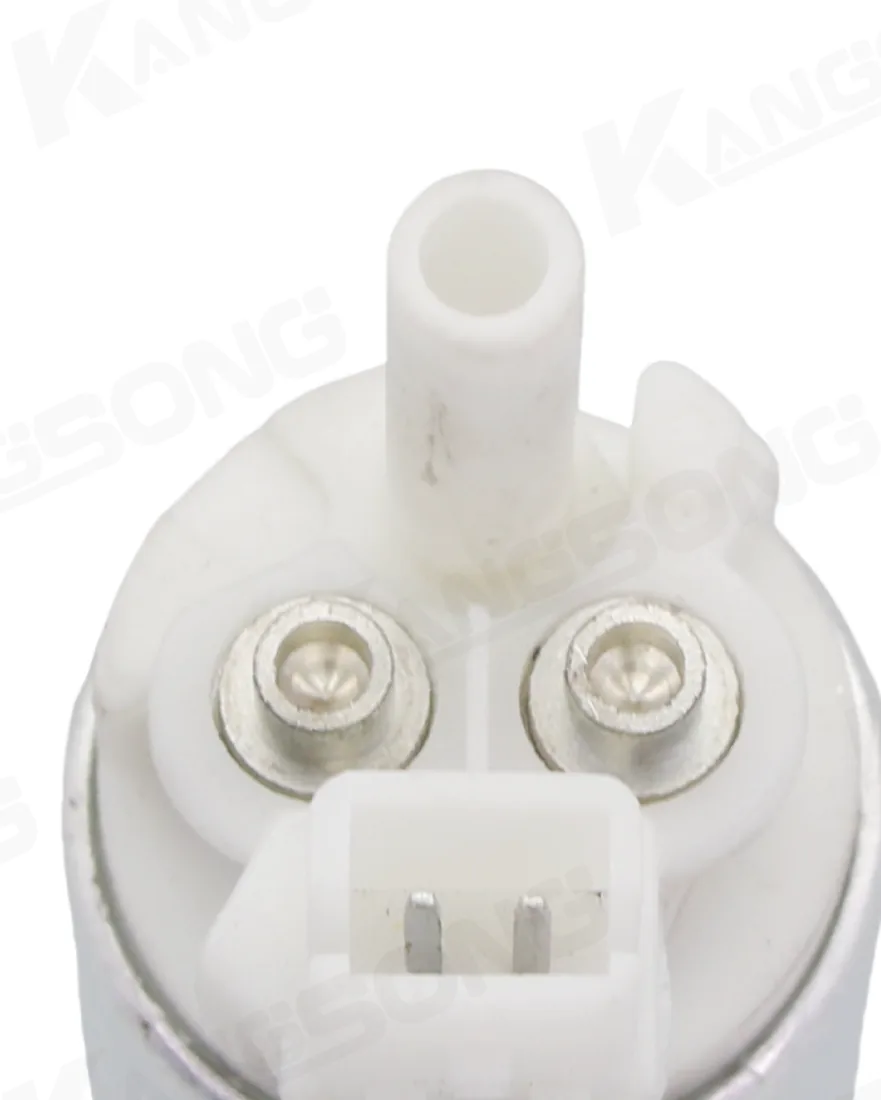
The plug count matters on the harness the truck already has. A two-pin main connector is what the page prints. A fuel pump upgrade that arrives with a different plug is a different part, even if someone called both of them high flow.
This window is the replacement for that C/K job when the order’s flow is 43.3-49.5 Gph. It is the wrong carton when the builder’s sheet names a higher flow, a different truck, or only the adjective.
Which pump fits the printed window, and which order waits
Use the C/K kit only for its printed window; a catalog search found no product title that says high flow.
When the order is the 1987-1995 C/K trucks, OE 25168719 or E3902, DC 12V, the two-pin plug, and the 43.3-49.5 Gph window, the matching page is the 1987-1995 C/K electric fuel pump kit. KS-360501 is the brand line on that page. Buy it as the stock window it prints.
When the order’s flow is higher than that window, leave this kit on the shelf. A search of published product titles on 16 October 2026 found high-pressure pumps and this C/K kit.
It did not find a title that says high flow. No high-flow SKU was found. Send that job to the fuel pump category and keep the higher flow figure on the purchase order so the next pass can match a part that actually prints it.
The same stop applies to a performance fuel pump request that never states gallons per hour. The category is a shelf. A higher-flow part is not implied by the shelf itself.
What the purchase order should already show
Copy the flow figure, the layout, the voltage, and the vehicle or OE line the sheet already has.
A complete line is short. It is also the only way the next person can avoid guessing.
| Field to copy | Why it is on the line | Example from a real page, when that is the job |
|---|---|---|
| Flow figure | The adjective cannot replace it | 43.3-49.5 Gph, only for the C/K kit |
| Layout | Return-style demand needs a path home for unused fuel | Return line and regulator, if the sheet names them |
| Voltage and plug | The harness has to match | DC 12V and 2 pins on the C/K kit |
| Vehicle or OE | Fitment is the title, not a guess | 1987-1995 C/K, OE 25168719 / E3902 |
| Fuel and role | Supply pump, injection pump, and yard pump are different machines | Diesel supply versus yard transfer, if that is the search |
If the higher flow is already written, keep it. If it is not written, ask for it before the carton moves. A fuel pump upgrade without a number is a sentence, not a part.
FAQ
What does a high flow fuel pump do?
It is the phrase buyers use when they want more fuel volume than a stock printed window. On a real order the pump still has to show the flow figure and the job, because the phrase itself does not move a measured amount of fuel.
How much fuel flow for 400hp?
There is no single gallons-per-hour answer on this page, and no factory formula that turns 400 horsepower into a Kangsong flow. If an engine builder has already calculated a flow, that number has to be printed on the purchase order.
What is the difference between a high pressure pump and a high flow pump?
Pressure and flow are different lines on the sheet. An older port-injection in-tank pump is often described around a pressure class, while a high-flow label is a volume claim that still needs its own gallons-per-hour or liters-per-hour figure. A higher pressure class does not, by itself, mean a higher flow.
Do you need a tune for a high flow fuel pump?
On a return-style layout, owners say the regulator holds pressure until the extra volume overloads the return. A larger pump on an engine that was not given more air does not, by itself, make more power. If the return is too small, pressure at idle can rise, and that is a plumbing problem to fix before anyone talks about a calibration.
What is a high flow pump?
It is a label, not a part number. The pump you can order is the one whose flow figure, voltage, plug, and vehicle or OE line match the sheet. If the sheet has no higher figure, you are still buying the printed window.
Is a high-pressure fuel pump better?
Better depends on which machine the sheet is buying. A high-pressure injection pump and a supply pump do different work, and a higher pressure class is not a higher flow. Match the pressure the system already uses, and keep the flow figure on its own line.