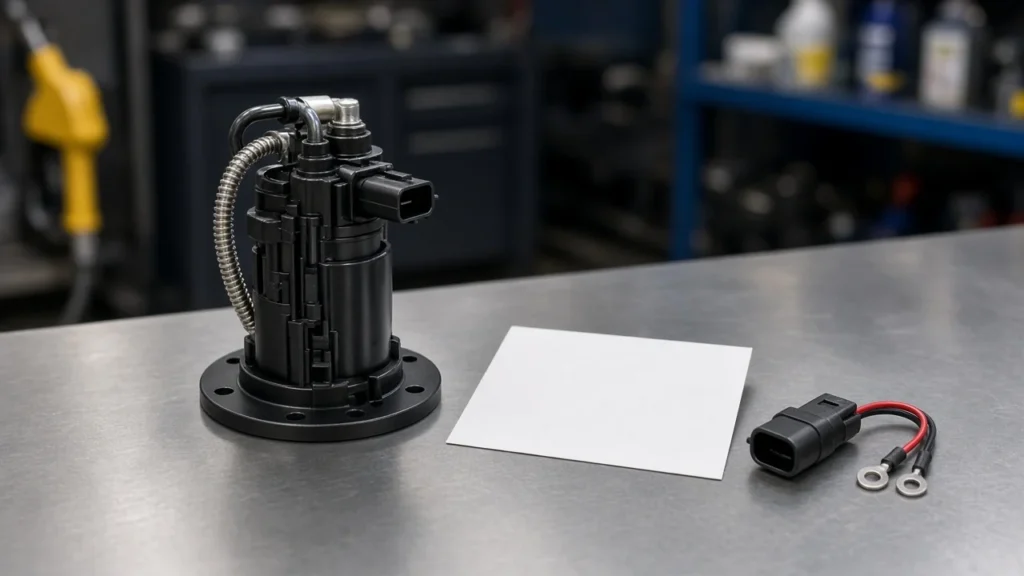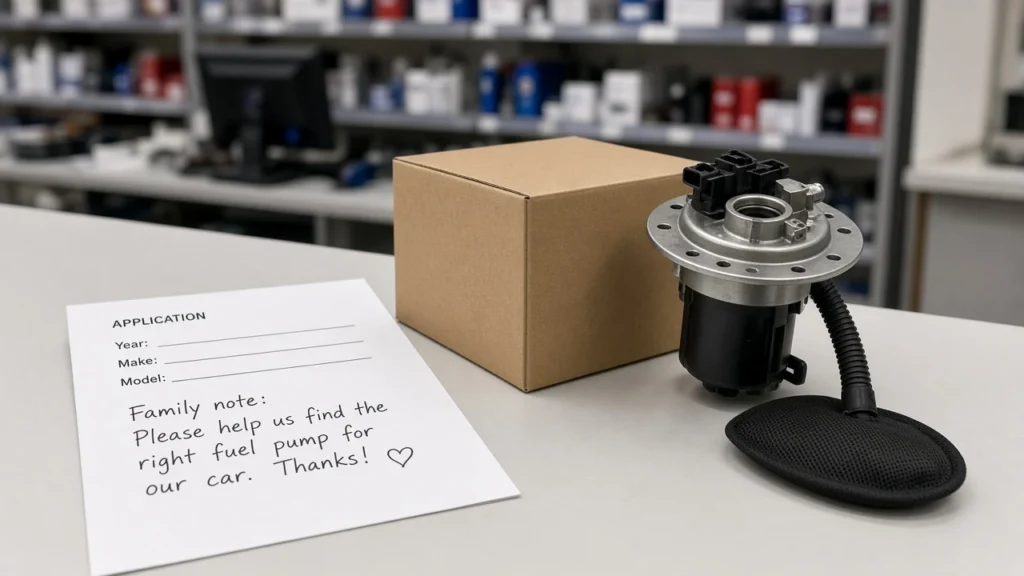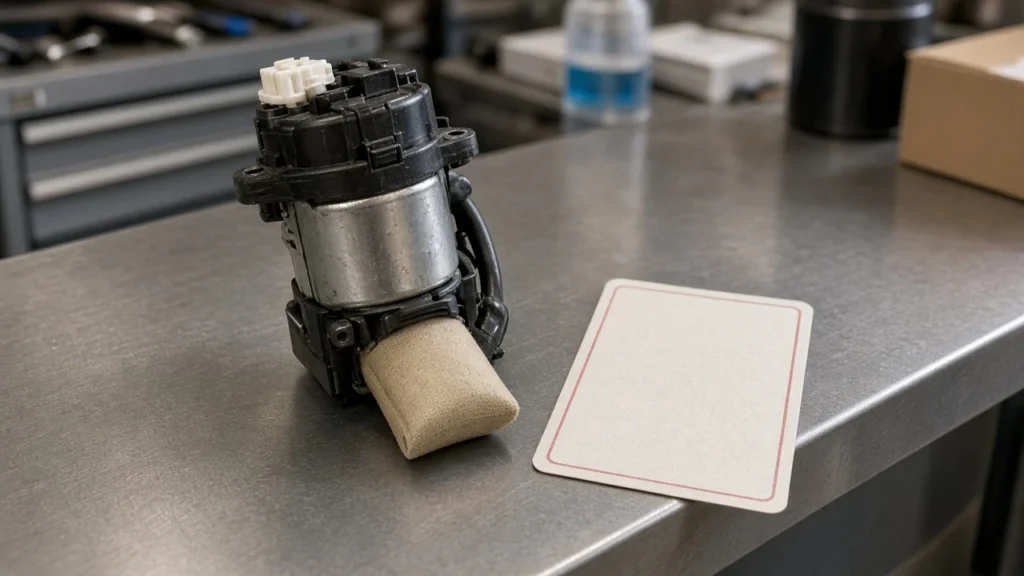
The purchase order is ready when it copies the sensor name the year sheet or the scan-tool line is already printing. A fuel pump sensor label on that sheet may be a rail-pressure sensor, a tank-pressure sensor, or the level sender. Counters who pick a carton from the bare phrase alone will often ship the wrong box.
The three names share a search habit and little else. Rail hardware reports pressure on the engine side. Tank hardware reports vapor pressure during an evaporative test.
The sender reports how full the tank is, and that job already has its own page.
Match the purchase order to the name the sheet prints
Write the name the sheet prints, because the query covers more than one part. Shopping pages and the overview on the live results page treat the phrase as one buyable item, then describe both a rail sensor and a tank sensor. The purchase order still has to carry a single name.
| Printed line | What the counter is holding | Carton to name |
|---|---|---|
| Fuel rail pressure sensor | Pressure report on the rail circuit | Rail-pressure sensor |
| Fuel pump pressure sensor, when the sheet points at the rail | Same rail report under a shorter label | Rail-pressure sensor |
| Fuel tank pressure sensor | Vapor-pressure report for the evaporative test | Tank-pressure sensor |
| Fuel level sender, gauge, or float | How full the tank is | Sender, on the sender page |
| Electric fuel pump, inside a printed year window | The part that moves fuel | Pump carton, after the sheet names the pump |
A shorter label such as fuel pump pressure sensor still needs the sheet’s location. If the line points at the rail, the carton is the rail sensor. If the line points at the tank, the carton is the tank sensor.
Rail-pressure lines stay on the engine side of the order
A rail-pressure line names the sensor on the rail circuit, not the in-tank pump. A public workshop bulletin hosted by NHTSA prints P0191 as Fuel Rail Pressure Sensor A circuit range/performance, next to rail-pressure too-low and too-high codes, and it lists the in-tank pump on a separate line. That split is the counter’s clue.
Common-rail layouts keep a high-pressure rail feeding the injectors, while the pump’s job is to move fuel toward that rail. Wikipedia describes the rail as its own injection layout and describes the pump as the part that transfers fuel out of the tank. Those are two boxes on a year sheet.
Gasoline port-injection trucks and direct-injection cars do not share one rail sensor. The bulletin above is a diesel workshop note, so its repair list stays on that diesel job. What travels is the printed name: rail-pressure sensor versus in-tank pump.
When the sheet says fuel rail pressure sensor, leave the pump carton on the shelf. The fuel pump pressure regulator page is the stop only when the printed word is regulator. A low-pressure feed pump, when that is the printed name, belongs on the low pressure fuel pump page.
Tank-pressure lines belong to the evaporative test
A tank-pressure line measures vapor pressure for the evaporative test, even when the sensor is mounted on the pump module. New York inspection training says the fuel tank pressure sensor can be part of the fuel pump sending unit assembly, on top of the tank or inside it, and that the control module uses the reading to notice evaporative leaks.
Sitting on the module does not turn the sensor into the pump. The pump transfers fuel. The tank sensor reports positive or negative pressure in the tank during the evaporative emissions system check.
Counters who order a pump module because the sensor is nearby will still have the original line unfilled.
A Mercedes-Benz warranty circular, also hosted by NHTSA, separates the pressure sensor on the fuel tank from the pressure sensor on the filler neck. The circular says the fault shows on one of those sensors. For a counter, that is another naming split: tank versus filler neck, two lines, two cartons.
Level complaints go back to the sender page
A level complaint uses the float and resistor card, so it leaves this page for the sender article. Gauge lag, a needle that stays on full, or a sender name on the sheet is the level device. The fuel pump sending unit page already covers that carton.
This page does not retell how the float and card are built. It only marks the handoff. If the printed words are fuel level sender, sending unit, or fuel gauge sensor, stop the sensor order and open that page.
A driver-module plug is a third handoff. When the sheet names the connector on the driver module, use the fuel pump driver module connector page. Mixing that plug into a pressure-sensor carton repeats the same naming miss.
Read the scan-tool line before anyone picks a carton
Read the printed line first, because a generic sensor search can come back empty. On an archived community thread, a 2002 Escape owner said a counter search for a fuel pressure sensor returned nothing, even though the engine still had a pressure sensor near the tank.
From the field: The archived reply separates the fuel tank pressure sensor from the sensor on the fuel rail and says each has a different purpose. Escape fuel-pressure sensor thread
That empty search is the everyday version of this page. The overview calls both parts a fuel pump sensor. The thread shows why the shorter search fails: the tank sensor and the rail sensor are stocked under different names.
Scan-tool text is enough for the purchase order. Copy the sensor name the tool prints. Skip hotwire tests, jumper wires, and bypass plugs.
Those tricks sit outside this naming job, and this page will not describe them.
Choose the electric pump carton only after the sheet names the pump
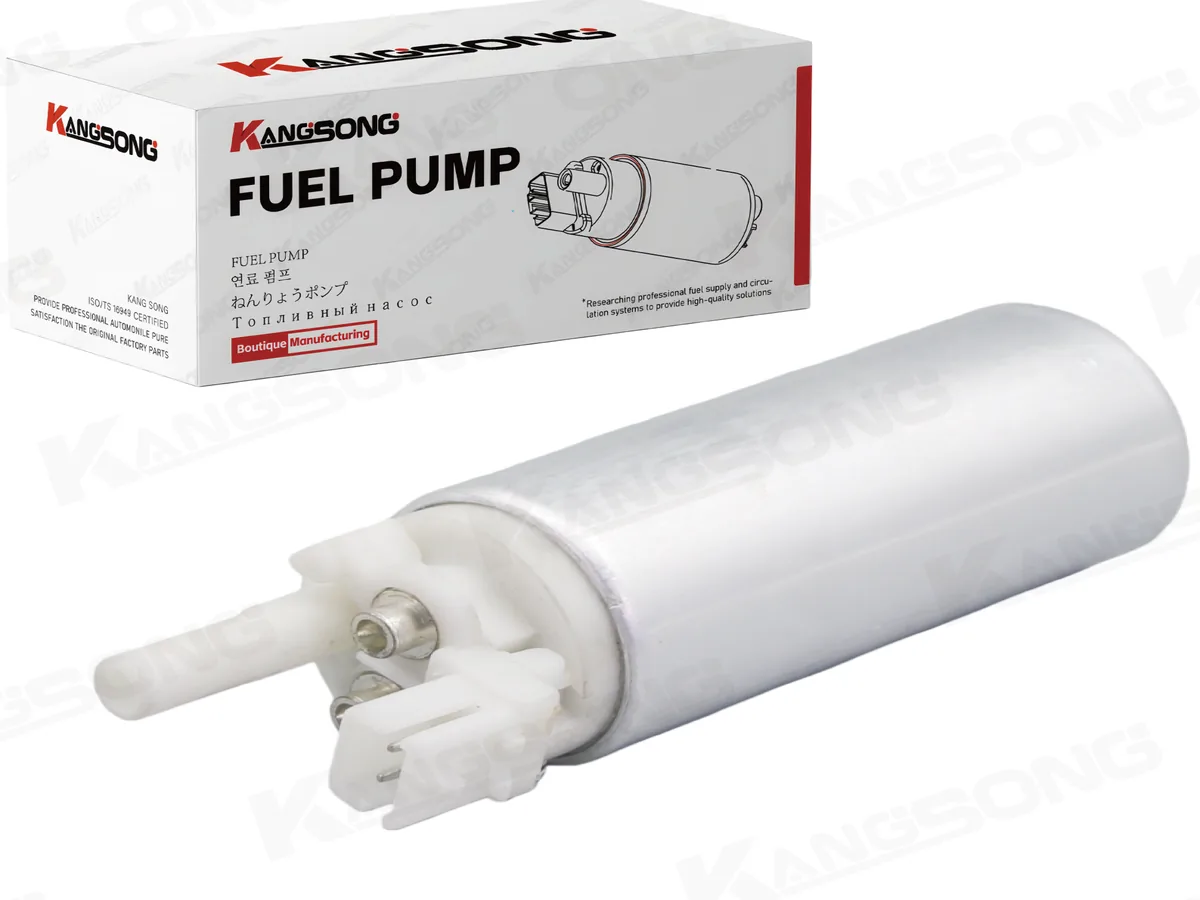
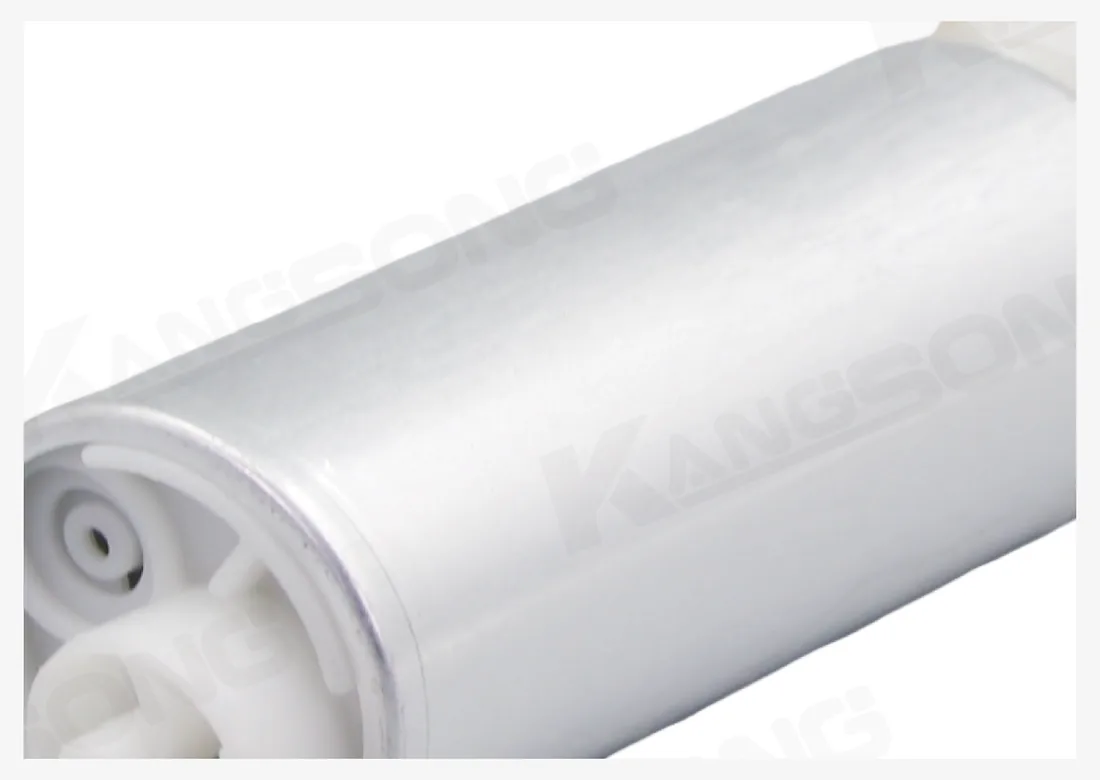
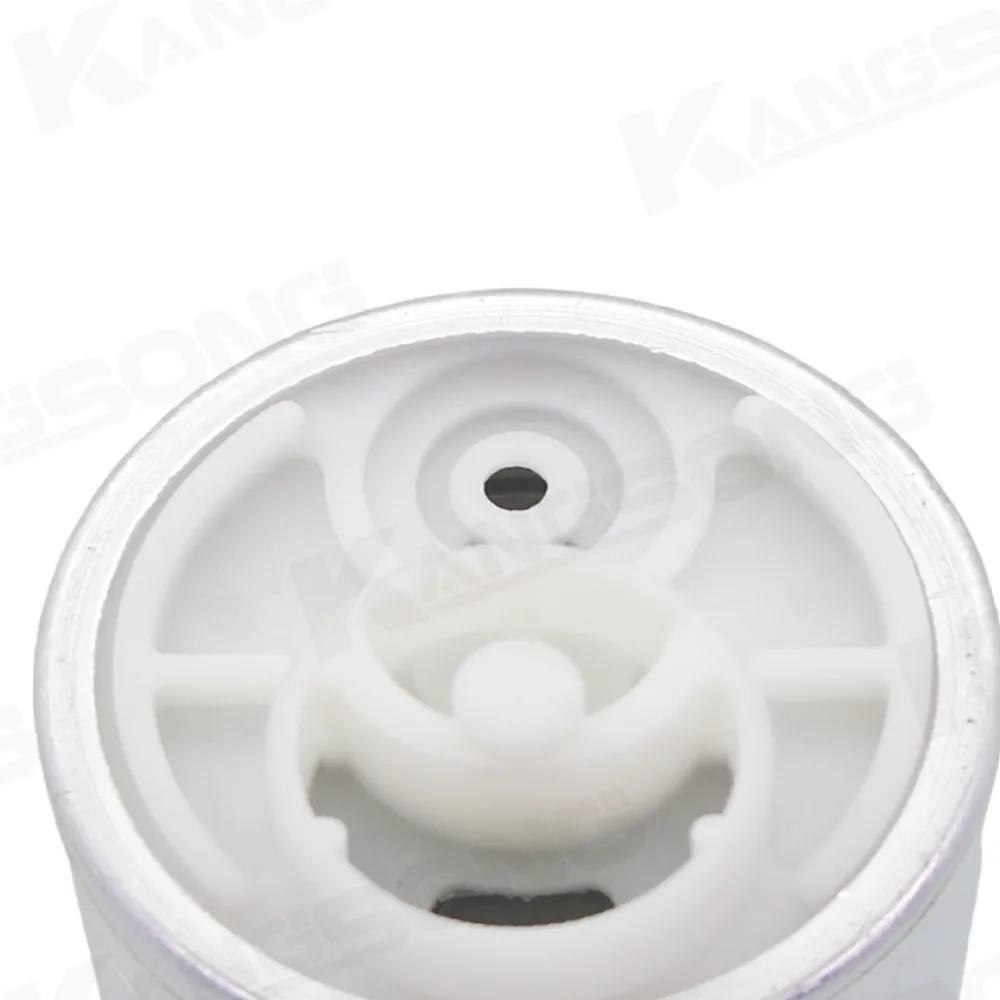
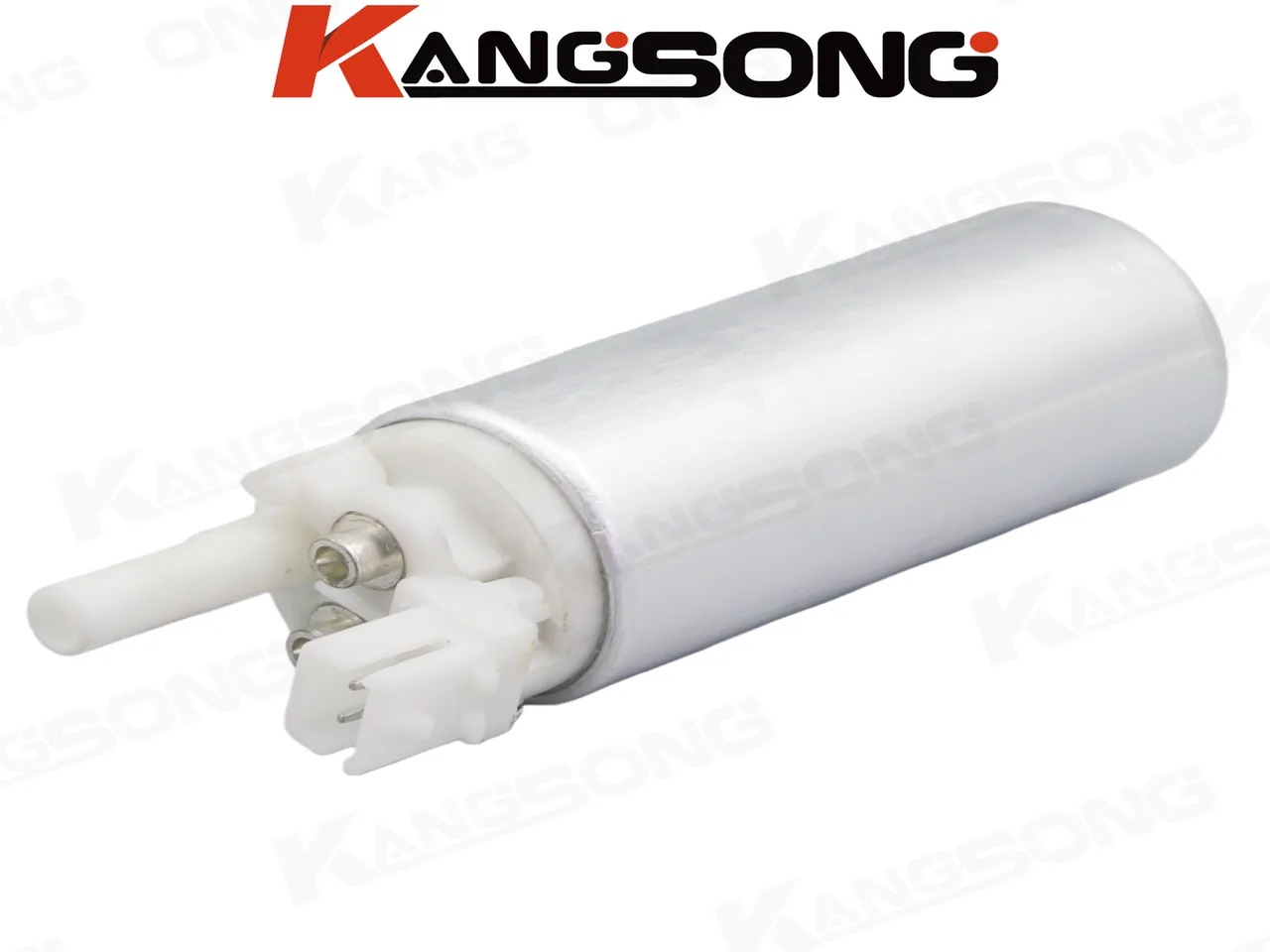
Choose the KS-360501 electric pump only after the sheet names the pump inside the printed 1987-1995 C/K window. The live product page calls the part an electric fuel pump for 1987-1995 C/K 1500, 2500, and 3500 pickups, with interchange numbers 25168719 and E3902. The word sensor does not appear on that page.
The live page lists KS-360501 as an electric fuel pump on DC 12V with a 2-pin main connector. Flow is printed as 43.3-49.5 Gph. Those fields describe the pump.
They describe the pump rather than sensor output, and the page’s air-pressure field is left unused here so nobody treats it as a fuel-pressure setpoint.
| Printed pump field | What the counter may copy | What it does not mean |
|---|---|---|
| 1987-1995 C/K 1500 2500 3500 | The year window on the pump title | A sensor fitment |
| OE 25168719 and E3902 | Pump interchange numbers | Sensor part numbers |
| DC supply and 2-pin connector | Pump electrical description | A pinout for a pressure sensor |
| 43.3-49.5 Gph | Pump flow | A pressure reading |
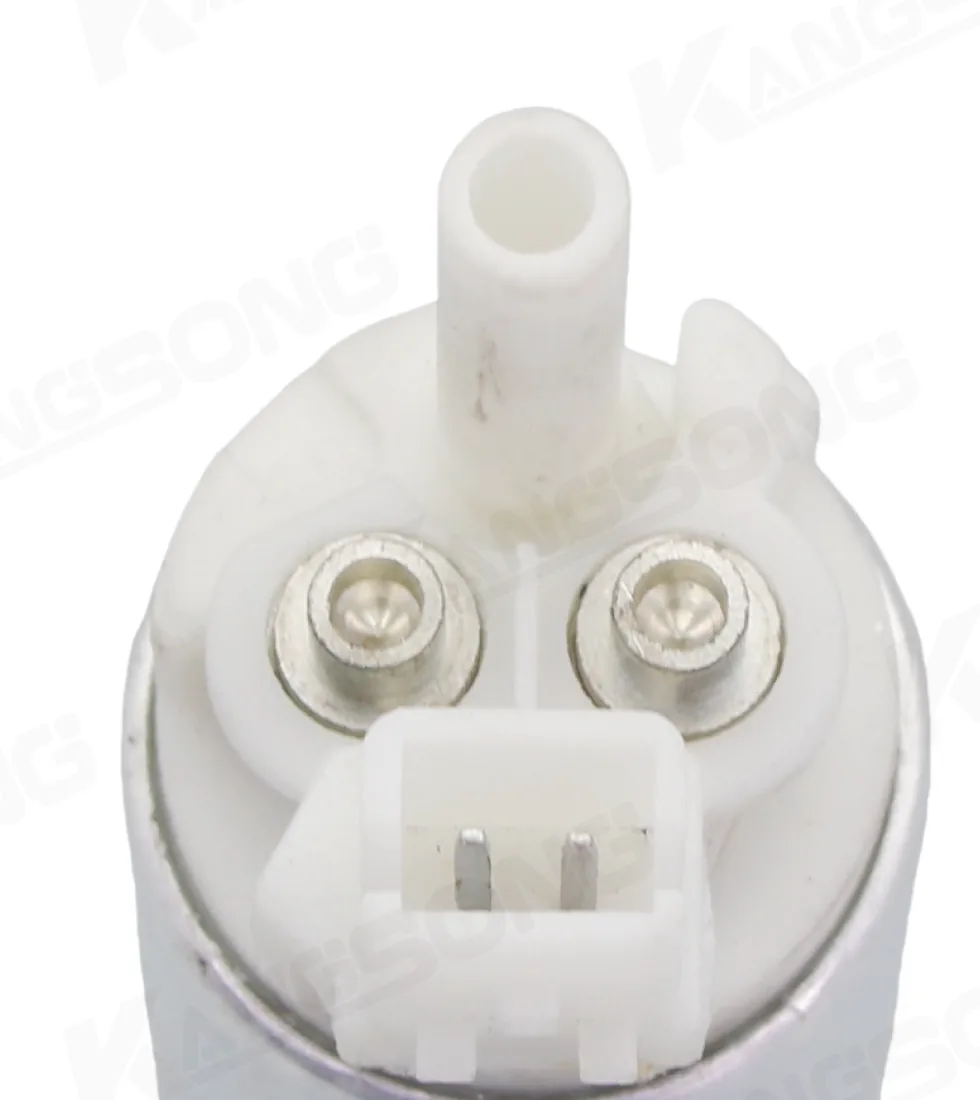
The KS-360501 electric gasoline fuel pump is the carton when the sheet has already said the pump failed inside that window. Bring the year, the OE number, and the connector count. Leave the order blank of any sensor claim.
Keep other sensor jobs in the open catalog
Other sensor jobs go to the catalog root because no standalone fuel-pressure-sensor SKU is published. A catalog search on 15 October 2026 returned pump assemblies, including one Outlander application whose title says the vehicle has a pressure sensor.
That record is still a fuel pump assembly. It remains a pump assembly you order as an assembly.
Send rail-sensor, tank-sensor, and filler-neck jobs that Kangsong does not print to the fuel pump catalog. Ask the supplier to match the printed sensor name on the next order. Do not borrow the C/K pump photo as proof that a sensor is in the box.
Importers writing a blanket line for fuel pump sensor should split the line before it reaches the warehouse. One row for the rail sensor, one row for the tank sensor, and a separate row only when the sheet names the pump. The sender row stays on the sender page.
FAQs
Is there a sensor for the fuel pump?
Sometimes the module carries a tank-pressure sensor, and sometimes the rail carries its own pressure sensor. The pump that moves fuel is a different part. Ask which name the sheet printed before you answer yes.
How does a fuel pump sensor work?
A rail-pressure sensor reports pressure on the rail so the control module can see what the injectors are being fed. A tank-pressure sensor reports vapor pressure in the tank during an evaporative test. The level sender, by contrast, follows a float.
What happens when a fuel pump sensor goes bad?
The control module loses the report that sensor was sending, and the sheet or scan tool usually names which sensor. This page does not list drivability stories. Match the printed name, then order that part.
How much does it cost to replace a fuel pump sensor?
Price depends on which of the three names is on the sheet, and this page does not publish prices. Retail ranges from shopping cards were left out on purpose. Name the part first, then price that carton.
Is a fuel pump pressure sensor the same part as a level sender?
A fuel pump pressure sensor, in counter language, is a pressure report on the rail or in the tank. The level sender is the float and resistor card. They can share a module and still be different cartons.
Which line sends the counter back to the fuel level sender page?
Any line that says fuel level sender, sending unit, or a gauge that no longer follows fuel level. Open the sender page for that carton. Keep this page for rail-pressure and tank-pressure lines.
Does the C/K electric pump carton include a pressure sensor?
The live KS-360501 page does not print a sensor. It prints an electric gasoline pump, the 1987-1995 C/K window, OE 25168719 and E3902, a 2-pin connector, and 43.3-49.5 Gph. Order it when the sheet names the pump.
References
- New York inspection notes on the fuel tank pressure sensor
- NHTSA-hosted bulletin naming the fuel rail pressure sensor circuit
- NHTSA-hosted circular separating tank and filler-neck pressure sensors
- Fuel pump overview
- Common rail injection overview
- Archived community thread on a missing fuel pressure sensor