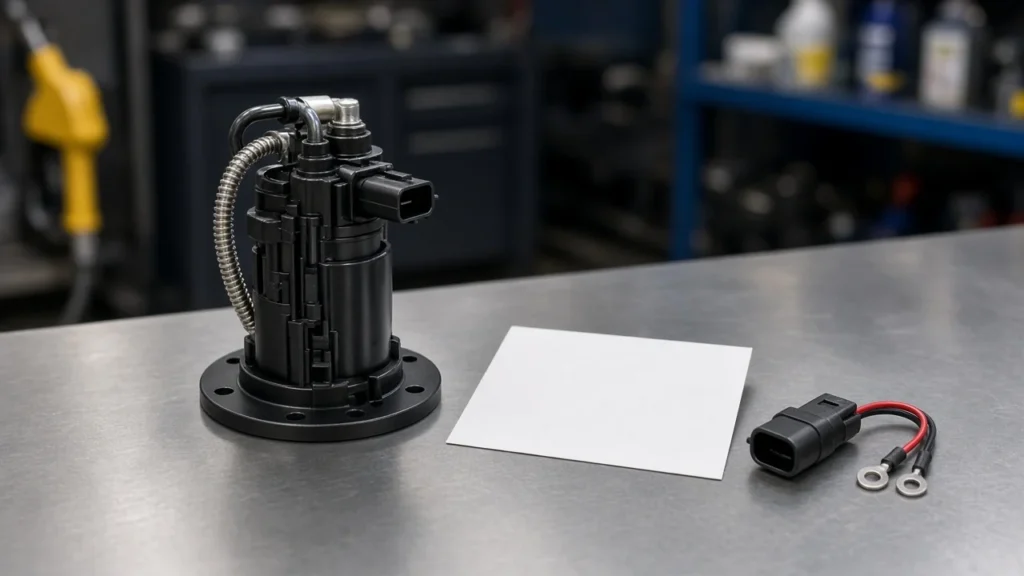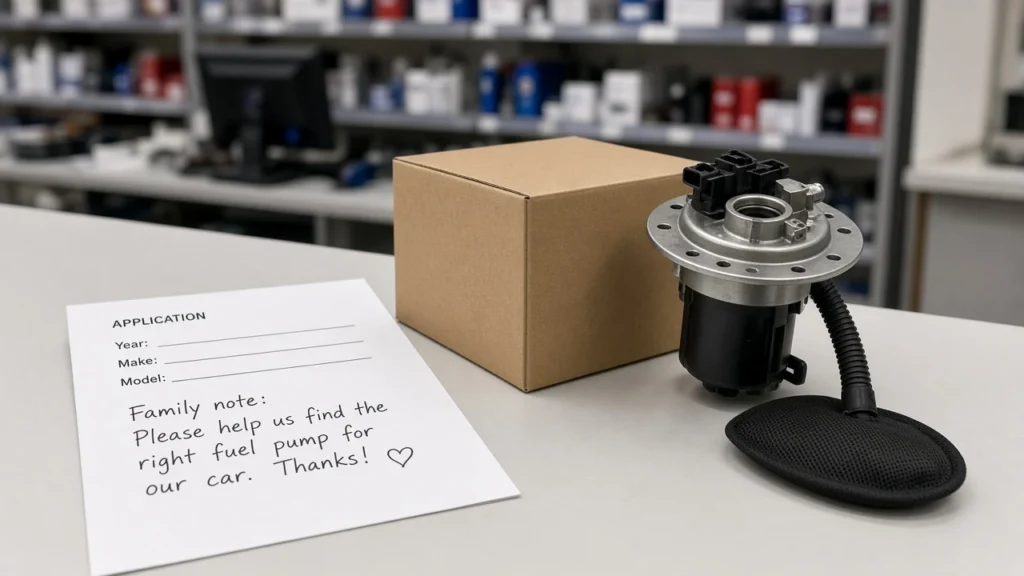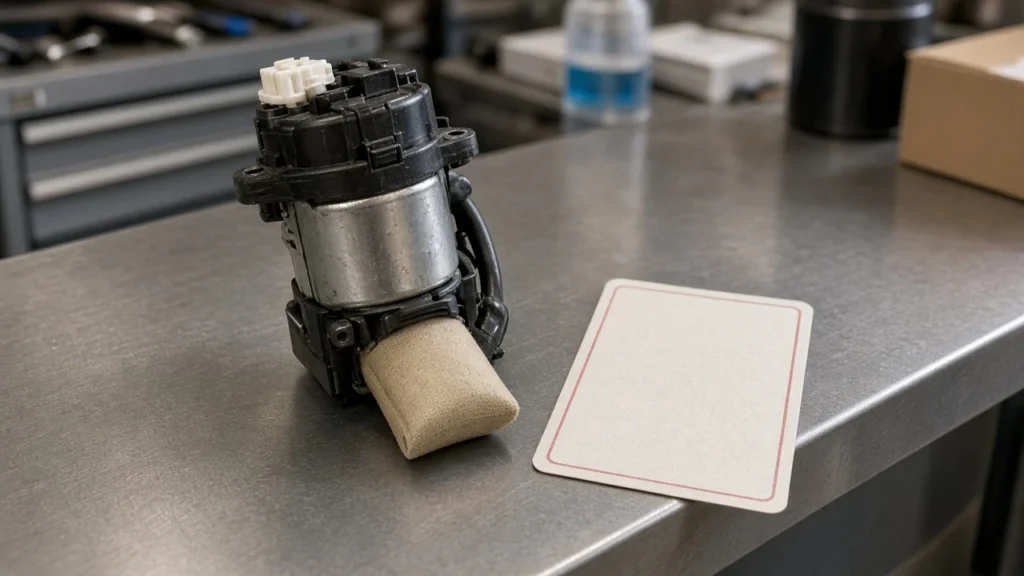
On a US counter, the fuel pump sending unit line has to name the gauge sender or the pump motor before anyone trusts the carton title.
A hanger can carry both pieces. The year sheet, or the OE line printed on it, still decides which box is pulled.
Counters lose time when the catalog title says sending unit and the box holds only a motor, or the reverse. Importers see the same split on a purchase order: one line, two jobs, and a sheet that already picked one of them.
The fuel sending unit vs fuel pump choice is that line. It is not a definition exercise and it is not a tour of every part in the tank.
Name the gauge sender or the pump motor before the carton title
Write “gauge sender” or “pump motor” on the purchase order before the hanger title is allowed to stand in for either one.
The gauge sender is the fuel level sender: a float and a resistor card that move the dash needle. The pump motor is the electric fuel pump canister that moves fuel. People type sending unit fuel pump when they mean the motor that shares the hanger with that sender.
A fuel gauge on the dash is the indicator. It is not the part in the carton. Shipping the indicator, or assuming the title included it, does not fill a tank and does not move a needle by itself.
When the sheet says the complaint is an empty needle and the engine still runs, the line leans toward the sender. When the engine will not stay fed and the needle still tracks the fill-up, the line leans toward the motor. Both clues can be wrong, which is why the year and the OE number stay on the same line.
A hanger title can ship without the motor
A hanger title can belong to a carton whose own table says the pump is not included.
Aftermarket listings use “fuel pump sending unit,” “fuel tank sending unit,” and “fuel pump hanger assembly” for hardware that sometimes includes a motor and sometimes does not. One Ford-application page titled as a sending unit without a pump still carried a conflicting “pump included” cell on the same specification table. Another page titled as a hanger assembly marked the pump as not included and shipped a lock ring and gasket instead.
That clash is the reason a counter reads the included-parts line, not the headline. The fuel pump and sending unit can share metal and still be sold as separate cartons.
Older vehicles often kept the level hardware and the pump as separate pieces in the tank. Newer hangers stack them. The stack does not merge the two order lines.
| What you write | Job on the vehicle | What “included” must say |
|---|---|---|
| Gauge sender | Float and resistor card for the needle | Sender, arm, and card; motor called out only if the sheet asks for it |
| Pump motor | Canister that moves fuel | Motor, and the sender only if that carton actually lists it |
| Whole hanger | Both jobs in one box | Sender and motor both named in the pack list |
The float and resistor card move the gauge
The gauge half is a float on an arm that slides a contact along a resistor card.
Encyclopedia wording for a road-vehicle gauge puts the sending unit in the tank and the indicator on the dashboard. The sending unit usually uses a float connected to a potentiometer.
As fuel drops, the float drops and the contact moves along the resistor. Wear or corrosion on that card makes the needle lie even while the motor is fine.
A plain-language account of the same hardware describes a float, often foam, on a thin metal rod mounted to a variable resistor. A wiper slides on a resistive strip.
Near the top of the tank the float can sit at the end of its travel, so the needle stays on full until the level falls to the bottom of the float. Tank shape can put the midpoint of that travel somewhere other than half the fuel.
None of those descriptions print a resistance number that belongs on every truck. A Jeep-club repair thread makes the practical point: the sender is a variable resistor, and if you change how far the float travels, you change the readable level.
Empty and full ohm targets from one model stay on that model’s sheet. They are not copied onto a different OE line.
The fuel pump float is the piece that rises and falls. It is not the canister, and it is not the dash needle. If the arm is bent or the float no longer follows the fuel, the card reports the wrong height while the motor can still run.
The C/K gallery frames are the electric canister
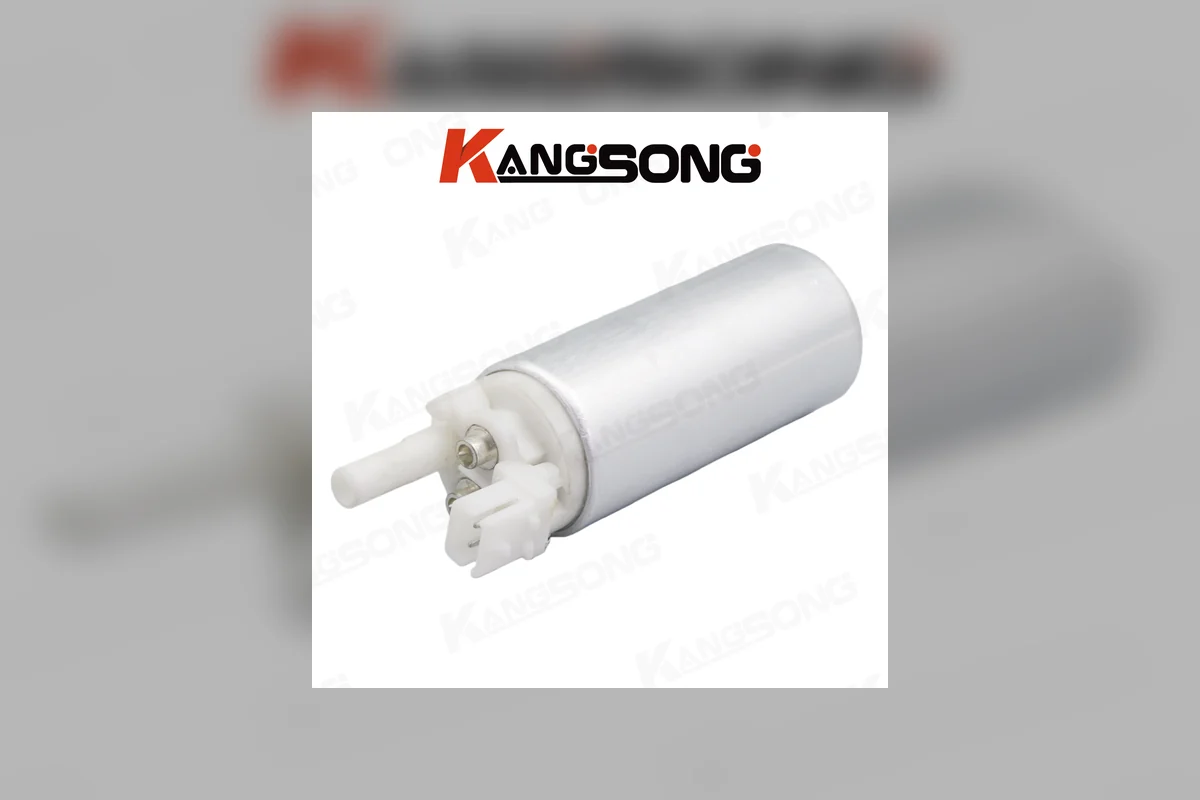
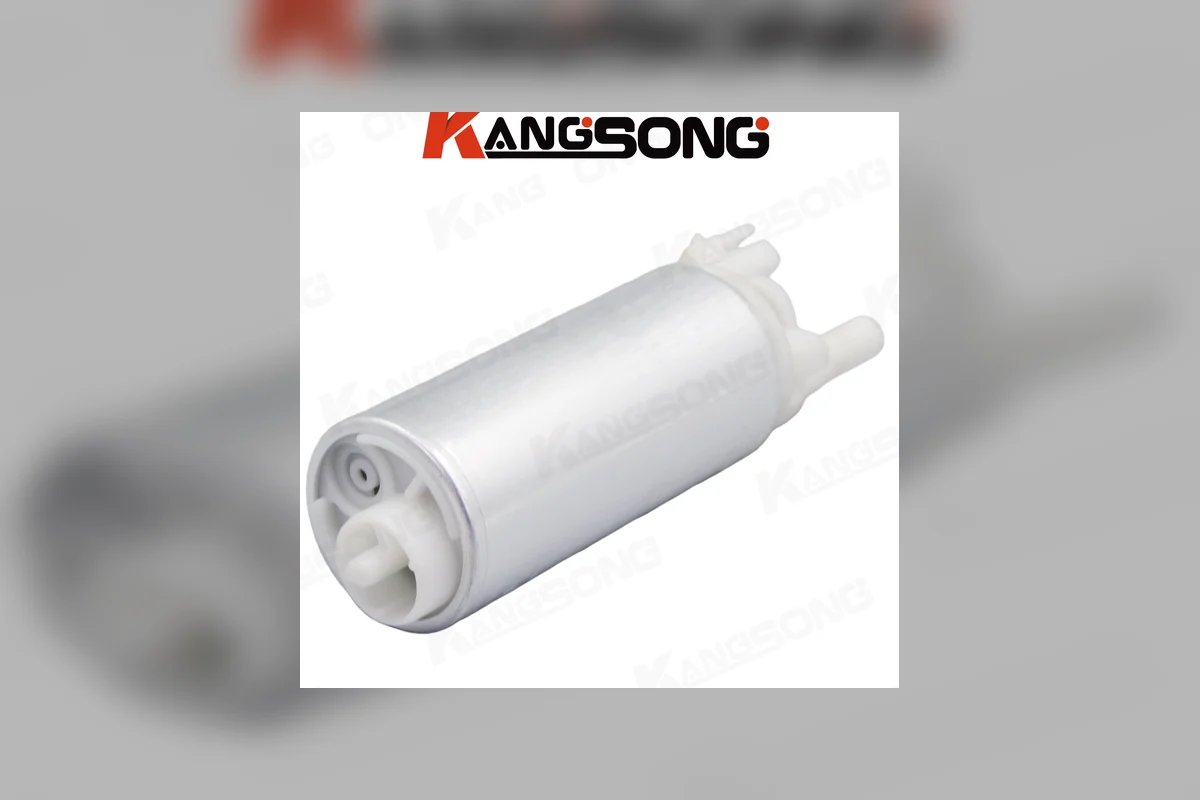
The four live frames for the C/K kit show a silver canister, a white outlet tube, a white two-pin plug, and the inlet end.
The page prose, re-read on 14 October 2026, says the product is a complete assembly including the fuel pump, a sending unit, and housing. The photographs opened the same day do not show a float arm or a resistor card. Both facts stay on the order: the sentence is what the page claims, and the frames are what the camera shows.
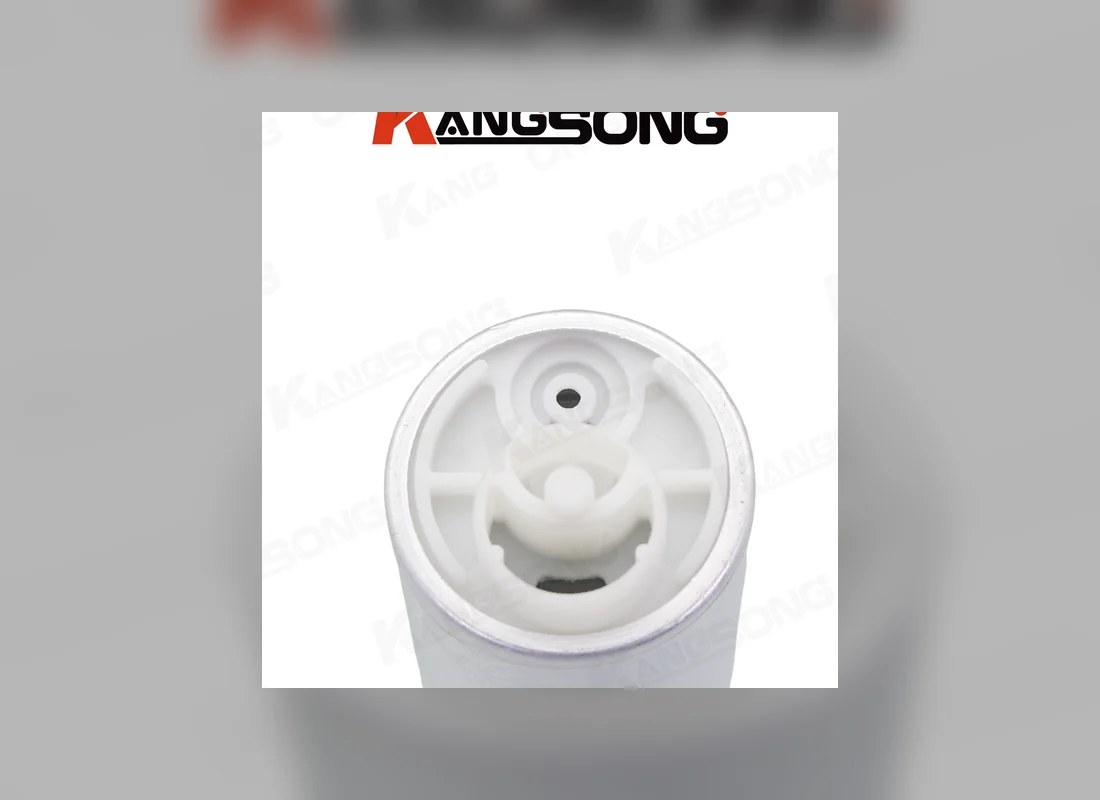
Quote the prose for the pack claim. Use the frames when you are telling a warehouse what the hardware looks like.
A drawing-board thumbnail on the same URL is a diagram plate, not a second proof that a float is in the photograph.
Inside the printed window below, call this hardware an electric gasoline pump. Calling it a sender for every truck would ignore the part name on the page, which is Electric Fuel Pump, and would ignore the photos.
At the inlet, a sock or screen would sit on many in-tank motors. That screen is a different order from the gauge sender.
The screen article on this site already covers that sock. This page does not retread it.
Write the printed pin count, not a guessed pin job
The C/K page prints two pins on the main connector and a harness with no pigtail. It does not assign a job to each pin.
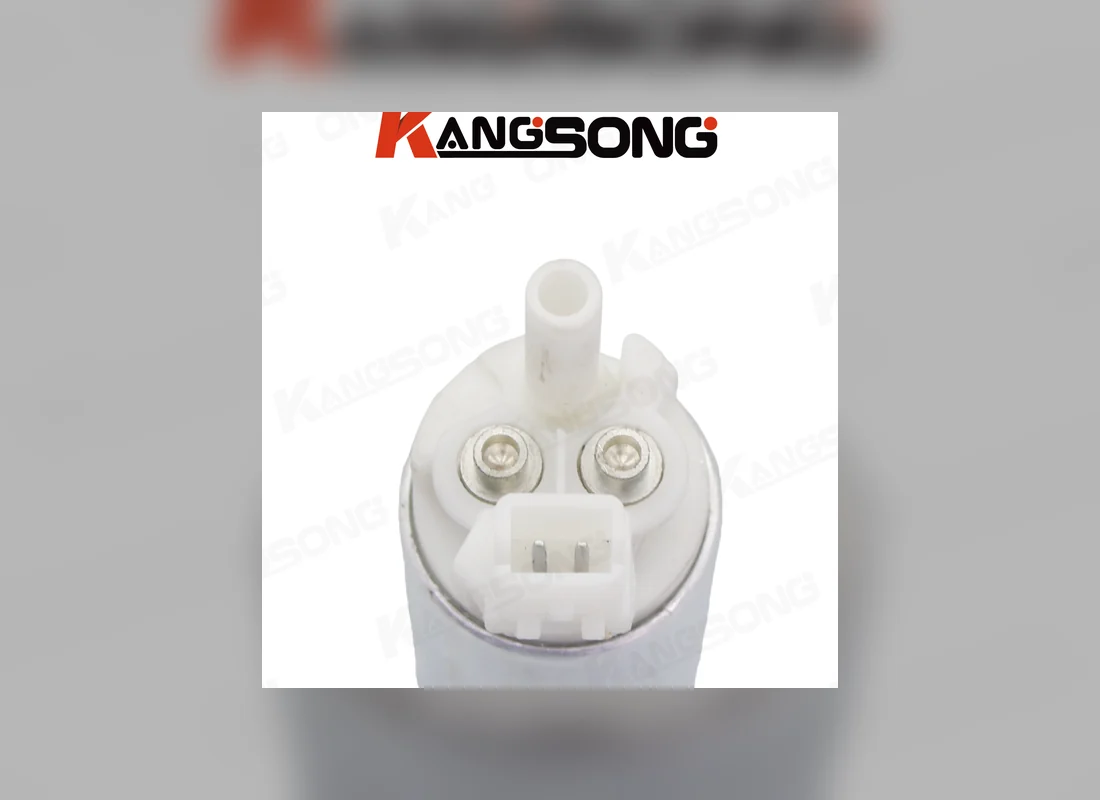
Write “2-pin” because that count is on the page. Leave pin function, wire color, and any resistance map off the line unless the year sheet already prints them. Guessing which pin is the gauge signal and which pin feeds the motor is how a sender carton gets wired like a pump, or the reverse.
The same page lists DC 12V, a flow line of 43.3-49.5 Gph, and interchange text that includes 25168719 and E3902. Those figures belong to this electric pump window. They are not a sender specification, and they are not a flow rating for a different truck.
Maximum Air Pressure is printed as 12-26. Treat that figure as an air label on this page. It is not fuel pressure, and it is not a float or resistor value.
Ambient limits on the same page run from -40 C to +85 C, the medium is named as gasoline for the matching vehicle, and a 1-year limited warranty is printed beside those lines. Quote them with the kit. Do not paste them onto a sender-only request the catalog did not list.
| Printed field on the C/K kit | What the counter may copy | What it does not decide |
|---|---|---|
| 1987-1995 C/K 1500, 2500, 3500 | The year and truck window | Any other platform |
| 25168719 and E3902 among the interchange list | Those OE strings if the sheet matches | A sender part number that was never printed |
| 2 pins, DC 12V, 43.3-49.5 Gph | The motor’s electrical and flow lines | Gauge ohms or a pin map |
| Air label 12-26 | The air label as printed | Fuel pressure or sender travel |
| Prose: pump, sending unit, and housing | The pack claim in the paragraph | A float you can see in the four frames |
Pump-only versus the unit that carries the float
Replacing the motor alone leaves the float and resistor card on the old hanger.
Shops already hit this split. One owner wrote that the sending unit seemed to be the fault, so the entire fuel pump and sending unit was replaced, and the needle was still stuck on empty.
The replies then argued about the float on that unit, the ground, and the gauge itself. The carton had already been bought.
The empty needle did not settle which half had failed.
From the field: A Ranger thread asked whether the earlier job changed the fuel pump only or the whole assembly that carries the float arm — the level complaint followed the hardware that reads height, not a new name on the box.
Wheelbase and tank depth showed up because a housing that sits too high or too low moves the float through the wrong part of the tank. Gallon capacities from that thread stay there. The purchase order only needs the year, the tank identity the sheet already uses, and which half is being bought.
A shortened or re-armed sender can still move and still read high or low, because the card is calibrated to the original travel. That is a reason to match the year sheet, not a reason to publish a travel length the sheet did not give you.
If the engine starves and the needle is honest, buy the motor. If the engine runs and the needle is stuck or scaled wrong, buy the sender side, or the hanger that actually lists both. A combined swap that leaves the needle wrong means the next line is the remaining half, the ground path, or the gauge, not another copy of the same carton title.
Choose the KS-360501 electric pump only inside the printed C/K window
Use the KS-360501 electric gasoline fuel pump for 1987-1995 C/K trucks when the sheet is that Chevrolet and GMC C/K 1500, 2500, or 3500 window and the line you are writing is the electric pump.
Inside that window the page is an electric gasoline pump with an installation kit. The pack claim also names a sending unit and housing.
The recommendation follows the part title and the photographs first: canister, outlet, two-pin plug, inlet. The sending-unit sentence is quoted with the pack, not stretched into a sender carton for every truck on the dock.
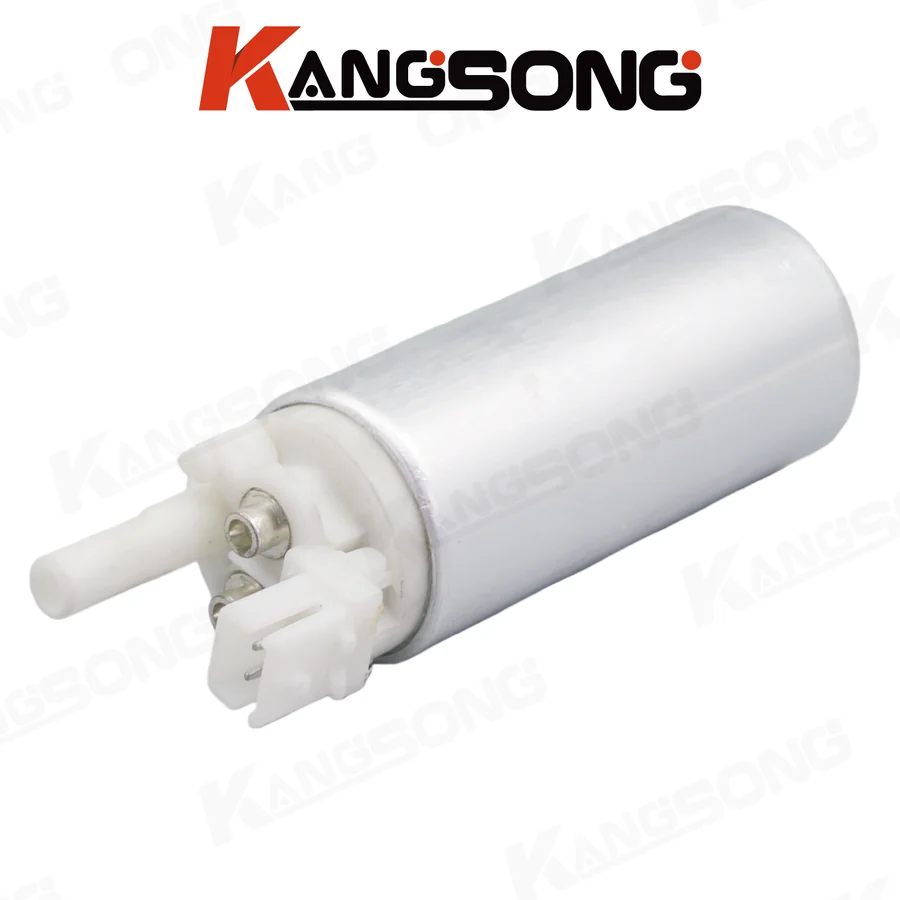
Outside that year and truck list, this URL is the wrong match. A live pass of the Kangsong product catalog did not surface a sender-only model under this keyword.
None is invented here. Other jobs start from that catalog, with the year sheet in hand, rather than from a public shop path that is not the live category.
The OEM fuel pump manufacturer page describes factory lines for electronic pumps, high-pressure pumps, and assemblies. It proves a plant, not a fitment. It does not place a float into the C/K frames and it does not extend 25168719 past the trucks printed with it.
Parts that sit on the electric element itself, apart from the gauge card, are already grouped under electric fuel pump parts. The difference between a mechanical pump and an electric motor is a different order, kept in mechanical versus electric fuel pumps. What a full in-tank module contains, when the sheet asks for the module rather than this sender-versus-motor split, sits in what a fuel pump assembly is.
Year, OE line, and which half failed
The sheet still needs the year, the OE line, and whether the gauge half or the motor half failed.
Write those three before the carton title. Add tank identity when the platform has more than one tank depth.
Add “motor included: yes or no” when the supplier table has that cell. Leave ohms, pin jobs, arm length, and fuel pressure blank unless the sheet already printed them.
A counter that only types fuel pump sending unit will be offered hangers, sender-only boxes, and motors. The extra words “gauge sender” or “pump motor,” plus the year and the OE string, are what make the warehouse pick one carton.
Importer programs can ask the factory for a hanger that packs both, or for the motor alone. That request belongs on the purchase order in those words.
The C/K kit above is the one live page in this article that already prints a window, a pin count, a flow line, and a pack sentence. Everything else waits for a matching sheet.
FAQ
What is the difference between a fuel pump and a fuel sending unit?
The pump motor moves fuel. The sending unit, in gauge language, is the float and resistor card that tells the needle how high the fuel sits. A hanger can hold both, and the purchase order still has to say which one is being bought.
Does one hanger mean the carton always contains both the sender and the motor?
No. Catalog pages title a part as a hanger or a sending unit and then mark the pump as not included, or they contradict themselves in the same table. Read the pack list.
Why can the gauge stay on empty after a fuel pump and sending unit swap?
Because the combined carton can be in the tank while the float, the ground, or the dash gauge is still the piece that is wrong. Owners report exactly that sequence: the whole unit went in, and the needle stayed on empty.
What should the purchase order call the float and resistor card?
Call it the gauge sender, or the fuel level sender. Those words point at the float, the arm, and the card. They do not point at the canister.
Is KS-360501 sender-only for every truck?
The live part title is an electric fuel pump for the printed 1987-1995 C/K window. The paragraph also says the pack includes a sending unit and housing, and the photos show the canister.
It is the wrong box for a sender-only line on a different truck.
What does the 12-26 air label on that C/K page describe?
It is the Maximum Air Pressure label printed on that page. It does not describe fuel pressure, and it does not describe the sender.
Which sheet line picks the carton when the catalog title says sending unit?
The year, the OE number, and the words that say gauge sender or pump motor. Tank identity joins them when depth changes by wheelbase or cab.
Where does a counter go for the pump-element parts list without repeating it here?
Use the electric fuel pump parts page for the element, the strainer page when the question is the sock, and the assembly page when the sheet asks for the whole module. This page stops at the sender-versus-motor line.