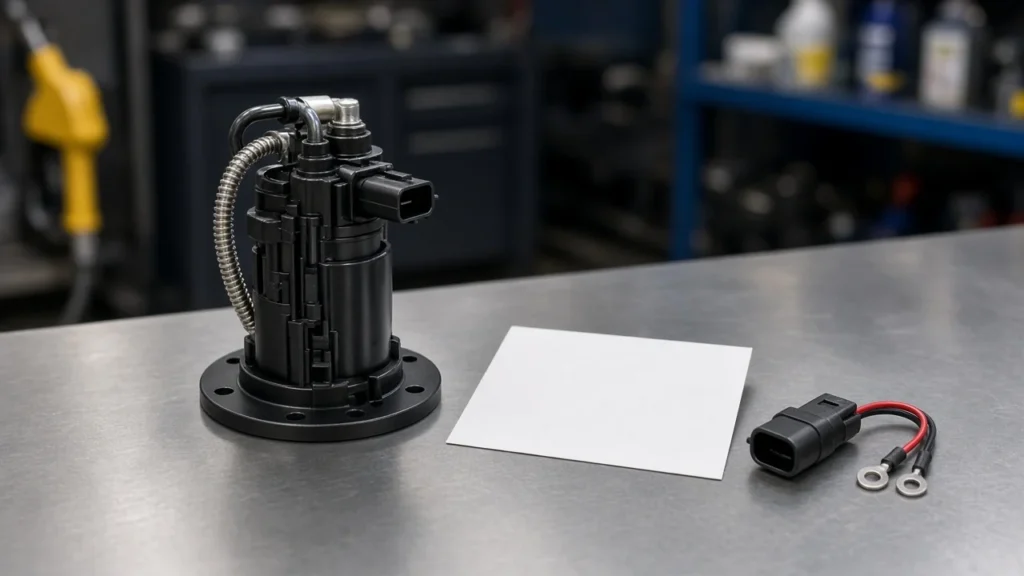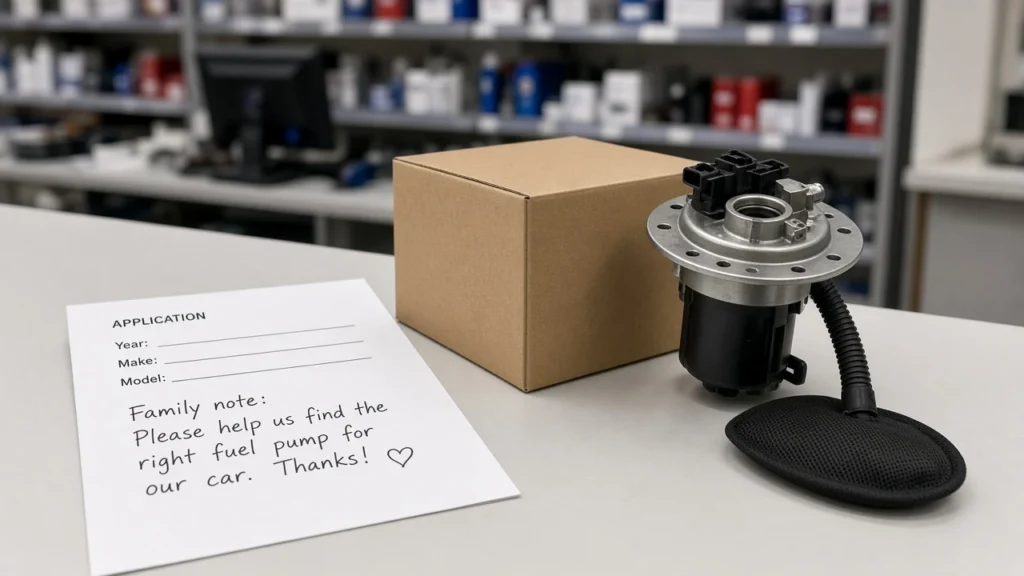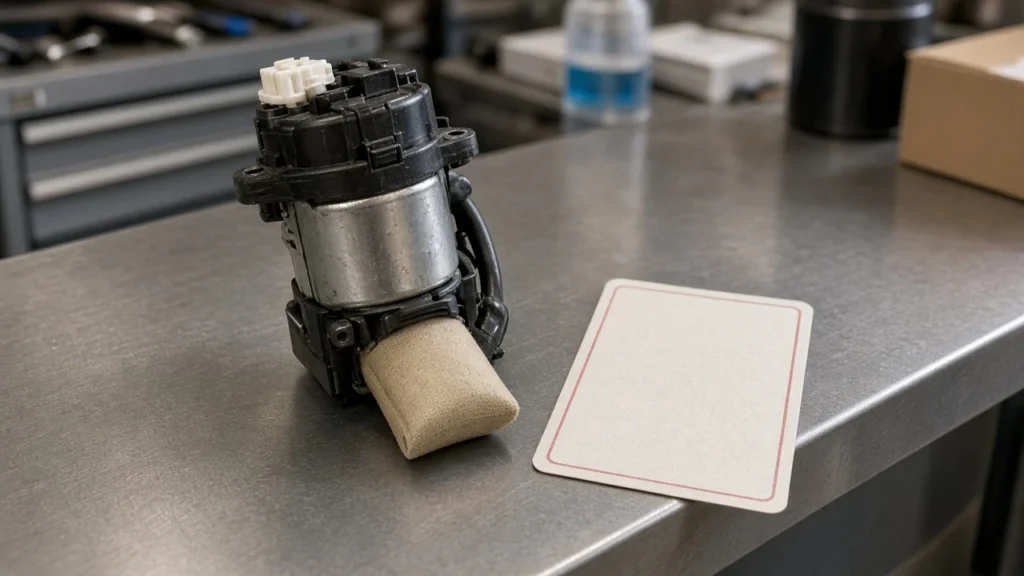
The purchase order is buying either a cam-and-lever mechanical pump or an electric motor. That mechanical fuel pump vs electric choice is what the year sheet prints before anyone names a carton. The pad on the block, the motor in the tank, and one printed truck window are the three checks that follow.
A counter who skips the drive ends up with the wrong carton even when the OE digits look familiar. Cam pumps and electric pumps both move fuel toward the engine. They do not share a mounting pad, a power path, or a place in the line.
The sheet names the drive before anyone picks a carton
The year sheet prints either a cam-and-lever pump or an electric motor, and that line is the order. Everything else on the page is how to read it.
Open the catalog line for the truck or the engine and look for the drive before the brand. A mechanical fuel pump on a carburetor engine is the unit the cam works. An electric fuel pump is the motor, whether the sheet calls it in-tank, inline, or a pump with a kit.
Missing those words, the fitment notes still show a pad on the timing cover or a pump inside the tank.
Two sheets can share a displacement and still print different drives. One small-block keeps the eccentric and the lever.
A later injected engine in the same family never had that pad. The carton follows the sheet in front of you, not the sheet for a cousin engine.
Shop talk sometimes treats “mechanical” as any pump that is not in the tank. That shortcut fails on direct injection, where a second mechanical pump sits on the engine and raises pressure for the injectors.
That pump is a different order. The supply-versus-injection split is already covered in fuel pump vs injection pump.
A cam eccentric moves the mechanical pump
The eccentric and the lever move the diaphragm while the engine turns. If the cam is not spinning, this pump is not moving fuel.
On the engines this comparison is about, the pump bolts to the timing cover. A Ford-truck reply says to stay mechanical when the timing cover has the spot and the camshaft has the eccentric. No pad, or no eccentric, and the cam pump has nothing to work it.
The lever has to take up free play before it moves the diaphragm. Wear at that lobe shows up as weak delivery, which stays a cam and pump question.
The pump pulls fuel from the tank. The suction line runs the length of the vehicle, so heat along that line is a known complaint on carbureted trucks.
Pressurizing the line from the tank end is why some owners later talk about an electric pump. That still leaves a pad on the engine if the sheet still prints one.
From the field: A Ford-truck owner warned that a torn diaphragm can send fuel into the crankcase and thin the oil. Source: Ford Truck Enthusiasts, mechanical versus electrical fuel pump, December 2012.
A torn diaphragm can send fuel into the crankcase and thin the oil. That leak can stay small until the bearings or the pistons show it. When a cam pump comes off for any other job, the diaphragm and the arm are part of the same look.
How the diaphragm pulses, stroke by stroke, sits on how a vacuum fuel pump works. This page only needs the drive: cam, lever, diaphragm, engine-mounted.
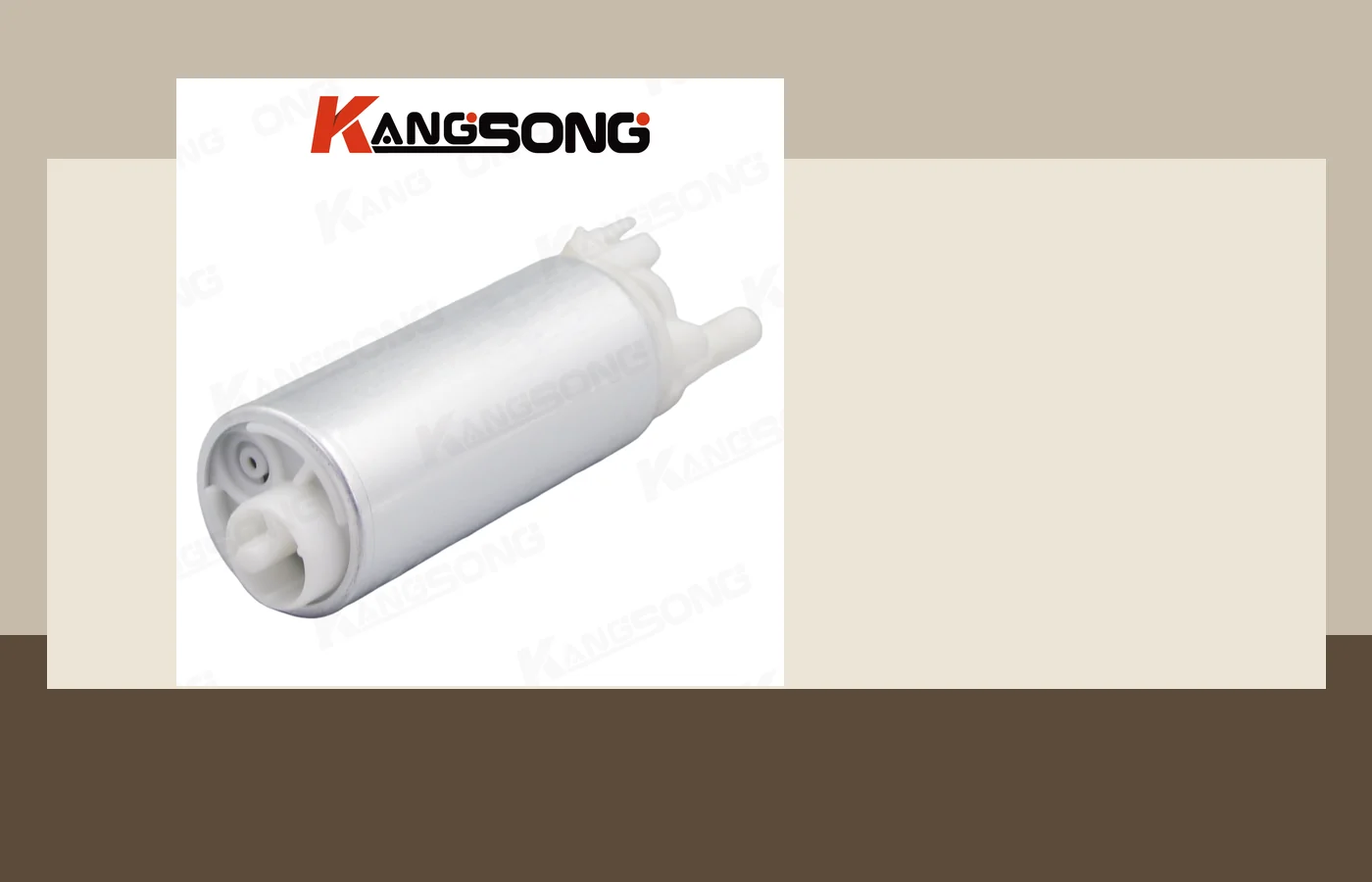
An electric motor pushes fuel and can sit in the tank
The motor pushes fuel, and on most injected vehicles it lives in the tank, where the fuel cools it. It does not wait on a camshaft lobe.
Fuel around an in-tank electric pump cools the motor. A tank that is kept very low makes that cooling thin, which is why low-fuel complaints show up on electric pumps and not on a cam pump bolted to the block.
Running the tank out can leave the motor without that bath. Treat that as a use condition on the same flow the page already prints.
An external electric pump is a different mount. An external electric pump belongs lower than the tank and close to it. Gravity has to reach the inlet.
A pump hung up by the engine is trying to pull, which is the job the cam pump already had, and heat at the block is what owners were trying to leave behind. Corvette owners who wanted the pump off a crowded big-block still got that same mount rule back: in the tank is what the factories did, and an external pump stays at the tank.
Frame-mounted motors draw the noise complaint. A Cougar owner called electric pumps less convenient and often noisier, and said a proper install uses an oil pressure cutoff.
An electric install on a stock-style carburetor car needs an oil pressure switch and a pump near the tank. That switch stops the motor if the engine stops. Wiring detail beyond that switch sits outside this comparison.
Before the engine fires, the motor can prime the line, because it is not tied to cranking speed. That helps a carburetor that has sat until the bowls went dry.
After a stall, fuel keeps moving unless the oil pressure switch, or an equivalent control, is in the circuit.
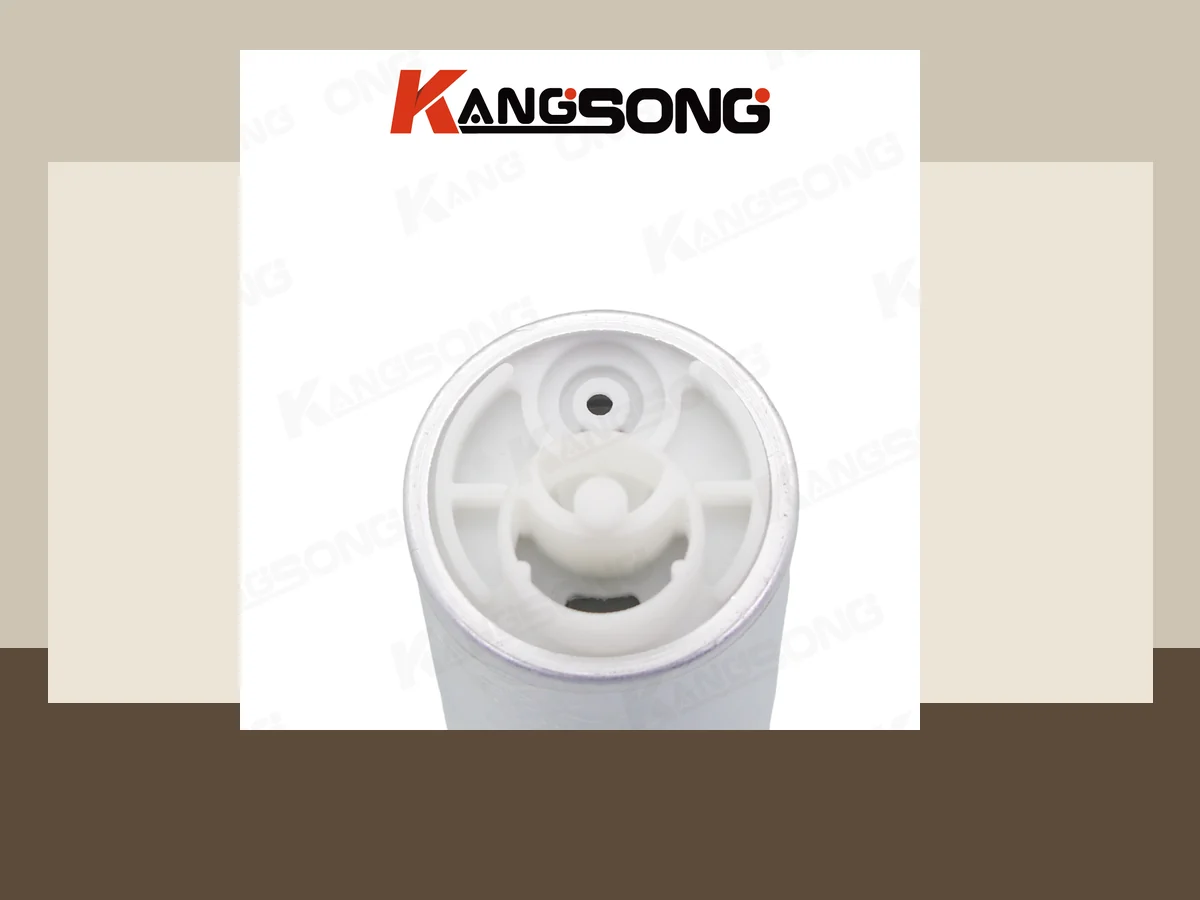
Carburetor sheets can stay with the cam pump
A stock carburetor sheet with the pad and the eccentric can stay mechanical. The Cougar thread’s practical answer was the same: if the car is still on a carburetor and close to stock, the mechanical pump is the simple carton.
Owners reach for an electric pump when the engine is modified and the cam pump’s volume is no longer the conversation, or when heat on the suction line has already shown up. Those changes belong on the sheet in front of the counter.
A return line and a regulator come up in that same thread as heat and bowl-level tools. They sit beside the drive. They do not rename it.
Read the mechanical vs electric fuel pump decision off the carburetor and the block together. Carburetor still specified, pad still machined, eccentric still on the cam: the order stays the cam pump. Carburetor specified, pad missing because the block was never machined for it: you are already in the next section.
| Drive | What moves the fuel | Usual place | What the counter checks first |
|---|---|---|---|
| mechanical fuel pump | eccentric and lever on the diaphragm | bolted to the engine | timing-cover pad and eccentric |
| electric fuel pump | electric motor | in the tank, or low and close to the tank | printed system, mount, and an oil pressure switch on a carburetor conversion |
Fuel chemistry does not pick this row. Diesel versus gasoline is a different comparison, on diesel fuel pump vs gas fuel pump.
Injected sheets print the electric pump
Manifold fuel injection prints an electric supply pump. Direct injection adds a different high-pressure mechanical pump.
Carbureted engines often use an engine-mounted mechanical pump, and many injected engines use an electric pump in the tank. That split is the ordinary US parts-counter pattern. The in-tank motor feeds the rail on port injection.
On direct injection the same style of in-tank pump is only the supply stage. A second pump on the engine, also called mechanical in the repair library, raises pressure for the injectors. Ordering that second pump when the sheet asked for a cam-driven supply pump, or the other way around, is the mix-up this head-to-head is here to stop.
The electric fuel pump vs mechanical argument on an injected truck is usually already settled by the manufacturer. The sheet prints the motor. Replacing it with a cam pump means inventing a pad the block does not have and giving up the in-tank cooling the system was built around.
Selection details for an electric gasoline pump, once the drive is already electric, live on gasoline electric fuel pump.
No pump boss means the cam pump is not the order
No boss on the block means the order is an electric pump. A cam pump cannot be bolted to a pad that was never machined.
A late fuel-injected block often has no boss for a mechanical pump, and the cam pump adds no wiring of its own. That second point is why people like the cam pump on an engine that still has the pad: no extra harness, and little noise.
Swap a fuel-injected LS, a Ford modular engine, or a late big-block into an older car, and the boss was never there. The electric vs mechanical fuel pump choice collapses. The motor is the drive that fits the block.
Access is a weaker reason, but it is a real one. A Corvette owner looked at a big-block cam pump and wanted the electric pump because the mechanical unit was hard to reach.
The replies did not say the motor can go anywhere. They sent the external pump back to the tank, lower than the fuel and close to it.
Hard reach changes the labor. It does not change the inlet.
If both drives are already on the vehicle, leave the cam pump out of the electric pump’s path. A diaphragm that fails in that stack can still fill the crankcase.
One drive on the order is the clean read. Two drives in series is how the oil gets diluted.
The C/K electric kit fits only as an electric pump
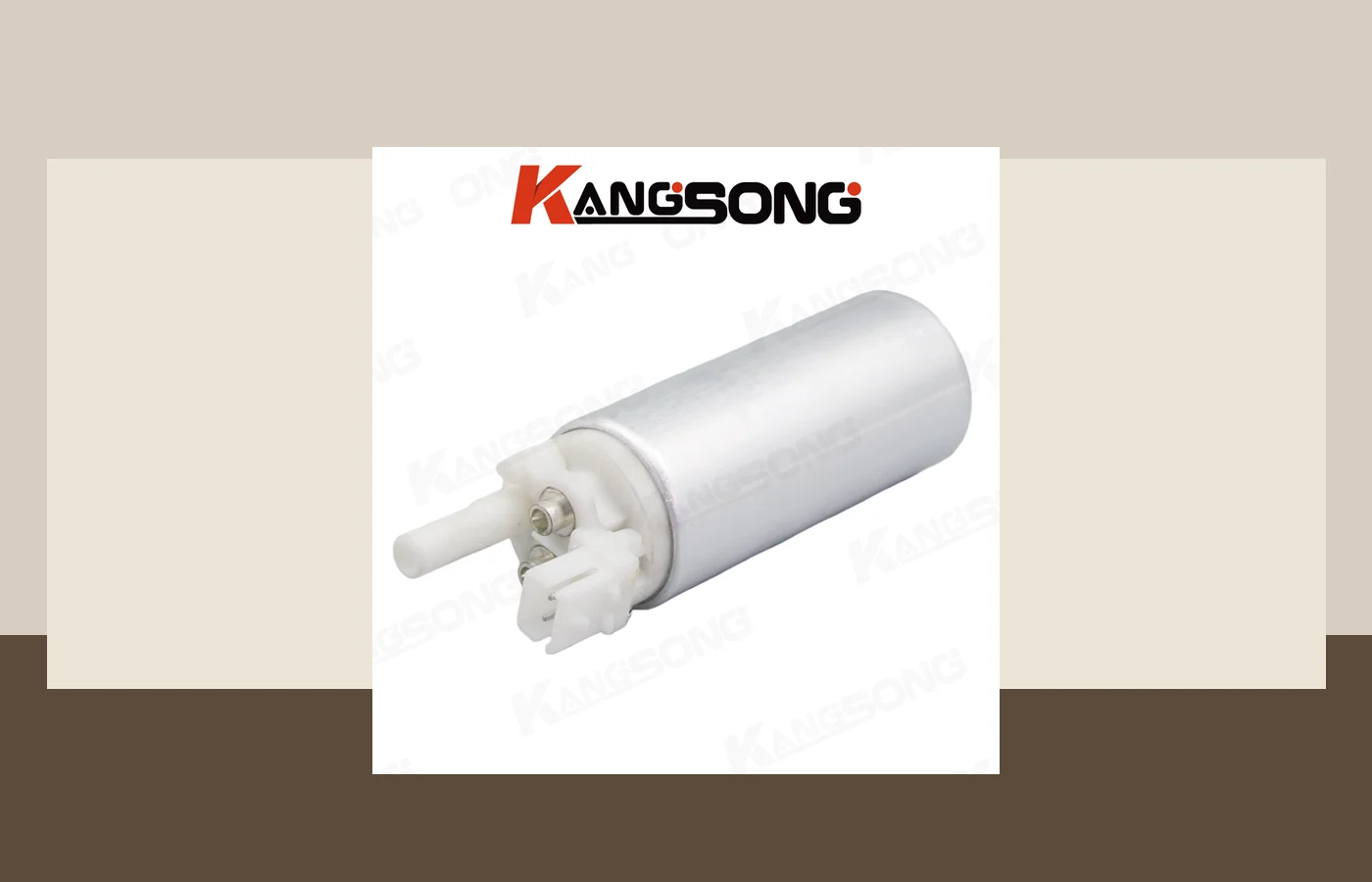
KS-360501 fits the printed 1987-1995 C/K electric window, and only as the electric drive. It is the carton when that sheet already names an electric pump in the OE 25168719 / E3902 window.
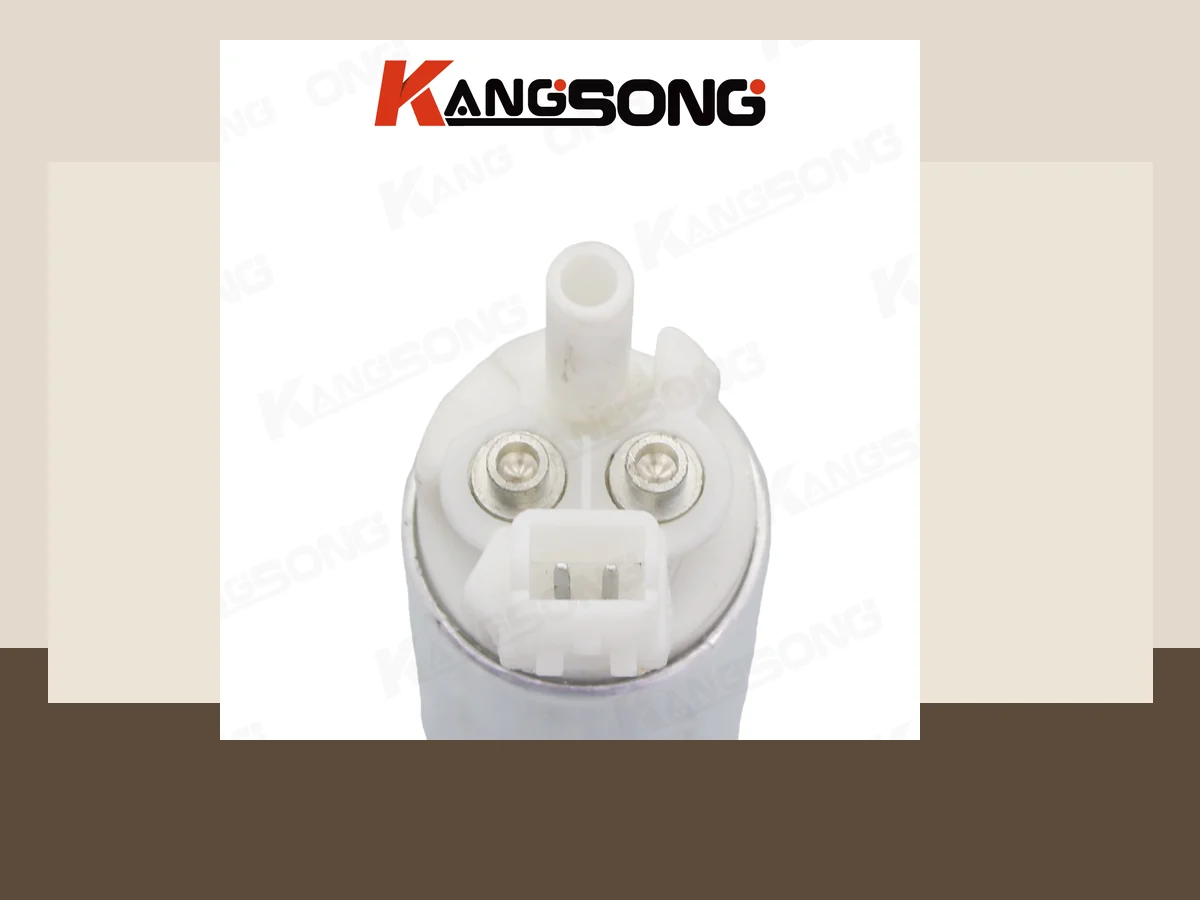
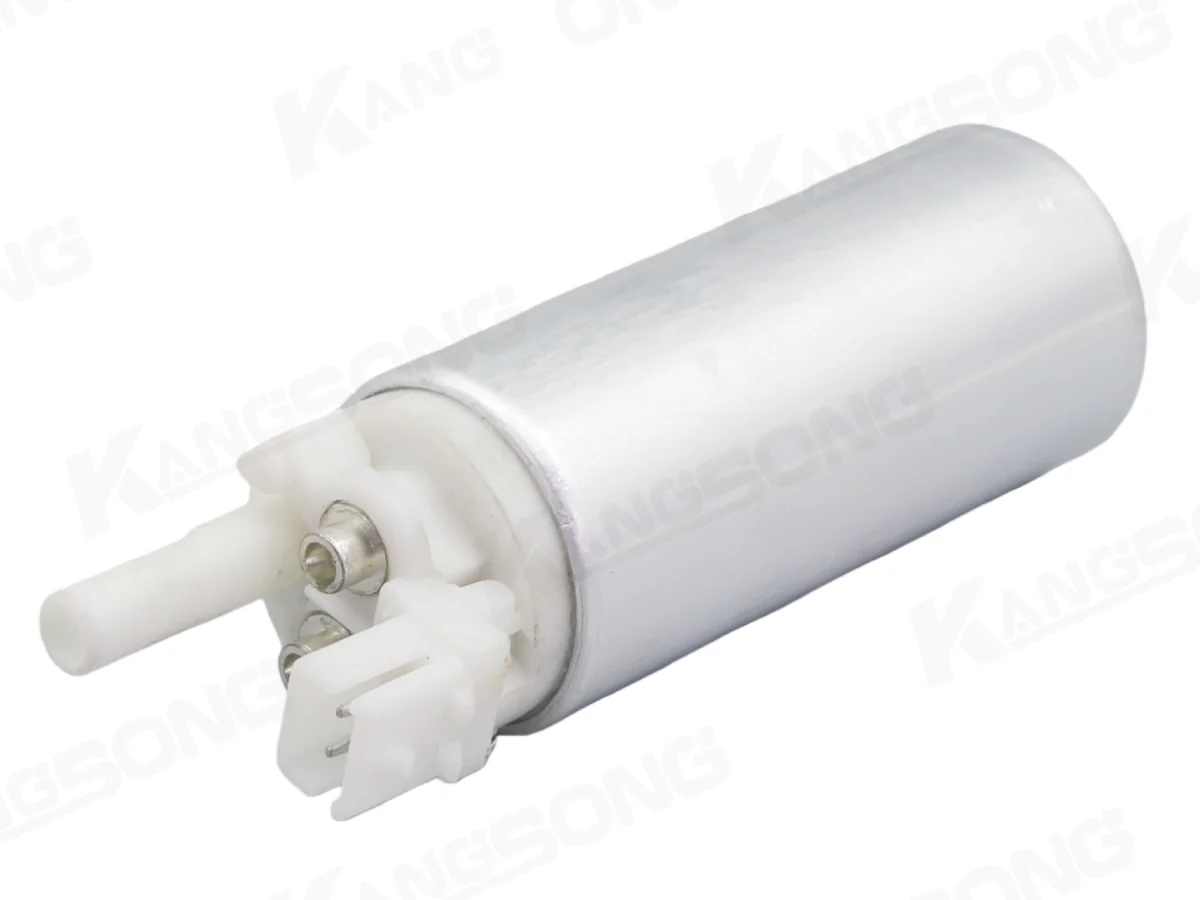
The KS-360501 electric gasoline fuel pump for 1987-1995 C/K is titled as an electric gasoline fuel pump with an installation kit for C/K 1500, 2500, and 3500 trucks in that year span. KS-360501 is listed at DC 12V with a flow of 43.3-49.5 Gph. The connector count on the page is 2-pin, and the gallery shows that plug on the electric canister.
The same page also describes a sending unit and housing, while the gallery shows the electric canister. Match the title and the photo to the sheet. The canister picture is the electric motor, so a cam-and-lever line still needs its own carton.
| Printed field | What KS-360501 shows |
|---|---|
| Vehicle window | 1987-1995 C/K 1500, 2500, and 3500 |
| OE lines used here | 25168719 and E3902 |
| Connector | 2-pin |
| Electrical supply | DC 12V |
| Flow | 43.3-49.5 Gph |
| Drive on this page | electric motor |
Kangsong does not publish a cam-driven pump under this comparison. A sheet that still prints the eccentric and the timing-cover pad needs that mechanical pump from the line that actually lists it. Other jobs stay on the product category.
Other jobs stay on the product category, because this catalog does not offer a cam-driven pump.
FAQ
What are the disadvantages of a mechanical fuel pump?
It pulls fuel the length of the vehicle, so a long suction line is the usual heat complaint, and a torn diaphragm can dilute the oil. It also runs only while the engine turns the eccentric, so a dry carburetor can mean a long crank. Those are the costs of a pump that needs no extra wiring when the pad is already there.
Can I replace a mechanical fuel pump with an electric?
Yes when the block has no pump boss, or when the sheet has already moved to an electric pump. On a stock carburetor engine that still has the pad and the eccentric, the Cougar and Ford threads both treat the cam pump as the carton to keep. An electric replacement still needs a mount near the tank and an oil pressure switch.
How long will a mechanical fuel pump last?
No source in this comparison gives a year count or a mileage count that a counter can print on a Kangsong order. The failure the Ford thread actually names is a diaphragm leak into the oil, which is a condition to inspect, not a calendar.
Will a mechanical fuel pump pull through an electric fuel pump?
Leave that stack off the order. The cam pump is a puller, and stacking an electric pump through it leaves the diaphragm in the path.
If that diaphragm fails, fuel can still reach the crankcase. Pick one drive.
Can I run a mechanical and electric fuel pump?
Running both as a pair is the same stack. Owners ask it when they want the electric pump to prime and the cam pump to stay in place.
The diaphragm stays in the circuit, so the oil-dilution risk stays too. One printed drive is the purchase order.
How many years will an electric fuel pump last?
There is no year figure on the KS-360501 page and no shared life number in the threads that a counter should copy onto every motor. What the library does say is that an in-tank motor is cooled by the fuel around it, so a tank kept very low is the use condition that shows up before any calendar does.