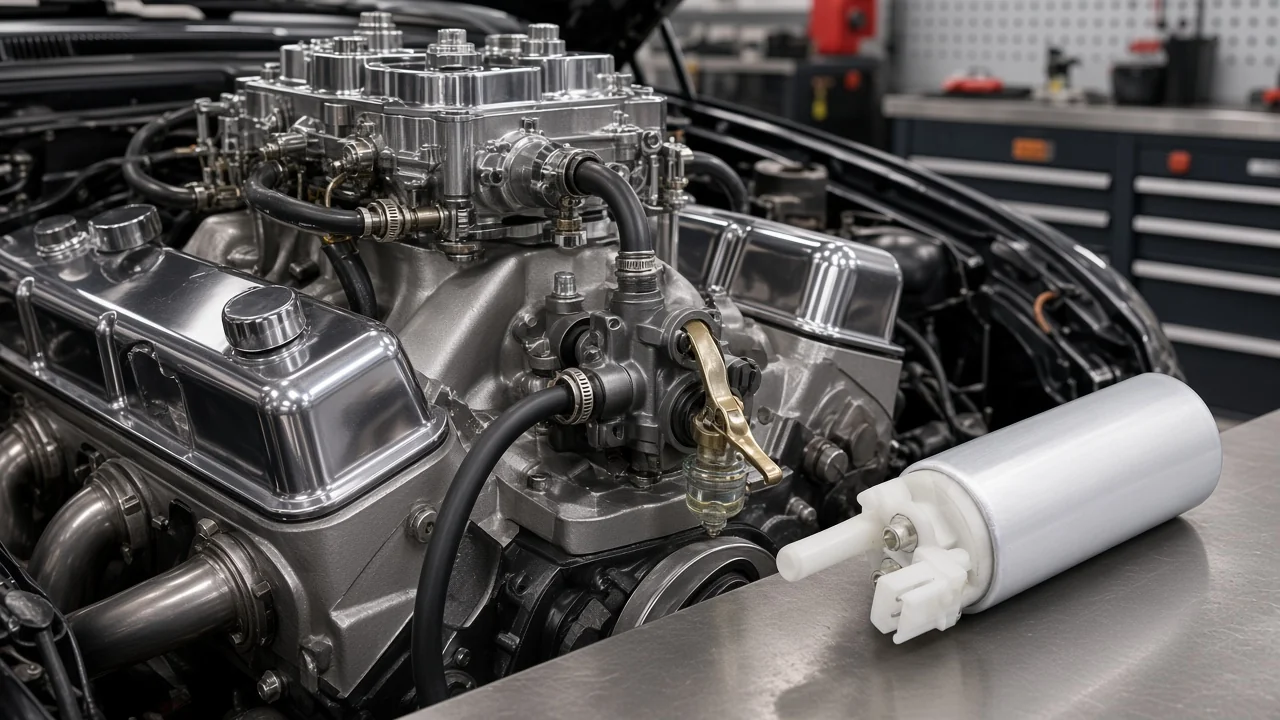
In carbureted applications, the most common fuel pump used in carbureted applications is a cam-driven mechanical diaphragm fuel pump mounted on the engine—not an in-tank fuel module built for fuel injection.
Quiz-style answers and technical primers converge on that type for stock setups. Low-pressure electric pumps show up mainly when builders retrofit around a missing or failed mechanical drive. Below is the OE answer, the pressure limits that protect the carburetor float bowl, when an electric path makes sense, and a scoped product example.
The Most Common Answer: Mechanical Diaphragm Pumps
For stock carbureted engines, technical sources most often describe a cam-driven mechanical diaphragm fuel pump—not a complete fuel pump assembly / hanger / module built for EFI tanks.
Encyclopedic primers put it plainly: carbureted engines often use low-pressure mechanical pumps mounted on the engine. Multiple-choice training materials that ask what’s the most common fuel pump used in carbureted applications also land on the mechanical option rather than EFI tank hardware. That framing describes the usual OE architecture.
A mechanical pump bolts to the block or timing cover and takes motion from a camshaft eccentric / lever, sometimes through a short pushrod. That keeps the pump engine-timed and independent of a chassis-mounted electric circuit. If you are answering what type of fuel pump is typically used with a carburetor system, start here before shopping electric kits.
How a Mechanical Carbureted Fuel Pump Moves Fuel
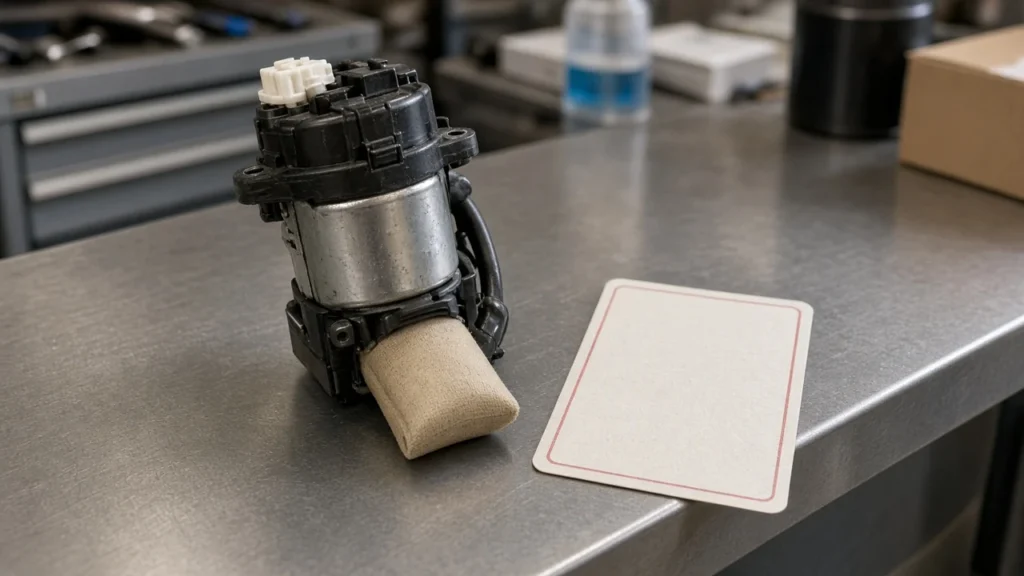
A camshaft eccentric / lever works a flexible diaphragm with check valves so fuel is drawn from the tank and pushed to the carburetor float bowl.
As the eccentric lifts the lever, the diaphragm enlarges the pump chamber and draws fuel through the inlet check valve. When the lever relaxes, the diaphragm spring pushes the chamber closed, the inlet valve seats, and the outlet valve opens toward the carburetor. Pressure is largely set by that spring, which is why these pumps stay in a low band instead of EFI territory.
The pump does not guess bowl level by itself. The carburetor float bowl uses a float and needle-and-seat to decide when the bowl is full; the pump simply keeps supply available. That pairing is why a healthy mechanical pump can keep cycling while the bowl stays stable once the needle closes.
| Stage | What moves | What the fuel does |
|---|---|---|
| Intake stroke | Lever pulls diaphragm down | Fuel enters through the inlet check valve |
| Discharge stroke | Diaphragm spring returns | Fuel exits through the outlet valve toward the carburetor |
| Bowl full | Needle and seat close | Pump stalls against closed needle instead of overfilling |
Why Carburetors Need Low Fuel Pressure
Carburetors need low, mid-single-digit-style pressures; excess pressure can hold the needle open and flood the carburetor float bowl.
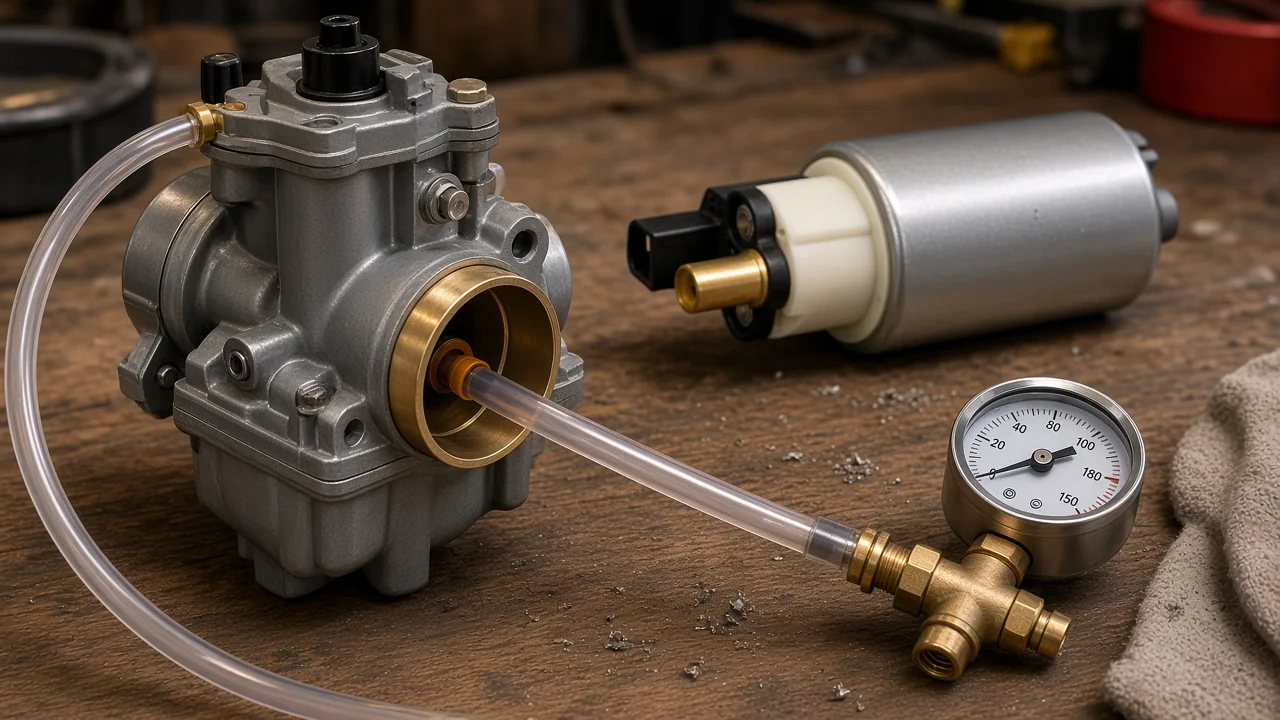
Street carbureted guidance often clusters around roughly 5 psi, and shop diagnostics commonly talk about about 5–6 psi for many mechanical pumps. Some carburetor families sit even lower—SU and Zenith-Stromberg applications are often discussed in the low single-digit range, with certain British mechanical pumps cited around 1.5–3.7 psi. Encyclopedia ranges for low-pressure mechanical pumps can stretch higher than street-carb practice, so treat every figure as application-scoped and confirm the carburetor’s specification.
Important: Too much pump pressure can force past the needle and seat and flood the float bowl. If you upgrade flow, check pressure at the carburetor inlet with a gauge instead of assuming a larger pump is safer (Hot Rod aftermarket fuel pumps; TheSamba mechanical vs electric thread).
| Context | Typical pressure language | Reader takeaway |
|---|---|---|
| Many street carbs | Around mid-single-digit psi (often ~5) | Match the carb maker’s target |
| SU / Zenith-Stromberg style | Often ~1.5–3 psi discussed | Extra caution with “universal” electric pumps |
| Broad mechanical encyclopedia band | Can cite higher low-pressure bands | Confirm the carburetor’s own limit |
When Low-Pressure Electric Pumps Show Up on Carbureted Engines
Electric low-pressure pumps appear mainly as retrofit or performance paths when mechanical drive is blocked, removed, or insufficient.
Classic examples include a bent or seized mechanical pushrod, an engine swap without a pump eccentric, or a vapor-lock fight where builders move pumping work closer to the tank. In those cases a low pressure electric fuel pump can restore supply when pressure, wiring, and shutoff logic match the carburetor.
Community threads on carbureted conversions repeat the same practical warnings: add a fuel pressure regulator when needed, and wire the pump so it stops feeding when the engine stops. Electric pumps can also push harder than a tired mechanical unit, which helps vapor-lock recovery and can overwhelm the needle and seat when pressure is ignored.
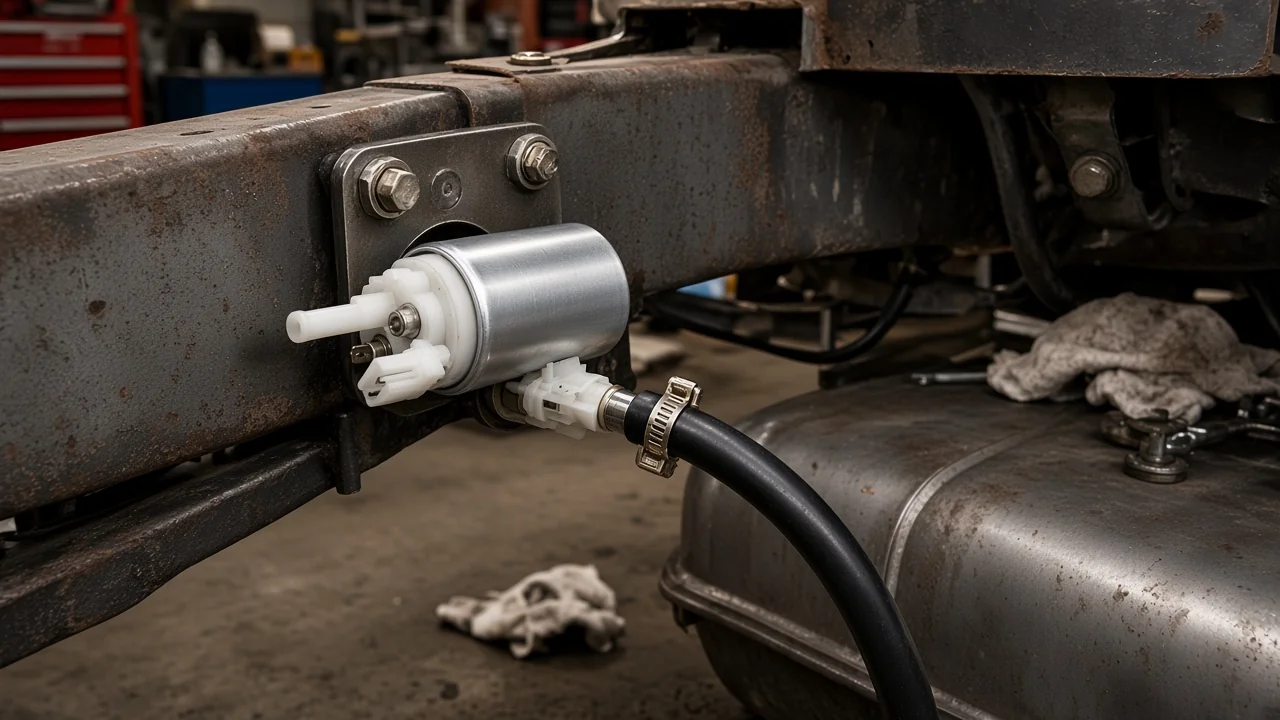
For placement and definition detail on chassis-mounted electrics, see the sister page on what an inline fuel pump is. For flow sizing math, use what size electric fuel pump do I need.
Carbureted Fuel Pump Selection Map
Match pump type to the drive available, the pressure target, and whether gravity feed already works.
| Option | Best when | Watch-outs |
|---|---|---|
| Mechanical diaphragm fuel pump | Stock cam drive is intact and the carb likes low pressure | Worn diaphragm/valves, wrong pushrod length, heat near the engine |
| Low pressure electric fuel pump | Mechanical drive is gone, blocked, or intentionally deleted | Fuel pressure regulator may be required; needs safe shutoff/relay logic |
| Gravity feed | Tank sits above the carburetor (common on some motorcycles and tools) | No pump means no recovery if the tank is below the carb |
If the mechanical drive is healthy and the carburetor is stock, the mechanical answer usually remains the simplest path. Choose electric when the architecture forces it—or when a controlled low-pressure electric system is the design goal.
Mistakes That Confuse Carbureted Fuel Pump Choices
High-pressure electric pumps built for fuel injection can overwhelm a needle and seat unless a proper fuel pressure regulator brings pressure down into the carburetor’s window.
“It flows more” is not a carburetor compliment when the bowl floods. Pair any high-output electric choice with measured inlet pressure.
Pulse or vacuum-operated diaphragm pumps on small engines are a related family.
Their principle lives on how a vacuum fuel pump works rather than here. Inline and external electric definitions belong on the inline fuel pump page.
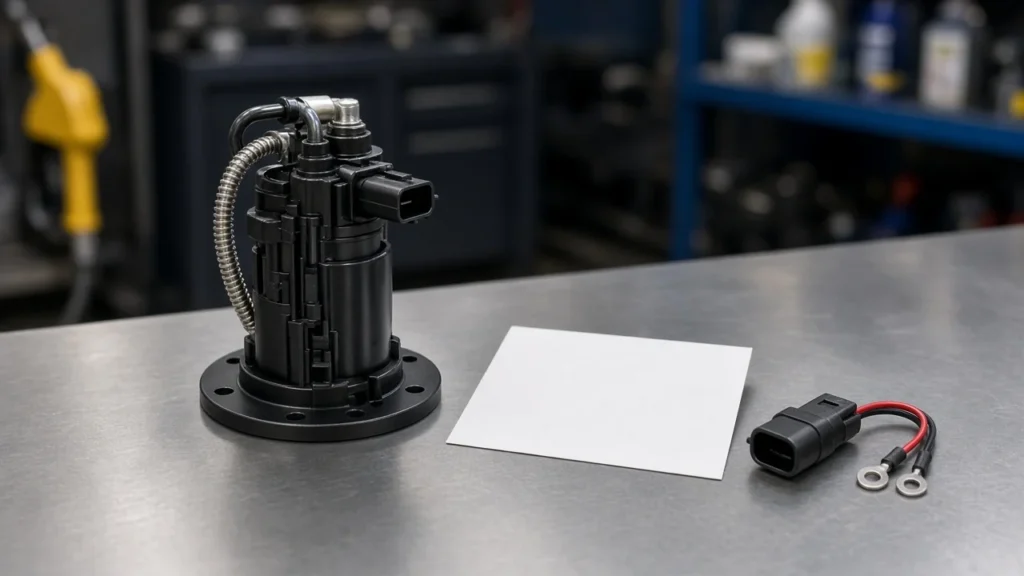
A complete fuel pump assembly / hanger / module solves in-tank electric supply for injection systems. Those assemblies are the distractors in quiz versions of this question for a reason.
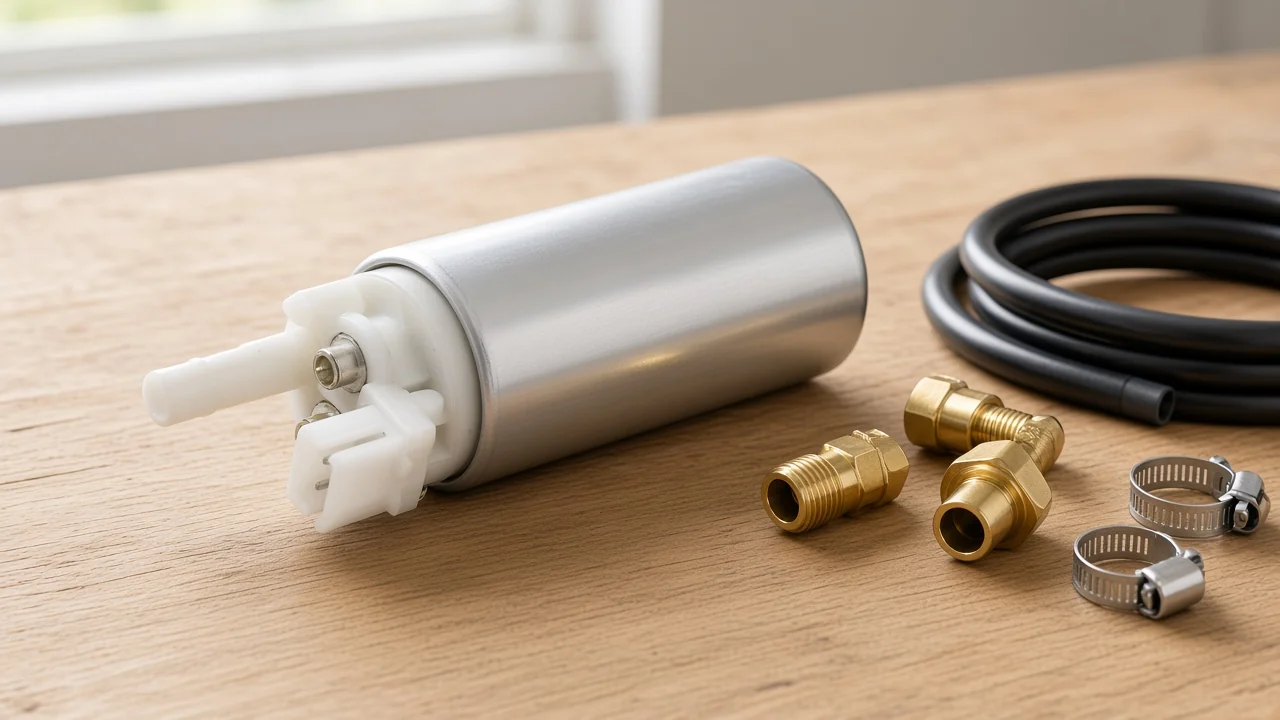
Recommended Electric Gasoline Fuel Pump with Installation Kit
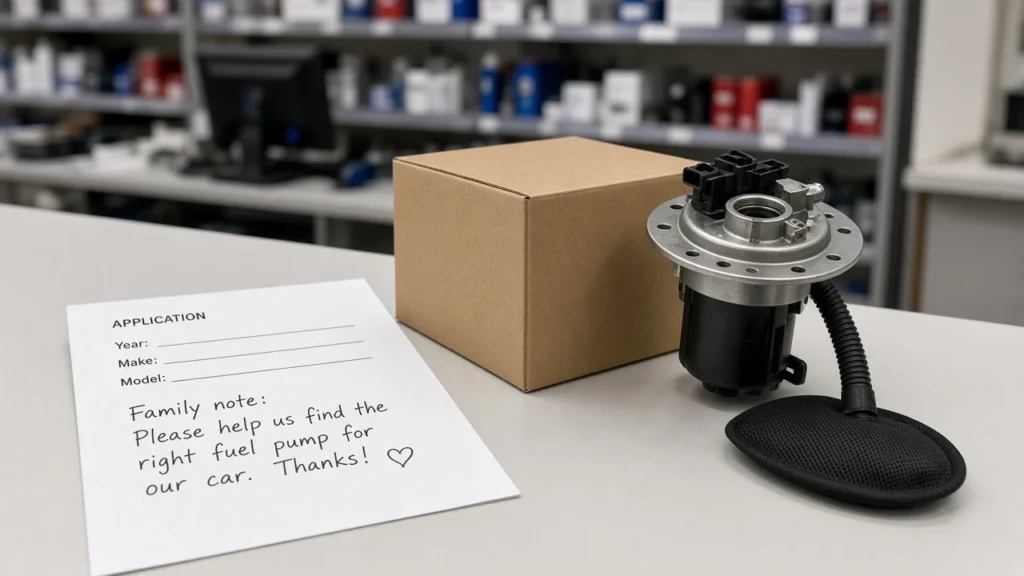
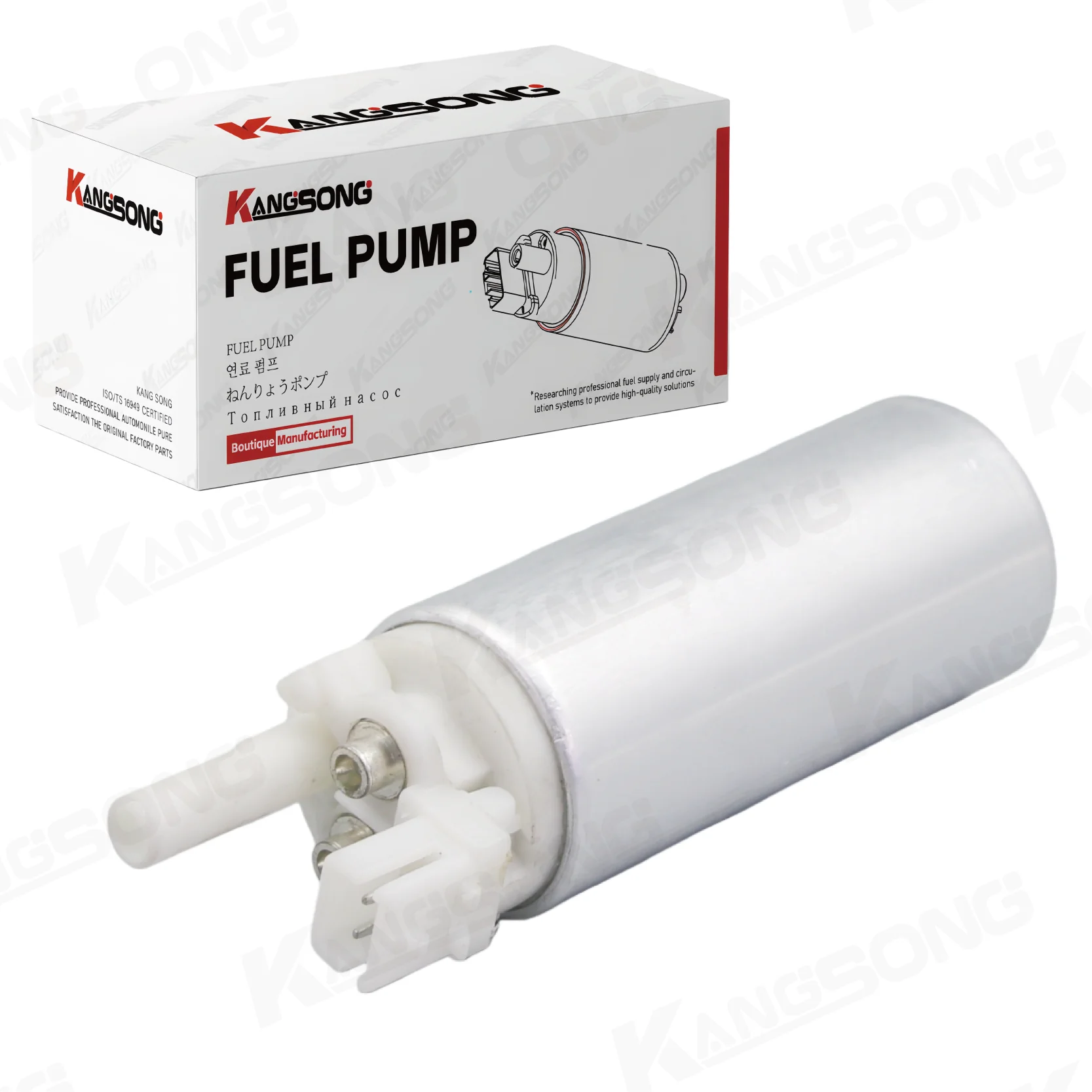
Product KS-360501 / 2551 illustrates an electric gasoline pump with install accessories within its listed OE and application scope—useful when your program is already on an electric path.
If you have already decided against a mechanical drive and need a first-party electric gasoline example with installation kit content, review the Electric Gasoline Fuel Pump with Installation Kit. Published PDP fields include DC 12V operation, accessories included, GPH 43.3–49.5, and a maximum air pressure band of 12–26, with OE crosses such as EP240, EP386, and 25168719 listed on the product page.
Use the PDP title and OE crosses to confirm fitment. The listing is an electric supply example, not a mechanical diaphragm twin. If your carburetor specification sits well below the published pressure band, plan a fuel pressure regulator and gauge check before install.
Browse more supply hardware from the products catalog root when you need adjacent SKUs after the pump decision is locked.
FAQ
What’s the most common fuel pump used in carbureted applications?
A cam-driven mechanical diaphragm fuel pump is the type most commonly described for stock carbureted engines. Low-pressure electric pumps are common retrofits, not the default OE answer.
What type of fuel pump is typically used with a carburetor system?
Most carbureted automotive systems use a low-pressure mechanical pump on the engine. Some layouts use gravity feed, and many projects later add a low pressure electric fuel pump.
Does a carbureted engine need a fuel pump?
Often yes, but not always. When the tank sits above the carburetor, gravity feed can supply fuel without a pump.
Can I use a high-pressure fuel pump on a carbureted engine?
Not as a direct, unregulated swap. High-pressure EFI-style pumps can flood the carburetor float bowl unless pressure is reduced to the carburetor’s specification with a fuel pressure regulator.
Why do people install a low-pressure electric fuel pump on a carbureted engine?
Common reasons include a damaged mechanical pushrod, engines without a pump eccentric, vapor-lock fights, or intentional electric conversions with regulator and shutoff wiring.
How does the carburetor avoid overflowing if the pump keeps supplying fuel?
The float closes the needle and seat when the bowl is full. The pump then works against that closed valve instead of continuously dumping fuel into the carburetor float bowl.
What pressure should a carbureted fuel pump deliver?
Many street carbs target mid-single-digit psi, while some carb families need even lower pressure. Always confirm the carburetor maker’s specification with a gauge at the inlet.
Is a complete fuel module assembly the usual carbureted OE answer?
Usually no. A complete fuel pump assembly / hanger / module is a typical in-tank EFI answer, not the standard mechanical carbureted pump architecture.