A high pressure fuel pump no start after replacement needs a systematic recheck of the repair, not an immediate second pump. Confirm the correct part, adequate low-pressure supply, connected controls, mechanical installation and any application-specific priming or learning requirements. Save fault codes and compare commanded with measured pressure using the vehicle’s diagnostic procedure. Stop if fuel leakage or contamination is found. This guide focuses on gasoline direct-injection service planning; diesel documents are used only where explicitly identified as examples of why procedures cannot be transferred between engines.
Establish what changed during the repair
First distinguish an engine that does not crank from one that cranks but will not start. A starting-system or authorization problem needs its own diagnostic path. If the engine cranks, record whether the no-start existed before the pump was replaced or appeared afterward. That difference changes which evidence deserves priority.
Collect the original codes, freeze-frame information, old and new pump references, installation notes and parts replaced with the pump. Identify the exact engine code and fuel system. A workshop should know whether a low-pressure supply fault, contaminated fuel or a confirmed mechanical defect justified the original replacement.
Do not erase that history with repeated code clearing. A code that returns immediately may help identify a disconnected component, but a stored pressure-related code alone does not prove the new pump is defective. Treat the code as the beginning of the prescribed test sequence.
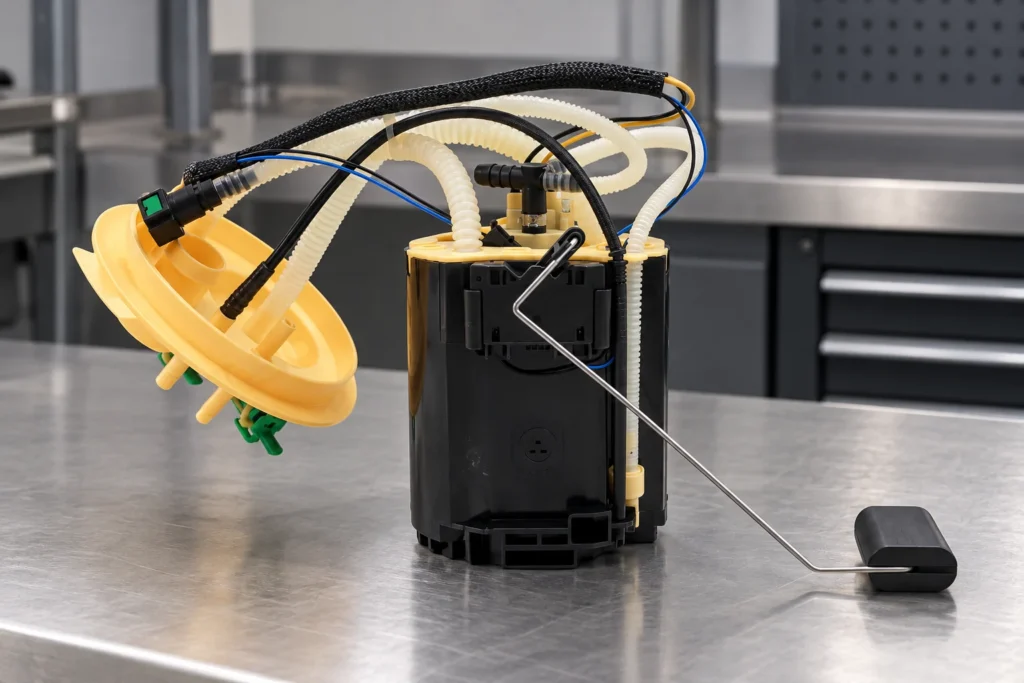
Our overview of automotive fuel-pump types helps separate the tank supply pump from the engine-mounted high-pressure stage. Replacing the latter does not remove the need to verify the former.
Recheck the complete fuel path
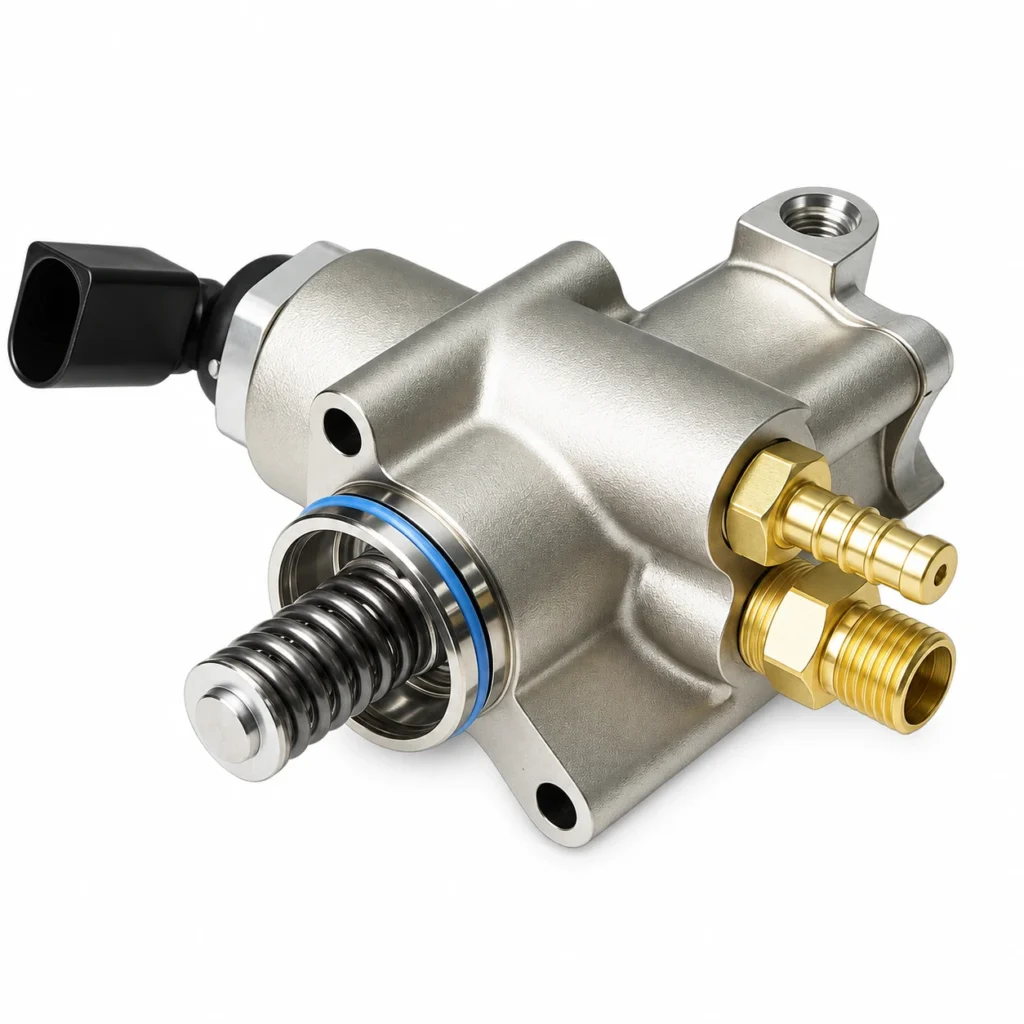
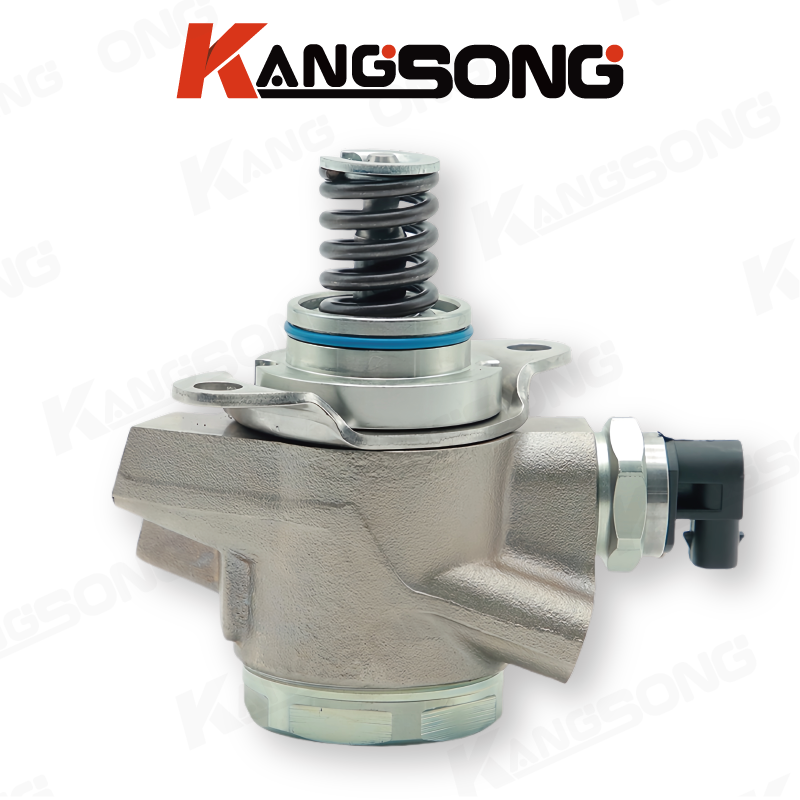
A gasoline direct-injection system uses a supply stage and an engine-side high-pressure stage. The Pearson automotive fuel-injection chapter provides educational context for these components. The pump illustration used in this article is an external product reference, not a diagram of the entire vehicle system.
Verify the low-pressure feed under the conditions specified for the actual engine. Hearing a tank pump operate is not a pressure or delivery measurement. Equally, one static reading does not necessarily establish supply during cranking. Compare the available measurements with the current service limits and identify exactly where the measurement was taken.
Check disturbed hoses and connectors for incorrect routing, incomplete engagement or damage. Confirm the fuel supply is the correct type and that a shipping protector has not been mistaken for a functional fitting. Do not improvise connections, bypass safety controls or run a pump dry to see whether it produces pressure.
If the supply stage fails its tests, repair that fault and repeat the diagnosis before replacing another engine-mounted pump. The related low-pressure fuel-pump guide covers the separate component family; its general information does not replace the engine’s measured acceptance criteria.
Organize the evidence before another parts order
This table is a planning aid for trained service personnel. It intentionally omits universal pressure thresholds, torque values and cranking times. Those values must come from the exact vehicle procedure, including any updated instructions that apply to the replacement part.
| Finding after replacement | What it does and does not establish | Next controlled check |
|---|---|---|
| Engine does not crank | Fuel pressure may not be the immediate cause | Starting and authorization diagnosis |
| Tank pump can be heard | Motor activity, not confirmed delivery | Specified supply-pressure and delivery tests |
| Low rail-pressure code returns | A pressure-control complaint, not automatic pump condemnation | Supply, sensor, control and mechanical tests |
| Commanded and measured rail pressure disagree | The control system is not achieving or reporting the target | Follow the manufacturer fault tree |
| New circuit fault appears | A disturbed connection is possible | Inspect connectors and test the designated circuit |
| Fuel contamination is found | Replacement may need a wider system repair | Stop and use the approved contamination procedure |
| Learning function is unavailable | The tool or application may differ | Verify engine procedure and tool coverage |
For an example of a non-pump cause behind pressure faults, Volkswagen technical tip 01-20-05TT discusses timing checks on its specified vehicles. Its numerical criteria are application-specific and should not be copied to another engine.
Confirm mechanical seating and drive engagement
Review the prescribed installation sequence, including the pump drive position, seating method and fasteners. An engine-mounted pump is a mechanical component as well as part of a controlled fuel system. If it was forced into position or the drive relationship is uncertain, stop further start attempts and have the installation checked against the manual.
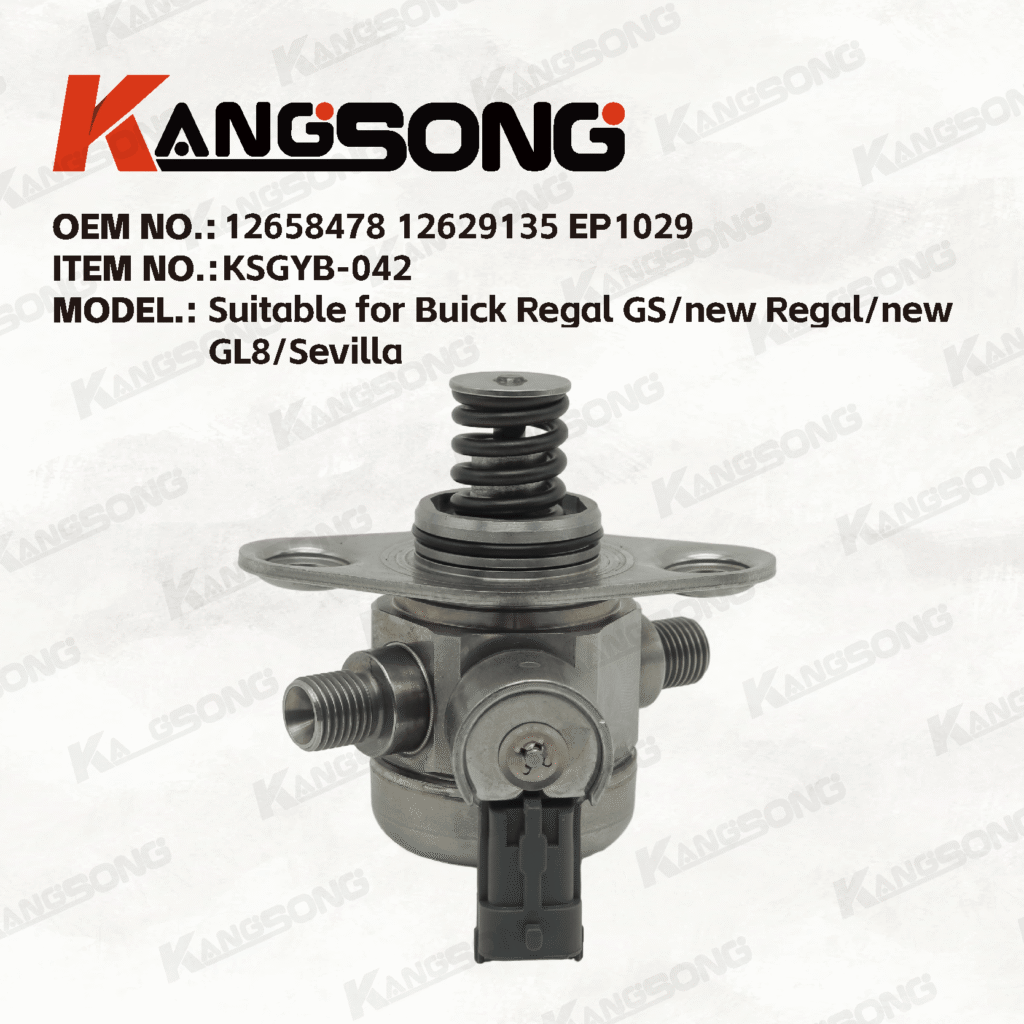
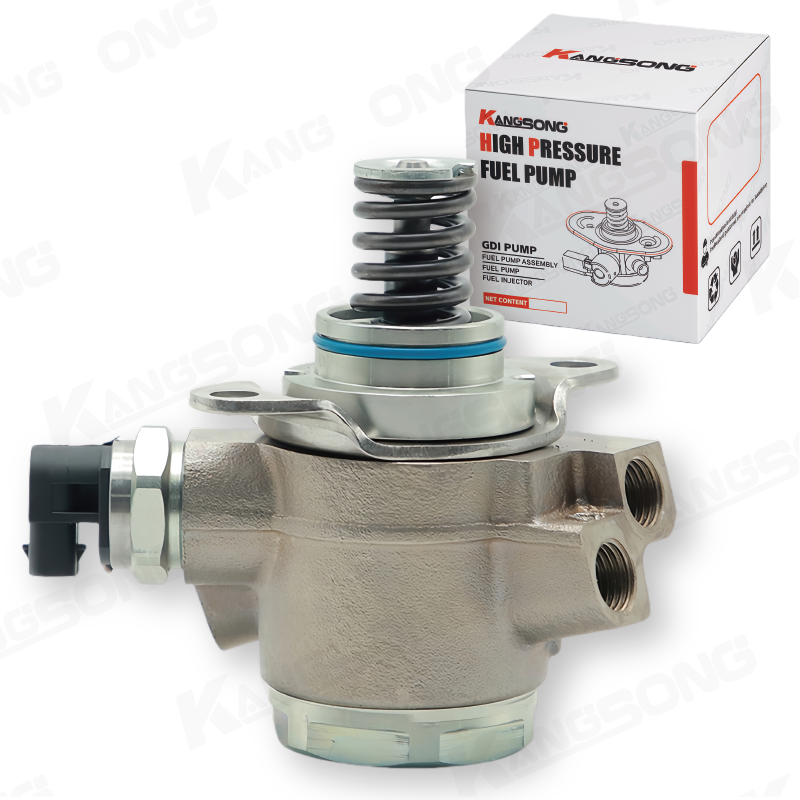
Do not assume that the mounting bolts should pull every pump into place. Some procedures require positioning the engine or drive mechanism before installation. Others specify a particular tightening sequence. The reference product’s visible spring and flange show why installation geometry matters, but they do not reveal the required assembly load or torque.
Check any follower or drive component only through the approved inspection procedure. A new pump does not correct an unrelated worn drive surface or incorrect valve timing. Our high-pressure fuel-pump cam-follower article addresses that separate inspection subject without making every no-start a follower failure.
Document whether specified one-time-use fasteners, seals and pipes were replaced. Requirements differ between applications. Reusing a part that the manual requires to be renewed can affect sealing or installation, while replacing unrelated components without evidence increases cost without clarifying the fault.
Separate priming, bleeding and adaptation
These words describe different operations. Priming concerns establishing the required fuel supply. Bleeding concerns removing air where the approved system procedure calls for it. Adaptation or learning concerns stored control values or a guided diagnostic function. None should be treated as a universal cure for a no-start after pump replacement.
An explicitly diesel example appears in Navistar’s MaxxForce 7 diagnostic information: its pump-replacement path includes a defined pressure-adaptation reset and refers a subsequent air-bound no-start to the engine’s priming procedure. That illustrates the need to read the exact instructions. It does not establish a reset requirement or bleeding method for a gasoline GDI engine.
Never loosen high-pressure lines during cranking as an improvised bleeding test. Use the approved equipment and depressurization method. High-pressure fuel can cause serious injury, and an open connection introduces contamination as well as a leak path. Repeated starting attempts are not a substitute for a verified priming operation.
Ask the workshop to record the diagnostic tool, selected engine function and outcome if a learning procedure is required. A generic scanner menu labeled “fuel pump reset” does not establish compatibility. If the required function is unavailable, resolve tool coverage or service access before declaring the replacement defective.
Read pressure information in context
When the service process calls for scan recording, capture requested and actual rail pressure alongside the relevant operating conditions. Note battery support, cranking state, engine speed and any control-related faults. A screenshot without those conditions may hide why two measurements disagree.
Confirm units and data definitions. Gauge and absolute pressure are not interchangeable, and low-side and rail-pressure values refer to different parts of the system. Do not compare one display directly with a generic internet specification. Use the exact manual’s reference value and testing method.
Sensor plausibility belongs in the diagnostic path. A reported pressure can be wrong because of the measurement circuit as well as because of fuel delivery. Conversely, plausible-looking data does not rule out every mechanical or control fault. Follow the prescribed sequence rather than selecting the test that most quickly supports a preferred parts diagnosis.
For background on the different fuel-delivery stages, the following Engineering Explained lesson compares direct and port injection. It helps explain why direct injection has different pressure requirements. It does not demonstrate a replacement-pump learning routine or supply the service limits for the engine being repaired.
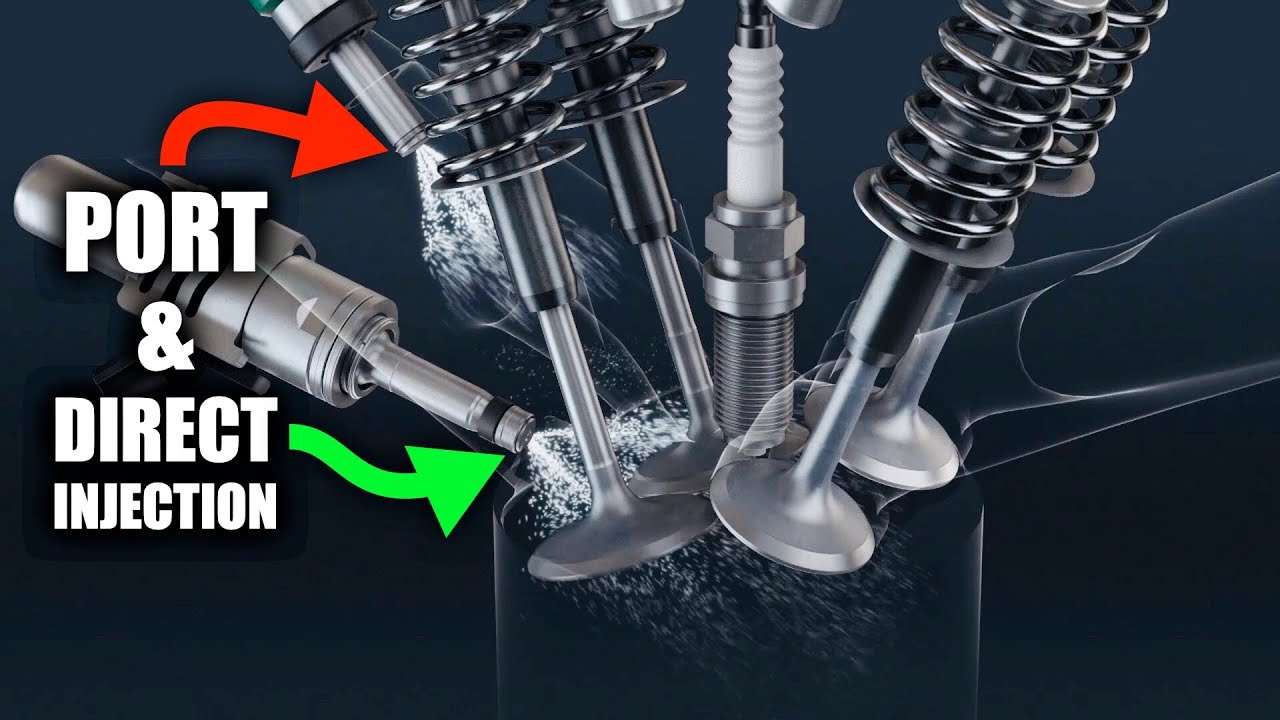
Engineering Explained: Why New Cars Are Using Both Direct & Port Fuel Injection
Protect the replacement from unresolved contamination
If debris, water or unsuitable fuel was implicated in the original failure, verify that the approved repair scope was completed. A new pump installed into an unresolved contaminated system may be exposed to the same cause. Preserve samples and inspection photographs where the service procedure requires them.
Do not prescribe a universal flush or cleaning solvent. The correct action depends on the system, material compatibility and contamination type. Some components may need replacement rather than cleaning. Obtain the vehicle manufacturer’s current instructions and document which parts of the system were addressed.
If the engine starts only briefly, recheck the evidence rather than repeatedly cycling it until it fails again. A short successful start does not prove that the feed supply, pressure control or sealing remains satisfactory under the required conditions. Stop immediately if leakage or another unsafe condition develops.
Send a complete replacement inquiry
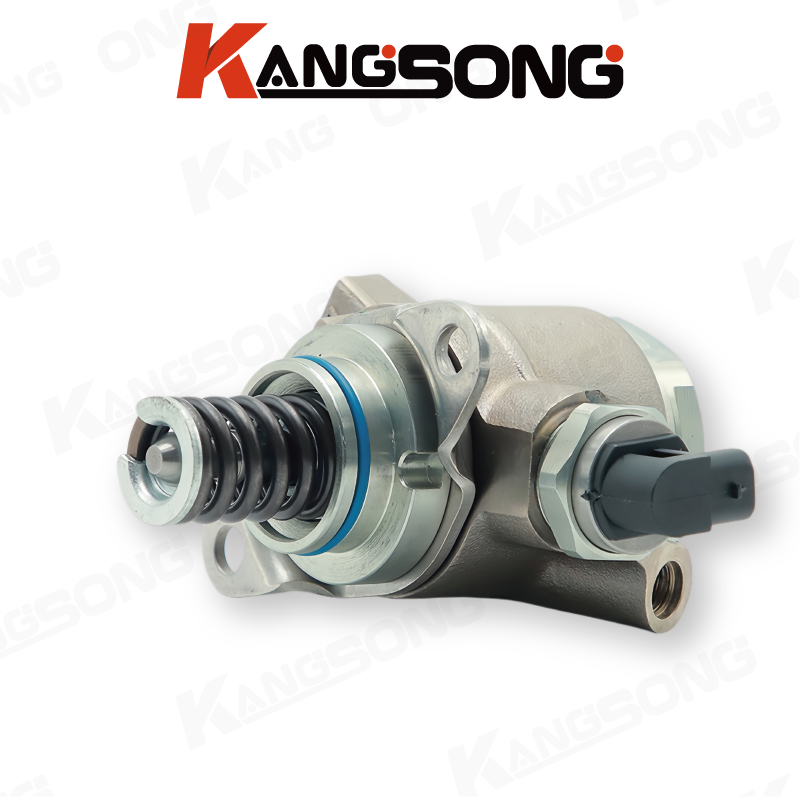
For the 07L127026Q reference high-pressure pump, request application confirmation using the original part number, suffix, engine code and vehicle information. Its external shape and connector are useful identification clues, not proof that it can replace any pump with a similar flange. No pressure capability or interchangeability is established by the photographs here.
Provide the before-and-after codes, measured supply information, rail-pressure record, installation checks and any required learning result. State whether the original no-start remains or a new symptom appeared. This allows the supplier and workshop to distinguish an application question from a verified component defect.
Before release, complete the vehicle’s required leak, fault and operating checks. Record both cold and warm behavior if the original complaint depended on temperature. A successful first start is a useful milestone, but the repair is accepted only after the relevant conditions and manufacturer checks have been satisfied.
FAQ
Does every replacement high-pressure pump need coding?
No universal rule applies. Check the exact engine procedure for any coding, adaptation or guided learning requirement and use a compatible diagnostic tool.
Can the tank pump cause a no-start after high-pressure pump replacement?
Yes, an unresolved supply-stage fault can prevent the high-pressure stage from operating correctly. Verify supply using the prescribed measurements.
Should I loosen a fuel pipe to remove air?
Do not improvise bleeding by opening high-pressure connections. Follow the approved depressurization, priming and testing procedure with suitable equipment.
Does a returning pressure code prove the new pump is bad?
No. Supply, control, sensing and mechanical faults can also be relevant. Complete the application-specific diagnostic path before assigning a component failure.