A diaphragm fuel pump line names the flexing member a cam works, or the mechanical pump that holds that member. An electric motor stays in another carton until the year sheet has already moved to a printed electric window. The sections below separate the rubber sheet, the cam pad, and that electric window.
Read the year sheet before the carton
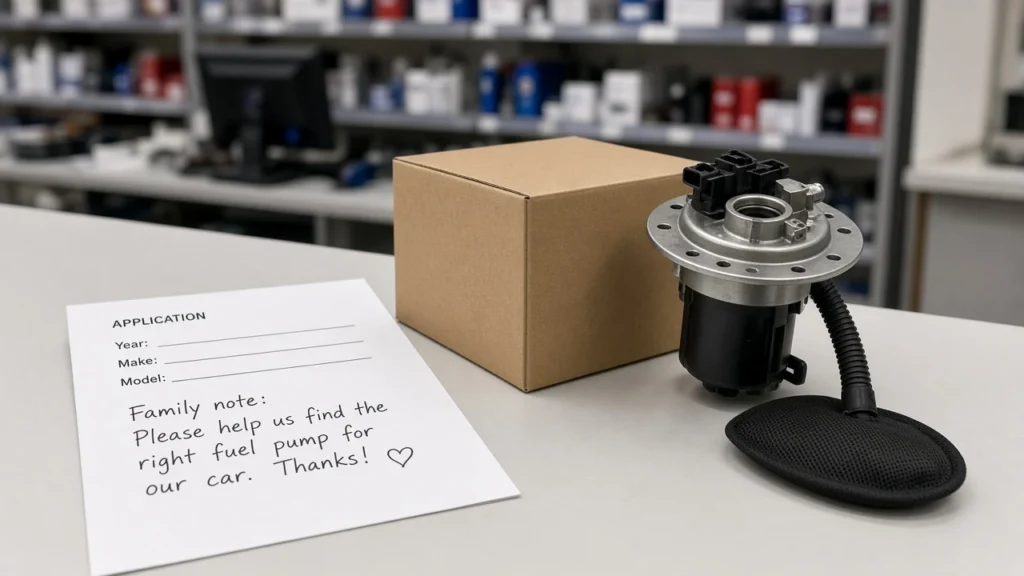
The year sheet picks the carton before any part number is typed. Words that say diaphragm can mean the rubber sheet alone, or they can mean the whole mechanical pump the sheet lives in.
A counter who types both into one line will receive the wrong box. The application print has to say which of the three is wanted: the flexing member, the pump body, or an electric motor.
| What the sheet still prints | Carton the counter names |
|---|---|
| Cam, eccentric, or timing-cover pad | Mechanical pump, or the diaphragm inside it when the line says the sheet only |
| Rubber sheet or fuel pump diaphragm alone | The flexing member, while the housing and valves stay in service |
| 1987-1995 C/K electric gasoline window | KS-360501 electric canister |
| Flange seal only | The gasket page, a different line from this one |
Importers stocking both carburetor-era engines and later truck tanks hit this split every week. The same two English words sit on both purchase orders, and the pad on the engine is what sorts them.
The flexing member and the pump around it
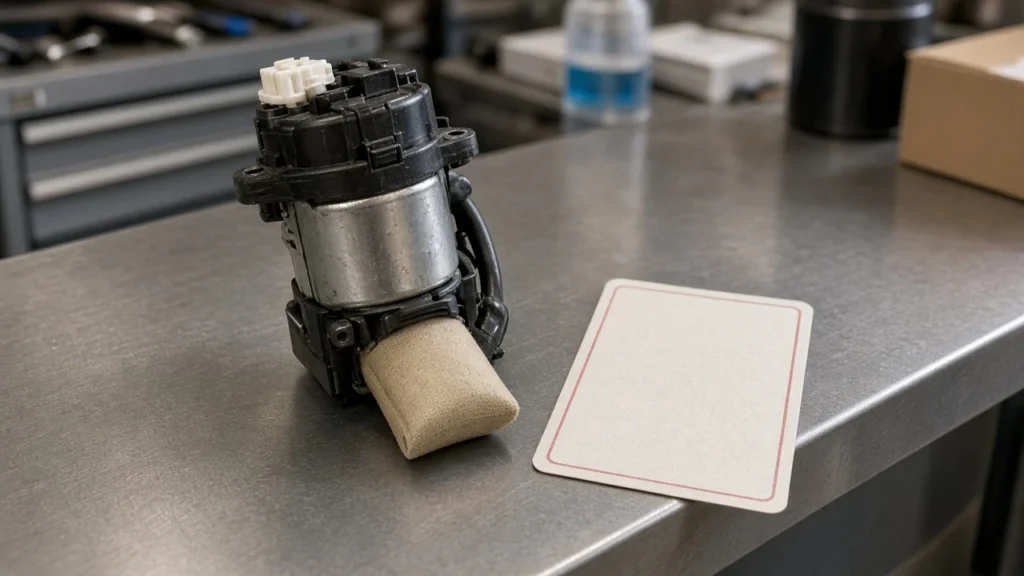
The fuel pump diaphragm is the sheet the cam flexes, and the pump is the body around that sheet. Inlet and outlet one-way valve pieces, the lever, and the housing stay with the pump even when the order names only the rubber.
A request for fuel pump diaphragm material is a request for the rubber compound, and this catalog prints no compound, thickness, or hardness for that sheet. Cutting a sheet to a guessed gauge would invent a spec the year sheet never supplied.
Rebuild talk in owner forums treats the rubber, the valves, and the spring as separate pieces inside one housing. If the housing is cracked or the lever is worn through, a rubber-only line leaves the failure in place.
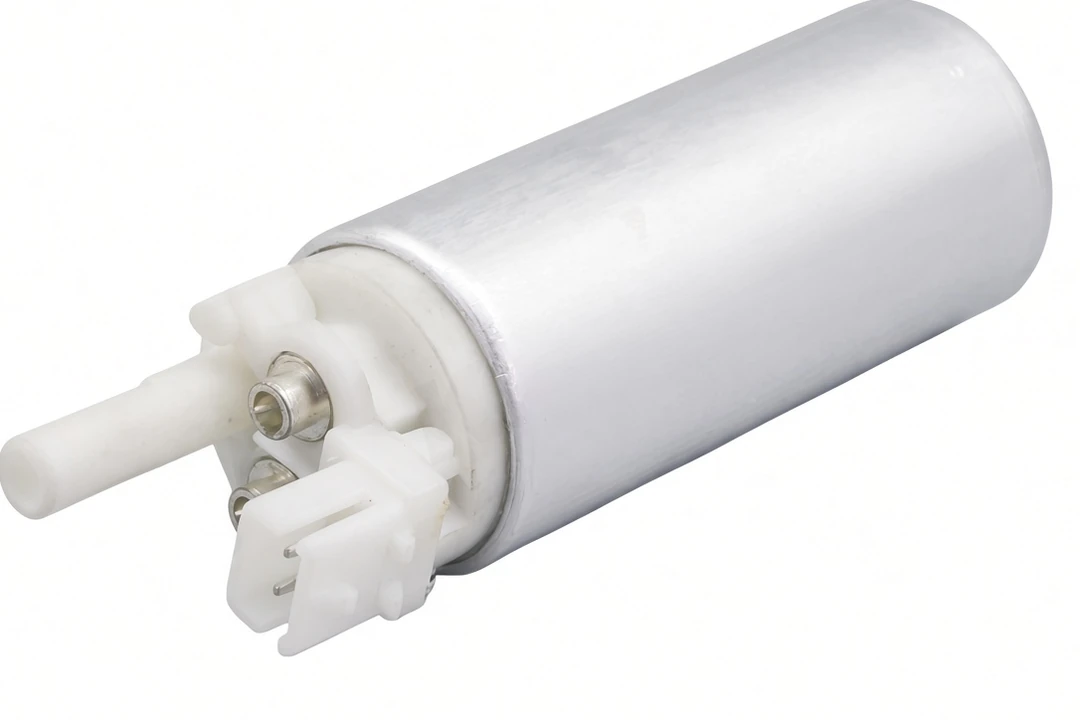
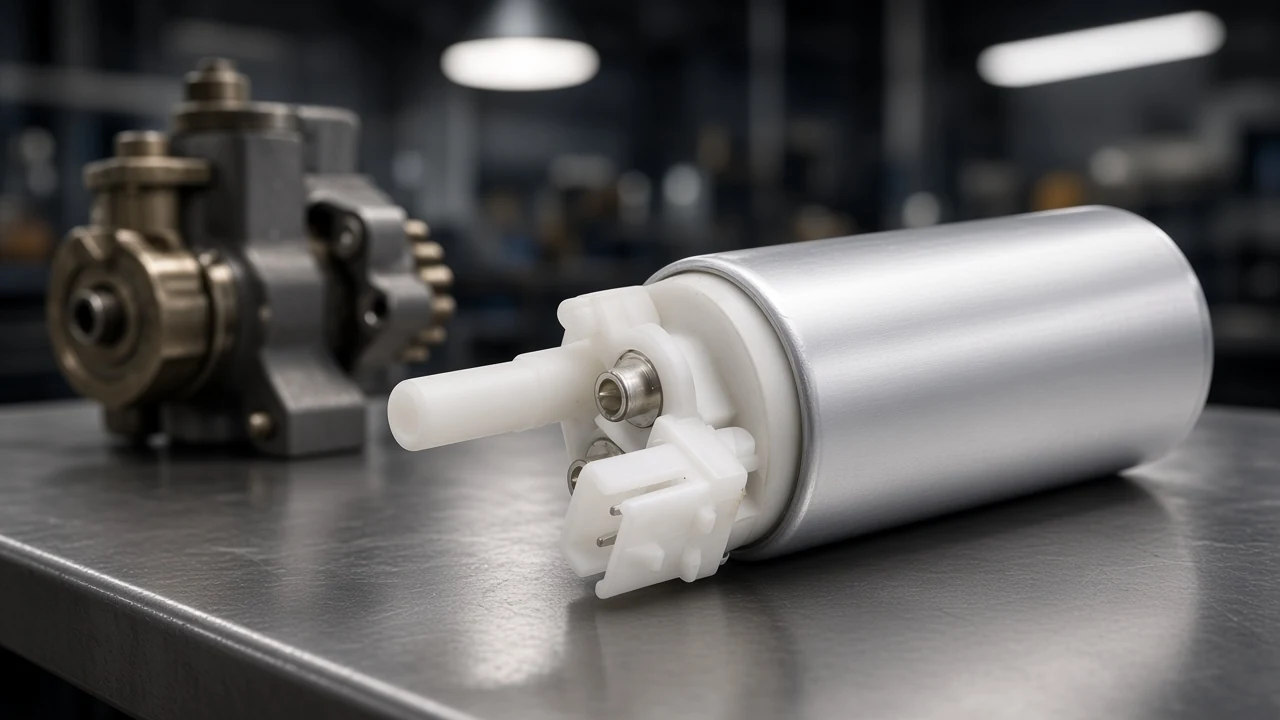
The silver canister in that frame is an electric gasoline pump. It sits on the desk so a counter can see the motor body that replaces the cam story only after the sheet has changed.
Cam, eccentric, and the timing-cover pad
A sheet that still prints the cam, the eccentric, and the timing-cover pad is still asking for the mechanical pump. The camshaft eccentric rocks a lever, the lever pulls the diaphragm down, and suction draws fuel through the inlet.
On the teaching-page account, the loose lever does not shove the diaphragm back up. The return spring does that work, and fuel leaves through the outlet one-way valve toward the carburetor.
While the carburetor bowl is full, the diaphragm can sit still. The lever keeps rocking because the outer arm stays against the eccentric, which is how the pump avoids knocking once demand stops.
Wikipedia’s fuel-pump article states a relatively low fuel pressure of 10–15 psi for carbureted mechanical pumps, names diaphragm pumps and plunger pumps as the two widely used mechanical types, states a typical 40–60 psi for older in-tank port-injection electric pumps, and states up to 30,000 psi for direct-injection mechanical pumps. Kangsong prints no diaphragm pressure of its own, so those class figures stay encyclopedia context.
A block with no timing-cover pad has nowhere for that lever to sit. Engines that left the factory on fuel injection are often described that way, and the cam-driven carton has then left the sheet.
From the field: On a CorvetteForum fuel-pump thread, fuel at the hole beside the fulcrum was read as a broken diaphragm. The reply said plugging that hole would pump gas into the oil pan, so the hole is a leak tell rather than a plug point.
That weep path matters on the order because a split sheet can look like an over-rich engine. The counter still buys the mechanical pump or the diaphragm inside it, and leaves roadside experiments off the purchase order.
A solenoid pulse is a different diaphragm
A solenoid that tugs a diaphragm is a different drive from the cam lever. Teaching pages show an iron rod and a contact set doing the pull, with no timing-cover pad in that story.
Call that part a solenoid diaphragm when the sheet says so. Leave it off a cam-pad purchase, because the mounting face, the lever, and the eccentric are absent.
Older textbook electric pumps of that kind still move fuel with valves and a spring. They are easy to confuse with the cam pump in a keyword list, and the sheet’s drive words are what keep the cartons apart.
When the sheet fits the electric canister
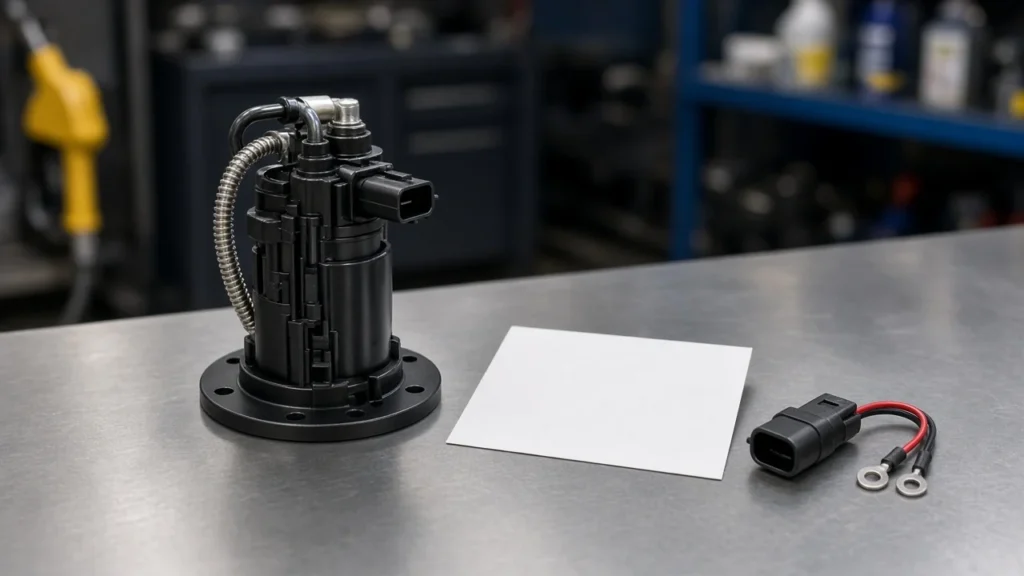
KS-360501 belongs on the order only after the sheet has moved to the printed 1987-1995 C/K electric window. The printed labels on KS-360501 are an electric fuel pump for 1987-1995 C/K 1500, 2500, and 3500 pickups, OE numbers 25168719 and E3902, a 2-pin connector, DC 12V, and flow of 43.3-49.5 gallons per hour.
That same page prints Maximum Air Pressure 12-26, which is an air label rather than a fuel-pressure rating or a diaphragm rating. Treat the flow band and the voltage as the electric-window labels, and leave the air figure out of any fuel-pressure comparison.
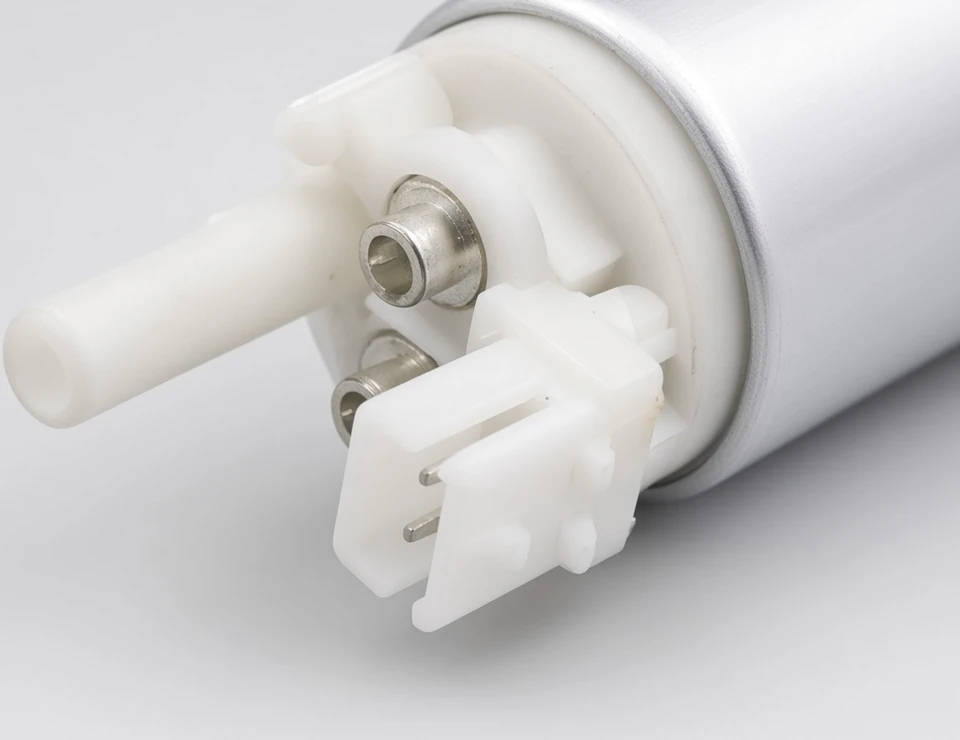
The connector face shows two metal pins in a white plug, which is the 2-pin label a counter can see without opening a drawing. The outlet tube beside the pins is part of that same electric element.
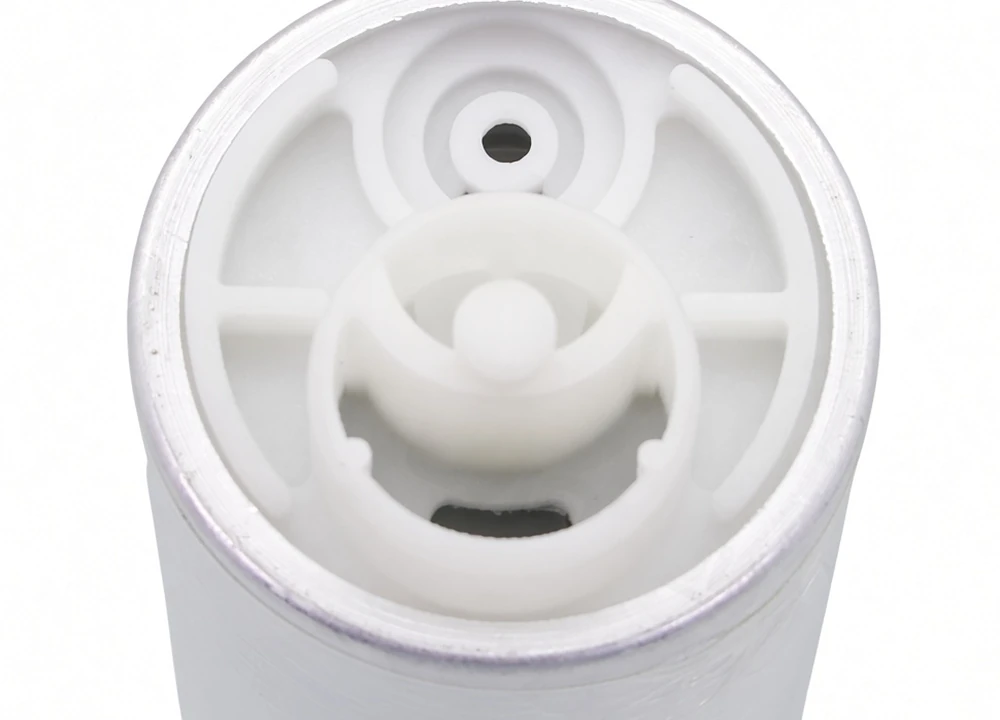
The strainer end is the inlet side of this electric canister. It is the end that sits in fuel on an in-tank layout, and it has no rocker arm for a cam to push.
| Label on the KS-360501 page | How the counter reads it |
|---|---|
| Part line Electric Fuel Pump | Electric gasoline canister |
| 1987-1995 C/K 1500, 2500, and 3500 | The printed truck window |
| 25168719 and E3902 | OE numbers printed on that page |
| 2-pin connector and DC 12V | Connector count and voltage on that page |
| 43.3-49.5 gallons per hour | Flow label on that page |
| Maximum Air Pressure 12-26 | Air label, separate from fuel pressure |
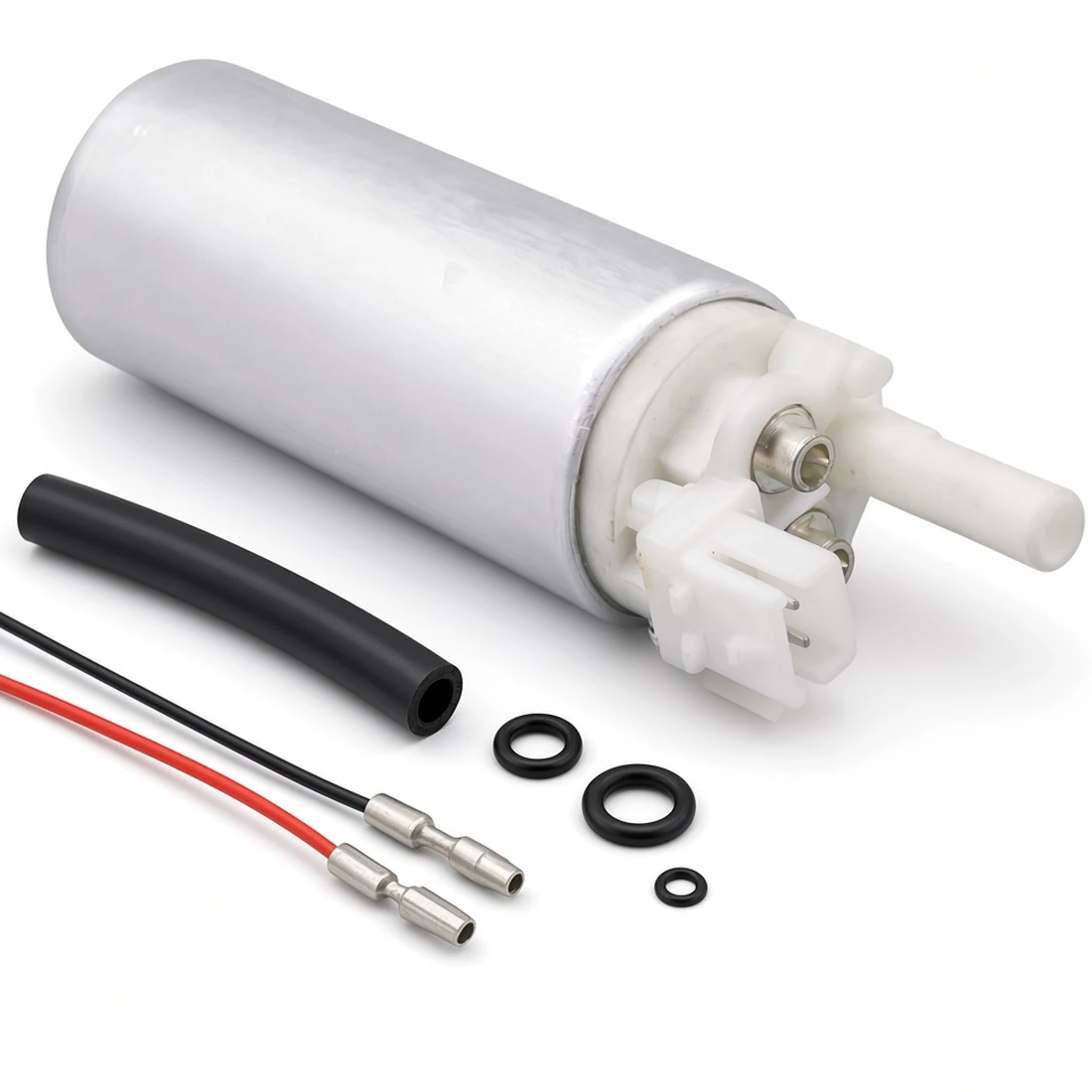
The photograph shows that electric pump beside a carton marked fuel pump. Open KS-360501 electric gasoline pump for the printed 1987-1995 C/K window when the year sheet already names that truck window.
Gallery frames for this listing show the canister, the pins, the strainer, and the carton. They do not show a cam lever or a rubber pumping sheet, which is why the picture stays inside this electric section.
Jobs that still need a mechanical listing
A cam-pad job needs a line that actually lists a mechanical pump. Kangsong’s public catalog does not print a diaphragm SKU or a mechanical-pump SKU, so this article will not invent one.
Other jobs start at the Kangsong product catalog. That category is a navigation root for published listings, and a listing there still has to name its own application before anyone treats it as the cam-pad part.
If the sheet names only the rubber and the housing is sound, the purchase is the flexing member from a line that sells that member. If the lever, the valves, or the body are the failed pieces, the purchase is the mechanical pump, again from a line that lists it.
Leave the flange seal and the pulse cycle alone
The flange seal, the vacuum pulse, the drive comparison, and the small-block boundary stay on their own pages. Mixing those essays into this order line would hide the carton decision.
Some older combination pumps put a vacuum half above the fuel diaphragm for wiper assist. Read that pulse on How a vacuum fuel pump works.
When the question is which drive to order in general, the comparison already lives at Mechanical fuel pump versus electric. This page only sorts the diaphragm words on the sheet.
The ring at the mounting face is the flange gasket, written up at Fuel pump gasket. It seals the pad, and the flexing member inside the pump is a different part.
A small-block Chevrolet question about mechanical versus electric boundaries already has a page at SBC fuel pump mechanical versus electric sourcing boundary. This diaphragm page leaves that boundary where it is.
FAQ
Can fuel in the crankcase oil point to a split diaphragm?
Owners on CorvetteForum describe fuel entering through the oil drainback hole at the bottom of the fuel-pump cavity when the diaphragm fails. One reply rejected the idea that the fuel runs uphill through the pushrod hole.
A rising oil level that smells like gasoline is a reason to look at that cavity. It still does not name a thickness or a compound for the replacement sheet.
Why does the lever keep rocking after the carburetor bowl is full?
Once the float needle shuts, pressure holds the diaphragm down and delivery stops. The outer lever keeps touching the eccentric so the arm does not hammer, which is normal free play rather than a broken link.
Is a rubber-sheet rebuild the same purchase as the whole mechanical pump?
Only when the sheet asks for the rubber alone and the housing, valves, and lever are still sound. A worn lever or a cracked body means the mechanical pump is the carton, even if the failed piece inside it was the diaphragm.
Does the flange gasket do the diaphragm’s job?
The flange gasket seals the mounting face against the timing-cover pad. The diaphragm is the moving floor of the pump chamber, so the two lines are different parts.
Will KS-360501 replace a cam-driven pump?
KS-360501 is the electric canister for the printed 1987-1995 C/K gasoline window. A sheet that still shows the cam pad is still a mechanical-pump order.
How should a counter read the 12-26 air-pressure label?
Read it as the air label printed beside the electric pump, separate from the 43.3-49.5 gallon-per-hour flow label. It is not the fuel pressure of a cam-driven diaphragm and it is not a hardness figure.
Where does a small-block Chevrolet boundary question belong?
It belongs on the existing small-block sourcing-boundary article linked above. Repeating that boundary here would bury the diaphragm-versus-pump decision this page is for.