
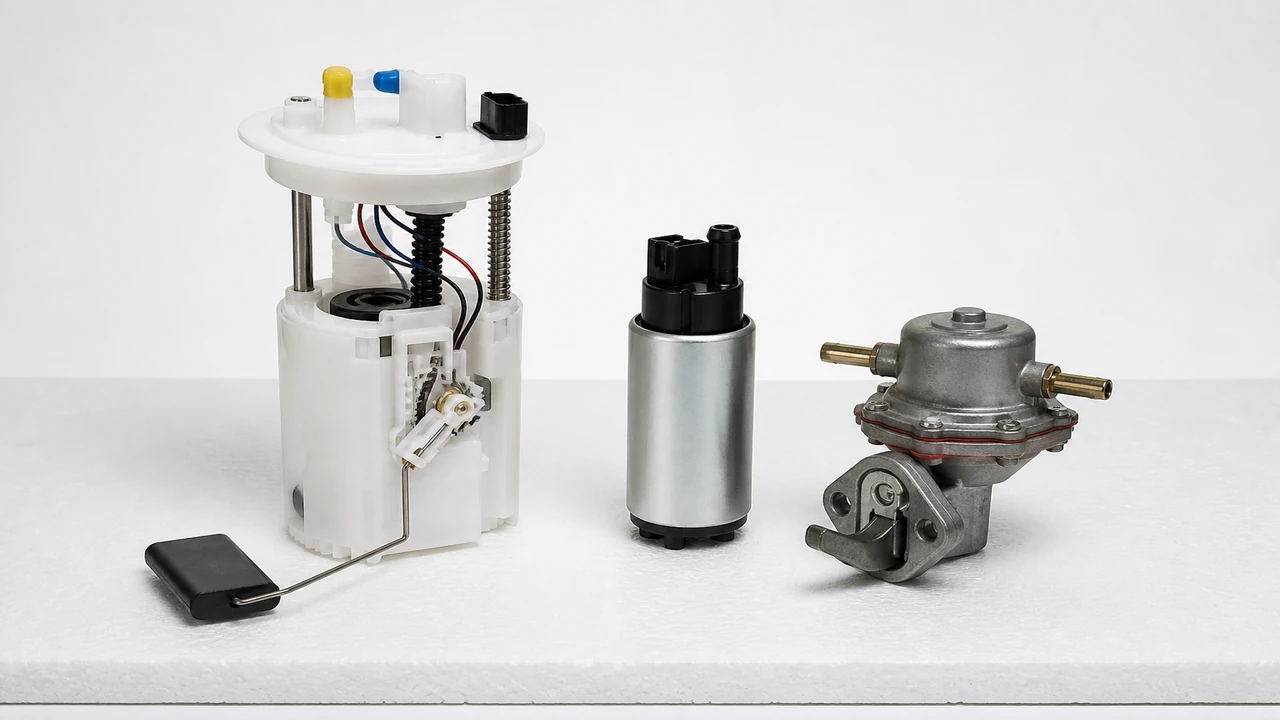
A fuel pump for car request is not complete until the buyer identifies the product architecture and assembly scope. Inline, in-tank, module, high-pressure, and low-pressure terms describe different decision paths; none of them proves vehicle fitment or a universal replacement.
- FAQs
Part 1. What does fuel pump for car mean to an importer?
For an importer, the phrase is an entry point rather than an orderable specification. The next decision is whether the buyer needs a pump component, an inline unit, an in-tank assembly, a module-related scope, or a high- or low-pressure system request.
The exact model and platform record determine the actual offer. A generic category label cannot safely establish pressure, voltage, connector, OE cross-reference, or vehicle compatibility.
Part 2. Which pump architectures appear in automotive requests?
Automotive requests often use broad terms for different physical and commercial scopes.
| Request language | Scope to clarify | Do not assume |
|---|---|---|
| Pump-only | offered component and interfaces | that all fittings are included |
| Inline or external pump | mounting, lines, wiring, and system role | that it replaces an in-tank module |
| In-tank pump | tank-facing architecture and assembly parts | that a cartridge is sufficient |
| Complete module | included components and OE record | that every module shares one connector |
| High/low-pressure request | exact system and model documentation | that the term supplies a universal value |
Manufacturer product pages such as the AEM in-tank pump documentation show why an offered model needs its own source material. The page does not transfer its specifications to another pump.
Part 3. What separates a pump-only request from a module request?
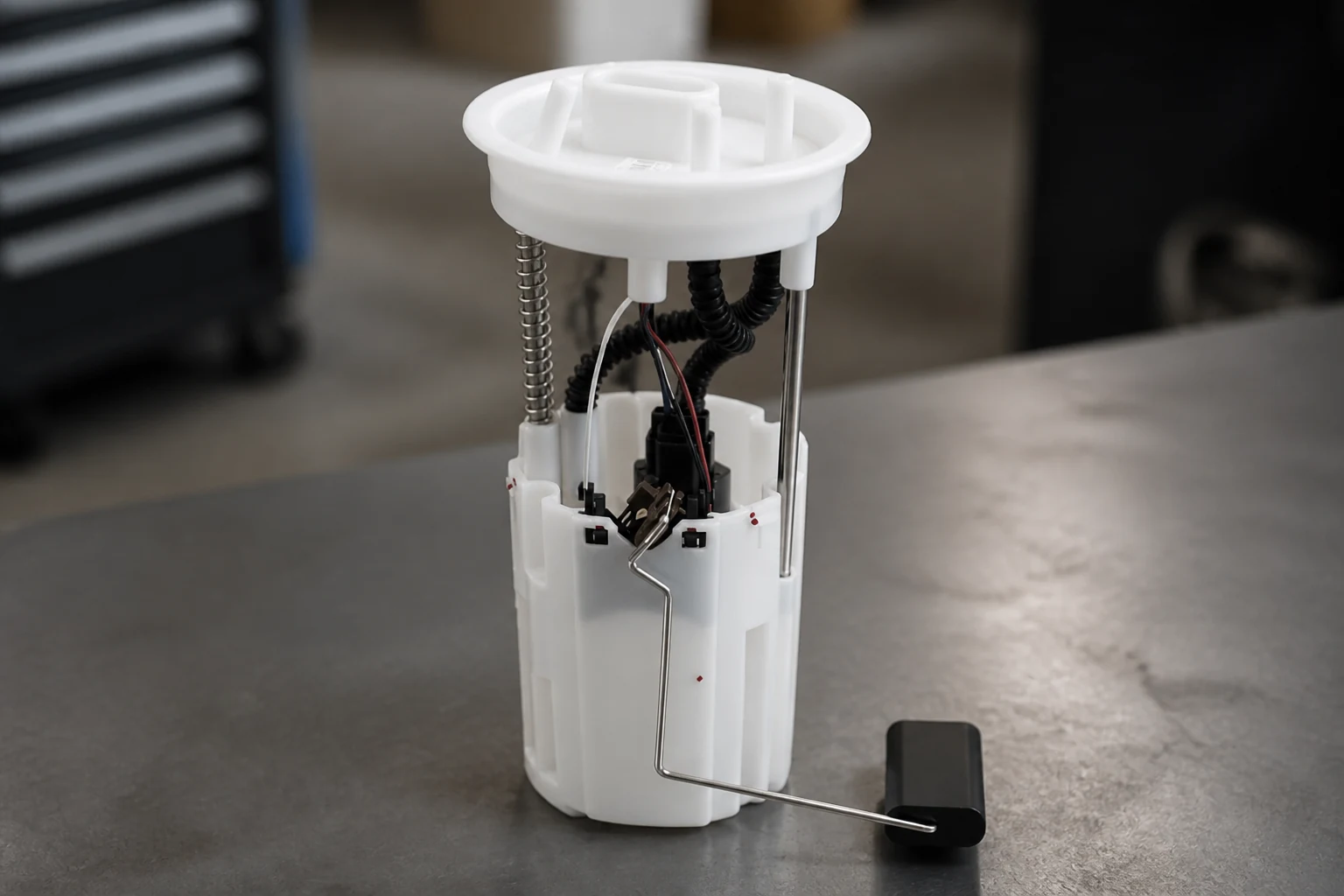
A pump-only request focuses on one component. A module request can include a larger tank-facing scope, potentially involving internal routing, a hanger, sender-related elements, strainers, sealing features, or a specific electrical interface.
The sourcing implication is simple: compare included components before comparing quoted prices. A lower component price may not represent the same replacement scope as a documented module request.
Part 4. How should pressure language and interfaces be handled?
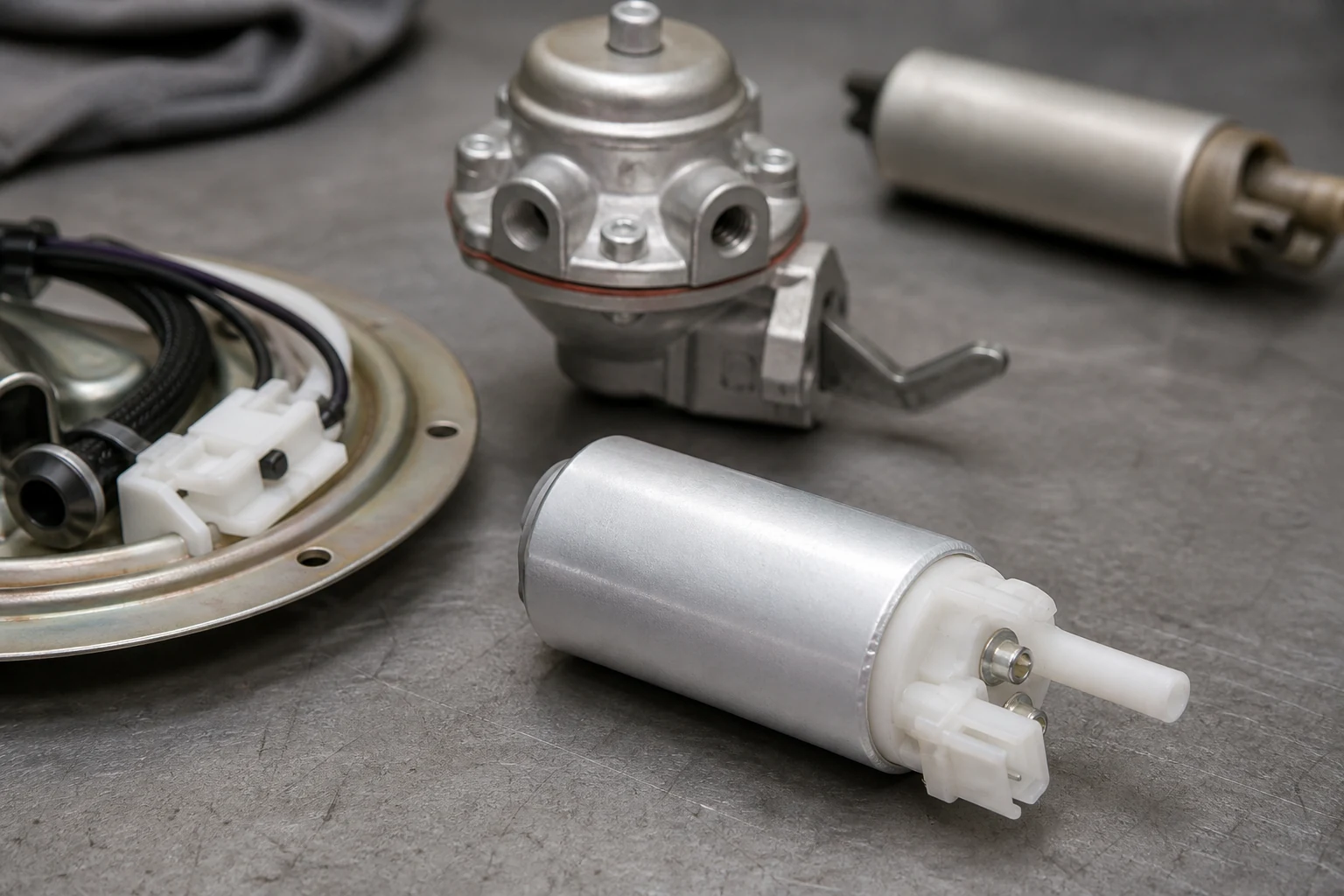
Pressure terminology, connector design, line ends, power/ground, filtration arrangement, and control strategy must be tied to the exact system and offered model. A buyer should request the applicable product data rather than infer a performance value from a generic category name.
Important: Do not use broad fuel-pump terminology to bypass the platform documentation required for fuel-system work. Confirm component scope and applicable procedures before a replacement or modification decision. (Fuel-system integrity reference)
The low-pressure electric pump guide gives a narrower example of the same principle: the system requirement comes before the label.
Part 5. When should an inline or external request remain separate?
Keep an inline or external request separate when its documented installation, line interfaces, mounting conditions, or electrical path differ from an in-tank/module scope. Combining them into one quote can obscure the exact parts and evidence the buyer needs.
The inline fuel-pump selection guide explains how scope, filters, and interfaces should be collected without claiming universal fitment.
Part 6. What evidence belongs in an importer RFQ?
An importer RFQ should let the supplier understand the real product task.
| Buyer should provide | Why it matters | Send with quote |
|---|---|---|
| Platform/engine or engineered-system record | defines the application boundary | Yes |
| OE/interchange record or drawing | supports exact identification | Yes |
| Pump-only, inline, in-tank, or module scope | prevents omitted components | Yes |
| Connector, line, and tank-interface notes | screens interface mismatch | Yes |
| Required offered-model documentation | avoids generic performance claims | Yes |
| Quantity and destination requirements | defines commercial review | Yes |
Retail support pages such as Summit Racing customer help reinforce the practical rule: confirm the offered item and its information rather than treating a category search as a complete selection.
Part 7. How does Kangsong support a documented product-family review?
After the requirements are clear, use Kangsong fuel pump products to locate the relevant product family. Kangsong publicly presents fuel pump assemblies, electric pumps, high-pressure pumps, low-pressure pumps, and module-related product routes; a final model choice still requires the supplied evidence.
Send the recorded scope through Contact Kangsong with OE/interchange evidence, interfaces, quantity, and requested documents. The fuel-pump regulator guide is a related resource when a control requirement needs separate evidence.
FAQs
What type of fuel pump is in a car?
The answer depends on the vehicle or system design. A request may involve a pump-only component, inline unit, in-tank pump, complete module, or another documented fuel-system scope.
Is every automotive fuel pump electric?
Do not assume so from a broad search term. Confirm the exact vehicle or engineered-system design and the offered-model documentation.
What is a fuel-pump module?
A fuel-pump module is an assembly scope that can include more than the pump component, such as tank-facing parts and specific interfaces. Its contents must be verified for the offered model.
Can an inline pump replace an in-tank pump?
Not as a generic rule. The system architecture, interfaces, assembly scope, and applicable documentation determine whether an inline or in-tank route is relevant.
What information identifies the correct pump?
Provide the platform or system record, OE/interchange or drawing, exact scope, interfaces, requested product data, quantity, and destination requirements.
Why should pressure terminology be verified?
High- and low-pressure terms do not establish a universal value or fitment. The required condition must be confirmed from the exact system and offered-model documentation.


