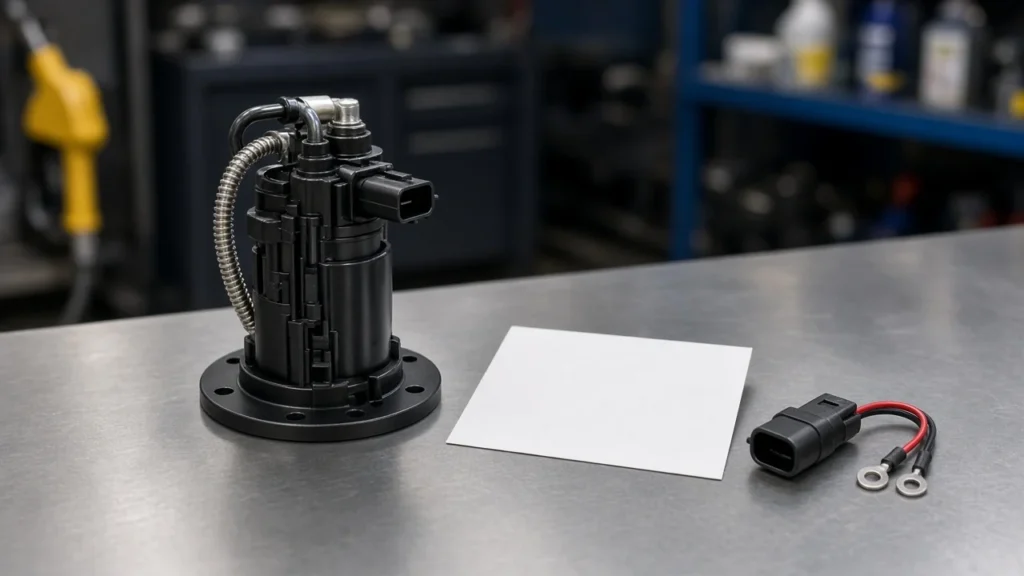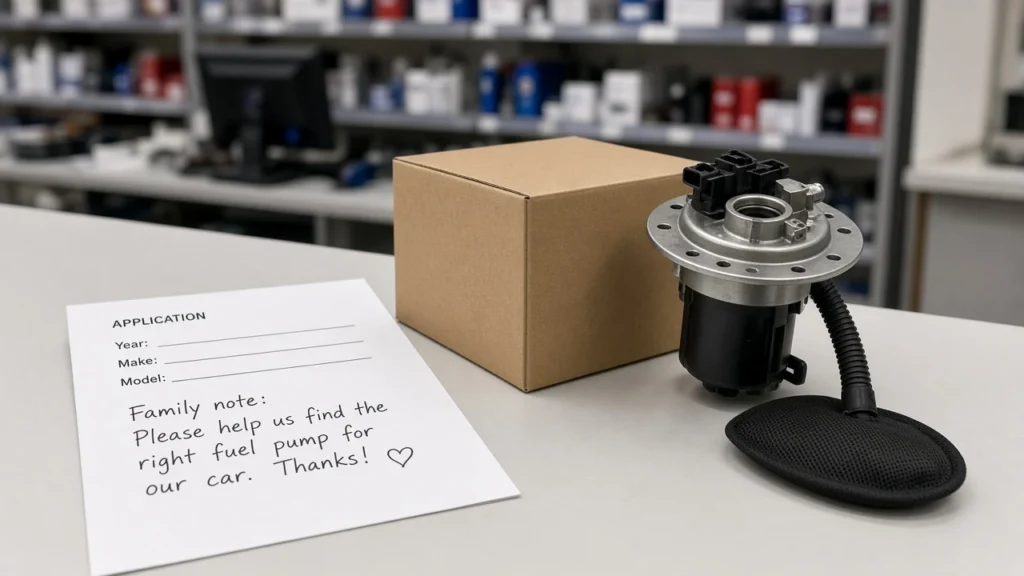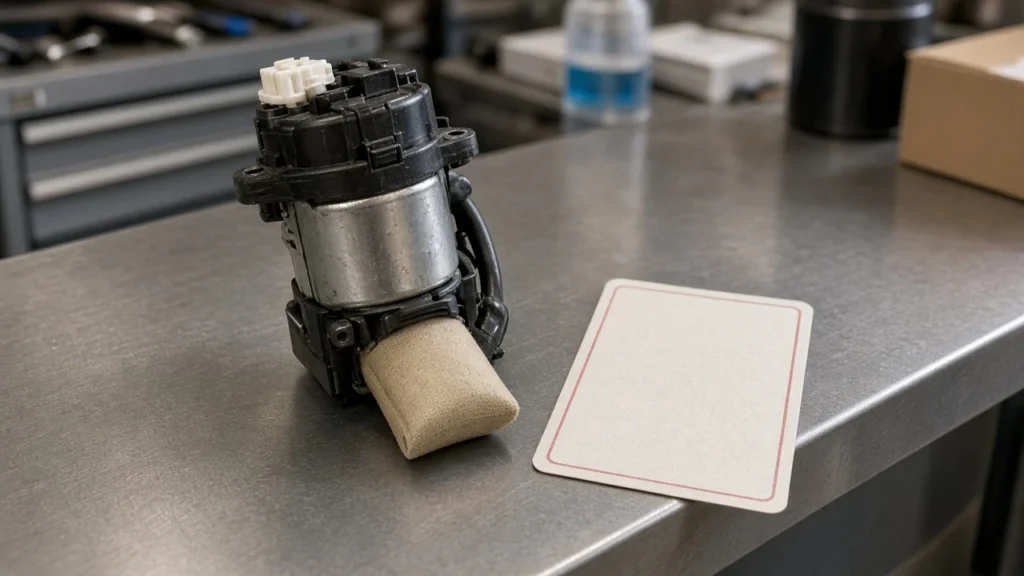
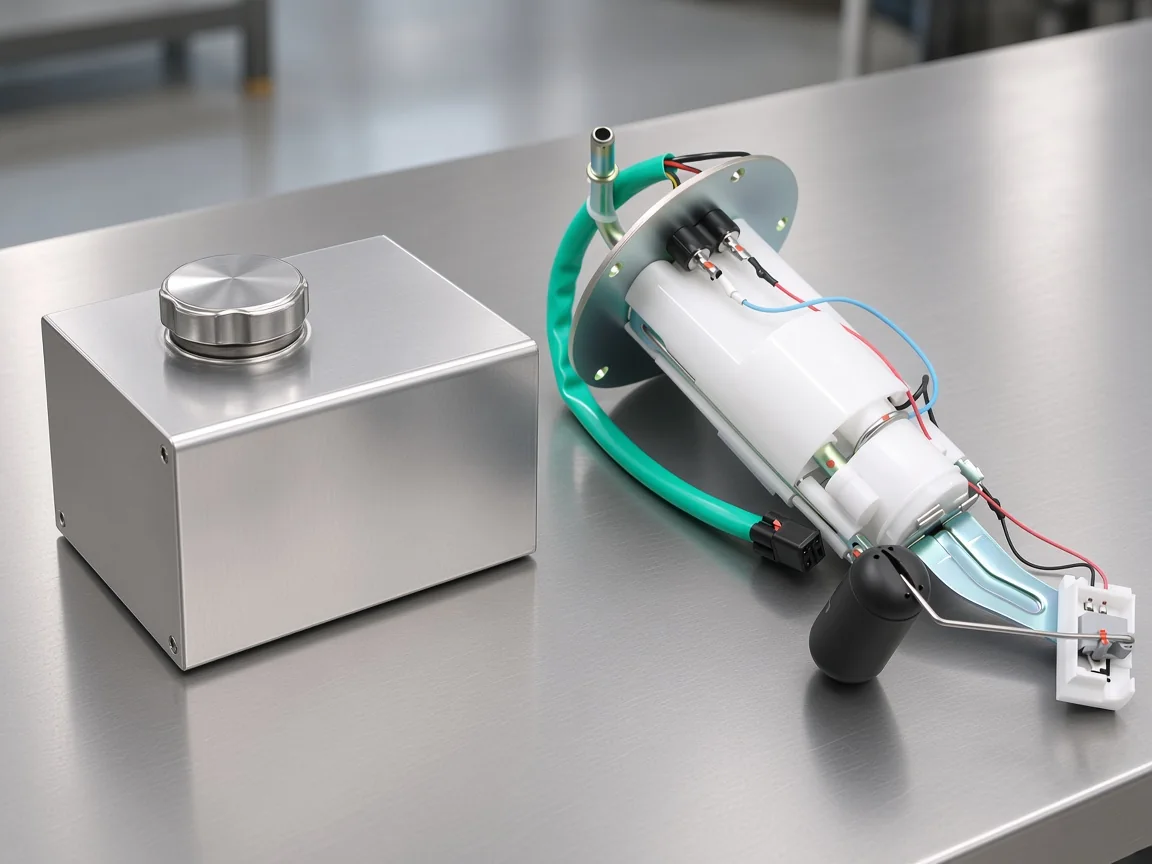
A fuel cell with pump line names a fabricated racing or safety tank package that may carry a pump. The cell is the tank on that sheet; the pump rides with it only when the same line still names the pump. Those words can also land on a hydrogen stack, a wheeled caddy, or the printed 1987-1995 C/K assembly, so those four objects stay on four lines.
The tank object comes first, then the pump-as-package fork, then the caddy neighbor, then the C/K window. Only one carton is allowed to move.
A fuel cell with pump names a tank package, not a hydrogen stack
A fuel cell with pump names a fabricated tank/cell package, not the electrochemical stack that makes electricity. Shop listings for a fuel cell tank with pump sell a container that holds gasoline or race fuel, then a pump that can sit in that container or outside it.
An electrochemical fuel cell is a different English object. Wikipedia’s fuel-cell page calls that device a cell that turns the chemical energy of a fuel, often hydrogen, into electricity. A clerk who hears “fuel cell” and walks toward a stack has left the automotive carton.
The clerk stays on the tank package because the electrochemical object makes electricity, and this automotive line still names the fabricated cell.
| Object on the sheet | What it actually is | Carton that can move |
|---|---|---|
| Fuel cell with pump | Fabricated racing or safety tank that may carry a pump | The cell/tank package the sheet names |
| Electrochemical / hydrogen stack | Device that makes electricity from a fuel | Not this automotive line |
| Fuel caddy with pump | Wheeled transfer tank and the pump that empties it | The yard carton, not a racing cell |
| Printed C/K assembly | 1987-1995 C/K pump, sender, and housing | KS-360501 only when that window is printed |
Keep the four names on the sheet. Pulling one carton for all four is how the wrong box leaves the dock.
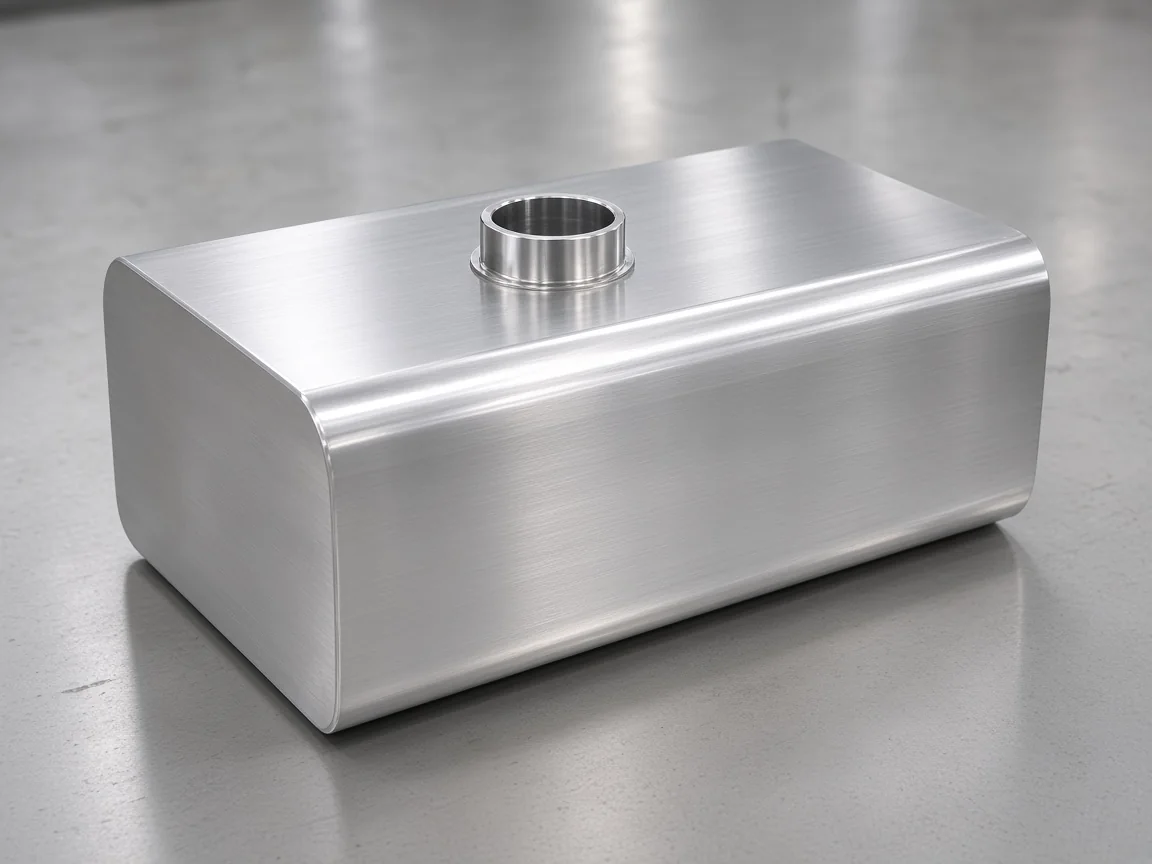
A racing fuel cell is a crash-minded tank, not a C/K hanger
A racing fuel cell is a crash-minded tank with a shell, a lining, and foam; it is not the printed C/K pump-plus-sender hanger. Wikipedia’s fuel-tank page describes that racing cell as a rigid outer shell and a flexible inner lining, filled with open-cell foam against vapor explosion, slosh, and fuel starvation.
A safety bladder is the crash-worthy inner tank in some motorsport cells. Wikipedia’s fuel-bladder page names those fiber-reinforced bladders as a tank safety object used in series such as Formula 1 and NASCAR. That lining is not a Kangsong part number.
SFI Specification 28.1 defines a fuel cell as an enclosure that can deform under impact while resisting rupture. The same sheet prints a five-year service window from manufacture, plus two years after the maker recertifies a polymer cell.
FIA FT3, FT3.5, and FT5 name a safety-bladder family with that same five-plus-two year use window. Those family names stay on the sanctioning sheet. They are not a catalog SKU.
A stock fuel tank and a racing cell can share the job of holding fuel. The racing cell still uses that rigid outer shell, flexible inner lining, and open-cell foam.
The printed C/K hanger is a pump-plus-sender assembly that drops into a factory tank. It does not become a crash-minded cell because both objects can say “in-tank.”
The pump on that cell still has to be named on the sheet
The pump on that cell still has to be named on the sheet, because a cell can arrive as a tank that still needs a pump package. Wikipedia’s fuel-pump page keeps the engine fuel pump job simple: it transfers fuel from the fuel tank to the carburetor or injector.
Shopping kits often sell the cell and that pump as one title. Owners still treat them as two objects. A cell on the bench without a named pump is an incomplete line, not a finished kit.
From the field: On LocostUSA, an owner already has an ATL cell with feed and return out of the top flange and still has to choose a pump package. Replies treat that cell as a tank that is already there, then argue an external pump versus an in-cell box.
The ATL cell is already on the bench, and the pump package is still a named choice. That is not a hose recipe, a height recipe, or a wiring walk-through.
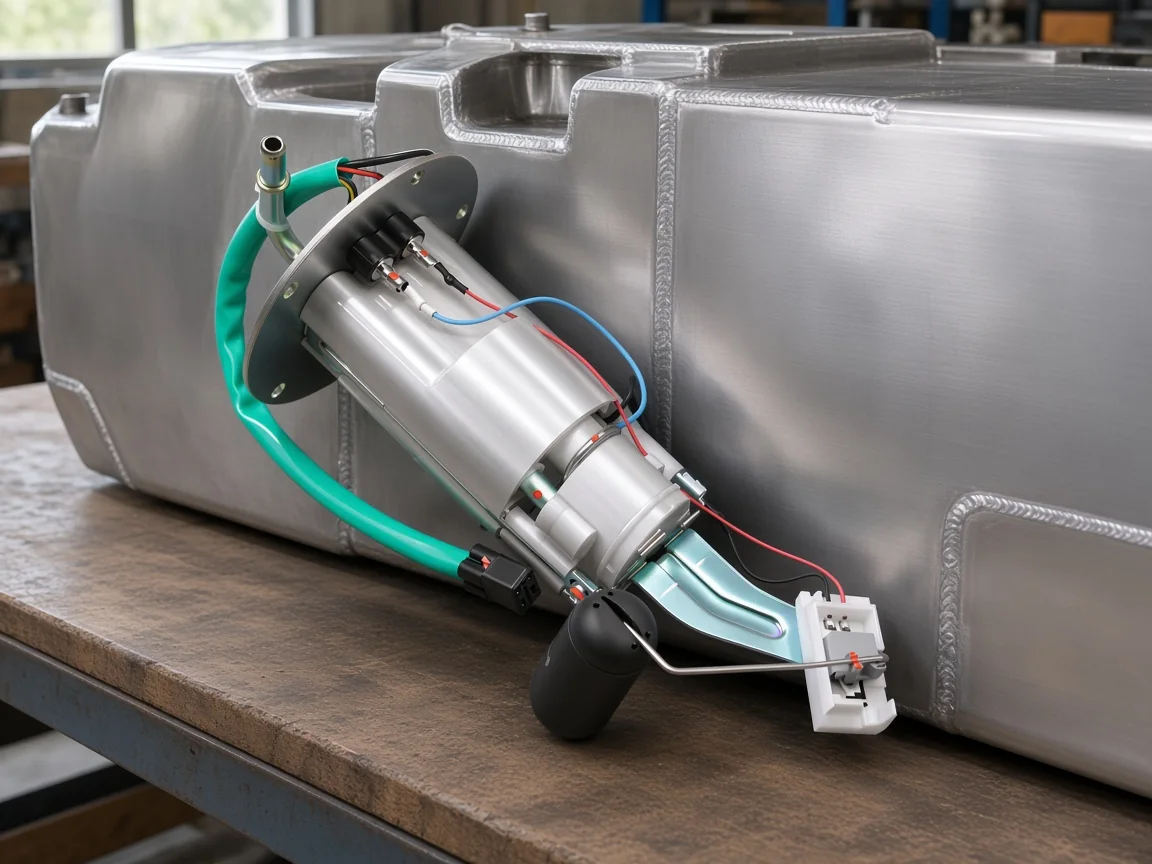
The sheet has to name the pump. In-tank or external is still a name on that package, not a shop procedure.
An LS swap fuel pump sheet is a different mount job. A universal electric fuel pump 12v adjective does not invent a cell SKU.
A portable fuel caddy with pump is a different carton
A portable fuel caddy with pump is a wheeled transfer carton, not this racing-cell line. The caddy holds fuel in the yard and uses a portable fuel pump to empty that tank into another vessel.
A clerk who hears “portable fuel cell with pump” and pulls a racing cell has swapped the job. The fuel caddy with pump page owns that wheeled carton.
The racing cell feeds an engine. The caddy moves fuel across a floor. Shared words “tank” and “pump” do not merge those cartons.
This catalog does not print a racing-cell SKU
This catalog does not print a racing-cell SKU, so an unprinted cell job stays on the category. Live category pages list high-pressure diesel windows and the 1987-1995 C/K kit. They do not list a fabricated cell, an SFI enclosure, or an FIA bladder.
Do not invent a cell part number to fill the gap. Do not stretch KS-360501 into that gap because the kit photo shows a pump. Unprinted racing-cell jobs go back to the product category.
A missing SKU is a stop, not a license to borrow the nearest in-tank carton. The sheet can still name the cell and the pump in plain language while that job waits on the category.
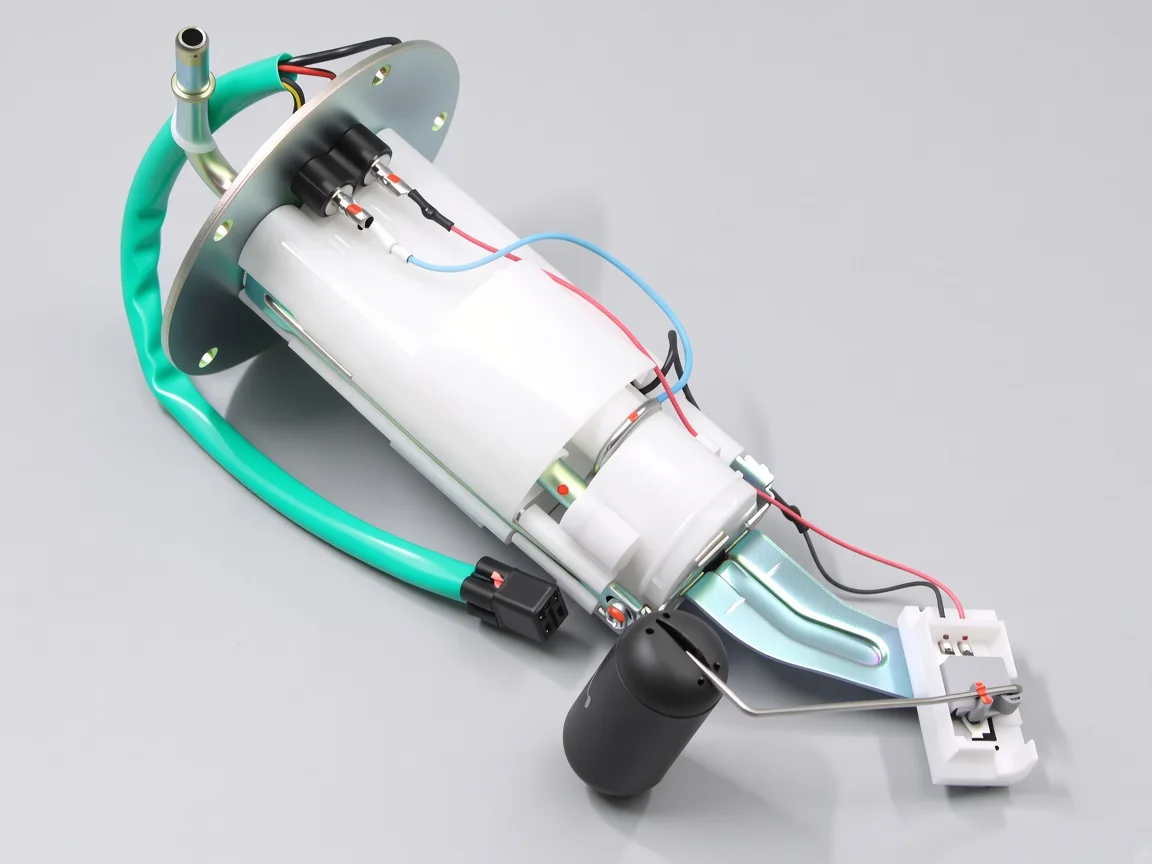
KS-360501 prints a 1987-1995 C/K assembly window
KS-360501 prints a 1987-1995 C/K complete assembly window, and that window is not a racing-cell kit. The title locks 1987-1995 C/K 1500, 2500, and 3500 pickups and lists OE 25168719 with E3902.
Kit labels on KS-360501 read DC 12V, a 2-pin main connector, and 43.3-49.5 Gph. Maximum Air Pressure 12-26 on that label is an air figure, and it is not a cell fuel-pressure rating.
The overview lists the fuel pump, the sending unit, and housing together as one ready pack under a 1-Year Limited Warranty. That sentence is a fuel pump assembly window, not a fabricated cell.
| Printed line | KS-360501 C/K assembly | Unprinted racing-cell sheet |
|---|---|---|
| Machine / window | 1987-1995 C/K 1500, 2500, and 3500 | The cell the sheet names, if it names one |
| Object | Complete assembly with pump, sending unit, and housing | Fabricated tank/cell package that may carry a pump |
| Connector | 2-pin main plug | The plug the cell sheet prints, if it prints one |
| Flow label | 43.3-49.5 Gph on this kit | Not copied from this kit |
| Air label | Maximum Air Pressure 12-26 | Not a fuel-cell pressure rating |
| Catalog role | Carton for that C/K window | No printed cell SKU; stay on the category |
A fuel pump assembly versus fuel pump split is the hanger-versus-element question. It does not turn this C/K pack into a racing cell.
Which catalog line fits a fuel-cell-with-pump sheet
The catalog line that can move is the printed C/K assembly when that window is on the sheet; an unprinted racing-cell job goes back to the category. Use the 1987-1995 C/K electric gasoline pump only when the purchase line names that truck assembly window.
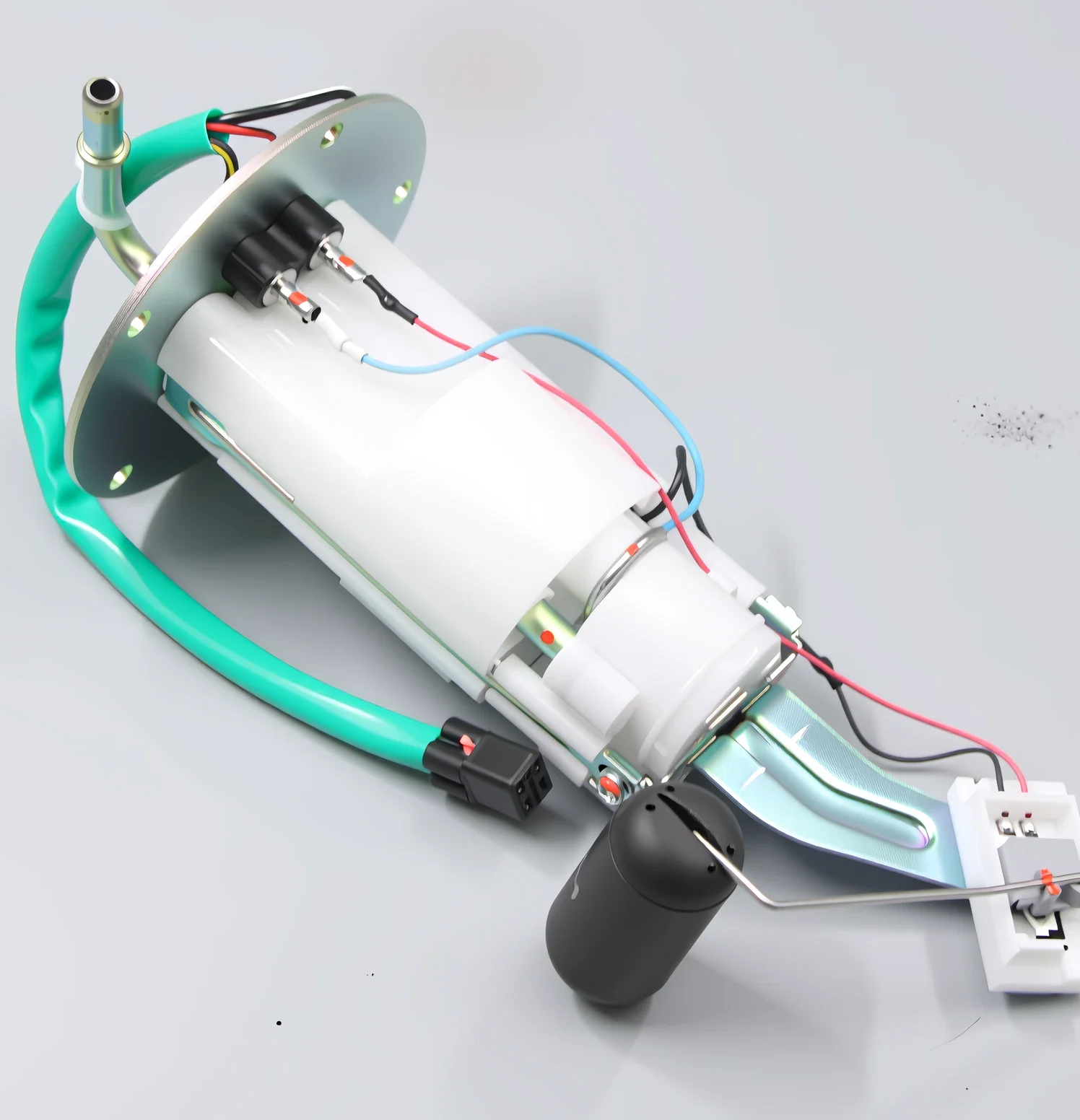
If the sheet is a racing or safety cell, a hydrogen stack, or a portable caddy, leave KS-360501 on its truck shelf. Send the unprinted cell job to the product category instead of forcing a lookalike in-tank carton.
Ship the C/K kit only with the C/K title on the line. Until a printed cell SKU exists, the useful sentence is still the object the sheet already shows: tank package, stack, caddy, or C/K assembly.
FAQ
Does a fuel cell with pump name a hydrogen stack?
No. On this automotive line the words name a fabricated tank/cell package that may carry a pump. The electrochemical stack that makes electricity is a different object.
Does a fuel cell always include a pump?
No. A shopping title can sell the two together, and a cell can still arrive as a tank that needs a pump package. The sheet has to name the pump before anyone pulls a combined carton.
Why use a fuel cell instead of a stock gas tank?
Shops ask for a racing cell when they want a crash-minded container with a rigid shell, a flexible lining, and open-cell foam.
Is KS-360501 a racing fuel cell?
No. KS-360501 is the printed 1987-1995 C/K complete assembly window. Recommend it only when that truck window is on the sheet.
Is a fuel cell with pump the same carton as a fuel caddy with pump?
No. The caddy is a wheeled transfer carton with a portable fuel pump. The racing cell is a tank package that feeds an engine.
Can this catalog invent a racing-cell SKU?
No. The category does not print a fabricated cell, so an unprinted cell job stays on the category instead of borrowing KS-360501.
Is the C/K air label a fuel-cell pressure rating?
No. Maximum Air Pressure 12-26 on KS-360501 is the air label on that kit. It is not a fuel-pressure rating for a racing cell.
Is a fuel cell the same as a fuel pump assembly?
No. The cell is the tank package. A fuel pump assembly is the printed hanger that includes the pump, sending unit, and housing.