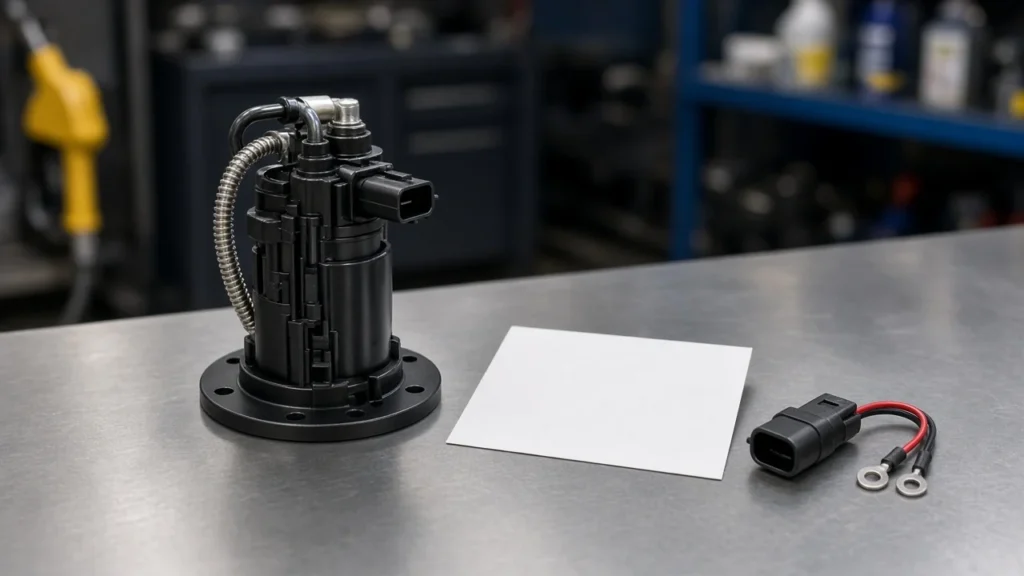
A pump that will not stop after the key is off proves a live feed is still reaching the motor. When a fuel pump runs continuously, the hum is power at the pump, and the pump has not shown itself to be the failed part. Contacts, an oil-pressure switch, an inertia switch, and the controller are the four places that feed can still be closed.
What a pump that will not stop proves
The hum means the motor still has power, so a failed pump is the wrong first name on the ticket.
An electric pump does not need the engine to turn it. If the counter can hear it with the key off, something on that year sheet is still connecting a live feed to the motor.
A pump that has actually failed goes quiet. This one has not.
That split is the whole job before any box comes off the shelf. A fuel pump runs after ignition off only while a device in the feed stays closed.
The year, the engine, and the sheet decide which device that is. A guess from a different truck will order the wrong part.
| What the counter hears | Device that can still be closed | Next line on the ticket |
|---|---|---|
| Hum with the key fully off | Relay contacts left shut on a battery feed | Name the contacts before a pump |
| Hum with the key on and the engine dead | Oil-pressure switch that stayed shut | See whether ignition power is still on that switch |
| Crank and no start after a jolt | Inertia switch that has opened | Call it a cut rather than a run-on |
| Hum while a command is still present | Electronic control module still asking | See whether coil power is even alive |
Counters hear this most often at the end of the day, key on the bench, pump still buzzing in the tank. The customer wants a pump because the noise is coming from the tank. The noise only proves the motor is being asked, electrically, to spin.
Write the closed device on the ticket first. If that line is still blank, the pump part number is still blank too.
Welded contacts after the coil lets go
Stuck relay contacts can keep feeding the pump after the coil has already dropped.
Battery power usually reaches that motor only after it crosses the relay contacts. The coil is a separate circuit.
It pulls an armature in, and a spring is what returns that armature when coil current stops. The click, if there is one, belongs to that motion. The hum belongs to the load faces.
Contacts that stick can leave that path closed after the coil has already dropped. Contact metal can weld or simply fail to part, so the load path stays made when the control side has already let go. The pump then runs from whatever feed those faces still connect, often a battery feed that does not care that the key is off.
A feed left closed keeps the pump running, drains the battery, and removes the normal shutdown. That is the practical cost on the lot: a flat battery by morning, and a safety cut that never got the chance to open because the load path never opened.
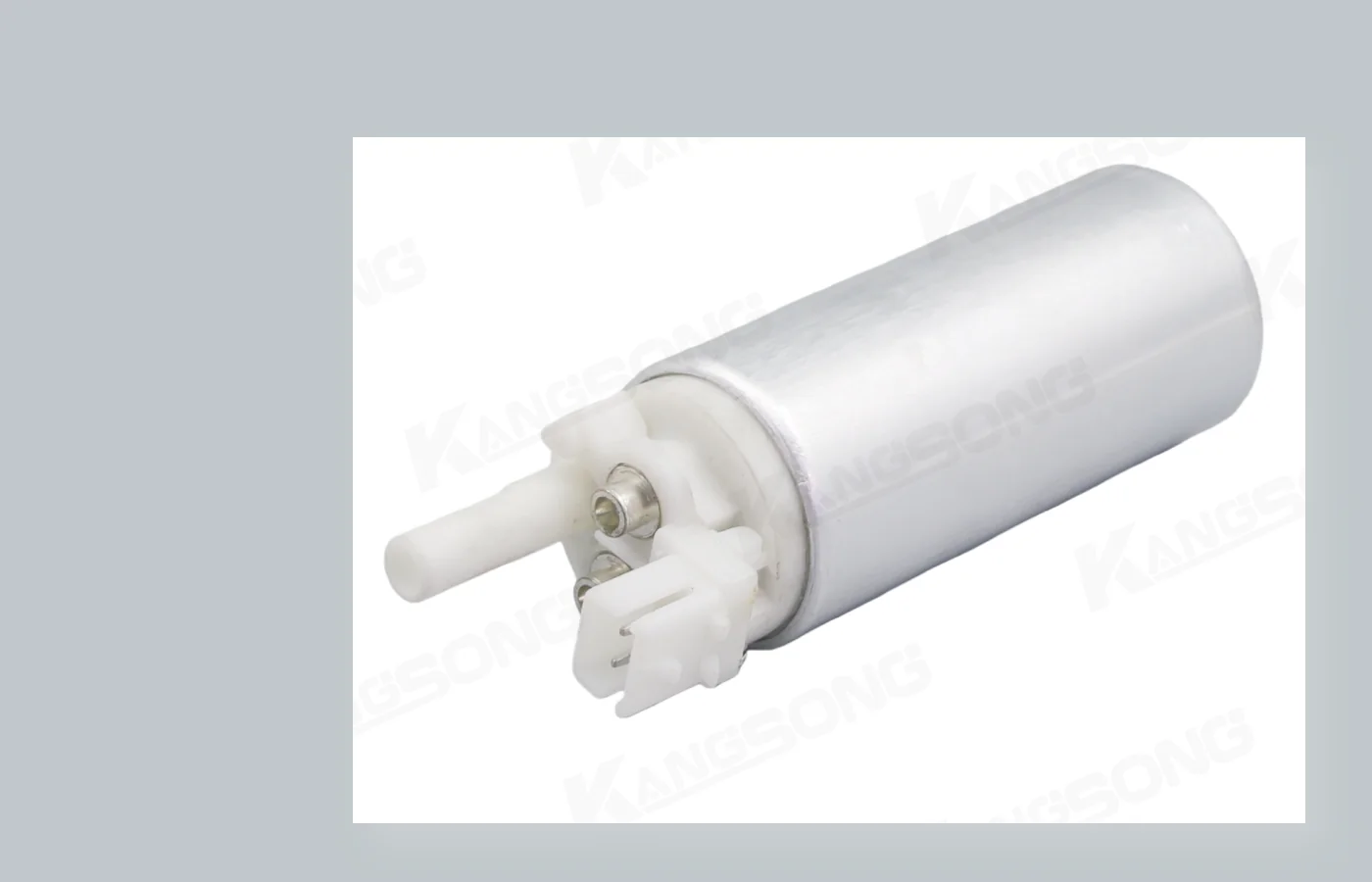
A fuel pump keeps running in this case because the faces never parted. Pulling the fuel-pump fuse and hearing the hum die is the clean confirmation that the motor was on that feed. Which fuse that is, and what amp rating the sheet prints, belongs on the fuel pump fuses page.
Coil sizing and which relay to stock are a different order. That choice lives on the 12V fuel pump relay page.
A click versus silence is different again, and it is already handled on the fuel pump relay clicking page. This ticket is the hum that continues after the key is off.
Owners asked for that path before naming a part. The year sheet is what shows whether the relay or the inertia switch is the device still in the feed.
Owners ask for that path because voltage at the pump depends on which box is still closed. Ford colors and fuse numbers from one 2004 sheet do not travel to a C/K.
An oil-pressure switch that stays shut
Ignition power still on that switch is what lets a stuck oil-pressure switch hold the pump.
A switch that stays shut can hold the pump on while ignition power is still present. On the aftermarket layout published in 2020, oil pressure falling lets the switch open, the relay drops, and the pump is not supposed to keep running merely because the ignition is still on. A switch that never opens holds that relay in for as long as its ignition feed is live.
Key fully off is a further split from a switch that only holds the pump while the ignition feed is live. If the key has killed that ignition feed, a stuck oil-pressure switch on that layout has nothing left to pass. The hum that remains, with the key fully off, points back at a battery feed through contacts that did not part.
Builders who add an electric pump on a classic car treat an oil pressure cutoff as part of doing the job properly. That line comes from a carbureted conversion thread.
Carry it as the expectation those builders bring to the counter. Then read the sheet that actually belongs to the truck in the bay, because a 1987-1995 C/K fuel-injection layout is a different document.
From the field: Royce’s note on a classic conversion is blunt: an electric pump needs an oil pressure cutoff, because the pump stays available for as long as it is powered. Classic Cougar thread
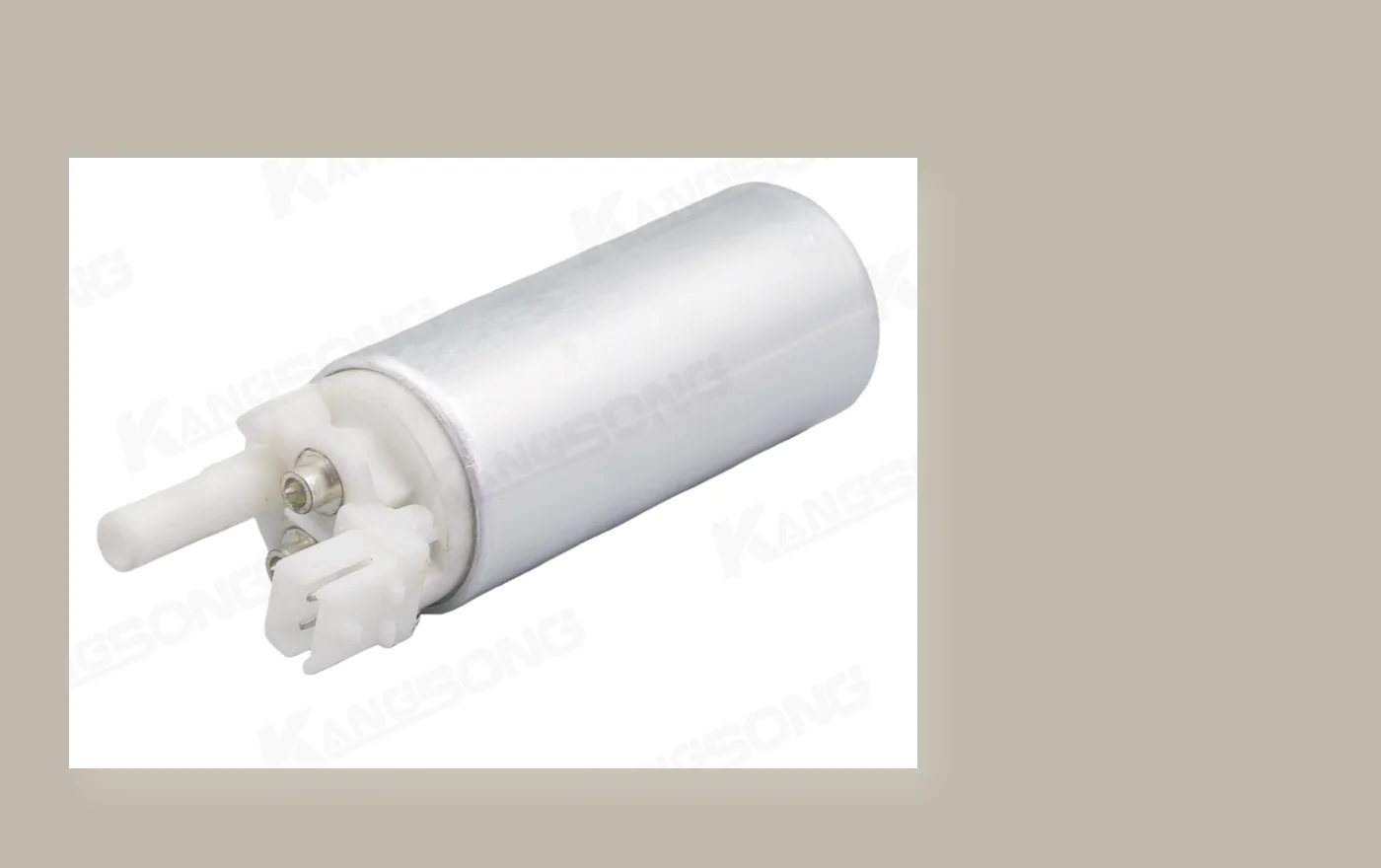
A fuel pump stays on, in this oil-pressure case, only while the feed to that switch is still hot. Which cutoff sits in the feed, and where a given truck hides it, is the job of the fuel pump safety switch wiring page. This page only asks whether that device is the one still closed.
An inertia switch that never opens
An inertia switch that never opens fails the crash cut. A tripped switch does the opposite and takes the pump’s power away.
An inertia switch is there to open the pump circuit on impact. The 1995 safety notice describes that job in plain terms: some vehicles already shut the pump off when a collision stops the engine, and others use an inertia switch to open the electrical circuit to the pump during the crash. A switch that stays closed through an impact has missed that job.
A tripped inertia switch takes power away, so the engine cranks and does not start. On the 1991-2007 Taurus and Sable account, the switch is mechanical and stays open until someone resets it.
The result is a crank with no fuel-pump power. A continuous hum is a different fault, and hearing one rules this cause out for the truck in front of you.
Do not send the counter looking for a trunk button because a different car uses one. The tutorial’s location is for those Ford cars only. If the sheet in the bay shows an inertia switch, the question is whether it is open or closed, not where a Taurus hides the reset.
A controller that never drops the command
Shut-off after the engine stops often sits with the electronic control module, and a command that never drops holds the coil only while coil power remains.
The shut-off decision is often left with the electronic control module once rotation sensors say the engine has stopped. The same 1995 notice says sensors may watch cam, crank, or alternator rotation, and the computer then decides to shut the pump off.
That is one normal way a fuel-injected petrol engine stops feeding the pump after the engine dies. The notice leaves the sensor list with the vehicles of that discussion, rather than with every 1987-1995 C/K.
A command that never drops matters only while the coil still has power. With the key fully off, sheets that kill coil power with the key leave a sleeping module unable to hold the contacts in.
If the hum continues in that state, the load path is still closed on its own. If the key is on, the engine is stopped, and the module is still grounding the coil, the command is the device to name before anyone condemns the pump.
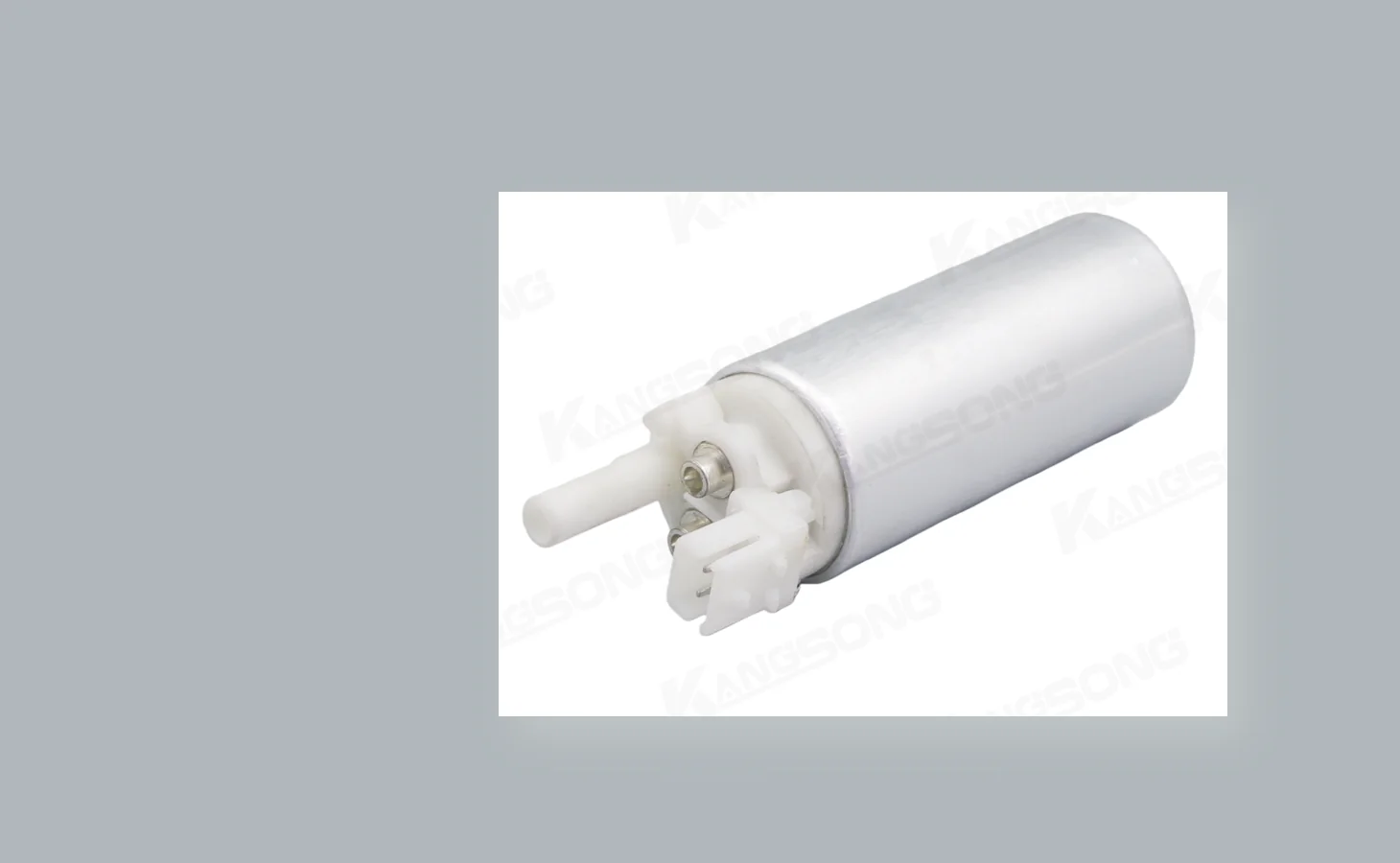
Ask whether the sheet shows a computer ground on the coil, an oil-pressure hold, or both. Naming “the computer” without that line just moves the wrong part across the counter.
The module is a decision maker. The contacts are still the parts that pass pump current.
When the C/K kit is the right product to order
Order the printed C/K kit only after the feed is gone and the pump itself has failed.
The kit stays on the shelf while the pump is still being fed. A motor that is humming is doing what the live feed asked.
Replacing it leaves the closed device in place, and the new pump hums too. Wait until the year sheet shows the feed open and the original pump silent, hot, or unable to move fuel when power is actually present.
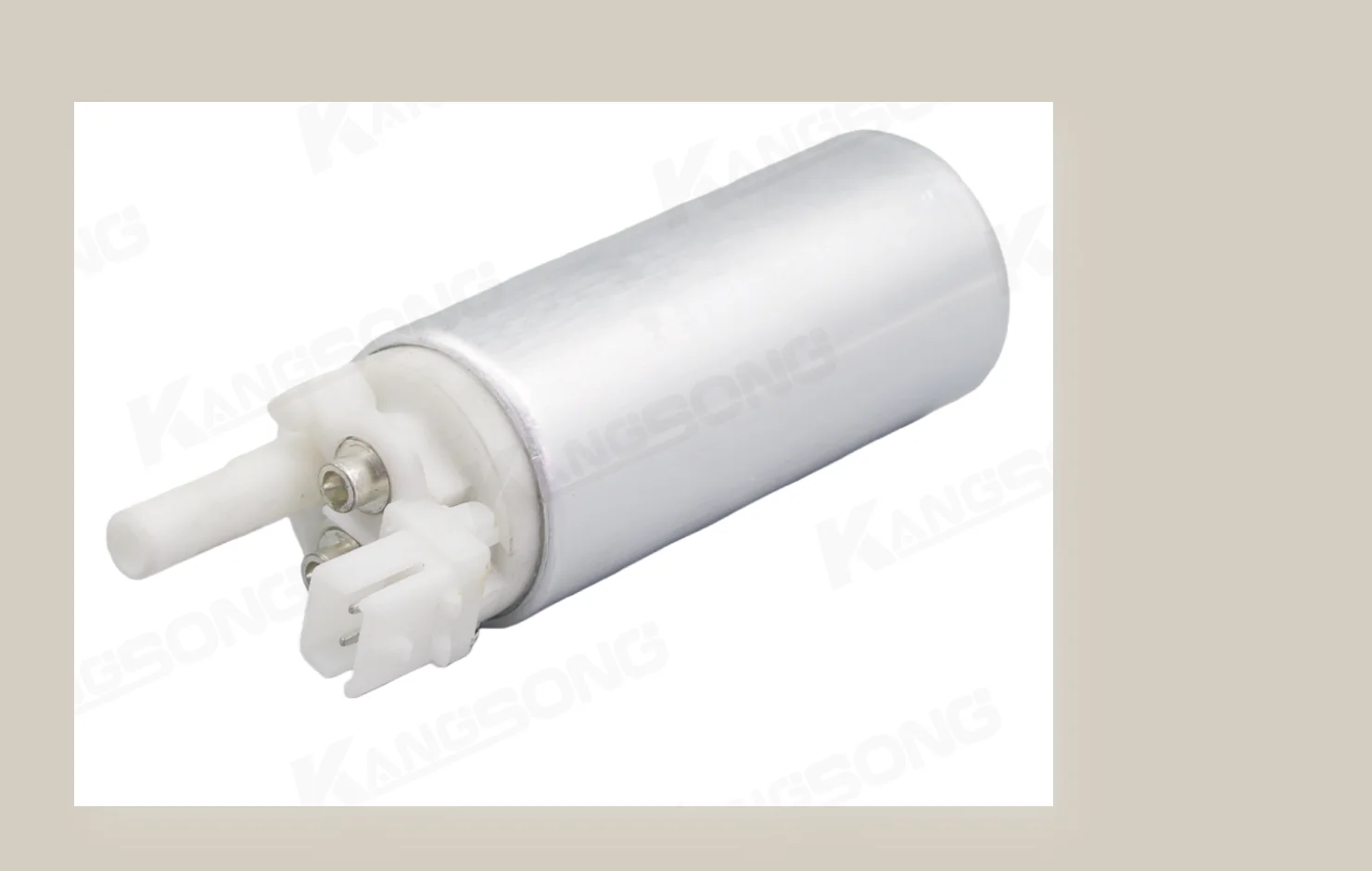
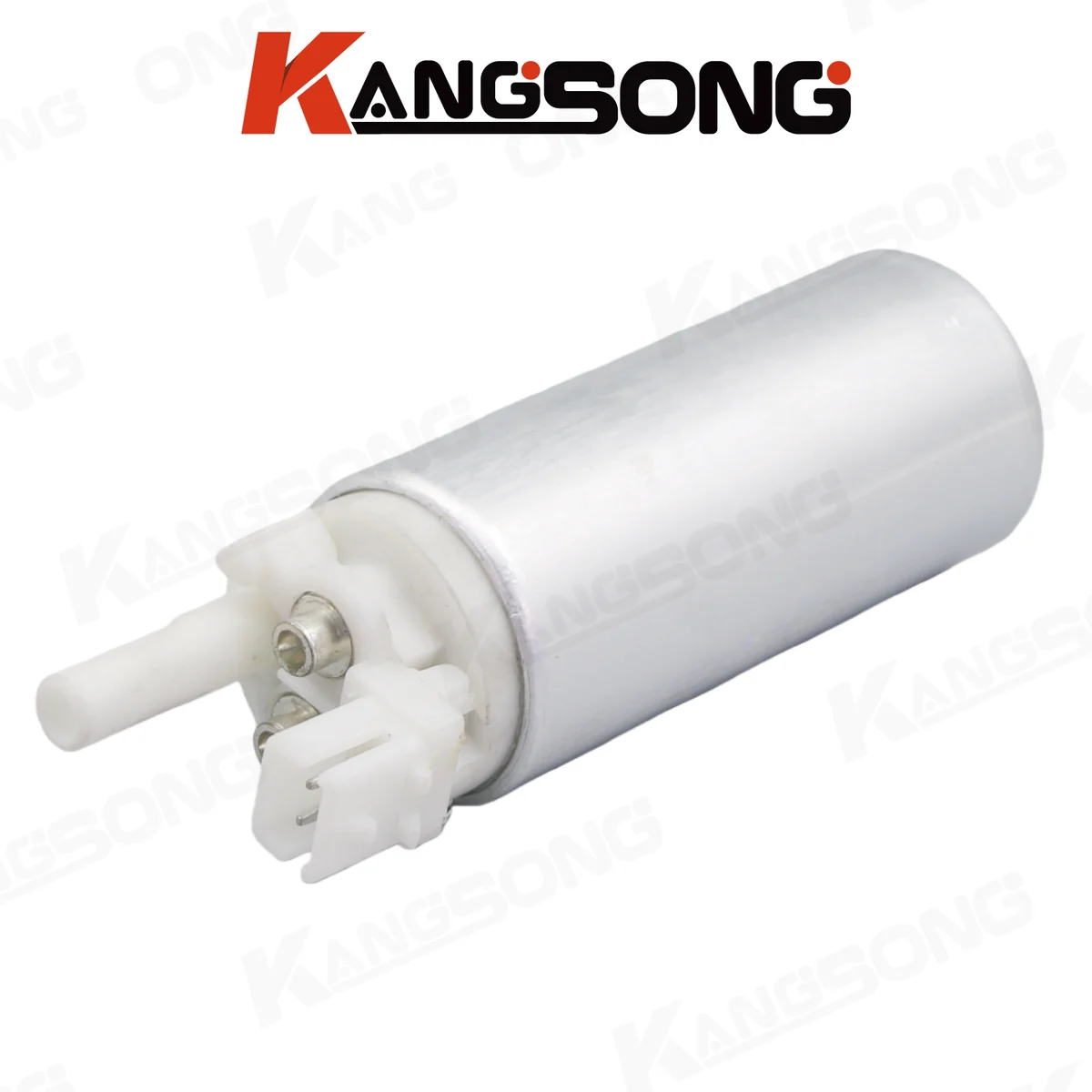
The printed kit is KS-360501, a 2-pin electric gasoline pump for the 1987-1995 C/K window, rated DC 12V at 43.3-49.5 Gph, interchanging with OE 25168719 and E3902. The page also describes that unit as a complete assembly with the pump, sending unit, and housing.
Those figures are the ones printed for this window. Leave them on this kit, and look up any other gasoline pump on its own page.
| Printed field | Value on the kit page |
|---|---|
| Brand | KS-360501 |
| Window | 1987-1995 C/K 1500/2500/3500 |
| OE numbers | 25168719 and E3902 |
| Main connector | 2-pin |
| Working voltage | DC 12V |
| Flow | 43.3-49.5 Gph |
Kangsong does not publish a shutoff switch for a pump that will not stop. Do not invent one to fill the ticket. If the truck is outside the printed C/K window, leave this kit and use the fuel pump catalog for the other job.
Inside the window, after the feed is open and the pump has failed, the part is the KS-360501 electric gasoline fuel pump with installation kit. Match the ticket to 1987-1995 C/K 1500, 2500, or 3500, and to OE 25168719 or E3902, before that box moves.
FAQ
Does a fuel pump that keeps running mean the pump failed?
No. A pump that keeps running is still being powered. A failed pump is the order only after that feed is open and the original motor no longer moves fuel when power is present.
Can the contacts stay closed after the coil has dropped?
Yes. The spring should return the armature when coil current stops, but the contact faces can stick and leave the load path closed. The hum then comes from those faces, not from a coil that is still pulled in.
Will a tripped inertia switch leave the pump running?
No. A tripped inertia switch opens the pump circuit and stays open until it is reset. The usual result is a crank and no start, which is the opposite of a continuous hum.
Why does the hum stop when the fuel-pump fuse is out?
The hum stops because that fuse sits ahead of the relay contacts on the usual load path. Silence with the fuse out shows the motor was on that feed. The fuse identity and amp rating stay on the fuse page.
Does an oil-pressure cutoff stop the pump after the engine dies?
On a sheet wired that way, yes, once oil pressure falls and the switch opens, as long as the switch is what had been holding the relay. If the key is fully off and the hum remains, look at a battery feed through contacts that never parted.
When does the 1987-1995 C/K kit belong on the counter order?
It belongs there when the feed is open, the pump itself has failed, and the truck is a 1987-1995 C/K 1500, 2500, or 3500 in the printed window for KS-360501, OE 25168719 and E3902. A hum with the key off is not that moment.